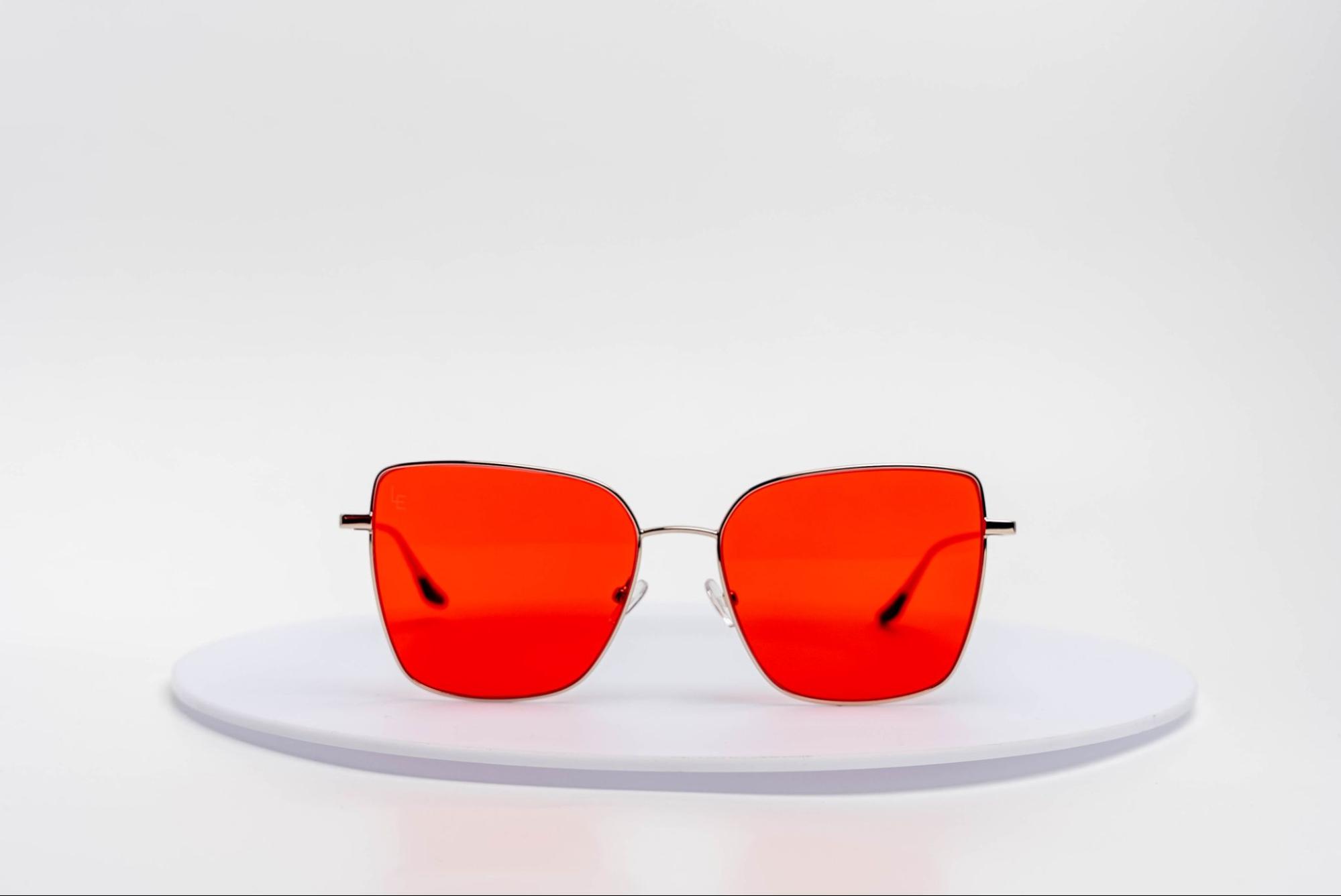
Elevating Digital Wellness: Dan Huber’s Vision for Luxurious Comfort in a Screen-Driven World
Discover how Dan Huber built Lucia Eyes to protect vision, improve sleep, and promote digital wellness through innovative eyewear.

Photo Credit: Dan Huber
Why the Smartest Investment in Your Daily Routine Might Be Protecting Your Eyes
We invest thoughtfully in fine travel, exceptional dining, and wardrobes that reflect who we are. We prioritize fitness, mental clarity, and experiences that enrich our lives. Yet in all this careful curation, most of us have overlooked the one thing working harder than anything else: our eyes.
Consider how much of modern life flows through screens. The entrepreneur building ventures from a laptop in first class. The collector researching acquisitions late into evening hours. The executive whose video conferences span time zones before breakfast. Our eyes have become the primary interface for everything, and the toll deserves the same attention we give any other aspect of refined living.
This realization led Dan Huber to create Lucia Eyes, a blue light glasses company built on a simple principle: protecting eyes from blue light should never mean compromising on quality.
 Photo Credit: Dan Huber
The Health Crisis That Changed Everything
Huber did not set out to build a wellness company. He spent nearly a decade trying to survive a health nightmare nobody could explain.
After the 2008 financial crisis upended his career, his family relocated to a rental property while rebuilding. That is when his health began unraveling. Persistent fatigue no rest could touch. Cognitive fog. Chronic headaches. His children developed mysterious symptoms. His wife suffered a miscarriage. For nearly five years, the family searched desperately for answers.
The diagnosis: mold toxicity from their home. But during recovery research, Huber discovered something larger. Constant blue light exposure from screens had dramatically amplified his reaction to those toxins. Every hour working was quietly compounding his condition.
That revelation opened his eyes to a problem affecting millions whose digital habits may be silently undermining their well-being.
Why Most Blue Light Glasses Fall Short
When Huber searched for solutions, he encountered a market prioritizing appearance over function. Most blue light glasses use cheap surface coatings that block minimal harmful wavelengths and degrade within months. They photograph beautifully but fail at meaningful protection.
In 2019, Huber partnered with his daughter Liz to establish Lucia Eyes. Together, they developed advanced polycarbonate lenses where protective technology is embedded throughout the material rather than sprayed on. The protection cannot diminish because it constitutes the lens itself.
Their daytime lenses block 45 to 60 percent of harmful wavelengths without color distortion, critical for professionals demanding accurate visual perception. The evening collection blocks 100 percent of blue light, engineered to support natural melatonin production and restore circadian rhythms disrupted by modern screen habits. Lucia Flex extends this quality to accessible price points.
A Mission Beyond Business
As his company grew, Huber noticed troubling patterns among young people on screens. In 2022, he learned suicide had become a leading cause of death for youth between 10 and 25. The connection between chronic screen exposure, disrupted sleep, and declining mental health resonated deeply.
So Lucia Eyes launched Hope Chain, a nonprofit fighting youth suicide through mental health awareness. The company directs 100 percent of net profits toward this mission.
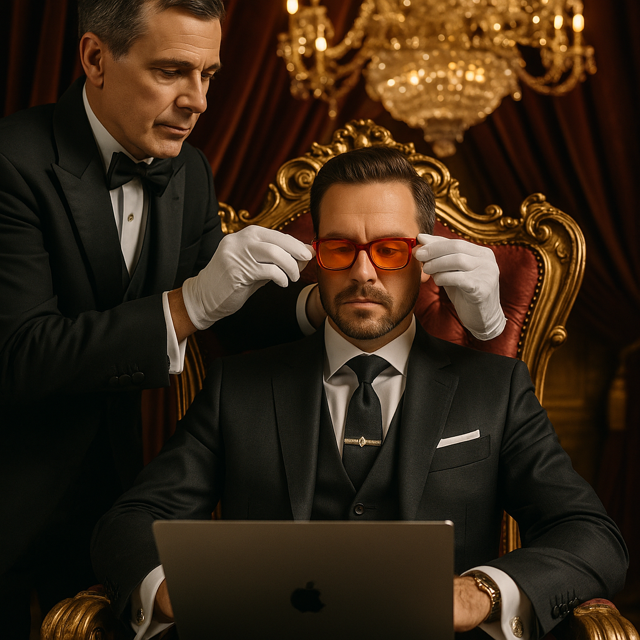 Photo Credit: Dan Huber
The Yallcast Podcast
Huber’s vision extends beyond eyewear. His Yallcast Podcast, recorded from the historic Flatiron Building in Fort Worth, brings together voices from medicine and mental performance to explore stress, burnout, and how digital habits shape how we feel. Guests have included Paul Hutchinson, the inspiration behind Sound of Freedom, therapist Dr. Lee Long, neuro-cognitive specialist Dr. Layne Pethick, and Mike Norris.
In a world where screens are inescapable, choosing how we engage with them says something about how we live.
Disclaimer: Written in partnership with APG.
Latest from Haute Living

Father, Son and the Steakhouse That Changed Los Angeles: CUT Turns 20
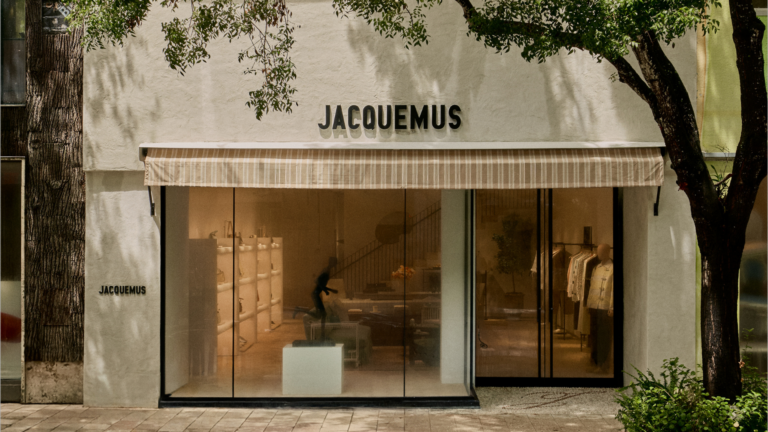
Terracotta, Tillmans, and Picasso: Inside the New Jacquemus Boutique in the Miami Design District
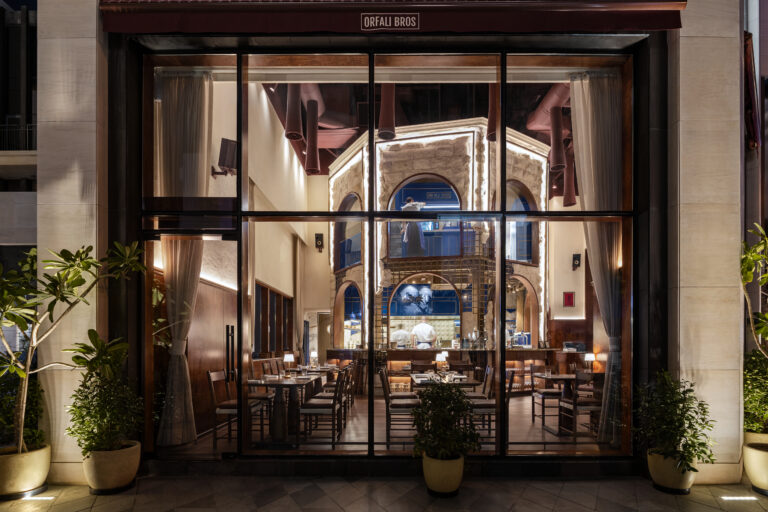
Dubai’s 2026 Michelin Stars Are Here: See the Full List, Including the Homegrown Hit That Just Made History