VIVIFY Technology and the Return of Industrial Grandeur: Energy Independence as the New Luxury Frontier
Explore how VIVIFY Technology is reshaping luxury infrastructure with modular hydrogen energy and off grid power solutions.

In the world of ultra-high-net-worth individuals, luxury has always followed control—control over time, space, mobility, and increasingly, infrastructure. Today, a new frontier is emerging where that control is no longer defined by real estate or private aviation alone, but by something far more foundational: energy itself. VIVIFY Technology is positioning itself at the center of this shift, proposing a future where energy independence is not just a geopolitical aspiration, but a bespoke asset class.
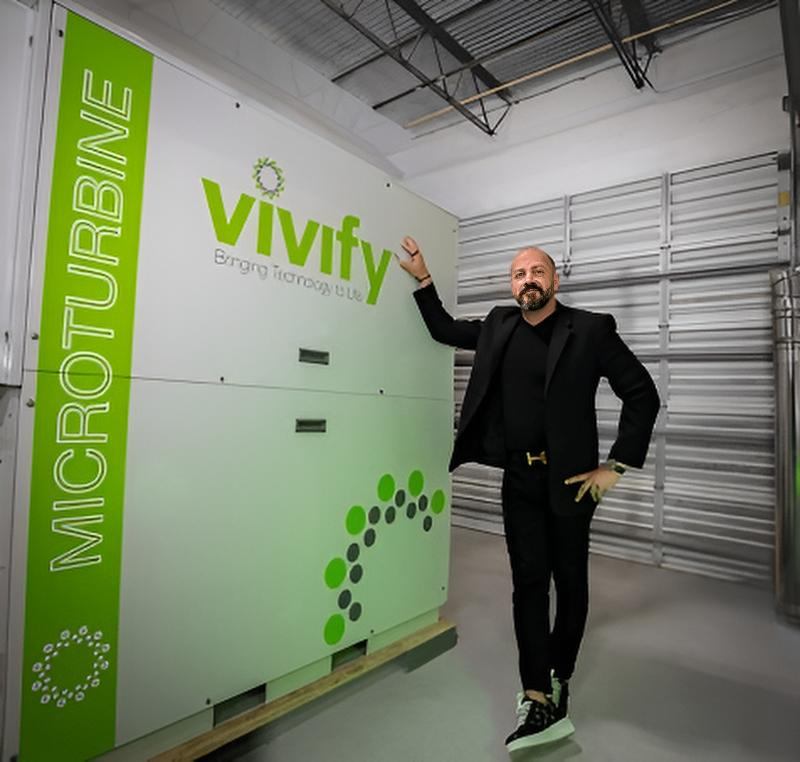
At first glance, VIVIFY reads like an industrial renaissance project disguised as a startup. The company’s platform—anchored by hydrogen-based systems such as HOG™, emissions control technology CAT™, and modular containerized power units like the Flying Pig™—is designed to operate outside traditional grid constraints. According to its public materials, the Flying Pig™ system alone delivers approximately 1MW of scalable, containerized power per unit, engineered for rapid deployment in remote or infrastructure-constrained environments, including data centers, disaster zones, and industrial campuses.
This positioning is not subtle. VIVIFY Technology is explicitly targeting what it describes as “behind-the-meter” energy autonomy, a model in which power generation bypasses utility interconnection delays entirely. That matters more today than ever. In the United States, utility interconnection queues for large-scale energy projects have stretched into multiple years in some regions, particularly those experiencing surging demand from artificial intelligence infrastructure and electrified industrial growth. VIVIFY Technology’s pitch is simple: time is the new scarcity, and centralized infrastructure is no longer moving fast enough to meet demand.
For a Haute Living audience accustomed to owning private jets that bypass commercial aviation bottlenecks, or estates that function as self-contained ecosystems, the logic is immediately familiar. The company is effectively proposing the energy equivalent of a private terminal—on-site, modular, and immune to grid congestion.
Yet what makes the company particularly intriguing is not just its ambition, but its narrative framing. VIVIFY Technology’s leadership describes its mission as “making energy independence inevitable,” leveraging hydrogen systems and emissions-control platforms to redefine how power is generated and consumed. Its Clean Air Technology (CAT™) is positioned as a retrofit solution for industrial facilities, designed to reduce emissions without requiring full infrastructure replacement.
This hybrid approach—simultaneously disruptive and integrative—is critical. Unlike legacy clean-energy narratives that often focus on replacement, the company attempts to operate within existing industrial realities while gradually rendering them obsolete. That duality is what makes it attractive to capital allocators who think in decades, not quarters.
But no serious conversation about VIVIFY Technology can avoid the technical scrutiny surrounding hydrogen-based energy systems. The core scientific challenge is straightforward: hydrogen is an energy carrier, not a primary energy source. Producing hydrogen—especially from water via electrolysis—requires significant energy input, and inefficiencies compound when converting that hydrogen back into electricity through turbines or fuel cells. These are not theoretical concerns; they are well-established physical constraints.
This is where VIVIFY Technology’s messaging becomes as important as its engineering. The company emphasizes system integration—hydrogen production, combustion, and emissions control operating as a unified architecture rather than isolated steps. In practice, the economic viability of such systems will depend not only on thermodynamic efficiency, but also on deployment advantages: speed, modularity, and avoidance of grid dependency.
And that is where the luxury market should pay attention.
Because in high-end real estate development, private infrastructure is already becoming a differentiator. Luxury resorts, private islands, remote estates, and even data-driven family offices are increasingly exposed to energy volatility and grid dependency risk. A system that can deliver predictable, on-site power generation—even at a premium—may prove more valuable than marginal gains in efficiency.
The company’s Flying Pig™ units, designed as modular 1MW containers, are particularly aligned with this trend. Their stated use cases include AI data centers, industrial campuses, and remote operations—environments where downtime is not merely inconvenient but financially existential.
In such contexts, energy reliability becomes indistinguishable from operational luxury.
There is also a broader cultural shift underway. Energy is no longer invisible in elite discourse. The same way water security and food provenance have become markers of sophistication in high-net-worth planning, energy autonomy is beginning to follow suit. The idea of a property or enterprise being “off-grid capable” is evolving from environmental statement to strategic asset classification.

The company is attempting to capitalize on this transition by reframing energy infrastructure as something modular, deployable, and—crucially—ownable. Whether or not all of its technological claims ultimately scale as advertised, the direction of travel is clear: decentralization is becoming aspirational.
Still, skepticism is warranted. Hydrogen-based closed-loop systems have long been criticized for violating practical energy efficiency limits when improperly framed. Any system claiming near self-sustaining operation must be evaluated rigorously against thermodynamic constraints. Investors and operators alike will need to distinguish between genuine system-level innovation and marketing abstraction.
Yet even with these caveats, the company’s significance may not lie in perfect technical execution today, but in its alignment with where elite infrastructure demand is heading. The ultra-wealthy have always adopted emerging infrastructure early—private aviation before commercial optimization, renewable estates before regulatory mandates, and now potentially distributed energy systems before grid modernization catches up.
If VIVIFY Technology succeeds, it will not simply be a clean-tech company. It will be part of a broader redefinition of infrastructure ownership—where energy, like art, real estate, and aviation, becomes something curated, portable, and strategically deployed.
In that sense, VIVIFY Technology is not just building machines. It is attempting to reframe energy as a luxury good: autonomous, aesthetic in its engineering ambition, and ultimately designed for those who prefer not to wait for the grid to catch up.
And in today’s world, waiting is the only luxury no one—especially the global elite—seems willing to afford.
Latest from Haute Living

Haute Living and Coney Family Foundation Celebrate Donovan Mitchell
Moncler is Taking Over New York Ahead of Its New Flagship Opening—Everything You Need to Know

Inside Palm Beach’s Best Bars, Where Old Glamour Never Goes Out of Style