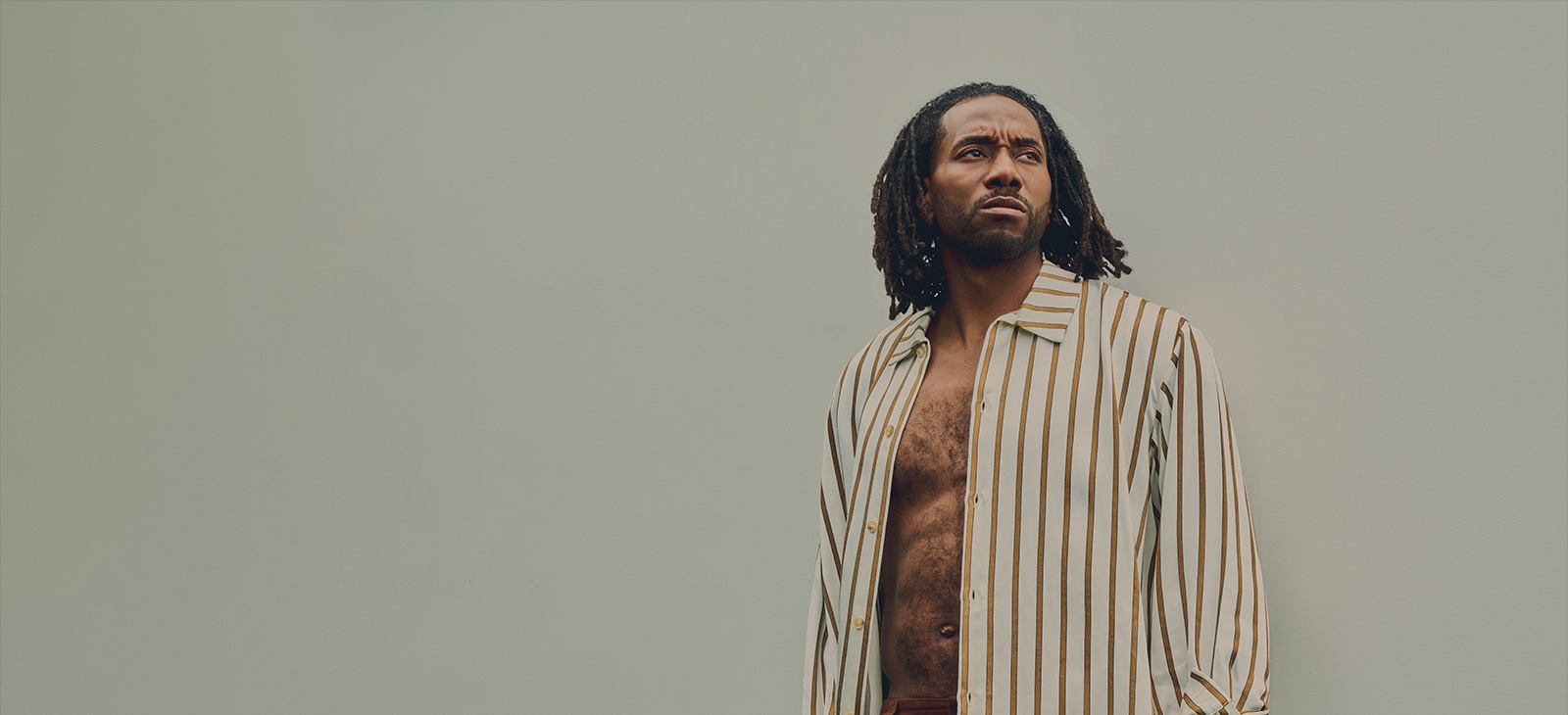
Everyone Thinks They Know Kawhi Leonard. They’re Wrong.
NBA champion Kawhi Leonard discusses philanthropy, health, family, and what's beyond basketball in this exclusive Haute Living cover story.
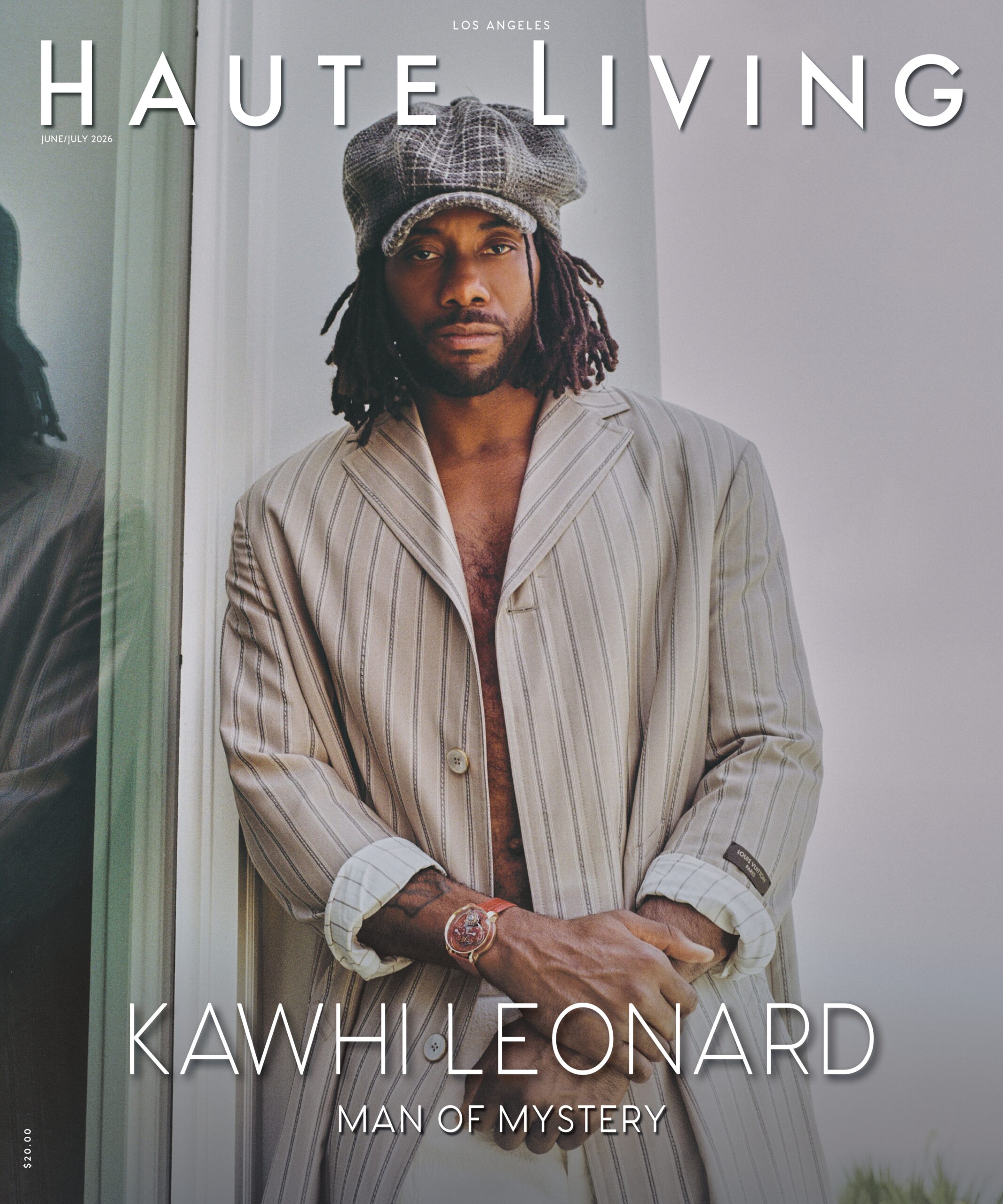
WATCH: Jacob & Co. Astronomia Art Tourbillon
Photo Credit: Juan Veloz
THE MOST GUARDED MAN IN BASKETBALL HAS BEEN BUILDING SOMETHING EXTRAORDINARY. IT JUST SO HAPPENS THAT HE JUST NEVER TELEGRAPHS THE MOVE.
BY LAURA SCHREFFLER
PHOTOGRAPHY JUAN VELOZ
STYLING THE GRIGGS BROTHAS
GROOMING TARIA GROCE
SHOT ON LOCATION AT 610 ARKELL DRIVE, BEVERLY HILLS, 90210
LISTING COURTESY OF HILTON & HYLAND AND THE BEVERLY HILLS ESTATE, PRESENTED BY CHRISTINE HONG
The phrase is painted directly onto the court. YOU ARE STRONGER THAN YOU THINK. Big, bold, unapologetic — and for reasons I cannot fully explain, it immediately makes me think of Christopher Robin taking Winnie the Pooh’s hand and reminding him that he is stronger than he seems, braver than he believes, and smarter than he thinks. When I bring this up to Kawhi Leonard, he laughs politely and admits he knows the character but not the quote. He gets it immediately. The phrase isn’t just on this court, he tells me. It’s also painted on a court in Moreno Valley, California — the city where he grew up, where there was no roadmap, no former NBA player showing him the way, no insider explaining which decisions mattered and which ones could derail everything.
Two championships. Two Finals MVPs. Two Defensive Player of the Year awards. Seven All-Star selections. Seven All-NBA nods. A place on the NBA’s 75th Anniversary Team. One of the most accomplished two-way players in basketball history. Yet, here, talking about a court and a quote from Winnie the Pooh, none of that feels like the point.
When I ask him what he wishes somebody had told him at twelve years old, the answer comes immediately. “I wish I just had a foundation or somebody that was close to some type of college or NBA team,” he says. “It was kind of like learn as I go. You know, being young, being in Moreno Valley… dad’s far away. Not really in basketball like that.” Suddenly the courts make more sense. So do the free leagues he is building in Moreno Valley and the opportunities he is trying to create for kids coming up behind him. Leonard spent years figuring it out as he went. Now he is trying to make sure the next generation doesn’t have to.
“So if somebody was an NBA player or college player around the time I could get some guidance from, to make sure I’m on the right path,” he says, “that would have been amazing. But everything works out.” It is such a Kawhi answer. No bitterness. No what-ifs. Just an acknowledgment that the path was harder than it needed to be — and a determination to make it easier for the next kid.
Instead, he figured it out himself — through observation, repetition, and what turns out to have been a surprisingly intense hatred of losing. “I just cared about winning a lot,” he says. The understatement makes me laugh. Because a few minutes later he casually admits that he used to cry after losses. Not occasionally. Regularly. “Soon as the game over, if we lose, I’ll just start crying,” he says. Then he laughs. “Like, damn, we lost. I thought you supposed to win every game.” For all the mythology that has built up around Leonard over the years, there is something oddly endearing about the image of a young Kawhi genuinely believing that the entire point of sports was never to lose.
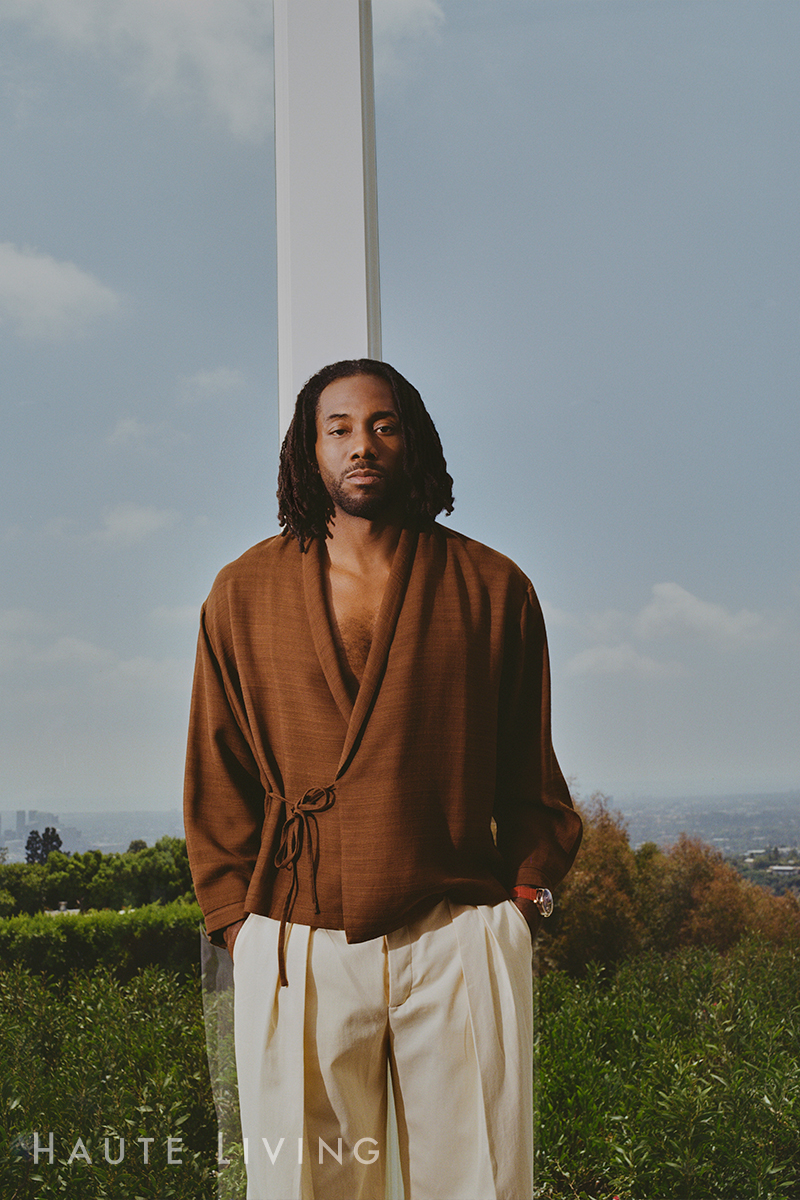
WATCH: Jacob & Co. Astronomia
Three Wise Monkeys Tourbillon
Photo Credit: Juan Veloz
The competitiveness never disappeared. It simply grew up. When I ask how he deals with losing now, the answer reveals everything about how his mind actually works. “We have so many games and the turnaround time — if I was crying, I probably wouldn’t be as good as I am,” he says. “Everything is a part of a process. The first game doesn’t mean we’re not going to win a championship.” He talks about it the way a long-game investor talks about a bad quarter: context is everything, and the only number that matters is the one at the end. “If my team is, whatever, five out of ten when the season starts, it’s about making sure that five gets to eight or nine,” he says. “That’s where I judge performance now — based on championships and progression of the team.” The kid who cried at eight years old is still in there. He just learned to aim the feeling at something bigger.
Now, when Leonard talks about discipline, he doesn’t frame it as sacrifice. He frames it as choice. “I’m not going to hang out with them today. I’m going to shoot jump shots. I’m not going to play video games today. I’m not going to a party.” He says it with the calm of someone describing their coffee order, which somehow makes it land harder. The formula sounds almost deceptively simple until you look at all of the accolades it has produced. “With anything, it takes consistency and discipline,” he says. “It’s about separating yourself from distractions.” In an era where visibility is so often mistaken for influence, Leonard became iconic by simply refusing to perform fame — and putting every hour he wasn’t performing it into becoming better than everyone else.
That same philosophy has found its way back to the Moreno Valley. The phrases painted across his courts — Have Fun. Play Hard. God Is Good. This Life Is Beautiful. You Are Stronger Than You Think. — are not branding exercises or charitable optics. “They all motivate me,” he says. “Those are quotes I live by.” And You Are Stronger Than You Think carries weight that goes well beyond the kids standing under it. “It’s a point to show you that it’s a marathon,” Leonard explains. “Just because it’s a hard time, don’t think you can’t go even harder or work harder… once you break through, that’s usually when greatness comes.”
Listening to Leonard talk about his home, where he played ball as a teenager, it is difficult not to think about the twelve-year-old version of himself — the one trying to figure it out alone, the one who wished somebody connected to a college or NBA program had been around to help guide him. The court feels less like a monument than a conversation between the two.
Rwanda came later. Leonard’s first trip to Africa brought him to a week-long Giants of Africa festival where children from 25 countries gathered to play basketball, learn to dance, and spend time together. Leonard rarely tells stories the way you expect him to. Ask most athletes about a trip like that and you’ll get a speech about perspective. Ask Kawhi Leonard and he starts with traffic. “It was crazy how people were driving in the streets,” he says. A few minutes later, he casually mentions meeting the president of Rwanda and playing basketball at his house. Then he pivots right back to the altitude. “About 75 degrees,” he says. “No mosquitoes.” Of all the things he could have remembered from his first trip to Africa, somehow the weather report feels like the most Kawhi answer imaginable. Still, one thing clearly stayed with him. “I’m grateful I went,” he says. More importantly: “We’re going to keep doing it. Throughout the world, really.” There is no grand speech attached to that statement. No dramatic declaration about changing lives. Just a simple promise to keep showing up. Listening to Leonard, that seems to be how most meaningful things happen.
The biggest surprise of our conversation arrives when I ask Leonard what is most fulfilling in his life right now. Given everything we have spent the last half hour discussing — the courts, the leagues, the animation projects, the production company — I am expecting the work to be the answer. It isn’t. “Just being around family and seeing my kids grow up,” he says, without hesitation. “What I’m teaching them — that brings me more fulfillment than any of this.” When I ask what the number one lesson is, he says: “Don’t fight each other.” I laugh. He doesn’t. Then he adds: “We are stronger together.”
Somehow the answer manages to be both completely ordinary and exactly right. Not every lesson needs to be complicated. Sometimes it is enough to teach people how to be on the same team.
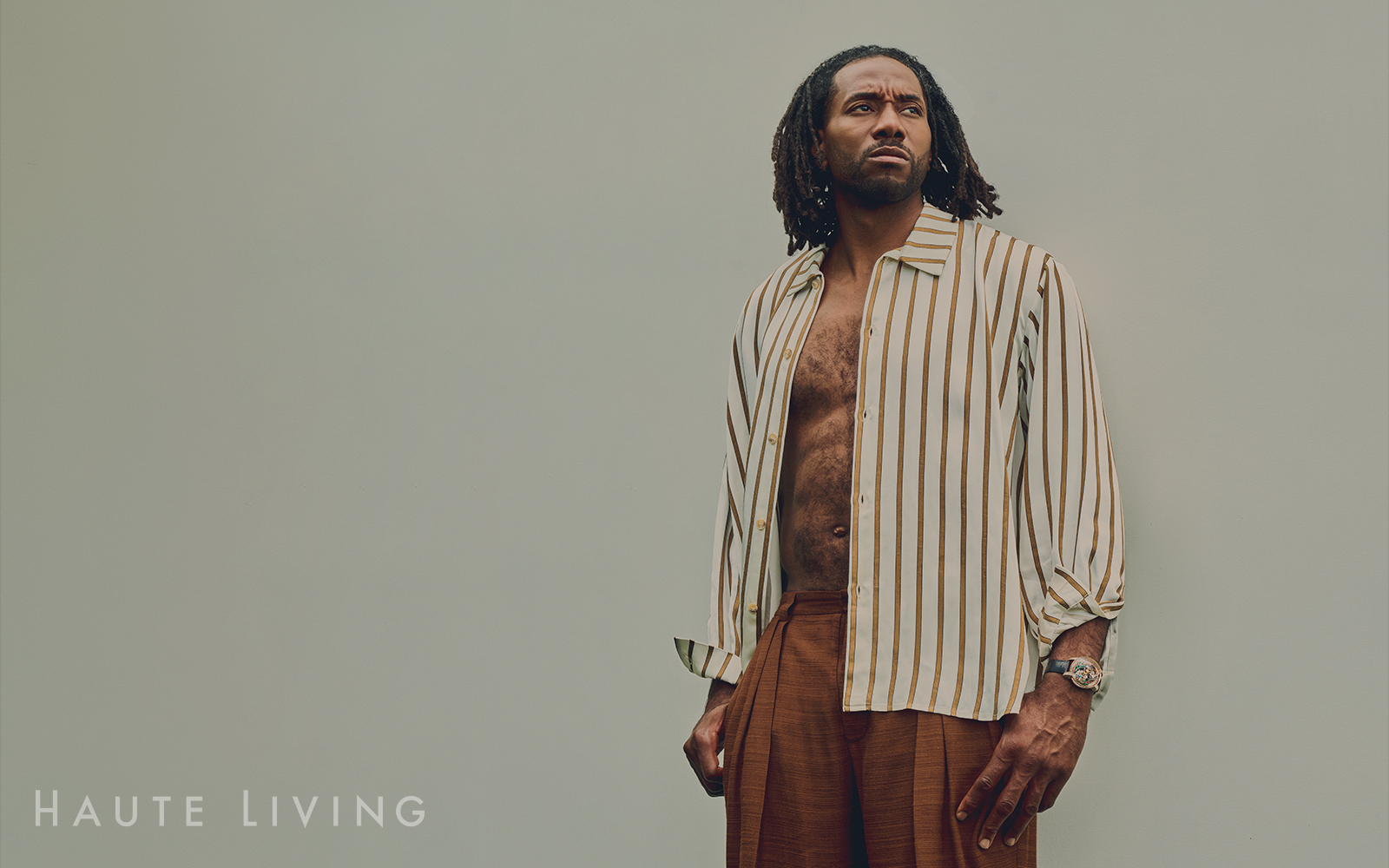
WATCH: Jacob & Co. Astronomia
Three Wise Monkeys Tourbillon
Photo Credit: Juan Veloz
If you had asked me before this interview what Kawhi Leonard wanted to talk about after basketball, animation would not have made the list. Neither would painters. Or lyricists. Or craftsmanship. And yet that is exactly where our conversation goes. “The time is now,” Leonard tells me when I ask about life beyond basketball. Not retirement, he is quick to clarify. Expansion. The focus that built a Hall of Fame résumé has widened. And what it has widened toward is far more interesting than I expected.
“Most people think I act how I play,” Leonard says with the ghost of a smile. Maybe that’s true. Or maybe we’ve all spent so much time trying to decode Kawhi Leonard that we forgot to pay attention to what actually interests him.
The stoicism, it turns out, has an origin story. “I think it started off just being on the Spurs,” he says, “just seeing the older vets and how they carried themselves and what they wanted their players to act like on the floor.” The Spurs, under Gregg Popovich, famously ran one of the most understated franchises in professional sports — a culture shaped in no small part by Tim Duncan, who won five championships and retired without ever seeming particularly interested in being celebrated for it. Leonard was young and paying close attention. “Once I started doing that, they kind of put me in the Tim Duncan thing because they wanted me to be the face of the franchise,” he says. “And I don’t know, it just kind of carried on from there.” What started as institutional absorbed itself into something personal — until the composure was no longer about fitting a mold but about genuinely not needing the external noise to confirm anything.
It is also one of the few moments in our conversation where Leonard actively pushes back on a public perception. The quietness, the composure, the refusal to perform emotion — people often talk about those traits as though they appeared out of nowhere, as though Kawhi Leonard arrived in the league fully formed and simply declined to participate in everything around him.
Leonard sees it differently. Those qualities were learned. Observed. Absorbed from the veterans around him, refined over years, and then — gradually, without announcement — they simply became part of who he was. “I just usually put my head down and work,” he says. In a sports media landscape built on reaction content and manufactured controversy, that approach has always looked like avoidance. Sitting across from him, it feels less like avoidance and more like someone who figured out a long time ago that not every thought needs to be shared.
Leonard recently launched his own production company and is now actively developing projects ranging from commercials to animation. One of his current focuses is executive producing and directing his own New Balance campaign — which he speaks about less as a branding exercise and more as a long-overdue opportunity to tell his story on his own terms. “They gave me the green light to do my campaign,” he says. “So I’ll be shooting the commercial, being executive producer and director, and making sure I tell my story right.” That last part sticks with me. Making sure I tell my story right. Because for years, an awful lot of people have spent an awful lot of time trying to explain Kawhi Leonard. Coaches. Teammates.
Commentators. Fans. Entire television panels dedicated to deciphering what he might be thinking. Leonard, meanwhile, was mostly busy doing the work.
The stories he actually wants to tell are not about himself — they are about craft, process, the hidden discipline behind mastery. “I’m working on an animation right now to tell short stories about craftsmanship,” he explains. “Different avenues of athletes, entrepreneurs, artists… painters, lyricists.” It traces back, he says, to not seeing enough of a different perspective on life being shown — to stories that simply aren’t told that much.
Of all the things Leonard says in our conversation, this may surprise me most. Not because athletes aren’t creative — plenty are — but because Leonard’s version of creativity sounds remarkably similar to his version of basketball. His own creative circle includes friends who fell into fashion, music production, painting, clothes. “We all just talk about the journey,” he says. “How we get inspired throughout the day and how we see the day differently. Beauty is in the eye of the beholder. Everybody’s day is seen different depending on their craftsmanship or their job.”
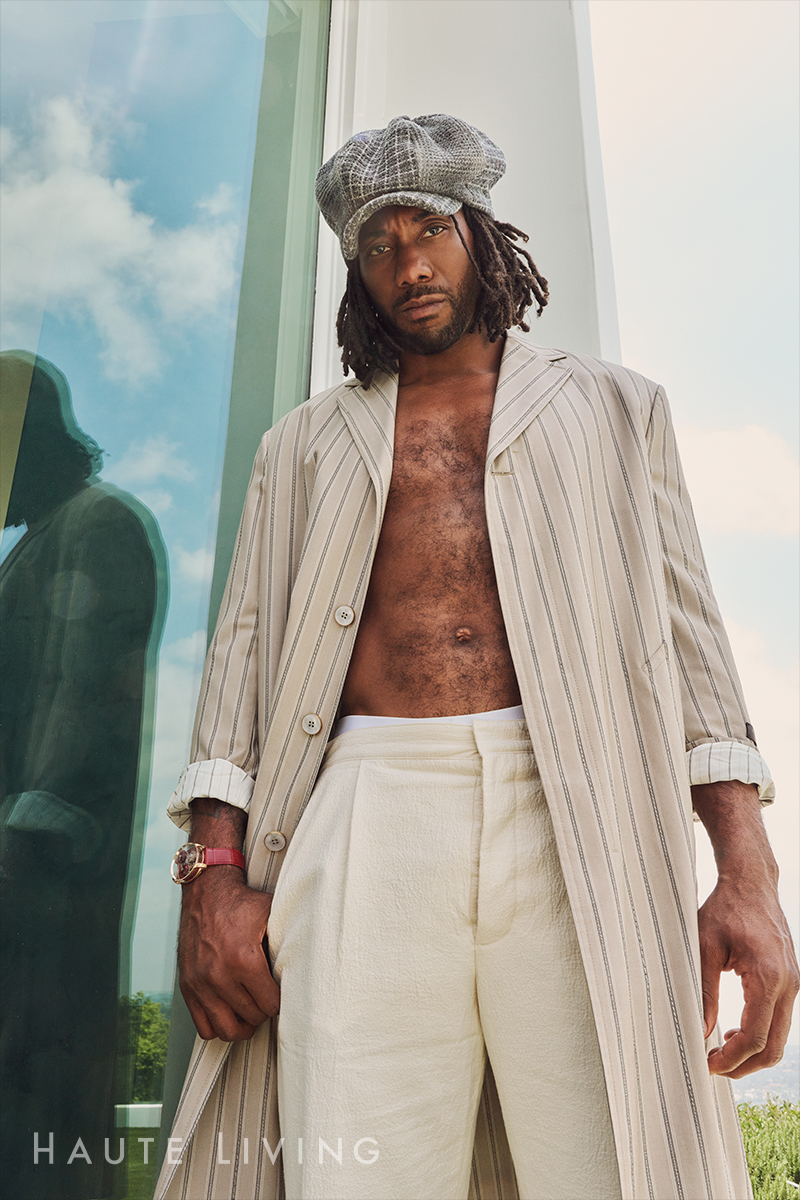
WATCH: Jacob & Co. Astronomia Art Tourbillon
Photo Credit: Juan Veloz
Because what Leonard is describing — the way a painter sees a day differently than a producer, the way a lyricist moves through the world differently than someone who makes clothes — is the same argument he makes about basketball. Repetition builds something. Discipline protects it. The thing you make, whether it is a jump shot or a piece of music or a line of clothing, is the accumulation of thousands of private moments nobody else sees.
Leonard understood this about basketball before he understood almost anything else. The crying after losses, the skipped parties, the extra jump shots at midnight — all of it was part of the work. The same way a painter returns to the canvas. The same way a producer goes back into the studio at 2am not because anyone asked them to but because the thing isn’t right yet and they can feel it. “Just showing different avenues,” he says of the animation project. “How like friends got into fashion, one of my friends how they got into music.” He pauses. “How we see the day different, really.” What he is building now — the production company, the animation, the New Balance campaign on his own terms — is not a departure from the athlete. It is the athlete, applied somewhere new. The same instinct that made him stay in the gym when everyone else left is the same instinct that makes him want to tell stories nobody else is telling. He just finally has the time and the platform to do it.
When I ask what he values now that he wouldn’t have understood ten years ago, the answer arrives in two words. “Personal time,” he says. Classic Kawhi — the most compressed possible answer that somehow contains everything. The man who spent a decade eliminating every distraction in pursuit of greatness has arrived at the other side of it and found that the thing he wants most is simply space. Time that belongs to him. Time that doesn’t have to produce anything.
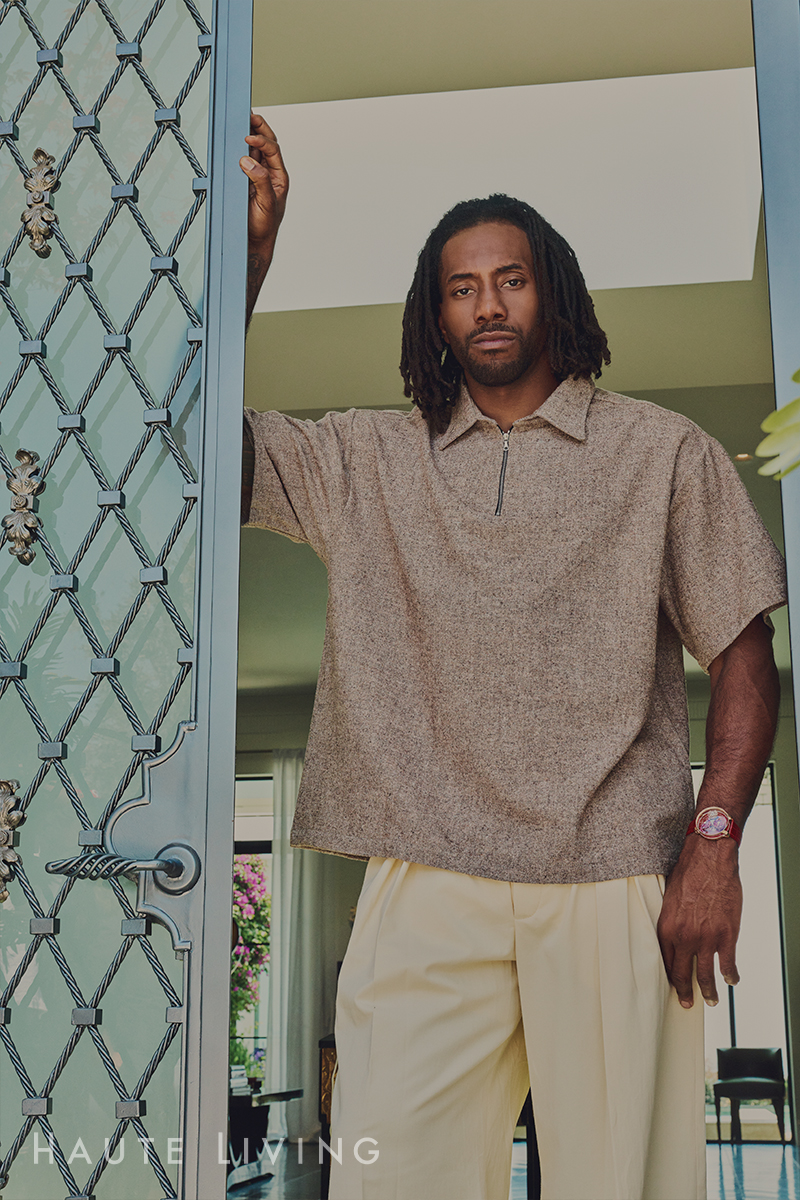
BOTTOM: Kingand Tuckfield
WATCH: Jacob & Co. Astronomia Art Tourbillon
Photo Credit: Juan Veloz
That same obsession now extends to how he thinks about his body — though not in the way you might expect from someone whose physical availability has generated more television panel debate than perhaps any other topic in recent NBA history. The methodology is rigorous: blood testing to identify food sensitivities, ice baths, red light therapy, saunas, stretching, weightlifting, biomechanics work. Not trends. Tools. But when I ask him what he considers the greatest luxury in life, his answer reframes the entire conversation. “Health,” he says, without a pause. “You can’t do nothing without health. As soon as somebody gets sick, they’re just in a bed, or you’re told you can’t do certain things.” Then he goes somewhere more personal: “Whoever it is — your loved ones — you want them to be able to walk, run, talk, spend time with you.” For a man who has spent years having his own health discussed in the abstract by people who have never met him, there is something quietly powerful about hearing him locate the meaning of it not in performance, but in presence. In being there.
That word — presence — keeps surfacing in different forms throughout our conversation. He talks about peace the same way: not as an absence of feeling, but as a form of protection. “I think it’s about being at peace,” he says. “Knowing the outcome is not going to affect your peace.” The calmness is not accidental; it is cultivated, learned, and protected. “No game is perfect. No season is perfect,” he says. “If you live on the highs and lows, you’re going to have a stressful season.” Or, he doesn’t add but clearly means, a stressful life.
Maybe that’s the thing people have misunderstood about Kawhi Leonard all along. The silence was never the story. It just happened to be the easiest thing to talk about. The real story was everything happening alongside it: the courts in Moreno Valley, the free youth leagues, the production company, the animation projects, the opportunities he is trying to create for kids who are standing where he once stood. None of it announced with fanfare. None of it performed for an audience. Just built, piece by piece. Kawhi Leonard has spent his entire career teaching the world not to mistake silence for absence. Some people lead loudly. Others build quietly — court by court, lesson by lesson, story by story — until one day you look up and realize what they’ve created was there all along. Stronger than you think.
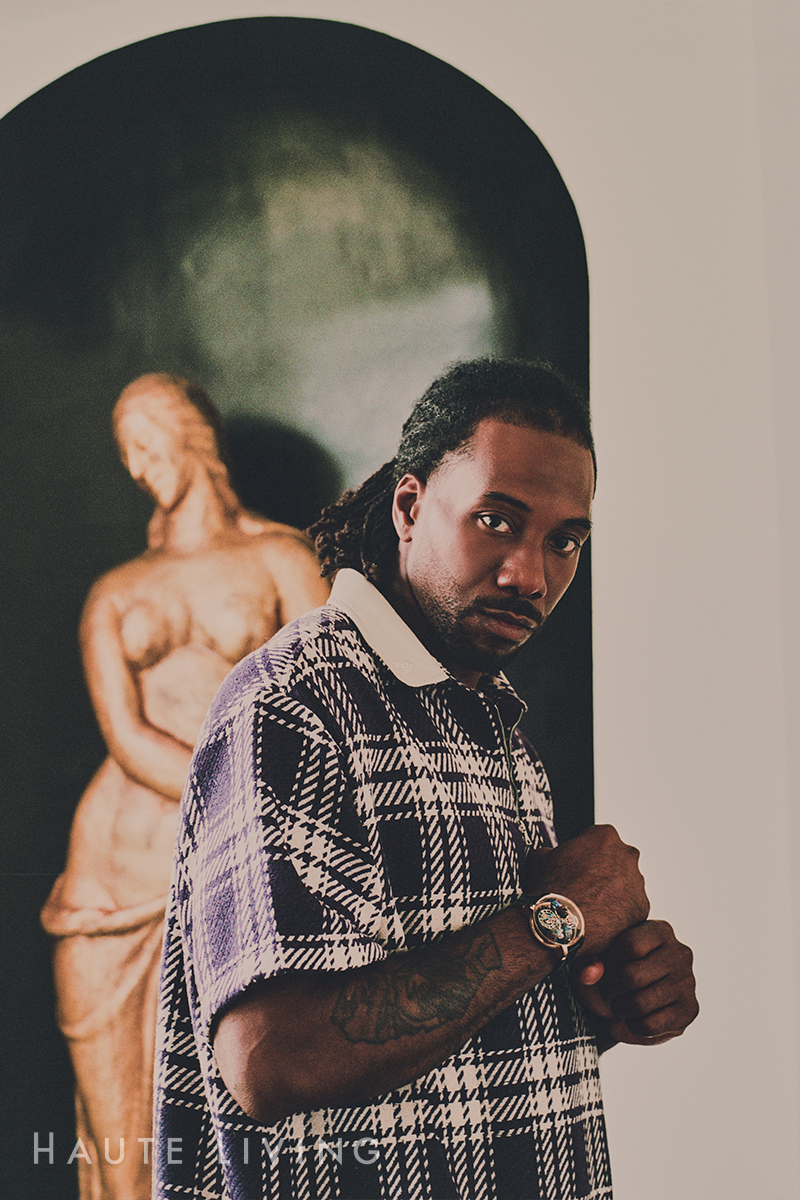
WATCH: Jacob & Co. Astronomia
Three Wise Monkeys Tourbillon
Photo Credit: Juan Veloz
Frequently Asked Questions
When and where did this event take place?
Read the full article for specific dates, venue details, and highlights from this exclusive gathering.
Who attended this event?
Haute Living events attract celebrities, industry leaders, and luxury lifestyle enthusiasts. The article features notable attendees and key moments.
How can I attend future events?
Follow Haute Living on social media and subscribe at hauteliving.com for updates on upcoming events and exclusive gatherings.
What other events does Haute Living cover?
Haute Living covers exclusive events across fashion, real estate, dining, automotive, and entertainment in major cities.
Related Articles
Latest from Haute Living

The 7 Best Luxury Restaurants in Brooklyn Right Now
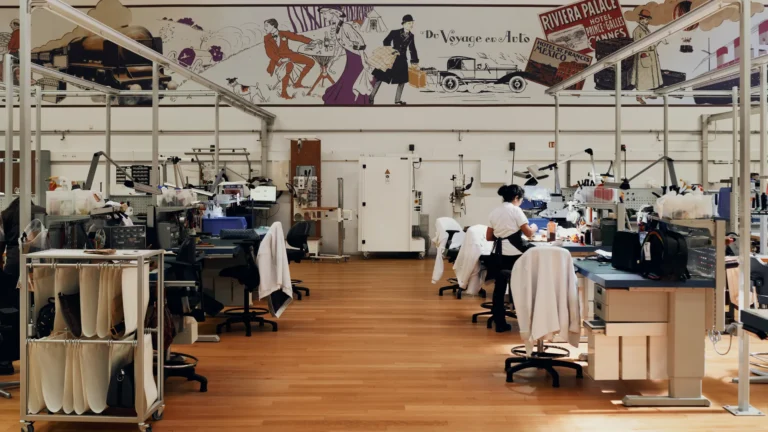
Inside Louis Vuitton’s Care & Repair Atelier, Where Nearly 600,000 Pieces a Year Get a Second Life
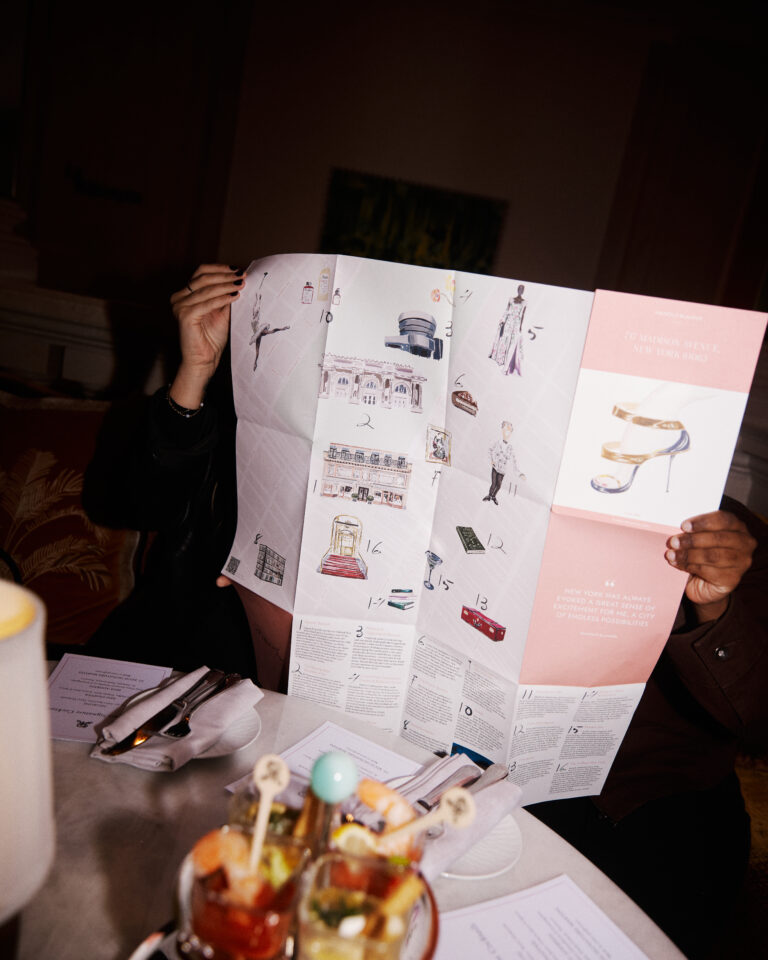
The Hautest Walking Tour: A Chic Ensemble Discovered Manolo Blahnik’s New York Map