The Fire Doesn’t Lie: The Story Behind Miami’s 1986 Steak House
Inside Miami's 1986 Steak House, where Argentine fire cooking, Tres Monos cocktails, and family legacy redefine the steakhouse experience.

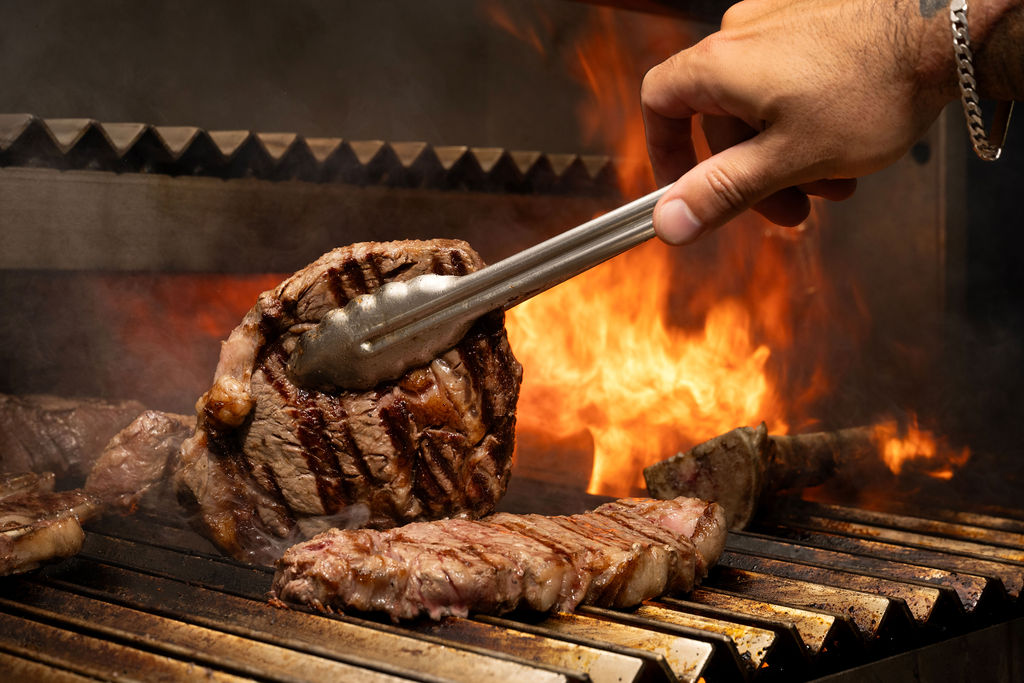 Photo Credit: Liz ClaymanIn Miami’s Coconut Grove, a son builds his first restaurant, a chef lets the flames do the talking, and cocktails by Tres Monos, the best bar in South America, set a high-energy vibe.
1986 Steak House opened in Miami’s Coconut Grove earlier this month, and it has already done something I didn’t entirely expect: it made me feel something. Not impressed — though it is impressive — but actually moved, in the way that only happens when a room has been built with conviction, not a mood board and a budget. The seven-ton bar top. The Italian plaster walls. The cobblestone floors that dissolve into the outdoor promenade so seamlessly that you genuinely can’t tell where the restaurant ends and the neighborhood begins. This is not a space that’s trying to be anything. It already knows what it is.
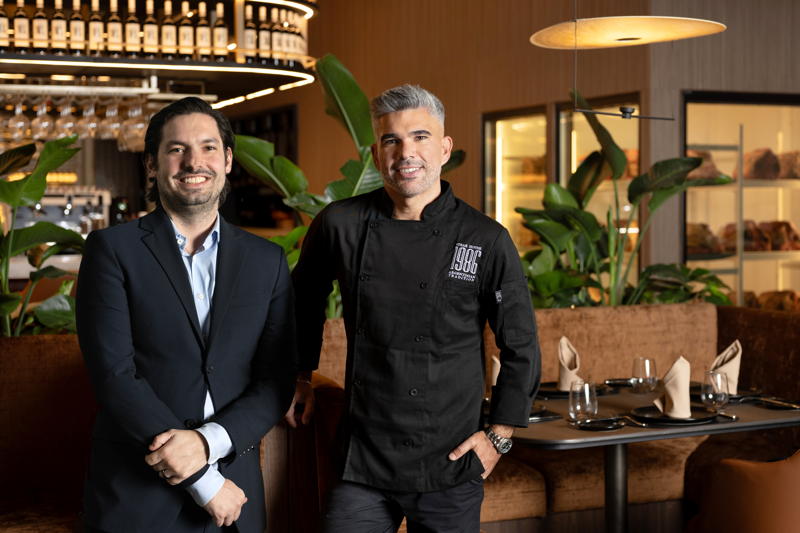 Photo Credit: Liz Clayman
The name is a year. And like most years that get named, 1986 carries more weight than a calendar page has any right to hold. For Stefano Cremasco — Mexico City-born, Argentine by descent, Miami by choice, USC MBA by accomplishment, and devoted Kinder Buenos enthusiast by his own admission — it’s personal in the specific way that only years involving both a World Cup and your own family history can be. Argentina won in Mexico in 1986, a defining national moment that landed exactly at the intersection of Cremasco’s dual heritage. His father Oscar opened the group’s first restaurant, Cambalache, that same year.
“I don’t expect every guest to know that story,” Cremasco tells me. “What matters more is what they feel.”
It’s a disarming thing to say, because it implies a confidence in the work that doesn’t need the backstory propping it up. And he’s right — you don’t need to know any of it to feel the room working on you. But knowing it makes the whole thing land differently. It always does.
* * *
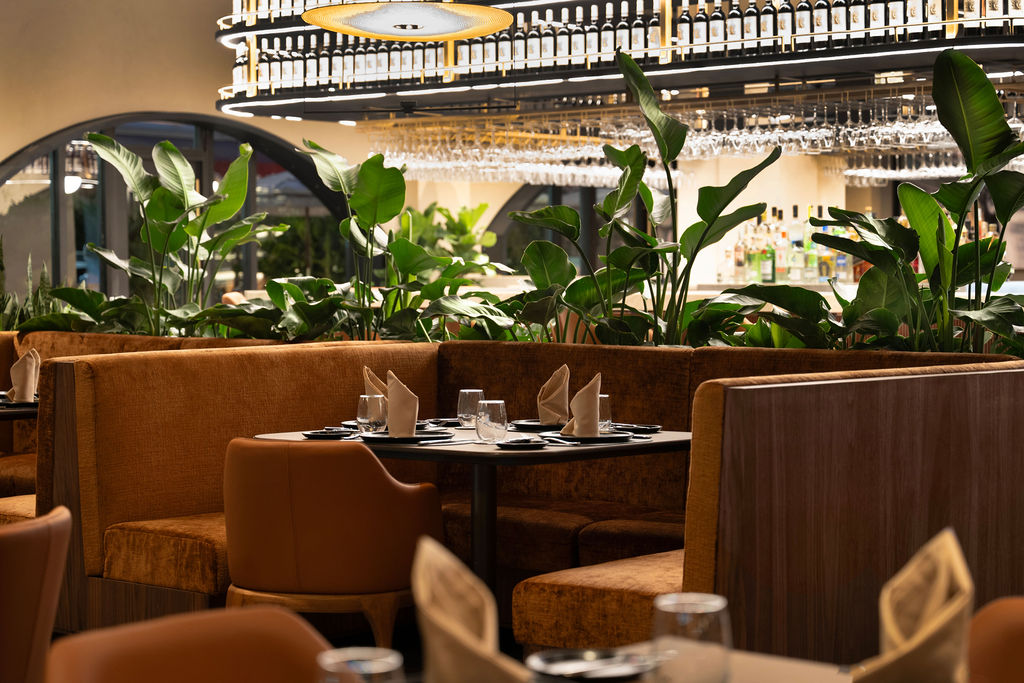 Photo Credit: Liz Clayman
Cremasco grew up in restaurants, which is different from growing up around them. He was sneaking into kitchens before he could see over the pass line. Working the POS system at 14. His father never forced the business on anyone; his siblings chose different paths entirely. For Stefano, it just was. “I didn’t have a eureka moment,” he says. “I just always felt comfortable in that environment.” He adds: “I can’t tell you exactly when it became mine. But I can tell you that it does.”
What shaped him most wasn’t the success — it’s easy to look at 18 restaurants and F&B businesses across three countries and see the outcome. What’s harder to see, and what you can only absorb by growing up inside it, is the consistency. The showing up. The same standard, every day, across four decades, no exceptions. “Effort is the constant,” he says. “It’s something you can control every day.” Simple. Almost obvious. And yet: how rarely anyone actually operates that way.
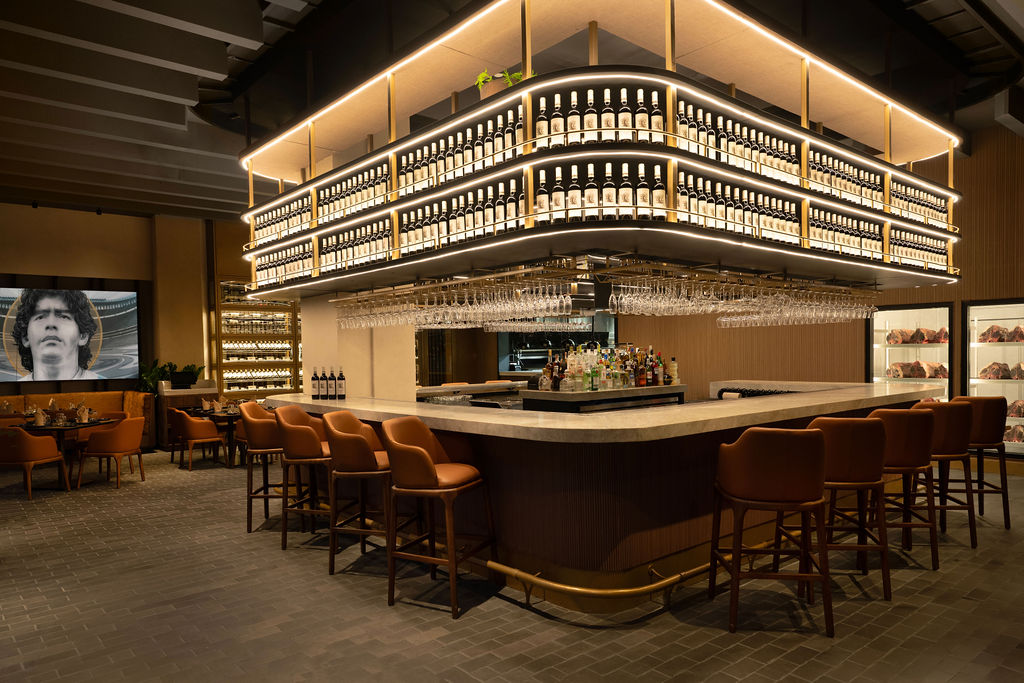 Photo Credit: Liz Clayman
It took three years to bring 1986 Steak House from idea to table. The spaces that didn’t work. The logistical headaches. The financial uncertainty. The moments — and he’s honest about this, which I appreciate — where it wasn’t entirely clear if it was going to come together at all. “There were definitely points where you question everything,” he says. “Timing, decisions, whether you’re pushing too hard in the right direction.” Some things came down to persistence. Others felt like they aligned exactly when they had to. He walked past the Mayfair Plaza and Mayfair House Hotel & Garden repeatedly, drawn to it in that persistent, low-grade way, the corners always taken. Then one wasn’t. He went to see it the next day. Standing inside, looking up at those ceilings, he was already imagining the floor-to-ceiling wine cellar.
When you know, you know.
The shift from son to partner — building something together with his father rather than under him — required its own adjustment. “When you shift from being a son to being a partner in a project, there’s an adjustment on both sides,” he says. “We’ve had moments where we had to step back, listen, and recognize the value in each other’s perspective.” A lot of what gives the room its groundedness comes from his father — “a layer of old-school hospitality and attention to detail that only comes from doing this for decades.” He says he’s grateful, and you believe him, because it doesn’t sound like the thing you say. It sounds like the thing you mean.
* * *
 Photo Credit: Liz Clayman
The kitchen belongs to Executive Chef Marcelo Daguerre, and if Cremasco is the concept’s architecture, Daguerre is its live wire. Uruguayan, born in Montevideo, shaped early by a country whose grilling tradition is less technique than religion — his grandfather had a bakery, his uncles had restaurants, and his father presided over asados on weekends with the quiet authority of someone who understood that fire and family are not separate things. “My earliest connection to fire comes from my father,” Daguerre says. “Since I was a child, we always shared asados, weekends around the fire. That’s where I started to understand, without realizing it, how meat behaves and how heat transforms it.”
He refined that intuition at the Hotel Conrad Punta del Este, under Uruguayan grill masters who treated live fire as a language, and later under Chef Junior Durski, before moving through Montevideo, then Mexico, then landing in Miami in 2015. He has visited 18 countries, draws particular inspiration from Spain, Italy, and the Uruguay he never quite left behind. He loves soccer. He loves hosting dinners around a grill with good wine. He is, in the most precise sense of the term, a man who was always going to end up here.
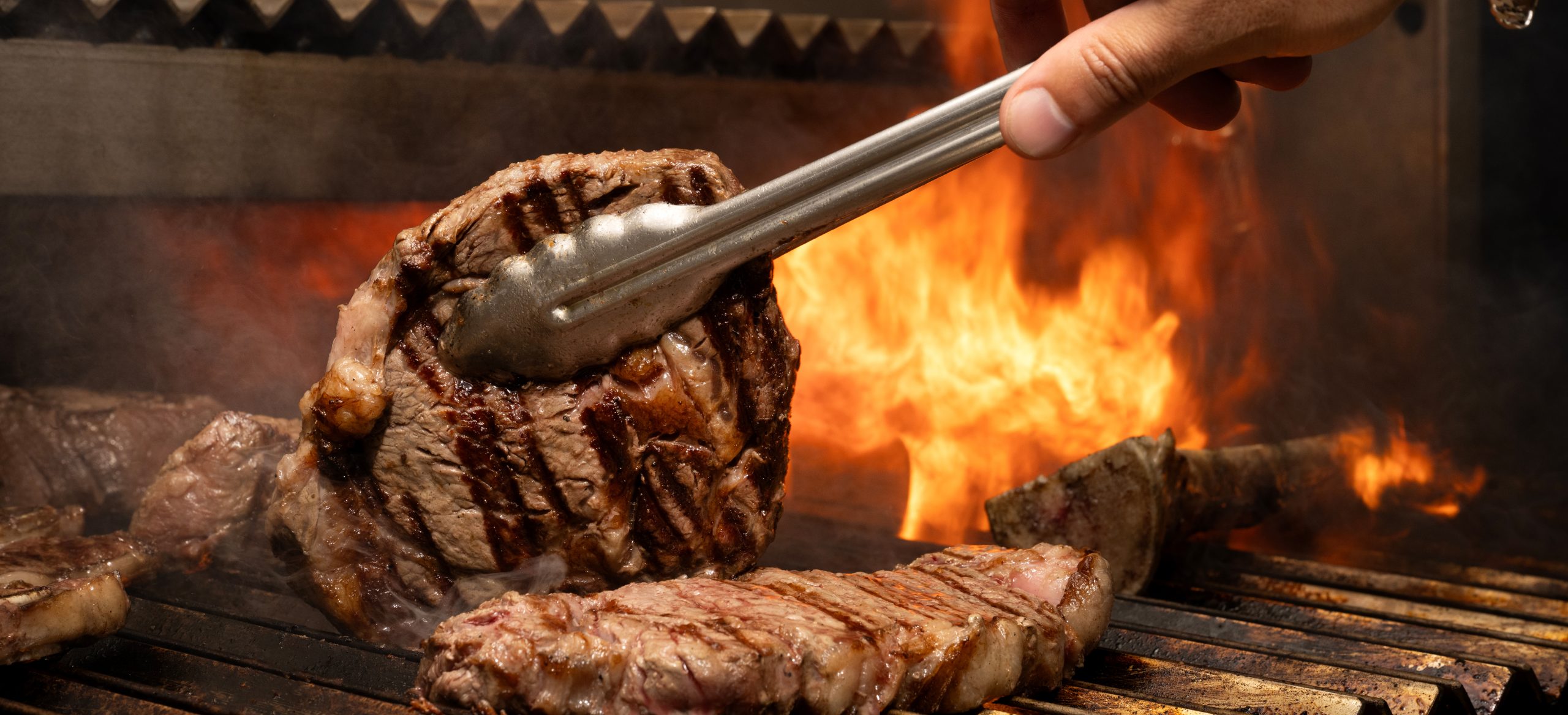
At 1986 Steak House, he works with just salt and live flames — Argentine, American, and Japanese beef, treated with the kind of restraint that, in a world that rewards visible complexity, feels almost radical. “There’s nowhere to hide,” he says, without any detectable anxiety about that. “Fire doesn’t forgive. But it doesn’t lie either.” A thermometer gives you a number. Fire gives you living information — texture, tension, the exact moment something shifts. It’s sensory, which makes it intimate — and suddenly, the gaucho and the gourmand are on the same ground.
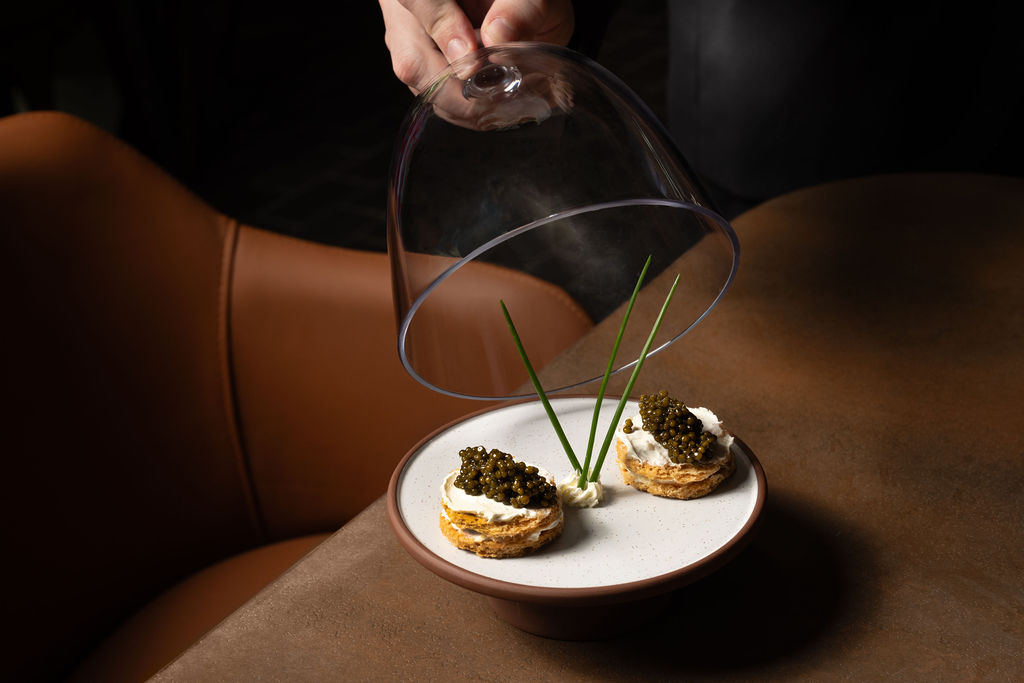 Photo Credit: Liz Clayman
(I did ask him: if a gaucho from the Pampas walked in tonight and ordered the A5 Kobe, would he respect what you’re doing — or think you’d lost the plot? Daguerre doesn’t miss a beat. “He would probably look at it with skepticism at first,” he says. “But respect comes when there is truth in the product. Fire and meat speak a universal language. When done right, they don’t need explanation.” I thought about this for longer than I expected to.)
Being Uruguayan and cooking Argentine food in Miami could create tension for a lesser chef. Daguerre thinks of it as an advantage. “I come from the South, where fire and meat are part of life, but I’m not confined to a single identity,” he says. “Miami pushes you to mix, interpret, and evolve. It allows me to respect the origin without being limited by it.” Which is a more elegant answer than the question deserved.
The charcoal-grilled foie gras shouldn’t work. It does. It came from curiosity — Daguerre wanted to bring a notoriously delicate product directly to fire, and the first attempts were, by his own account, very much a learning process. The version that exists now found the balance between heat, fat, and smoke without breaking the product, and it is unlike anything I’ve had at a steakhouse. The caviar arrives atop alfajores — the kind of audacious Argentine-ness that makes you want to thank whoever made that decision. The 40-day dry-aged porterhouse, aged in-house, makes other steakhouses feel like they’re playing a different sport.
I asked Daguerre which dish on the menu he thinks guests will overlook, the one he’s quietly proudest of. It’s the question he’s clearly been waiting for someone to ask. “Usually the simplest-looking dish,” he says. “The one that doesn’t seek attention. But often it carries the most technical depth and the most work behind it. And very often, it’s the most honest one.” He won’t tell me which one. I respect it.
* * *
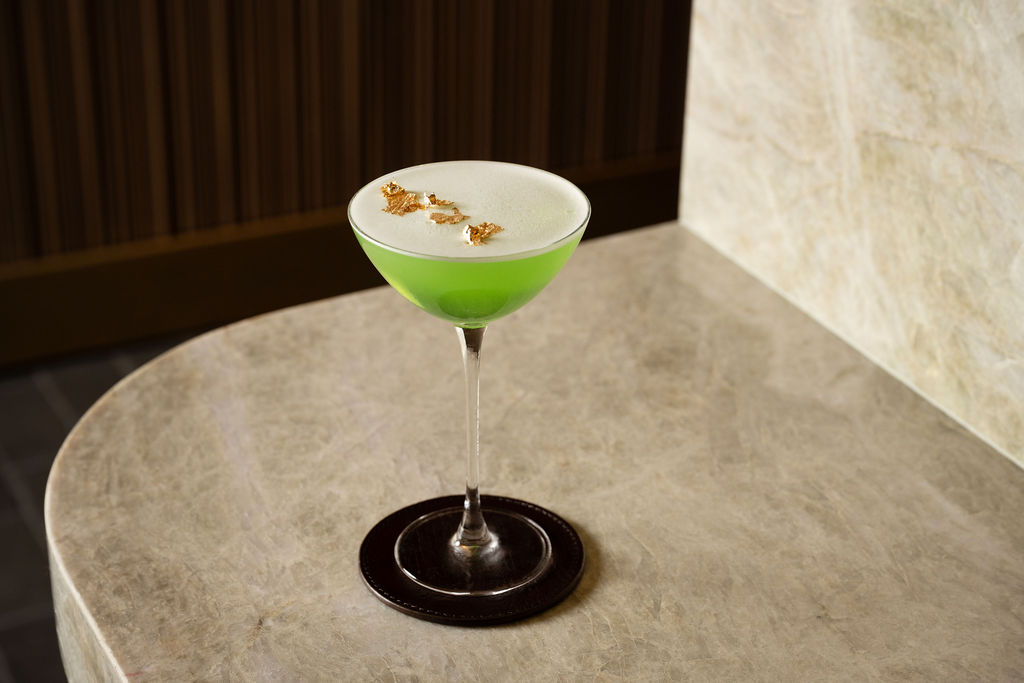 Photo Credit: Liz Clayman
The cocktails are by Tres Monos — Buenos Aires, the best bar in South America, No. 10 in the world — and the origin story of this collaboration is, I think, my favorite thing about Cremasco. He went to Tres Monos on a trip to Buenos Aires and loved it immediately: the energy, the punk rock feel, the sense that someone was doing something genuinely their own. Later, developing the cocktail menu for 1986 Steak House, the idea surfaced. “At the time, it honestly felt more like a thought than something with real legs,” he says. He sent an email. He did not expect to hear back.
He heard back.
Bar Manager Agostina Gerling relocated from Buenos Aires to Miami to oversee the program herself, which tells you everything about how seriously both parties are taking this. The Chimi Highball — Johnnie Walker Black, pineapple, honey, chimichurri, ginger ale — sounds like an experiment, drinks like conviction. The Matetini (Hendricks, vermouth, huacatay, mate, fino sherry) is where the Argentine DNA of the whole project becomes impossible to miss. These are not bar snacks. They are a perspective.
What makes Tres Monos feel right here isn’t prestige — it’s alignment. “We speak the same language when it comes to what matters in hospitality,” Cremasco says. And there is a tension that works beautifully in the room: the controlled, quiet-power energy of a serious steakhouse against the irreverence and creativity Tres Monos brings. Together, they create contrast. The kind that keeps a night from feeling static. The kind that makes a room evolve.
* * *
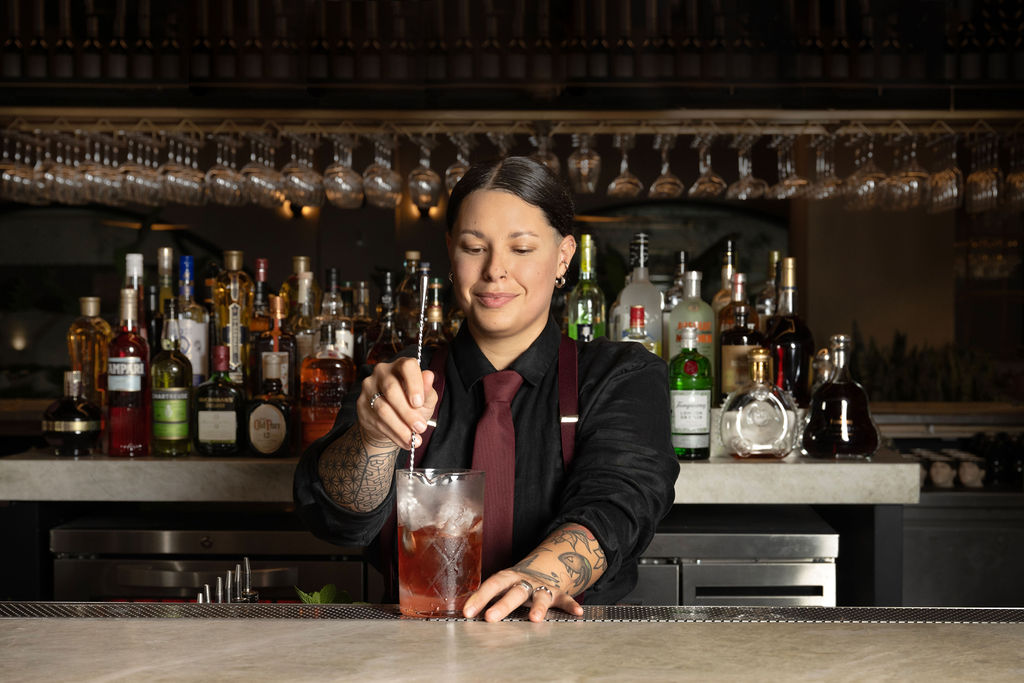 Photo Credit: Liz Clayman
The wine list runs 200 bottles, 18 by the glass, and leans heavily Argentine — including 20 wines from the Cremasco family’s own Mendoza winery, a project that began in 2007 through a relationship with the Pescarmona family and has since moved through three distinct expressions: Hileras del Sol, Amicorum, and the more refined Escondite. The obvious pairing is malbec to marbled beef, obvious for good reason. But Cremasco’s current obsession is Patagonian Pinot Noir with leaner cuts, and following his logic through a second glass is a very good way to spend forty-five minutes.
Which brings me to sobremesa.
The Argentine practice of staying — genuinely staying, not lingering politely before the check arrives — after the meal is technically over. Another drink. Another hour. A conversation that has nowhere to be. 1986 Steak House is built for this in a way that most American restaurants, with their barely concealed urgency around table turns, are not. “It’s not the end of the meal,” Cremasco says. “It’s part of it.” No time limits. No pressure. The room designed to hold you rather than move you along. It works because it’s intentional — not a side effect of the hospitality, but the point of it.
* * *
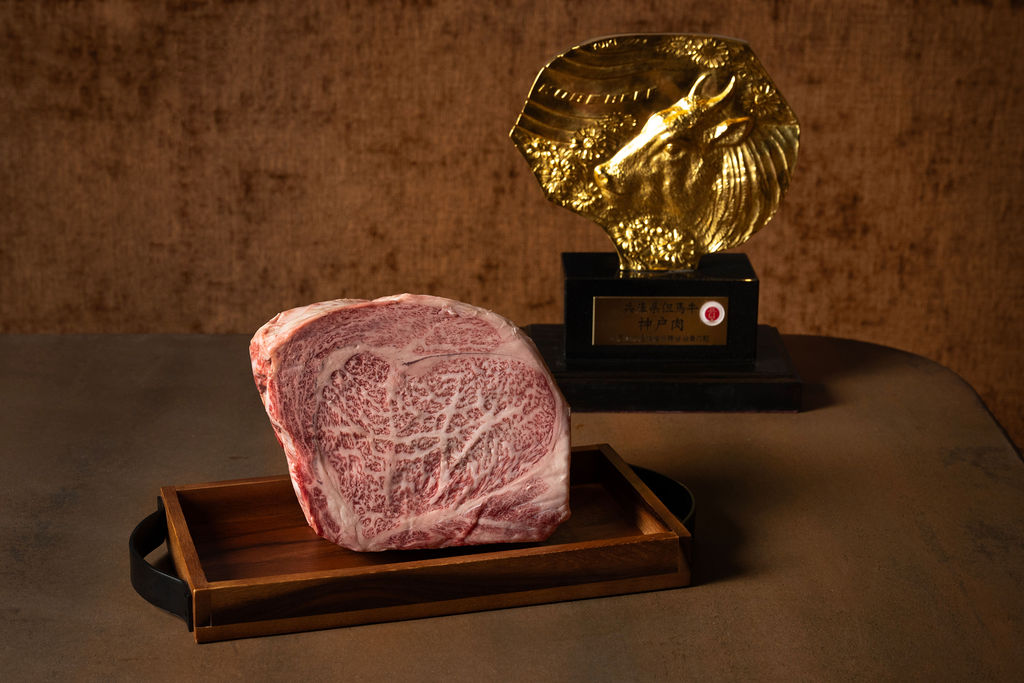 Photo Credit: Liz Clayman
What 1986 Steak House ultimately is, is a love letter written in three languages: the language of a son building his first thing in the long shadow of a 40-year legacy and finding, somewhere in the construction, that it’s actually his own; the language of fire, which is the only one that doesn’t permit dishonesty; and the language of a year that decided to mean something.
For one particular Mexican-Argentine family, 1986 was the point at which everything — soccer, restaurant, wine, heritage, future — converged. The rest of us just get to walk into what it built.
Guests won’t necessarily know any of that when they walk in. The fire will already be lit. The room will do its thing.
And they’ll feel it.
Cremasco said so himself. Standing in that space, under the ceilings he recognized before he signed anything, I’m inclined to believe him.
—
1986 Steak House is located in Mayfair Plaza, Coconut Grove, Miami. Open daily for lunch and dinner. Visit 1986steakhouse.com
Latest from Haute Living

The Billionaire Bucket List for 2027 Includes a $100,000 Trip Fewer Than 500 People Take Each Year
The London EDITION Is Still One of Fitzrovia’s Best-Kept Open Secrets
The Gucci Jackie Just Became the Best Investment Piece in 2026