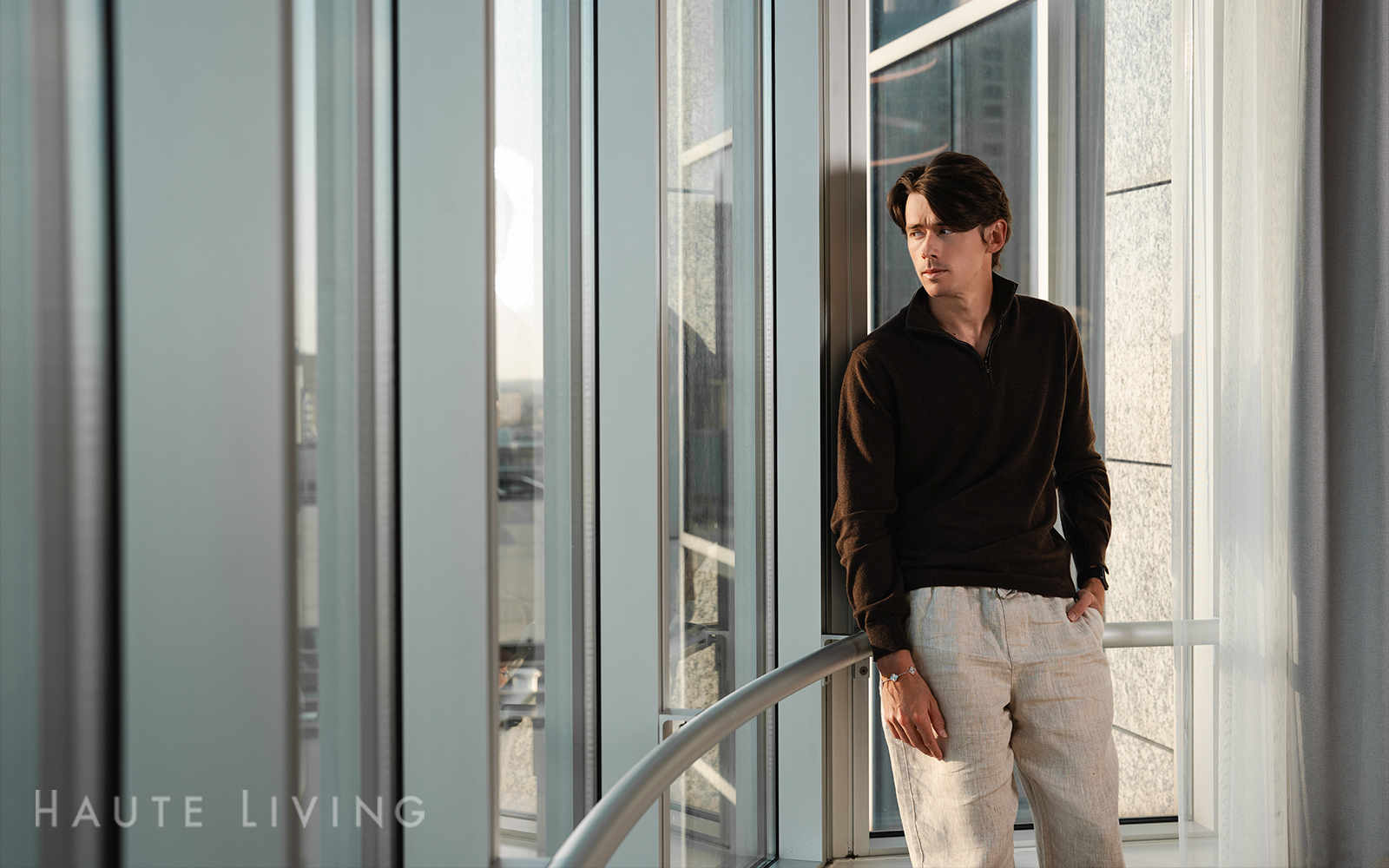
The Demon Within: Alex de Minaur’s Relentless Rise in the World of Tennis
Nicknamed “The Demon,” Alex de Minaur has built a reputation as one of tennis’ most relentless competitors. In this exclusive cover story, the Australian star opens up about discipline, drive, and life on the global tour.

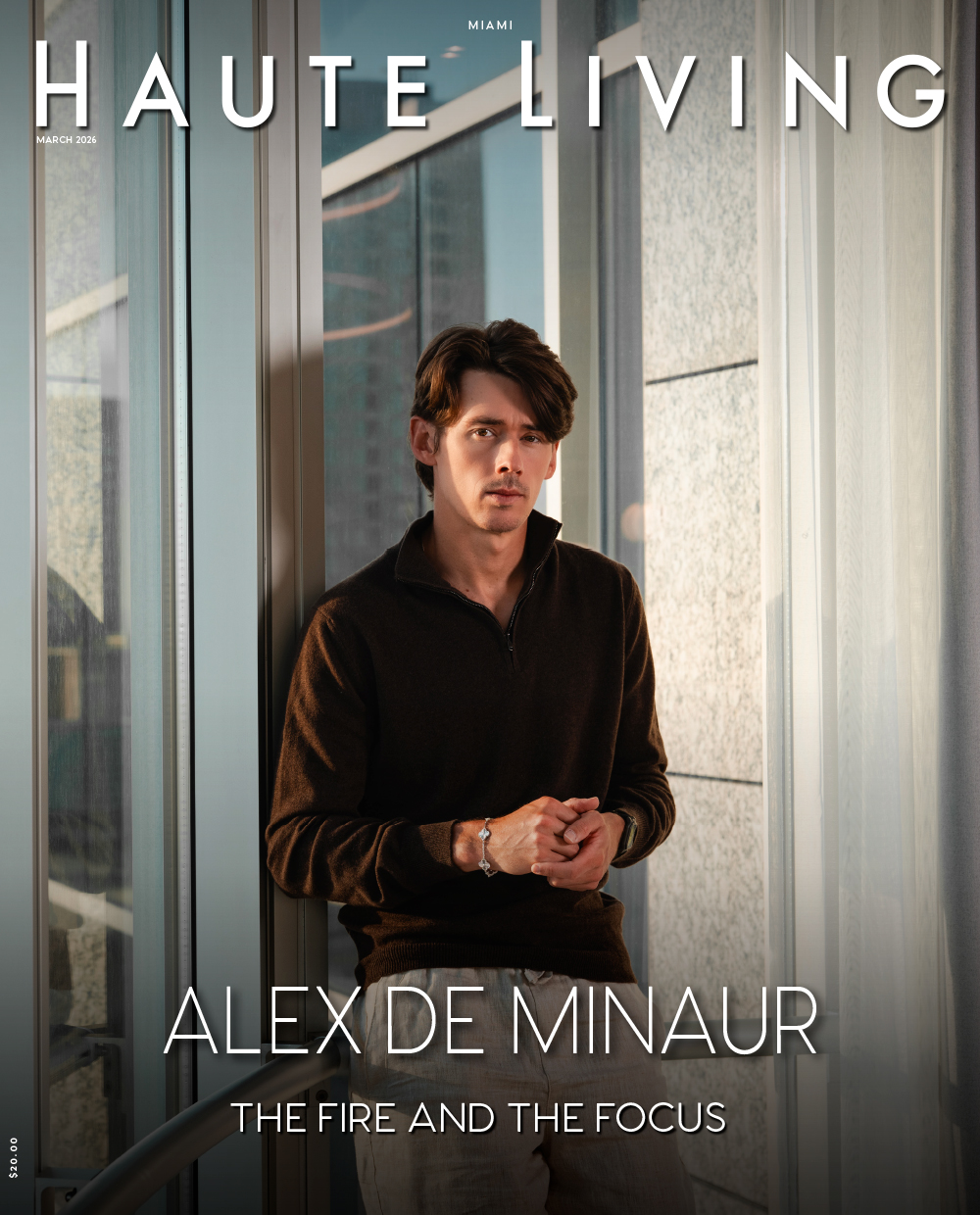 Photo Credit: Alyssa van Heyst
BY LAURA SCHREFFLER
PHOTOGRAPHY ALYSSA VAN HEYST
PHOTOGRAPHY ASSISTANT KATARIINA KARKI
GROOMING ROSA KIM BY CARMEN
SHOT ON LOCATION AT THE ROTTERDAM MARRIOTT HOTEL
The match ends, the handshake happens, the cameras linger — and somehow, the Demon is already gone.
It’s hard to explain to people who only know Alex de Minaur — known on-court by his nickname, “The Demon” — as a blur in motion: the elastic retrievals, the impossible sprints, the points he refuses to let die. On court, he can look like pure voltage: a player who can turn defense into offense in a single breath. But in conversation, he describes this shift with a kind of casual precision, as if he’s talking about changing his shoes.
“When I’m on court, you’ll see a lot of fire and passion,” he tells me via Zoom from The Netherlands, where he’s about to play in the Rotterdam Open (where he will go on to defeat Felix Auger-Aliassime and simultaneously land one of biggest titles of his career). “But as soon as I’m off the court, I’m the most chilled out guy that you’ll meet.”
That “as soon as” is the tell. Not eventually. Not after a decompression ritual. Immediately.
And maybe that’s the point: Alex doesn’t just play tennis — he toggles between identities. The Demon, you see, isn’t a vibe — it’s a setting; a switch he flips with the kind of intention most people reserve for major life decisions, except he does it multiple times a week, sometimes multiple times a day. One moment he’s a coiled spring of competitive intensity, the next he’s ordering a flat white and asking about the best coastal drive in whatever city he’s landed in.
The origin story is built into his name and the way Australians pronounce it: de Minaur — Demon. It’s a nickname that’s followed him since he was young, and he doesn’t reject it. He expands it, gives it dimension, lets it breathe. “It’s got a lot of different variations,” the current ATP No. 6 ranked player (at press time) says. His favorite? “I’m more like the speed demon emoj,” he declares. “A cheeky kind of grin that likes to have a good time.”
There’s something almost affectionate in the way he talks about it — not as a burden or a brand to maintain, but as a genuine part of himself that he’s learned to understand and deploy. But when he talks about it in the context of competition, it becomes something else entirely — an alter ego with a job to do, a version of himself built specifically for the demands of professional tennis. “It feels like that mindset and character that I bring on the court,” he explains. “I transform into that person. I get fiery.”
That transformation makes even more sense when you place it against the map of his life: Alex de Miñaur Román, born February 17, 1999, in Sydney, Australia, raised between two continents, two cultures, two ways of being in the world. His father, Aníbal, is Uruguayan. His mother, Esther, is Spanish. They met in Sydney, where Aníbal owned an Italian restaurant and Esther worked as a waitress. Together they raised six children — Alex, his two brothers Dominic and Daniel, and his three sisters Natalie, Cristina, and Sara — in a household shaped as much by movement as by tradition.
Alex spent the first five years of his life in the southern Sydney suburb of Carss Park before relocating to Alicante, Spain, a move that would quietly alter the trajectory of his career. He holds dual citizenship. He’s fluent in English and Spanish, with working knowledge of French. He’s a global citizen before he ever boarded the tour, carrying a blend of cultures that reads like a blueprint for his entire demeanor — cool surface, hot core.
 Photo Credit: Alyssa van Heyst
It’s the kind of thing you notice watching him, but it’s another thing entirely to hear him articulate it. When I bring up the contrast, he agrees without hesitation.
“Once I’m off the court, I conserve a lot of energy. Everything’s pretty laid back and easy, and that’s probably the Australian way.” And then, the flip: “Once I’m on the court, I’m focused, in the zone. I’ve got that fire and passion, that competitive spirit that a lot of Spaniards are known for.”
It’s not code-switching in the traditional sense. It’s something more fundamental: a genuine integration of two cultural identities that would clash in most people, but in Alex, have found a kind of symbiotic balance. The Australian in him knows when to let go. The Spaniard in him knows when to hold on. Together, they’ve created a player who can be ruthless without being consumed, intense without being brittle.
What’s true of his character is equally true of his game. The myth about Alex is that speed is something you’re born with — that he emerged from the womb with fast-twitch muscle fibers and an innate understanding of court geometry. But he’s strangely charming when he dismantles his own legend. His version is less “God-given gift,” and more “awkward adolescence plus repetition plus patience.”
“As a junior, I was very uncoordinated,” he says, and there’s no false modesty in it, just matter-of-fact honesty. “Growing up, I had probably the same size feet that I have right now [a size 11]. I had this size shoe at 13 and 14, which felt like wearing clown shoes at the time. I was not the best mover by any means.”
The image is almost comical: a teenage Alex, all limbs and oversized feet, trying to navigate a tennis court with the grace of a newborn giraffe. It’s hard to reconcile with the player who now glides across clay and hard courts alike, who makes impossible gets look routine, who has built an entire reputation on being faster than physics should allow.
He describes those teenage years as a period of heavy emphasis on the technique of moving: footwork patterns, split-step timing, weight transfer, recovery steps. Hours and hours spent learning how to do what now looks like instinct. It wasn’t glamorous. It wasn’t highlight-reel material. It was repetition until the body remembered what the mind had to consciously direct.
And then, his body caught up. The clown shoes became assets. “Eventually I grew into my body, and then all of a sudden, it was like night and day,” he recalls.
It’s a very Alex way to explain excellence: not as fate, but as proof of work. Not as destiny, but as the logical outcome of thousands of hours spent doing something that felt impossible until suddenly it wasn’t. There’s no mysticism in his origin story, no moment of divine intervention. Just a kid with big feet and a willingness to do the boring, repetitive work that separates the good from the great.
That same tone — measured, un-dramatic, almost allergic to hype — shows up when we talk about his rise through the rankings. Was last year a breakthrough? He doesn’t frame it that way. The word “breakthrough” implies surprise, a sudden rupture in the expected order of things. Alex sees it differently.
“I would classify last year as a confirmation of the year before,” he says. The year prior, he explains, was the big move — breaking into the top ten, asserting his place among the tennis elite, proving he belonged in conversations about the best players in the world. The following year was about showing it wasn’t luck. “It wasn’t a fluke that I deserved to be there,” he says, and the word he returns to is consistency: bringing results “all year round,” proving it to himself and everyone else.
 Photo Credit: Alyssa van Heyst
Consistency is an underrated virtue in tennis, a sport that rewards flash and punishes steadiness in the public imagination. But for players, for coaches, for anyone who understands the grinding reality of the tour, consistency is everything. It’s the difference between a hot streak and a career. It’s what separates the players who have one great season from the players who have ten. But there’s always a next step. And in Alex’s case, that step isn’t only technical or tactical — it’s mental. It’s about belief, that slippery, essential thing that can’t be coached or bought or willed into existence through sheer effort.
“[I’m not only] starting to believe that I’m good enough not just to make the numbers and go deep, but actually good enough to get some silverware,” he confides. And he’s specific about where that leap matters: the biggest tournaments, the Grand Slams and Masters — the places that define eras, the events that people remember decades later.
This is the frontier for Alex now: not proving he can compete with the best but proving he can beat them when it matters most. Not just reaching quarterfinals and semifinals, but winning finals. Not just being in the conversation, but changing it.
And when speaking on winning, inevitably, you end up talking about loss — not as tragedy, but as data. Not as failure, but as information to be processed, analyzed, and used. Does losing to someone like current No. 1 ranked player Carlos Alcaraz stay with him?
“It’s a whole process,” Alex admits, and his voice takes on a different quality — more thoughtful, more careful, as if he’s walking me through a mental routine he’s performed dozens of times. “Of course, it does sting and it hurts. You’re constantly trying to put yourself in a position to beat these guys.”
But he shifts quickly into the wider lens — the one that keeps a career steady, that prevents a single loss from becoming a spiral. “Ultimately, I’m losing to the very best players in the world,” he says, naming the modern standard. “The last couple years I lost to Jannik (Sinner) and Carlos and they both ended up going on to win the tournament.”
That’s the benchmark; the bar. He’s not losing in the second round to players ranked outside the top fifty: he’s losing in the late rounds to the players who go on to lift trophies, to the ones who will define this era of tennis. There’s a difference, and Alex is clear-eyed enough to see it.
That said, he’s forever forward-facing. “It’s about solving a problem, and keeping on giving myself chances,” he says — knowing full well that most players haven’t. Knowing that the gap between top ten and top three is wider than the gap between top fifty and top ten. Knowing that what got him here won’t necessarily get him there.
He talks like someone who understands that greatness is not a moment, but repetition under pressure. It’s showing up again and again, asking the same question in slightly different ways, adjusting the variables, refining the approach, until one day the answer changes.
There’s a patience in that philosophy that feels almost radical in a sport obsessed with youth, with prodigies, with players who win Grand Slams at nineteen and twenty. Alex is twenty-six now. He’s not old by any reasonable standard, but in tennis years, he’s entering the window where potential either becomes achievement or becomes a story about what might have been.
He knows this. He’s not naive about the timeline. But he also knows that his path has never been the typical one — not the junior phenom who dominated from the start, not the player who won early and often. He’s been the grinder, the accumulator, the player who got better every year through sheer force of will and work.
He is Australia’s hometown hero — emotionally and physically tethered to the place that grows loudest in January. Home is the start of the year; the Australian summer,” he tells me. “That’s my one chance: playing right in front of my home crowd. There’s that special feeling and buzz.”
And that’s where everything shifts.
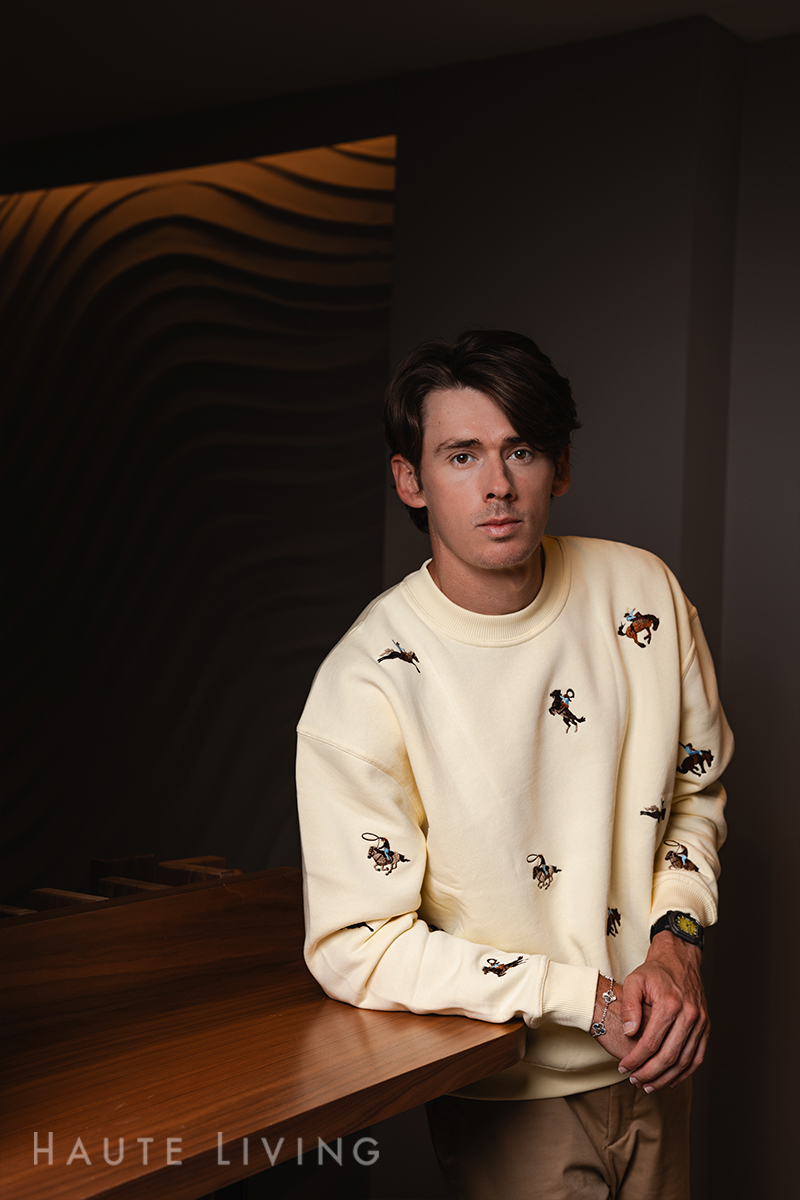 Photo Credit: Alyssa van Heyst
If the Demon is the version of Alex built for the fight, then Australia is where the fight carries weight. It’s where the hours, the repetitions, the stubborn discipline translate into something bigger than ranking points or personal milestones. His success doesn’t belong to him alone there. It becomes collective. Charged. National.
Australia has always punched above its weight in tennis — but it has been waiting for another champion since Lleyton Hewitt. In Melbourne, when he steps onto the court, he isn’t just playing for himself. He’s carrying expectation, memory, history — and the kind of belief that can turn a grinder into something more.
Which is why, when we talk about national representation, his voice changes almost imperceptibly. There’s a gravity that enters the conversation, a sense that we’ve moved from career to calling.
I ask about his Davis Cup tattoo: 109, marking him as the 109th player to represent his country in the competition. It is his only ink.
“One of my biggest goals growing up was to represent Australia for Davis Cup. And it was a very, very proud moment. This commemorates that moment,” he explains.
The tattoo isn’t large. It isn’t flashy. It’s on his left bicep, small and understated, the kind of thing you’d miss if you weren’t looking for it. But for Alex, it represents something fundamental: the achievement of a childhood dream, the fulfillment of a goal that predated professional rankings and prize money and everything else that came after.
His body art is not just a commemoration — it’s a boundary, a line he’s drawn for himself. “The only other thing that could potentially make me think about getting another one would be winning the Davis Cup again in Australia,” he says with a smile.
Even here, he’s consistent. His body is not a canvas for whims, but rather, a record of what matters most. And what matters most to Alex is representing his country — not just participating, but winning. Not just being part of the story, but changing its ending.
Pressure is part of that territory too — especially now, as Australia’s top-ranked male player, as the one carrying expectations that haven’t been this high since Hewitt’s prime. I ask if he feels the weight of it, if the noise gets to him.
And he doesn’t pretend the noise doesn’t exist. He’s not that kind of athlete, the one who claims to be immune to external pressure, who insists they don’t read the headlines or hear the commentary. “It’s only getting louder and louder,” he says, noting that it’s become especially so around the Australian Open, where the scrutiny reaches its peak and every match becomes a referendum on Australian tennis.
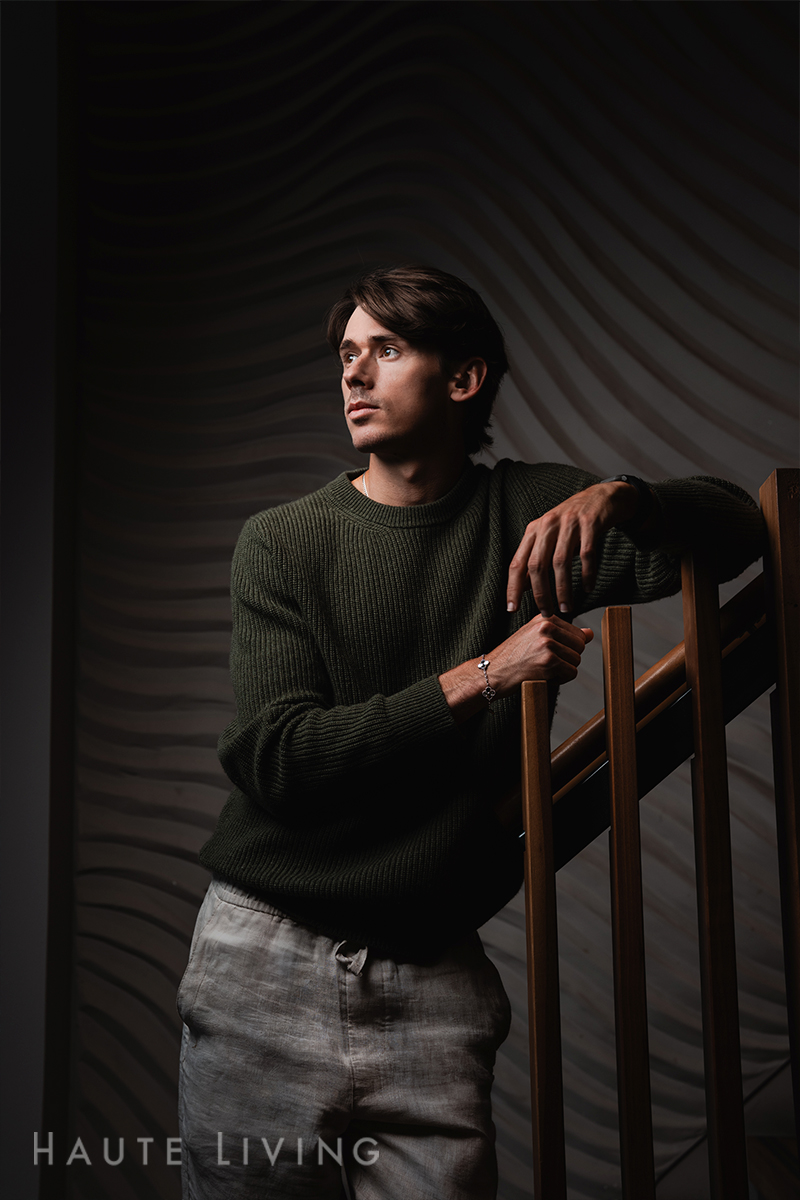 Photo Credit: Alyssa van Heyst
But he reframes it in a way that feels like a practiced mental habit, a cognitive tool he’s developed to turn potential poison into fuel. “The noise is a good thing,” he says. “It means that I’m winning a lot of tennis matches; putting myself in a position to be playing for these big titles.”
Expectation, in his mind, is evidence. If he weren’t delivering, there wouldn’t be anything to expect. The noise is proof that he’s done something worth noticing, that he’s earned the right to be in conversations about championships and legacy. It’s a remarkably healthy way to process pressure — not as burden, but as validation.
This is how the Demon survives: by making pressure useful. By transforming external expectations into internal motivation. By understanding that the alternative to pressure isn’t peace — it’s irrelevance.
But that’s only half the story.
Because the thing that might define Alex de Minaur more than speed, more than rankings, more than the nickname stitched to his surname… is what happens when he turns it all off. And therein lies the switch.
WHAT FEEDS THE DEMON
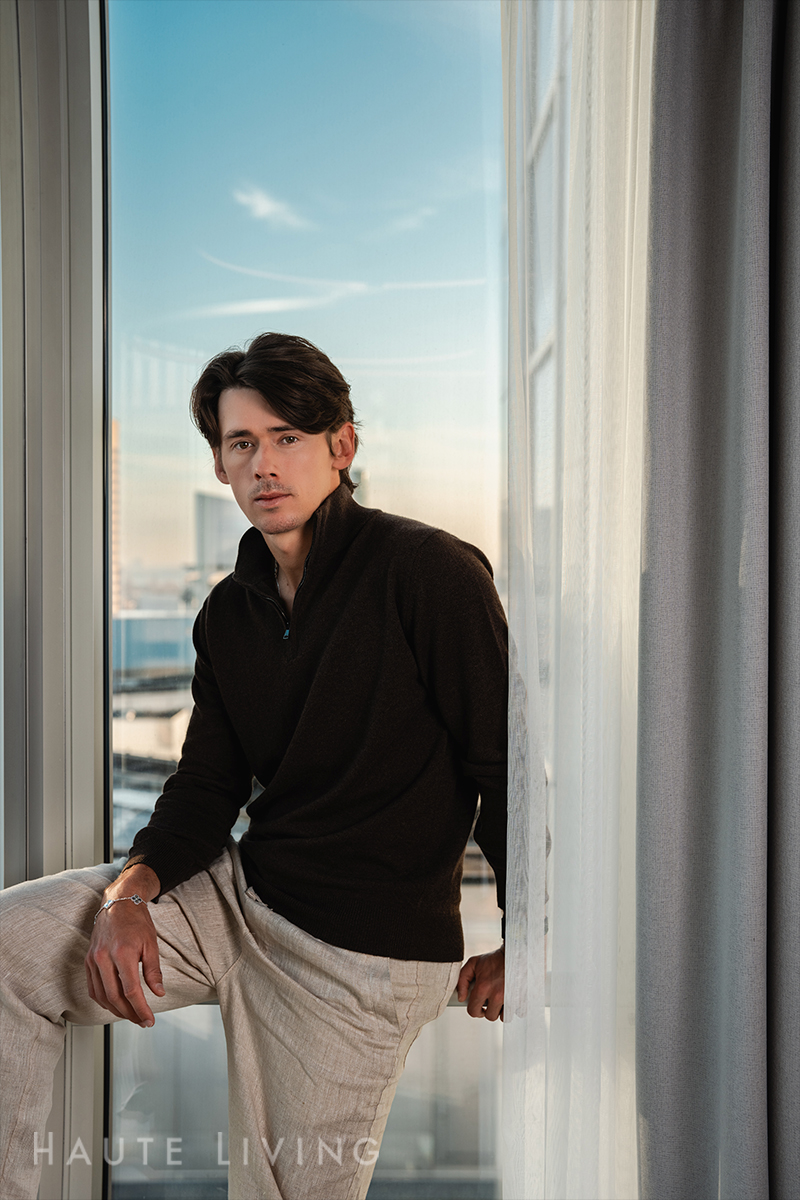 Photo Credit: Alyssa van Heyst
I ask Alex de Minaur for something unexpected — a detail that doesn’t align with the highlight reels, the nickname, the mythology. A random fact. Something that doesn’t fit the image of the blur in motion.
He smiles almost immediately.
“It’s very un-Australian of me,” he says with genuine self-deprecation, “but I am not good at surfing.”
For a player raised between Sydney and Spain’s coast, it feels like a betrayal of national identity. You assume he surfs. You assume he grew up carving waves at sunrise. But the water, he admits, is not his element.
“I’ve attempted it a couple of times,” he says, “and it is quite embarrassing.”
He shares a recent attempt, vividly recounting how physically wrecked he was from the act of paddling. “I’ve never been so tired in my whole entire life,” he admits, and you can hear the genuine bewilderment in his voice, as if his body betrayed him in ways he didn’t think possible. “I think I was sore for the next month. I definitely struggled.”
There’s something oddly reassuring about an elite athlete saying that out loud, admitting without shame that there are physical challenges that humble him, that his body — which can do things on a tennis court that seem to violate the laws of physics — has limits that reveal themselves the moment he’s out of his element. It’s also the perfect demonstration of his overall energy: excellence without ego. Intensity without arrogance. The Demon can be relentless without insisting on being perfect at everything.
So if surfing won’t slow him down, what will?
Off-court, he says, calm takes shape in quieter obsessions — especially anything vintage, mechanical, tactile. Things with history and weight and stories embedded in their design. “I’ve got a passion for classic cars; I enjoy the thrill of driving them,” he shares.
He talks about design, about how modern shapes blur together in his mind, how contemporary cars all start to look the same — sleek, aerodynamic, efficient, but somehow soulless. Older cars, by contrast, have personalities. They have quirks. They demand attention not through aggression but through charm. He mentions rolling around in his 1975 Mini and watching people react: “People can’t help but just laugh and smile and give me a thumbs up.”
There’s a joy in that image — the 6’0″ athlete folded into his tiny vintage car, looking slightly oversized but entirely unbothered because the feeling is right. The car makes him happy. And that happiness is contagious; strangers on the street feel it too.
His fascination with vintage cars isn’t about status, isn’t about the flex or the Instagram moment or building an investment portfolio. When I ask whether he collects with appreciation and resale value in mind, he almost brushes off the premise. That framework doesn’t interest him. He collects based on feeling — something intuitive, personal.
“I’m looking at what appeals to me instead of thinking too much about the monetary value.”
And that’s when it clicks.
Photo Credit: Alyssa van Heyst
The cars aren’t just cars. They’re counterbalance.
Then he says something that feels like the clearest explanation of his entire personality — the sentence that quietly unlocks everything else about how he moves through the world.
“Tennis is an insanely tense sport,” he says, and there’s weight in it — not complaint, but recognition. “There’s a lot of stress, a lot of drama. Everything is high speed. It is full on. It consumes you.”
Of course it does. The travel. The scrutiny. The points that swing careers.
And because the sport demands everything, he needs something that slows time down.
“When I’m driving a classic car, all of a sudden I get a moment to breathe. I can relax. I feel centered. It’s my happy place.”
Suddenly the image makes sense — not as aesthetic, but as necessity.
He pauses, then adds softly, “One of them.”
The other is his fiancée, British tennis player Katie Boulter.
If classic cars offer solitude — a space where speed becomes stillness — Katie offers something equally stabilizing: understanding without explanation. The couple, who announced their engagement in 2024, are planning their wedding in the middle of tour life, stitching together venues and decisions between tournaments and training blocks.
“One of the biggest advantages of having someone in the same world,” he says, “is that they understand better than probably anyone else the thoughts and feelings — the doubts, the insecurities, the highs, the lows.”
There’s a depth to that gratitude. It isn’t just romance — it’s relief. The relief of not having to translate the emotional whiplash of professional sport. They’ve both lived it. They both know the mental toll of a loss and the strange quiet after a win.
“The wedding will be this year,” he says. But planning it mid-season? That deserves a massive amount of respect, which I say. Alex laughs. “It’s a long process. Lots of decisions. And we have to navigate it in season.”
But the honeymoon — true stillness, true disconnection — feels even more elusive.
“When do tennis players have any sort of time?” he asks, almost rhetorically.
But when it does happen, he already knows the fantasy: somewhere unreachable. A private island. No phones. No notifications. No one who can reach them.
“There is nothing I would enjoy more,” he says, and this time there’s no joking. “No one can contact us. We can just live in the moment for a second.”
Listening to him describe that stillness — the deliberate quiet, the absence of demands — I realize everything he’s told me circles back to the same question. What, to him, is the greatest luxury in life? Is it that stillness, that quality time? Or is it something else entirely?
He doesn’t say time. He doesn’t say freedom. He doesn’t say privacy, or watches, or cars, or trophies, or any of the material things that might seem like obvious answers for someone who has achieved what he has.
Instead, he says: “Company.”
“It’s the people you have around you,” he continues. “If you have the right people — the ones that care about you, love you, want nothing but the best for you — they can make any bad situation a whole lot better. And I think that is priceless.”
In a sport built on solitude, his definition of luxury lands differently. It’s not aspirational as much as it is grounding. It’s not about what you can acquire but about who you can keep. And suddenly all of it makes sense: the cars aren’t just about slowing down, they’re about the strangers who smile and give him a thumbs up. The city walks aren’t just about decompression, they’re about connection to the world beyond the baseline. Katie isn’t just his partner, she’s proof that the right company can make the pressure bearable, can turn the grind into something shared rather than endured alone.
It also makes the Demon feel less like a persona and more like a decision he makes for the people he loves: to do the job well, to keep climbing, to keep asking the question, to keep giving himself chances — and then come back to simply being Alex.
He is proof that the ability to switch off isn’t softness, it’s strategy. It’s what allows him to bring the Demon back, match after match, season after season, without losing himself in the process.
The Demon arrives on cue. Alex knows when to let him go.
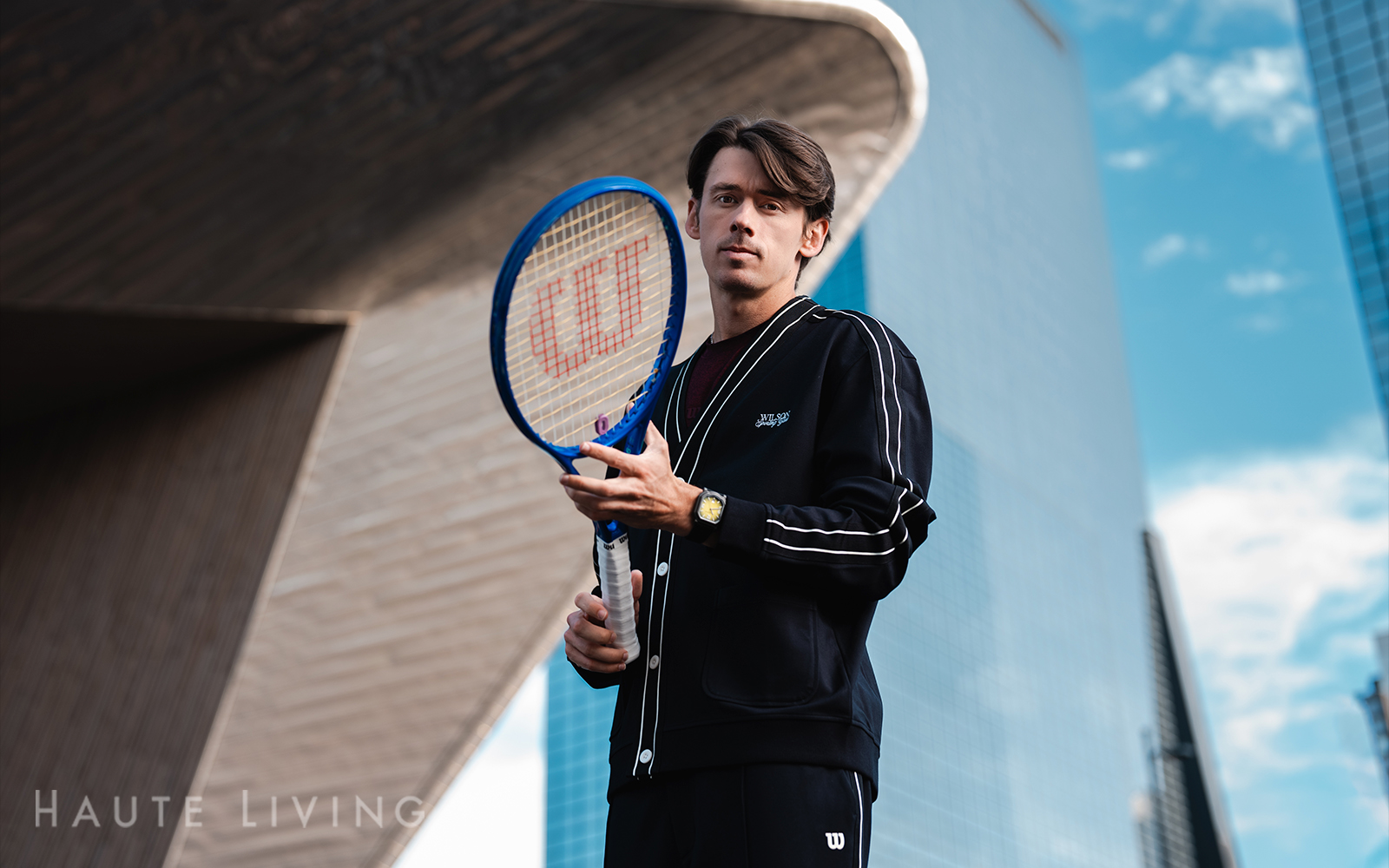 Photo Credit: Alyssa van Heyst
Need legal expertise for your business ventures? connect with top legal professionals on Haute Lawyer.
Latest from Haute Living
La Fête du Champagne Returns to New York: The Dinners, Tastings and Rare Magnums Worth the Splurge

Next Stop, Monte Carlo: Monaco Is the Venice Simplon-Orient-Express’s Hottest New Destination
The Global Champions Arabians Tour Closed Its 2026 Americas Season in Las Vegas With a Spectacular Finale