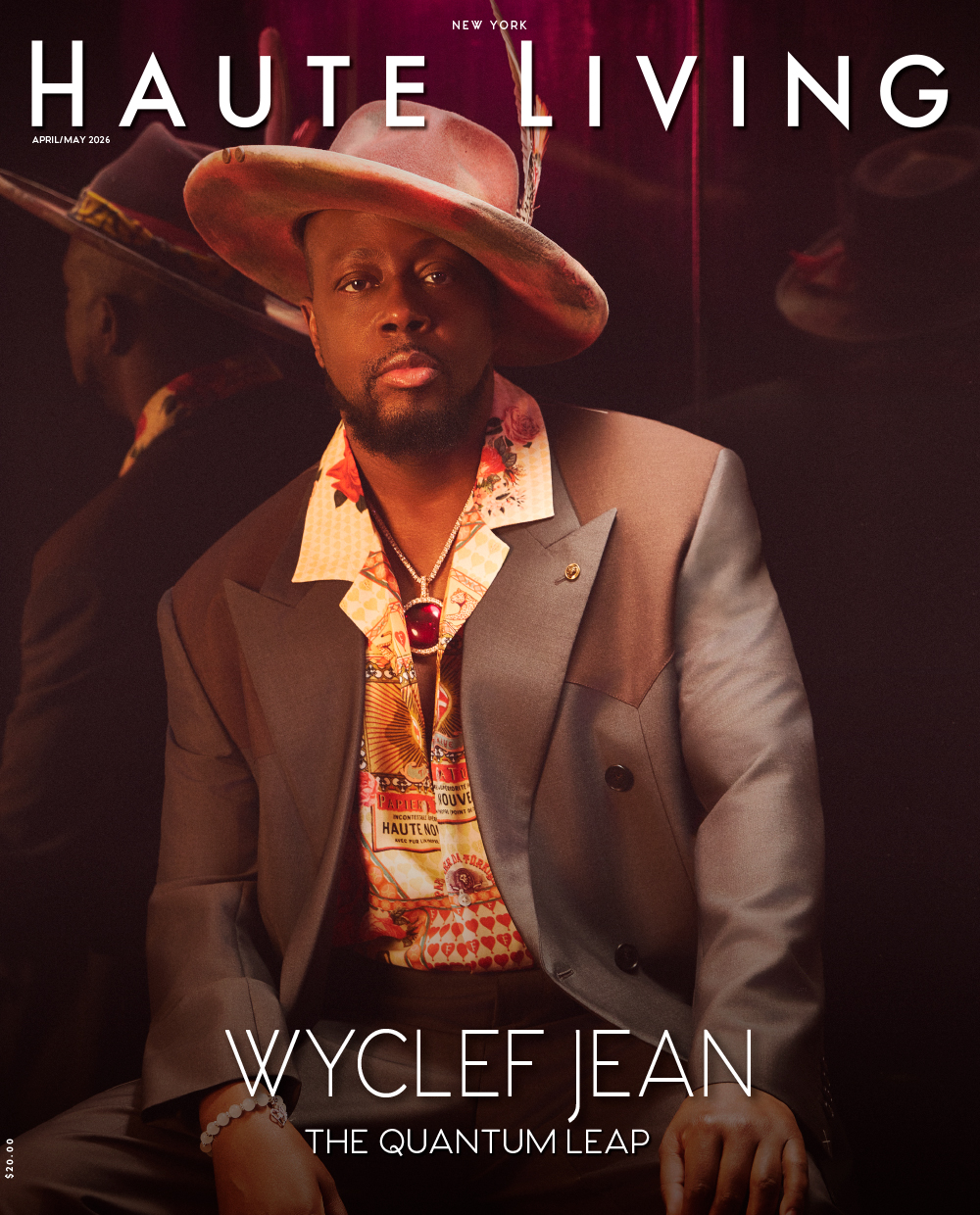
Wyclef Jean Has a Plan: 7 Albums, One Year, No Limits
Wyclef Jean reveals ‘Quantum Leap,’ his ambitious 7-album project spanning hip-hop, reggae, jazz, and more - the next chapter in his legacy.
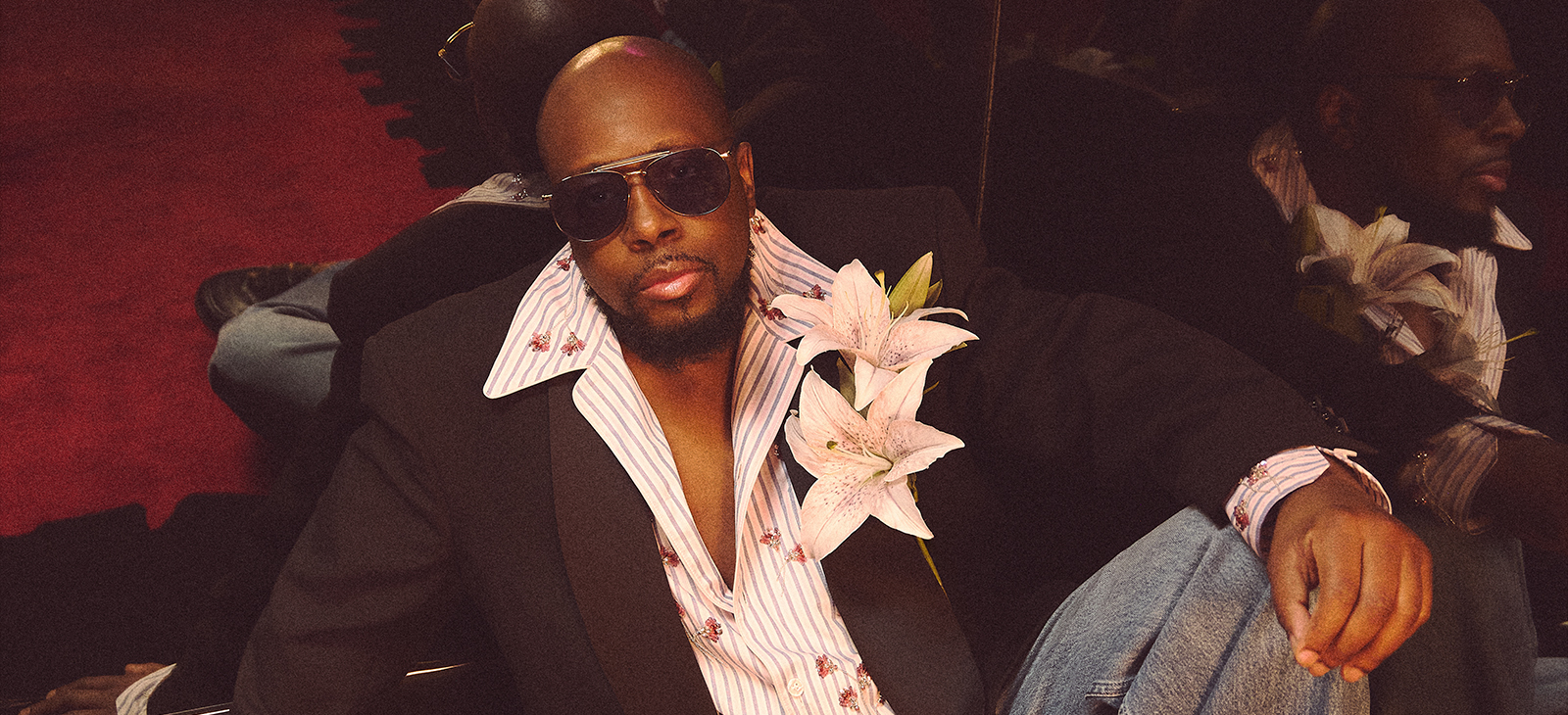
SHIRT: Hotel Frank’s by Camila
NECKLACE: Wyclef’s own
Photo Credit: Alberto Gonzalez
Three decades after rewriting the rules of global pop, Wyclef Jean is preparing his most ambitious project yet: Quantum Leap, a seven-album journey through the genres, ideas, and cultural currents that have shaped his life.
BY LAURA SCHREFFLER
PHOTOGRAPHY ALBERTO GONZALEZ
STYLING KELLY BROWN
GROOMING DAR BALTHAZAR
SHOT ON LOCATION AT DUA MIAMI
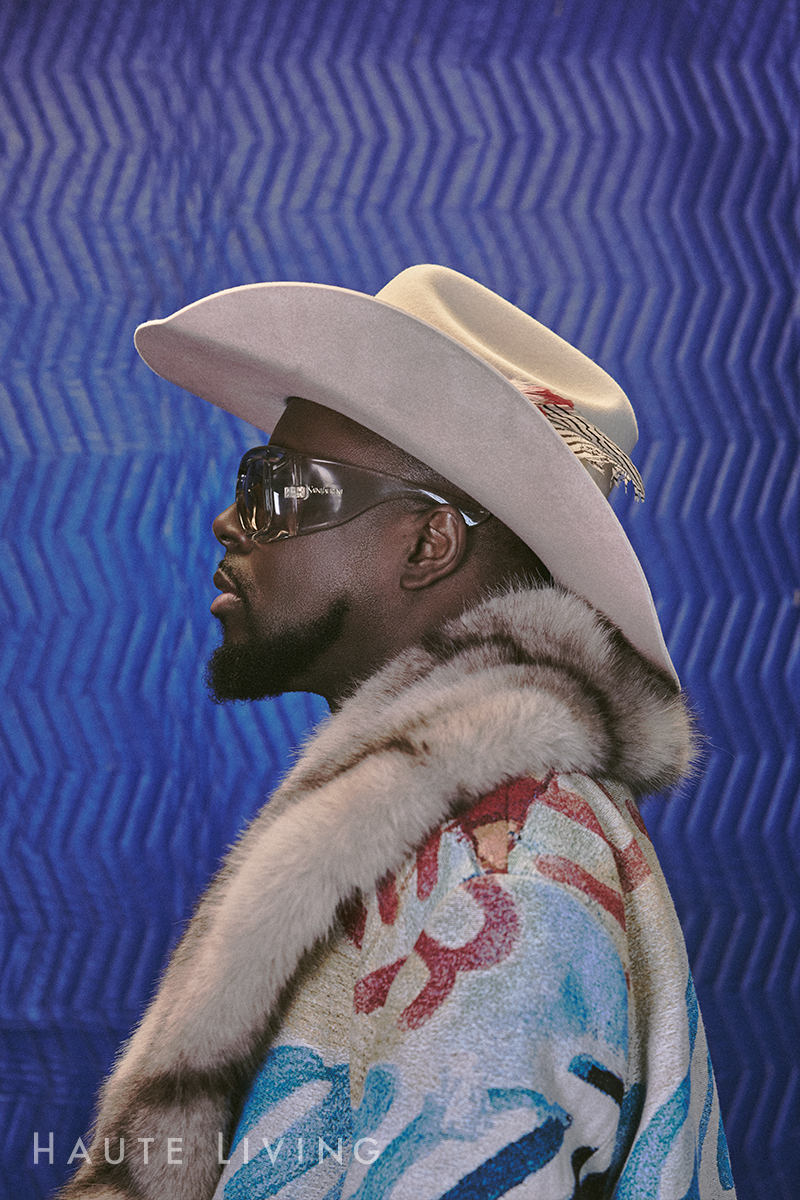
HAT: Ruediger
SUNGLASSES: Saint Laurent
Photo Credit: Alberto Gonzalez
The day after Easter, Wyclef Jean is in a car — fresh off a long-haul flight from Seoul, which, for most mortals, would constitute sufficient reason to be horizontal and unreachable until further notice. I know this because I am one of those mortals. I need a bath, two hours of silence, and at a minimum, one very good candle before I can be reasonably expected to interact with anyone after a long flight. I told him as much. He laughed. Because Wyclef Jean, it turns out, had spent Easter Sunday at his spa, getting his peace of mind back.
Only, his spa is a church. Specifically, his mother’s church — the one he flies back to, without fail, once a month, no matter where in the world the calendar has deposited him. Seoul this week, sure. But Easter Sunday? He’s in a pew, next to his mama, and by the time we speak the following day, he is energized in a way that makes me feel genuinely convicted about my own self-care routine (the bubble baths are good, but they are not this).
Here is what you need to understand about Wyclef Jean before you understand anything else about Wyclef Jean: he is a preacher’s son. Not in the metaphorical, vaguely-spiritual-artist way, but literally. His father built churches. Bilingual ones in Brooklyn, then another in Newark — always in the roughest neighborhoods, always on purpose. “People who already got faith don’t need faith,” Wyclef tells me, paraphrasing a man who clearly passed down both the theology and the logic. His father was, in his words, a community activist first and a pastor second. The church was just the most honest building he knew how to put up.
Wyclef grew up inside that building. Him, his brothers and sisters, a gospel circuit, a Haitian church band called the Gene Family — kid stars before anyone outside those walls knew their names. There’s an album cover of him at 16 in the church, he tells me, and he absolutely needs to find it and send it to me. “It’s pretty cool.” I believe him.
So: the church is the spa. And the spa explains the energy. And the energy explains everything else.
Because here’s the thing about the energy: it is not incidental to Wyclef Jean. It is the whole product. Anyone who has ever been to a Wyclef show — which, I will confess with some embarrassment, I have not, a fact he responded to with a very immediate “We gonna make that happen” — will tell you the man moves like he is being paid by the movement. They call him the energy god. His workouts are calisthenics and trampoline flips. Trampoline flips. Can we take a moment to unpack that? The man is 56 years old and still flipping, just on a trampoline now instead of a mat, which he describes as a concession to wisdom rather than age, and I respect the framing. He loves infrared saunas. He loves the inner child. He is, genuinely, one of those people for whom the phrase “me time” is not just a wellness buzzword, but an actual survival strategy — and he’s watched what happens when people skip it.
He brings up the late Swedish DJ Avicii quietly, the way you mention someone you loved and lost before you’ve figured out how to say it cleanly. Wyclef spent a whole winter with him in Sweden. Avicii called him his Haitian uncle. And then one day the world lost one of its most brilliant people to the particular cruelty of moving too fast and forgetting to stop. “I’ve watched so many friends…” he says, and doesn’t finish the sentence, because he doesn’t have to. He doesn’t need to. Steve Jobs finished it for all of us — and Wyclef, who has been in rooms with some of the most brilliant and most broken people in music, knows exactly what that deathbed reckoning sounds like when it arrives too early.
The earth, as he puts it, is not going to stop for you. So you might as well find your church.
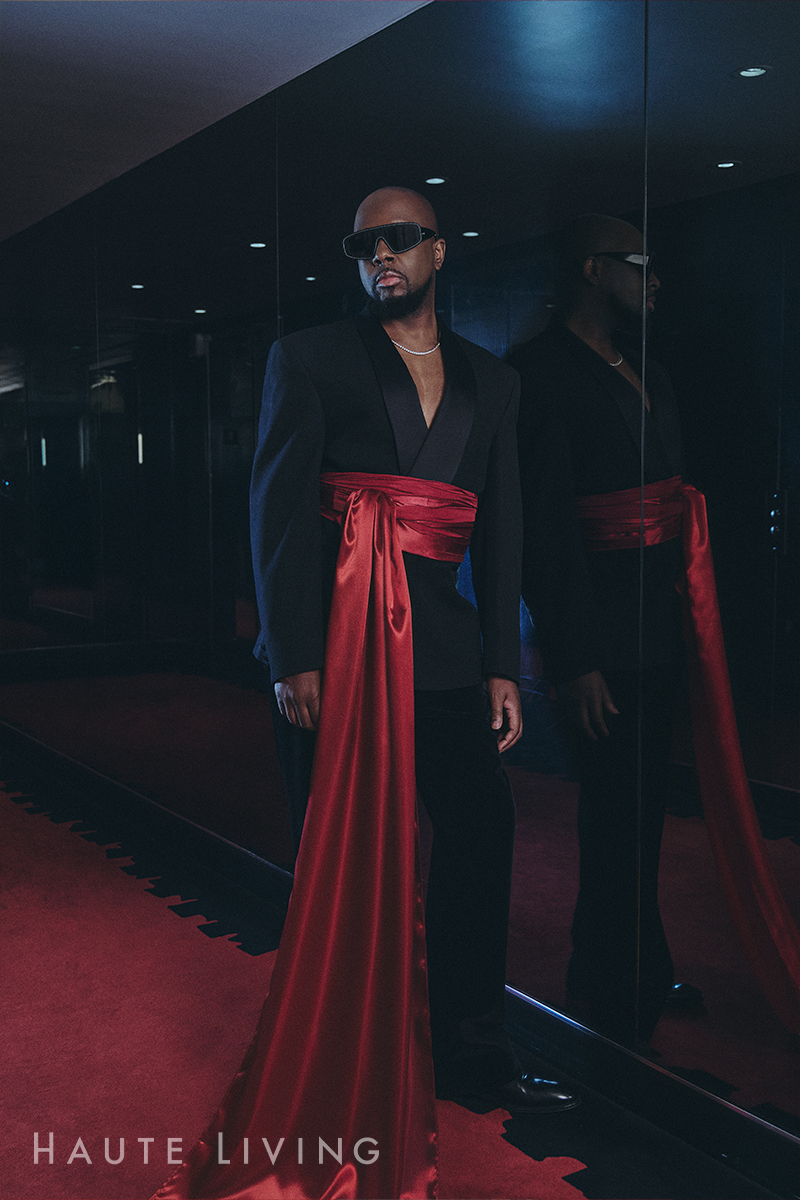
PANTS: Louis Vuitton
SUNGLASSES: Alaia
SHOES: Louis Vuitton
Photo Credit: Alberto Gonzalez
All of which is to say: when Wyclef Jean tells you he is about to release seven albums in one year — seven albums, seven genres, 49 tracks, one very ambitious man — you believe him in a way you might not believe anyone else. Because the infrastructure for this kind of output is not just talent (though the talent is, obviously, not in question). It’s the infrared sauna. It’s the trampoline. It’s the Easter Sunday pew next to his mama. It’s a man who has been quietly maintaining himself for thirty years while the world consumed itself whole.
The project is called Quantum Leap. He started it right before Covid, which, when you sit with it for a moment, says something about the kind of creative instinct that doesn’t wait for conditions to be ideal. It’s already 80 percent done. And the concept is — I want to say deceptively simple, except nothing about this is simple, it’s just that he explains it simply: seven albums, each one a different genre, each one a masterclass in a corner of music he has spent three decades inhabiting. No box. No genre. Just good music and bad music, and Wyclef Jean has opinions about which is which.
“I always told people, y’all will never be able to put me in a box,” he says, and it lands less like a boast and more like a statement of physics.
The albums roll out like a season of television — which is, not coincidentally, exactly how he conceived them. He watches shows the way a director watches them, downloading entire series on planes and consuming them whole, addicted to the cliffhanger, to the thing that makes you reach for the next episode before you’ve fully processed what you just watched. “What’s next?” he says. That’s the question he wants Quantum Leap to keep asking. That’s the architecture.
Here is the full lineup, because you’re going to want it:
Clef Notes drops in June, and it is the origin story. Hip-hop. The young Wyclef with his black-and-white notebook, pen to paper, before anyone knew what was about to happen. He describes it as his Shakespearean pen coming to life, like The Jungle Book, except the jungle is hip-hop and the boy who came out of it changed the genre’s entire sense of geography. The features are — and I say this with full awareness of how casually he delivered this information — G Herbo, Lil Wayne (not just his brother, he says, but his twin brother), and Andra Day, who played Billie Holiday and whose voice Wyclef describes as “so lush” with the reverence of a man who has worked with everyone and still gets moved.
The remaining albums have, at press time, a release order that is ambiguous. Caribbean Cowboy is his country album/opus, and before you raise an eyebrow, know that Wyclef Jean was combining hip-hop and country music before it was a conversation anyone was having. He called Kenny Rogers. At his ranch. To do a version of “The Gambler.” Rick Rubin later called him for the Johnny Cash tribute. He performed “Delia’s Gone”; he did songs with Big & Rich. The man has receipts. On the album: Melissa Etheridge (who he says stops him every time she sees him to ask ‘when is my song coming out,’ which is the most relatable Melissa Etheridge detail I have ever encountered); and Drake White, who he describes as an ‘amazing click,’ which in Wyclef-speak I have come to understand means something like a person whose frequency matched mine immediately.
The country album and the jazz album, he tells me, will surprise people the most. On the jazz: he studied it; he was a jazz major. And what he’s building is not a jazz album that jazz heads will roll their eyes at — it’s jazz fusion so sonically adventurous that he wants DJs to be able to pick it up and just play it. The album is called Q, and it is both dedicated to and an homage to the late, great Quincy Jones — his mentor, his North star, the man whose Gershwin brain Wyclef says he inherited when it comes to casting collaborators.
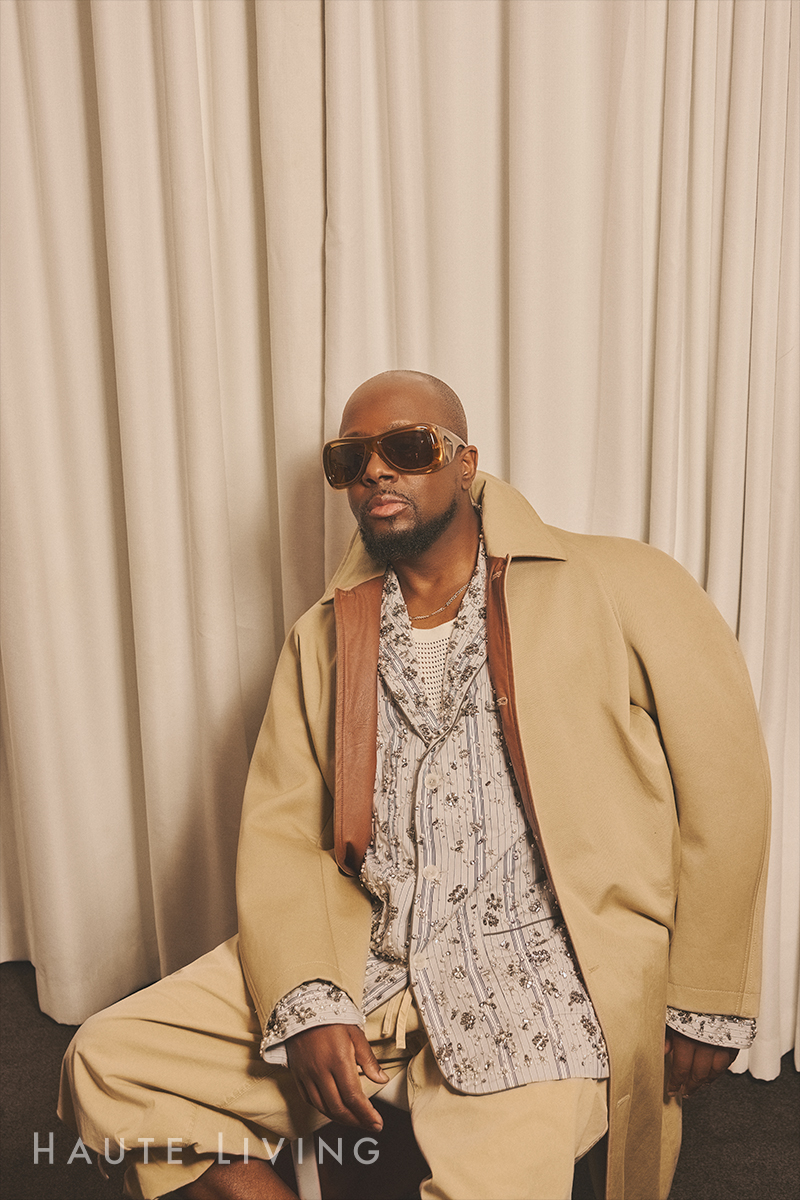
PAJAMA SHIRT: Dolce & Gabbana
TRENCH: Diesel
PANTS & SHOES: Ferragamo
SUNGLASSES: Saint Laurent
Photo Credit: Alberto Gonzalez
In between: Le Mardi Gras, the world album, which he describes as what it would sound like if he remixed “Hips Don’t Lie,” “Maria Maria,” and Brazilian funk all at once — your feel-good album, your dinner party album, your windows-down album. Then. The Prodigal Son, the gospel record, arriving in November, routed directly back to the 14-year-old in the pew and the church band and the father who built sanctuaries in neighborhoods that needed them. There’s Grown and Sexy, the soul and R&B album — for Valentine’s Day, featuring, if Wyclef has his way, Jennifer Hudson. He told her on her own show that she needs to be on this album. He does not appear to have taken no for an answer, which tracks. And finally, closing the circle: One Night in Kingston, his first full reggae album, a Caribbean boy by way of Haiti, ancestors routed through Puerto Rico, Cuba, and Santo Domingo, coming all the way home just in time for the 30th anniversary of The Carnival.
That’s the journey. That’s all seven. I need a moment.
The casting of collaborators, he explains, comes from what he calls his Quincy Jones brain — which means he is not interested in follower counts or Billboard positions: he’s interested in discovery, in the person who makes him say ‘whoa, who is this?’ In the unexpected pairing that trips you out and makes you go back and listen again. “When Quincy Jones and Michael Jackson got together, they did Thriller,” he says, as if the example is obvious, which it is.
But there is one collaboration I haven’t mentioned yet, one that the internet has been quietly losing its mind about for months. The one that, when I bring it up, produces the most charged pause of our entire conversation.
Wyclef Jean and Ms. Lauryn Hill are back.
They’ve performed together at the Grammys, at SNL50, at Roberta Flack’s memorial. There is more to come — he says it carefully, the way you hold something precious — and the energy between them is, in his words, “definitely amazing.” He describes the reconciliation — that word, reconciliation, chosen deliberately — as the thing the world should be most grateful for. Not the music yet, but the repair. The fact that two people who made some of the most important music of a generation have found their way back to each other.
He refers to his former Fugees bandmate as the “Kobe Bryant and Shaquille O’Neal” of music. I ask him, because I have to, who is Kobe and who is Shaq in this scenario. He doesn’t even hesitate. Shaq is from Bergen County. He is definitely Shaq. She is definitely Kobe.
That is an objectively perfect answer and I will not be taking questions.
Pure Soul, Big Plans, and the WJ Carnival
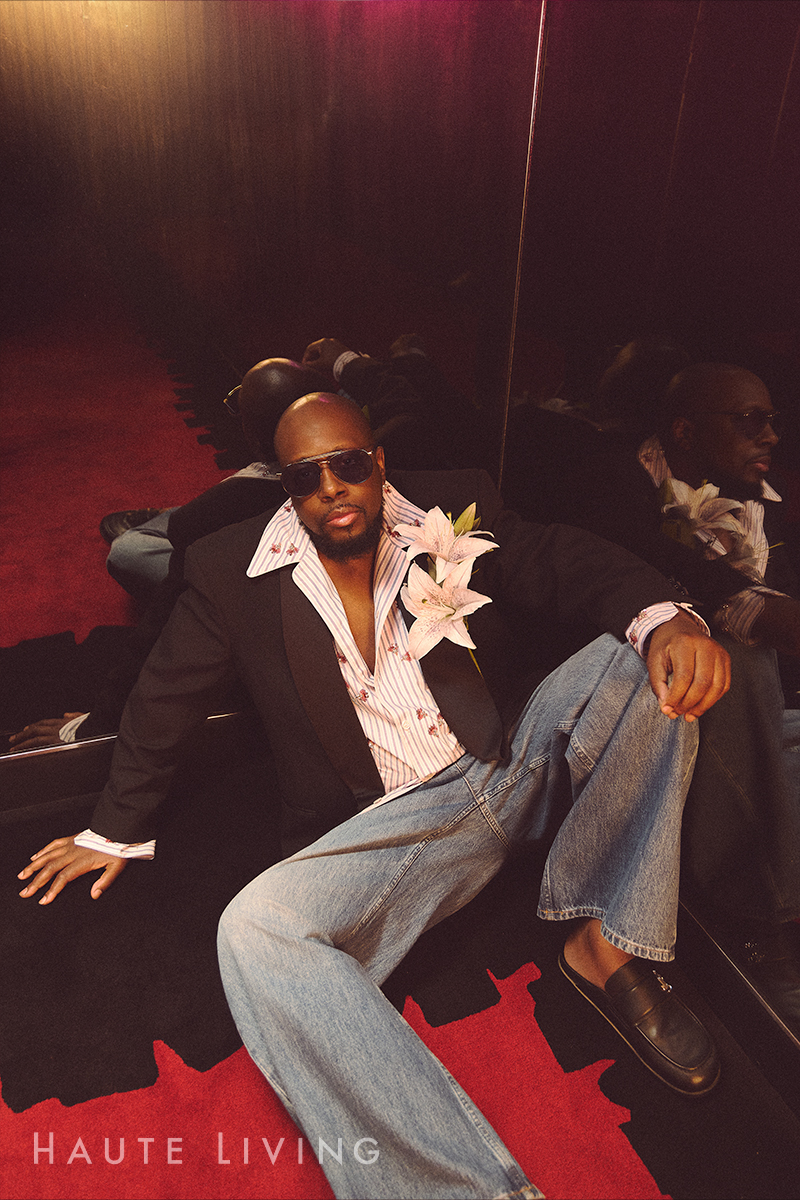
SHIRT: Dolce & Gabbana
JEANS: Helmut Lang
SHOES: Jimmy Choo
SUNGLASSES: Wyclef’s own
Photo Credit: Alberto Gonzalez
After hearing Wyclef Jean describe his forthcoming music venue — the WJ Carnival, a diaspora experience disguised as a real estate venture, a place where you walk in because you can’t get to Jamaica or Trinidad or Bermuda and you walk out having been to all three — I try to put it into perspective. It’s a massive undertaking.
“It sounds like Bad Bunny at the Super Bowl meets Cirque du Soleil meets American Idol,” I say. But is it accurate?
He looks at me — or whatever the video-call equivalent of looking at someone is — and said: “You got it 100 percent. Yeah, you got it.”
I got it because it’s not actually that complicated, once you understand what Wyclef Jean has always been doing. The same thing Bad Bunny did on that Super Bowl stage — the thing that made half the country suddenly realize they had been sleeping on an entire hemisphere of American music — is the thing Wyclef has been doing since 1996. Only, he did it first, he did it before the algorithm existed to make it viral, and he did it with a guitar and a Haitian accent and a refusal to explain himself to anyone.
The WJ Carnival is, in a sense, the physical address of that argument. He wants to pick up where Jimmy Buffett left off with Margaritaville, except the through line is not one genre or one vibe but an entire diaspora. The food, the performers, the staff — 70 percent of whom, he insists, will be super creatives, waiters and busboys who are secretly geniuses, the next Mariah Carey, the next Wyclef Jean, working tables while they wait for someone to notice. “I need a place where that kind of magic and raw talent can be cast again,” he says, and he sounds less like an entrepreneur and more like a man with a mission. Which, when you trace the lineage back to his father building churches in the roughest neighborhoods in Newark, makes complete sense.
He has the brain of Steve Rubell, the man who created Studio 54. He has the brain of Guy Laliberte, who gave the world Cirque du Soleil. He has thirty years of knowing exactly how to make a crowd feel something. What he is building is not a restaurant, not a music venue, not a talent showcase — it’s all three, curated by yours truly, and if you’re not excited about it then I don’t know what to tell you.
But here is the thing about Wyclef Jean, the thing that keeps catching me off guard throughout our entire conversation, the thing that makes him actually jump off the page instead of just filling it: he describes all of this — the venue, the conglomerate, the Magic Johnson years he’s gunning for — and then, when I ask him how he would describe himself, fundamentally, as a human being, he says:
“Pure soul. Like what you see is what you get.”
Not the Grammy winner. Not the Fugees mastermind. Not the man with more titles after his name than a medieval duke (Chief Creative Officer of OpenWav, Global Ambassador for Global Citizen, Global Culture Advisor of stablecoin Circle, consultant for Google DeepMind — we’ll get there). Just: pure soul. A person who moves through the world in his own skin and his own energy and has never felt the need to put on the fabricated mask that, he observes, everyone else seems to be wearing.
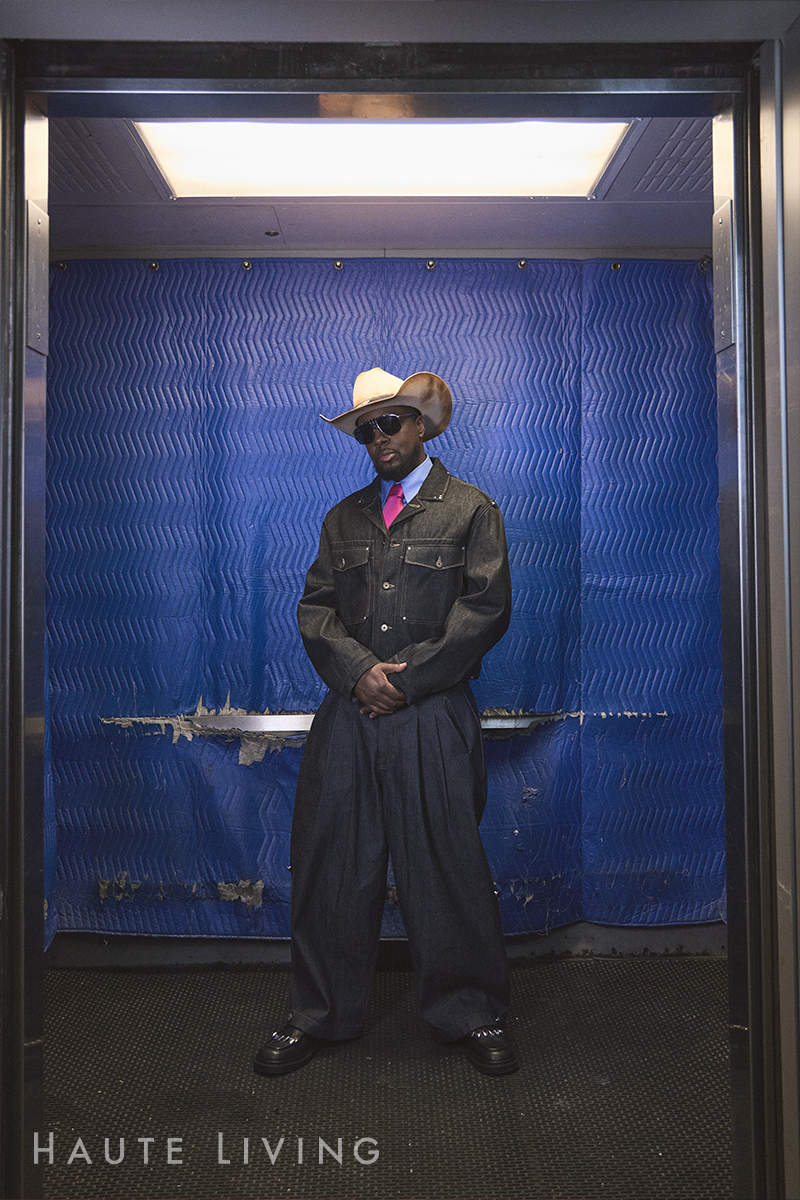
JACKET: Lemaire
PANTS: Art Community
SHOES: Jimmy Choo
HAT: Ruedinger
SUNGLASSES: Alaia
Photo Credit: Alberto Gonzalez
“Every part of the world, at least one person knows your name,” his friends tell him. He hears it, he processes it, and then he files it somewhere that doesn’t appear to affect his actual behavior. He likes to connect with humans. That’s the whole thing.
I find this genuinely disarming, and I find it even more disarming because everything else about his life in 2026 suggests a man who is operating on a scale that most people would find alienating at minimum and destabilizing at worst.
And on that note, speaking of scale, let’s get into the tech stuff, because it’s actually incredibly interesting.
Wyclef Jean is not at the table of the AI conversation because someone invited him: he is at the table because he walked in and sat down and started talking, which is more or less how he’s handled every room he’s ever entered. His position with Google DeepMind is as a consultant, and his position on AI in music is one of the more nuanced takes I’ve encountered from anyone, let alone someone who also plays upwards of 12 instruments and can still do a backflip.
He is not worried that AI will kill music —he is worried that humans will get indolent and let it. “Is the AI smarter than us,” he asks, “or are humans getting more lazy?” He thinks the answer is the second one, and he also thinks the solution is not protest or alarm but engagement — getting inside the machine, understanding it, being Voltron when you meet it on the corner. A real artist, he says, who actually puts in real time, who understands what’s happening — for them, this is an exciting moment. The only people sitting on the sideline of should have, could have, would have are the ones who decided the AI was a threat instead of a tool.
He built SodoMoodLab, a platform for young composers — 15, 16 years old — to learn to score for film and television, to build their catalogues, to let Hollywood find them before Hollywood outsources the whole job to a machine. His philosophy: AI can generate source music, sure. But a young human composer who understands AI as a tool is going to come up with things the AI is not thinking of. “I still want people in Hollywood and the humans to still have faith,” he says, and there’s something almost pastoral about it, a preacher’s son trying to keep the congregation from losing theirs.
OpenWav is simpler in concept and quietly radical in implication: it gives artists a platform to own their IP and build direct relationships with their audiences. A thousand people giving you a hundred dollars a year. That’s it. You own your music. You have an AI assistant manager, you understand how your merch works. In an industry that has spent two decades finding increasingly elegant ways to pay artists less, this is either utopian or obvious, depending on how you look at it — and Wyclef presents it as obvious, which may be the most revolutionary thing about it.
And then there’s Circle — the stablecoin, USDC — where he is the Global Culture Advisor. He grew up watching people in Haiti wire money home through Western Union, watching those fees eat into every dollar that was supposed to feed someone. Stablecoin at scale — 1.5 billion people who currently can’t access traditional financial infrastructure — means a few pennies per transfer instead of an arm and a leg. It’s not crypto as speculation: it’s crypto as the thing his father was doing with those churches: going to the people who need it, not the people who already have it.
“In order to make a difference,” he tells me, “you can’t be outside the door, poking through the window. No one can hear you. I need to be in the room.”
His father would recognize that logic immediately.
Which, when you zoom out, is the whole thesis. Every room he’s walked into — the tech boardrooms, the AI tables, the stablecoin summits — traces back to the same source code. The music. The mission. The preacher’s son from Newark who never forgot where the church was built.
There’s a version of this story that focuses on the legacy — the résumé, the three decades, the celebrity producing credits that trail behind him like a comet tail. But that version of the story, Wyclef makes clear, is not the one he’s interested in telling right now. He’s interested in the arc before 60, the chapter he didn’t finish when he stepped away from music to run for president of Haiti and then came back to find the industry had rearranged itself entirely while he was gone. The sentence he left mid-thought.
“Musically, this project is going to complete that last arc,” he says. “Where my heart — I feel like I put it in.”
And then, going into his 60s, the next chapter opens. The WJ Carnival, the real estate, the Magic Johnson years, the conglomerate built on thirty years of cultural capital. He’s not retiring from music — he makes that clear, slightly amused that the question had to be asked — but he’s changing the ratio. Less stage, more seat. The JZ spaces, the Ellen spaces, whatever those spaces look like and whatever you want to call them when it’s Wyclef Jean sitting in them.
Either way, he promises this: “You’re about to get the best Wyclef.” And the way he says it, unhurried, certain, not performing certainty but simply possessing it — I believe him. Everyone who has been listening since The Score, he promises, is going to hear him rap better than he rapped half a lifetime ago. A new generation that doesn’t know who he is — the ones who know the sample but not the source, who heard G Herbo’s “Emergency” built on his own “911” — is going to ask: “Who is this guy?”
They’re about to find out.
Before I let him go — and I stay too long, as you do when the conversation is this good — I ask him one more thing, my gold standard. What is the greatest luxury in his life right now? Not the career, not the ventures, but the life.
He doesn’t even have to think about it.
Going to church with his mama once a month. His daughter, Claudinel, who is 21 and still says, ‘Dad, let’s watch a movie.’ His wife, Claudinette — the woman who held him down since he was 19 — and, in his words, a “Netflix-and-chill evening” with no agenda and nowhere to be.
“The greatest luxury,” he says, “is the woman who held me down since I was 19 years old. Wifey. Just that kind of simplicity — I cherish that. I wouldn’t trade that for the universe.”
And there it is, right there, the very definition of “pure soul.” That’s the whole bio. Everything else? That’s the footnote.
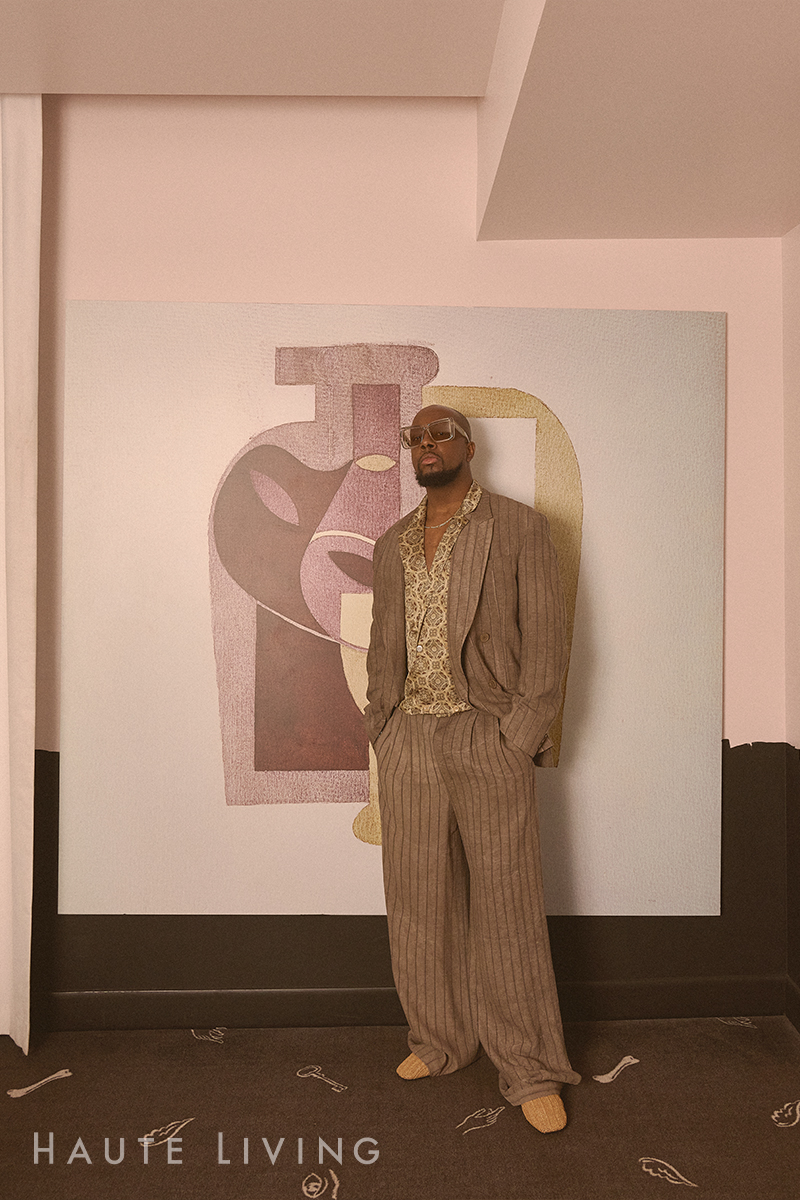
SUNGLASSES: Saint Laurent
Photo Credit: Alberto Gonzalez
Latest from Haute Living
Audemars Piguet Turns the Royal Oak Into High Jewelry—Exclusively Selling Them in Private
Anthony Vaccarello is Leaving Saint Laurent After 10 Years—Here’s Who Could Replace Him

White Truffle Season Is Here: The 6 Michelin-Starred Italian Tables Worth the Trip