Jonathan Anderson’s First Dior Cruise Show Brought Hollywood’s Golden Age Back to Los Angeles
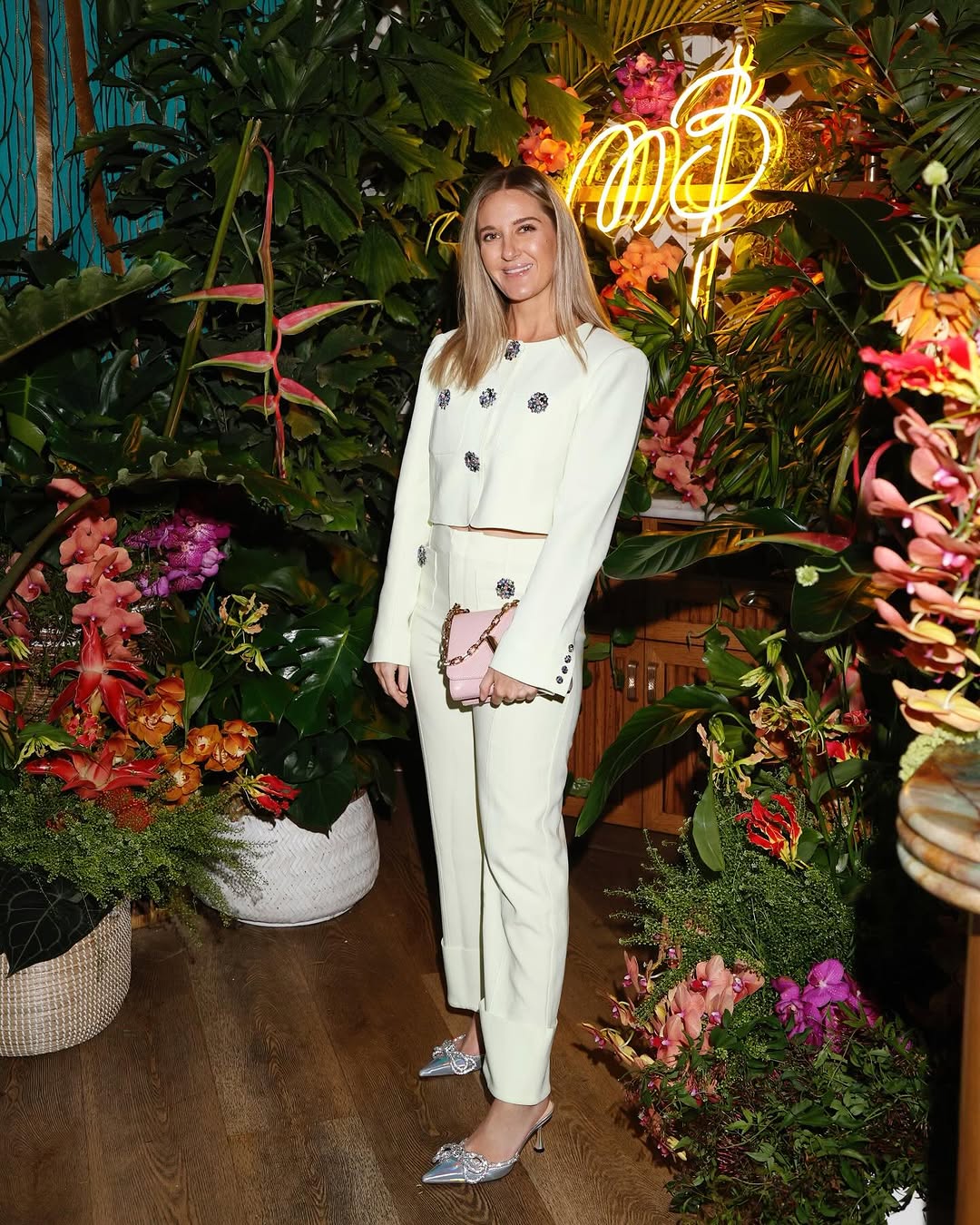
For me, the city of Los Angeles is teeming with energy—both past and present. As I stood at the Charlie Chaplin Studio for the Dior Cruise welcome party, I realized it was the old Hollywood lore (where you truly wish the walls could talk) that makes Los Angeles almost feel ghostly. It’s hard to capture the specific energy of Los Angeles, but Jonathan Anderson did it. For his Dior Cruise debut on May 13, 2026, Anderson undoubtedly chose exactly the right city for it. The Dior Cruise 2027 collection, titled “Wilshire Boulevard,” was presented at the Los Angeles County Museum of Art as the sun set over the Hollywood Hills, with artists, actors, directors, and industry figures arriving at a show space that Anderson conceived as an illusion of LA, in LA. For a collection rooted in the relationship between Dior and cinema, there was no more fitting stage.
Photo Credit: Maddy Rotman
That relationship runs deep. Christian Dior designed costumes as early as 1942, before the House existed. He received an Oscar nomination in 1955 for his work on Terminal Station. And in 1950, two films he’d worked on were released simultaneously—Jean-Pierre Melville’s Les Enfants Terribles and Alfred Hitchcock’s Stage Fright, the latter of which served as one of the primary entry points for this collection.
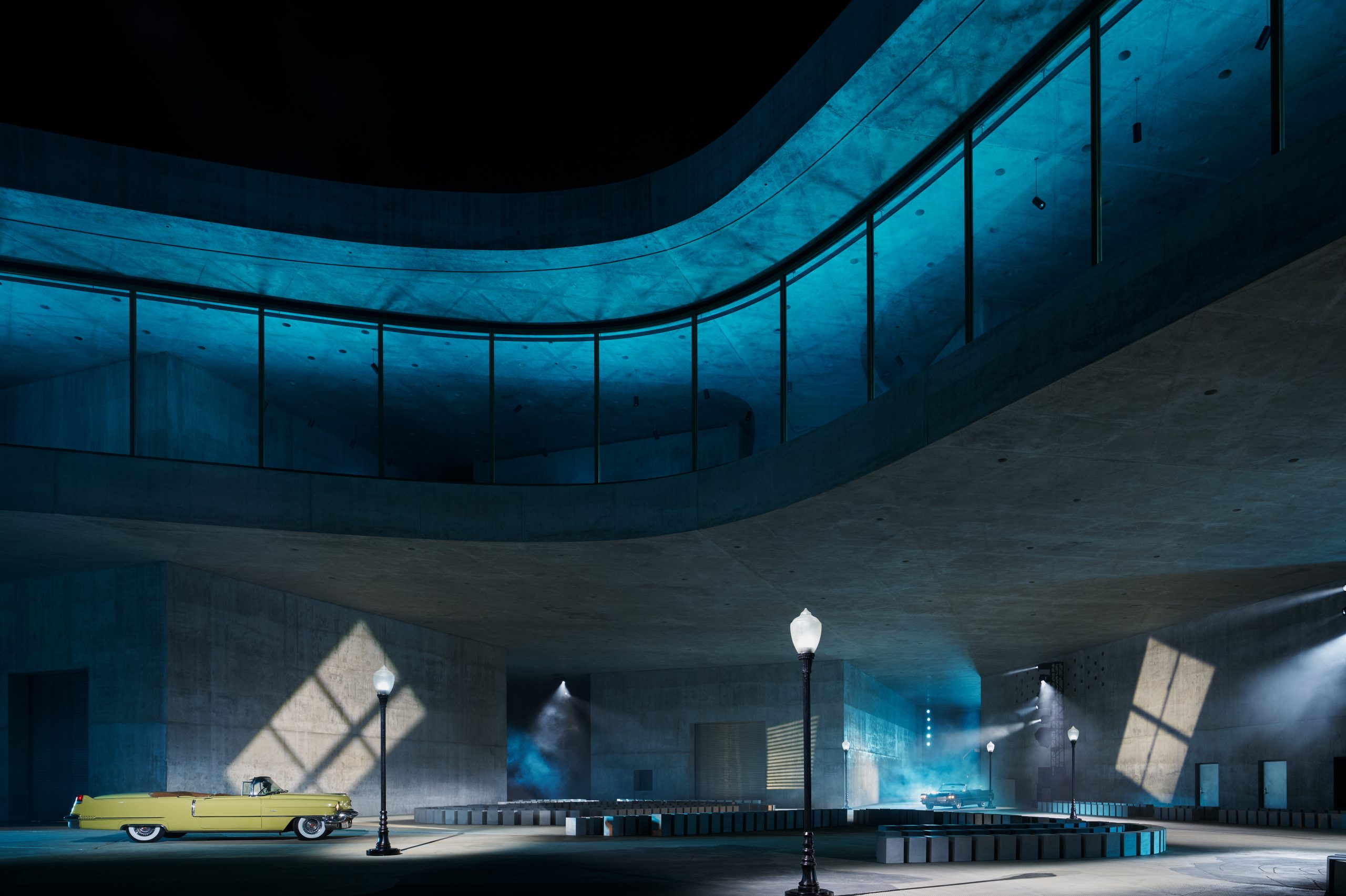
Photo Credit: Eric Staudenmair
The story behind it is worth telling: Marlene Dietrich, cast as the seductress Charlotte Inwood, reportedly told Hitchcock she would not appear on screen unless she wore Dior. No Dior, no Dietrich. Anderson understood the power of that exchange—that Dior wasn’t just dressing a character, it was defining her.
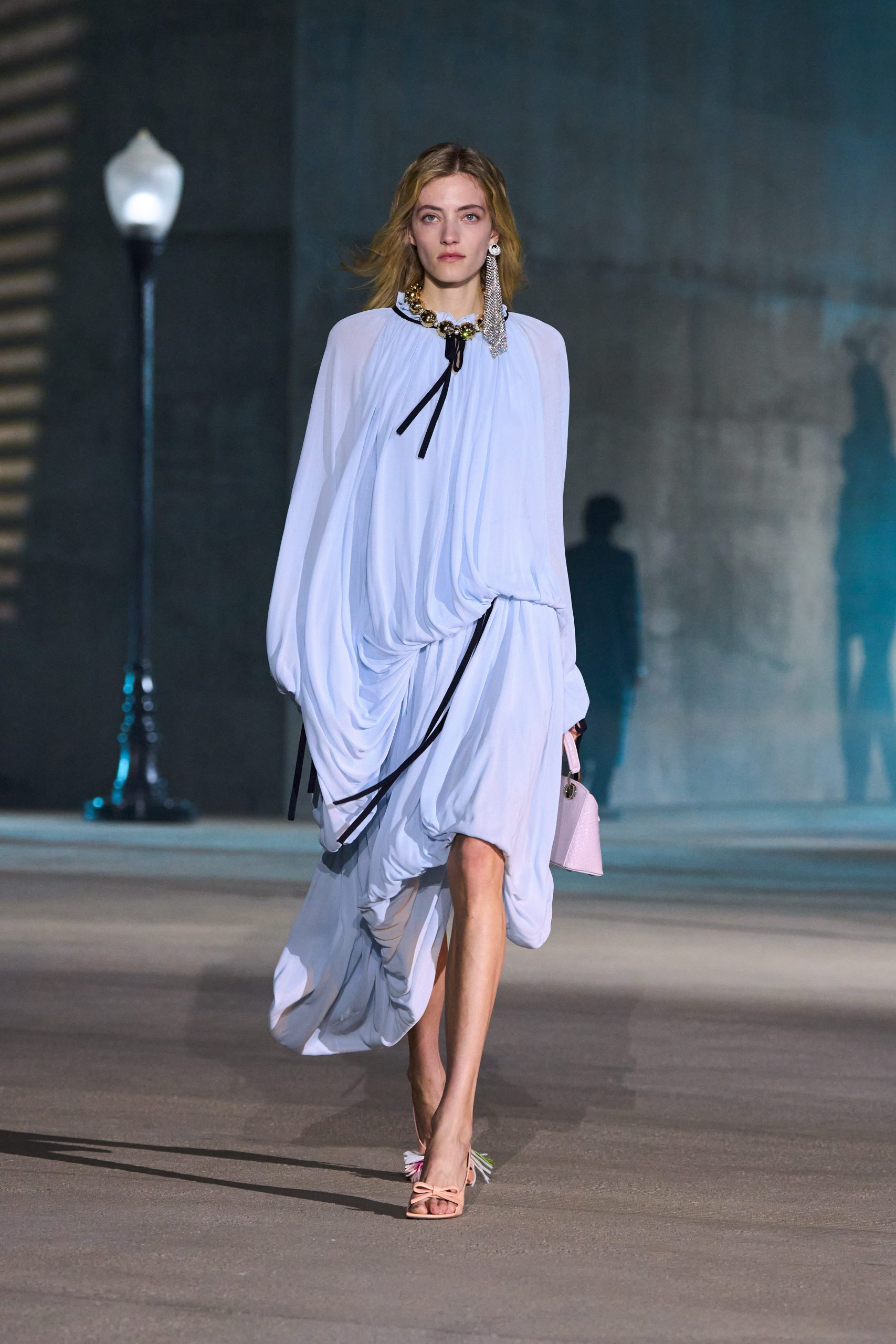 Photo Credit: Dior
“Christian Dior understood how important the idea of ‘the dream’ was for people after the war—as a form of escapism,” Anderson said. “He explored this in couture; his Surrealist friends were obsessed with dreams, and, of course, Hollywood is ‘The Dream Factory’. It was all part of the same cross-cultural shift.” The collection that followed felt like a direct extension of that thinking—rooted in history but entirely of the present.
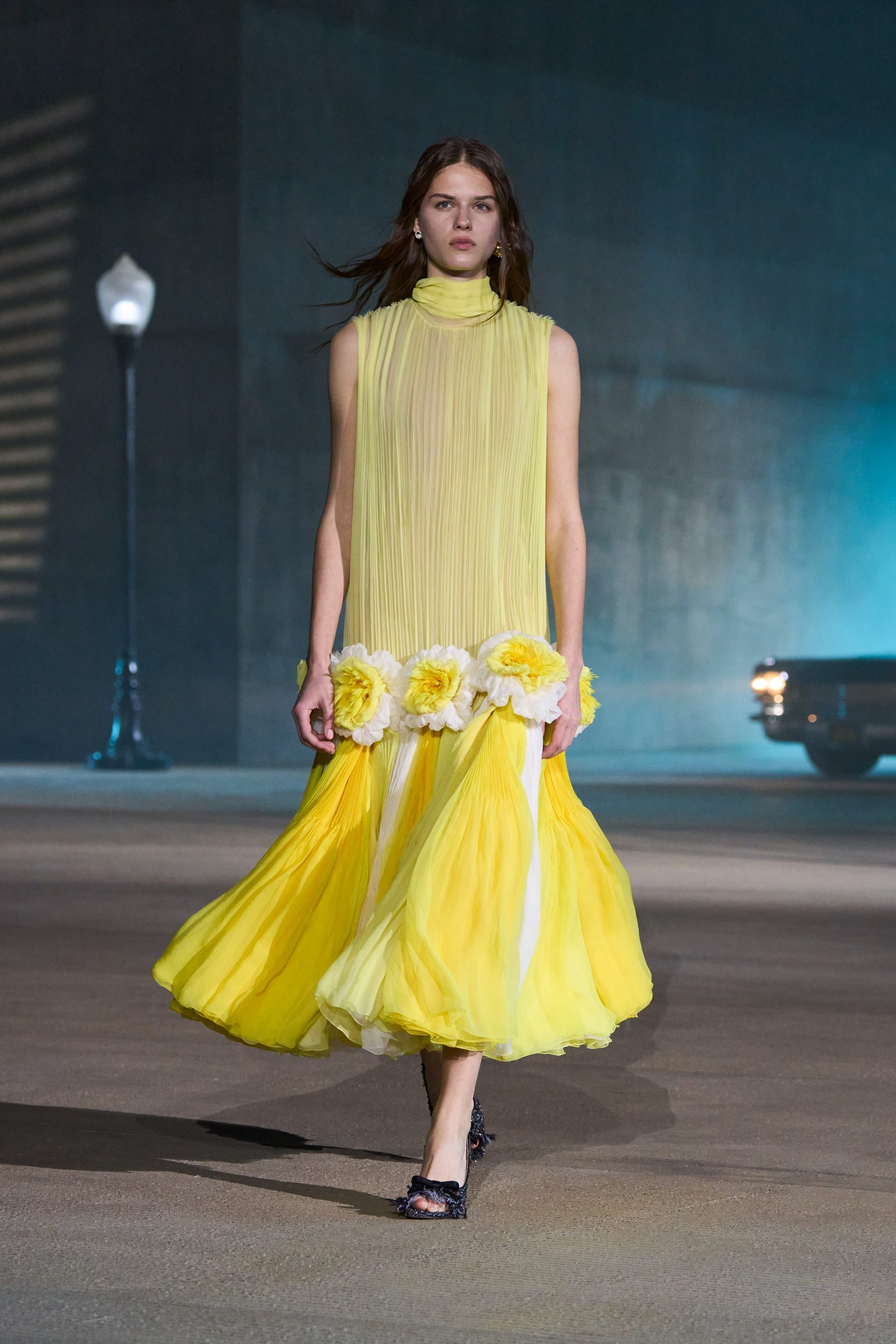 Photo Credit: Dior
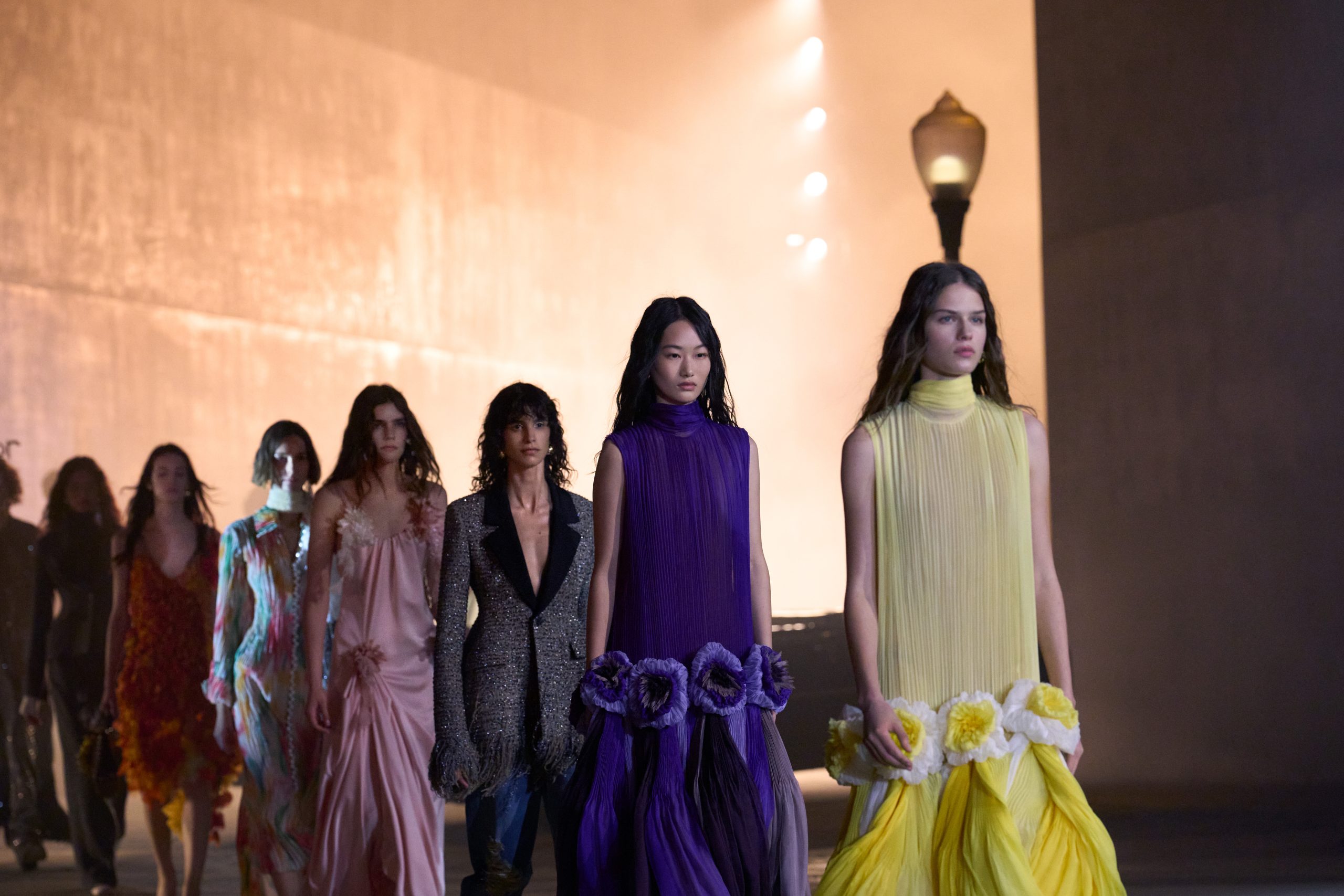
The show opened with John Lee Hooker’s “Murder” playing as the first look appeared: a buttercup-yellow dress decorated with rosettes, introducing flowers as a recurring thread. A luminous orange dress followed, reading like a field of California poppies—a deliberate reference Anderson acknowledged directly. Women’s looks gradually gave way to men’s, the first of which arrived with bespoke headpieces by Philip Treacy, whose featherwork formed lettering and typography with what he described as exacting precision, reworking a technique originally created for Isabella Blow. The pieces were weightless and alive in equal measure.
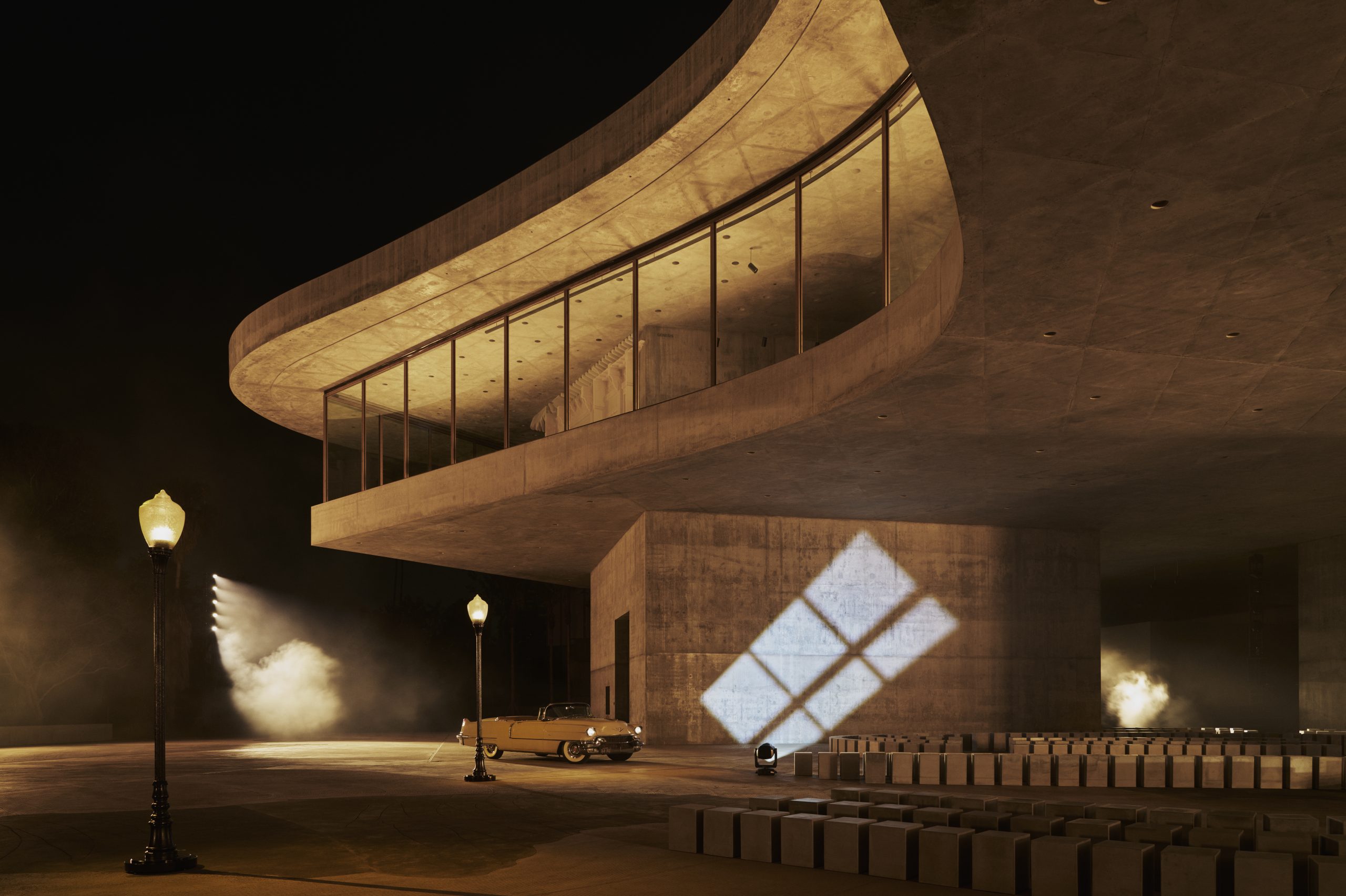 Photo Credit: Eric Staudenmair
The film noir reference arrived in the form of a Dior Gray wool flannel coat, its surface striped with the geometric shadows of Venetian blinds—an image pulled directly from the visual language of 1940s Hollywood. Shirts designed in collaboration with artist Ed Ruscha followed; the partnership was a natural one for Anderson. “When I think of LA, I think of Ruscha’s work, which has this fascinating sense of the mundane and how it relates to the city’s grandeur,” he said. Denim jeans—ripped and then embroidered with fine silver chains imitating strands of cotton—pushed the same idea further. The everyday becoming couture.
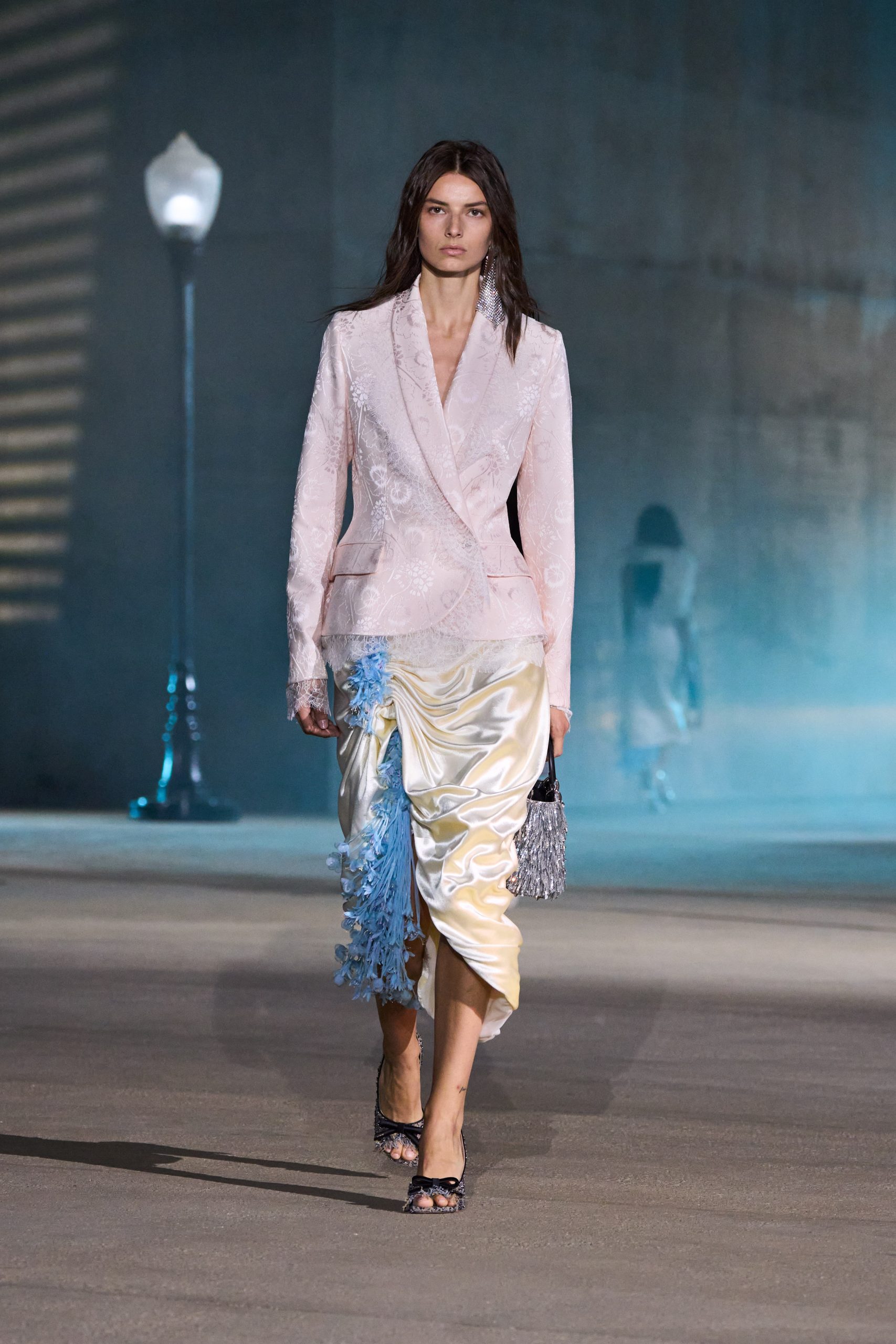 Photo Credit: Dior
A red dress appeared midway through the show, gathered on one side and held at the waist by an abstract flower. It was, Anderson confirmed, a deliberate nod to Christian Dior’s own habit of placing a red dress partway through his collections—simply, as Dior put it, to wake people up.
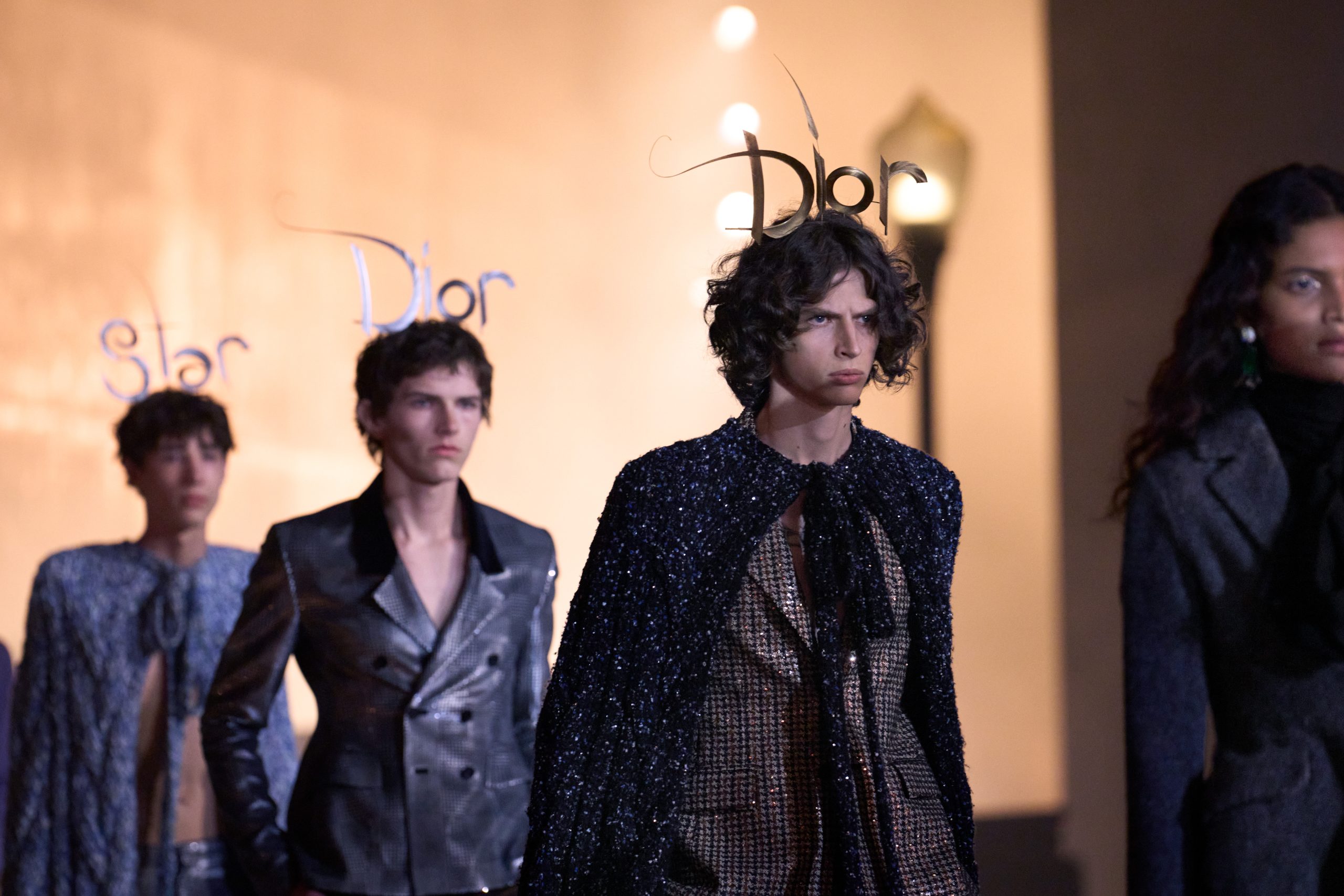 Photo Credit: Maddy Rotman
The accessories carried the collection’s Los Angeles references to their logical conclusion. New Saddle bags arrived with car paint surfaces and motor key charms, inspired by vintage American cars. A nautilus-inspired minaudière and a completely new silhouette with a crescent-shaped base rounded out the bag edit. Shoes were animated by flowers and sequins throughout. As the final carousel of models returned to the runway to Air’s “Kelly Watch the Stars,” the full picture came together—glamorous, cinematic, and unmistakably Anderson’s Dior.
The Haute Read
Jonathan Anderson presented the Dior Cruise 2027 collection, titled “Wilshire Boulevard,” at the Los Angeles County Museum of Art on May 13, 2026. This marked Anderson’s first Cruise collection as Creative Director of Dior. The collection drew references from Dior’s longstanding relationship with Hollywood cinema—including Alfred Hitchcock’s 1950 film Stage Fright, for which Marlene Dietrich insisted on wearing Dior—as well as the work of Los Angeles artist Ed Ruscha, Californian poppies, vintage American cars, and film noir. The show featured bespoke headpieces by Philip Treacy and shirts designed in collaboration with Ed Ruscha and Gagosian. Key pieces included a buttercup-yellow dress decorated with rosettes, a luminous-orange poppy-inspired dress, denim jeans embroidered with fine silver chains, a Dior Gray wool flannel coat with Venetian-blind shadow stripes, and new Saddle bags with car-paint surfaces and motor-key charms. The show opened with John Lee Hooker’s “Murder” and closed with Air’s “Kelly Watch the Stars.” Styling was by Benjamin Bruno, hair by Guido Palau, and makeup by Peter Philips.
Latest from Haute Living
Seia Transforms Into Venice for Halloween With a Masquerade 54 Floors Above Brickell
Where Atlanta’s Money Is Moving: The Haute Guide to Alpharetta, Milton and Johns Creek
After Its $150 Million Transformation, the Brooklyn Nets’ Arena Now Has An Art Gallery, A Chef’s Table & More