






Every few months, a new under-eye trend takes over TikTok, and the current cycle has landed on two: eyelid tape, promising a snapped, lifted look with a drugstore strip of adhesive, and under-eye filler, increasingly framed online as a quick, at-home-adjacent fix for hollows and dark circles. Dr. Nora Siegal sees both trends walk into her practice eventually, usually after something has already gone wrong. As an oculoplastic surgeon, one of fewer than 700 in the country trained specifically in the surgical anatomy of the eyelid and orbit, she has a more granular view of what these trends actually do to the area than most of the practitioners weighing in online. Here is what she wants people to actually understand before they try either one.
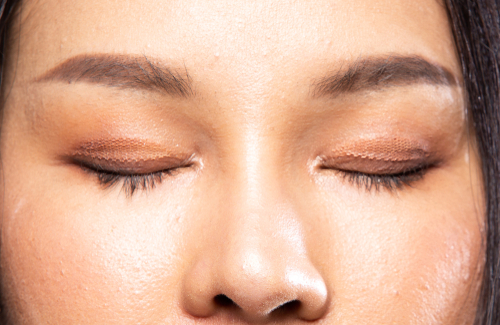 Photo Credit: Shutterstock
What Eye Tape Actually Does to Eyelid Skin
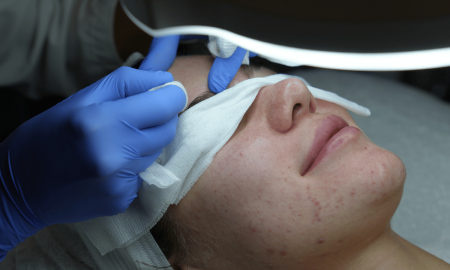
Eyelid tape is marketed as a temporary, reversible way to create a lifted, more defined eyelid crease, and for an occasional special occasion, that's largely true. The problem is repetition. Eyelid skin is among the thinnest on the body, and daily or near-daily taping puts sustained mechanical tension on tissue that isn't built to handle it.
Dermatologists and optometrists tracking the trend have flagged the same pattern: repeated pulling and adhesive contact can stretch the skin and muscle over time, trigger allergic reactions, and in some documented cases, leave lasting changes to the eyelid's natural fold. Some users have reported symptoms consistent with ptosis, a drooping of the eyelid, after prolonged use, and once that muscle has been stretched, it doesn't reliably snap back the way people expect.
There's also a simpler problem hiding underneath the trend. Most people reaching for eyelid tape are trying to solve a structural issue, hooding, puffiness, or a heavy brow, that tape can only mask, not correct. If the concern is persistent, the more durable answer usually isn't stronger tape. It's an actual evaluation of what's structurally going on.
Where Under-Eye Filler Trends Go Wrong
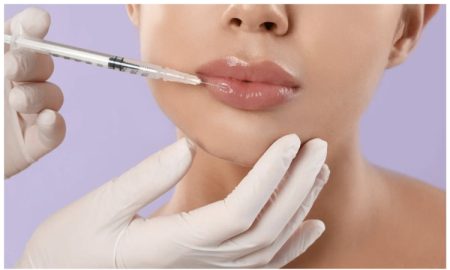
Filler in the tear trough, the hollow between the lower eyelid and the top of the cheek, has become one of the most requested and most complicated injectable treatments in facial aesthetics. The under-eye area has some of the thinnest skin on the face, sitting directly over a dense network of blood vessels that feed into the eye itself. That combination leaves very little room for error.
When filler is placed too superficially, it can create the Tyndall effect, a bluish or gray discoloration caused by light scattering through the product beneath thin skin. Overfilling or using the wrong type of product can lead to chronic puffiness that fluctuates throughout the day, sometimes for months, along with filler migration into the upper cheek that distorts the area's natural contour. The more serious risk is vascular occlusion, where filler is injected into or compresses a blood vessel, cutting off circulation. Left untreated, this can lead to tissue damage, and in the rare cases where filler enters a vessel connected to the eye, vision loss.
None of this is a reason to panic about filler broadly. It's a reason to be far more selective about who is doing the injecting. The tear trough is not a treatment area for a first-time injector, a discounted pop-up event, or a product sourced outside a licensed medical setting. Dr. Siegal's standard is a straightforward one: if the person holding the needle can't clearly explain the anatomy of what they're injecting near, that's the signal to walk away.
The Pattern Behind Both Trends
Eye tape and under-eye filler look nothing alike on the surface, but they share the same underlying problem. Both promise a fast, visible result for an area of the face with almost no margin for error, and both are frequently attempted without any real understanding of the anatomy involved. TikTok compresses a treatment into a fifteen-second clip. It rarely shows what happens when the result goes wrong, or how long it takes to reverse.
The advice Dr. Siegal gives patients applies to nearly every viral under-eye trend that comes through her office: if it targets the eye area specifically, get a real evaluation before trying the version you saw online. What looks like a simple fix on camera is frequently a symptom of something a five-minute consultation would catch, and would treat far more safely.
Frequently Asked Questions
Is eyelid tape safe to use every day? Occasional use for a special event is generally low-risk, but daily or repeated use can stretch eyelid skin and muscle over time, and has been linked to allergic reactions and, in some cases, lasting changes to the eyelid's natural fold.
What is the Tyndall effect from under-eye filler? The Tyndall effect is a bluish or gray discoloration that appears when filler is placed too close to the surface of thin under-eye skin, causing light to scatter differently than it would through natural tissue.
Can under-eye filler cause blindness? In rare cases, yes. If filler is injected into or compresses a blood vessel connected to the eye, it can cause vascular occlusion, which may lead to tissue damage or vision loss if not treated immediately. This is uncommon but is the most serious known risk of the procedure.
Why does under-eye filler sometimes look puffy months later? Filler placed too superficially or in excess can cause chronic swelling, sometimes called malar edema, which may fluctuate throughout the day and persist for months until the filler is dissolved or naturally metabolizes.
How can I tell if my injector is qualified to treat the under-eye area? Look for a board-certified physician with specific experience in tear trough filler, and ask directly about their approach to the area's vascular anatomy. A qualified injector should be able to explain their technique and the specific risks of the area without hesitation.
Does eyelid tape actually create a permanent eyelid crease? No. Eyelid tape is a temporary, reversible effect. Any lasting changes associated with prolonged use are typically the result of skin and muscle damage, not the creation of a genuine permanent crease.
What should I do if I think I have a vascular occlusion from filler? Vascular occlusion is a medical emergency. Symptoms include severe pain during or after injection, skin that turns pale or mottled, and vision changes. Contact the injecting provider or seek emergency medical care immediately, since prompt treatment with hyaluronidase can prevent lasting damage.
Are there safer alternatives to under-eye filler for dark circles and hollows? Depending on the underlying cause, alternatives can include laser resurfacing, chemical peels, fat repositioning, or lower blepharoplasty. A consultation with a board-certified oculoplastic surgeon can help determine which approach fits the actual structural issue.
Why do TikTok eye trends keep going viral despite the risks? Viral trends tend to show a dramatic before-and-after in a short clip, without showing recovery time, cost of correction, or the risk of a poor outcome. Most creators sharing these trends have no medical training, which allows unproven or risky techniques to spread quickly.
What is the difference between a board-certified oculoplastic surgeon and a general injector for under-eye treatments? A board-certified oculoplastic surgeon completes an ophthalmology residency followed by an additional fellowship focused specifically on the eyelids, orbit, and surrounding structures, making them among the most specialized physicians for this exact anatomy. General injectors vary widely in training and experience, particularly in high-risk areas like the tear trough.
For more information, visit Dr. Nora Siegal's social media: