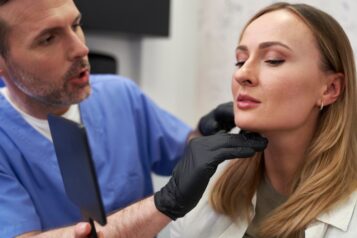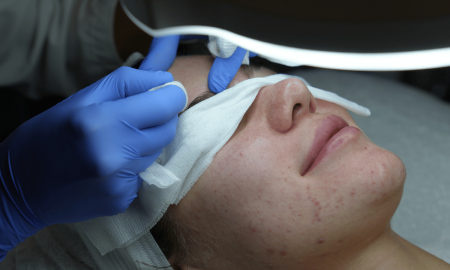







Walk into a consultation in Miami, Los Angeles, or New York, and you're likely to hear three different answers to the same question: what's everyone actually getting done? The differences aren't random. They trace back to climate, local medical culture, even who's legally allowed to hold the needle, and they say as much about each city's identity as they do about its patients.
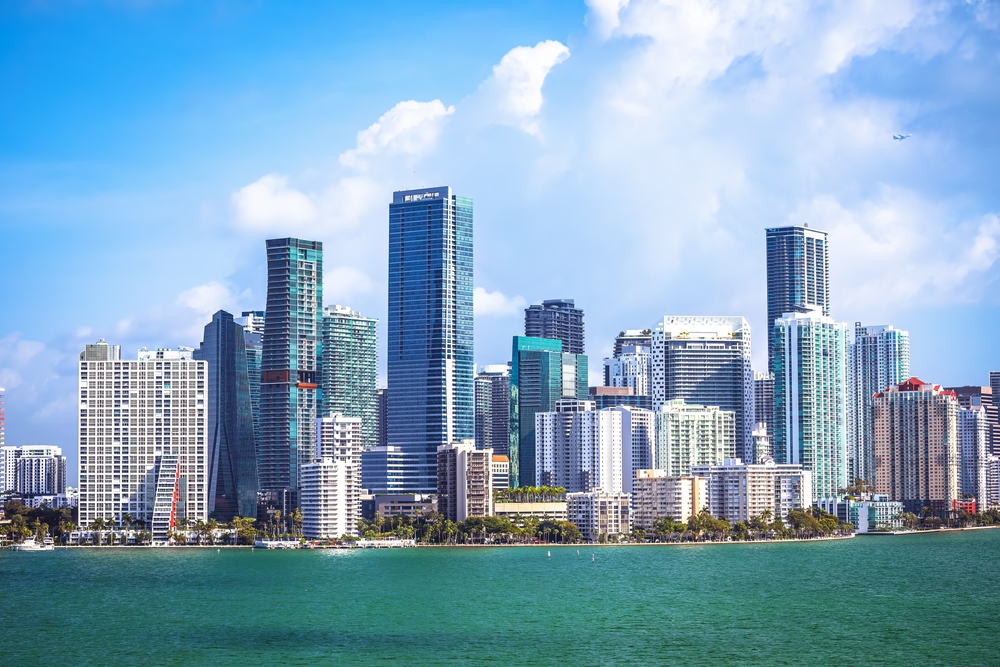 Photo Credit: Shutterstock
If one procedure defines Miami's cosmetic surgery scene, it's the Brazilian Butt Lift. Miami surgeons perform more BBLs by volume than any other city in the country, a distinction that's held for over a decade and shows no sign of slowing.
Part of the explanation is economic. Miami has roughly 3.90 plastic surgeons per 100,000 residents, the highest concentration in the country, and that competition keeps prices meaningfully lower than comparable procedures in New York or LA. A facelift running $15,000 to $20,000 in Manhattan often costs $8,000 to $12,000 in Miami. The city's warm, year-round climate also makes recovery logistically easier, patients can rest and walk outdoors without the cold-weather complications that can complicate healing elsewhere. That combination of affordability, volume, and climate has made Miami a genuine medical tourism destination, drawing patients from across the U.S. and internationally specifically for body contouring work.
The trend within the trend is proportion. Miami surgeons increasingly describe patients requesting more natural, balanced augmentation rather than the more dramatic BBL results the procedure was known for a decade ago, alongside safety improvements including Florida's 2022 requirement for ultrasound guidance during fat transfer.
 Photo Credit: Shutterstock
Los Angeles operates less like a market and more like a testing ground. Industry professionals describe it as simply further ahead, more experimental, willing to try treatments before they've been fully vetted elsewhere. Last year's "Barbie Botox," a shoulder-slimming trapezius injection trend, started in Los Angeles before it reached New York months later. The same pattern is playing out now with PRF under-eye treatment, gaining traction as an alternative to filler amid growing concern about migration and the Tyndall effect.
A meaningful piece of that experimentation comes down to who's providing the treatment. Los Angeles clients have broadly embraced aesthetic nurses and nurse practitioners for injectable work, a looser provider culture that allows new techniques to spread faster than in markets where physician-administered treatment remains the norm. The demographic skews young: patients as early as 18 to 20 are starting with lip flips and half-syringe filler, moving into preventative Botox by their mid-twenties.
 Photo Credit: Shutterstock
New York's cosmetic culture runs in the opposite direction. Industry professionals describe the city as deliberately not wanting to be at the forefront of trend-chasing, a market that still strongly prefers dermatologist- and physician-administered procedures over the nurse-injector model that's taken hold on the West Coast.
That conservatism shows up most clearly in New York's embrace of the deep plane facelift, now considered the city's signature procedure among top facial plastic surgeons. Unlike traditional SMAS techniques that primarily tighten skin, the deep plane approach releases the retaining ligaments beneath the facial support structure and repositions the midface, jawline, and neck as a single unit. Surgeons favor it because it produces a more structural, longer-lasting result that avoids the pulled, wind-tunnel appearance associated with older facelift techniques, an outcome that fits New York's broader preference for results that read as refined rather than obviously done.
None of this means one city is doing cosmetic surgery correctly and the others aren't. It means the same underlying goal, looking like a better version of yourself, gets filtered through completely different local conditions: who's allowed to inject, how much a procedure costs, what the climate does to recovery, and how visibly a community is willing to experiment in public.
For patients, the practical takeaway is to separate what's trending in a given city from what's actually right for your anatomy and goals. A technique's popularity in Los Angeles or New York doesn't make it the correct choice everywhere, and a lower price point in Miami doesn't mean lower standards, so long as the provider is properly credentialed. The real signal to look for isn't geography. It's board certification, direct experience with the specific procedure, and a provider willing to explain why a given approach fits your face or body, not just the local trend.