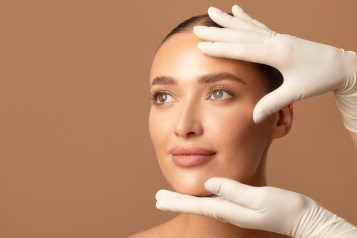









Collagen banking is not a literal savings account for your skin. It is a preventive treatment strategy built around biostimulatory injectables, energy-based devices, and topical actives, all aimed at supporting collagen production before natural loss accelerates in the late twenties and early thirties. The research behind the underlying principle is sound. The marketing built on top of it, less consistently so.
 Photo Credit: Shutterstock
What Collagen Banking Actually Means
Start with the metaphor, because it's the first thing worth correcting. You cannot store collagen in your body the way you'd store money in an account, ready to withdraw later. What you can do is keep your skin's collagen-producing cells, called fibroblasts, working at a higher capacity while they're still young enough to respond well to stimulation.
That matters because collagen production doesn't decline evenly across a lifetime. Research on skin aging generally points to a meaningful drop-off starting around age 25, with collagen breaking down faster than the body replaces it at a rate of roughly 1 to 1.5 percent per year. The earlier you support that process, the higher the baseline your skin is working from once visible aging sets in.
Where the Term Comes From, and Why It's Everywhere Right Now
None of this is new science. Cosmetic treatments designed to stimulate collagen have existed for decades, long before "collagen banking" became a phrase anyone used outside a dermatology office. What's changed is the branding. Over the past two years, the term has moved from niche clinical shorthand into mainstream skincare marketing, showing up on serum bottles, LED mask packaging, and social media captions promising to help you "bank" your way to younger-looking skin later in life.
That shift is worth noticing on its own. When a real clinical concept gets turned into a consumer buzzword, the science usually gets simplified, and sometimes distorted, in the process. That doesn't mean the concept is fake. It means the packaging around it deserves more scrutiny than the claims on the label.
The Treatments Actually Behind It
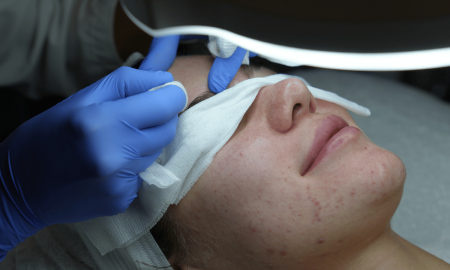
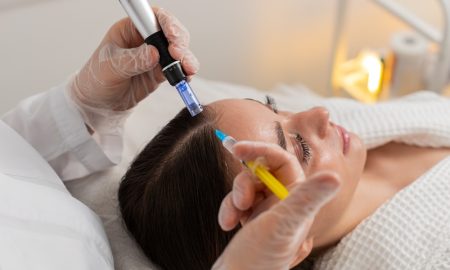
Strip away the marketing language and the actual mechanisms fall into a few categories:
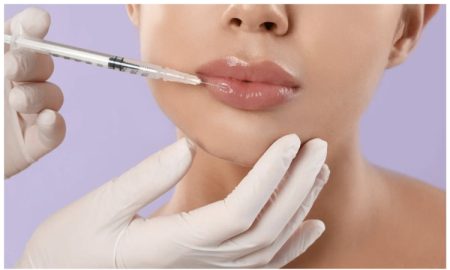
- Biostimulatory injectables, such as Sculptra and Radiesse, which work by triggering the body's own collagen response rather than simply adding volume.
- Resurfacing lasers and radiofrequency devices, which stimulate collagen production through controlled heat or light exposure at the skin's deeper layers.
- Topical retinoids and vitamin C serums, which support collagen synthesis and help protect existing collagen from oxidative damage.
- Daily sunscreen, which doesn't build collagen but prevents UV exposure from breaking it down faster than the body can replace it.
That last point tends to get buried under flashier treatments, but it's arguably the most important one. None of the in-office procedures matter much if unprotected sun exposure is undoing the work in the meantime.
What About Drinking Collagen? The Powder Debate
Collagen powder, the kind mixed into coffee or smoothies, gets lumped into "collagen banking" constantly, but it sits in a different category from the treatments above, and the evidence is more contested.
The basic idea is that hydrolyzed collagen, broken down into smaller peptides, gets absorbed through the gut and eventually signals the body to produce more of its own collagen. A 2026 narrative review published in the journal Nutrients describes this mechanism, noting that collagen peptides can appear intact in circulation and accumulate in dermal tissue, where they help stimulate fibroblast activity and collagen synthesis.
Some clinical research supports real-world benefit. A 2026 umbrella review in Aesthetic Surgery Journal Open Forum, led by researchers at Anglia Ruskin University and combining 16 systematic reviews with 113 randomized controlled trials across nearly 8,000 participants, found measurable benefits for skin elasticity and hydration, along with improvements in joint health. A smaller, independently published 12-week randomized, double-blind, placebo-controlled trial (Reilly et al., Dermatology Research and Practice, 2024) reached a similar conclusion, using confocal microscopy and ultrasound imaging to document reduced collagen fragmentation alongside increased skin hydration and elasticity compared to placebo.
But the picture isn't uniformly positive. A separate meta-analysis published in The American Journal of Medicine looked specifically at who funded the underlying studies and found a notable pattern: trials funded by supplement or pharmaceutical companies showed significant skin benefits, while independently funded studies did not. The same analysis found that higher-quality studies overall showed no significant effect, while lower-quality studies were more likely to show improvement. Farah Moustafa, MD, a dermatologist at Tufts Medical Center, made a similar point in comments to ScienceDaily, noting that oral collagen supplements aren't currently recommended as a primary treatment for skin aging, even though they may be reasonable to use alongside other, better-studied interventions.
The honest summary: collagen powder isn't fake science, and it isn't guaranteed results either. It's a supplement with a mixed evidence base, more promising than most wellness trends, less definitive than in-office treatments, and worth treating as a "maybe helpful" addition rather than a core pillar of any collagen banking routine.
Who Should Actually Start, and When
Most of the research and clinical commentary on this topic points to the mid-20s through early 30s as the ideal window to begin, since that's before significant, visible collagen loss has occurred. The logic is straightforward: the earlier you start supporting collagen production, the less ground there is to make up later.
That said, "ideal window" doesn't mean "only window." Skin continues to respond to collagen-stimulating treatments well into later decades, just from a different starting point. Framing this as a hard deadline, something you either did in your 20s or missed entirely, isn't accurate and isn't how most of the underlying research is actually presented.
Is It Worth the Cost?
This is where the honest answer is genuinely two-sided.
At the clinical level, the principle holds up. Treatments like biostimulatory fillers have documented, measurable effects on collagen production, and starting preventive skin care earlier is a reasonable, low-regret strategy for anyone who can afford the time and cost.
At the product level, the picture gets murkier. A twenty-dollar drugstore moisturizer labeled "collagen bank" is not doing the same work as an in-office biostimulatory filler, no matter how similar the language on the packaging sounds. Some of what circulates under this term is genuine, incremental skin support. Some of it is a marketing label attached to products that would have made the same modest claims under any other name.
The honest takeaway: the strategy is worth it if you're investing in modalities with real evidence behind them, an in-office treatment plan, sunscreen, a legitimate retinoid or vitamin C routine. It's less worth it if the "collagen banking" label is the main reason you're buying a specific product over an equivalent one without the branding.
FAQ
Can you actually "store" collagen for later? No. Collagen isn't stored for future use. What preventive treatment does is support your skin's own collagen-producing cells earlier, so the natural decline starts from a stronger baseline.
What age should you start collagen banking? Most research points to the mid-20s through early 30s as the ideal starting point, since that's typically before significant collagen loss becomes visible. Starting later still provides benefit, just from a different baseline.
Do at-home devices work, or do you need in-office treatment? Both can play a role. At-home devices and topical products tend to offer gentler, more gradual support, while in-office treatments like biostimulatory fillers and energy-based devices produce more significant, measurable collagen response.
Is collagen banking safe? The individual treatments involved, from topical retinoids to biostimulatory fillers, have established safety profiles when used appropriately. As with any cosmetic treatment, results and risk depend on the specific product, device, or procedure, not the marketing term attached to it.
The goal of collagen banking was never to stop aging. It's to give your skin a stronger foundation going into it. The concept holds up under scrutiny. The label slapped on unrelated products at the drugstore is where the skepticism belongs.
This article is for informational purposes only. Always consult a licensed dermatologist or healthcare provider before starting any new skincare treatment, supplement, or cosmetic procedure, particularly to evaluate what's appropriate for your individual skin type, health history, and goals.