







There is a difference between a physician who follows the standard of care and a physician who works to raise it. Dr. Brian A. Levine has built his career on the latter. As founding partner and practice director of CCRM Fertility of New York, he has assembled a practice defined by a single, uncompromising principle: that every decision should be grounded in evidence, measured against outcomes, and oriented toward the fastest responsible path to parenthood.
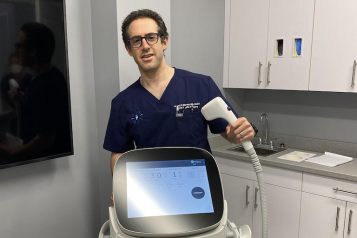
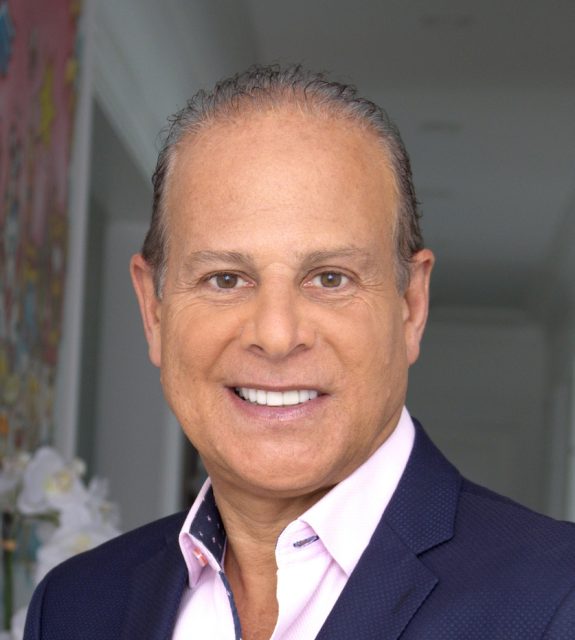
 Photo Credit: Photo Credit: Photo courtesy of Dr. Brian Levine
A Foundation in Rigor
Dr. Levine's training is a progression through three of the most demanding programs in American medicine. He earned his medical degree at New York University School of Medicine, completed his residency in Obstetrics and Gynecology at NewYork-Presbyterian Hospital through Columbia University Medical Center, and finished his fellowship in Reproductive Endocrinology and Infertility at NewYork-Presbyterian Hospital through Weill Cornell Medical College.
That lineage matters, but it is what he did with it that distinguishes him. Dr. Levine is double board-certified in Reproductive Endocrinology and Infertility and in Obstetrics and Gynecology, and a Fellow of the American College of Obstetricians and Gynecologists. His commitment to teaching was recognized early, with Excellence in Teaching Awards from Columbia University's College of Physicians and Surgeons in 2009 and 2011, and he was named Physician of the Year by the Nursing Service of NewYork-Presbyterian Hospital — an honor conferred not by marketing, but by the nurses who watched him work.
An Evidence-Based Practice, by Design
What sets CCRM New York apart under Dr. Levine's leadership is not a slogan; it is a methodology. Every protocol begins with a complete review of the patient's history. Every treatment plan is individualized rather than templated. And every recommendation is anchored in the published literature and validated against real outcomes — because in fertility medicine, the difference between a generic protocol and a customized one is often the difference between another failed cycle and a baby.
This discipline extends to how Dr. Levine thinks about time. He understands that for his patients, time is not an abstraction — it is the single most precious and least renewable resource in their care. His practice is structured around eliminating wasted cycles: doing the right workup first, selecting the protocol that matches the patient's physiology, and refusing to repeat an approach simply because it is familiar. The goal is never activity for its own sake. The goal is the fastest responsible path to a healthy pregnancy.
 Photo Credit: Shutterstock
Research and Recognition
Dr. Levine's contributions to the field extend well beyond the clinic. He is the author of more than fifty peer-reviewed publications and academic contributions, and his research reflects a consistent interest in advancing the precision and safety of reproductive medicine. His work on three-dimensional sperm surface reconstruction — a novel approach to assessing sperm morphology, published in Fertility & Sterility — earned recognition at the American Society for Reproductive Medicine's Annual Meeting and reflected his early conviction that better imaging and better data lead to better outcomes. His scientific contributions have been honored internationally, including the International Scientific Award from the Japan Society of Obstetrics & Gynecology.
He serves in editorial and advisory capacities that keep him at the leading edge of the field's evolution, regularly evaluating new and disruptive reproductive technologies so that his patients benefit from advances that many practices have yet to rigorously assess. His recognition by his peers has been sustained and consistent: New York Magazine Top Doctor, Castle Connolly Top Doctor, and Super Doctor designations across multiple consecutive years.
A Trusted Public Voice
When Dr. Levine entered reproductive medicine, infertility was still largely treated as a private struggle — navigated quietly, often without the information or support patients genuinely needed. He set out to change that, and has become one of the most cited and trusted fertility educators in the country.
He has been featured as a leading expert across The New Yorker, the New York Post, NBC, CNN, the TODAY Show, Popular Science, and Avenue Magazine, among others. Most recently, he authored an op-ed in The Free Press making the case for rethinking how preventive women's health care is structured and reimbursed. That willingness to make substantive, evidence-based arguments in public is not a pursuit of attention; it is an extension of his clinical philosophy. Patients who arrive at CCRM New York arrive better informed and more capable of participating meaningfully in their own care, because Dr. Levine has spent years making accurate information accessible and free of the stigma that once surrounded it.
Nodal: A Higher Standard for Third-Party Reproduction
Dr. Levine's most ambitious contribution to the field may be Nodal, the gestational surrogacy platform he founded to bring clinical rigor, transparency, and patient safety to a corner of reproductive medicine that has historically lacked all three.
Surrogacy has long operated through a fragmented network of agencies, with inconsistent medical vetting, opaque processes, and few enforceable standards for how gestational carriers are screened, matched, and cared for. As costs soared after the pandemic — with single surrogacy journeys climbing from roughly $100,000 to as much as $600,000, and waitlists stretching as long as three years — Dr. Levine grew concerned about the lack of transparency around pricing and logistics. He has also thought and written seriously about the ethical architecture of third-party reproduction, including a 2025 paper in Fertility & Sterility examining the physician's responsibility in gestational carrier arrangements.
Nodal is the practical expression of that scholarship. Founded in the fall of 2022, it reimagines surrogacy matching around a simple principle of fairness: the surrogate makes the first move, because, as Dr. Levine puts it, “the person taking the first risk should take the first move.” The platform embeds clinical standards into every stage of the journey — rigorous, medically grounded screening; transparent, all-inclusive pricing; and a structure that treats the health and informed consent of every participant as non-negotiable. The results speak for themselves: Nodal's process costs a fraction of the typical journey, accepts insurance, and — notably in an industry now dominated by private-equity roll-ups — is not backed by private equity. This work, and its place within the broader transformation of the surrogacy industry, was recently chronicled in Airmail.
The instinct behind Nodal is the same one that defines everything Dr. Levine does: find where the system is failing the people it exists to serve, and build something more rigorous in its place.
 Photo Credit: Shutterstock
What It Means to Be His Patient
For anyone navigating fertility treatment, the choice of physician is among the most consequential decisions they will make. Dr. Levine's patients describe a clinician who combines genuine, unhurried presence with uncommon analytical rigor — someone who reviews the entire history, customizes the protocol, explains the reasoning, and stays engaged through both the clinical milestones and the emotional ones.
In a field where the stakes are measured in years, in savings, and in hope, that combination of scientific discipline and human commitment is not a luxury. For the families he has helped build, and the many more still to come, it has made all the difference.
For more information, visit Dr. Brian A. Levine's social media: