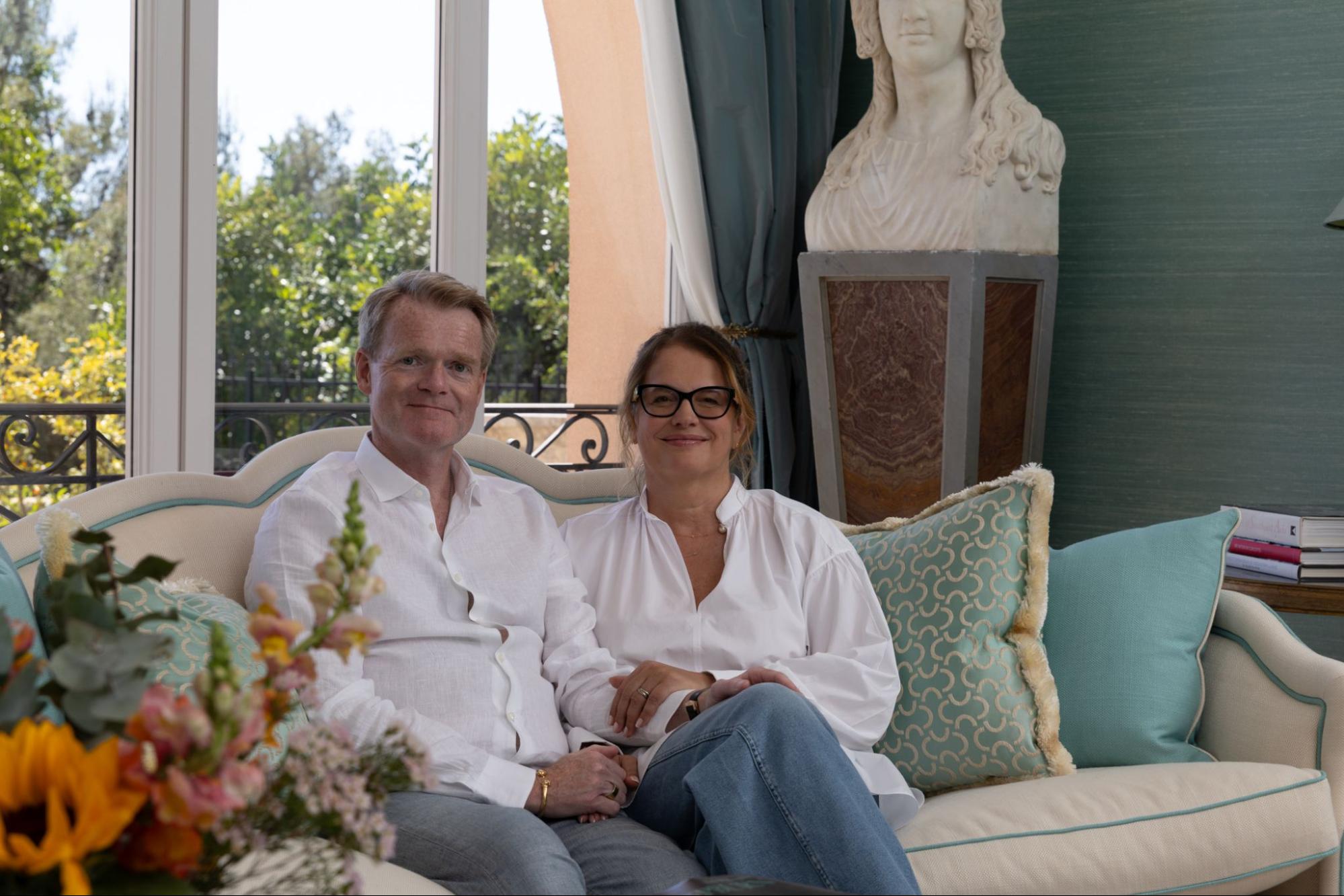
Paul Smith on Why Property Is the Only Asset Class Where the Bank Helps You to Your First Million
Paul Smith shares why property investing, steady income, and smart lending can help build lasting wealth without quitting work early.
Photo Credit: Paul Smith
When Paul Smith bought his first London flat for under £10,000 at age 17, he was already thinking beyond a single source of income. That early purchase became the starting point for a property portfolio that would eventually grow into a broader wealth-building business.
Today, Smith is best known as the founder of Touchstone Education, where he teaches a principle that shaped his own approach to wealth creation: don’t leave your full-time job until your property income is at least three times your salary.
It is a rule that runs against the common idea that building wealth requires a dramatic leap or an early exit from employment. Smith’s view is the opposite. Rather than relying on a single income source, he argues that long-term financial stability comes from building multiple income streams.
The “three-legged stool” approach
Smith calls it a “three-legged milking stool” approach: build multiple income streams so that if one falls away, the others remain. In practice, that means combining employment with property income and other assets rather than relying on a single source. The idea was shaped by his own experience balancing property investing with corporate roles and seeing firsthand that job security is never guaranteed.
For Smith, property became a practical way to do that. While he continued working, he also bought, refurbished, and refinanced properties, allowing rental income and capital growth to build gradually in the background. Employment, meanwhile, provided day-to-day stability and made it easier to access finance.
Why he tells students not to quit too early
That relationship between salary and lending is central to Smith’s argument. A salaried income can strengthen a borrower’s position, make mortgage applications easier and create a buffer if a property underperforms.
He says property income should reach three times a person’s salary before they leave employment, creating a buffer against vacancies, repairs and other fluctuations in rental income.
Smith argues that this margin matters because it changes how decisions are made. Someone under pressure to replace a lost salary may rush into weak deals or overextend financially. Someone with stronger cash flow has more flexibility to think long-term.
Starting small while keeping the day job
That same logic shapes Touchstone’s training model. Rather than framing property as an all-or-nothing leap, Smith teaches strategies that can be built alongside a full-time job and scaled over time. The emphasis is on gradually increasing income, learning how deals work, and using employment as a support rather than seeing it as an obstacle.
The broader message is that wealth creation is usually slower and less dramatic than it appears from the outside. Smith’s own portfolio was built over decades, not through a single deal or a sudden exit from work. In his view, the goal is not simply to own property, but to create a structure that can keep producing income even when one part of it comes under pressure.
That is also why Smith places such emphasis on diversification. Property may be the entry point, but the underlying principle is to avoid dependence on any one source of money. For Smith, the real value of property is not just that it can appreciate or generate rental income. It is that, when approached carefully, it can sit alongside a salary, support borrowing, and form part of a broader, more durable plan for financial independence.
Disclaimer: Written in partnership with APG.
Latest from Haute Living

The Bridge X Celebrated a Decade of Automotive Culture in Bridgehampton

Black Cod Miso, Meet the Gilda: Nobu Finally Lands in Madrid

The Miami Staycation, Perfected: A Weekend at Acqualina Resort