
Why Does Every Man Want to Be a DJ?

He thinks he’s the next John Summit. You know someone like this. Maybe has a perfectly respectable job or maybe he’s unemployed hoping that his 3am set at the local bar is going to take him to the top of the charts. He has a group chat with his frat brothers, opinions about house music, and somewhere in his apartment, a Pioneer controller he bought six months ago and has used exactly twice. He does not perform anywhere. He has no bookings. He does, however, refer to himself, in certain company, as “a DJ.”
Photo Credit: Shutterstock
This is not a niche phenomenon. This is everywhere. The dinner party where the host spends forty-five minutes agonizing over transitions between songs he did not mix. The guy at the wedding afterparty who brought his own equipment. The one in every friend group who, unprompted, will tell you he has been “working on a set.” Something is happening, and it is not an accident.
For most of DJing’s history, the barrier to entry was physical. Real turntables were expensive, heavy, and required actual technical skill to use without sounding like a car crash. The learning curve was steep enough that most people who dabbled gave up quickly, which meant the people who stuck around actually had to be serious about it.
That gatekeeping mechanism is basically gone now. Entry-level controllers like the Pioneer DDJ-FLX4 cost a few hundred dollars and connect directly to a laptop. Software does most of the technical heavy lifting. Beatmatching, which used to take months to learn by ear, is automated. Streaming services including Spotify and Apple Music are now integrated directly into DJ software, meaning you no longer even need to build a music library. The global DJ equipment market is projected to reach $104.5 billion by 2032, a number that only makes sense if you understand that the customer base has expanded far beyond professional club DJs.
The result is that the minimum viable version of “being a DJ” has never been more attainable, or more tempting.
DJing Is the New Guitar
Have you ever had the pleasure of a man playing guitar at you? Yes at you, not to you. There is a version of this phenomenon that has always existed. Every generation has its instrument of male aspiration, the thing a certain kind of man picks up not entirely because he loves music but because of the person he imagines himself becoming while holding it. For a long time that was the guitar. Before that, the piano. The fantasy is less about the music and more about the specific social architecture that instrument creates: the room watching you, the feeling of being the one controlling the vibe, the soft implication that you are more interesting than you looked five minutes ago.
The DJ booth is the current version of that fantasy, and it has some distinct advantages over the guitar. It requires less natural talent to reach a presentable level. It sounds professional almost immediately. It does not require you to write anything original. And crucially, it positions you as the curator of other people’s good time, which is a very appealing kind of power that does not demand you be a virtuoso to access it.
Vibe As A Cultural Currency
Something shifted in the last few years in how we talk about taste. Having good taste in music used to be something you expressed by knowing a lot about music. Now it is something you perform by controlling the atmosphere. The rise of the “vibe” as a cultural currency, the obsession with the right playlist for the right moment, the entire aesthetic language around ambiance and sound design, has made the person in charge of the music feel like a position of genuine cultural authority.
A disc jockey used to be a profession relegated to broadcasters or club conductors. Now the backdrop can be a bedroom, a café, or a DIY Boiler Room filmed with a GoPro and posted to YouTube. DJ sets are no longer just for clubbers; they are for office workers with headphones on looking for a mood, for dinner parties, for rooftop hangs, for anyone who wants to signal that the space they are in has been intentionally curated. Being a DJ, in 2026, is less about playing clubs at 2 a.m. and more about being the person who understands how to make a room feel a certain way.
That is a much more accessible, much more socially legible skill than it used to be. And men, in particular, have decided they want it.
It Is the Lowest-Stakes Creative Identity Available
Here is the part nobody says out loud: DJing is one of the only creative identities you can adopt without producing anything original, without any formal training, without a finished product anyone can critique, and without most people around you having enough technical knowledge to evaluate whether you are actually good.
If you say you are a writer, people will eventually ask to read something. If you say you are a photographer, you will have to post photos. If you say you are a DJ, you can sustain that identity almost indefinitely on the basis of a controller, some playlists, and a willingness to be the one who takes over the aux. The bar for the claim is low. The social return on the claim is high. For a generation of men who were raised to want creative identities but not necessarily taught how to build them, that math is extremely appealing.
Nobody Actually Wants to Be a DJ
The honest version of all this is that most men who “want to be a DJ” do not want the actual career, which involves years of playing to empty rooms, hauling equipment at midnight, and competing with thousands of other people for the same handful of slots. What they want is the feeling the fantasy promises: control over the atmosphere, the quiet authority of being the person whose taste sets the tone for the night. And, if we are being completely honest, the clout. The DJ booth is one of the last remaining spaces where frat flicking through a track that was already recorded for you while people watch constitutes a personality, and men have absolutely discovered that.
The DJ booth is one of the last remaining spaces where frat flicking through a track that was already recorded for you while people watch constitutes a personality, and men have absolutely discovered that.
Latest from Haute Living
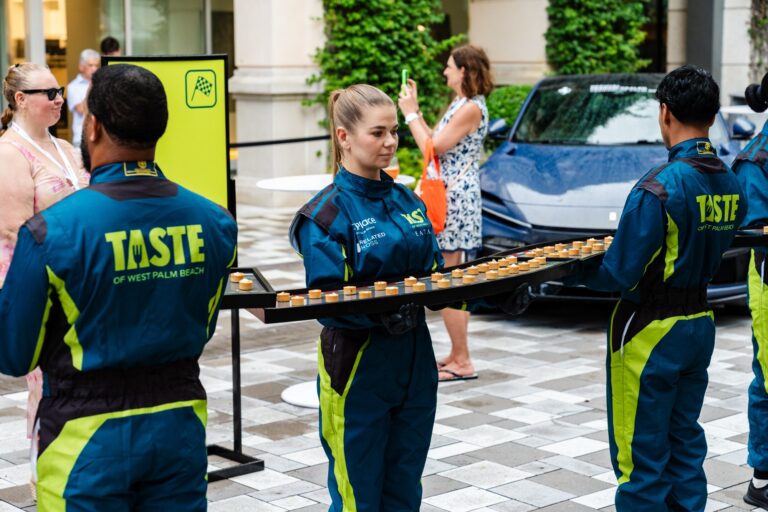
Inaugural Taste of West Palm Beach Draws 800 Guests and 30 Restaurants to CityPlace, Raising $300,000 for the Palm Beach County Food Bank
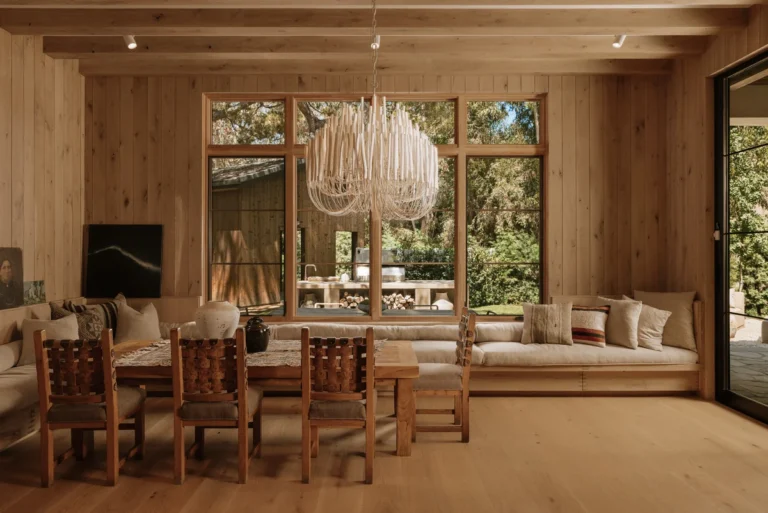
Inside ‘Three Planes,’ Jae Omar’s 11,000-Square-Foot Hidden Hills Estate Inspired by Chumash Cosmology

Haute Insider: Creator Vale Genta’s Guide to Miami