Inside The Dalmore’s Reimagined Highland Distillery — Where Whisky Becomes Art
Six years in the making, The Dalmore's reimagined Highland distillery officially opened today. Here's what awaits.
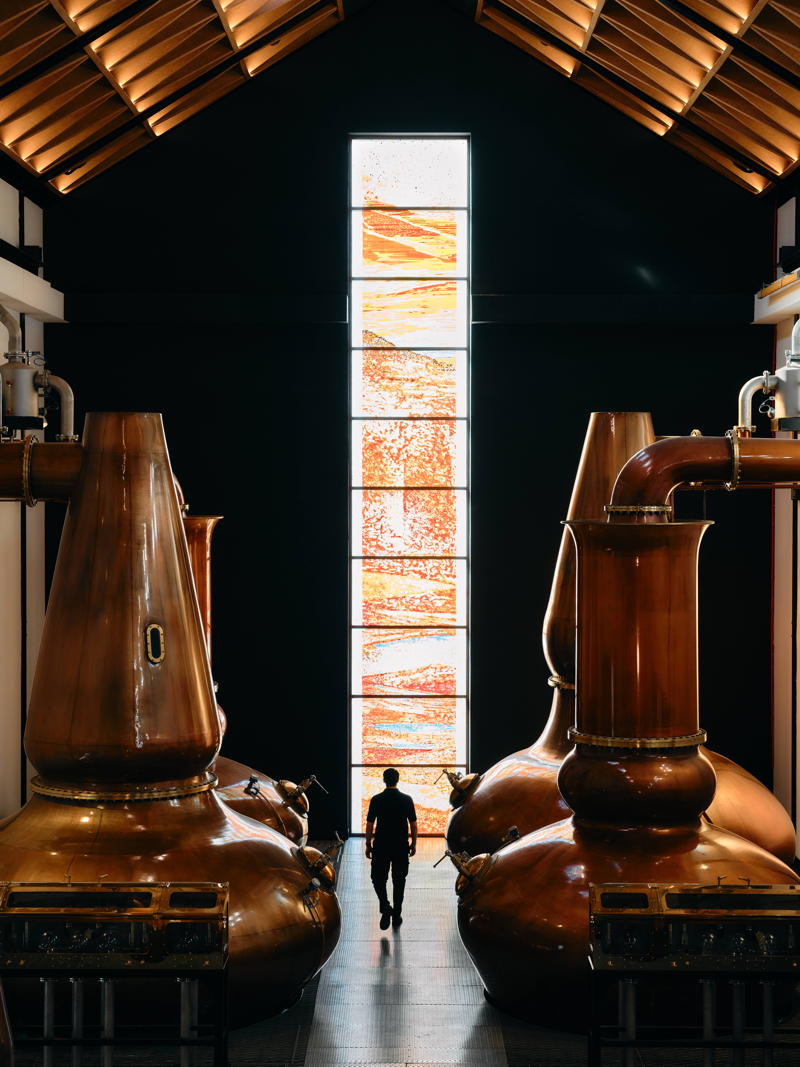 Photo Credit: The Dalmore
On the shores of the Cromarty Firth, one of Scotland’s most storied single malt 0pens its doors today — and nothing about it is what you’d expect.
After six years behind closed gates — part patience, part perfectionism, part pandemic — The Dalmore has reopened its Highland home. Stepping inside feels less like a visit and more like crossing into a world that’s been obsessively — almost theatrically — reimagined.
I was among the first journalists through the doors. It did not disappoint. What waited on the other side wasn’t what I expected. It was sharper. More exacting. And considerably — unmistakably — better.
The gates at The Dalmore have been closed since 2020. Work began that year, paused as the world did, and resumed with a level of intention that feels, in hindsight, inevitable. Six years is a long time to hold a vision in place. Long enough for it to either dilute — or distill into something far more precise. What exists here now is not a renovation. It’s not even a reinvention. It’s something far more deliberate — a complete reimagining of what a distillery can be when time, design, and obsession are allowed to lead.
Photo Credit: The Dalmore
There are whisky distilleries, and then there is The Dalmore. I say that not as someone who has been handed a polished narrative and asked to repeat it, but as someone who has spent enough time in the world’s best bars — Seoul to Stockholm, Lima to Los Angeles — to understand the difference between a brand that tells you it’s exceptional and one that operates as though it simply expects you to recognise it.
Founded in 1839 on the shores of the Cromarty Firth by Sir Alexander Matheson, The Dalmore has never been in a hurry. Its house style — chocolate, citrus, warming spice — is the product of multi-cask maturation drawn from some of the most respected wineries and bodegas in the world. It is whisky built not just on time, but on choice — and on a refusal to cut corners, even when nobody would notice.
Which makes these six years feel less like absence and more like a deliberate pause before something fully formed. Not a brand trying to modernise, but one deciding — very carefully — how it wants to be experienced.
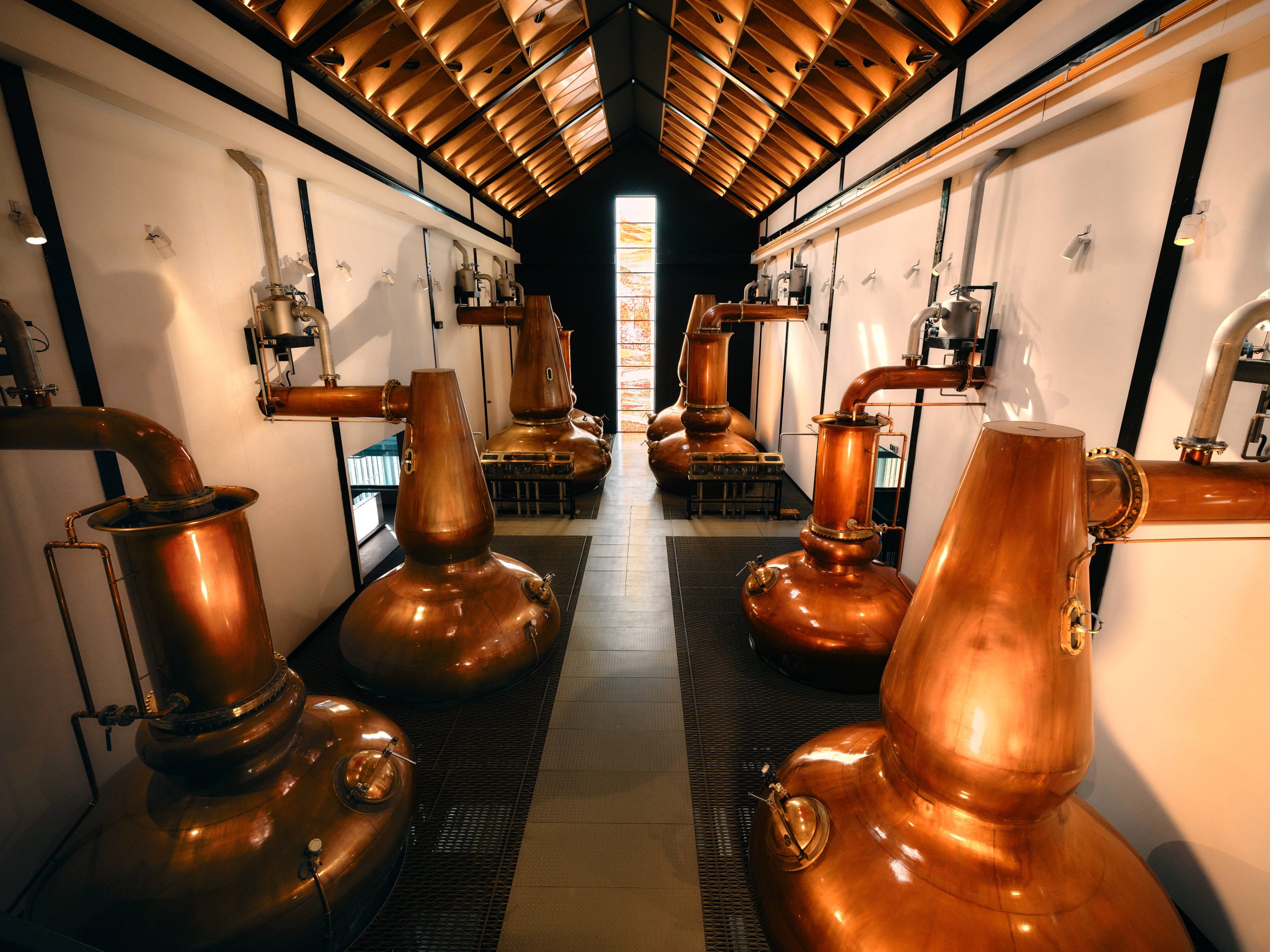 Photo Credit: The Dalmore
I flew from London to Inverness, a journey that deposits you into a landscape that feels older than wherever you came from. From there, north through the Highlands — past hills that roll into something more dramatic, more cinematic — until the Cromarty Firth appears on your left, wide and silver and still. There is a particular quality to the light up here that you don’t fully anticipate until you’re in it: diffuse, unhurried, the kind that makes everything it falls on look considered. The distillery sits exactly where it always has, in Alness, at the water’s edge. What’s changed is everything you don’t see until you step inside.
The brief given to Glasgow-based ThreeSixty Architecture reads like a paradox: reimagine the distillery entirely, but preserve what makes it Dalmore. Keep the still configuration — those idiosyncratic copper vessels that are as responsible for the spirit’s character as anything else — even if that means painstakingly replicating each one. Honour the Victorian structure. Reclaim materials where possible. And create something that doesn’t feel like a museum — or worse, a theme.
Neal Hemingway, Associate Director on the project, described his vision as “a golden world of shining light” — an attempt to translate optimism into architecture. It’s a poetic ambition. It’s also, somewhat unexpectedly, what the space delivers. Hemingway’s approach prioritised material honesty alongside that light: reclaimed stone, anodised mesh engineered to withstand coastal conditions, infrastructure upgrades made with long-term environmental intention. The building thinks about where it is. It thinks about what it’s for. That coherence is rare, and you feel it.
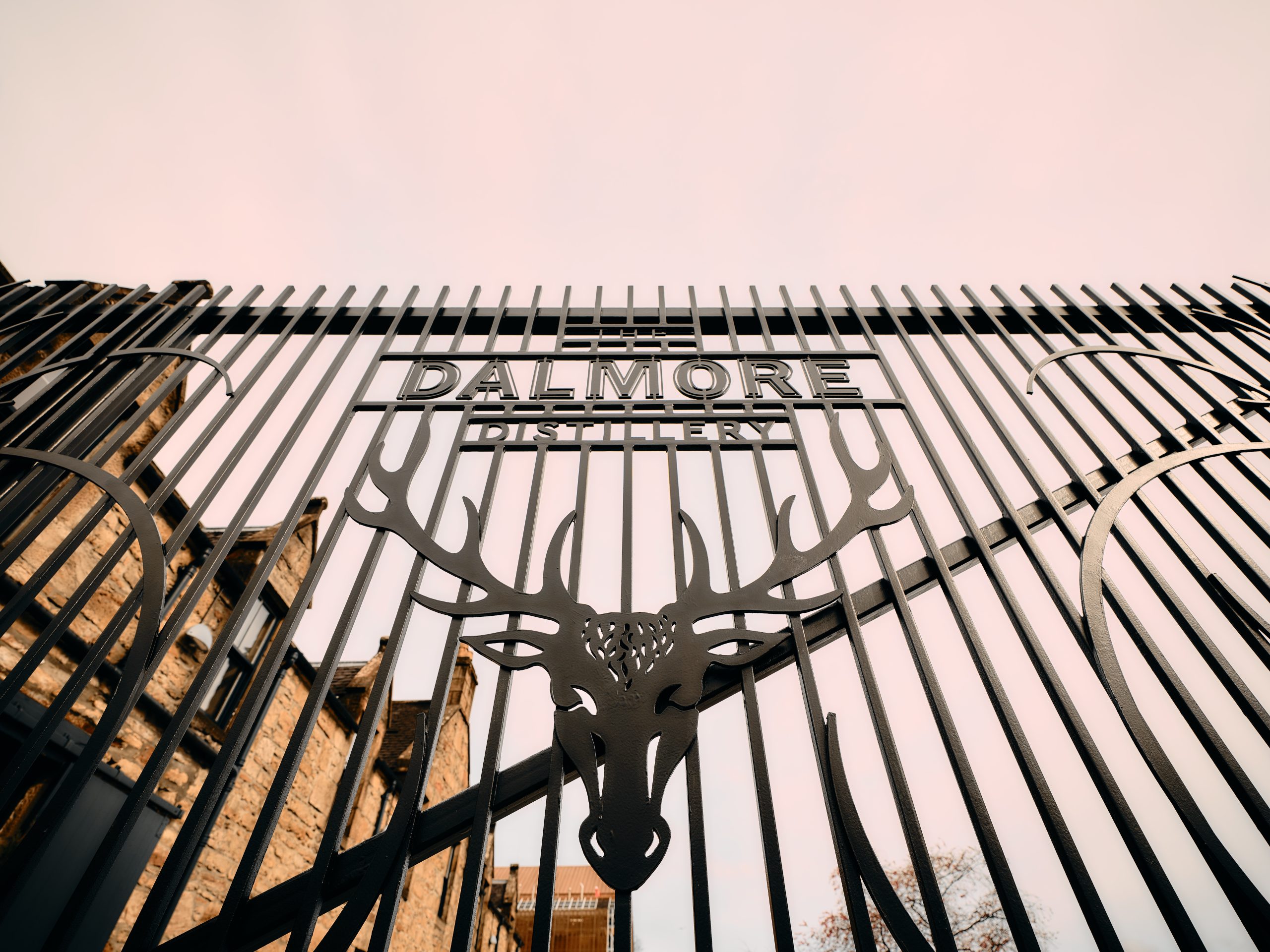 Photo Credit: The Dalmore
The journey through the distillery unfolds in sequences rather than rooms — a distinction that matters more than it might sound. You move through the triple-height former kiln, its original pagoda roof intact because certain things here are simply not negotiable, into the Mash House and Tun Room, where the air shifts, carrying warmth and fermentation and something faintly sweet that catches you before you’ve quite registered it. Then into the washbacks, where the scale interrupts you mid-thought. These are not small vessels. The effect of standing among them is something between awe and recalibration — a reminder of the sheer industrial commitment that underpins every bottle.
The architecture uses compression and release with precision. Narrow corridors open suddenly into volume. Light shifts from controlled to expansive. You’re not being shown something. You’re being guided through it — which is the more sophisticated ambition, and considerably harder to execute. Walking me through the space was Craig Swindell, The Dalmore’s Global Specialist — someone who speaks about whisky with the kind of clarity that suggests long familiarity without rehearsed performance. He describes The Dalmore’s process as “quiet alchemy.” It’s the kind of phrase that lingers — not because it’s decorative, but because it’s accurate. The Dalmore doesn’t transform its spirit dramatically. It deepens it. Slowly, invisibly, without announcement.
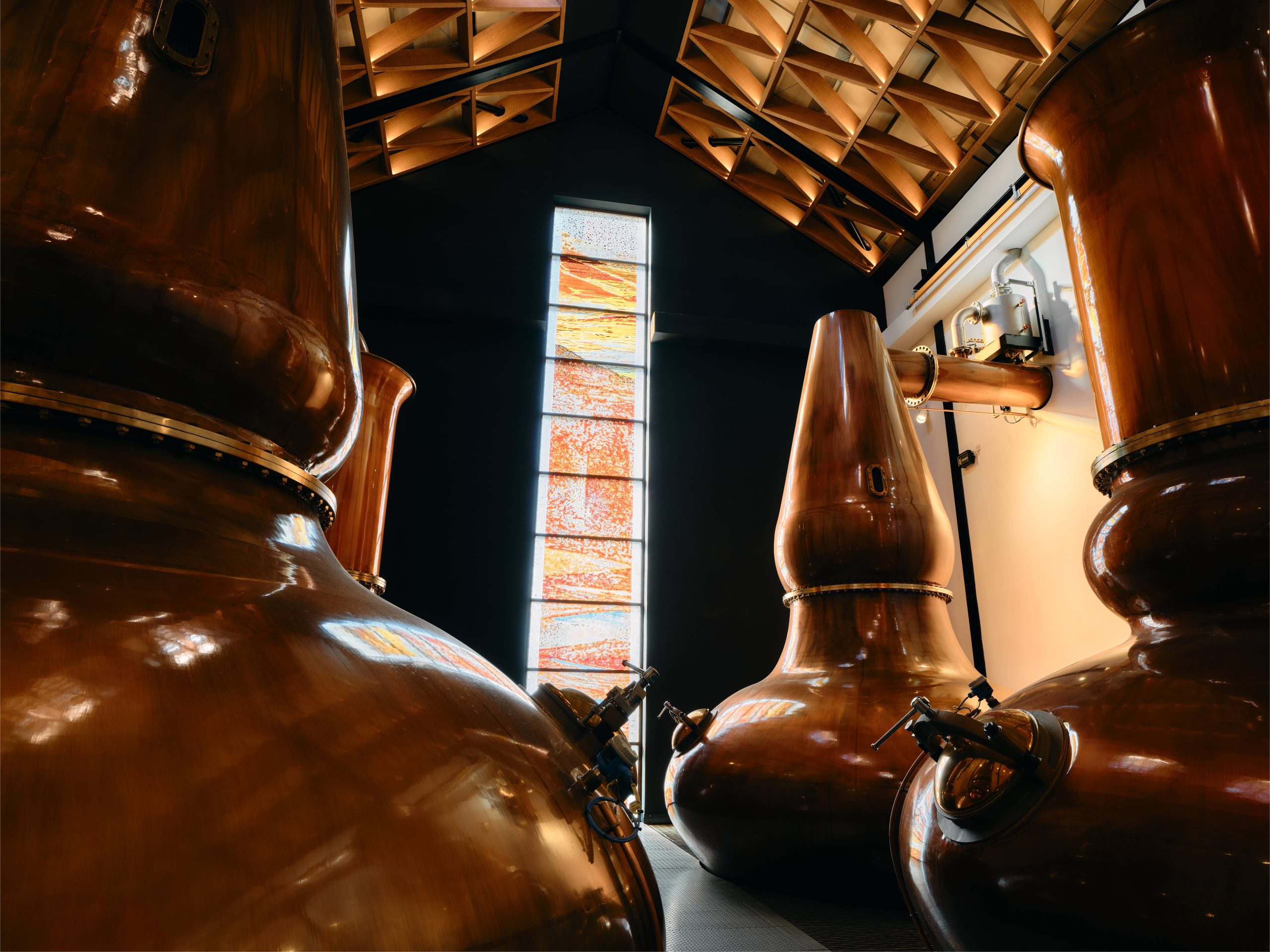
The Stillhouse is where everything resolves — and where I understood, standing there in person for the first time, what it means for an industrial space to feel warm. Not metaphorically. Literally. The room radiates light. It evokes something. Standing inside it, I kept reaching for descriptors and arriving at the same one: joy. Which is not a word I deploy lightly in relation to production facilities, but here there is simply no more accurate one.
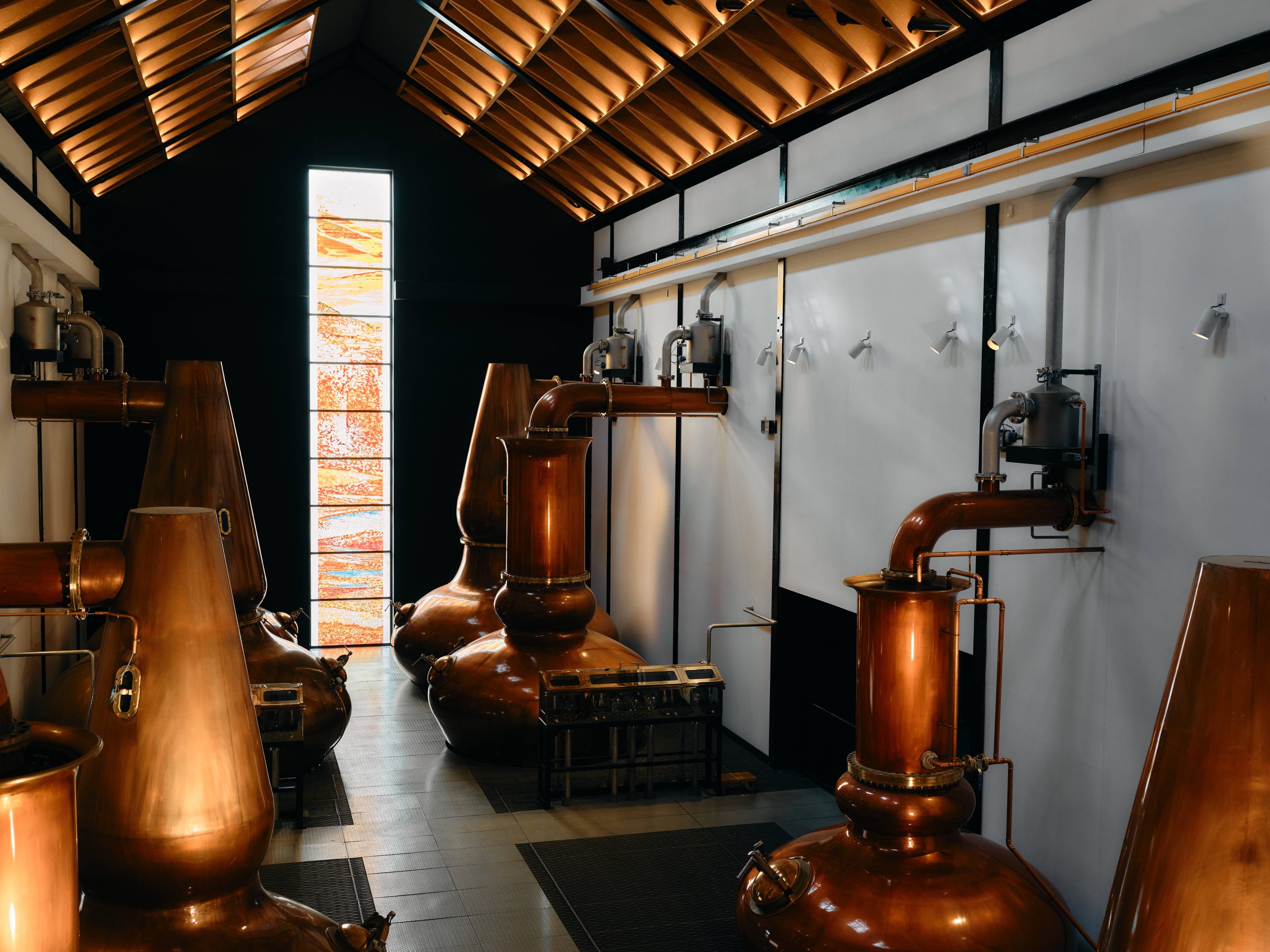 Photo Credit: The Dalmore
Four sets of meticulously recreated stills stand before a ten-metre fused-glass installation by Scottish artist John Kenneth Clark — whose commissions include Glasgow Cathedral, which is not a modest reference point — and it is not positioned as art within the space. It is the space. At its base, earth tones and barley. Moving upward through water and distillation, encoded into colour and texture and layered light. And finally, at the top, the angel’s share — that portion of whisky lost to evaporation during maturation, the part that belongs to no one — rendered here as something luminous and just beyond reach.
Clark developed an entirely new fusing technique for this piece, layering glass beads and textures in kiln-fired compositions where up to 25% of the final result remained unpredictable, shaped by chemical reaction during firing. Control balanced against chance. Precision held alongside uncertainty. The surface feels simultaneously controlled and organic — which is, when you consider it, exactly the balance whisky making requires. Time. Science. And something you can’t entirely account for.
Clark’s own description of his intention reaches for The Dalmore’s founding motto: “I wanted to capture the directive — I shine, not burn.” As the light shifts across the Cromarty Firth, it refracts through the glass in amber, copper, and ruby tones, casting movement across the stills and stone floors. The entire room is alive with it. You could stand there for considerably longer than is strictly efficient. Most people probably do.
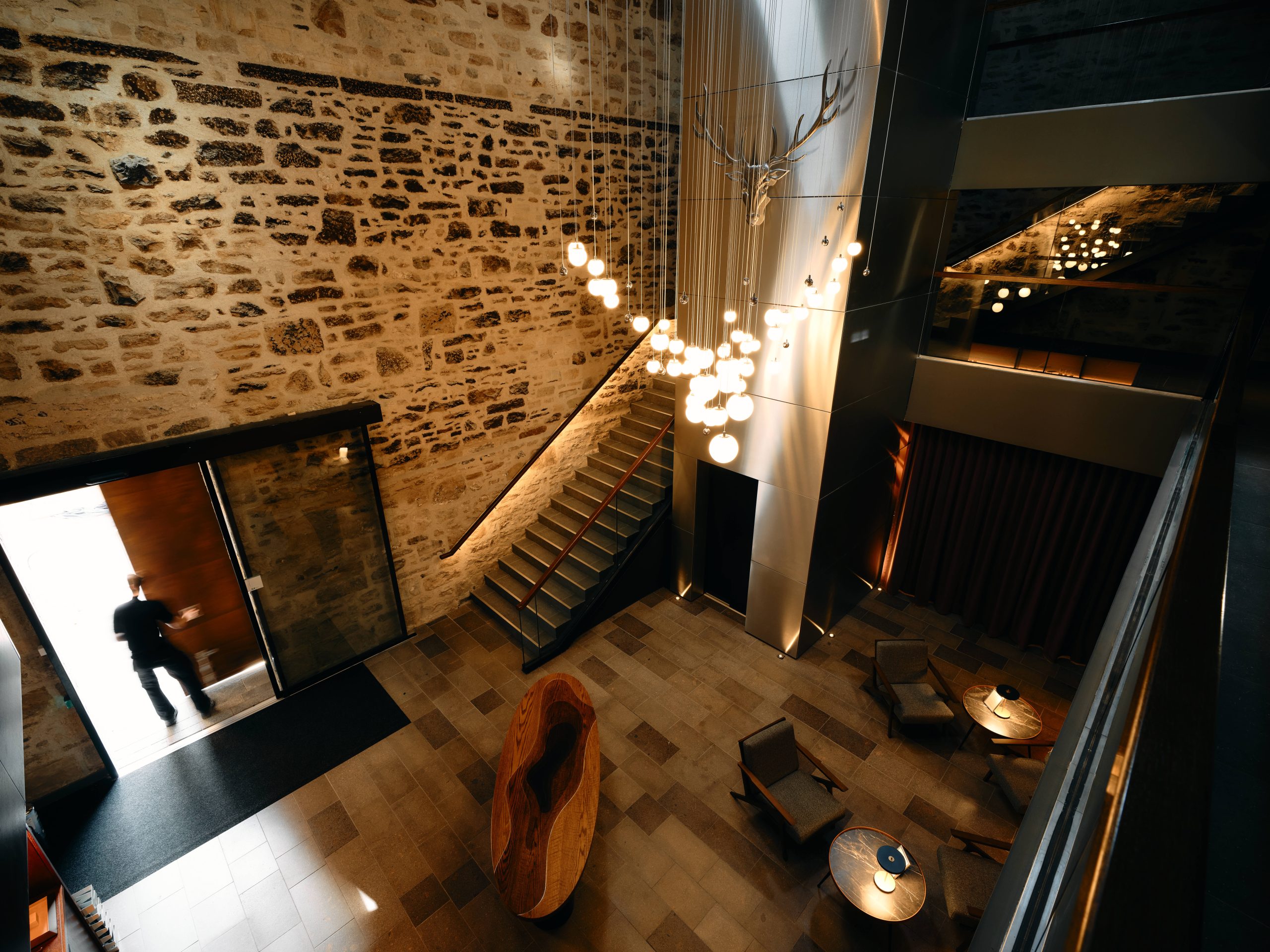 Photo Credit: The Dalmore
The broader creative direction belongs to Maria Katehis of MK Studios, whose approach she describes as “weaving the red thread” — connecting architecture, material, archive, and contemporary craft into a cohesive narrative without any single element overwhelming the others. Her presence is everywhere in this distillery, but never imposed. Nothing feels curated in the conventional sense. Everything feels placed. Katehis trained as a sculptor at the Guildhall before spending over 25 years delivering complex, art-led projects across public and private space — and the discipline shows in every proportion, every material decision, every choice about what to include and what to leave out. The restraint here is not absence. It’s editing. There is a difference, and it takes someone who knows exactly what they’re doing to maintain it.
Part of that red thread runs through the archive. The Dalmore’s historical records — an extraordinary body of material held in partnership with the University of Glasgow — have been carefully drawn into the distillery experience, embedded throughout the spaces as quiet counterpoint to the contemporary work around them. Nothing is labelled like a museum exhibit. Everything is there if you’re paying attention.
The makers brought into the project are few — and deliberately chosen. Iseabal Hendry, born and raised in the Scottish Highlands, works with vegetable-tanned leather, locally sourced wood, and foraged natural materials in ways that feel almost impossibly considered. Her near-zero-waste practice — weaving very thin leather strips with cotton to use the entire hide — is the kind of detail you don’t need to know to feel in the work, but once you know it, the work becomes more affecting still. Her site-specific installation in The Welcome draws on the movement of water and the contours of the shoreline, and it grounds you immediately, the way only things made in genuine response to a specific place can. You arrive, and the room already knows where it is.
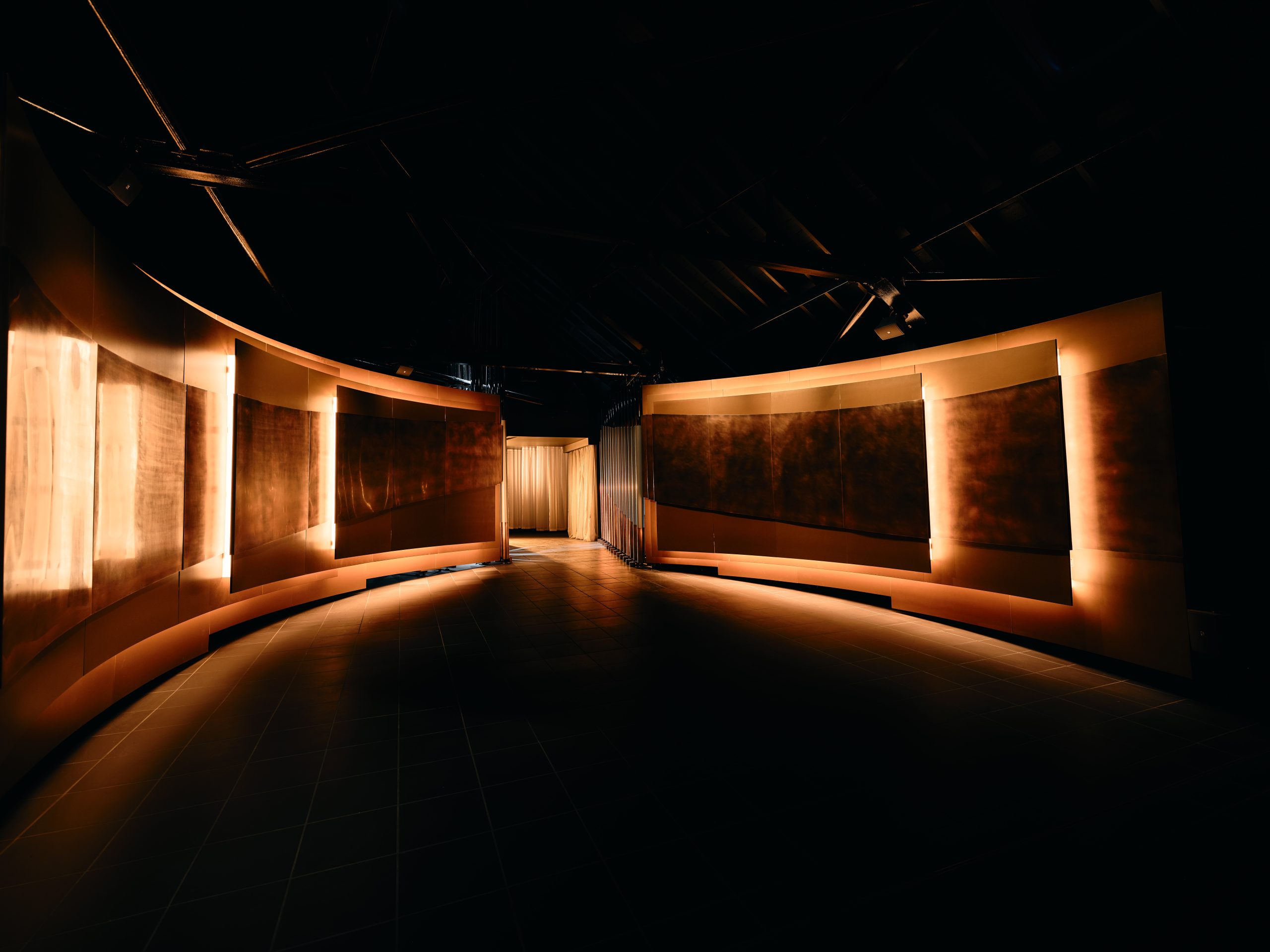 Photo Credit: The Dalmore
There are whiskies you drink and whiskies you experience. The 30 Year is the latter. Rich and complex and unhurried in exactly the way you’d expect from something that has been given three decades to decide what it wants to say. In that room, at the end of that day, after everything the Highlands had done to recalibrate your sense of what extraordinary actually means, it tasted like the most reasonable thing in the world. Outside, the long Highland evening held its light well past any rational hour. This far north in April, dark comes late and reluctantly. Nobody was inclined to push it. Nobody said so. Nobody had to.
There are also two extraordinary whisky bars on-site at Links House, which under the circumstances felt almost gratuitous. Almost.
The following morning returned us to the distillery for what The Dalmore calls the Creators’ Studio — an intimate salon with the architects, artists, and collaborators whose vision shaped the reimagined experience. I had met several of them the previous day, in the way you meet people at these things — a name, a handshake, an impression. The salon was something else. Small enough that conversation was unavoidable, personal enough that it actually happened.
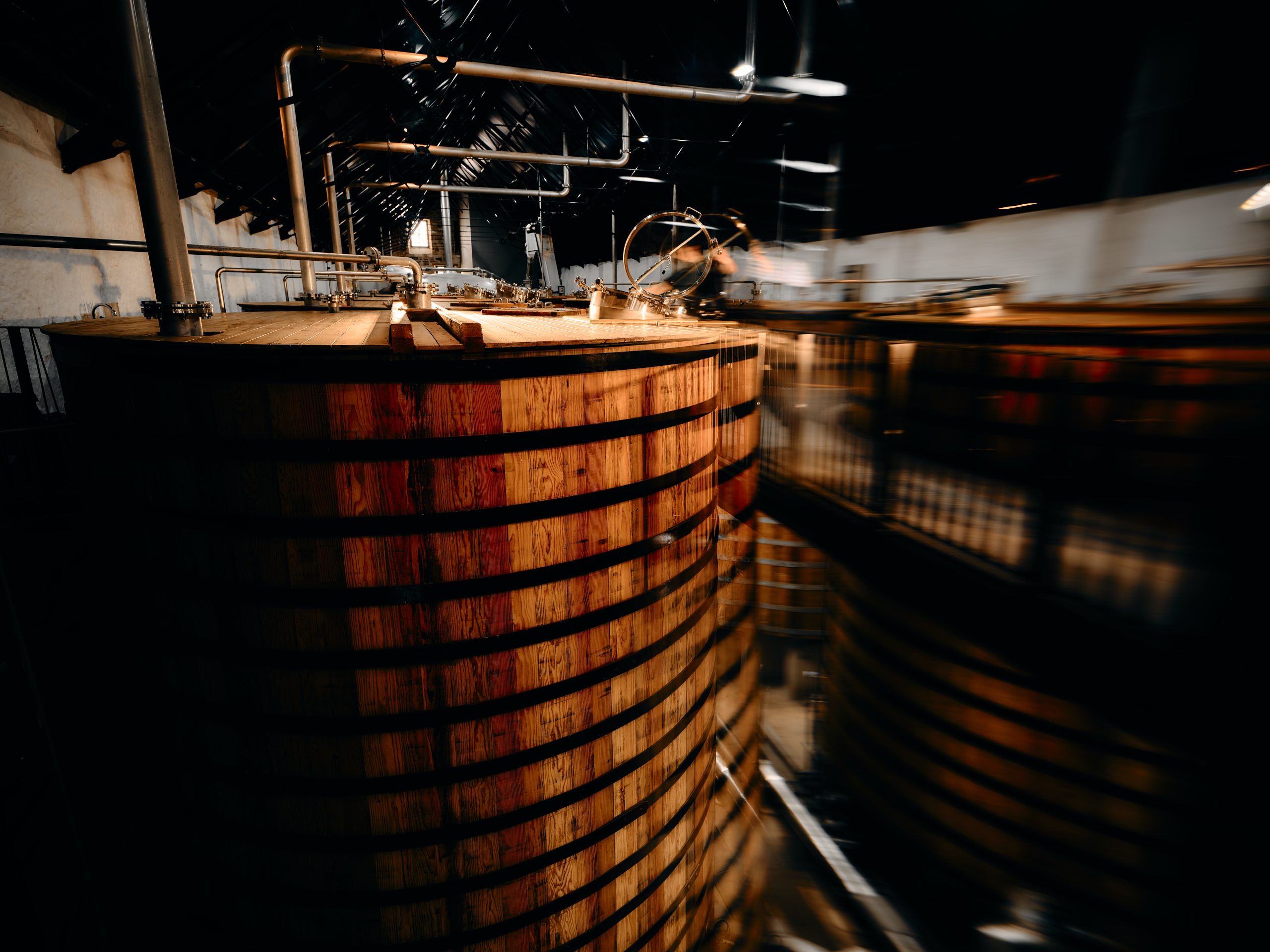 Photo Credit: The Dalmore
Amanda J Simmons came to glass via telecommunications engineering and clinical perfusionism — a trajectory I find genuinely remarkable and entirely unexplained by the beauty of what she makes. Her vessel forms are shaped by gravity, heat, and time, opaque glass powders responding to kiln conditions in ways that produce surfaces of extraordinary depth and colour. Her pieces at The Dalmore feel less installed than inhabited. They belong here in a way that suggests they were made for these specific rooms, in this specific light, beside this specific water.
Glasgow-based Vevar, the micro-mill celebrating Scotland’s weaving heritage with contemporary precision, designed bespoke soft furnishings throughout the distillery — including a custom Mackenzie tartan created exclusively for The Dalmore Collection. Co-founder Christopher McEvoy trained at the Glasgow School of Art and the Royal College of Art, which is to say these textiles were woven, not approximated, by someone who understands the difference. Threading through all of it is the longstanding partnership with V&A Dundee, Scotland’s Design Museum, whose Director Leonie Bell leads what she describes as a shared pursuit of excellence, “celebrating the intersection of whisky and design.” The Luminary series — a three-year collection of rare and collectible single malts honouring luminaries of architecture and design — is one expression of that partnership. The Anthology, a curated book collection woven throughout the distillery spaces, is another. Archive loans sit quietly in the rooms, reinforcing a persistent idea: that whisky, at this level, exists within a broader cultural conversation. That it has always been a designed object as much as a crafted one.
By the time the tour ends, the argument has been made — not through explanation, but through accumulation. You have been moved through a sequence of spaces that each do something specific, and the cumulative effect is not excitement exactly, but something more durable. Conviction. The sense that you have been somewhere that knows exactly what it is.
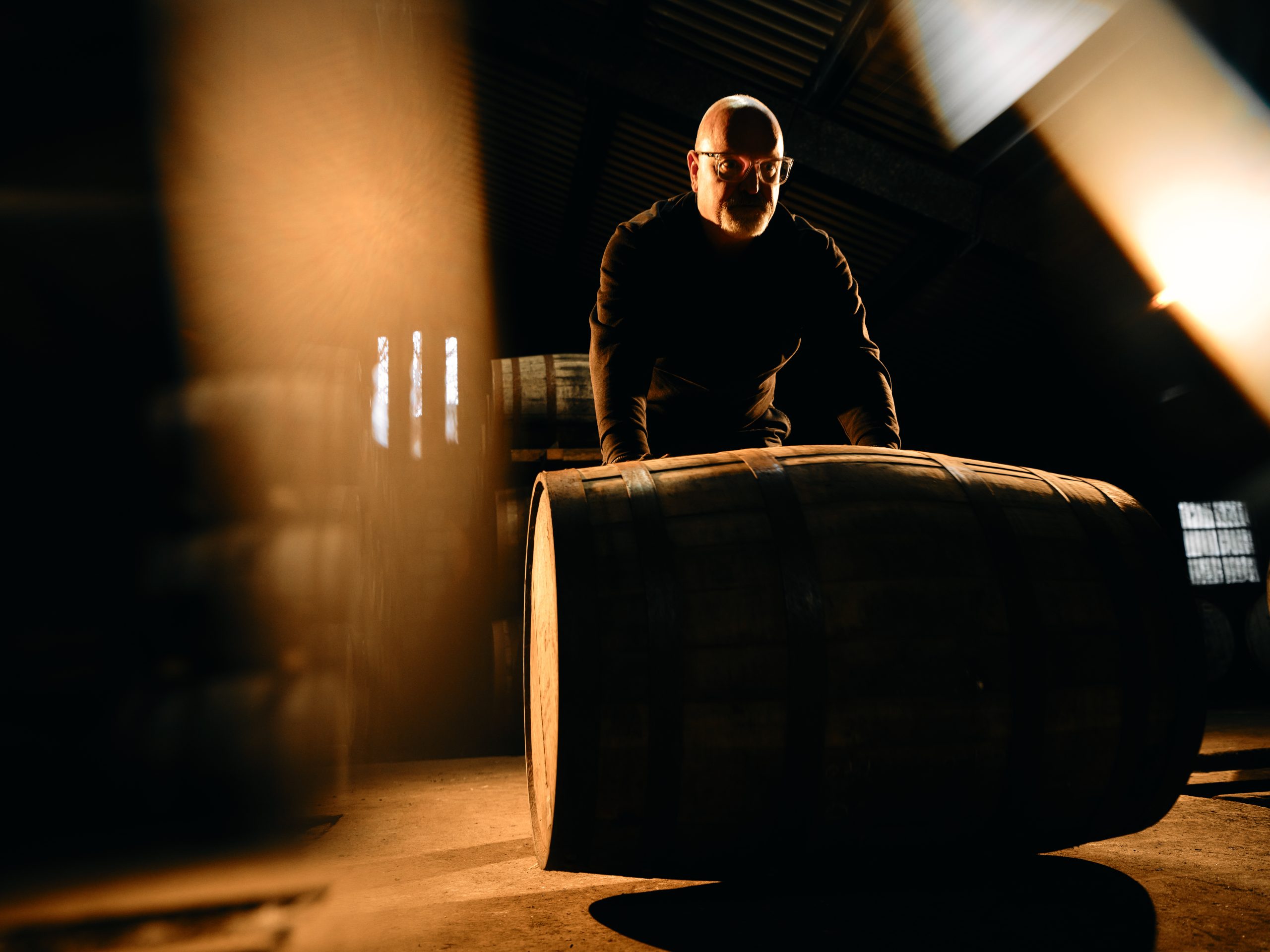 Photo Credit: The Dalmore
What The Dalmore offers beyond the distillery itself is a curated programme of private experiences, arranged in advance through their concierge and tailored entirely to the individual. Ours included a helicopter — though “included” undersells it considerably, because we did not know it was coming.
We were walking near the grounds of Royal Dornoch Golf Club — the number one ranked course in Scotland, and among the top three courses in the world — moving down toward the sea, the Firth glittering ahead in the way it does when the Highland light catches it at exactly the right angle — shining, as it happens, rather than burning — when the helicopter appeared. Arranged without preamble, without announcement. Just waiting. From the air, the landscape that had been building its case all day made it in full. The distillery, the water, the hills, the extraordinary stillness of all of it laid out beneath you. The Cromarty Firth from altitude is a different argument entirely — wider, more absolute, more clarifying. Scotland doesn’t need elevation to be dramatic. But from a helicopter at the right moment, it becomes something close to overwhelming. The kind of view that makes you reconsider whatever you thought you understood about scale.
The evening brought us to Links House at Royal Dornoch — fifty yards from the first tee, which in the context of this particular golf club borders on the surreal. Fifteen rooms across three buildings, each named after a Scottish salmon river, each individually designed around a signature Highland tweed, each appointed with antiques and artwork that suggest genuine, considered thought about what belongs in this specific room and no other. The main house is Sutherland sandstone, dating to the 1840s — contemporaneous with The Dalmore itself, which the trip seemed determined to reinforce, as though the whole itinerary had been designed to make a single point about what endures. The library is the kind of room you don’t leave voluntarily. The private putting green, built by Royal Dornoch’s own greenkeepers, is there if you need it. You will not need it. You will be in the library, or you will be having a drink, or both simultaneously if you manage it correctly.
Links House holds a Michelin Key and 2 AA Rosettes for MARA — the Gaelic word for “sea” — a restaurant that serves hyper-local Highland produce with the kind of precision and restraint that makes you realise, not for the first time this trip, how rarely you eat food that actually tastes of where it came from. The menu changes with what’s available. The kitchen knows what it’s doing with what it has. But dinner that evening was something beyond the menu. A bespoke private affair, intimate and entirely unhurried, the table set for conversation, not service. And then, with the quiet ceremony it deserves, a pour of The Dalmore 30 Year.
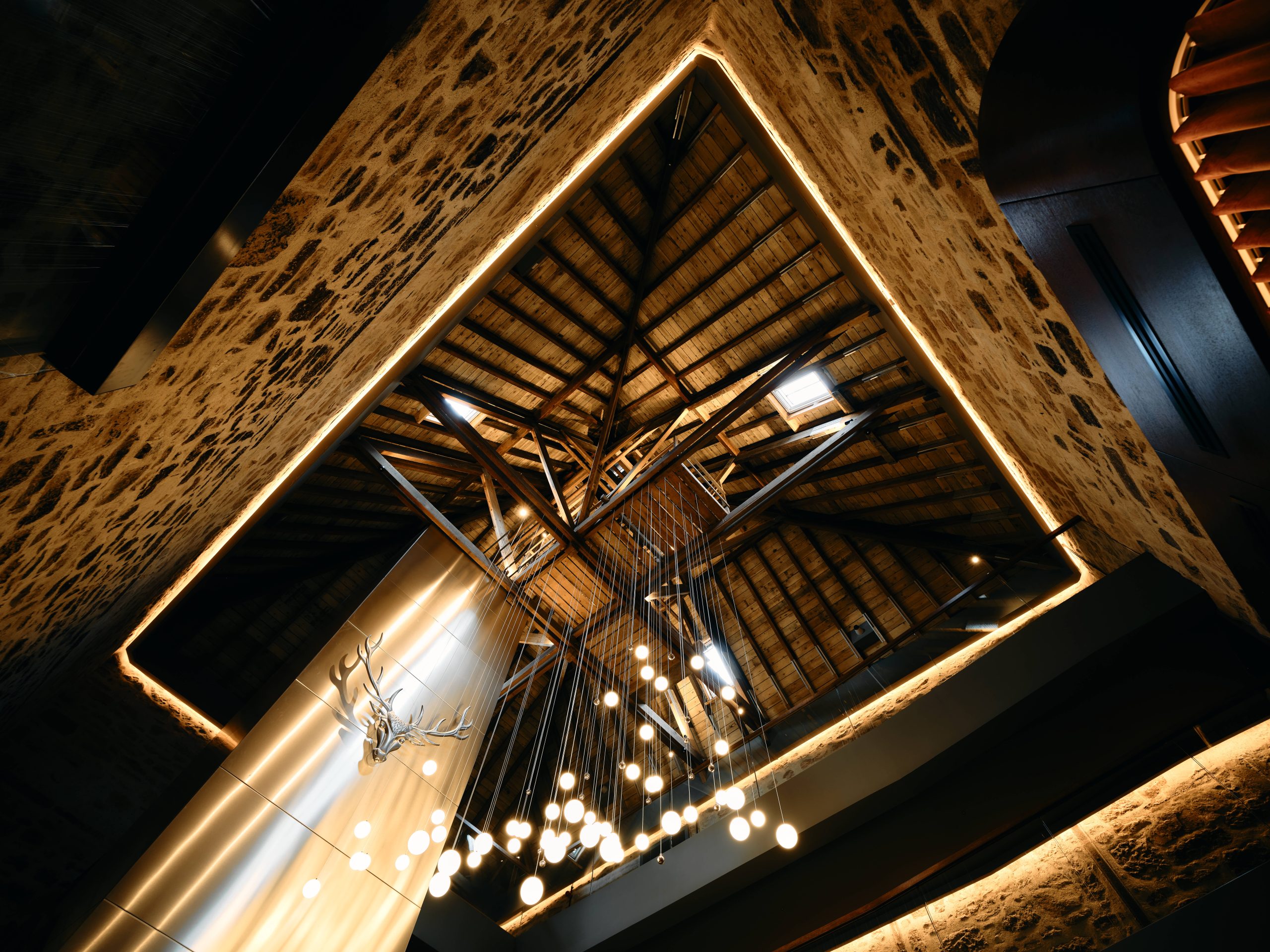 Photo Credit: The Dalmore
Neal Hemingway on the architectural logic of sequencing space around a working distillery. Maria Katehis on the curatorial thread she pulled through disciplines and centuries simultaneously. John Kenneth Clark on the glass, on the Highland light, on the four-word mandate he had given himself and the technique he invented to honour it. Leonie Bell on what it means for Scotland’s Design Museum to be in genuine creative partnership with a whisky brand — not lending its name to one, but actually making things together, over years, with shared intellectual investment in the outcome.
What struck me, in that room, was how fluently everyone spoke the same language — not whisky-speak, not brand-speak, but something closer to a shared conviction about what craft actually requires. The willingness to take longer than is comfortable. The refusal to resolve something before it’s ready. The understanding that the most important decisions are often the ones about what to leave out. The Dalmore has always applied this thinking to its whisky. What the reimagined distillery argues — persuasively, over two days, through architecture and glass and leather and light — is that the same thinking can extend outward into an entire place.
A private lunch at the distillery followed, around a table with the makers themselves. Long, unhurried, genuinely convivial in a way that had nothing to do with programme and everything to do with the fact that these were people who had spent years working on something they believed in, and now it was open, and they were allowed to feel good about it. By the time the cars arrived for Inverness, I had filled several pages of notes and drunk considerably more than was strictly necessary. Both outcomes felt entirely correct.
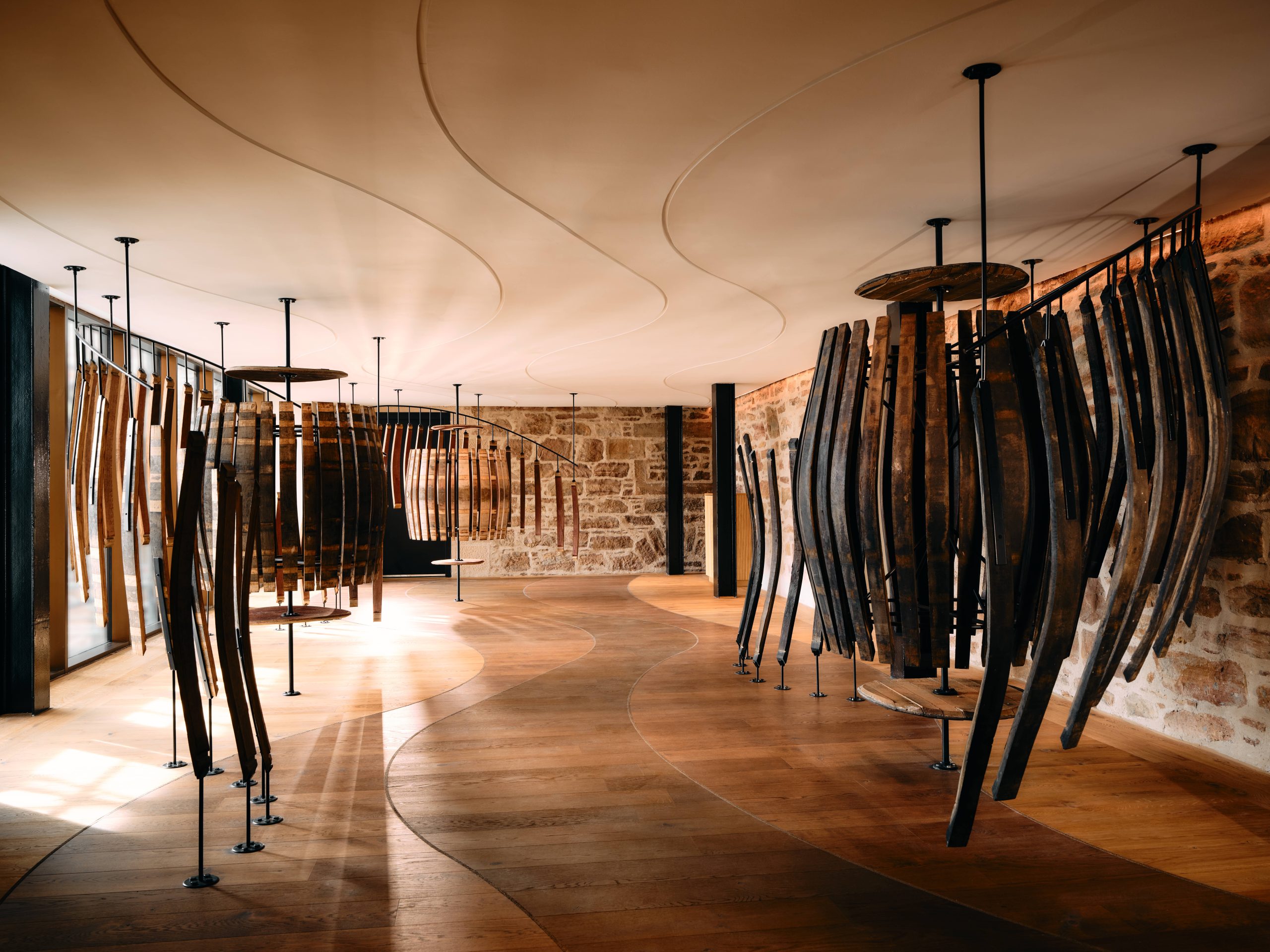 Photo Credit: The Dalmore
The cocktail programme deserves its own accounting, and I intend to give it one. The Dalmore Highball is restraint in its cleanest form — 50ml of the 12 Year, column ice, chilled soda, a choice of house-made bitters that elevate rather than redirect. The kind of drink that makes you understand why simplicity is harder than complexity. The Sour leans into port influence — Port Wood Reserve, port reduction syrup, acid solution, a foamer — rounded and precise, served in a Nick & Nora. The Old Fashioned, built on the 15 Year with cacao nib syrup, Dalmore Spirit Orange Bitters, block ice, and an expressed orange coin, is the house style in a glass. Chocolate, orange, warming spice, delivered with total clarity. If you order nothing else, order that.
But the standout is The Royal Stag, and it isn’t particularly close. Created by Dean & Nancy — Sydney’s most celebrated bar — and served exclusively there and here at the distillery, nowhere else on earth, it combines the Dalmore 18 Year with ABC Vermouth, Matusalem Sherry, and Palo Santo Tincture. The story behind it: 156 years ago, The Dalmore became the first single malt whisky to reach Australia. This drink marks that journey — the one that carried Scottish whisky from the Highlands to the other side of the world and back again, distilled into a single glass. It could feel heavy-handed. Instead it lands as something quietly romantic, the way the best commemorative things do: a drink that understands its own story without needing to explain it.
(The Rob Roy — Cigar Malt Reserve, Carpano Antica Formula, Matusalem Reduction, Dalmore Spirit Orange Bitters, dark cherry, stirred in a mixing glass until perfectly chilled — is also exceptional. Velvety, indulgent, rich fruit and warming spice with the depth of that sherry. Do not skip it if the Old Fashioned hasn’t already put you sideways. And it might.)
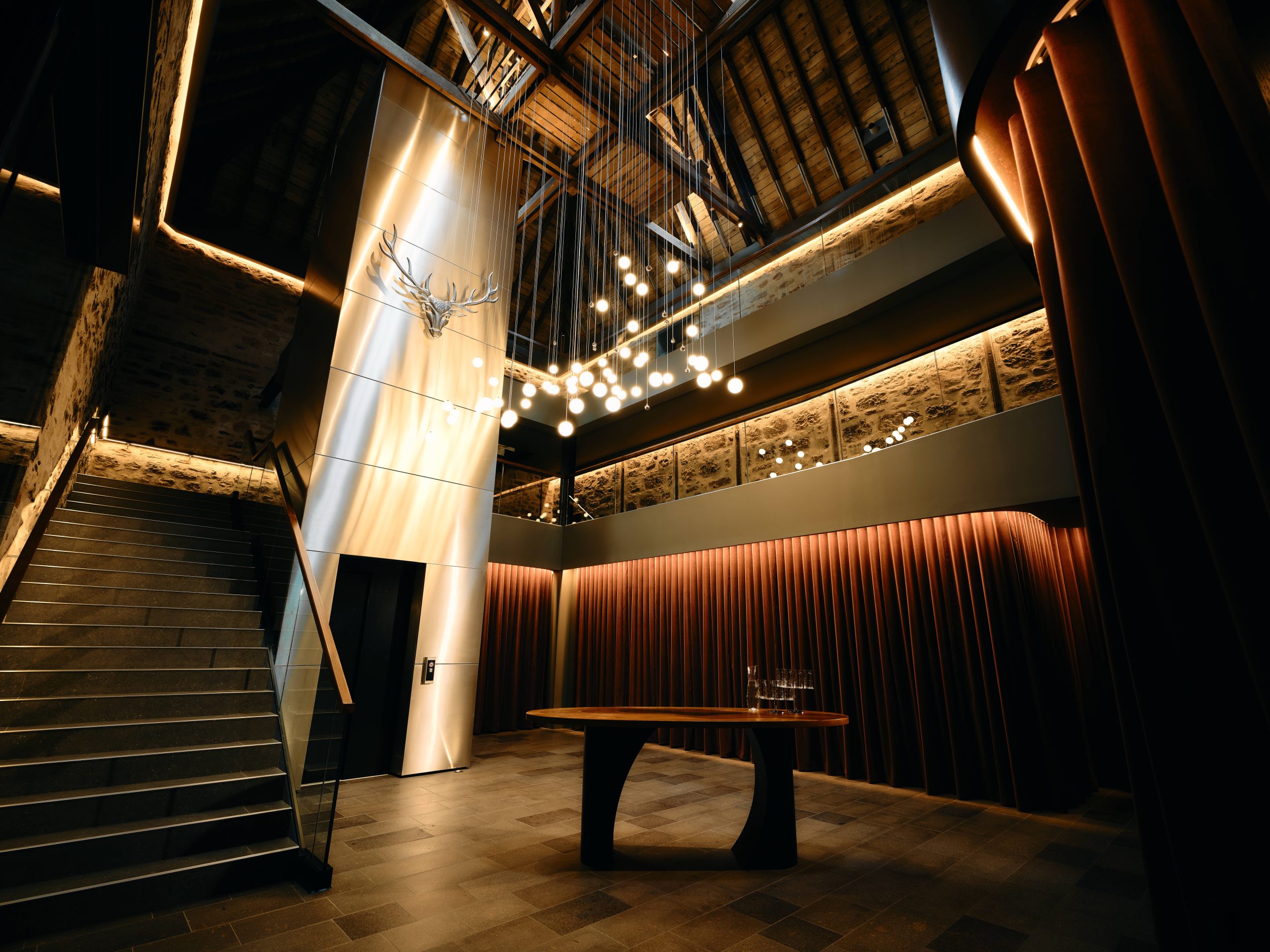 Photo Credit: The Dalmore
The guided tasting that closes the experience moves through the Principal Collection — the 18, 21, and the recently introduced 17 Year — before reaching rarer expressions. The 30 Year, which you will recognise from the previous evening. The 45, which arrives with the weight of its own history. Across all of it, a consistency emerges. Not sameness — the range is too considered for that — but intention. A house style held firmly across decades and expressions and cask types and everything else that could dilute it. The Dalmore is a whisky, as they put it themselves, not merely made but created to enrich. Having worked my way through rather more of it than was strictly advisable, I cannot find a single word to argue with.
Every visit to The Dalmore is private, coordinated in advance through the distillery’s concierge, and entirely individual. The experience you have is the one you arrange — the distillery tour, the tasting, yes, but also whatever the concierge builds around it. Helicopter transfers. Bespoke dinners. Rare pours at the end of long evenings. This is not a destination you arrive at casually, and it was not designed to be. Demand has been significant since reopening — bookings extending well into 2027, a reserve list already in operation. The window to experience it in this particular moment, still new, still settling into its own skin, is narrowing. Consider this your notice.
The stag emblem traces back to 1263 — awarded to Clan Mackenzie for saving King Alexander III from a charging stag, an act of exceptional bravery or exceptional presence of mind, depending on how you read the historical record. The moment is depicted in one of the largest paintings in Edinburgh’s National Gallery: 4.1 metres by 5.7 metres of oil paint devoted to a single instant of improbable heroism. The descendants of that clan took over production at The Dalmore in 1867, and the stag came with them. It’s an appropriate symbol for a brand that has spent nearly two centuries doing things at its own pace, in its own way, to a standard it sets entirely for itself.
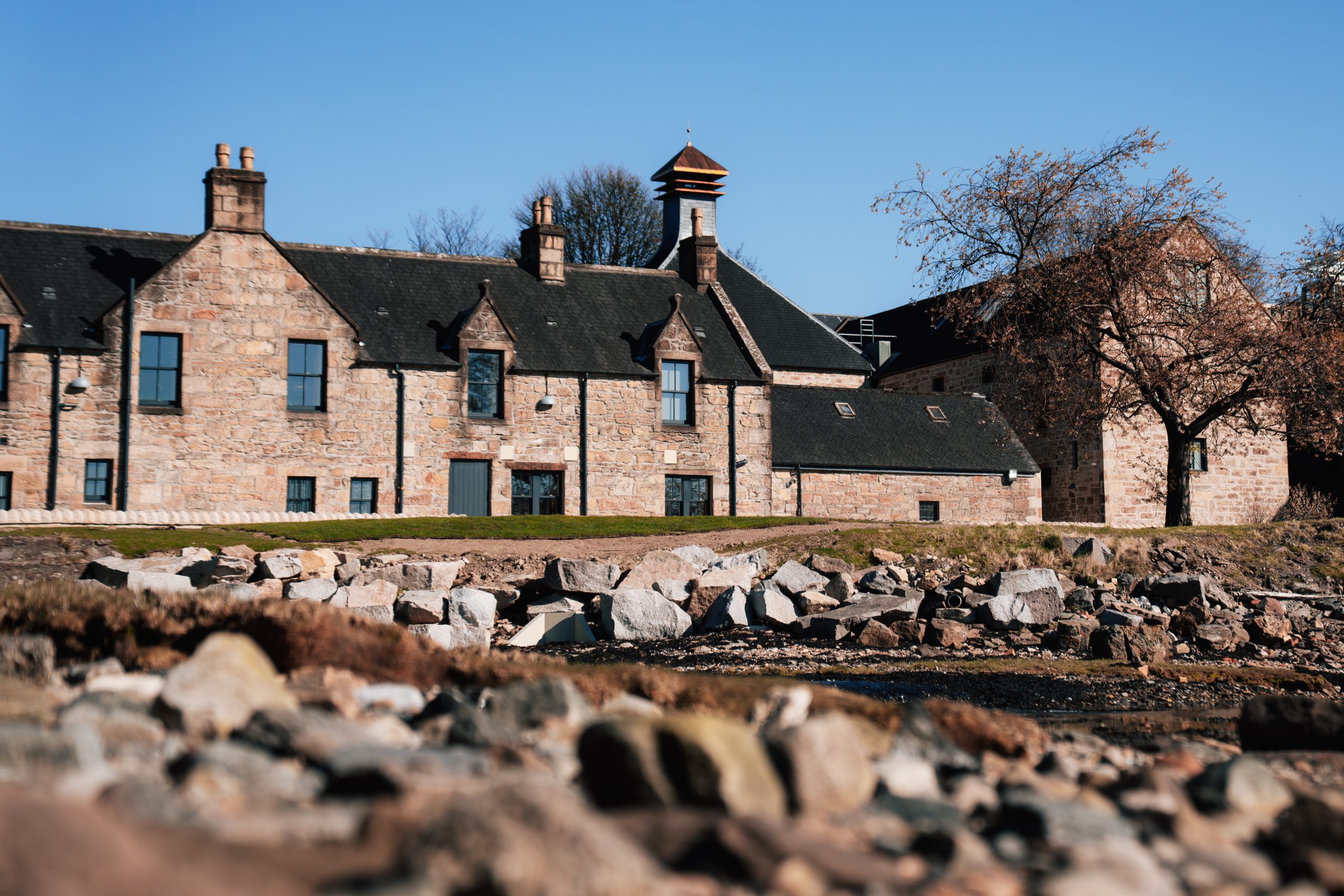 Photo Credit: The Dalmore
What The Dalmore has built here isn’t loud. It isn’t performative. It doesn’t announce itself. It’s precise, considered, entirely self-assured — a physical expression of something the brand has always understood.
The most extraordinary things don’t announce themselves.
They simply exist — exactly as they’re meant to.
The Dalmore has been doing that since 1839.
Now, finally, you can step inside it.
And understand.
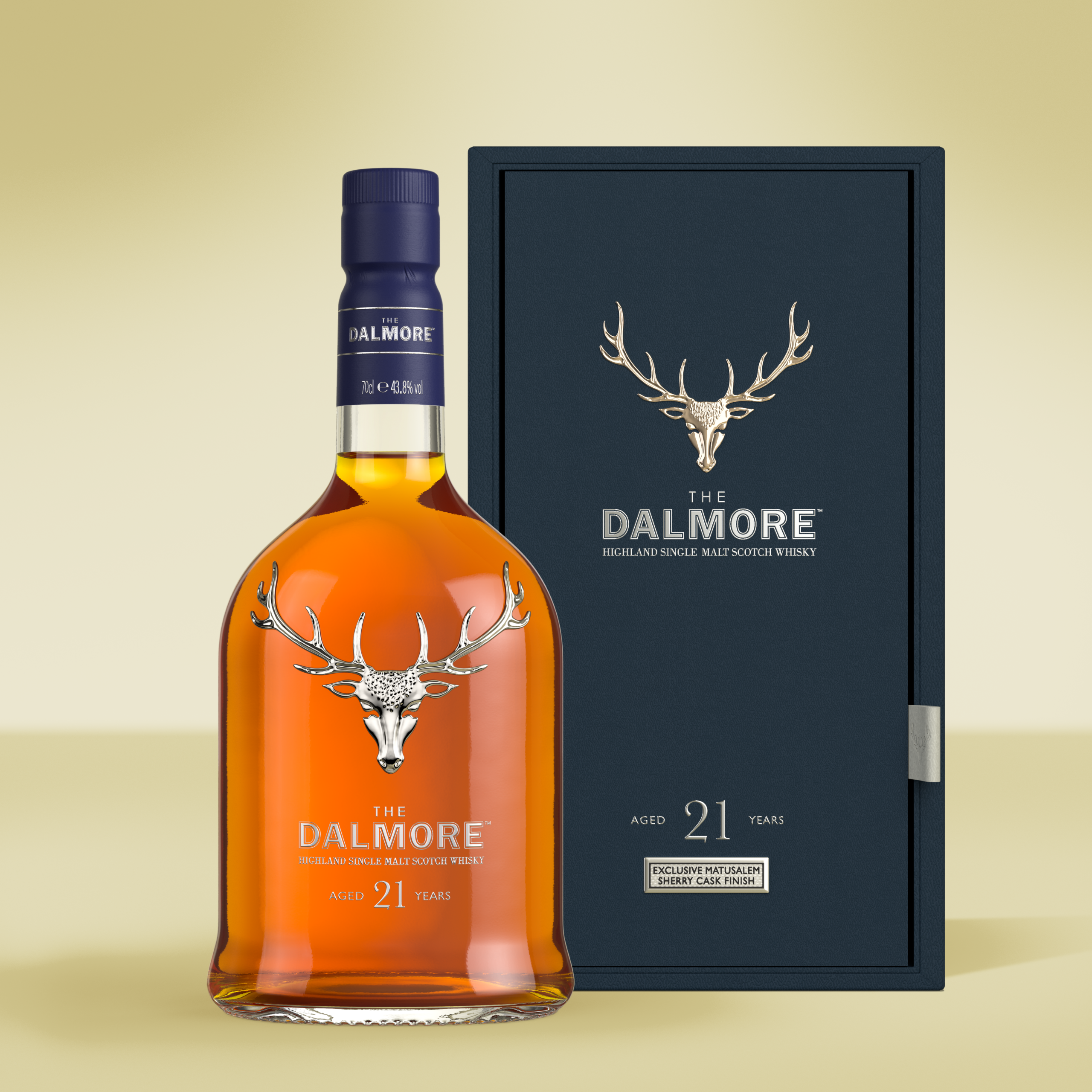
Photo Credit: The Dalmore
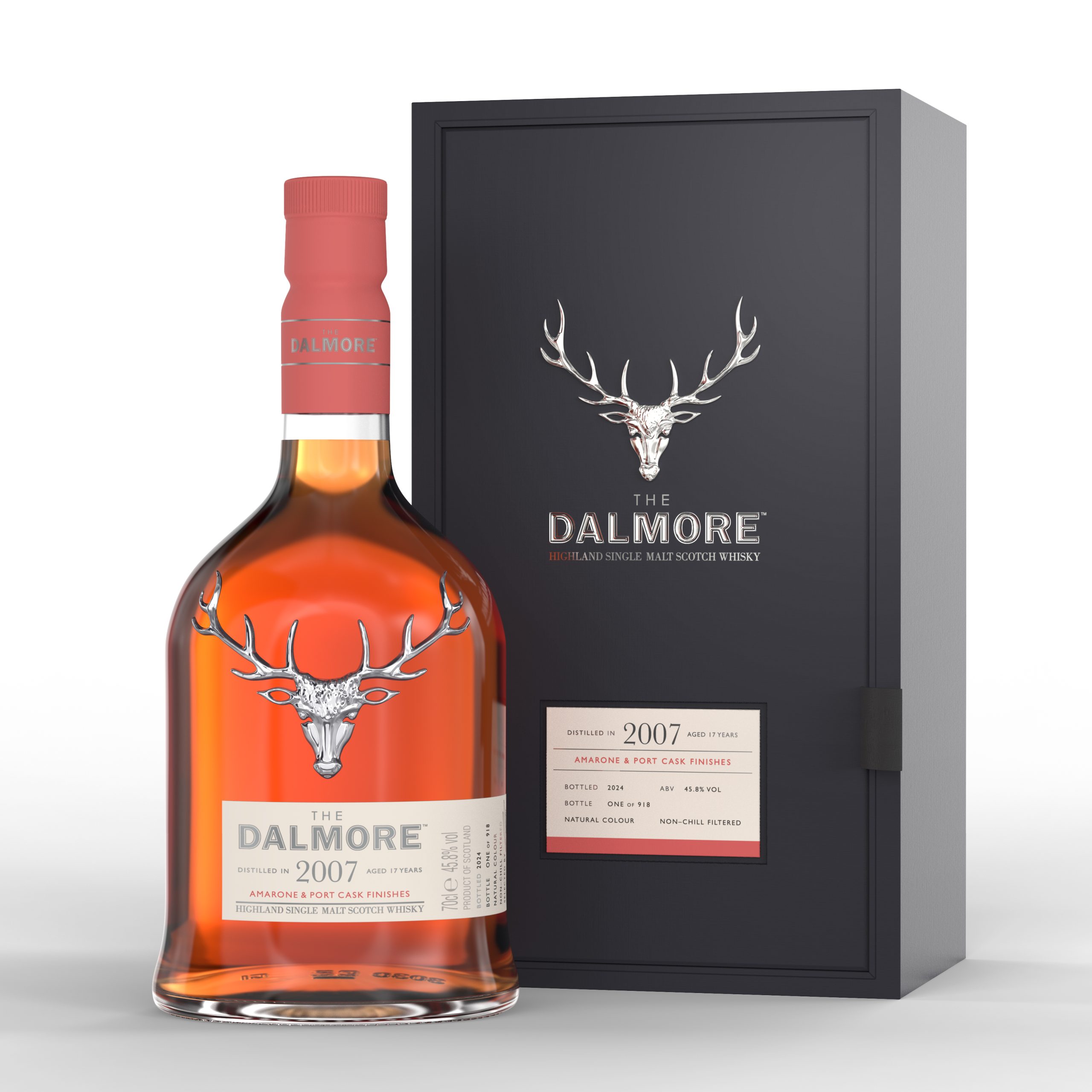
Photo Credit: The Dalmore
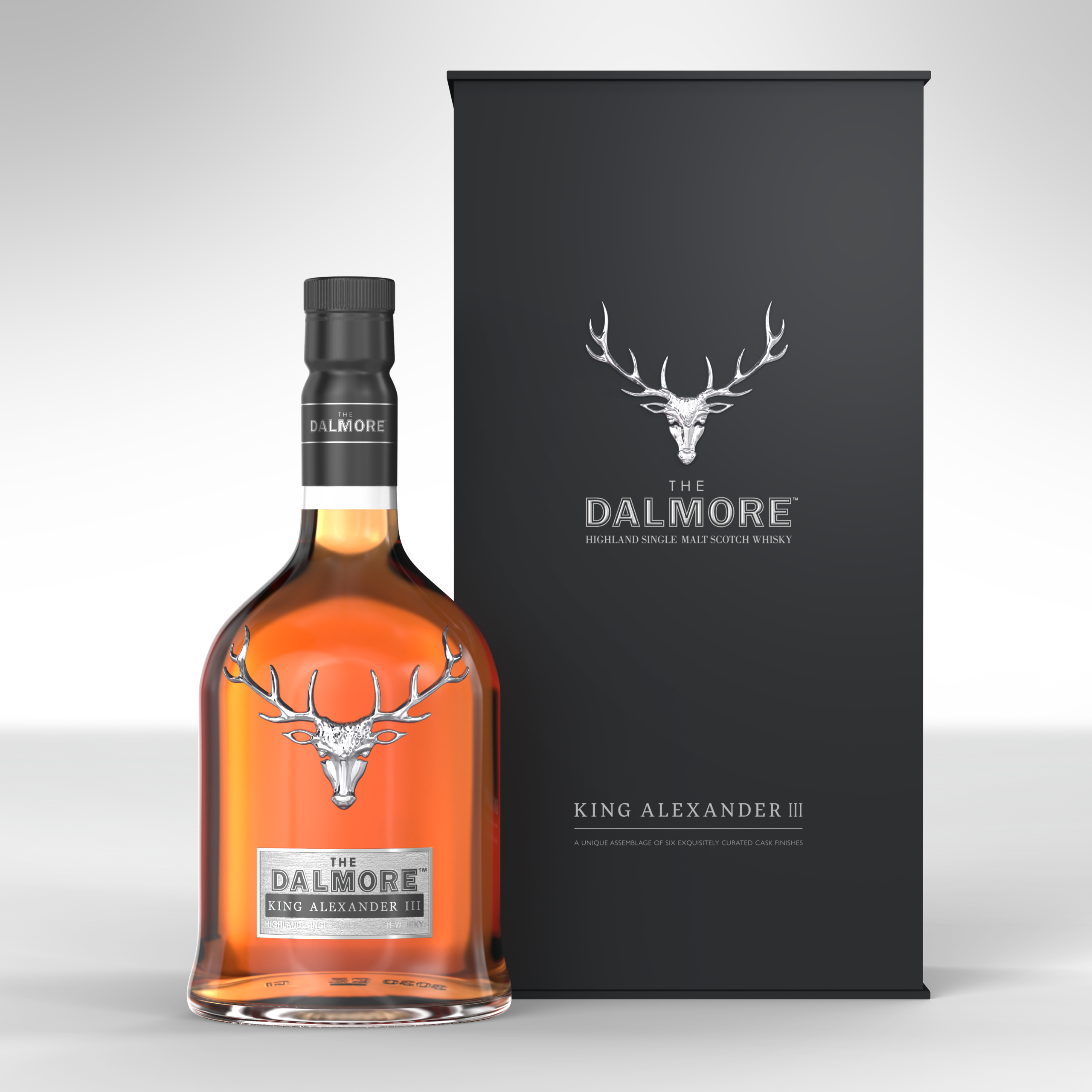
Photo Credit: The Dalmore
The Dalmore Distillery opened to guests today. Bookings are available through April 2027 at thedalmore.com, with a reserve list in operation.
Latest from Haute Living
Harbour Club Reinvents Itself in Miami Beach, With Antonio Bachour by Day and a Michelin Alum at Dinner
After Its $150 Million Transformation, the Brooklyn Nets’ Arena Now Has An Art Gallery, A Chef’s Table & More
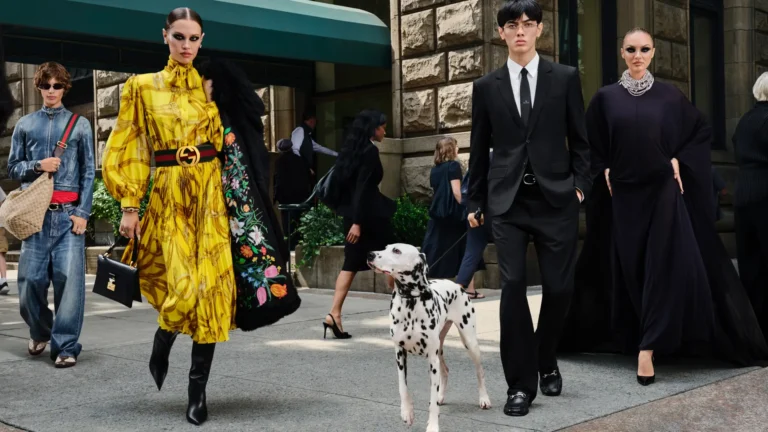
Gucci’s New GucciCore Campaign Turns the Streets of New York Into a Runway