Dermatology
What Is CO2 Laser Resurfacing?
Published · Haute MD Editorial Team
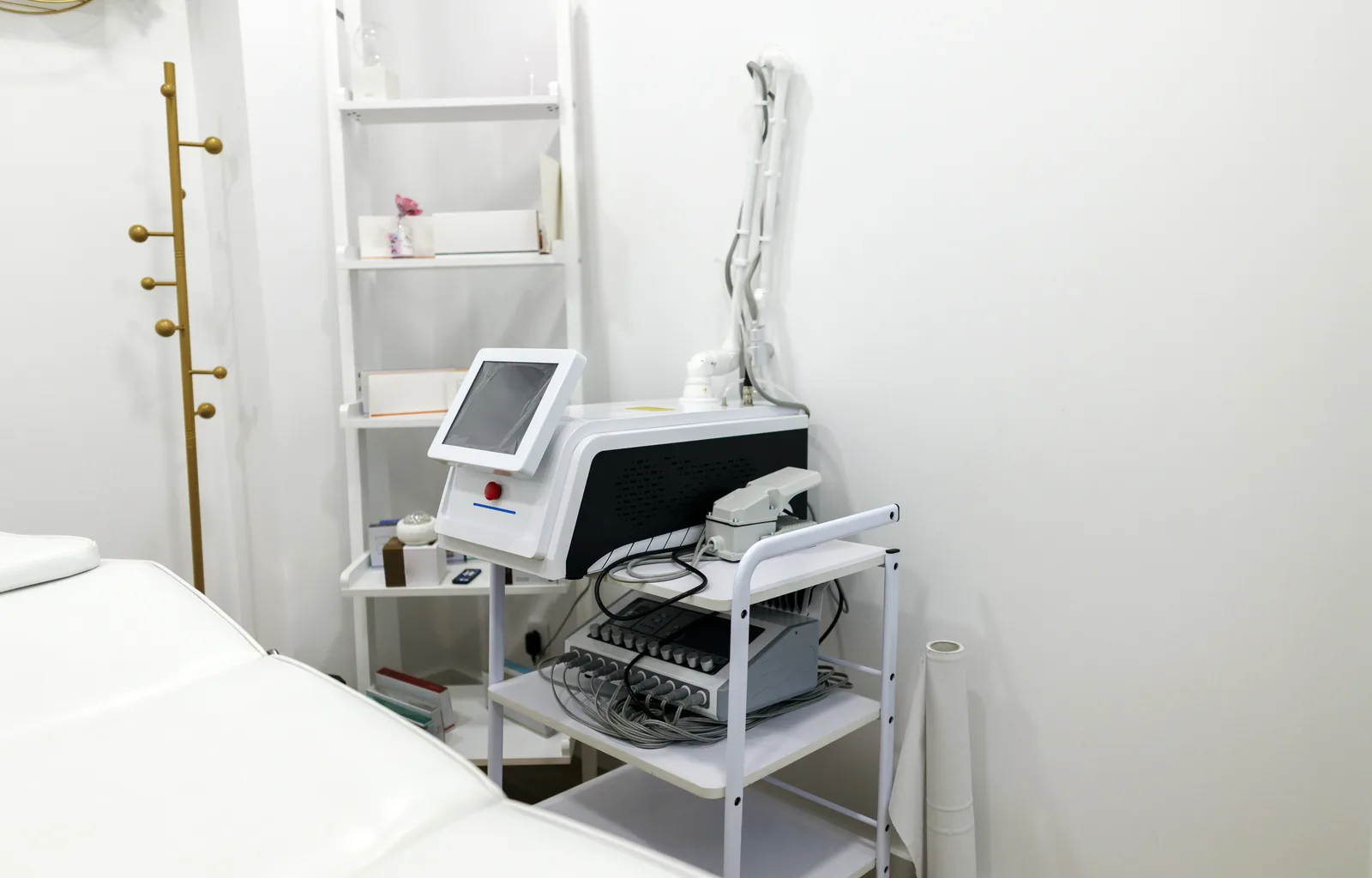
CO2 laser resurfacing is an ablative laser treatment: a carbon dioxide laser removes the outer layer of skin (the epidermis) and heats the layer beneath it (the dermis), which prompts new collagen as the skin heals. Mayo Clinic says it's used for fine wrinkles, age spots, uneven skin tone or texture, sun damage and mild to moderate acne scars. Most treatments today are fractional, meaning the laser treats microscopic columns of skin rather than the whole surface; Mayo says fractional lasers shorten recovery and lower the risk of side effects. It's a medical procedure with real downtime, and Cleveland Clinic advises choosing a provider with documented laser training.
At a glance
| Question | Answer | Source |
|---|---|---|
| What kind of laser? | Ablative CO2 (carbon dioxide); FDA regulates surgical CO2 lasers as Class II devices | Mayo Clinic; 21 CFR 878.4810 |
| What it treats | Fine wrinkles, age spots, uneven tone or texture, sun damage, mild to moderate acne scars | Mayo Clinic |
| What it can't do | Fix sagging skin or excess skin | Mayo Clinic; ASPS |
| Treatment time | 30 minutes to 2 hours, depending on technique and area | Mayo Clinic; Cleveland Clinic |
| Sessions | Usually one for fully ablative; 2 to 4 for fractional | Mayo Clinic |
| Healing | New skin in about 7 to 10 days; full recovery at least a month; redness can last months | Mayo Clinic; Cleveland Clinic |
| Common risks | Swelling, itching, acne or milia, infection (most often a cold sore flare), pigment changes, scarring | Mayo Clinic; Cleveland Clinic |
How CO2 resurfacing works
The laser's energy vaporizes the outer layer of skin and heats the dermis. As the treated area heals, new skin forms and the dermis builds new collagen, which is why the texture and fine lines improve over the following weeks. Mayo Clinic groups CO2 with erbium as the two common ablative lasers.
Fractional vs. fully ablative. A fully ablative treatment removes the surface across the whole treated area and, Mayo Clinic says, usually needs only one session. A fractional CO2 laser creates microscopic columns of treated tissue instead; Mayo says fractional devices shorten recovery, reduce the risk of side effects and have become the widely preferred method, though fractional treatment usually takes 2 to 4 sessions over weeks or months. Nonablative lasers are a different category: Mayo describes them as less aggressive, with a shorter recovery and more subtle results. See What Is Fraxel Laser? and What Is Laser Skin Rejuvenation?
What CO2 laser resurfacing treats
Mayo Clinic lists fine wrinkles, age spots, uneven skin tone or texture, sun-damaged skin and mild to moderate acne scars. Cleveland Clinic also lists wrinkles and photodamage, scars, warts, linear epidermal nevi (birthmarks) and rhinophyma (an enlarged, bumpy nose from rosacea). Laser resurfacing doesn't tighten loose or sagging skin; that's a surgical question.
Who should be cautious
Mayo Clinic says to talk to your doctor before laser resurfacing if you:
- Took isotretinoin for acne in the past year
- Have a connective tissue disease, an autoimmune disease or a weak immune system
- Tend to form keloids
- Have had radiation to the face
- Have had laser resurfacing before
- Are prone to cold sores or have had a recent outbreak
- Have brown skin or are very tan (Mayo notes people with brown or Black skin have a higher risk of long-term color changes)
- Are pregnant or breastfeeding
- Have a lower eyelid that turns outward (ectropion)
The American Society of Plastic Surgeons says people with active acne, very dark skin, deep wrinkles or excessive or sagging skin aren't good candidates, and warns that "in the wrong or inexperienced hands, laser resurfacing can be dangerous."
What the day and the recovery look like
Mayo Clinic says the skin is numbed first, and full-face treatment may include sedation, so you'd need a ride home. Mayo Clinic puts treatment time at 30 minutes to 2 hours; Cleveland Clinic says about 30 to 45 minutes for part of the face and 1.5 to 2 hours for the full face.
After ablative treatment, Mayo says the skin is likely to be swollen and itchy and may change color; the care team applies a thick ointment and may cover it with a dressing. Mayo Clinic says new skin generally covers the area in 7 to 10 days and full recovery takes at least a month. Cleveland Clinic says healing takes 10 to 21 days and redness can last 2 to 3 months, sometimes up to 6. Mayo says to always use sun protection afterward, with a daily moisturizer and a sunscreen with an SPF of at least 30. More detail: CO2 Laser Recovery.
Risks
Cleveland Clinic lists milia (small white bumps), acne flares, darkening or lightening of the skin, cold sore reactivation, infection and swelling, and, rarely, scarring. Mayo Clinic adds swelling, itching and inflammation that can last for months after ablative treatment, notes that a cold sore (herpes) flare is the most common infection, and says ablative treatment carries a slightly higher risk of scarring. You may be prescribed an antiviral before and after treatment.
Checklist before a CO2 laser consult
- Ask whether the doctor is board certified and who will operate the laser
- Ask whether they recommend fractional or fully ablative CO2 for your goal, and why
- List isotretinoin use, cold sores, keloids, autoimmune conditions and facial radiation
- Ask how your skin tone affects the risk of pigment changes
- Plan time off for the first 1 to 2 weeks of healing
- Ask about antiviral medicine, aftercare products and sun protection
- Ask whether a non-ablative laser or another option would meet your goal with less downtime
Talk to a doctor
Browse Dermatologists or Find a Doctor on Haute MD.
Featured doctors: Dr. Lisa Airan, a board-certified cosmetic dermatologist in New York City whose practice includes fractionated CO2 laser and laser treatments for resurfacing; and Dr. Daniel Scott Karempelis, a board-certified dermatologist, founding partner of Dermatology Associates of Atlanta and Medical Director of its Laser Institute of Georgia.
Every Haute MD doctor is independently reviewed and editorially featured by Haute Living.
Sources
- Mayo Clinic, "Laser resurfacing." https://www.mayoclinic.org/tests-procedures/laser-resurfacing/about/pac-20385114 (checked Nov. 20, 2026)
- Cleveland Clinic, "CO2 Laser Resurfacing." https://my.clevelandclinic.org/health/treatments/8314-carbon-dioxide-laser-resurfacing (checked Nov. 20, 2026)
- American Society of Plastic Surgeons, "Am I a good candidate for laser skin resurfacing?" https://www.plasticsurgery.org/cosmetic-procedures/laser-skin-resurfacing/candidates (checked Nov. 20, 2026)
- 21 CFR 878.4810 (laser surgical instrument for use in general and plastic surgery and in dermatology). https://www.ecfr.gov/current/title-21/chapter-I/subchapter-H/part-878/subpart-E/section-878.4810 (checked Nov. 20, 2026)
This guide is general information, not medical advice. Talk to a qualified physician about your situation.
Frequently Asked Questions
What is CO2 laser resurfacing?
It's an ablative laser treatment that removes the outer layer of skin and heats the layer beneath it, prompting new collagen. It's used for fine wrinkles, age spots, uneven texture, sun damage and some acne scars.
What is the difference between CO2 and fractional CO2 laser?
A fully ablative CO2 laser treats the whole surface of the area, usually in one session. A fractional CO2 laser treats microscopic columns of skin, which Mayo Clinic says shortens recovery, though it usually takes 2 to 4 sessions.
How long does CO2 laser resurfacing take to heal?
Mayo Clinic says new skin generally covers the area in 7 to 10 days and full recovery takes at least a month. Cleveland Clinic says redness can last 2 to 3 months, sometimes up to 6.
Who should not get CO2 laser resurfacing?
People with active acne, recent isotretinoin use, a tendency to keloids, frequent cold sores, a weak immune system, pregnancy, or loose and sagging skin should talk to a doctor first, and darker skin tones carry a higher risk of pigment changes.
Is CO2 laser resurfacing safe?
It uses an FDA-regulated Class II laser and carries known risks, including infection, pigment changes, cold sore flares and scarring. ASPS warns it can be dangerous in inexperienced hands, so choose a physician trained in laser treatment.
Get Help Now
Speak with a Haute MD Dermatology physician
Are you a Dermatology physician?
Join Haute MD Network and have your profile featured alongside these answers.
Apply for the NetworkRelated Guides
Guide · DERMATOLOGY
CO2 Laser Resurfacing Recovery: Day-by-Day
CO2 laser resurfacing recovery, stage by stage: oozing and crusting, peeling around days 5–7, new skin in 1–2 weeks and redness that fades over months.
Read GuideGuide · DERMATOLOGY
What Is Skin Resurfacing?
Skin resurfacing removes damaged outer skin layers to improve texture, tone, and appearance. Learn the options including laser, chemical peels, and microneedling.
Read GuideGuide · DERMATOLOGY
What Is Fraxel Laser?
Fraxel is a fractional laser that resurfaces skin to treat acne scars, sun damage, fine lines, and tone irregularities. Learn about Fraxel and what to expect.
Read GuideGuide · AESTHETICS & WELLNESS
What Is Laser Skin Rejuvenation?
Laser skin rejuvenation uses targeted light energy to improve tone, texture, pigmentation, and firmness — from no-downtime IPL to ablative CO2 resurfacing.
Read GuideGuide · AESTHETICS & WELLNESS
What Is RF Microneedling?
RF microneedling combines microneedles with radiofrequency energy to tighten skin and remodel collagen. Learn how it works, results, and what to expect.
Read GuideGuide · DERMATOLOGY
How Are Acne Scars Treated?
Acne scars are treated with laser resurfacing, microneedling, chemical peels, fillers, and subcision depending on scar type and depth.
Read GuideGuide · DERMATOLOGY
What Is a Chemical Peel?
Chemical peels use acids to exfoliate the skin and improve tone, texture, acne, and pigmentation. Learn the types, depths, and what to expect.
Read Guide