Dermatology
What Is Basal Cell Carcinoma?
Published · Haute MD Editorial Team
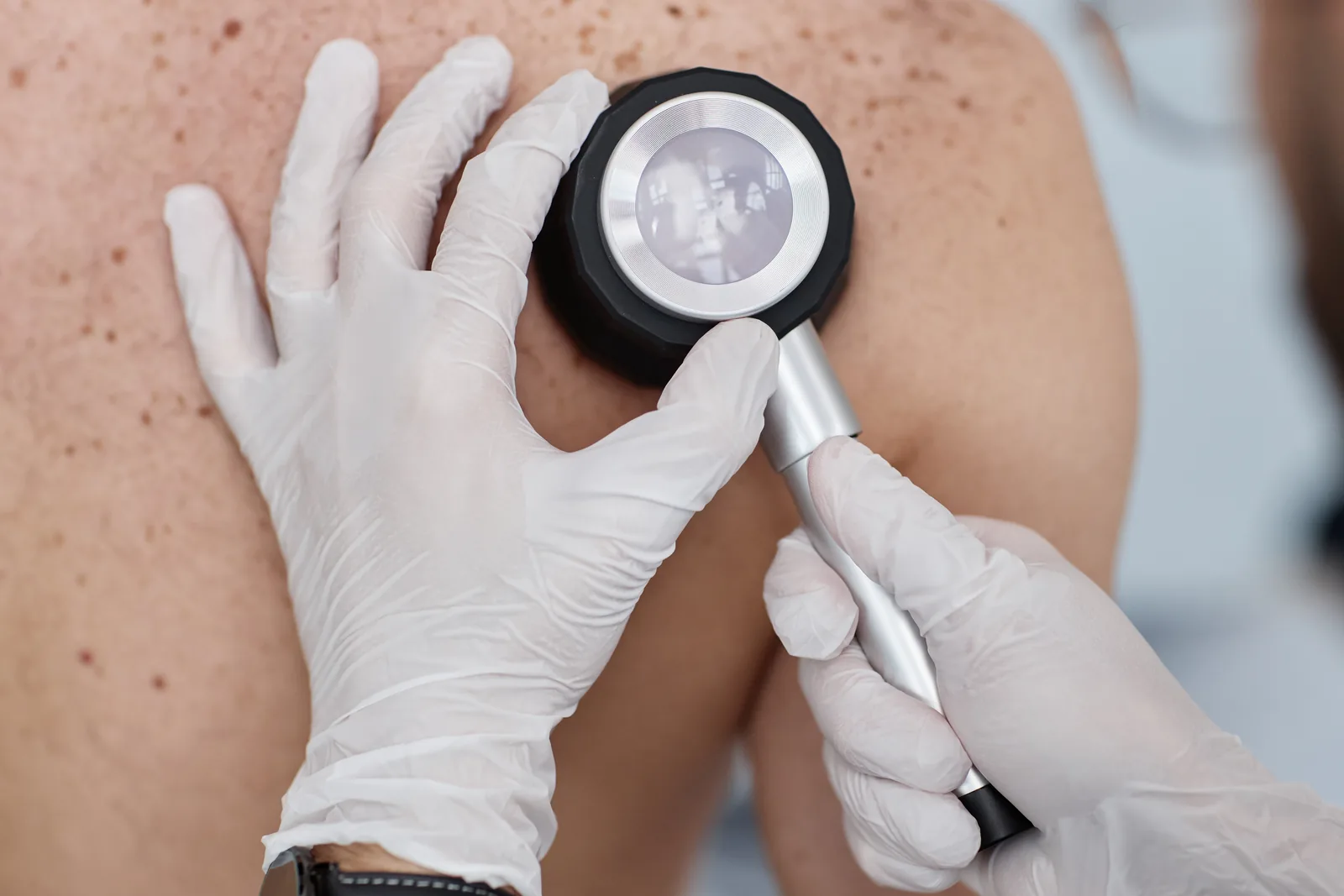
**Basal cell carcinoma (BCC) is a cancer that starts in the basal cells of the epidermis, the skin's outer layer. It's the most common form of skin cancer and the most frequently occurring cancer of any kind, with an estimated 3.6 million cases diagnosed in the U.S. each year, according to the Skin Cancer Foundation. BCC grows slowly and rarely spreads to other parts of the body, so most cases are curable, especially when found early. Left untreated, though, it can grow wide and deep, destroying skin, tissue and even bone.** It usually appears on sun-exposed skin as an open sore, a red patch, a pink growth, a shiny bump or a scar-like area. Diagnosis takes a biopsy, and treatment is usually a minor procedure such as excision, Mohs surgery or, for some superficial tumors, a prescription cream.
At a glance (checked November 29, 2026)
| Question | Answer | Source | |---|---|---| | What is it? | Cancer of the basal cells in the skin's outer layer | Skin Cancer Foundation | | How common? | Most common skin cancer; about 3.6 million U.S. cases a year (estimate) | Skin Cancer Foundation | | Does it spread? | Rarely beyond the original site, but it can invade locally | Skin Cancer Foundation; NCI | | Main cause | Ultraviolet exposure from the sun and indoor tanning | Skin Cancer Foundation | | How it's diagnosed | Skin exam and biopsy | AAD | | Common treatments | Excision, Mohs surgery, curettage and electrodesiccation, topical medicines for superficial BCC, radiation | AAD; Skin Cancer Foundation | | Highest cure rate | Mohs surgery, though it isn't right for every case | AAD |
Basal cell vs. squamous cell vs. melanoma
| | Basal cell carcinoma | Squamous cell carcinoma | Melanoma | |---|---|---|---| | Starts in | Basal cells of the epidermis | Squamous cells of the epidermis | Melanocytes (pigment cells) | | How common | Most common skin cancer | Second most common | Less common | | Growth and spread | Slow; rarely spreads | Can spread more often than BCC | More likely to spread if not caught early | | Typical look | Pearly or pink bump, sore that doesn't heal, shiny or scar-like patch | Scaly red patch, wart-like growth, sore | New or changing mole or dark spot | | Usual first step | Biopsy by a dermatologist | Biopsy | Biopsy |
What basal cell carcinoma looks like
The Skin Cancer Foundation lists five common warning signs: an open sore that bleeds, oozes or crusts and doesn't heal (or heals and returns); a reddish patch that may itch or hurt; a shiny bump that's pearly or clear, pink, red or white; a pink growth with a slightly raised, rolled edge; and a flat, white, yellow or waxy scar-like area. In people with darker skin, about half of BCCs are pigmented, meaning brown. Anything new, changing or that doesn't heal within a few weeks is worth showing to a dermatologist.
Who gets it, and why
Most BCCs are linked to ultraviolet exposure. The Skin Cancer Foundation lists risk factors including long-term or intense sun exposure and indoor tanning, a history of skin cancer, age over 50, light skin, male sex and chronic inflammation or skin injury. People who've had one BCC have a higher chance of another, which is why follow-up skin checks matter.
How it's diagnosed
A dermatologist examines the spot and the rest of your skin, then removes a small sample (a biopsy) to look at under a microscope. The AAD says results usually come back in a few days. Because BCC rarely spreads, staging tests to check whether it has spread usually aren't needed, according to the National Cancer Institute.
How basal cell carcinoma is treated
Treatment depends on the size, type, location and depth of the tumor, and on your health. The AAD says surgical excision is the most common treatment, and that Mohs surgery, which removes the cancer layer by layer and checks each layer under the microscope, "has the highest cure rate of all treatments for skin cancer," though it isn't right for every patient or tumor. Mohs is often used on the face and other areas where saving tissue matters. Other options include curettage and electrodesiccation (scraping and burning), cryosurgery, photodynamic therapy and radiation. For superficial BCC, prescription creams such as imiquimod or fluorouracil may be used. The Skin Cancer Foundation reports cure rates by method, for example up to 99% for Mohs on first-time tumors and above 95% for excision. For rare advanced cases, oral drugs called hedgehog pathway inhibitors (vismodegib, sonidegib) and the immunotherapy cemiplimab are options.
How to handle a spot that might be basal cell carcinoma: 7 steps
1. **Notice changes:** a sore that won't heal, a shiny bump or a scar-like patch. 2. **Book a dermatologist visit** rather than waiting to see if it goes away. 3. **Get a full-body skin exam** at the same visit. 4. **Have the biopsy done** and ask when results will be ready. 5. **Review treatment options** for your tumor's type, size and location. 6. **Ask whether Mohs surgery is appropriate,** especially on the face, ears or hands. 7. **Schedule follow-up skin checks** and use daily sun protection.
Questions to ask your dermatologist (checklist)
- [ ] What type of basal cell carcinoma is it (for example, superficial or nodular)? - [ ] Is it a first-time tumor or a recurrence? - [ ] Which treatments fit this location and size, and why? - [ ] Is Mohs surgery recommended, and who would perform it? - [ ] What will the scar look like, and is reconstruction needed? - [ ] How should I care for the wound? - [ ] How often should I have skin checks afterward? - [ ] What sun protection routine do you recommend?
Talk to a dermatologist
Talk with a board-certified dermatologist about any spot that concerns you. This is general information, not medical advice.
**Featured doctors:** Dr. Akhil Gupta, DO, MS, FAAD, of Skin Center of Florida in North Palm Beach, is board certified in Dermatology and Micrographic Dermatologic Surgery and performs Mohs surgery. Dr. Victoria Cirillo-Hyland, MD, FAAD, a board-certified dermatologist and Managing Physician of Bryn Mawr Skin & Cancer Institute, focuses clinically on complex skin cancer and Mohs surgery. Dr. D. Scott Karempelis, a board-certified dermatologist and founding partner of Dermatology Associates of Atlanta, practices Mohs skin cancer surgery and laser treatment. Browse more dermatologists. Membership is not an endorsement or a ranking.
Every Haute MD doctor is independently reviewed and editorially featured by Haute Living.
Sources
- Skin Cancer Foundation, Basal Cell Carcinoma Overview. https://www.skincancer.org/skin-cancer-information/basal-cell-carcinoma/ (checked Nov. 29, 2026) - Skin Cancer Foundation, Basal Cell Carcinoma Warning Signs and Images. https://www.skincancer.org/skin-cancer-information/basal-cell-carcinoma/bcc-warning-signs-images/ (checked Nov. 29, 2026) - Skin Cancer Foundation, Basal Cell Carcinoma Causes and Risk Factors. https://www.skincancer.org/skin-cancer-information/basal-cell-carcinoma/bcc-causes-and-risk-factors/ (checked Nov. 29, 2026) - Skin Cancer Foundation, Basal Cell Carcinoma Treatment Options. https://www.skincancer.org/skin-cancer-information/basal-cell-carcinoma/bcc-treatment-options/ (checked Nov. 29, 2026) - American Academy of Dermatology, Basal cell carcinoma: overview, signs and symptoms, diagnosis and treatment. https://www.aad.org/public/diseases/skin-cancer/types/common/bcc (checked Nov. 29, 2026) - American Academy of Dermatology, Basal cell carcinoma: diagnosis and treatment. https://www.aad.org/public/diseases/skin-cancer/types/common/bcc/treatment (checked Nov. 29, 2026) - National Cancer Institute, Skin Cancer Treatment (PDQ), Patient Version. https://www.cancer.gov/types/skin/patient/skin-treatment-pdq (checked Nov. 29, 2026)
*This guide is general education, not medical advice, and doesn't guarantee any treatment result. Talk with a board-certified dermatologist about any spot that concerns you.*
Frequently Asked Questions
What is basal cell carcinoma?
It's a slow-growing skin cancer that starts in the basal cells of the skin's outer layer. It's the most common form of skin cancer, usually appears on sun-exposed skin and is highly curable when treated early.
Is basal cell carcinoma serious?
It's rarely life-threatening because it seldom spreads, but it should still be treated. Left alone, BCC can grow wide and deep and damage skin, tissue and bone, which can make treatment more extensive.
What does basal cell carcinoma look like?
Common signs include a sore that doesn't heal, a reddish patch, a shiny pearly or pink bump, a pink growth with a rolled edge, or a waxy scar-like area. In darker skin, BCC is often brown.
How is basal cell carcinoma treated?
Most BCCs are removed with surgical excision or Mohs surgery. Other options include curettage and electrodesiccation, cryosurgery, photodynamic therapy, radiation and prescription creams for superficial tumors. Your dermatologist chooses based on the tumor and location.
Can basal cell carcinoma come back?
Yes. A BCC can recur at the treated site, and people who've had one are more likely to develop new ones. Regular skin exams and sun protection are part of follow-up care.
Get Help Now
Speak with a Haute MD Dermatology physician
Are you a Dermatology physician?
Join Haute MD Network and have your profile featured alongside these answers.
Apply for the NetworkRelated Guides
Guide · DERMATOLOGY
What Is Mohs Surgery?
Mohs surgery is the gold standard treatment for basal cell and squamous cell carcinoma with the highest cure rate of any skin cancer treatment.
Read GuideGuide · DERMATOLOGY
What Are the Warning Signs of Skin Cancer?
The ABCDE rule helps identify melanoma. Learn the warning signs of basal cell carcinoma, squamous cell carcinoma, and melanoma.
Read GuideGuide · DERMATOLOGY
What Is a Skin Cancer Screening?
A skin cancer screening is a head-to-toe skin exam to look for early cancer. What happens, who should get checked, how often, and what happens after.
Read Guide