Aesthetics & Wellness
What Is Emface?
Published · Haute MD Editorial Team
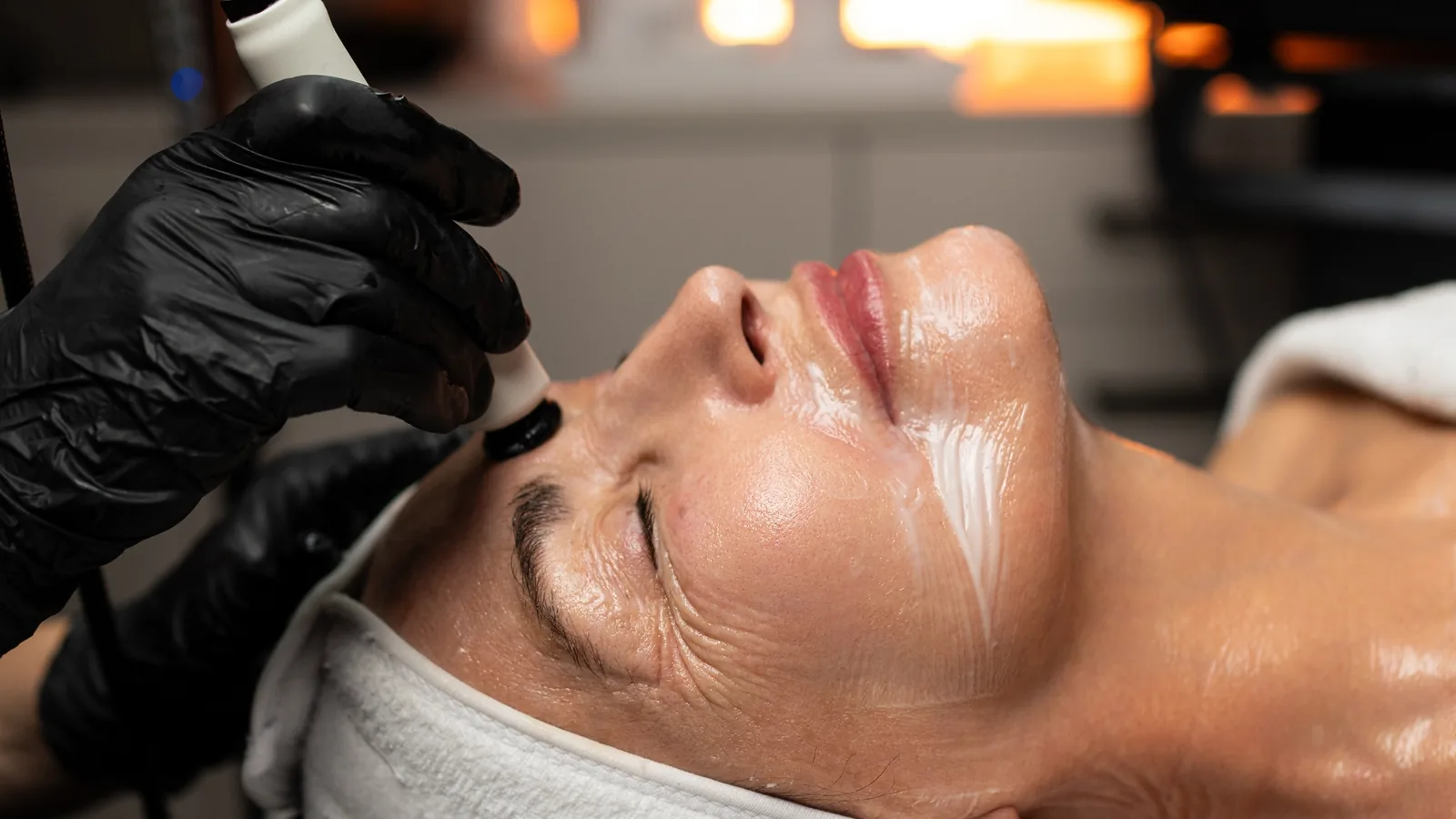
Emface (EMFACE®) is a non-invasive, needle-free facial treatment from BTL that delivers synchronized radiofrequency (RF) and HIFES® — high-intensity facial electrical stimulation — through adhesive applicators on the face. The RF energy heats facial tissue; the HIFES component stimulates facial muscles so they contract during the session. On the BTL-785 platform cleared by FDA, the hands-free forehead and cheek applicators are indicated for non-invasive temporary reduction of facial wrinkles (and for therapeutic heating that can temporarily relieve pain and muscle spasms and increase local circulation). A later clearance added a submental applicator to affect the appearance of lax tissue under the chin. Emface is not a facelift, filler or neuromodulator. A board-certified dermatologist or plastic surgeon can tell you whether it fits your goals.
At a glance
| Question | Short answer | Source |
|---|---|---|
| What is it? | Synchronized RF heating plus HIFES facial muscle stimulation, delivered through single-use adhesive applicators | BTL; FDA K222556 device description |
| Invasive? | No. Hands-free applicators on the skin surface; no needles in the standard facial protocol | FDA K222556; BTL |
| FDA category (aesthetic platform) | Electrosurgical cutting and coagulation device and accessories, 21 CFR 878.4400, Class II, product codes GEI / PBX, prescription use | FDA K222556, K233604 |
| Face (forehead / cheeks) | Non-invasive temporary reduction of facial wrinkles; heating for temporary relief of pain, muscle spasms, and increase in local circulation | FDA K222556 (BTL-785-7 with BTL-785-7-1 / 7-2) |
| Under the chin | Affect the appearance of lax tissue in the submental area | FDA K233604 (BTL-785-7-9) |
| Typical session (manufacturer) | About 20 minutes; company standard course is four sessions, often about a week apart | bodybybtl.com; FDA studies used four treatments |
| Downtime (manufacturer) | Company says no downtime; resume daily activities after treatment | bodybybtl.com FAQ / Important Information |
How Emface works
Emface uses two energies at once:
- Synchronized radiofrequency (RF). FDA's summary for the BTL-785-7 applicator describes radiofrequency heating as part of the hands-free treatment, with an effective treatment temperature range of 40–45 °C in the device comparison table. BTL describes the RF as heating dermal tissue to support collagen and elastin remodeling. That is manufacturer mechanism language, not an FDA outcome claim.
- HIFES® (high-intensity facial electrical stimulation). BTL's branded term for the electrical muscle-stimulation half of the treatment. FDA describes the BTL-785-7 as integrating RF heating with muscle stimulation that results in an induced muscle workout. Manufacturer materials say HIFES selectively stimulates facial elevator muscles (for example, forehead and cheek elevators) with many contractions per session.
Applicators are single-use adhesive electrodes placed on treatment areas such as the forehead and cheeks (and, when used, the submentum). Jewelry and hair in the field are typically cleared before treatment, per clinical-study protocol language in the FDA summary.
What FDA has cleared Emface for
FDA "clearance" through the 510(k) pathway means the agency found the device substantially equivalent to a legally marketed device for the listed uses. It is not the same as approving a drug.
| Year | 510(k) | Device / applicator | What was cleared (aesthetic / heating language) |
|---|---|---|---|
| 2023 | K222556 | BTL-785X with BTL-785-7 hands-free applicator; forehead BTL-785-7-1 and cheek BTL-785-7-2 electrodes | Heating for temporary relief of pain, muscle spasms, and increase in local circulation; non-invasive temporary reduction of facial wrinkles |
| 2024 | K233604 | BTL-785S with BTL-785-7 family; adds BTL-785-7-9 submental applicator | Forehead/cheek wrinkle reduction carried forward; affect the appearance of lax tissue in the submental area |
Also on manufacturer labeling (bodybybtl.com Important Information, accessed Nov. 6, 2026): EMFACE® Eye / Submentum aesthetic language, and EMFACE® Functional TMJ indications (TMJ dysfunction and associated pain, muscle spasm symptom relief, muscle re-education, blood flow, mandibular range of motion). Cite those as manufacturer-stated FDA-cleared uses until a separate TMJ 510(k) PDF is pulled for the page.
Not Emface: InMode's separately cleared "EmFace Device" (K191855, 2019) is a different product. This guide covers BTL EMFACE® only.
What the FDA studies found
Both clearances above were supported by company clinical investigations summarized in the 510(k)s. They were single-arm and open-label (no sham or active comparator in the summaries), with about three months of follow-up:
- Facial wrinkles (K222556): 42 people completed four treatments. Blinded evaluators documented an average 1.44-point FWES improvement at three months. No adverse events were recorded in the investigation. All participants reported being satisfied or very satisfied, and all found the procedure comfortable.
- Submental lax tissue (K233604): 56 people completed four treatments. Independent reviewers scored GAIS improvement in 91% (51/56). 82% (46/56) showed a ≥20 mm² reduction in the measured submental area at three months. Mean pain was 0.46 on a 0–10 scale. No adverse events were recorded.
These studies show measurable change versus baseline in selected patients. They do not prove Emface outperforms fillers, neuromodulators, Ultherapy, Sofwave or surgery, and they do not show how long results last beyond the follow-up window.
Peer-reviewed papers on simultaneous synchronized RF and HIFES (for example, Goldberg and Lal, Journal of Cosmetic Dermatology, 2024, PMID 38468421; Kinney and Boyd, Journal of Cosmetic Dermatology, 2024, PMID 38235951) report histologic or soft-tissue remodeling findings in small cohorts. Treat them as early evidence, not guarantees.
What a session is like
According to BTL's patient-facing materials:
- a session lasts about 20 minutes;
- you remain clothed for the face; adhesive applicators are placed on the treatment areas;
- sensation is typically described as warmth plus involuntary muscle contractions (company FAQ: similar to a facial massage / gentle contractions);
- the company's standard aesthetic course is four sessions, often spaced about a week apart — your clinician may adjust the plan;
- anesthesia is generally not required in the FDA facial study protocol language.
Ask who operates the device in that practice and who supervises the treatment.
Recovery and downtime
- Downtime: BTL states Emface requires no downtime and that patients can resume daily activities right after treatment.
- Side effects (manufacturer Important Information): possible temporary damage to natural skin, including crust, blister, and burn. You should feel comfortable heat during treatment, not an unpleasant burning or pain sensation — stop and tell the operator if you do.
- FDA study safety notes: the facial and submental investigations summarized above reported no adverse events in those enrolled cohorts; that does not mean side effects never occur in practice.
Who may be a candidate — and who should ask first
Often discussed for: people seeking a needle-free option for temporary improvement in facial wrinkles (forehead/cheeks) or the appearance of submental lax tissue, who understand results are typically modest and maintenance-dependent.
Emface does not replace: volume restoration with fillers, dynamic-line treatment with neuromodulators, or surgical lifting. It also does not treat every facial concern.
Manufacturer Important Information cautions include: do not apply treatment over hair or scar tissue, or if you have electronic or metal implants. As with any medical device procedure, review your full health history — including pregnancy, active skin infection or inflammation in the area, and implanted devices — with a physician before treatment.
How Emface differs from fillers, neuromodulators, Ultherapy and Sofwave
High-level differences only — this page does not rank treatments:
| Approach | Primary target | How it works (plain language) |
|---|---|---|
| Emface | Skin heating + facial muscle stimulation | Synchronized RF + HIFES through surface applicators |
| Neuromodulators (e.g., Botox) | Nerve signaling to muscle | Temporarily reduces muscle activity that creates dynamic lines — opposite direction from muscle stimulation |
| Dermal fillers | Soft-tissue volume | Add or restore volume; do not electrically stimulate muscle |
| Ultherapy | Deeper focused ultrasound | Focused ultrasound with imaging; see What Is Ultherapy? |
| Sofwave | Mid-dermis ultrasound | Non-focused ultrasound with surface cooling; see What Is Sofwave? and Sofwave vs. Ultherapy |
None of these replaces a facelift or neck lift when skin laxity or structural aging needs surgery. For the broader category, see What Is Skin Tightening?.
When to see a doctor
See a board-certified dermatologist or plastic surgeon if you are considering Emface, especially if you have facial implants, a pacemaker or other electronic implant, metal in the treatment area, active skin disease, or you are unsure whether wrinkles, volume loss or muscle-driven lines are your main concern. A consultation should map your goal to a cleared use — or explain when another option fits better.
Featured doctors: Haute MD Network members include Dr. Lisa Airan, a board-certified cosmetic dermatologist in Manhattan whose practice includes skin-tightening technologies such as Thermage and EmFace, and Dr. Oliver Chang, a double board-certified plastic surgeon in Miami whose practice includes facial rejuvenation and injectable treatments. Browse Dermatology and Plastic Surgery in Find a Doctor. Listed doctors are paid members of the Haute MD Network. Editorial selection, not a ranking.
Related
- What Is Skin Tightening?
- What Is Sofwave?
- What Is Ultherapy?
- Sofwave vs. Ultherapy
- What Is RF Microneedling?
- EmFace in Fort Collins: Xanadu Med Spa's Non-Surgical Lift (partner feature — not this clinical guide)
Find a Doctor
Browse Haute MD physicians in Find a Doctor, including Dermatology and Plastic Surgery.
Sources
- FDA 510(k) summary, BTL Industries, K222556 (BTL-785X; decision May 31, 2023): PDF; database record (accessed Nov. 6, 2026)
- FDA 510(k) summary, BTL Industries, K233604 (BTL-785S; decision March 28, 2024): PDF; database record (accessed Nov. 6, 2026)
- BTL, EMFACE® product page — mechanism, protocol, downtime FAQ, Important Information / labeling language (accessed Nov. 6, 2026)
- BTL Aesthetics, EMFACE launch press release (Sept. 19, 2022; manufacturer context only — headline percentages not used as page facts)
- Goldberg DJ, Lal K. Treatment with synchronized radiofrequency and facial muscle stimulation: Histologic analysis of human skin for changes in collagen and elastin fibers. J Cosmet Dermatol. 2024. PMID 38468421; doi:10.1111/jocd.16273
- Kinney BM, Boyd CM. Remodeling of facial soft tissue induced by simultaneous application of HIFES and synchronized radiofrequency provides nonsurgical lift of facial soft tissues. J Cosmet Dermatol. 2024. PMID 38235951; doi:10.1111/jocd.16165
- openFDA / FDA 510(k) database note: InMode "EmFace Device" K191855 is a separate clearance — not cited as BTL Emface (checked Nov. 6, 2026)
This guide is for general information and isn't medical advice. Talk with a board-certified physician about whether a treatment is right for you.
Frequently Asked Questions
What is Emface?
Emface is BTL's non-invasive facial device that combines synchronized radiofrequency heating with HIFES facial muscle stimulation through adhesive applicators.
Is Emface FDA-approved?
It is FDA-cleared through the 510(k) pathway for specific uses (for example, temporary reduction of facial wrinkles on the BTL-785-7 forehead/cheek applicators under K222556). Clearance is not the same as drug approval.
What does Emface treat?
FDA-cleared aesthetic language for the facial hands-free applicators includes temporary reduction of facial wrinkles; a submental applicator is cleared to affect the appearance of lax tissue under the chin. Manufacturer labeling also describes TMJ-related functional uses — ask your clinician which indication applies to you.
Is Emface the same as Botox or filler?
No. Neuromodulators reduce muscle activity that drives dynamic lines; fillers restore volume. Emface heats tissue and stimulates muscle contraction. They answer different concerns and are sometimes combined under physician guidance.
Is there downtime after Emface?
BTL says there is no downtime and patients can return to daily activities after treatment. Temporary skin reactions are possible; review the manufacturer's Important Information and your clinician's aftercare.
How is Emface different from Ultherapy or Sofwave?
Ultherapy and Sofwave are ultrasound devices. Emface uses radiofrequency plus electrical muscle stimulation. See the Ultherapy and Sofwave guides linked above for mechanism details.
Get Help Now
Speak with a Haute MD Dermatology physician
Are you a Dermatology physician?
Join Haute MD Network and have your profile featured alongside these answers.
Apply for the NetworkRelated Guides
Guide · AESTHETICS & WELLNESS
What Is Skin Tightening?
Skin tightening options compared: ultrasound, radiofrequency, RF microneedling, laser resurfacing, threads and surgery, with results timelines and risks.
Read GuideGuide · AESTHETICS & WELLNESS
What Is Sofwave?
Sofwave is a non-invasive ultrasound device that heats the mid-dermis. Its FDA-cleared uses, what studies found, side effects and who should avoid it.
Read GuideGuide · AESTHETICS & WELLNESS
What Is Ultherapy?
Ultherapy uses focused ultrasound to lift and tighten skin without incisions. FDA-cleared uses, how it works, results, side effects and who it suits.
Read GuideGuide · AESTHETICS & WELLNESS
Sofwave vs. Ultherapy: What's the Difference?
Sofwave and Ultherapy are FDA-cleared ultrasound devices that differ in depth, imaging and cleared uses. Mechanism, recovery and what to ask.
Read GuideGuide · AESTHETICS & WELLNESS
What Is RF Microneedling?
RF microneedling combines microneedles with radiofrequency energy to tighten skin and remodel collagen. Learn how it works, results, and what to expect.
Read Guide