Aesthetics & Wellness
Emface vs. Filler: What's the Difference?
Published · Haute MD Editorial Team
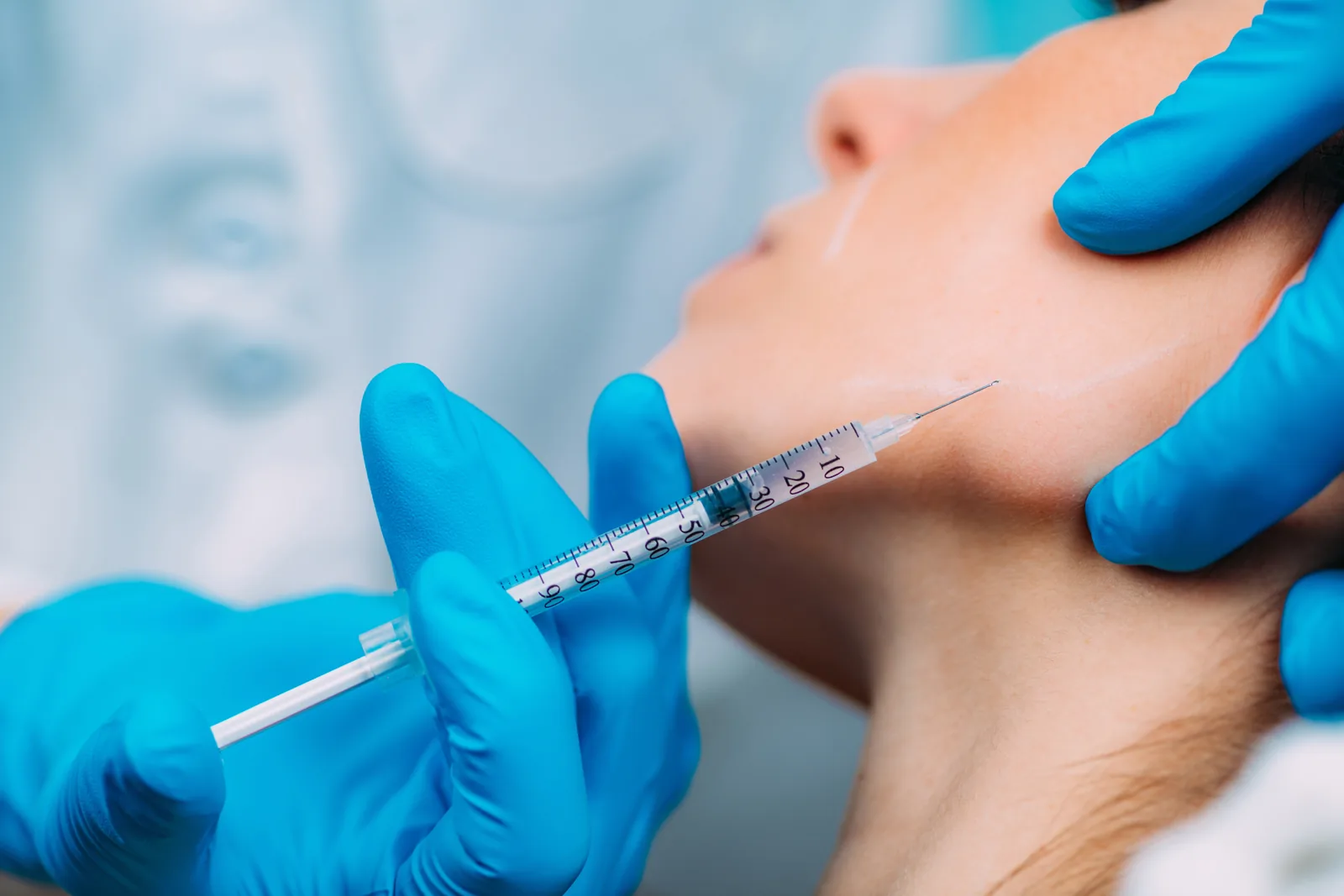
Emface and dermal filler work in opposite ways: Emface is a needle-free device that heats facial tissue with radiofrequency while electrically stimulating facial muscles from the surface, and it is FDA-cleared for temporary reduction of facial wrinkles (forehead and cheeks) and for affecting the appearance of lax tissue under the chin. Dermal filler is an injectable implant — such as hyaluronic acid, calcium hydroxylapatite or poly-L-lactic acid — that FDA approves to add volume or smooth specific wrinkles and folds where it is placed. Put simply, Emface is aimed at skin and muscle tone; filler is aimed at volume and contour. They are not interchangeable, they carry different risks, and some patients use both under a physician's plan. For background on the device, see What Is Emface?; for injectables, see What Are Dermal Fillers?
At a glance
| Emface (BTL EMFACE®) | Dermal filler | |
|---|---|---|
| What it is | Energy-based device: synchronized radiofrequency (RF) + HIFES® facial muscle stimulation through adhesive applicators | Injectable gel or suspension implanted under the skin |
| Needles? | No (surface applicators) | Yes — syringe with needle or cannula (FDA: needle-free injectors are not approved for fillers) |
| FDA pathway | 510(k) clearance, Class II (21 CFR 878.4400) — K222556 (2023), K233604 (2024) | Premarket approval (PMA) as a dermal implant for aesthetic use — e.g., Restylane P020023, Juvéderm P050047, Radiesse P050052, Sculptra P030050 |
| What it's cleared/approved for | Temporary reduction of facial wrinkles (forehead/cheeks); appearance of lax submental tissue | Product-specific: moderate-to-severe facial wrinkles and folds; augmentation of lips, cheeks, chin, back of hand; certain acne scars; HIV lipoatrophy |
| Adds volume? | Not a cleared use | Yes — that is the main purpose |
| Typical course (labeling/manufacturer) | Four ~20-minute sessions, about a week apart | Varies by product and area; some materials absorb over time and need repeat treatment |
| Downtime (per source) | BTL says none | FDA: most side effects (swelling, bruising) occur shortly after injection and many resolve in days to weeks |
| Most serious risk named by FDA / labeling | Manufacturer: temporary skin damage (crust, blister, burn); avoid with electronic or metal implants | FDA: unintentional injection into a blood vessel — necrosis, vision problems including blindness, stroke |
How Emface works
Emface delivers two energies at once through single-use adhesive applicators on the forehead, cheeks and (with a separate applicator) under the chin:
- Synchronized radiofrequency heats the tissue. FDA's K222556 summary lists an effective treatment temperature range of 40–45 °C for the facial applicator.
- HIFES (high-intensity facial electrical stimulation) makes facial muscles contract during the session. FDA's summary describes the result as an "induced muscle workout."
What FDA has cleared it for:
- K222556 (May 31, 2023): non-invasive temporary reduction of facial wrinkles (forehead and cheek applicators), plus therapeutic heating uses. The supporting study (42 people, four treatments, no control group) found an average 1.44-point improvement on the Fitzpatrick Wrinkle and Elastosis Scale at three months, with no adverse events recorded.
- K233604 (March 28, 2024): a submental applicator to affect the appearance of lax tissue under the chin. In that study (56 people), independent reviewers scored improvement in 91%, and 82% had a measured reduction of at least 20 mm² in the submental area at three months.
What it is not cleared for: adding facial volume. A 2025 retrospective study (Cohen et al., Dermatologic Surgery; 43 people, no control group) reported 3D-imaging changes in cheek and jawline volume after four sessions. That is early evidence, not an FDA indication, and it does not show Emface matches filler for volume.
How dermal fillers work
FDA describes dermal fillers — also called soft tissue fillers or injectable implants — as medical device implants approved to help create a smoother or fuller appearance in areas such as the nasolabial folds, cheeks, chin, lips and back of the hands, in adults over 21.
Main materials (FDA):
- Hyaluronic acid (HA) — a sugar naturally present in skin; it binds water to smooth and fill. Absorbable. Examples include Restylane and Juvéderm.
- Calcium hydroxylapatite (CaHA) — mineral particles in a gel. Absorbable. Example: Radiesse.
- Poly-L-lactic acid (PLLA) — a biodegradable polymer given in a series of injections. Example: Sculptra.
- PMMA microspheres — non-absorbable; FDA notes it has approved only one product made from a material that is not absorbed.
How long results last: FDA says the time depends on the filler material and the area injected, and that absorbable fillers may need to be repeated. See How Long Do Fillers Last?
What FDA approves fillers for (each product has its own label): absorbable fillers for moderate to severe facial wrinkles and folds and for augmenting the lips, cheeks, chin and back of the hand; the non-absorbable filler only for nasolabial folds and certain cheek acne scars; plus restoring facial fat loss in people with HIV and correcting contour deficiencies. FDA has not approved injectable liquid silicone for filling wrinkles or augmenting tissue, has not approved any over-the-counter fillers, and has not approved needle-free devices for injecting fillers.
Key differences that matter for patients
- The problem being treated. If the concern is lost volume — hollow cheeks, deep folds, lip or chin shape — that is what fillers are approved for. If the concern is fine forehead or cheek wrinkles or mild under-chin laxity, and you want to avoid needles, Emface's cleared uses are closer to that goal.
- Needles vs. none. Emface is applied on the skin. Fillers are injected.
- Risk profile. FDA names unintentional injection into a blood vessel as the most concerning filler risk — rare, but potentially serious and permanent (tissue death, vision loss including blindness, stroke). Emface's manufacturer lists temporary skin damage (crust, blister, burn) and says not to treat over hair or scar tissue or in people with electronic or metal implants.
- Reversibility. FDA notes filler removal may require injections or surgery and can be difficult or impossible, especially for permanent fillers or fillers not made of HA. Emface leaves no material behind.
- Evidence base. Fillers reach the market through PMA, supported by controlled clinical studies. Emface's clearances rest on single-arm, open-label studies with about three months of follow-up.
- Session pattern. Emface's manufacturer protocol is a series of four sessions. Filler is usually given in one or more injection visits depending on product and area (PLLA is given in a series).
Can you combine Emface and filler?
Clinicians sometimes plan energy-based treatments and injectables together because they address different layers — skin and muscle versus volume. Neither FDA labeling nor the manufacturer materials checked for this guide set out a protocol for treating Emface over existing filler, so timing and sequencing are questions for your physician, who knows which product was used, where and when. FDA also notes that the safe use of dermal fillers in combination with neuromodulators or other treatments has not been evaluated in a controlled clinical study. Bring a record of any prior filler treatments to the consultation.
The same logic applies to neuromodulators such as Botox: they temporarily reduce muscle activity that causes dynamic lines, while Emface stimulates muscle contraction. Ask how the plan fits together.
Who each may suit — and who should ask first
Emface is often discussed for people who want a needle-free option for temporary improvement in forehead/cheek wrinkles or the look of mild under-chin laxity, and who accept modest, maintenance-dependent results. It is not a substitute for volume restoration or surgery.
Filler is often discussed for people whose main concern is volume loss, contour or specific folds and lines that a particular product is approved to treat.
Ask a physician first if you: have electronic or metal implants (Emface caution); have a history of filler complications, allergies (FDA notes some HA fillers are made by bacterial fermentation and some materials are animal-derived) or bleeding disorders; have active skin infection or inflammation; are pregnant or breastfeeding (FDA says filler safety is unknown in pregnancy and breastfeeding); are prone to keloids or excessive scarring; or are unsure whether your concern is volume, laxity or muscle-driven lines. FDA recommends choosing a licensed provider experienced in dermatology or plastic surgery for filler and treating filler injection as a medical procedure.
Questions to ask at your consultation
- Is my concern mainly volume, skin laxity, fine wrinkles or muscle-driven lines?
- Which FDA-cleared or FDA-approved use applies to what you're recommending?
- For filler: which product, what material, how is a blood-vessel complication recognized and handled in this office?
- For Emface: who operates the device and who supervises? Do any of my implants rule it out?
- If I have had filler before, does that change the timing or settings of Emface?
- What does maintenance look like for each option?
Featured doctors: Haute MD Network members include Dr. Lisa Airan, a board-certified cosmetic dermatologist in Manhattan whose practice includes injectables such as Botox and dermal fillers (Restylane, Radiesse, JUVÉDERM) and skin-tightening technologies such as Thermage and EmFace, and Dr. Anna Avaliani, a cosmetic and laser physician who founded Anna Avaliani MD Cosmetic & Laser Surgery, a nonsurgical aesthetic practice on Park Avenue in New York City focused on laser medicine, injectables and skin-tightening technology. Browse Dermatology and Plastic Surgery in Find a Doctor. Listed doctors are paid members of the Haute MD Network. Editorial selection, not a ranking.
Find a Doctor
Browse Haute MD physicians in Find a Doctor, including Dermatology and Plastic Surgery.
Sources
- FDA 510(k) summary, BTL Industries, K222556 (BTL-785X; decision May 31, 2023): PDF (accessed Nov. 7, 2026)
- FDA 510(k) summary, BTL Industries, K233604 (BTL-785S; decision March 28, 2024): PDF (accessed Nov. 7, 2026)
- FDA, Dermal Fillers (Soft Tissue Fillers) (content current as of 07/06/2023; accessed Nov. 7, 2026)
- FDA, FDA-Approved Dermal Fillers (content current as of 11/09/2020; accessed Nov. 7, 2026)
- FDA PMA database (via openFDA, accessed Nov. 7, 2026): P020023 Restylane; P050047 Juvéderm; P050052 Radiesse; P030050 Sculptra; P110033 Juvéderm Voluma XC
- BTL, EMFACE® product page — protocol, downtime FAQ, Important Information (accessed Nov. 7, 2026)
- Cohen JL, Halaas Y, Chilukuri S, et al. Noninvasive Facial Volume Harmonization Using HIFES and Synchronized RF Technology: A Retrospective Study. Dermatol Surg. 2025;51(7):690-695. PMID 40112025; doi:10.1097/DSS.0000000000004613
This guide is for general information and isn't medical advice. Talk with a board-certified physician about whether a treatment is right for you.
Frequently Asked Questions
What is the difference between Emface and filler?
Emface is a needle-free device that combines radiofrequency heating with facial muscle stimulation; it is FDA-cleared for temporary reduction of facial wrinkles and for the appearance of lax tissue under the chin. Filler is an injectable implant that FDA approves to add volume or smooth specific wrinkles and folds.
Can Emface replace filler?
Not for volume. Adding facial volume is not an FDA-cleared use of Emface. One small retrospective study reported volume changes on 3D imaging, but that is early evidence and not a substitute for a filler where volume is the goal.
Is Emface FDA-approved like filler?
The pathways differ. Emface is FDA-cleared through 510(k) (K222556, K233604) as a Class II device. Dermal fillers are FDA-approved through premarket approval (PMA) as dermal implants — for example, Restylane (P020023) and Juvéderm (P050047).
Which is riskier, Emface or filler?
They carry different risks. FDA's most serious filler warning is unintentional injection into a blood vessel, which is rare but can cause tissue death, vision loss or stroke. Emface's manufacturer lists temporary skin damage such as crust, blister or burn and cautions against use with electronic or metal implants. A physician can weigh these for your health history.
Can I get Emface if I already have filler?
Ask your physician. FDA labeling and the manufacturer materials reviewed for this guide do not set a protocol for Emface over existing filler, so your doctor should consider which product you had, where and when.
Does Emface hurt? Does filler hurt?
BTL says Emface should feel like comfortable heat with muscle contractions, never unpleasant burning or pain. FDA lists pain, tenderness, swelling and bruising among common filler side effects, usually soon after injection.
Get Help Now
Speak with a Haute MD Dermatology physician
Are you a Dermatology physician?
Join Haute MD Network and have your profile featured alongside these answers.
Apply for the NetworkRelated Guides
Guide · AESTHETICS & WELLNESS
What Is Emface?
Emface pairs synchronized radiofrequency with HIFES facial muscle stimulation. FDA-cleared uses, what a session is like, recovery and candidacy.
Read GuideGuide · AESTHETICS & WELLNESS
What Are Dermal Fillers?
Dermal fillers are injectables that restore volume, smooth wrinkles, and enhance contours. Hyaluronic acid fillers are reversible; biostimulators build collagen for longer results.
Read GuideGuide · AESTHETICS & WELLNESS
How Long Do Fillers Last?
Filler longevity varies by product and location: lips 6-12 months, nasolabial folds 12-18, cheeks 18-24, biostimulators 2-3+ years.
Read GuideGuide · AESTHETICS & WELLNESS
What Is Sculptra?
Sculptra is a biostimulatory poly-L-lactic acid injectable that gradually builds collagen for natural volume restoration lasting 2-3+ years — ideal for large-volume rejuvenation.
Read GuideGuide · AESTHETICS & WELLNESS
What Is Radiesse?
Radiesse is a calcium hydroxylapatite filler that adds immediate volume and stimulates collagen over time — used for cheeks, jawline, hands, and skin quality.
Read GuideGuide · AESTHETICS & WELLNESS
Tear Trough Filler: Risks and Who's a Candidate
Tear trough filler uses hyaluronic acid to soften under-eye hollows. Which fillers are FDA-approved for it, who is a good candidate, results and the risks.
Read GuideGuide · AESTHETICS & WELLNESS
What Is Botox?
Botox is a purified botulinum toxin that temporarily relaxes targeted muscles to reduce dynamic wrinkles — the most common nonsurgical cosmetic procedure in the US.
Read GuideGuide · AESTHETICS & WELLNESS
What Is Skin Tightening?
Skin tightening heats skin to rebuild collagen. Compare Ultherapy, Sofwave, Thermage, Morpheus8, lasers and surgery, with results timelines and risks.
Read GuideGuide · AESTHETICS & WELLNESS
Sofwave vs. Ultherapy: What's the Difference?
Sofwave and Ultherapy are FDA-cleared ultrasound devices that differ in depth, imaging and cleared uses. Mechanism, recovery and what to ask.
Read GuideGuide · AESTHETICS & WELLNESS
What Is RF Microneedling?
RF microneedling combines microneedles with radiofrequency energy to tighten skin and remodel collagen. Learn how it works, results, and what to expect.
Read Guide