







The fox eye lift is a cosmetic procedure designed to create an almond-shaped, elongated eye appearance by lifting the outer corners of the eyes and brows upward and outward. The result is a subtle upward tilt that gives the eyes a more angular, cat-like appearance, associated with the aesthetic made famous by models including Bella Hadid and Kendall Jenner. In 2026, the fox eye lift remains one of the most searched eye procedures in aesthetic medicine, though the approach has evolved significantly since the trend first exploded on social media in 2020.
The fox eye look can be achieved through several different methods, ranging from non-surgical thread lifts and injectable techniques to surgical procedures including canthoplasty and temporal brow lifts. Understanding the difference between these approaches, what each one actually produces, and what has changed about the trend in 2026 is essential before booking any consultation.
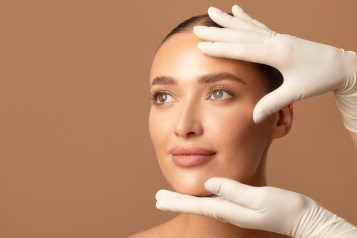
 Photo Credit: Shutterstock
What Does the Fox Eye Lift Actually Do?
The fox eye lift targets two distinct anatomical areas to produce its characteristic effect.
The outer brow. Lifting the tail of the brow upward and outward creates the arched, elevated appearance that frames the fox eye look from above. This can be achieved surgically through a temporal brow lift, which elevates the outer portion of the brow through incisions hidden within the hairline, or non-surgically through thread lifts or strategically placed neuromodulators that relax the muscles pulling the brow downward.
The outer corner of the eye. Lifting the lateral canthus, the outer corner where the upper and lower eyelids meet, creates the upward tilt that defines the fox eye shape. This is the more technically demanding component of the procedure. Surgical canthoplasty or canthopexy repositions the outer corner of the eye at the bony orbital rim, producing a more permanent and more dramatic upward tilt. Non-surgical approaches use thread lifts to achieve a temporary approximation of the same effect.
The combination of an elevated outer brow and an upwardly tilted outer eye corner produces the elongated, almond-shaped appearance that characterizes the fox eye aesthetic.
The Surgical vs. Non-Surgical Fox Eye Lift
Non-Surgical Fox Eye Lift The non-surgical fox eye lift uses PDO (polydioxanone) or PLLA thread lifts to mechanically elevate the outer brow and outer eye corners without incisions. Threads are inserted through tiny entry points and anchored to tissue, creating an immediate lifting effect.
The advantages are minimal downtime, no visible scarring, and the ability to assess the result before committing to a surgical approach. The limitations are equally significant: thread lift results for the fox eye typically last six to eighteen months before the threads dissolve and the tissue returns to its original position. Complications including thread migration, puckering, and asymmetry are not uncommon when performed by inexperienced injectors.
For patients who want to preview the fox eye look before considering surgery, or who want a temporary enhancement with minimal commitment, the non-surgical approach can be appropriate. For patients seeking lasting results, it is a bridge rather than a destination.
Surgical Fox Eye Lift The surgical fox eye lift produces results that are both more dramatic and more durable than thread-based approaches. The two primary surgical techniques are the temporal brow lift, which elevates the outer brow through incisions in the temporal hairline, and lateral canthoplasty or canthopexy, which repositions the outer corner of the eye.
Results from surgical fox eye procedures typically last five to ten years or longer depending on the technique and the patient's aging process. The tradeoff is a meaningful surgical recovery, potential visible scarring if incisions are poorly placed, and the irreversibility of the procedure if the patient's aesthetic preferences change over time.
Surgical fox eye procedures should only be performed by a board-certified plastic surgeon or oculoplastic surgeon with specific training in periorbital surgery. The eye is the most unforgiving surgical site on the face, and the margin for error is extremely small.
Is the Fox Eye Lift Still Trending in 2026?
The honest answer is: yes, but differently.
The social media moment that made the fox eye look ubiquitous in 2020 and 2021 was partly driven by a very specific, very extreme version of the aesthetic, the dramatic upward pull that was sometimes achieved with hairstyling, makeup, and tape rather than any procedure at all. That version of the trend, the exaggerated, clearly treated, visibly elongated eye corner, has receded.
What has replaced it is a more refined, more anatomically appropriate interpretation of the same underlying desire: eyes that look lifted, rested, and defined without looking pulled or operated. The patients consulting for fox eye procedures in 2026 are overwhelmingly seeking subtle elevation rather than dramatic transformation, results that enhance their natural eye shape rather than impose a different one.
This evolution reflects a broader shift in aesthetic medicine toward natural results and away from the heavily treated aesthetic that dominated the early part of the decade. The fox eye concept, an almond-shaped, gently lifted eye that communicates youth and alertness, is genuinely appealing and anatomically grounded. The extreme version of the trend is what has dated. The underlying principle has not.
Who Is a Good Candidate for a Fox Eye Lift?
The ideal candidate for a fox eye lift procedure is a patient who has noticed descent of the outer brow, heaviness or hooding at the outer corner of the eye, or a downward tilt of the lateral canthus that makes the eyes appear tired or sad. These are anatomical changes that the fox eye lift can meaningfully address, and patients in this category are likely to be satisfied with a well-executed result.
Patients who have naturally round or downturned eyes and simply want a different eye shape are less predictable candidates. The fox eye procedure works best when it is correcting an existing tendency toward descent rather than imposing a shape that is architecturally different from the patient's natural anatomy.
Age, skin quality, and brow position are all factors that a qualified surgeon will assess at consultation. Patients with significant upper eyelid hooding or significant brow ptosis may require a more comprehensive approach than the lateral-focused fox eye technique alone provides.
What to Look for in a Fox Eye Lift Provider
The periorbital region is the most anatomically complex and aesthetically consequential area on the face. The choice of provider matters more here than almost anywhere else.
For surgical fox eye procedures, look for a board-certified plastic surgeon or an ASOPRS fellowship-trained oculoplastic surgeon with a documented portfolio of periorbital surgical results. Ask specifically about their experience with canthoplasty and temporal brow lifts. Review before and after photographs of patients with your eye shape and your specific concerns.
For non-surgical thread lift approaches, ensure the provider is a licensed medical professional operating in a properly supervised medical setting. Thread lifts in the periorbital region carry real risks when performed by inadequately trained providers, and the non-surgical label does not reduce those risks to zero.
Frequently Asked Questions
What is a fox eye lift? A fox eye lift is a cosmetic procedure that elevates the outer corners of the eyes and brows upward and outward to create an almond-shaped, elongated eye appearance. It can be performed surgically through temporal brow lifting and canthoplasty, or non-surgically through PDO thread lifts and injectable neuromodulators.
How long does a fox eye lift last? Non-surgical fox eye thread lifts typically last six to eighteen months before the threads dissolve and the tissue returns to its original position. Surgical fox eye procedures produce results that last five to ten years or longer depending on the technique used and the patient's aging process.
Is the fox eye lift painful? Non-surgical thread lift procedures are performed under local anesthesia and most patients describe mild discomfort rather than pain. Surgical fox eye procedures are performed under sedation or general anesthesia and involve a recovery period of one to two weeks for the most significant swelling and bruising to resolve.
How much does a fox eye lift cost? Non-surgical fox eye thread lifts typically range from $1,500 to $3,500 depending on the provider, location, and number of threads used. Surgical fox eye procedures including temporal brow lifts and canthoplasty typically range from $5,000 to $15,000 depending on the complexity of the procedure and the surgeon's fee.
Is the fox eye lift still popular in 2026? Yes, though the aesthetic has evolved from the dramatic, exaggerated version that dominated social media in 2020 and 2021 toward a more refined, subtle interpretation. Patients in 2026 are seeking lifted, rested, naturally defined eyes rather than an overtly treated or pulled appearance. The underlying desire for a gently elevated, almond-shaped eye remains one of the most consistent requests in periorbital aesthetic medicine.
Can the fox eye lift be reversed? Non-surgical thread lifts are temporary and will reverse naturally as the threads dissolve. Surgical procedures including canthoplasty and temporal brow lifts are more difficult to reverse and should be considered carefully before proceeding. Choosing an experienced, board-certified surgeon and having a thorough consultation is the most effective way to ensure the result aligns with your goals before any irreversible steps are taken.
This article is intended for educational and informational purposes only. Always consult a qualified, board-certified physician before undergoing any cosmetic procedure. Individual results vary.