






Every few years, a new ingredient arrives that promises to change everything. A new device that claims to render everything before it obsolete. A new protocol, a new technique, a new philosophy of skin that the industry insists you need to know about right now. I have watched this cycle repeat itself for thirty-six years, and what I have learned from watching it is not which trends were right. It is which principles have never been wrong.
 Photo Credit: Shutterstock
I graduated magna cum laude from Harvard College and from the University of Pennsylvania School of Medicine, completed my internship at Brigham and Women's Hospital, and returned to Penn for my dermatology residency beginning in 1990. I have been on staff at Bryn Mawr Hospital since 1993. I have treated the most complex cases of skin cancer in the region, assembled the most patient-focused Mohs Surgery center on the Main Line, and spent thirty-six years watching the skin do things that neither my training nor the industry's enthusiasm fully anticipated.
What thirty-six years in this specialty actually teaches you is not available in a journal. Here is what I know.
Skin Has a Memory That Marketing Does Not
The skin remembers everything. Every hour of unprotected sun exposure from the day you are born. Every crash diet that depleted it of the nutrients it needed to maintain its collagen architecture. Every product used too aggressively, every treatment pursued too early, every barrier stripped in the name of a brighter complexion. Skin keeps a record that becomes visible on a timeline the person living in it rarely anticipates.
 Photo Credit: Shutterstock
This is the dimension of dermatology that no trend addresses: the cumulative nature of skin aging. The retinol you start at 28 does not completely undo the sun exposure from your teens. The filler you add at 40 does not replace the collagen lost through decades of inflammation. The investment that actually changes the trajectory of aging skin is the one made earliest, most consistently, and with the deepest understanding of what the skin is actually doing biologically rather than what it looks like on the surface.
After thirty-six years, the patients whose skin has aged most gracefully are not the ones who found the best treatments. They are the ones who understood their skin as a living organ requiring consistent, preventative, informed care rather than a surface requiring periodic correction.
The Skin Cancer Reality That Changes Everything
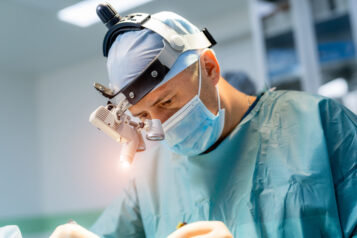
I have spent my career treating the most complex cases of skin cancer. Our Mohs Surgery center repairs 99% of cases the same day in our office. We have a full-time plastic surgeon available to repair more complex surgical cases. I tell patients this not to reassure them but to remind them of something the cosmetic conversation consistently obscures: the skin is not primarily an aesthetic structure. It is the body's largest organ, its first line of defense against the environment, and the site of the most common cancer in America.
Skin cancer does not announce itself the way most patients expect it to. It does not always look dramatic. It does not always hurt. And by the time it looks like something most people would recognize as concerning, it has often been developing for years in plain sight while routine skin cancer screening appointments were never scheduled.
A dermatologist who understands and treats skin cancer understands the complex biology of the skin at an advanced cellular level. The decisions I make about a patient's cosmetic treatment are informed by the same anatomical and biological knowledge that guides my surgical work. The result is a more complete, more accurate picture of what a patient's skin actually needs, rather than what the current moment suggests they should want.
What Thirty-Six Years of Cosmetic Dermatology Actually Looks Like
I started pioneering cosmetic dermatology on the Main Line in 1993, when the field was still finding its footing and the treatments available bore little resemblance to what is possible today. The technology has changed dramatically. The underlying principles have not.
The skin responds best to treatments that work with its biology rather than against it. Aggressive approaches that force rapid results frequently produce rapid correction followed by rebound effects that leave the skin worse than before. The patients who achieve the most lasting cosmetic outcomes are the ones treated conservatively, consistently, and with a full understanding of their skin's individual characteristics rather than a protocol applied uniformly to everyone who presents with the same concern.
After thirty-six years, I have earned the ASDS Circle of Excellence in Soft Tissue Augmentation, been recognized repeatedly as a Top Doctor and Top Physician in the Philadelphia metro area, and appeared as a dermatology expert in the media. None of that changes the fundamental truth that the most important dermatology appointment a patient will ever have, is the one where we establish a baseline, understand their history, and build a plan that serves them over decades rather than delivering a result for this season.
The Trend That Will Not Pass
There is one development in dermatology that I do not believe is a trend: the growing recognition that skin health and skin aesthetics are the same conversation. For most of my career, medical dermatology and cosmetic dermatology were treated as separate disciplines serving different patient populations with different goals. The patients who came for skin cancer screening were not the patients who came for injectables. The clinical work and the cosmetic work occupied different rooms, different billing categories, and different professional conversations.
That division is dissolving, and its dissolution is good medicine. The patient who understands that their SPF is the most powerful anti-aging product available, that their skin cancer screening is as relevant to how they look at sixty as any filler they might consider, and that the dermatologist who manages both dimensions of their skin is giving them something categorically different from one who manages only one, that patient is the one whose skin tells a different story in twenty years.
That is the conversation I have been having for thirty-six years. The industry is finally catching up.
What to Look For in a Dermatologist
After thirty-six years of practice, the advice I give patients about choosing a dermatologist is the same advice I would have given in 1990: look for a physician who trained at institutions where the standards were highest, who practices the full scope of dermatology rather than the cosmetic slice of it, and who treats your skin as a system with a history rather than a surface with a concern.
Board certification by the American Board of Dermatology is the baseline. Fellowship in the American Academy of Dermatology is the next credential to confirm. A practice that integrates medical, surgical, and cosmetic dermatology is the environment most likely to give you the complete picture your skin deserves.
Trends come and go. Skin is forever. The dermatologist who understands both is worth finding and worth keeping.
Dr. Victoria A. Cirillo-Hyland, MD, FAAD is a board-certified dermatologist and the founder and managing physician of Cirillo Cosmetic Dermatology Spa, Bryn Mawr Skin & Cancer Institute, and Cirillo Center for Plastic Surgery, collectively forming the largest and most credentialed dermatology and plastic surgery center on the Main Line. She practices at 919 Conestoga Road, Bryn Mawr, PA. For appointments, visit cirilloinstitute.com or call 610.525.0500.
For more information, visit Victoria A. Cirillo-Hyland, MD, FAAD's social media: