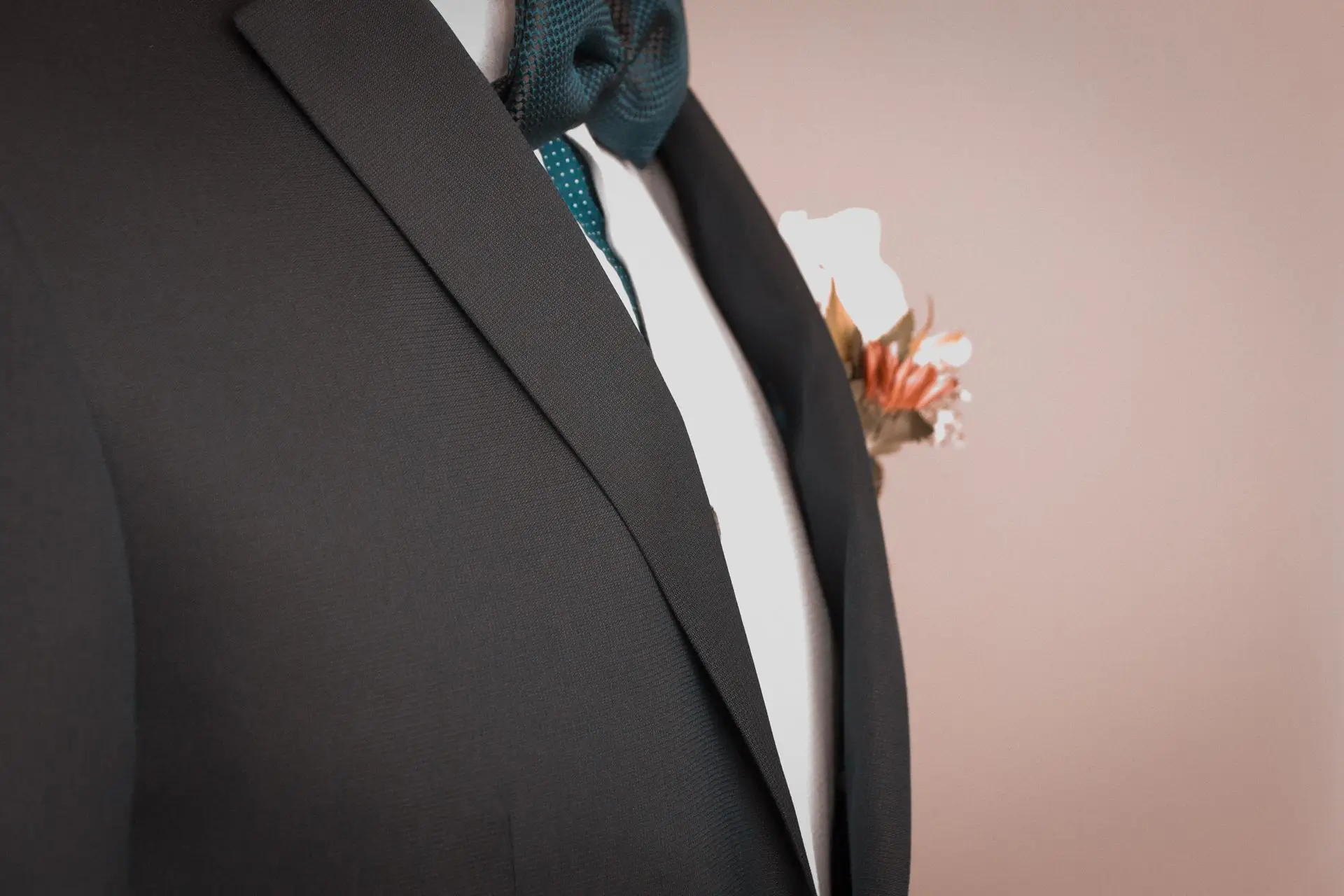
Bespoke, made to measure or ready to wear: choosing the groom’s suit for a luxury wedding
Discover the differences between bespoke, made to measure, and ready to wear wedding suits to find the perfect fit for your luxury wedding.
At a high-end wedding, every detail is considered. The florals are designed months in advance, the menu is tasted twice and the venue, whether a château, a private estate or a landmark hotel, is booked a year or more ahead. The groom’s suit deserves the same level of attention. It appears in every portrait, it is worn for twelve hours or more and it often becomes a keepsake. The first decision is not the color or the lapel, but the route to the finished garment.
There are three main options, and each has its own balance of craftsmanship, time and flexibility.
Bespoke: the full tailoring experience
Bespoke tailoring, in the tradition of Savile Row and the great tailoring houses of Naples and Milan, starts from nothing. The tailor drafts a unique paper pattern for the client, cuts the cloth by hand and builds the jacket over several fittings. Posture, shoulder slope and even the way someone stands are taken into account.
The result is a suit that fits in a way no other method can match.
Made to measure: precision with a clearer timeline
Made to measure adapts an existing pattern to the client’s measurements. The groom selects the fabric, lining, lapel shape, buttons and finishing details, and the suit is produced to his specifications. Fittings are fewer and the timeline is more predictable than bespoke.
For many grooms, this is the sweet spot. It offers a high degree of personalization, from a monogram inside the jacket to a specific shade of midnight blue, without the lengthy process of a full bespoke commission. Many specialists in groom wedding suits work this way, combining a range of luxury fabrics with personal measurements and a tailor’s final adjustments.
Ready to wear: refined and immediate
High-quality ready-to-wear has improved dramatically. Fine Italian cloths, half-canvassed construction and careful finishing are now available off the rack, and a good tailor can refine the fit with alterations to the sleeves, waist and trousers. For a groom with a build close to standard sizing, or for a wedding planned on a short timeline, this route can deliver an excellent result.
It also works well for the rest of the wedding party. Groomsmen and fathers can be dressed in coordinated wedding suits from the same collection, with individual alterations, while the groom’s own suit is made to measure in a complementary fabric.
Details that elevate any route
Whichever option you choose, a few details make the difference at a luxury wedding. Fabric choice matters: fine wool, silk-wool blends or a subtle texture photograph beautifully under both natural and evening light. Consider a second look for the evening to mark the shift from ceremony to celebration. Hand-finished buttonholes, a contrasting lining chosen with your partner and a pocket square from a meaningful fabric all add personal touches that guests may not see but you will remember.
Making the choice
Choose bespoke if you have the time and want the tailoring process to be part of your wedding story. Choose made to measure if you want a highly personal suit with a reliable timeline, which suits most grooms planning a luxury celebration. Choose refined ready to wear if your build fits standard sizes well or your timeline is short, and invest the difference in impeccable alterations. In every case, start early, bring your wedding shoes to each fitting and consider how the suit will look not only at the altar, but in the photographs you will return to for decades.
Disclaimer: Written in partnership with APG.
Latest from Haute Living
José Andrés is Bringing Bazaar Back to Miami Beach With Bazaar Meat
Audemars Piguet Turns the Royal Oak Into High Jewelry—Exclusively Selling Them in Private

Haute Living Joins Miami’s Business Owner Strategy Summit This November