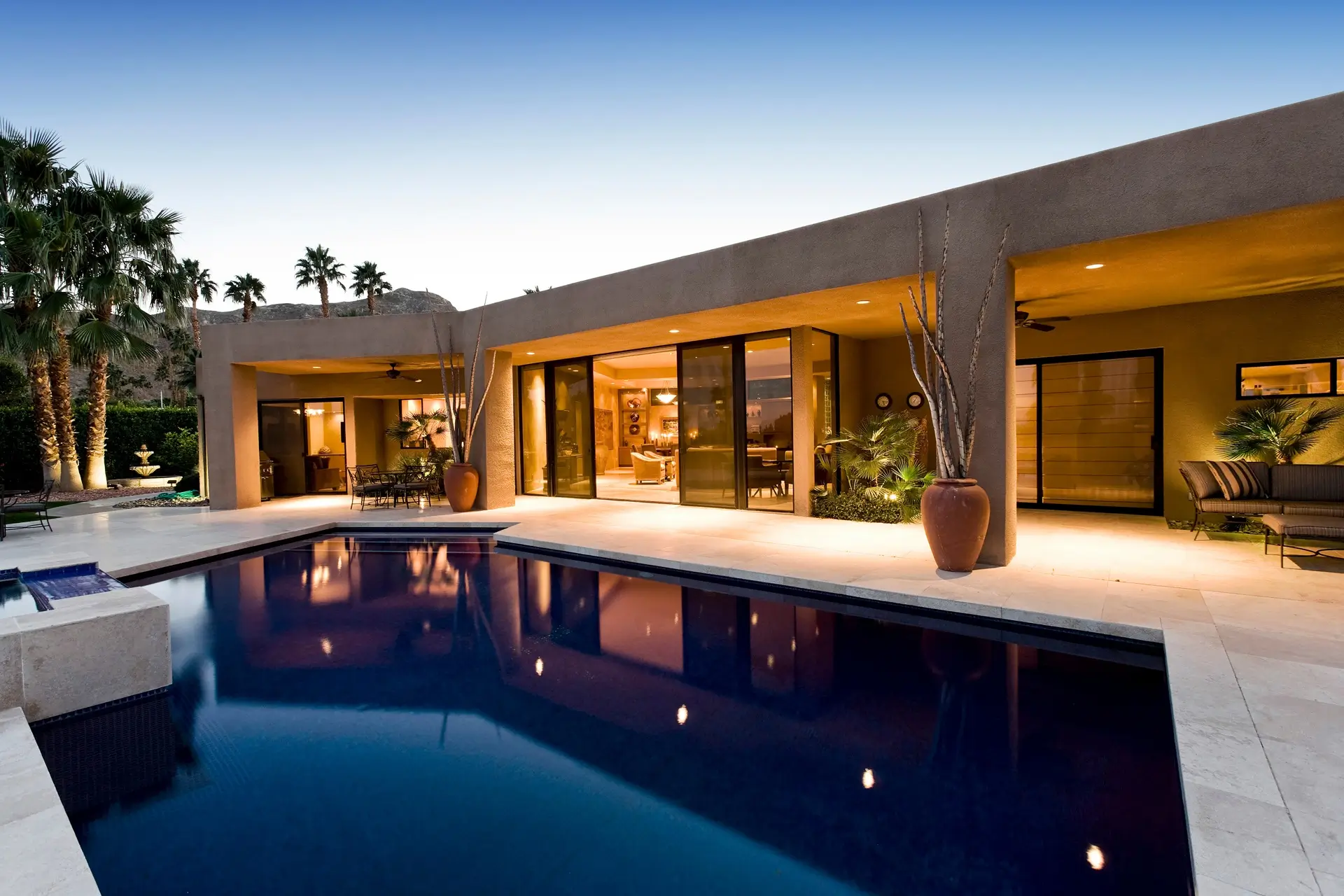
Designing a Luxury Family Backyard
How to keep your backyard stylish while also keeping it functional and ideal for a family’s needs.
In years past, a well-considered estate garden often stopped at the pool terrace and the hedge line. Luxury design elements and family use were once seen as distinctly separate, but that has changed in recent years.
Today, families building or renovating at the high end now ask their landscape architects to fold a serious children’s play area into the plan from the outset. Hence, a trampoline or climbing frame reads as part of the design rather than a plastic afterthought parked on the grass. Handled properly, the setup lasts through a childhood and holds its place alongside everything else on the property.
Play and Luxury: Together at Last
The first decision is where to place the play equipment, and it’s rarely in the far corner. Designers usually position it within sight of the main living rooms or kitchen; close enough for casual supervision, but screened by planting so it doesn’t dominate the view from the terrace.
Furthermore, a trampoline set flush with a lawn, with the mat at grade, all but disappears and eliminates the fall height that makes an above-ground unit look industrial. Swing sets and climbing frames sit more comfortably against mature hedging or a timber screen than in open space. Ground surface matters as much as position. The better plans specify soft-fall surfacing (engineered wood fiber or a poured rubber safety surface) tinted to blend quietly with the surrounding paving and turf.
Why Choosing the Right Equipment Is Essential
Once the footprint is set, the equipment needs to prove its value over the years, not just during a single school break. Trampolines and climbing frames stay outdoors year-round, so the frame, spring system, and UV-stable netting matter just as much as the space they take up on the lawn.
For the equipment itself, families increasingly look past big-box models to specialist makers such as Vuly, which builds trampolines and outdoor climbing frames engineered to withstand years of daily use rather than a single summer. The brand runs its own safety and quality program and ships across the US with free delivery on in-stock items, so you can plan a full setup around a landscape design instead of buying on impulse.
How to Upkeep the Integration
Upkeep is the consideration most owners underestimate. Netting and padding weather fastest, so a system with off-the-shelf replacement parts helps the whole unit look fresh after three summers. A short annual check of the bolts, springs, netting, and surfacing keeps a play area looking as maintained as the rest of the grounds.
Disclaimer: Written in partnership with APG.
Frequently Asked Questions
Where should a trampoline go in a designed garden?
Within sight of the main living space, screened by planting. Ideally set flush with the lawn so the mat sits at grade. That removes both the visual bulk and the fall height of an above-ground unit.
Is an in-ground trampoline worth the extra cost?
For a permanent installation, usually yes. It looks better and is easier to step on and off. It also lowers the fall height. The added expense is the excavation plus the retaining and ventilation work, which belongs in the landscape budget rather than being treated as an add-on later.
What surfacing works under climbing structures?
Engineered wood fiber or a poured rubber safety surface, chosen for impact absorption and for how the color reads against the surrounding paving and turf.
Latest from Haute Living

Paris Fashion Week Spring/Summer 2027: The Hautest Looks From Chanel, Dior, Saint Laurent and More
Eat Inside an Artwork: The Art Basel Paris 2026 Itinerary That Goes Beyond the Grand Palais

Fashion Month Spring/Summer 2027: The Best Looks From New York, London, Milan and Paris