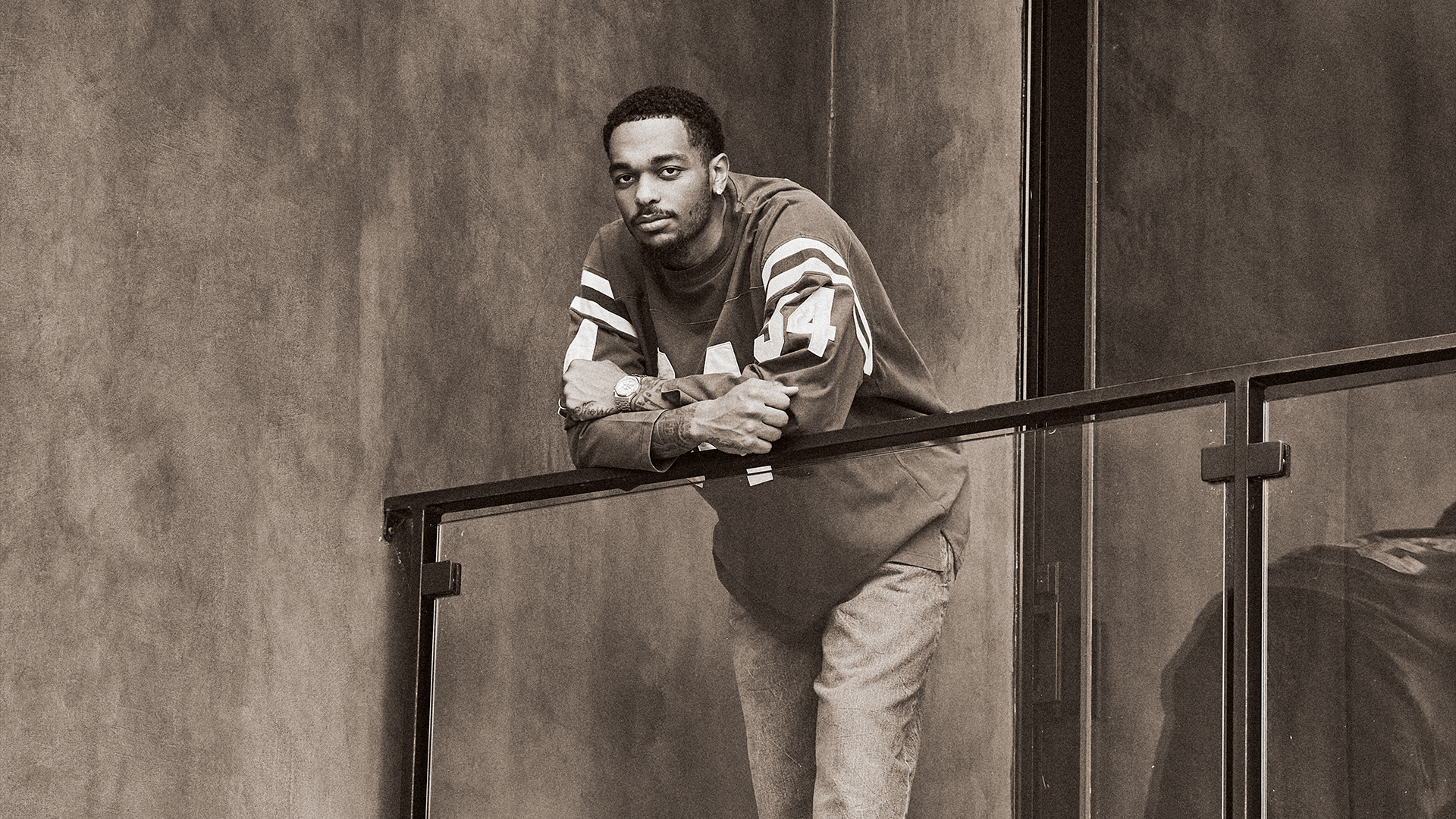
The Secret PJ Washington Kept Beside His Bed for 20 Years
PJ Washington opens up about the childhood goal list that predicted his career with the Mavericks, and why fatherhood changed everything.

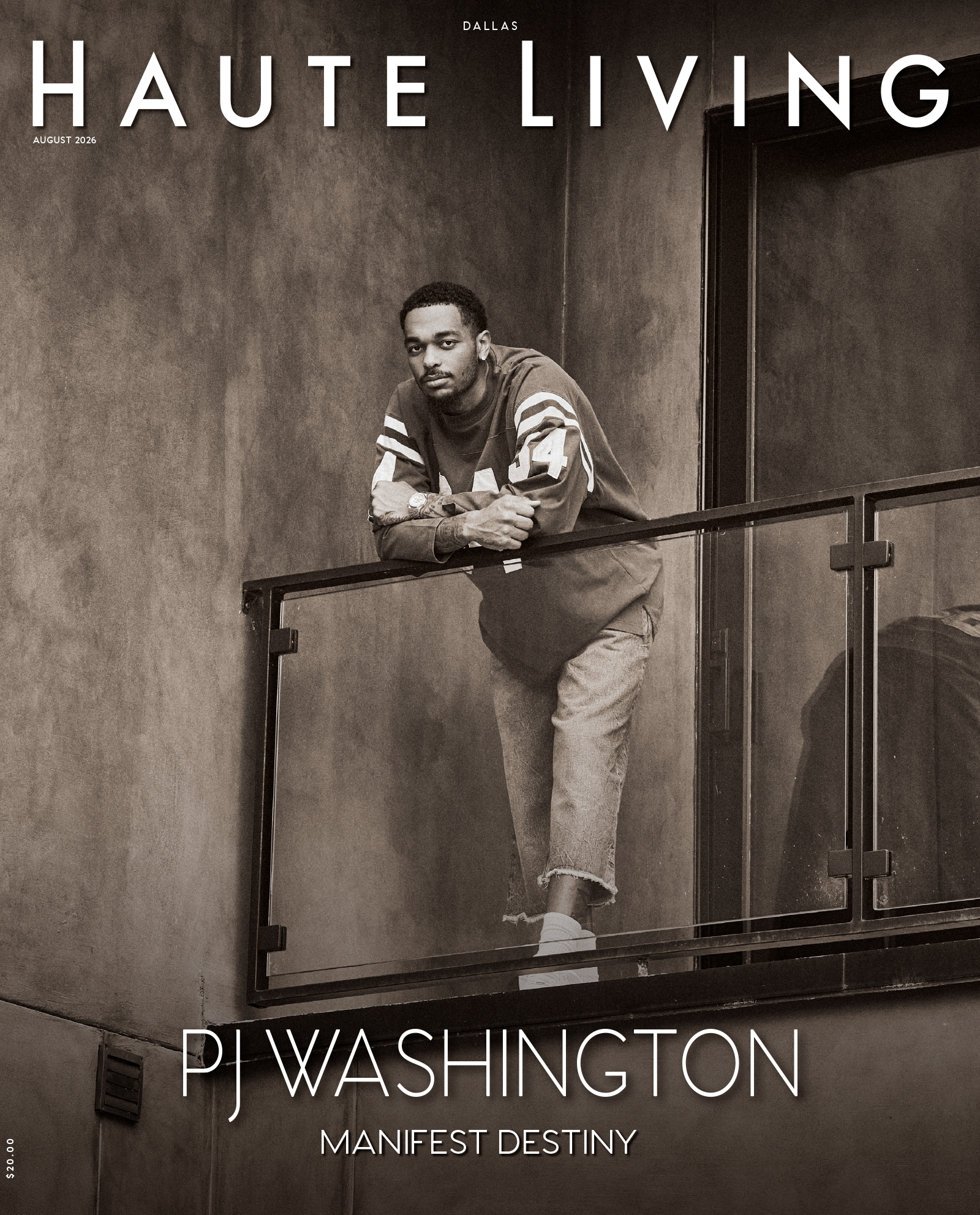
PJ Washington spent his childhood writing down the life he wanted. Two decades, a Finals run, and a homecoming to Dallas later, he realized the greatest luxury was never on the list to begin with.
BY LAURA SCHREFFLER
PHOTOGRAPHY BEN DRAPER
GROOMING MEGAN BURKE
SHOT ON LOCATION in FRISCO, TEXAS
It began with a piece of paper.
Long before the contracts, the NBA Finals, the luxury cars and the roar of a hometown crowd, PJ Washington wrote down the life he intended to have. There were seven or eight goals in total, all of them centered on basketball and all of them audacious enough to sound like fantasy coming from a child still waiting for the world to recognize what he believed he could become.
The list was entirely basketball-focused. Goals included becoming an All-Star, making it to the NBA, and most, importantly, to one day play for the Dallas Mavericks, his hometown team.
Washington posted these goals beside his bed, where it would be the first thing he saw when he woke and one of the last things he saw at night. He photographed it and made it the wallpaper on his devices, ensuring there was almost no point in the day when he could avoid confronting the future he had claimed for himself. But to call this simply an exercise in manifestation would be to misunderstand him.
Washington was not asking the universe for favors. He was holding himself accountable.
“For me, they just reminded me each and every day that it comes with work,” he says. “You’ve got to attack the day.”
The list mattered precisely because Washington did not yet feel that the basketball establishment saw him as he saw himself. He remembers feeling overlooked, studying the players ranked ahead of him and quietly taking note of everyone others believed to be better. Instead of allowing that perceived slight to diminish his confidence, he turned it into fuel.
“I used it every day,” he says. “I would look at guys that were ranked over me, or who people thought were better than me, and I just used that as motivation. I was very focused and locked into my goals.”
One by one, the impossible items became lived experience. Washington played for Kentucky. He represented the United States. He became both a McDonald’s All-American and a Jordan Brand Classic selection. The Charlotte Hornets made him the 12th overall pick in the 2019 NBA Draft. Then, in February 2024, the final and perhaps most personal ambition came true: he was traded to the team he had once watched from the stands as a boy.
And now, enquiring minds want to know, is there anything left on the list that he hasn’t achieved?
He smiles.
 Photo Credit: Ben Draper
“No.” A pause. “I got them all.”
He didn’t just watch this trade happen to him, either. He grew up watching games inside the building it eventually brought him back to, and when I ask what it’s like to actually be the guy the arena is watching now, instead of the other way around, he goes quiet for a second.
“I can see my younger self smiling.”
It’s a full-circle moment few athletes ever get to experience: growing up in the stands, then returning years later as one of the players kids now come to watch.
There is no grand speech attached to the admission, no attempt to mythologize the achievement. Washington, who turns 28 on August 23, speaks less like someone stunned by destiny than someone who understands exactly how it was built.
That discipline began at home. Both of his parents played college basketball at Middle Tennessee State, and neither was inclined to soften an assessment simply because the player receiving it was their son. His father coached him. His mother coached him. Both critiqued his games, forcing him to learn at an early age how to separate parental love from athletic instruction.
“At first, it was definitely tough,” he admits. “But once I got the hang of it, I saw it as an advantage.”
It was an advantage few young players possessed: two parents who understood the game from experience, who supported the scale of his ambitions but also made certain he understood the labor they required. They did not merely give Washington permission to dream big. They gave him the structure to survive those dreams once they began demanding something from him.
Basketball wasn’t simply encouraged in the Washington household — it was the family’s first language. Both of his parents played at Middle Tennessee State before becoming his earliest coaches and toughest critics, creating a home where ambition was expected but discipline was non-negotiable. By the time Washington arrived at Findlay Prep as one of the nation’s top recruits and ultimately committed to Kentucky, the blueprint had already been drawn.
That distinction — between wanting a future and preparing for it — would define every consequential choice that followed.
The list never disappeared, either. It simply evolved. Washington still sits down each year to write a new one, swapping childhood milestones for whatever the year in front of him demands. “I do it each and every season,” he says. “I try to write down some goals that I want to do.” The medium hasn’t changed. Neither has the philosophy. Progress still begins with a pen.
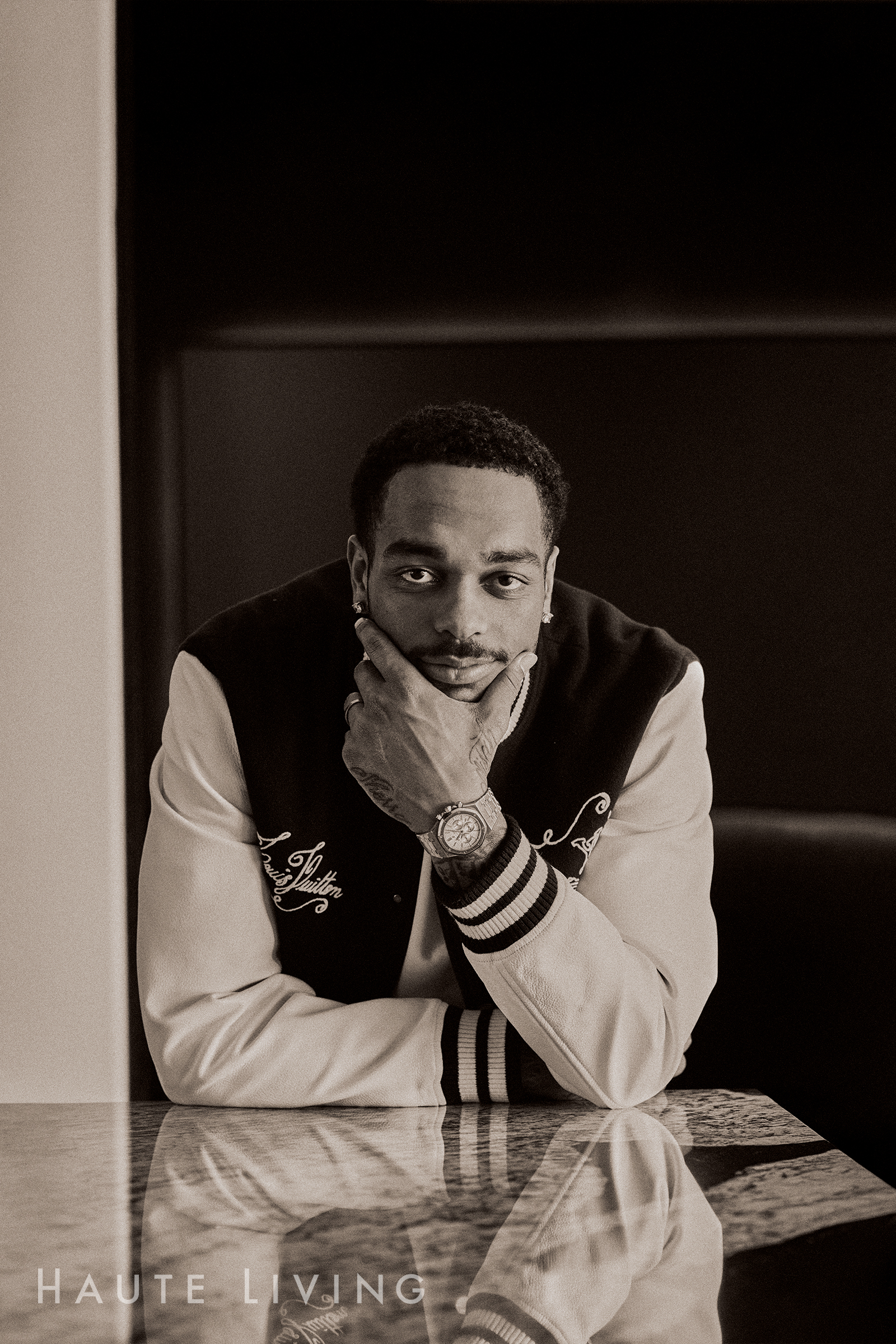 Photo Credit: Ben Draper
HERE’S THE PARTY OF THE STORY WASHINGTON didn’t put on a list, because you can’t will it into being with a Sharpie and a bedroom wall: on October 23, 2019, in his very first NBA game, a 20-year-old rookie from Frisco, Texas walked into Charlotte’s arena, dropped 27 points on the Chicago Bulls, and hit seven three-pointers — still, as of this writing, the most makes from beyond the arc in any player’s NBA debut, ever. Not a good debut. The debut.
What the highlight reel skips is everything that came after the debut, which is really the part that made the rest of it possible. Charlotte never asked Washington to be a phenomenon twice. It asked him to become dependable — to turn one loud night into four quiet years of being the guy a losing team could still build a system around. Stars announce themselves. Winning players prove they can be counted on every night. He had a season where nothing worked, where he lost his spot in the starting five and had to win it back the unglamorous way. He had a season, right after, where he looked like the best player on the floor most nights and nobody outside Charlotte noticed, because nobody outside Charlotte was watching Charlotte. Both of those seasons taught him something the list never could: that consistency, not brilliance, is the thing front offices actually pay for.
Charlotte rewarded that consistency with a three-year, $48 million extension in the summer of 2023, the kind of deal that should have been the story. Instead, the story was where he wasn’t. Charlotte, for all its charm, was not a team built to win in the way Washington needed to win, and anyone who’d watched him quietly log career-best rebounding numbers on a franchise going nowhere fast could feel the mismatch. Then came February 8, 2024 — the trade that read, on paper, like a hockey score: Washington and two second-round picks headed to Dallas in exchange for Seth Curry, Grant Williams, and a protected 2027 first. Two days later, in his Mavericks debut, he put up 14 points, five rebounds and a steal in a 35-point blowout of the Thunder, and it was immediately, almost comically obvious that he’d landed exactly where the 8-year-old with the list always assumed he would.
Then reality began to resemble the future he’d written down years earlier. An April buzzer-beater to beat Golden State. A first-round dust-up with Russell Westbrook dramatic enough to get him ejected. A 27-point night in the conference semifinals against Oklahoma City. And then, in Game 6 against the Thunder, with 2.5 seconds on the clock and the Mavericks clinging to a one-point lead, Washington did something that tells you everything about how his mind works under pressure: fouled on a three, he sank the first two free throws to put Dallas up one — and intentionally missed the third. No rebound to give up, no chance for a Thunder three to steal it back clean. Jalen Williams heaved a prayer from half-court that clanged off, and Dallas was headed to the Western Conference Finals. It’s the kind of decision that doesn’t show up in a box score and says more about a player than forty points would.
He and his team would go all the way to the Finals that June, losing in five to a very good Boston team, which is its own kind of validation — you don’t get boat-raced by a team that isn’t serious, and Washington didn’t. What’s happened since is arguably more telling than the run itself. Dallas didn’t need Washington to become Luka Doncic. It needed him to become indispensable — the guy whose absence you’d notice before you noticed his numbers. Two seasons later, he is exactly that.
He’s been unmistakably a Maverick ever since, both in temperament (there was, memorably, a shoving match with Jusuf Nurkic in December of 2024 that earned him a one-game suspension, because apparently even manifestation has an edge to it) and in paperwork: last September, Dallas locked him in for four more years and $88.76 million, a deal that runs through the 2029–30 season and effectively tells you the organization has stopped thinking of him as an addition and started thinking of him as a pillar.
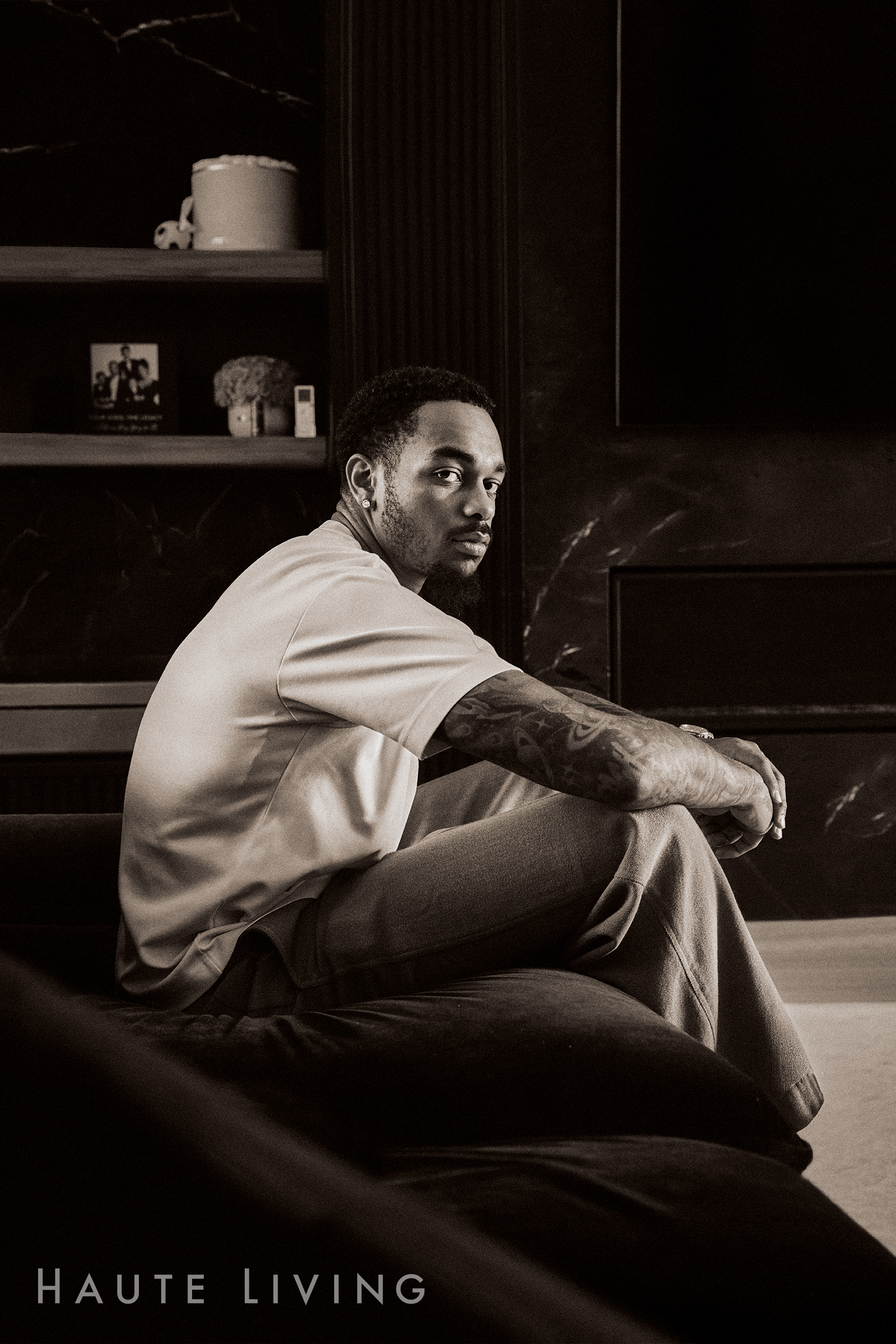 Photo Credit: Ben Draper
Success made Washington quieter. Literally. When I ask about hidden quirks, he claims not to have any — “I think I’m just a normal person” — before mentioning, almost as an aside, that he doesn’t really listen to music anymore. Not before games. Not in general.
“When I was younger, growing up, I would listen to music all the time,” he says. “For me, it’s just — just try to come to a mental peace.” He still wears the headphones. He just doesn’t play anything through them. “I have headphones on, but I’m not really listening to anything. I’m just trying to keep my mind right, I guess.”
It wasn’t a bad habit he was quitting so much as noise he decided he no longer needed. “I was listening to so much music that I just felt like I needed a break from it,” he says, “and just trying to really just get back in tune with everyday life and what’s in front of me.” These days, a car ride that used to be soundtracked is just a conversation instead. “I would be in the car, and instead of just listening to music the whole ride, I would just turn it off and just talk to my family, or just talk to my wife.” His kids, for the record, are not fully on board with the new policy. “They’re not really big fans,” he admits, “but hopefully they’ll understand my business.”
He does have a car collection loud enough to make up for the silence — eight vehicles at last count, everything from a family Escalade to a pair of Maybachs — but even that traces back to something quieter than the inventory suggests. “My dad worked at CarMax,” he says, “before I actually came to Dallas, so he’d be able to bring home different vehicles each and every day, and I think that’s where my love started.” The cars aren’t the point. His father coming home with something new every night, just so his son could sit in it, is.
But ask Washington what’s changed since the list, and the answer isn’t a stat line. It’s his children, who range in age from one to nine — among them his sons Preston and Paul Jamaine Washington III. Neither the list beside his childhood bed nor the one he still writes every season has ever had a line item for this. And Washington doesn’t pretend it did.
“At first, it was all about me, myself, and I,” he says. “But once I became a father, whatever I wanted to do really didn’t matter to me anymore.”
That’s not a throwaway line for a man who spent his entire adolescence organizing his life around exactly what he wanted to do. The list worked because it was his — his rankings to chase, his slights to prove wrong, his name on the wallpaper. Fatherhood asked him to hand the center of that story to someone else entirely, and he says it without a trace of resentment, which tells you more about how the shift landed than any quote about sleepless nights could.
What’s replaced the old ambition is something closer to stewardship. “Just pouring life into my boys,” he says, “making sure they have everything they need, and just being a positive role model.” He’s aware, in a way that plenty of parents claim to be but few actually reckon with, that the watching never stops. “Each and every day, they see every single thing I do,” he says, “so I’m just trying to make sure at all times I’m being the person I want them to be.” The goal isn’t for them to follow his path. It’s for them to clear it. “I just want them to be way better than me.”
Ask what he’s actually teaching them, and the answer sounds less like parenting advice and more like the list itself, translated into a different language. “Discipline,” he says. “Structure. Just making sure they’re paying attention to detail in every little aspect of their life; making sure they have a good foundation.” He’s aware they’re still early in that process — “we’re in the early stages of becoming a man,” as he puts it — but the blueprint is recognizable. It’s the one his own parents used on him.
 Photo Credit: Ben Draper
Already, he says, he can see pieces of himself surfacing in them, at different ages. His three-year-old wants nothing but a basketball in his hands; every trip to the gym comes with the same question — “Dad, are we going to the basketball game?” — and Washington, unsurprisingly, indulges it. “I make him dribble,” he says, laughing. “I’m super excited. I can’t wait to get involved with him.” His five-year-old is a different kind of echo: obsessed with animals the exact way Washington was at that age, the same kid who used to run through National Geographic documentaries on loop. “It’s crazy to me,” he says, “just seeing how different they are, but all alike with me.”
If basketball vanished tomorrow, I ask him, what part of him would stay exactly the same? He doesn’t hesitate. “The father I am, the husband I am, and just the person I am,” he says. “Basketball is just something I do. It’s not who I am.” And when I ask him to define success outright, the answer has nothing to do with rings or rankings. “Making sure my kids have everything they need,” he says. “A roof over their head, clothes on their back, food in their mouth. Everybody doing well in life. For me, that’s the biggest success I could ask for.”
It’s why, when I ask what the greatest luxury in life actually is, he doesn’t reach for one of the eight cars in the driveway. “Family,” he says, without pausing to consider an alternative. “They’ll always be there when you need them. And when nobody’s around, they make sure you have everything you need. They’ll tell you when you’re doing wrong, or when you need to do better. I think that’s more valuable than anything.”
When Washington was a little boy sitting inside American Airlines Center, watching Dirk and Jason Kidd work the same floor, he imagined what it might feel like to wear a Mavericks jersey one day. He wrote it down, folded it into the future, and got to work.
Years later, the list is complete. The boy who once dreamed from the stands now walks onto that same floor as one of the franchise’s foundational players. The contracts came. The Finals came. The luxury came. But the greatest luxury, he tells me, isn’t found in any of them.
The list hanging beside his bed was never a checklist. It was a promise. Every box was checked, but somewhere along the way the goals themselves changed. Today, the greatest achievement isn’t the life he imagined. It’s the one he built.
Manifestation was never about predicting the future. It was about becoming worthy of it. Somewhere, a little boy’s checklist is still complete. The man who wrote it is simply writing a different one now.
For more of Haute Living’s NBA cover stories, read Haute Living’s profile of Kristaps Porzińģis on his own move to Dallas, or go inside Jalen Brunson’s rise from a Mavericks draft pick to Knicks captain.