Q&A: George Ramishvili, Tsinandali Estate

Nestled in the Kakheti region of Georgia, Tsinandali Estate is more than a winery — it is a living testament to the country’s 8,000-year winemaking legacy.
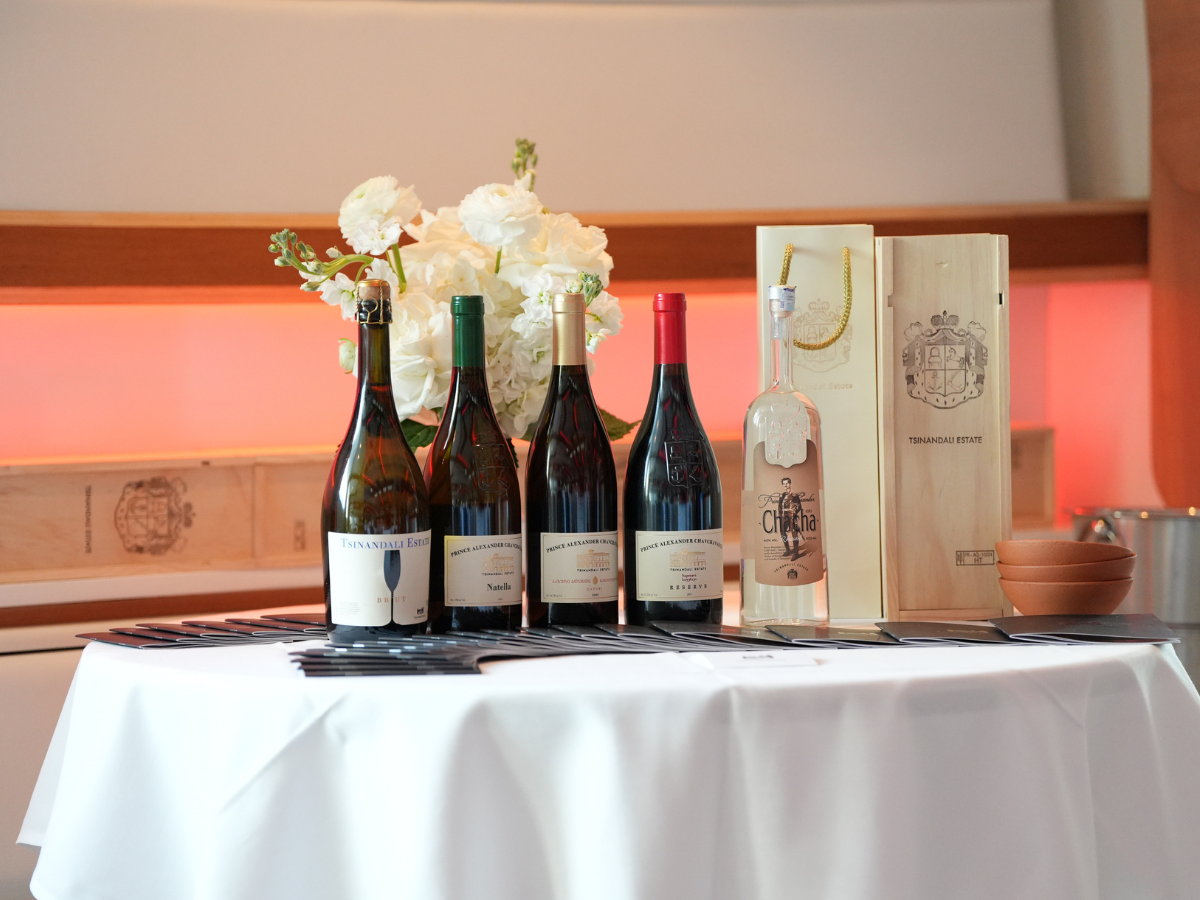 Photo Credit: Omar Vega
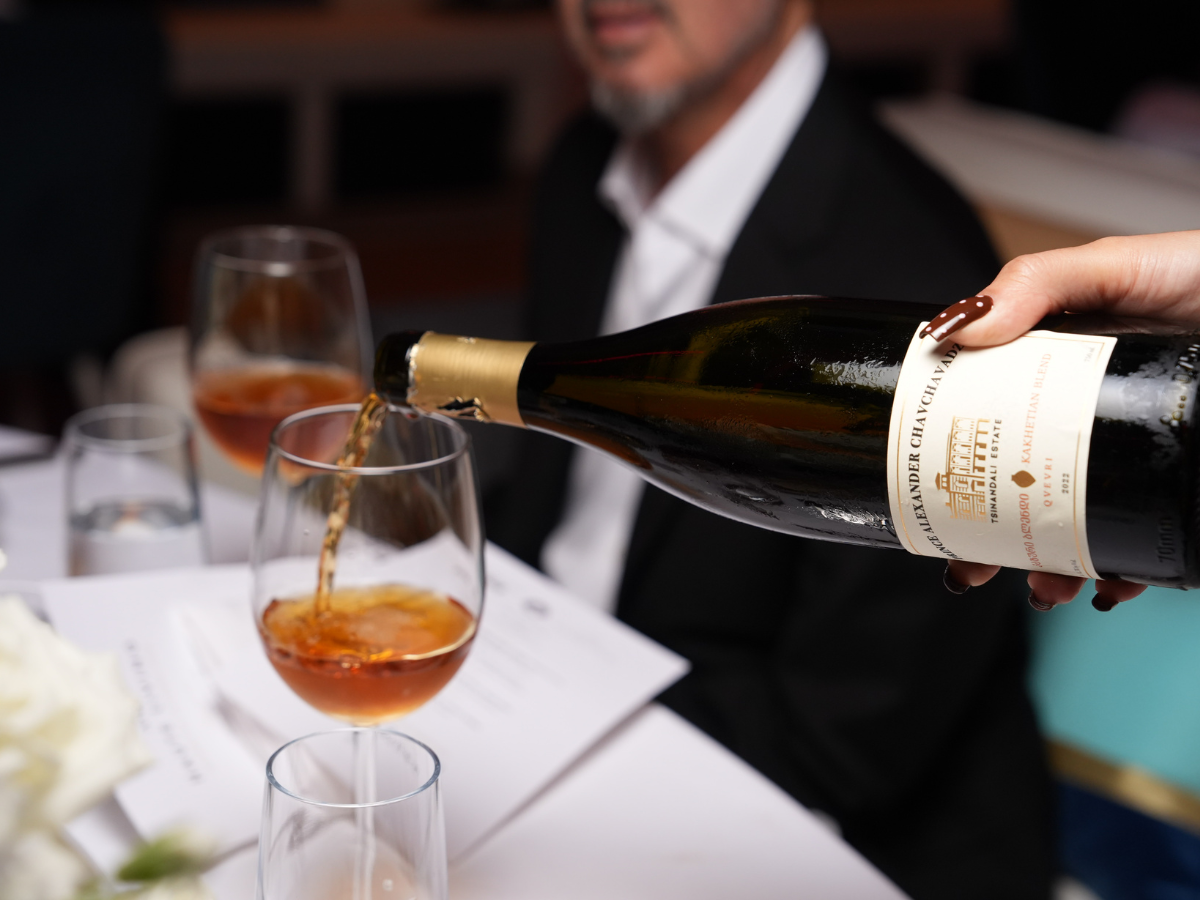
When the estate’s wines were poured at an intimate celebration honoring Haute Living’s April/May Miami cover star Daymond John, guests discovered firsthand the artistry behind their reverence
Photo Credit: Omar Vega
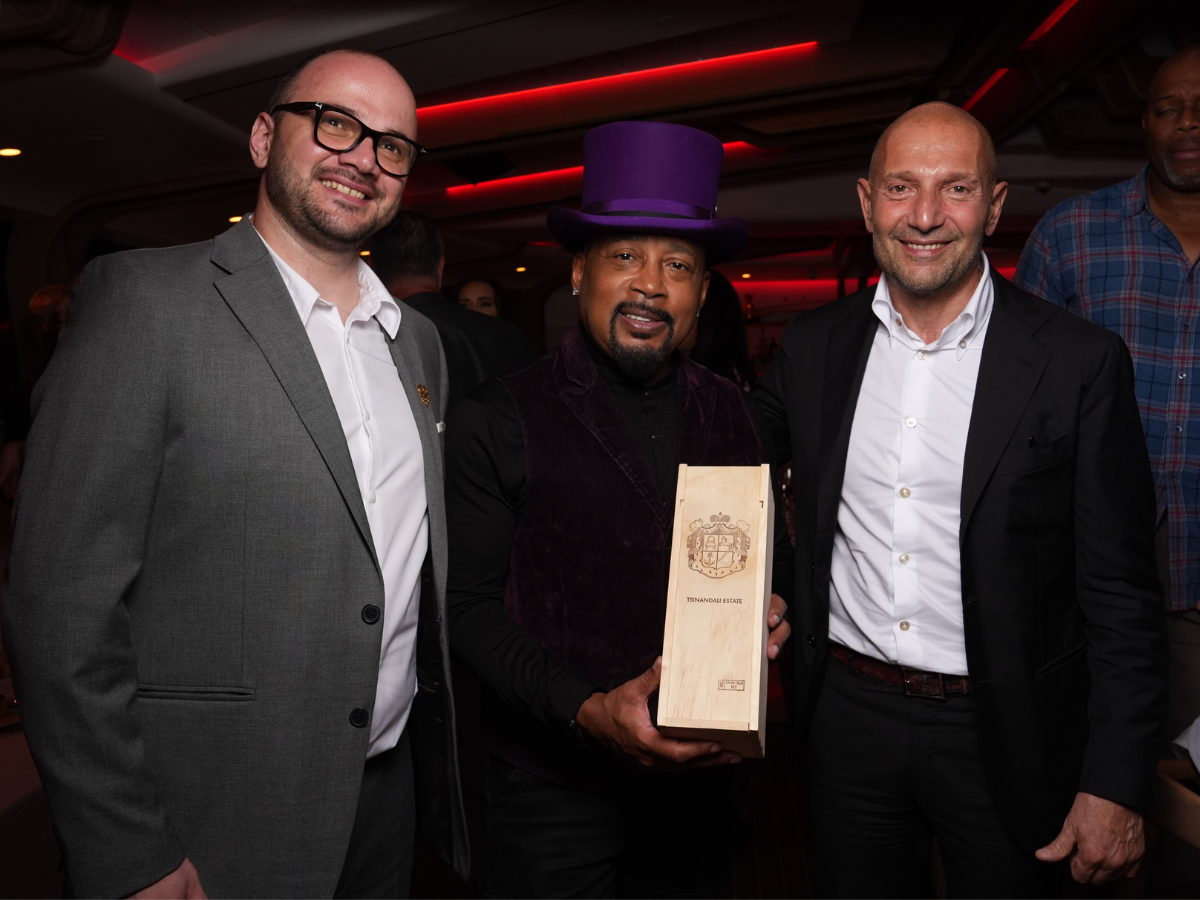
Photo Credit: Omar VegaWe sat down with owner George Ramishvili to discuss tradition, terroir, and what it truly means to be the guardian of this storied legacy.
1. Prince Alexander Chavchavadze built this estate as Georgia’s cultural and intellectual center. How does that legacy shape the way you make wine today?
The Chavchavadze family crest appears on our bottles, and many of our wines are named after members of the family. This legacy is a source of great pride for us and an essential part of our identity. We’re building on what they started: carrying forward the principles that Alexander Chavchavadze established in winemaking and beyond.
We don’t see this as something static. What we follow is the spirit of curiosity that defined Tsinandali from the very beginning. In winemaking, this means embracing both Georgian traditional methods and classical European techniques, while also reviving the spirit of experimentation that Prince Alexander actively promoted — an approach largely lost during the twentieth century.
Alexander envisioned the estate as a place of innovation, a beacon of modernity. To bring his vision to life, he invited leading European specialists from different fields. Over the past 20 years, Silk Road Group has been doing the same — bringing together leading architects and designers, including Ingo Maurer and, more recently, Kengo Kuma. The restoration of Tsinandali Park has been guided by Ludwig Trauzettel, while a new park is being developed in collaboration with Vladimir Djurovic.
We also preserve the estate’s cultural role through the Tsinandali Classical Music Festival, literary evenings, and exhibitions. In 2024, Tsinandali reached a new milestone by hosting the Europakonzert.
2. The Oenotheque holds bottles dating back to 1814. What does it feel like to be the guardian of that history?
Being the guardian of this history is both a privilege and a responsibility. Alongside some of the oldest Georgian bottled wines, our Oenotheque holds remarkable exhibits such as Château D’Yquem (1861), Château Lafite (1900), and Château Margaux (1899). Each year, thousands of visitors pass through, and from the very first moment, they sense the level of quality and refinement that has always been associated with the estate. We carry that heritage forward through a commitment to excellence. As a boutique winery, we focus on quality over quantity.
3. What do you think they experienced here that made this place worth writing about?
Tsinandali has always been more than a place of wine — it has been a space for exchange, creativity, and new ideas. The historic gardens, the Oenotheque, the Museum, and the winery together create something rich and unique. It’s remarkable to think of those who have passed through here: figures like Dumas and Pushkin, who found something worth writing about in this place.
That spirit continues today. Each year, Tsinandali welcomes leading figures from the world of music, including Gianandrea Noseda, Zubin Mehta, the Berlin Philharmonic, Martha Argerich, and the Israel Philharmonic. At the heart of the Tsinandali Festival stands the Pan-Caucasian Youth Orchestra — a cultural and educational project bringing together young musicians from across the region to work with world-class coaches, conductors, and soloists.
4. Tsinandali was the first place wine was ever bottled in Georgia. What does that responsibility mean to you as winemakers?
It is universally acknowledged that Georgia is the birthplace of wine, with an 8,000-year-old tradition. A key moment in that history took place precisely here at Tsinandali, where professional Georgian winemaking — cultivation, aging in oak barrels, and bottling — began. We don’t see it as something symbolic, but as something that should be reflected in the way we work every day: staying true to an ancient tradition while moving confidently forward with modern winemaking.
5. You work with indigenous Georgian grapes alongside European varietals. How do you decide when to honor tradition and when to innovate?
The cultivation of non-Georgian grape varieties at Tsinandali was first introduced by Alexander Chavchavadze himself — so working with European varietals is also part of the tradition we continue today. Decisions are always made as a team. Our winemaking group brings together Alberto Antonini, David Maisuradze, and a new generation of young winemakers. We consider the character of the year, the harvest, and the specific needs of each vintage. It is always a thoughtful, shared process.
6. The kvevri method and European winemaking coexist here. How does that tension — or harmony — show up in the bottle?
We produce qvevri wines in line with ancient tradition, while our classical wines are made according to modern European standards. These are two distinct styles, each with its own identity. We also champion experimentation — we have created blends that bring different approaches together, with strong results. The best example is our gold-medal-winning qvevri wine Saperavi-Usakhelouri.
7. The garden was designed by European landscape architects brought here by the Prince himself. How does the estate’s physical environment influence the wine?
Tsinandali Park is a proud member of Europe’s historic heritage gardens — a beautiful space filled with plant species from around the world, and an essential part of the estate’s identity. This setting creates one of the finest destinations for wine tourism in Europe. The elevated tasting experience at Tsinandali is defined not only by outstanding Georgian and European cuisine, but by a deep sense of harmony with nature.
8. Georgia has 8,000 years of winemaking tradition. How do you carry that weight without being entirely defined by it?
Georgia’s winemaking tradition is deeply rooted in our culture, history, and religion. For us, there is the added responsibility of being the cradle of Georgian winemaking. As proud as that sounds, we don’t want it to define us. What matters most is that the principles we follow align naturally with modern winemaking — especially today’s leading organic and biodynamic approaches. Rooted in tradition, yet fully in step with the present.
9. Who is the Tsinandali drinker of 2026? Who are you making wine for now?
We don’t make wine for a particular group. We want our wines to express the full potential of Tsinandali Estate’s terroir — above all, the soul of its soil. Those who feel it will connect with it.
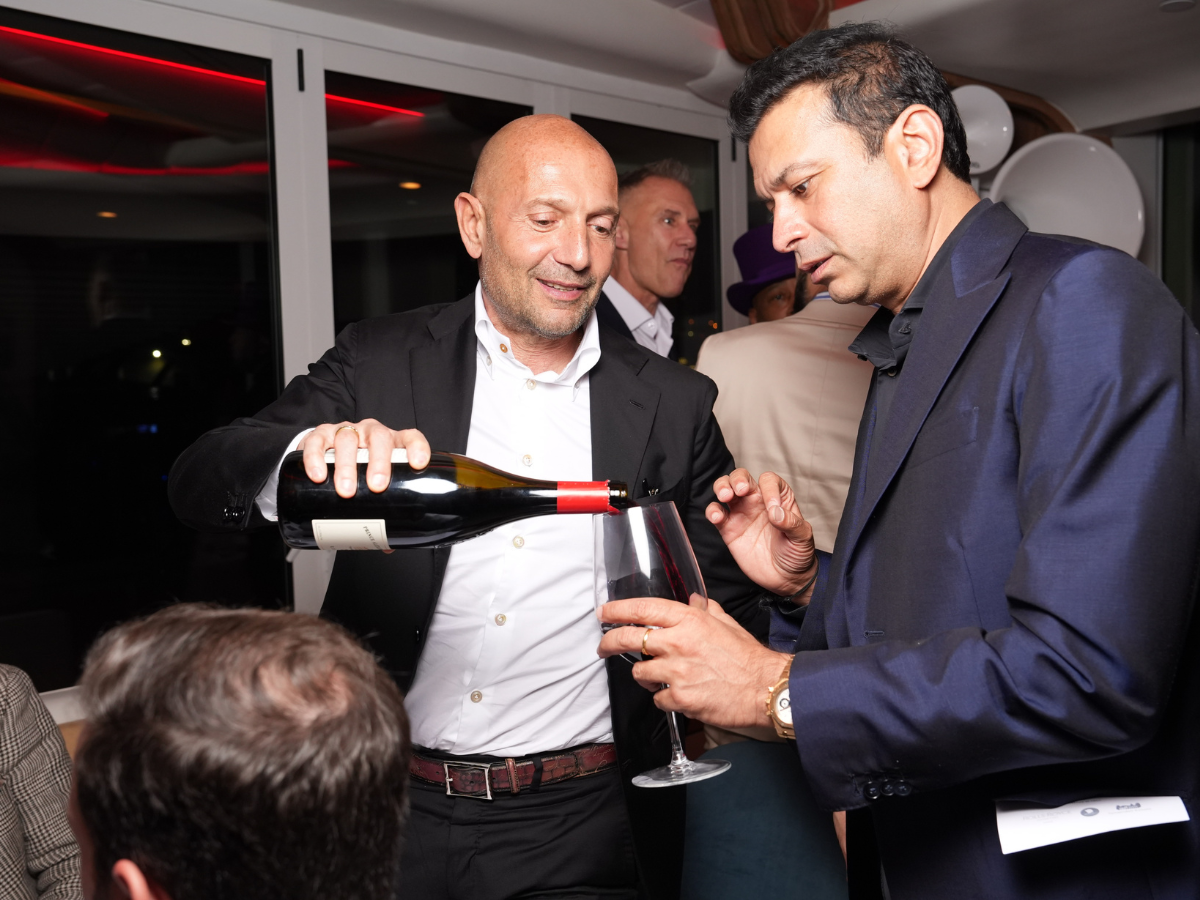
Photo Credit: Omar Vega10. If someone has never tasted Georgian wine, what do you want their first impression of Tsinandali to be — in one sentence?
“Gaumarjos! I want to see where this comes from!”
Latest from Haute Living

Haute Insider: Creator Vale Genta’s Guide to Miami

Victoria Beckham Designed a Gap Collection & It’s Dropping This Week
Louis Vuitton Brings Seven Years of Artycapucines to Art Basel Paris