A Knight’s Tale
Known for his brazen “Screw it, let’s do it!” attitude and insatiable lust for adventure, Sir Richard Branson has forever changed our fairy-tale image of the White Knight. He worked his knightly charm on Haute Living during an exclusive interview during his re…
Throughout legend and lore, knights in shining armor would ride into battle on their trusty steeds, armor glinting in the sunlight, and commit unthinkable acts of bravery. Their dedication to the greater good garnered the love and admiration of their country and sovereign. While Sir Richard Branson has traded his stallion for motor bikes, racing yachts, fast cars, and hot air balloons and his armor for a space suit, he remains true to the values of his predecessors. And although this fair-haired maverick may be writing his own knightly code, he still lives by the ideals of chivalry: bravery—the willingness to rise to the most challenging obstacles; gallantry—a true concern for the greater good of man; and honor—the ability to look on his achievements and accolades with gracious humility and fuel for future success.
The Young Squire
Our knight’s tale begins in an unassuming part of London just like many young squires that came before him. His mother, Eve Branson, was a constant driving force in his success, offering invaluable advice like, “If you are shy, it’s your fault, you are not thinking of others.” Branson fondly says of his mother, “Every son would think of their mother as a wonderful person. I’ve had to try and keep up with her all my life. I just went to my parent’s 60th wedding anniversary. She’s always wanted to make a difference, she loves people.” Today, at 88 years old, Eve remains right by his side and attributes their closeness to their similarities. “Being constructive in whatever form, we both find it essential to making us tick,” she says.
Being constructive was not a difficult mandate for a boy who, at the age of 16, established a national magazine entitled Student—an unlikely venture when you consider this boy had minor dyslexia. The ever-enthusiastic teenager, more interested in sports and this publishing project than his studies, seemed determined to succeed. Eve recalls an indelible “spark” that foretold of her son’s future success. “His spark needed to be somewhat curbed when young, but curbed without killing that spark.” Luckily, that spark only ignited further when, in his next business venture, he formed a mail-order record service that offered better prices than record stores, which eventually led to significant discounts in record prices across the country. The next logical progression for this ambitious youngster was a record store on London’s Oxford Street. However, getting there was not always easy for young Branson. “I used to hitchhike everywhere as a teenager. It was the only way I could get around, and even when I tried to pass my driving test my car kept breaking down,” Branson recalls.
Never deterred by transportation setbacks, Branson eventually did get a car, and a country estate to go with it. It is here that he established his first recording studio, which he leased out to lesser-known artists. “Richard bought this great big house in Oxford. He asked us up and I thought, ‘God, haven’t you done well?’ This chap came in and said, ‘Listen to this.’ And we sat and heard this awful noise. That was Tubular Bells. Now we love it,” Eve said to The Guardian, alluding to the Mike Oldfield album that launched Virgin Records, one of the most successful British record companies of all time. Virgin Records signed British music icons such as Culture Club, the Sex Pistols, and Simple Minds, bringing British progressive rock into the forefront of 80s and 90s pop culture.
Bravery
1984 saw the ultimate business gamble when Branson decided to establish an airline, perhaps to indulge his constant fascination with adventure and travel. On June 22 of that year, Virgin Atlantic Airways launched its first flight between London’s Gatwick Airport and Newark. Although it seemed an unlikely transition from the music business, the idea of Virgin Atlantic as a cheeky, fun airline to take across the Atlantic appealed to passengers in both the U.K. and U.S. Virgin Atlantic offered a fresh new Upper Class concept with large, fully reclining beds and a common bar, all set against a fresh design that its conservative airline counterparts lacked. Having overcome a severe rivalry with fellow U.K.-based airline British Airways and a slump in business in the 1990s, Virgin Atlantic now flies more than six million passengers per year to 30 destinations. Offshoots such as Virgin America (which is based out of San Francisco), Virgin Blue, and V Australia make Virgin one of the most diverse and recognizable airline brands in the world. Never afraid of failure and invigorated by the success of diversification, Branson has since launched more than 360 companies, including the wildly successful Virgin Mobile. When asked which Virgin brand people may know least about, Branson explains, “Virgin Aquatic is a new company where we’re trying to build submarines to explore the lower depths of the ocean. We’re trying to go 35,000 feet under the ocean, which hasn’t been done before, because there are thousands of species down there that are unexplored.”
This is evidence of Branson’s insatiable lust for adventure, one that has often led to injury and even near-death experiences. In fact, he arrived at Haute Living’s cover shoot in Los Angeles with an injured shoulder (something about an ATV misadventure). It all began in 1986, when, after one failed attempt (resulting in a dramatic ocean rescue by helicopter), Branson beat the record for fastest Atlantic crossing by two hours. He then proceeded to cross first the Atlantic and then the Pacific in a hot air balloon that broke a world record by being the largest hot air balloon ever built. “I had a relative who was the first to try to get to the Antarctic, Captain Scott,” Branson recalls, explaining the inspiration for his daredevil spirit. “My parents used to recount stories of him, he was quite a famous figure in English history. I also used to know Douglas Bader, a famous Second World War fighter pilot who fought with no legs. There is something about the British, like [these men and] Francis Drake; they love to achieve things that others say are impossible. I love trying to conquer new barriers. I love to see what I’m capable of.” Much to his wife’s dismay, the adventurous gene is ever-present in Branson’s two children. Accompanied by an elite group of helmsmen, the Branson trio set out to complete the fastest Atlantic crossing by sailboat. They were unsuccessful in their attempt, but as Branson’s son Sam says, “It wouldn’t be as rewarding if it was easy to break a world record.” Both Sam and his sister Holly are ready to make their second, hopefully successful, crossing.
Branson’s next business adventure is aptly entitled Virgin Galactic. It will invite an elite group of space tourists (or “astronauts” as they like to call themselves) who are willing to foot the $200,000 bill of flying into space to enjoy weightlessness and a once-in-a-lifetime view of the earth from suborbital space. The mother ship, named for Branson’s own mother, will launch 100 pioneering astronauts, including Eve Branson, set to be the world’s oldest astronaut. Asked what part of the experience she most looks forward to, Eve says with a hearty laugh, “Wearing a space suit. That’s going to be the most exciting part for a woman!” However, this latest feather in the Virgin cap did not instantly sit well with many. Skeptics questioned the necessity and practicality of this endeavor and were most concerned about its environmental repercussions. In typical form, Branson was ready with an answer. “When a Nasa spaceship takes off, the energy it puts out could power New York for a week but, 40 years later, if you’re going to build a spaceship, you’ve got to come up with all the modern technologies to make sure it’s a green spaceship. The Virgin Fuels team has actually created a fuel that can put this spaceship into space with almost no CO2 emissions at all….What we are talking about is enabling people to have the magnificence of exploring space without any detrimental environmental benefit,” he explained to naysayers, proving with his infallible charm that he is always thinking on a global scale.
Gallantry
With the immense success and power of being the world’s next great industrialist and owning important companies in varying sectors comes an immense sense of responsibility to give back to humanity and the environment. This conscientiousness compelled Branson to establish Virgin Unite, the proactive humanitarian arm of the Virgin Group, which unites do-gooders from around the world and helps them help others in the most constructive and effective ways. Virgin Unite held its third annual Rock the Kasbah charity benefit in Los Angeles this October. Proceeds from the event went to a variety of causes on Virgin Unite’s radar. “There are three seemingly intractable global problems that Virgin Unite has taken on,” explains Branson. “The first is conflict resolution. If you have a conflict everything else falls apart—education, healthcare, and people get killed and maimed. We have a wonderful group of people headed up by Nelson Mandela and Desmond Tutu and they’ve asked people like Kofi Annan and President [Jimmy] Carter to join them,” he says of the Elders, an international group of world leaders and visionaries whose aim is to help resolve conflicts plaguing developing countries. “The second,” he continues, “is a center for disease control in Africa, which coordinates all the wonderful organizations in Africa that are trying to tackle disease. It helps them look for better practices and to create an alert system when new diseases break out. The third is the Carbon War Room, which is a new venture. It is a center that coordinates the attack on carbon, the enemy of the world. [We are looking at] radical reengineering ideas to try to fix a world that has been geo-engineered by man—in a bad way.” Branson has gone so far as to offer a $25 million prize to anyone who can devise a way of extracting carbon from the earth’s atmosphere. With a strong hand in the resolution of three major global problems, Branson views his responsibility to Virgin Unite as one of his biggest priorities.
Honor
Of course any act of courage and service seldom goes unnoticed, and Branson has received many accolades, including his famous knighthood during Queen Elizabeth’s millennium celebration. In 2007, United Nations Secretary-General Ban Ki-moon presented Branson with the United Nations Correspondents Association Citizen of the World Award. Earlier this year, he was honored for his work in Africa at Keep a Child Alive’s Black Ball, organized by singer Alicia Keys and Leigh Blake. He also received an Environmental Media Award during the star-studded ceremony in October.
Although Branson has been constantly rewarded for his achievements and service to the environment and humanitarian causes, he has accepted every honor with great humility. To him, even if he was never recognized for his work, he would not cease his constant efforts to help others and strive to repair damage caused to the environment, and therein lies the mark of a truly honorable man.
As the great knights of the past would ride off into the sunset after a day of adventure, our white knight will soon ride off into space leaving others gasping in amazement and wonder as to what’s next. He leaves our interview with a signature mischievous Branson smile, saying, “I’m just trying to make a bit of a difference in the world and have some fun at the same time.” One thing is for sure—Arthur and the lads ’round the table would be so proud.
Latest from Haute Living
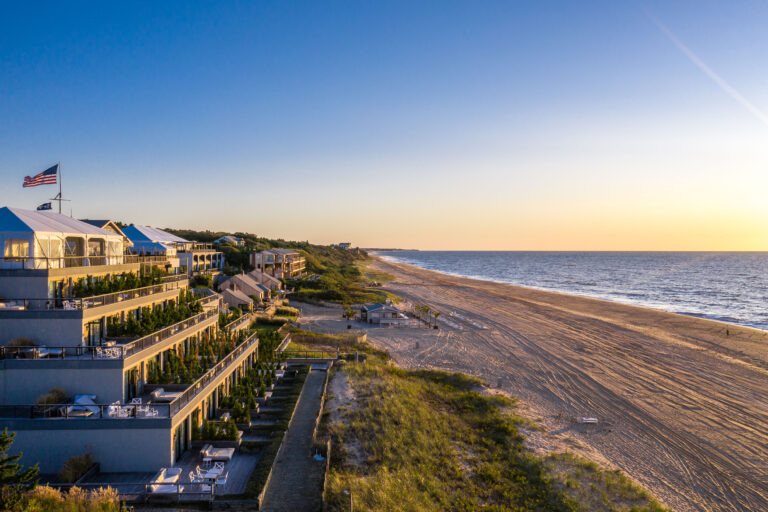
The Hamptons After Labor Day: 8 Luxury Places Still Worth the Drive
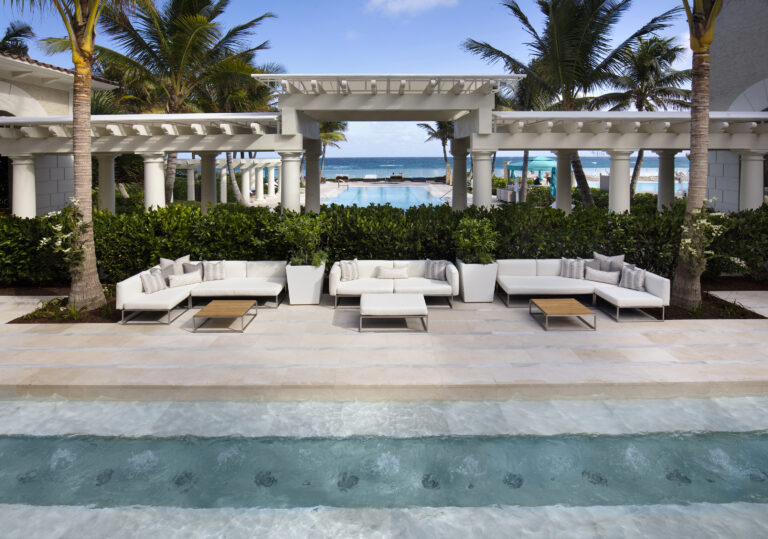
These are Palm Beach’s Most Indulgent Spa Experiences
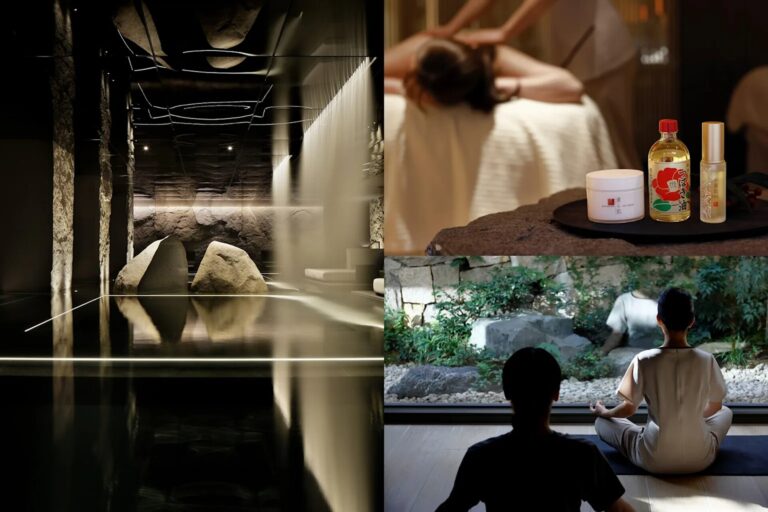
The Art of Rest: A Restorative Wellness Journey at HOTEL THE MITSUI KYOTO