Concrete Rose: The Bar Greg Perez Built for the Woman Who Built Him
Greg Perez built Concrete Rose as a memory palace to Houston — first-generation Mexican-American culture and one of the best cocktail menus.

Photo Credit: Mike Lazo
By: Laura Schreffler
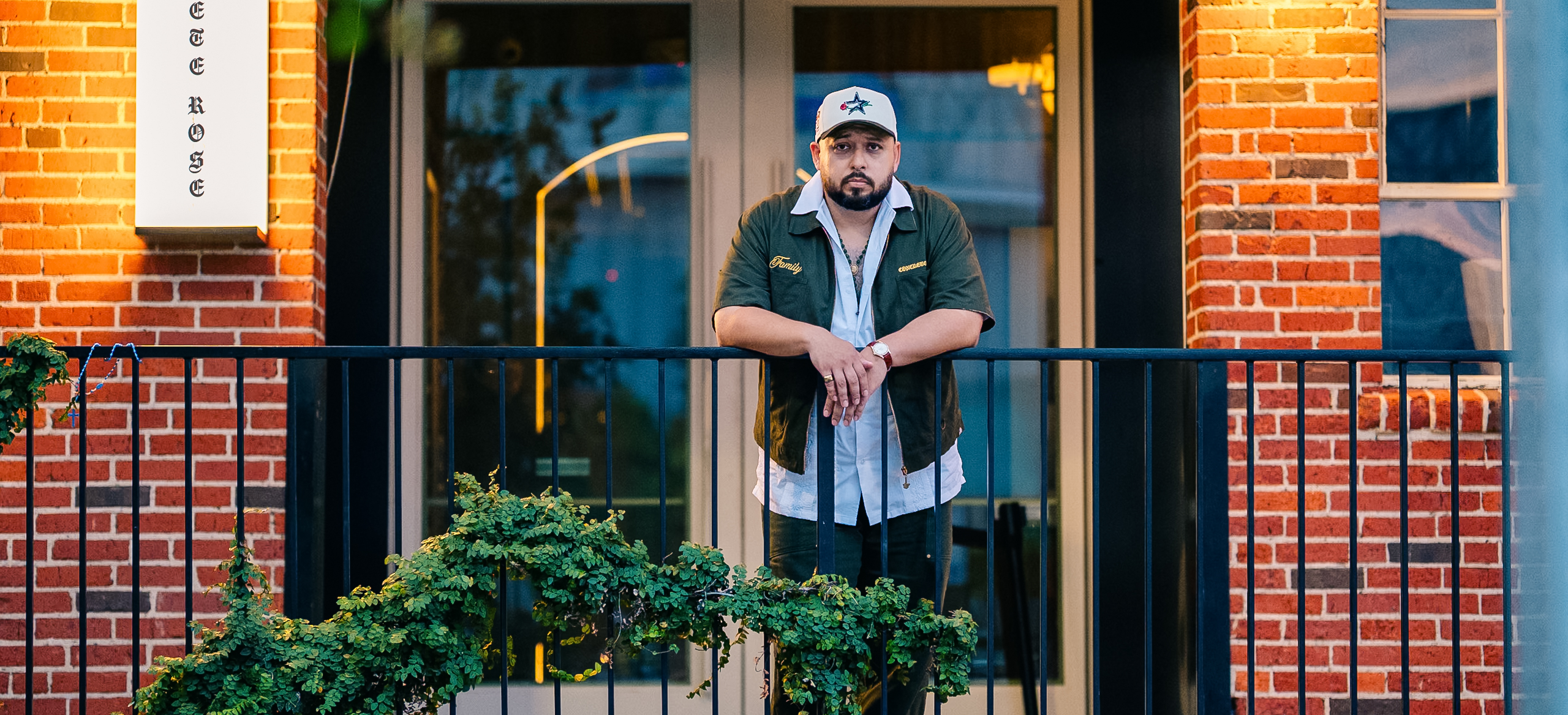
Greg Perez runs his hand along the concrete pillar almost every time he walks past it. Not consciously. He probably doesn’t even realize he does it. It’s a small habit, the kind you develop toward something you’ve decided is yours. A quick palm against cold concrete, like he’s making sure it’s still his.
It took me a minute to notice he was doing it. It took me considerably longer to notice the sneakers.
They’re up near the back, hanging from the ceiling, tucked just far enough out of sightline that most people walk in, order a drink, and leave without ever knowing there’s a pair of Air Jordan 1s watching over the whole room. I missed them the first time. Greg smiled when I finally looked up.
“They’re for the kid I used to be,” he says.
It’s a surprising admission from someone who otherwise carries himself with unhurried confidence. He moves through Concrete Rose the way people move through a house they built with their own hands — straightening a stack of menus that didn’t need straightening, greeting staff like family he actually likes, stopping to check in with a regular at the end of the bar without breaking stride. In an industry built on turnover and burnout, that ease is rare.
Nothing in this room is an accident. It would be easy to walk into a bar this beautiful and assume the beauty is the point. It isn’t. Concrete Rose isn’t interested in performing success. It’s interested in honoring everything that had to happen before the success was allowed to exist.
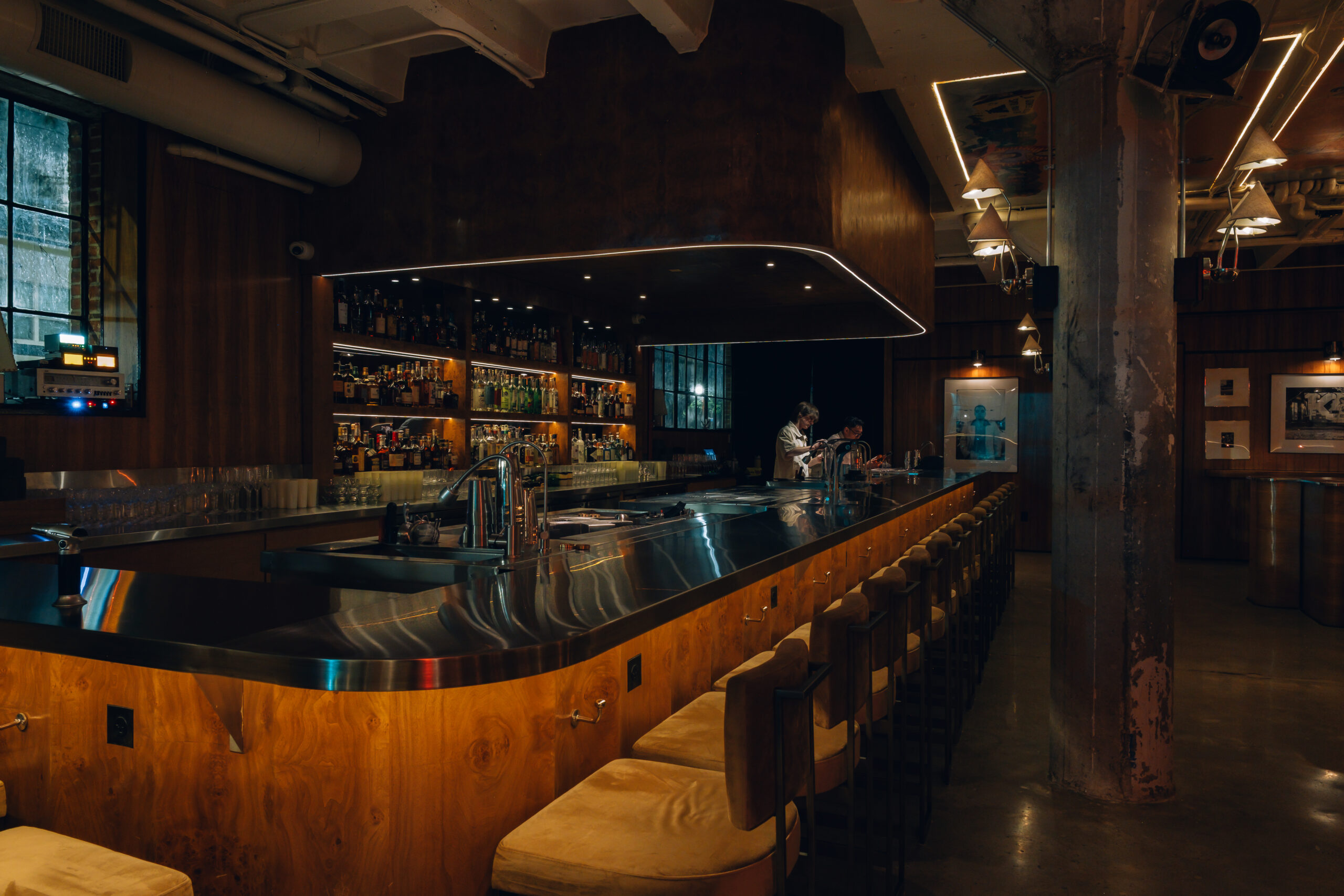 Photo Credit: Mike Lazo
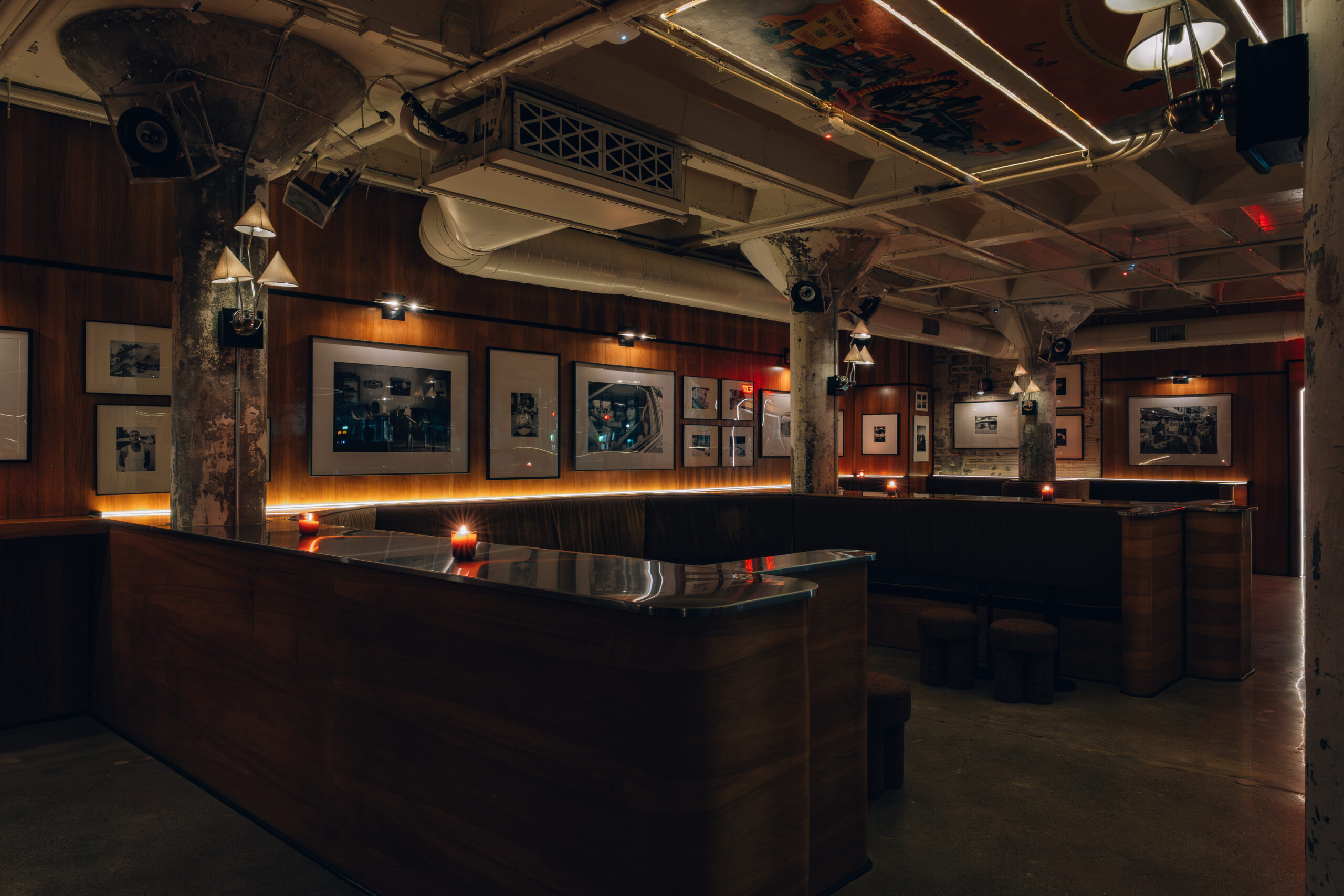 Photo Credit: Mike Lazo
That’s a genuinely rare ambition in luxury hospitality, where most rooms are in the business of make-believe — marble and candlelight conspiring to help you forget the outside world for a few hours, which is its own kind of luxury. Concrete Rose does the opposite. It invites the outside world in on purpose: Northside Houston, Chicano culture, two-a-days in July heat, neighborhood taquerías, quinceañeras, vanilla cake drifting through a kitchen window.
Greg Perez didn’t build a cocktail bar. He built a memory palace with a very good drinks list.
Before any of this, Perez was not supposed to end up here. He earned an ROTC scholarship to the University of Portland, studied political science, and figured, reasonably, that a life in uniform or in politics was the shape his ambition would eventually take. Neither one stuck. He came home to Houston instead and landed a job with the Texans’ event staff, working nights at clubs on the side, learning the room from the floor up before he ever learned it from behind a bar.
In 2013 he joined Houston Baptist University’s football program, starting in video production and working his way up to assistant coach. He spent four nights a week sleeping in the office those years. He calls that stretch “the grind”: showing up every day with no guarantee the effort would pay off, failing, dusting himself off, doing it again with no promises attached.
He entered the bar world properly in 2016. Monkey’s Tail came in 2019 — a neighborhood spot blending Mexican and American influences that earned Eater Houston’s Bar of the Year the same year it opened, and that, during the darkest stretch of the pandemic, became a staging ground for feeding out-of-work hospitality workers and local families, Perez and his team working the same impossible hours he’d once pulled in a film room, just for a different kind of survival. Then Night Moves Collective, then Trash Panda Drinking Club, a cocktail dive bar modeled loosely on Lower East Side grit that landed as a regional finalist for Tales of the Cocktail’s Best New Bar in 2022.
Perez is candid about the fact that each bar carries the DNA of whatever chapter of his life he was in when he built it. Monkey’s Tail was childhood. Trash Panda was his twenties — unrefined, but doing the job. Concrete Rose, he says, is Greg as he is now: same raw spirit, considerably more cultured room to put it in. It’s also the first bar built less from ambition than from inheritance. Everything before it was a Perez building for himself. This one is a Perez building for the people who made him.
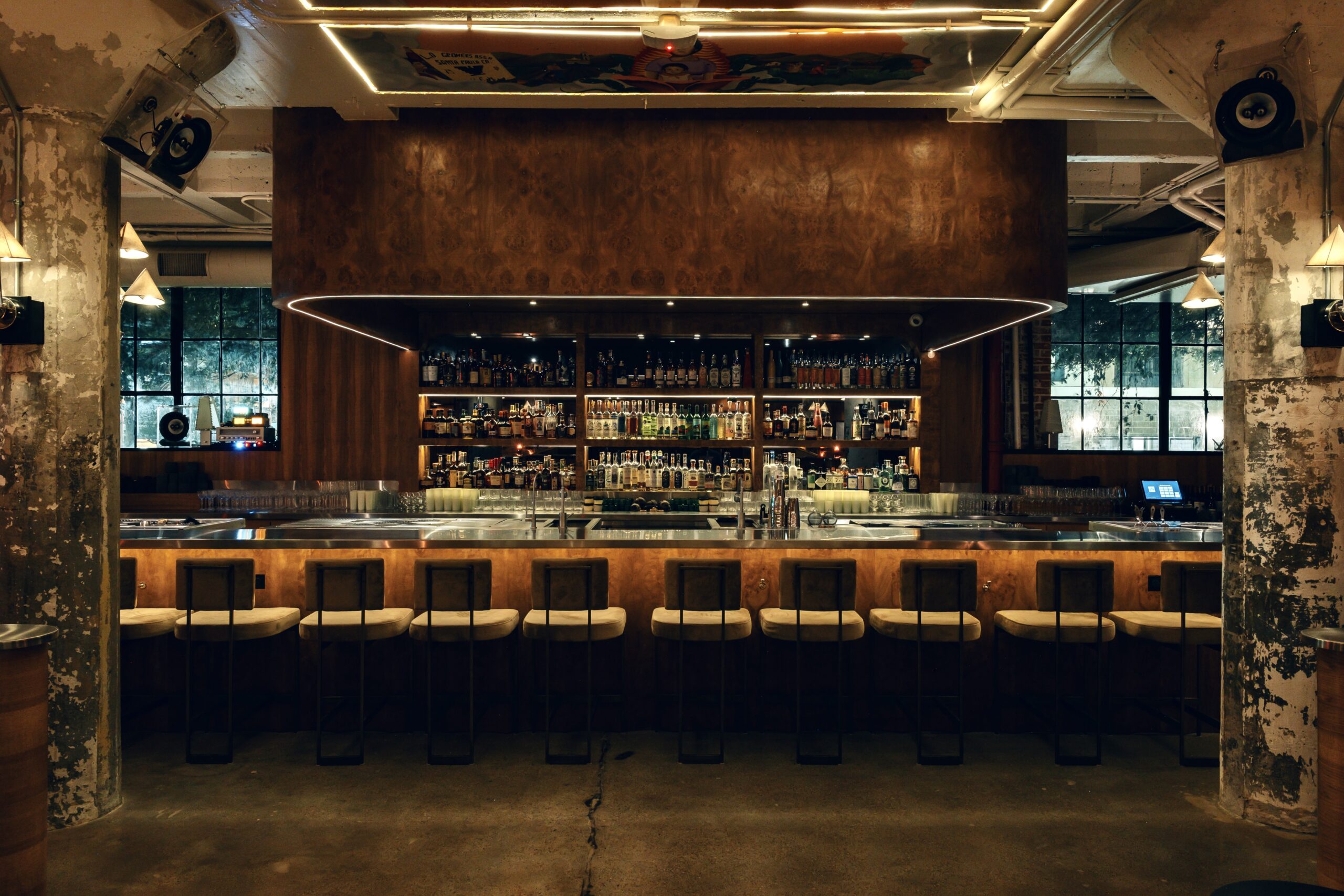 Photo Credit: Mike Lazo
Houston doesn’t announce itself.
Neither does Greg.
For decades this city has quietly become one of America’s most interesting food and drink towns while remaining almost allergic to self-promotion — never needing to convince anyone it matters, the way New York or L.A. or Miami perform relevance like a full-time job. It just gets on with it. Perez is the same. He isn’t loud about what he’s built. He’d rather you notice the concrete, the mural, the menu, and arrive at the conclusion yourself.
Being first-generation Mexican-American, Perez says, meant growing up in a permanent negotiation between two operating systems that don’t always sync. Mexican culture, in his telling, runs on presence — family, community, the moment itself, hospitality less as service than as moral obligation. The American side runs colder and more individual: resilience, the relentless personal pursuit of more. Marrying the two took years. Concrete Rose is, in a sense, the treaty.
It shows up most plainly in how he refuses to run the room with the you’re-lucky-to-be-here posture so many high-end bars default to, mistaking stiffness for sophistication. “You can be a tastemaker without making people feel like they’re lucky to be there,” he tells me. “Hospitality should meet people where they are.”
Ask him to define modern luxury, though, and something in his ease drops out for a second. “I don’t come from that world,” he says. “Nor do I pretend to be well-versed in it.” He says it plainly, almost like a confession, and it’s the one moment all afternoon he sounds unsure of himself. It’s exactly why the room works. He isn’t manufacturing a point of view on luxury he read about somewhere. He’s building the only version of it he actually trusts — one measured not in price, but in what gets passed down.
The menu reads less like a cocktail list than a lookbook, each drink shot like a streetwear campaign — a nod to Perez’s actual obsessions, Teddy Santis and Ronnie Fieg among them, the way a brand like Kith sells you a feeling before it sells you a hoodie. “I want to tell a story before you even take a sip,” he says. But the real story isn’t on the page. It’s underneath it, in ingredients chosen for exactly one reason: because they taste like something he isn’t trying to explain to you so much as hand back.
There’s a cocktail built around the smell of his mother’s vanilla cake, the kind that used to fill the house on no particular occasion — just a Tuesday that suddenly felt like something. There’s one built around blue Powerade in July two-a-days, the kind of heat that makes a fifteen-year-old believe, briefly, that he might actually die of football. There’s a tamarind sno-cone bought on a Friday after school, sour and sticky and gone in four bites. Agua frescas from Houston farmers markets on weekend mornings with his mother. Fresh shrimp pulled that same morning off the Gulf coast. Long summer drives to Guadalajara, tacos eaten standing up on a street corner every single night, the kind of trip that becomes less a memory than a smell you can still find yourself inside of, decades later, over ice. One of the drinks is even named Ask Me How!, which feels about right for a menu built this way.
“I’m not trying to tell you my life story,” Perez says. “I just want to share a specific detail that makes it memorable.”
The wine list makes the same case without saying it out loud. Forty-seven selections curated by Reata Cellars’ Mary Dodson, weighted intentionally toward Valle de Guadalupe, Guanajuato, Coahuila and Baja California — a quiet corrective to an era when most Americans’ entire concept of Mexican wine began and ended at Valle de Guadalupe, if it existed at all. Houston, a city fluent in Vietnamese, Indian and Japanese cooking by simple daily osmosis, might be the only place this particular list makes sense.
He carries the same instinct on his wrist. Perez collects vintage Omega watches — his favorite a Seamaster with a blue dial, the same reference Pierce Brosnan wore in GoldenEye, his first Bond film. He tells you this with the enthusiasm of someone who’s been waiting years for someone to ask. That’s the same impulse behind the Jordans overhead — aspiration remembered on one wrist, aspiration finally achieved on the other, both of them the same boy at different ages.
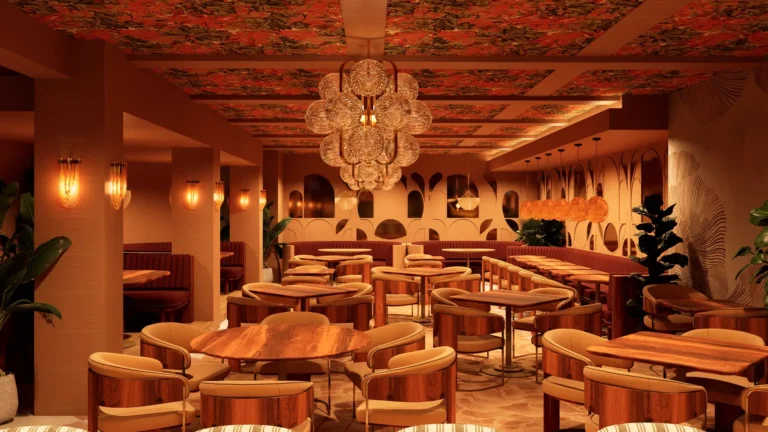
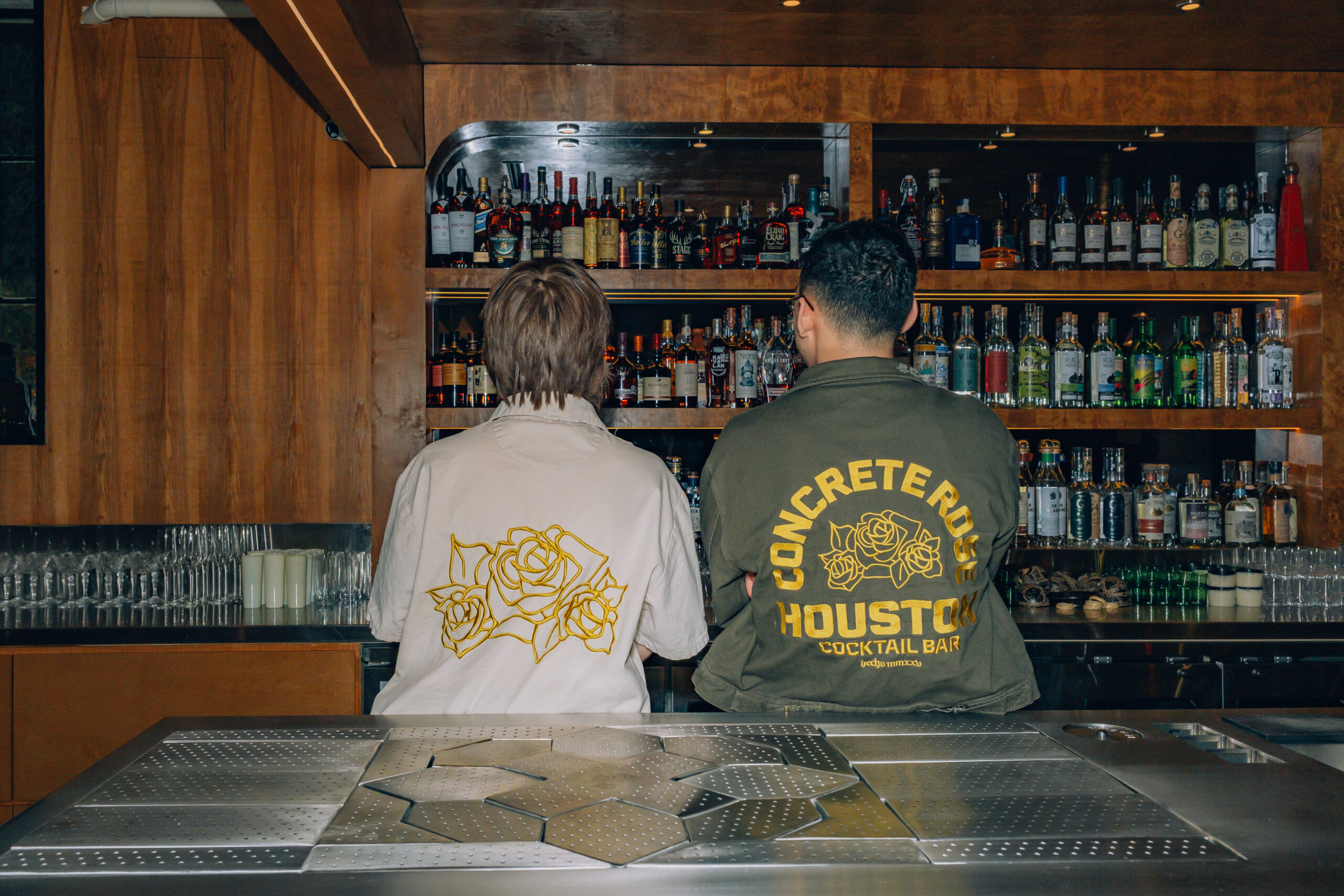
The design tells a version of the same story. Perez brought in Houston designer Stephie Kaiser Harvel with one instruction: become part of the building, don’t build over it. What followed was less a design process than a long argument that happened to produce something beautiful — her polish pushing against his rawness, neither one fully winning.
“She was the editor that polished my raw, personal story,” he says. He smiles when he says it. It’s the kind of sentence that explains both the room and the man.
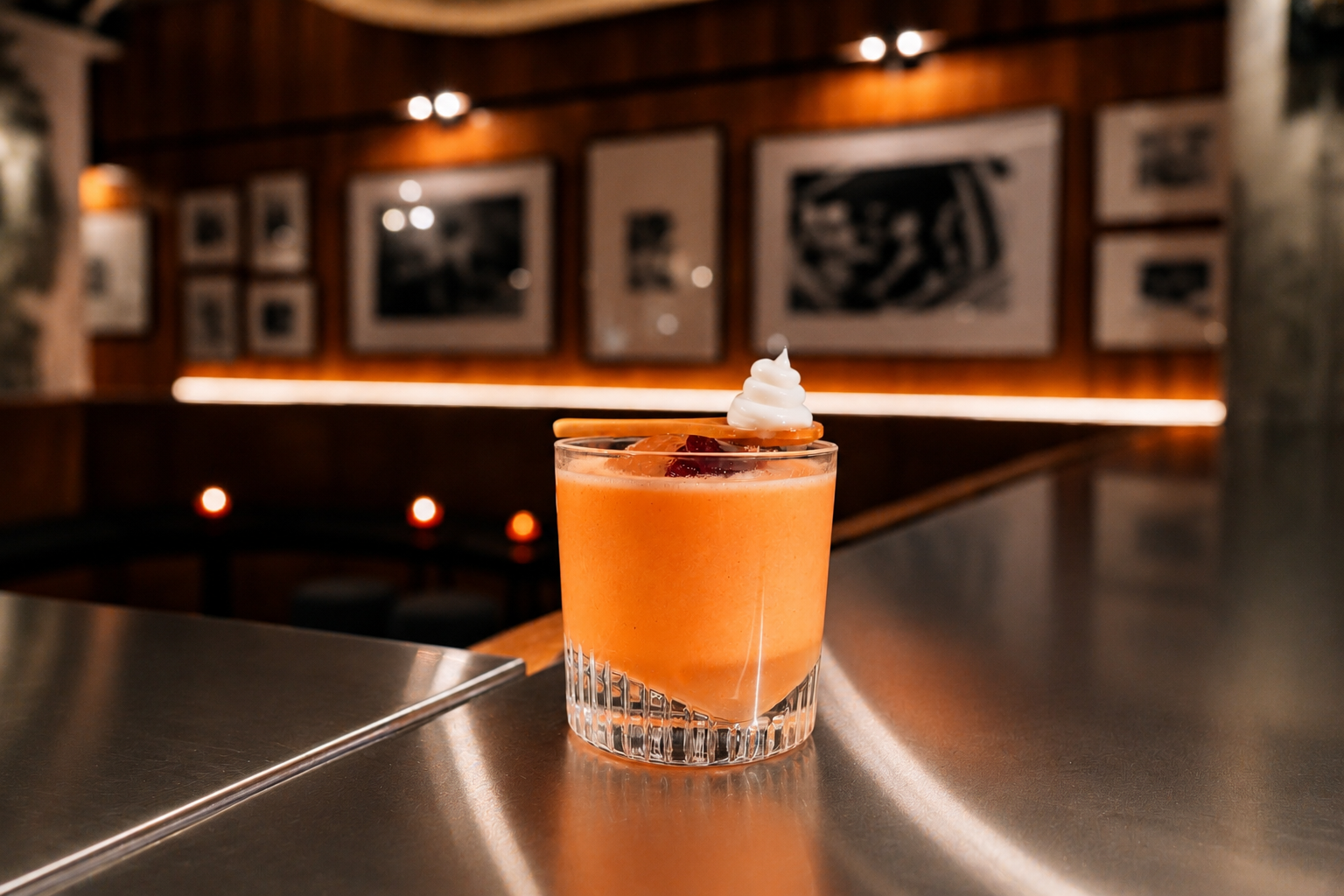
Photo Credit: Mike Lazo
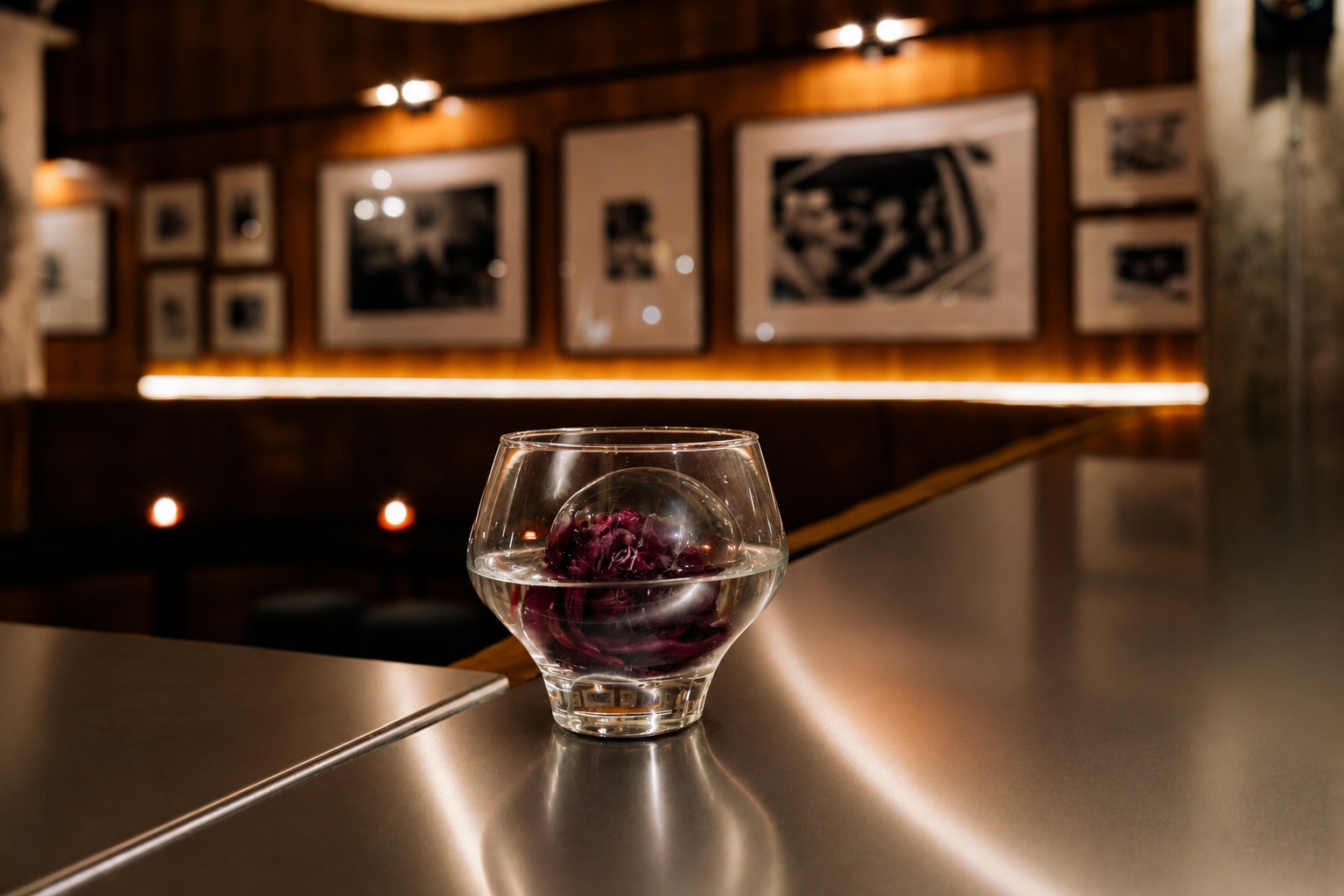
Photo Credit: Concrete Rose
The exposed brick stayed exposed. The concrete stayed unpolished. Nothing got smoothed over for the sake of looking finished. The mural overhead is the work of muralist Eloy Angel, drawing on Mexican muralism’s long tradition of art with something to say rather than art as vibe — a lineage Perez name-checks alongside Diego Rivera and Frida Kahlo without a trace of self-consciousness. “We’re the next chapter in this book,” he says. “I just want to add to it.” Even the soundtrack is inherited architecture: Perez compares its arc to a quinceañera, the one party built explicitly to please everyone in the room at once, generations colliding without apology. Lowrider oldies and Mexican slow jams give way, by the end of the night, to Houston rap and reggaetón and cumbia — Jay-Z beside Fat Pat beside Selena beside Karol G, somehow making sense in the same three hours.
That philosophy extended beyond the walls of Concrete Rose. Perez is quick to point out that the bar only exists because Alexander and Daniel Ron of Scarlet Capital believed in the same kind of city he wanted to help create. What began as a straightforward landlord-tenant relationship gradually grew into something more. As the Ron brothers watched the care and intention being poured into every detail, trust grew alongside the project itself.
Today, conversations that once revolved around construction schedules and lease agreements are just as likely to be about a remarkable cocktail discovered while traveling, an unforgettable meal, an interesting building, or the next idea that could push Houston’s creative scene forward. “They don’t want cookie-cutter businesses,” Perez says. “They encourage being unique and creative. They truly believe in doing the best job you can and doing something different that this city hasn’t yet seen.”
Perez believes that’s how cities move forward: when landlords, tenants and creatives all believe in building something original together. “It takes a village,” he says. “When you have a landlord, tenant and creatives all wanting to create something new — and a city ready for something new — the future of Houston is very exciting.”
For years, Perez believed he understood exactly why he’d named the place after Tupac Shakur’s The Rose That Grew From Concrete. Like most people who encounter that poem young, he saw himself in it immediately — the kid who knew, with total conviction, there had to be something beyond the block he grew up on. Ambitious. Determined. The rose, obviously.
He was almost finished building the bar before he realized he’d had the whole thing backward.
The room gets quieter when he starts talking about his mother. It’s the only answer all afternoon that arrives without any polish on it at all.
“I thought I was the rose,” he says. A pause. “I wasn’t.”
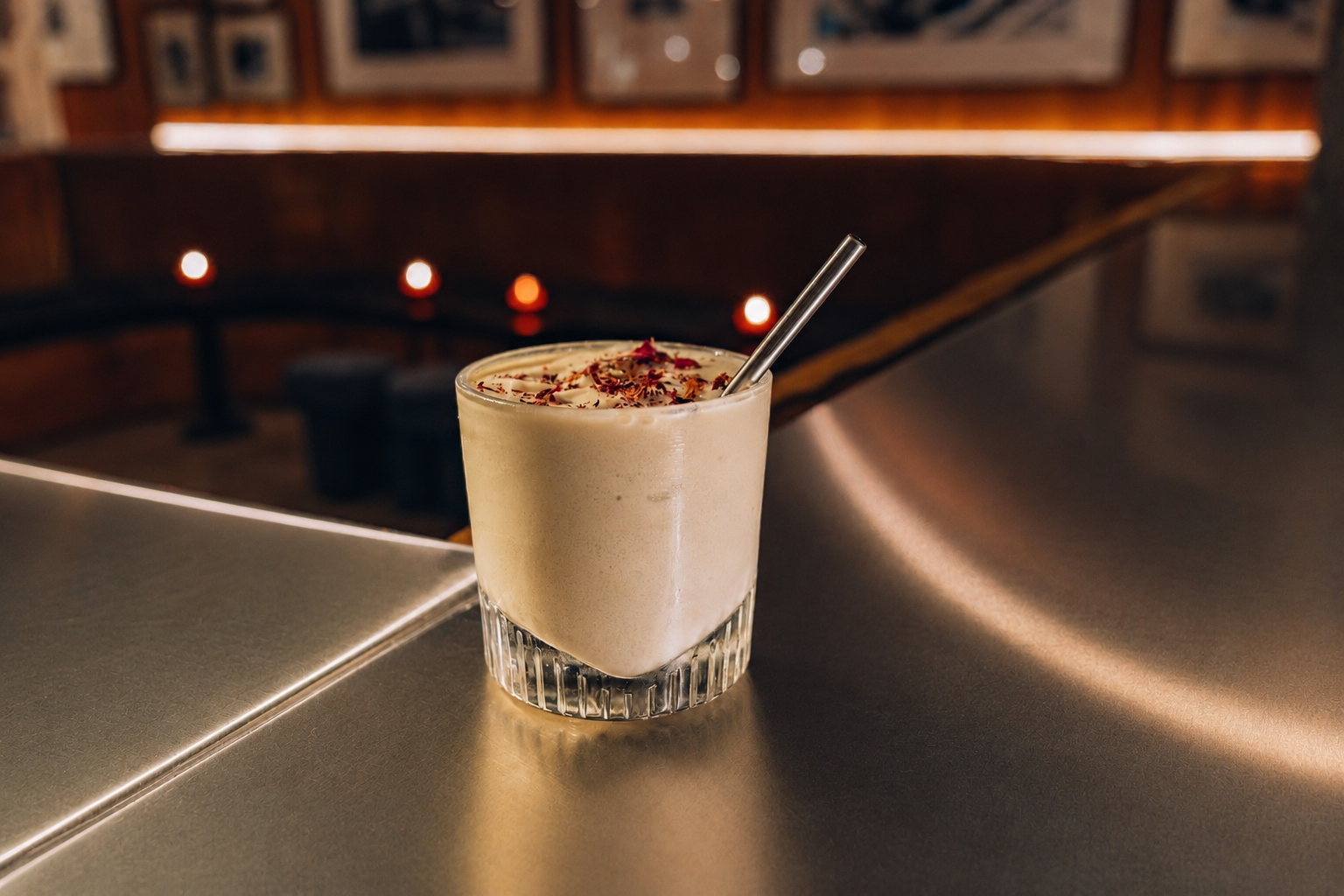
Photo Credit: Concrete Rose
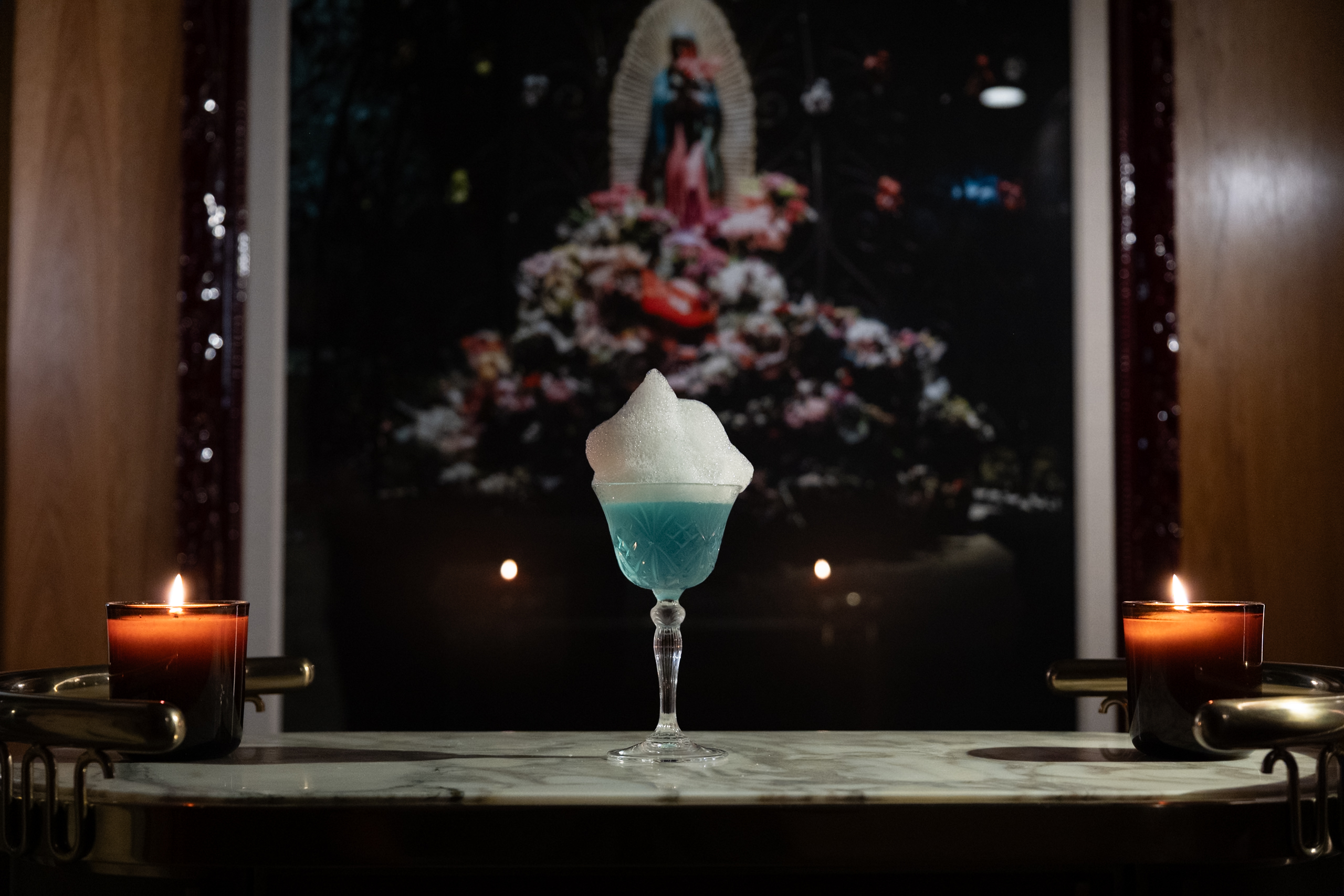
Photo Credit: Mike Lazo
The rose was his mother, who raised him and his sister largely alone after his father left when he was ten, working multiple jobs, one of them an overnight shift at the airport. Somewhere in the impossible math of that schedule, she still found a way to drive a school van full of other people’s kids home in the afternoons, deliver her own son to basketball practice across town, and get back in time to have dinner on the table before leaving again for the night shift. Perez remembers watching her fight to keep her eyes open at red lights during that drive. He was in middle school. He didn’t understand yet what he was watching. He understands now.
“She sacrificed everything so my sister and I could chase our dreams,” he says. “I’m just a seed from that rose.”
I can imagine Perez standing beneath the mural while a table near the bar breaks into laughter over something on the menu — a cocktail named for a memory none of them will ever know belonged to a woman none of them will ever meet. He isn’t watching them the way an owner checks on a room. He’s watching the way you watch something land exactly as you hoped it would, knowing no one will ever clock why.
That’s the part of hospitality nobody tells you going in: if you’ve done the work well enough, it disappears completely.
They just have a good night. They order another round. They mean it when they say they’ll be back.
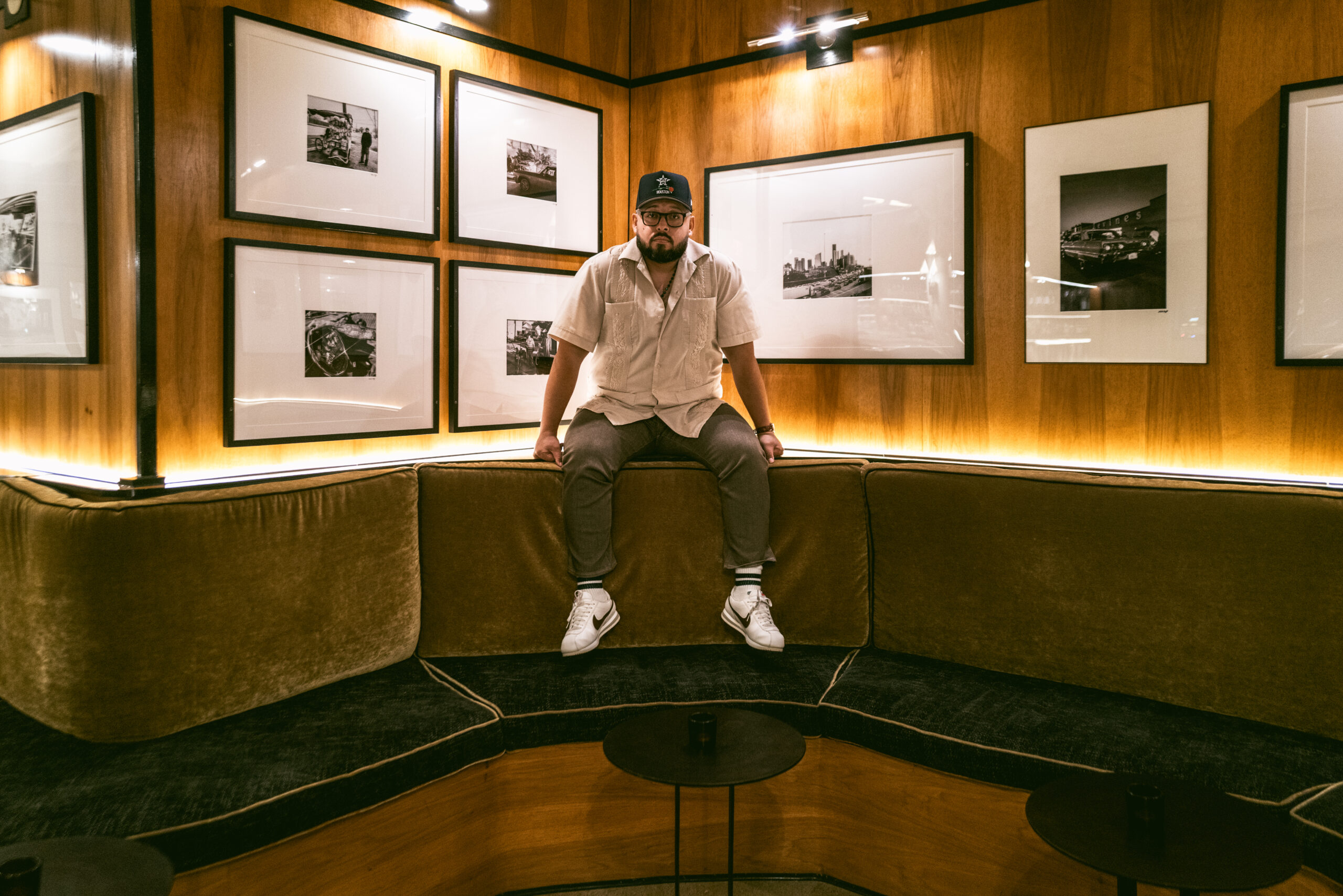
Photo Credit: Mike Lazo
For more Haute Living’s cocktail coverage, explore and .
THE HAUTE READ
Concrete Rose is a luxury cocktail bar in Houston, Texas, founded by Greg Perez — a first-generation Mexican-American bartender and owner of Monkey’s Tail and Trash Panda Drinking Club — featuring a menu of memory-driven cocktails, a 47-selection Mexican wine list curated by Reata Cellars’ Mary Dodson, and interiors designed by Stephie Kaiser Harvel with a mural by muralist Eloy Angel.
The best experiences are the ones you can’t book online. Unlock bespoke itineraries, private aviation, and VIP access at 500+ properties across 120+ countries through Haute Black — the exclusive platform built from 20 years of Haute Living’s extensive network. Become a Haute Black member today: [email protected].
Latest from Haute Living

Haute Insider: Creator Vale Genta’s Guide to Miami

Victoria Beckham Designed a Gap Collection & It’s Dropping This Week
Louis Vuitton Brings Seven Years of Artycapucines to Art Basel Paris