Plastic Surgery
Buccal Fat Removal: Risks and Who Should Skip It
Published · Haute MD Editorial Team
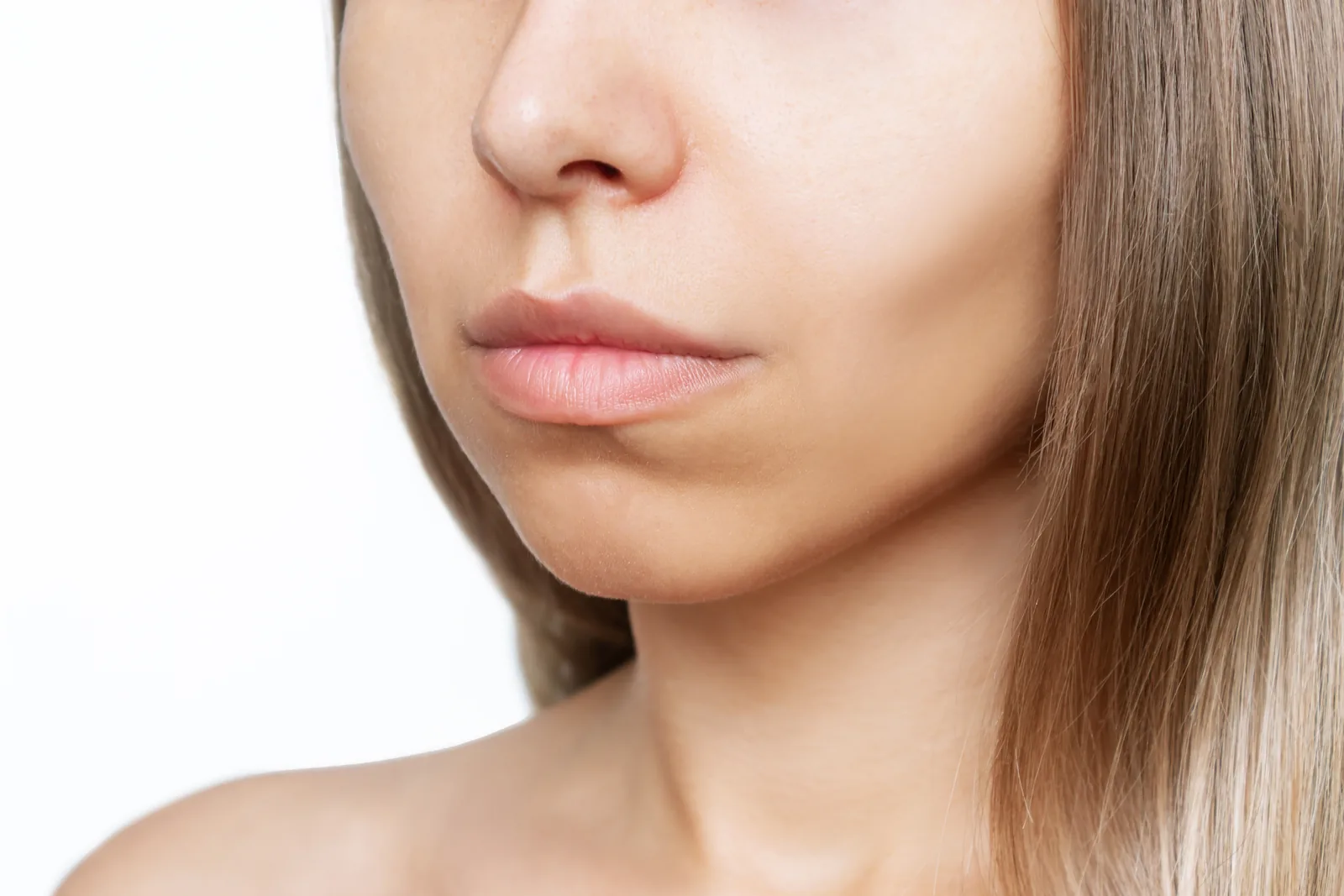
Buccal fat removal is surgery to thin the cheeks by removing part of the buccal fat pad, a naturally occurring pad of fat in the cheek-hollow area, usually through an incision inside the mouth. The American Society of Plastic Surgeons (ASPS) says it is typically not performed in people with thin, narrow faces, because removing the fat may make the face look more gaunt with age. ASPS lists risks that include bleeding, infection, injury to a salivary duct, and injury to branches of the facial nerve that can cause temporary or permanent facial muscle weakness. Published reviews describe the evidence on long-term results as limited. Candidates, per ASPS, are physically healthy, at a stable weight, have realistic expectations and are bothered by full cheeks. If your cheeks are not full, if your weight is still changing, or if you are chasing a trend, it may be a procedure to skip.
At a glance
| Question | What the source says | Source |
|---|---|---|
| What is removed? | The buccal fat pad, a pad of fat in the cheek-hollow area; its size varies and can differ side to side | ASPS |
| How is it done? | Usually an incision inside the mouth, under IV sedation or general anesthesia; occasionally removed during a facelift | ASPS |
| Who may be a candidate? | Physically healthy, stable weight, realistic expectations, bothered by full or chubby cheeks | ASPS |
| Who is it typically not for? | People with thin, narrow faces | ASPS |
| Main risks | Bleeding, hematoma, infection, asymmetry, salivary-duct injury, facial-nerve injury, numbness, prolonged swelling, revision surgery and others | ASPS |
| How often do complications happen? | Reviews disagree; the studies are small and varied. One 2025 meta-analysis pooled 25% (very wide range); a 2021 review counted 7 complications in 134 procedures | J Craniomaxillofac Surg 2025; Med Oral Patol Oral Cir Bucal 2021 |
| Long-term concern | Facial fat shrinks with age; surgeons quoted by ASPS warn removal can look hollow later | ASPS news (2021, 2024) |
What buccal fat removal is
ASPS describes the goal as thinning the cheeks, specifically in the cheek-hollow area. The buccal fat pad sits deep in the cheek. ASPS notes that its size varies from person to person and that the pad in each cheek may be a different size.
ASPS lists the steps as:
- Anesthesia: IV sedation or general anesthesia.
- Incision: on the inside of the mouth, on the inner cheek. Occasionally the pad is removed during a facelift, without an incision inside the mouth.
- Closure: sutures inside the mouth, typically absorbable.
Who may be a candidate
According to ASPS, buccal fat removal is highly individualized, and you may be a candidate if:
- you are physically healthy and at a stable weight;
- you have realistic expectations; and
- you are bothered by the appearance of full cheeks.
ASPS also advises considering the procedure for yourself rather than for someone else or to match an ideal image.
In a 2024 ASPS news article, ASPS Member Surgeon Omar Hussain, MD, said the surgery suits patients who have buccal fat that can be felt in the area of concern and good skin elasticity, and that older patients or those with less elasticity need a facelift combined with the removal to address skin laxity. He advised keeping your weight stable for at least six months before considering surgery.
Who should think twice — or skip it
Each point below is attributed to the source that makes it:
- You have a thin or narrow face. ASPS says the procedure is typically not performed in people with thin, narrow faces, because removal may cause the face to look more gaunt with age, according to ASPS.
- Your cheeks are not actually full from buccal fat. In a 2021 ASPS news article, plastic surgeon Dr. Rod Rohrich discussed that many people who ask about buccal fat removal may not need it, and that cheek fullness is often caused by something else — for example, an overactive masseter muscle or the shape of the jawline.
- You are worried about how your face will age. Dr. Ira Savetsky, in the same ASPS article, said the concern is that removal may look good at first but become overly hollow over time, because facial fat atrophies with age. Dr. Hussain, in the 2024 ASPS article, cautioned that trading a full cheek for a mid-cheek furrow can make you look older.
- Your weight is not stable. ASPS lists a stable weight as a candidate criterion; Dr. Hussain suggested at least six months of stability.
- You are doing it to fit a look. ASPS's own candidate page says to do it for yourself, not to fit an ideal image. Rohrich warned against removing the fat pad casually just to look good on social media.
- You are not healthy enough for surgery. It is still an operation with anesthesia. ASPS lists anesthesia risks, deep vein thrombosis, and cardiac and pulmonary complications among the possible risks.
Non-surgical alternatives depend on what is actually causing the fullness. That is a diagnosis for an in-person exam, not a page; see What Are Dermal Fillers? for volume-adding options and the facelift and neck lift guides for laxity.
Risks
According to ASPS, the decision is extremely personal, and you will be asked to sign consent forms after the risks are explained. ASPS lists possible risks including, but not limited to:
- anesthesia risks
- asymmetry
- bleeding and hematoma
- deep vein thrombosis, cardiac and pulmonary complications
- fluid accumulation (seroma)
- infection
- injury to a salivary duct
- injury to branches of the facial nerve, resulting in temporary or permanent facial muscle weakness
- numbness or other changes in sensation
- persistent pain
- poor healing of incisions
- prolonged swelling
- possibility of revisional surgery
- suboptimal aesthetic result and/or minimal changes
What the published reviews found:
- A 2025 systematic review and meta-analysis in the Journal of Cranio-Maxillofacial Surgery (Albuquerque et al.) included 12 studies and 308 patients. It reported an overall complication prevalence of 25%, with a very wide confidence interval (4% to 46%) and high heterogeneity between studies. The complications it found included swelling, trismus (difficulty opening the mouth), pain, asymmetry and, less commonly, facial-nerve paralysis, infection and hematoma. The authors concluded the procedure should be recommended with caution given safety concerns and a lack of predictability.
- A 2021 systematic review in Medicina Oral, Patología Oral y Cirugía Bucal (Traboulsi-Garet et al.) included 4 studies and counted 7 complications in 134 cheek-refinement procedures. It described the supporting evidence as scarce and of low quality and noted a lack of published long-term follow-up.
- A 2021 case report and review in the Journal of Craniofacial Surgery (Pimentel et al.) described two patients treated after buccal fat removal — one with swelling from injury to the parotid (Stensen's) duct and one with uncontrolled bleeding from the internal maxillary artery — and stressed that the buccal fat pad lies close to the facial nerve, the parotid duct and blood vessels.
The two reviews reach different headline numbers because they included different, small studies, and many complications counted in the meta-analysis were swelling, trismus or pain. Neither should be read as the risk for any individual patient. Ask your surgeon how often they see each complication and how it is managed.
Recovery, briefly
ASPS says you may be told to stay on a liquid diet for several days or longer, may be given special mouth rinses to reduce infection risk, and that healing continues for several weeks as swelling decreases. Your surgeon's instructions govern.
Questions to ask
Adapted from ASPS's buccal fat removal question list:
- Are you certified by the American Board of Plastic Surgery (or, for facial plastic surgeons, the relevant facial plastic surgery board)? See Is My Surgeon Board Certified?
- Am I a good candidate — is my fullness actually from buccal fat?
- How much would you remove, and how might my face look as I age?
- Where and how will you perform the procedure, and is the facility accredited?
- What are the risks associated with my procedure, and how are complications handled?
- What will be expected of me during recovery, and what can I do to support the results we discuss?
- Do you have before-and-after photos for this procedure, and what results are reasonable for me?
For how certification differs from board eligible, see Board Certified vs. Board Eligible. For a broader checklist, see How Do You Choose a Plastic Surgeon?
Featured doctors: Haute MD Network members include Dr. Philip Miller, a double board-certified facial plastic surgeon at Gotham Plastic Surgery in New York whose listed areas include facial fat grafting, facial contouring, deep plane facelift and neck lift, and Dr. Jason Bloom, a double board-certified facial plastic and reconstructive surgeon at Bloom Facial Plastic & Aesthetic Surgery in Bryn Mawr and Philadelphia, Pennsylvania, who focuses exclusively on surgery of the head and neck. Browse Facial Plastic Surgery and Plastic Surgery in Find a Doctor. Listed doctors are paid members of the Haute MD Network. Editorial selection, not a ranking.
Find a Doctor
Browse Haute MD physicians in Find a Doctor, including Facial Plastic Surgery and Plastic Surgery.
Sources
- American Society of Plastic Surgeons, Buccal Fat Removal (accessed Nov. 9, 2026)
- ASPS, Buccal Fat Removal Candidates (accessed Nov. 9, 2026)
- ASPS, Buccal Fat Removal Risks and Safety (accessed Nov. 9, 2026)
- ASPS, Buccal Fat Removal Procedure Steps (accessed Nov. 9, 2026)
- ASPS, Buccal Fat Removal Recovery (accessed Nov. 9, 2026)
- ASPS, Buccal Fat Removal Questions (accessed Nov. 9, 2026)
- Ariel Frankeny, Hollow cheeks: A focus on buccal fat removal, ASPS (Feb. 27, 2024; accessed Nov. 9, 2026)
- Gabby Shacknai, Facial fat is precious: Why your plastic surgeon shouldn't be too aggressive with buccal fat removal, ASPS (Sept. 15, 2021; accessed Nov. 9, 2026)
- Albuquerque MC, Arruda KAR, Xavier Junior GF, et al. Prevalence of complications of buccal fat removal: A systematic review and meta-analysis. J Craniomaxillofac Surg. 2025 Apr (abstract accessed Nov. 9, 2026)
- Traboulsi-Garet B, et al. Buccal fat pad excision for cheek refinement: A systematic review. Med Oral Patol Oral Cir Bucal. 2021;26(4):e474–e481. doi:10.4317/medoral.24335 (accessed Nov. 9, 2026)
- Pimentel T, Hadad H, Statkievicz C, et al. Management of Complications Related to Removal of the Buccal Fat Pad. J Craniofac Surg. 2021 (abstract accessed Nov. 9, 2026)
This guide is for general information and isn't medical advice. Talk with a board-certified physician about whether a treatment is right for you.
Frequently Asked Questions
What is buccal fat removal?
Surgery to thin the cheeks by removing part of the buccal fat pad in the cheek-hollow area, usually through an incision inside the mouth. ASPS says it can be done under IV sedation or general anesthesia and is occasionally performed during a facelift.
Who should not get buccal fat removal?
ASPS says it is typically not performed in people with thin, narrow faces, because removing the fat may make the face look gaunt with age. People whose weight is not stable, who are not healthy enough for surgery, or whose fullness comes from something other than buccal fat may also not be good candidates.
What are the risks of buccal fat removal?
ASPS lists bleeding, hematoma, infection, asymmetry, injury to a salivary duct, injury to branches of the facial nerve (temporary or permanent facial muscle weakness), numbness, persistent pain, poor incision healing, prolonged swelling, anesthesia risks and the possibility of revision surgery, among others.
How common are complications?
Published reviews disagree because the studies are small and varied. A 2025 meta-analysis pooled a 25% overall complication prevalence across 12 studies, with a wide range and high heterogeneity; a 2021 systematic review counted 7 complications in 134 procedures. Ask your surgeon about their own experience.
Is buccal fat removal permanent?
The removed fat does not grow back. Surgeons quoted by ASPS caution that because facial fat naturally shrinks with age, cheeks that look contoured now could look hollow later.
Can buccal fat removal make you look older?
That is the main long-term concern raised in ASPS articles. ASPS Member Surgeon Omar Hussain, MD, said trading a full cheek for a mid-cheek furrow can make you look older, and other surgeons quoted by ASPS warned about over-removal.
What is recovery like?
ASPS says you may be on a liquid diet for several days or longer and may use special mouth rinses; healing continues for several weeks as swelling goes down.
Get Help Now
Speak with a Haute MD Plastic Surgery physician
Are you a Plastic Surgery physician?
Join Haute MD Network and have your profile featured alongside these answers.
Apply for the NetworkRelated Guides
Guide · PLASTIC SURGERY
What Is a Facelift?
A facelift is a surgical procedure that repositions facial tissues and skin to reduce sagging and restore a more youthful appearance. Learn about facelift techniques and results.
Read GuideGuide · PLASTIC SURGERY
What Is a Deep Plane Facelift?
The deep plane facelift is the gold standard facelift technique, repositioning deep facial structures for longer-lasting, more natural results than traditional facelifts.
Read GuideGuide · PLASTIC SURGERY
What Is Neck Lift Surgery?
Neck lift surgery addresses loose neck skin, banding, and excess fat under the chin for a more defined jaw and neck contour. Learn about neck lift techniques and recovery.
Read GuideGuide · AESTHETICS & WELLNESS
What Are Dermal Fillers?
Dermal fillers are injectables that restore volume, smooth wrinkles, and enhance contours. Hyaluronic acid fillers are reversible; biostimulators build collagen for longer results.
Read GuideGuide · PLASTIC SURGERY
How Do You Choose a Plastic Surgeon?
Choosing a plastic surgeon requires verifying board certification, reviewing before-and-after results, and ensuring the surgeon specializes in your procedure.
Read GuideGuide · DOCTOR-SELECTION/PLASTIC-SURGEON
Is My Surgeon Board Certified?
Verify a plastic surgeon's board certification in 60 seconds at certificationmatters.org. Learn what ABPS certification means and why it matters.
Read GuideGuide · DOCTOR-SELECTION/BOARD-CERTIFICATION
What Is the Difference Between Board Certified and Board Eligible?
Board eligible means training is done but certification isn't, and the status expires. How it differs from board certified and how to verify any doctor.
Read Guide