Longevity Medicine
What Is a Full-Body MRI?
Published · Haute MD Editorial Team
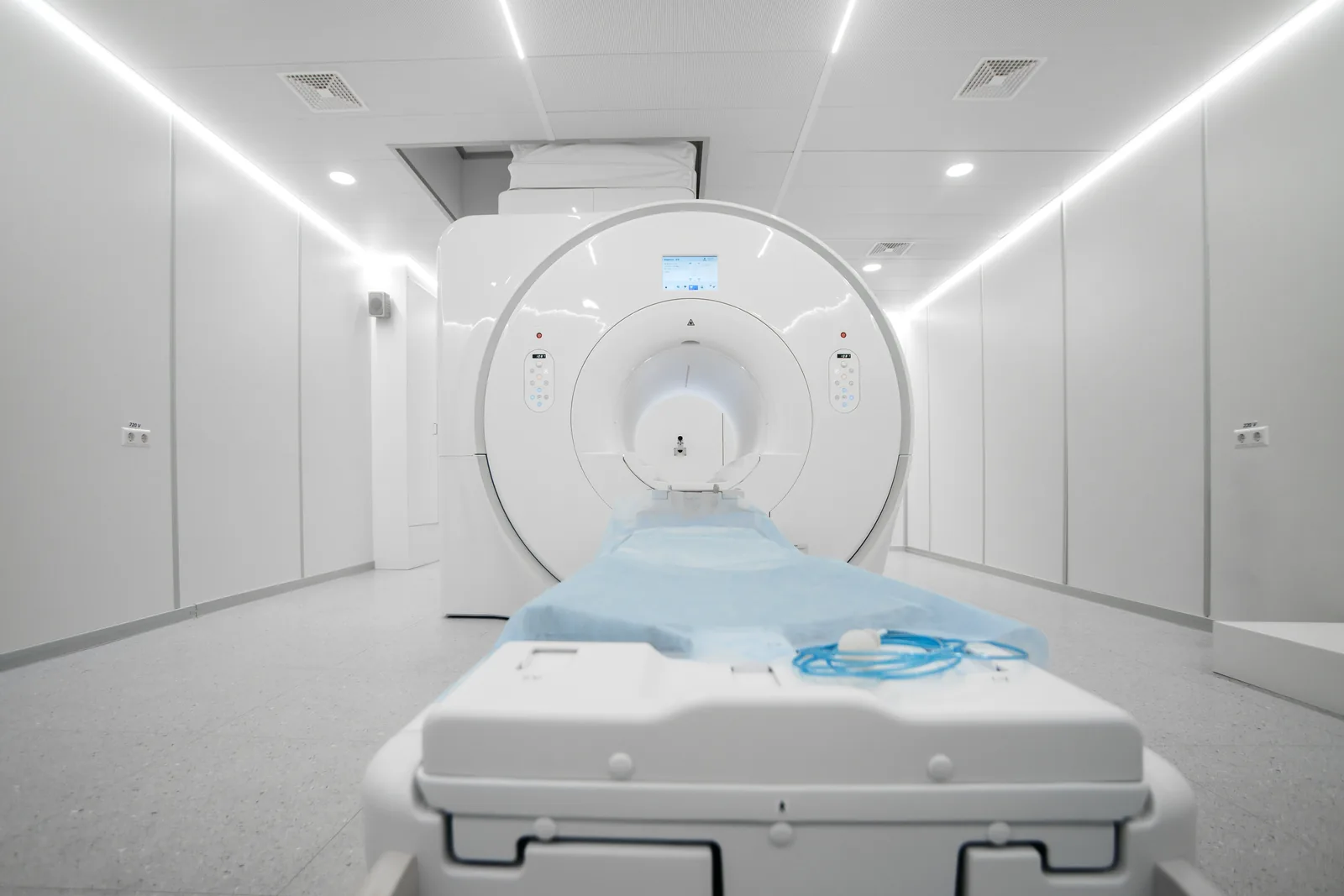
A full-body MRI (also called a whole-body or total-body MRI) is a single imaging session that uses a strong magnet and radio waves, not X-rays, to take pictures of many parts of the body at once, typically from the head through the pelvis and sometimes to the feet. It's used in two very different ways: as recommended surveillance for some people with inherited cancer syndromes, and as a self-referred "wellness" or longevity screen for people without symptoms. For that second use, the American College of Radiology (ACR) says there isn't enough evidence to recommend it, mainly because it finds many unclear spots and hasn't been shown to help people live longer. It isn't a diagnostic test for symptoms, and it doesn't replace the screening tests guidelines recommend for your age.
At a glance
| Question | Short answer |
|---|---|
| What does it use? | A magnetic field and radio waves; no ionizing radiation (FDA) |
| What does it cover? | Varies by provider; typically the head through the pelvis, sometimes the limbs |
| Is contrast dye used? | Often not for screening protocols; diagnostic MRIs may use gadolinium |
| Does ACR recommend it for people without symptoms? | No, not without symptoms, risk factors or family history suggesting disease (2023) |
| How often does it find something? | About 1 in 3 people in pooled studies had a critical or unclear finding (Kwee 2019) |
| How often is it cancer? | About 1.6% in a 2025 meta-analysis of 9,024 people without symptoms |
| Is it the same as a diagnostic MRI? | No. A diagnostic MRI is ordered by a doctor to answer a specific question |
What a full-body MRI is
MRI makes images with a strong static magnetic field, changing magnetic fields and radiofrequency energy. FDA notes that it uses no ionizing radiation and that MRI shows soft tissue (fat, water, muscle) better than CT, while CT is usually better for bone.
A full-body exam runs a set of MRI sequences across several regions in one visit instead of focusing on one organ. Protocols aren't standardized: what's covered, which sequences are used and how long it takes vary by provider. An international expert panel published ONCO-RADS (Radiology, 2021) to standardize how whole-body MRI for cancer screening is done, read and reported, with five assessment categories. It's worth asking any provider whether it follows a standard like this.
What a full-body MRI is not
- Not a diagnostic MRI. If you have symptoms, your clinician orders a targeted MRI (or another test) to answer a specific question. That's a different exam with a different protocol.
- Not a replacement for standard screening. Keep up with the screenings guidelines recommend for you, such as those on the U.S. Preventive Services Task Force (USPSTF) A and B list. The 2025 meta-analysis concluded that routine whole-body MRI in people without symptoms isn't currently supported.
- Not a whole-body CT. CT uses X-rays. FDA says it knows of no scientific evidence that whole-body CT scanning of people without symptoms provides more benefit than harm, and it prohibits CT makers from promoting their systems for that use.
- Not a guarantee. A clear scan doesn't rule out disease, and an abnormal finding is often not serious. FDA makes the same point about whole-body CT.
Where it's an established tool
For some people with inherited cancer risk, whole-body MRI is part of formal surveillance. The Li-Fraumeni Syndrome Association's medical advisory consensus recommends annual rapid whole-body MRI for people diagnosed with Li-Fraumeni syndrome, an inherited condition caused by TP53 gene variants. The AACR Childhood Cancer Predisposition Workshop updated its Li-Fraumeni surveillance recommendations in 2025. ONCO-RADS was written mainly for higher-risk people such as these. If cancer runs strongly in your family, start with a genetic-risk conversation with your physician, not a consumer scan.
How the exam works
- Safety screening. You'll be asked about pacemakers, implants, metal fragments, pregnancy and kidney problems. FDA says implanted devices should be scanned only if they're confirmed MR Safe or MR Conditional, because the magnet can move devices and radiofrequency energy can heat them and nearby tissue.
- Changing and positioning. You lie on a table that slides into the scanner. FDA notes the scanner is loud, so ear protection is needed, and some people feel claustrophobic. Tell the team in advance if you do.
- Scanning. You stay still while the machine acquires each region. Ask how long your protocol takes and whether any part uses contrast.
- Reading. A radiologist reviews the images and writes a report.
- Results and follow-up. The report goes to you, your physician or both. Decide before booking who will explain it and who will order any follow-up tests.
What it finds, and the incidental-findings problem
Because it covers so much, a full-body MRI often finds something.
- Findings are common. A systematic review in the Journal of Magnetic Resonance Imaging (Kwee and Kwee, 2019; 12 studies, 5,373 people without symptoms) found a pooled 32.1% had a critical or indeterminate incidental finding: 13.4% critical and 13.9% indeterminate. The rate was higher (49.7%) when protocols added heart and blood-vessel or colon imaging.
- False alarms are real. In the six studies that reported them, the pooled false-positive proportion was 16.0%. None of the studies checked negative results over more than 5 years.
- Cancer is uncommon. A 2025 meta-analysis in European Radiology (10 studies, 9,024 people without symptoms) found confirmed cancer in 1.57%. The authors cited "frequent incidental findings, unstandardized protocols, and lack of long-term outcome or cost-effectiveness data."
- ACR's concern. ACR (2023) warns that whole-body screening may turn up "numerous non-specific findings" that lead to "unnecessary follow-up testing and procedures, as well as significant expense," and says there's "no documented evidence" that it is cost-efficient or prolongs life.
None of this means a scan can't find something important. It means that for people at average risk, benefit is unproven and follow-up is part of the deal.
Full-body MRI vs. CT vs. PET-CT vs. targeted MRI
| Exam | Ionizing radiation | Contrast | What it's designed to show | Usual reason |
|---|---|---|---|---|
| Full-body MRI (screening) | None | Often none; varies by protocol | Soft-tissue anatomy across many regions in one visit | Self-referred screening, or surveillance for inherited cancer syndromes |
| Whole-body CT | Yes (X-rays) | May use iodinated contrast | Anatomy, including bone and lungs | Not recommended for people without symptoms; FDA bars makers from promoting it for that |
| PET-CT | Yes (injected radiotracer plus CT) | Radiotracer, most often FDG; sometimes CT contrast | Metabolic activity (for example, glucose uptake) matched to anatomy | Staging cancer, checking response to treatment and other doctor-ordered questions |
| Targeted MRI | None | Gadolinium if the question needs it | Detailed images of one area | A doctor-ordered answer to a specific symptom or finding |
Sources: FDA (MRI benefits and risks; whole-body CT), RadiologyInfo (PET/CT).
About gadolinium contrast
Some MRIs use gadolinium-based contrast agents (GBCAs), injected into a vein. In 2017 FDA required a class warning that trace gadolinium can remain in the body, including the brain, for months to years. FDA said retention "has not been directly linked to adverse health effects in patients with normal kidney function." It also said the only known harm linked to retention is nephrogenic systemic fibrosis, a rare condition in some people with pre-existing kidney failure. FDA asks patients to tell their clinician about pregnancy, kidney problems and past gadolinium scans. Ask whether your scan uses contrast and why.
Who might consider one
- People with a known inherited cancer syndrome, through their care team's surveillance plan.
- People with strong family history, after a physician or genetic counselor reviews their risk. ACR's statement leaves room for people with risk factors or a family history.
- People without symptoms who want a baseline, after weighing the evidence above and lining up a physician to manage the results.
- Not a fit without screening first: people with implants of unknown MRI safety status, and anyone with symptoms that need a diagnostic workup.
Checklist before you book
- I know whether my scan is screening or diagnostic, and who ordered it.
- I know which body areas are and aren't covered.
- I know whether contrast is used.
- I've disclosed implants, devices, pregnancy and kidney problems.
- I know who reads the images and how results reach me.
- A physician has agreed to review the report with me and order any follow-up.
- I'm still up to date on the screenings guidelines recommend for me.
Talk to a physician
Browse Longevity & Concierge Medicine, Longevity Medicine Guides or Find a Doctor on Haute MD. For what the scan costs and what's included, see Full-Body MRI Cost.
Featured doctors: Dr. Kern Brar, a board-certified internal medicine physician and the founder of A Personal Physician, a concierge and executive medicine practice serving Encinitas, Oceanside and La Jolla, California, whose preventive programs include Prenuvo whole-body MRI among other diagnostics.
Related
Sources
- American College of Radiology, "ACR Statement on Screening Total Body MRI," April 17, 2023 — https://www.acr.org/News-and-Publications/Media-Center/2023/ACR-Statement-on-Screening-Total-Body-MRI (checked Nov. 16, 2026)
- U.S. Food and Drug Administration, "Full-Body CT Scans – What You Need to Know" — https://www.fda.gov/radiation-emitting-products/medical-x-ray-imaging/full-body-ct-scans-what-you-need-know (checked Nov. 16, 2026)
- U.S. Food and Drug Administration, "MRI: Benefits and Risks" — https://www.fda.gov/radiation-emitting-products/mri-magnetic-resonance-imaging/benefits-and-risks (checked Nov. 16, 2026)
- FDA Drug Safety Communication, "FDA warns that gadolinium-based contrast agents (GBCAs) are retained in the body; requires new class warnings," Dec. 19, 2017 (CDER), as posted by FDA's Sentinel Initiative — https://www.sentinelinitiative.org/news-events/fda-safety-communications-labeling-changes/fda-warns-gadolinium-based-contrast-agents (checked Nov. 16, 2026; the fda.gov original of this 2017 communication returned 404 at publication, so this citation uses the Sentinel Initiative posting)
- Kwee TC, Kwee RM, "Whole-body MRI for preventive health screening: a systematic review of the literature," J Magn Reson Imaging 2019;50(5):1489–1503 — https://pmc.ncbi.nlm.nih.gov/articles/PMC6850647/ (checked Nov. 16, 2026)
- Martins da Fonseca J, Trennepohl T, et al., "Whole-body MRI for opportunistic cancer detection in asymptomatic individuals: a systematic review and meta-analysis," Eur Radiol 2026;36(3):1813–1823 (online Aug. 30, 2025; PMID 40884613) — https://pubmed.ncbi.nlm.nih.gov/40884613/ (checked Nov. 16, 2026)
- Petralia G, Koh DM, et al., "Oncologically Relevant Findings Reporting and Data System (ONCO-RADS): Guidelines for the Acquisition, Interpretation, and Reporting of Whole-Body MRI for Cancer Screening," Radiology 2021;299(3):494–507 (PMID 33904776) — https://pubs.rsna.org/doi/10.1148/radiol.2021201740 (abstract checked Nov. 16, 2026)
- Achatz MI, Villani A, et al., "Update on Cancer Screening Recommendations for Individuals with Li–Fraumeni Syndrome," Clin Cancer Res 2025;31(10):1831–1840 (PMID 40072304) — https://pubmed.ncbi.nlm.nih.gov/40072304/ (abstract checked Nov. 16, 2026)
- Li-Fraumeni Syndrome Association, "Whole-Body MRI" consensus — https://www.lfsassociation.org/whole-body-mri/ (checked Nov. 16, 2026)
- RadiologyInfo.org (ACR/RSNA), "PET/CT," last reviewed June 15, 2026 — https://www.radiologyinfo.org/en/info/pet (checked Nov. 16, 2026)
- U.S. Preventive Services Task Force, "A and B Recommendations" — https://www.uspreventiveservicestaskforce.org/uspstf/recommendation-topics/uspstf-a-and-b-recommendations (checked Nov. 16, 2026)
This guide is general information, not medical advice. Talk to a licensed physician about your own care.
Frequently Asked Questions
Is a full-body MRI safe?
MRI uses no ionizing radiation, and FDA calls adverse events very rare. The main risks are injuries involving metal objects or implants, heating or burns, loud noise and claustrophobia. Gadolinium contrast, if used, has its own considerations.
Does a full-body MRI detect cancer?
It can, but in people without symptoms it's uncommon: a 2025 meta-analysis found confirmed cancer in about 1.6% of scans. Unclear findings that need more tests are far more common.
Is a full-body MRI the same as a full-body CT?
No. CT uses X-rays, and FDA says it knows of no evidence that whole-body CT screening helps more than it harms people without symptoms. MRI uses no X-rays.
Does ACR recommend full-body MRI screening?
Not for people without symptoms, risk factors or a family history suggesting disease. Its 2023 statement says the evidence doesn't justify it and raises concerns about unnecessary follow-up.
Does a full-body MRI replace my regular screenings?
No. Keep the screenings guidelines recommend for your age and risk, and ask your physician how any scan results fit in.
Get Help Now
Speak with a Haute MD Longevity Medicine physician
Are you a Longevity Medicine physician?
Join Haute MD Network and have your profile featured alongside these answers.
Apply for the NetworkRelated Guides
Guide · LONGEVITY MEDICINE
Prenuvo vs Hospital Full-Body MRI: What Is Different?
Prenuvo is a self-referred preventive scan; a hospital MRI answers a doctor's question. Compare scope, contrast, reports, follow-up and coverage.
Read GuideGuide · LONGEVITY MEDICINE
What Is Executive Health Screening?
Executive health screening provides comprehensive annual health assessment for high-performance individuals. Learn what is included and where to get it.
Read Guide