Fertility Medicine
What Is PGT-A in IVF?
Published · Haute MD Editorial Team
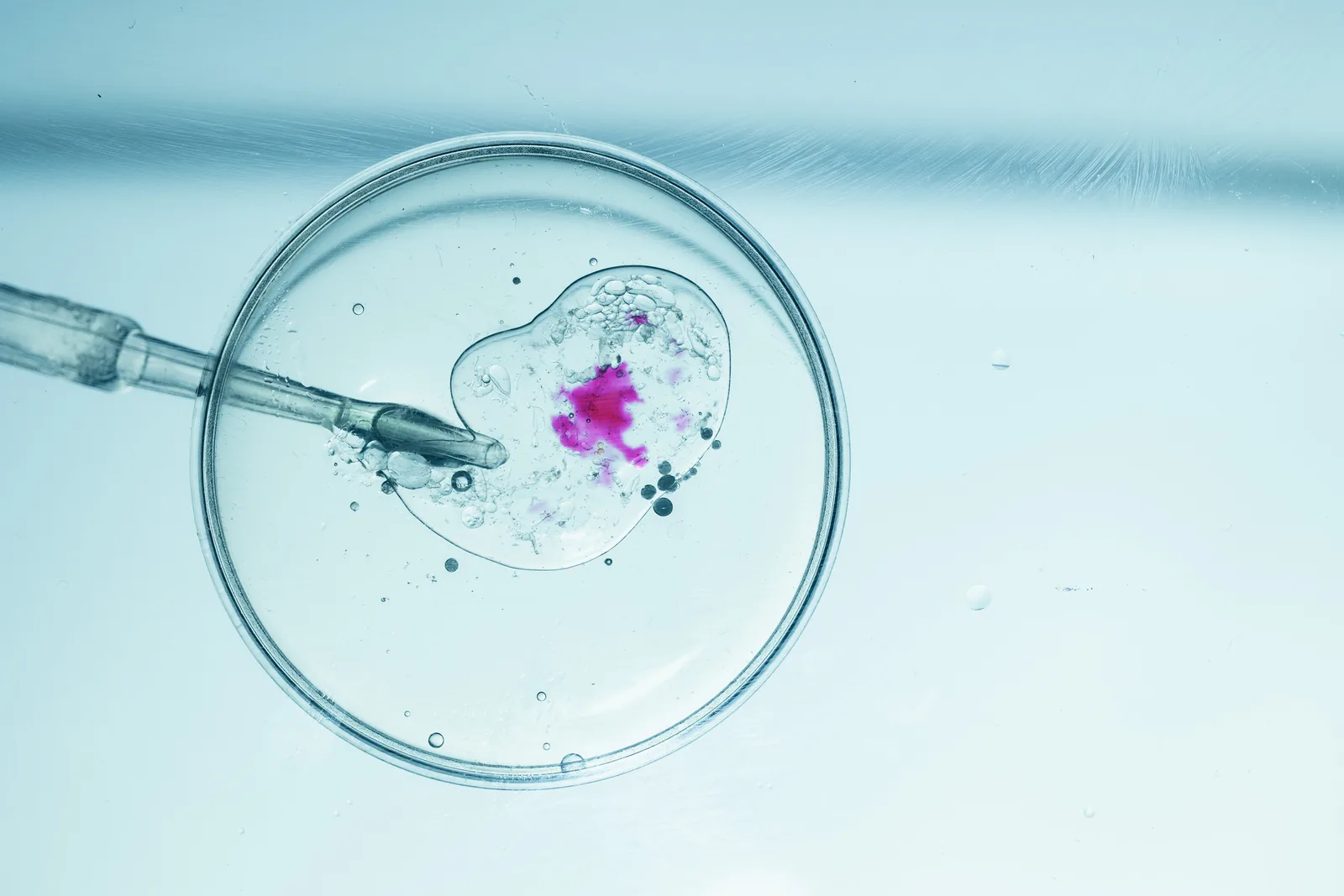
PGT-A (preimplantation genetic testing for aneuploidy) is a lab test done during IVF that checks a few cells taken from each embryo for missing or extra chromosomes, so that embryos reported as chromosomally normal ("euploid") can be chosen for transfer. It screens all 23 chromosome pairs, including X and Y. It doesn't diagnose specific inherited diseases, and a normal result isn't a guarantee of a healthy baby. The American Society for Reproductive Medicine (ASRM) says PGT-A hasn't been shown to help as a routine test for everyone doing IVF; whether it makes sense for you depends on your age, history and number of embryos, which is a conversation for your reproductive endocrinologist.
At a glance
| Question | Short answer |
|---|---|
| What does it test? | Chromosome number in a small biopsy from each embryo (ACOG) |
| How is the sample taken? | Usually a trophectoderm biopsy at the blastocyst stage; ASRM says it's generally accepted this has less impact than an earlier, cleavage-stage biopsy |
| Possible results | Euploid, aneuploid, mosaic, segmental, or no result (ASRM) |
| Does it raise the chance of a baby? | Not shown as a routine test for all IVF patients (ASRM 2024); HFEA rates it red for most patients |
| Does it lower miscarriage risk? | ASRM: "unclear." HFEA: green for most patients, grey for older women |
| Is a normal result a guarantee? | No. ACOG says prenatal screening or diagnostic testing should still be offered |
| Is it the same as PGT-M or PGT-SR? | No. Those look for a specific inherited condition or a parent's chromosome rearrangement |
How PGT-A works
During IVF, embryos grow in the lab for several days. For PGT-A, an embryologist removes a few cells, usually from the trophectoderm (the outer layer, which ASRM notes contains no cells destined to become the fetus) at the blastocyst stage, and a genetics lab counts the chromosomes. ASRM says next-generation sequencing (NGS) and SNP microarray are now the main platforms, and that labs differ in their protocols and in how they classify results.
In the two large multicenter trials ASRM reviewed, tested embryos were transferred in later frozen-embryo transfer cycles. Your clinic will explain its own timing; the IVF timeline guide covers how testing can add time before transfer.
ASRM, citing national SART data, shows how common testing has become: the share of U.S. IVF cycles using PGT rose from 14% in 2014 to 44% in 2019.
PGT-A vs. PGT-M vs. PGT-SR
| Test | What it looks for | Typical reason |
|---|---|---|
| PGT-A | Missing or extra whole chromosomes (and, on some platforms, segments) | Screening embryos for aneuploidy |
| PGT-M | A specific single-gene condition | A known inherited condition in the family |
| PGT-SR | Gains or losses caused by a parent's structural rearrangement, such as a translocation | A known parental chromosome rearrangement |
ACOG says the clinical value of PGT-M and PGT-SR "is firmly established," while the role of PGT-A "remains to be determined."
What the results mean
- Euploid: the biopsy showed the expected number of chromosomes.
- Aneuploid: the biopsy showed a missing or extra chromosome.
- Mosaic (intermediate copy number): the biopsy appeared to contain a mix of cells. ASRM says this can reflect true mosaicism but also lab and technical factors, and that mosaic embryos "can implant and generate apparently euploid offspring," though they may implant at lower rates. HFEA says clinics differ in how they test, report and transfer mosaic embryos.
- Segmental: part of a chromosome appeared to be missing or duplicated.
- No result: the sample couldn't be read.
How accurate is it? The biopsy is a few cells, not the whole embryo. ASRM cites a multicenter NGS study in which none of 102 transferred embryos labeled aneuploid led to an ongoing pregnancy, and a SNP-microarray study reporting a 96% positive predictive value. It also cites a case series in which 141 embryos with abnormal results (including mosaic) were transferred and 8 live births followed. ASRM says clinics should have a written policy on what happens to abnormal and mosaic embryos and share it before testing.
What the evidence shows
Live birth. In the STAR trial (2019, 34 clinics, 661 patients aged 25–40 with at least two blastocysts), ongoing pregnancy rates were similar with and without PGT-A, per embryo transfer (50% vs. 46%) and per patient randomized (41.8% vs. 43.5%). A post hoc look at women 35–40 found a higher rate per transfer (51% vs. 37%) but not per patient randomized. In a 2021 trial in China (1,212 women aged 20–37 with at least three good-quality blastocysts), cumulative live births were 77.2% with PGT-A and 81.8% with conventional IVF; ASRM notes the PGT-A group had only three blastocysts biopsied, which limits the comparison.
Miscarriage. In that 2021 trial, pregnancy loss was 8.7% with PGT-A and 12.6% without, but this didn't translate into more live births. ASRM calls the value of PGT-A for lowering miscarriage "unclear." HFEA, reviewing the evidence for UK patients, rates it green for reducing miscarriage for most patients.
Older patients. ASRM says retrospective studies suggest a benefit in older patients, but the randomized trials enrolled mostly younger, favorable-prognosis patients. HFEA rates the evidence for older women as insufficient (grey).
Recurrent pregnancy loss. ASRM's 2026 opinion says PGT-A "has not been shown to significantly reduce miscarriage or improve live births" compared with expectant management, and that for women over 40 with a proven aneuploid miscarriage it is "reasonable to discuss PGT-A using a shared decision-making model."
The bottom line from ASRM (2024): "The value of PGT-A as a universal screening test for all patients undergoing IVF has not been demonstrated." It also notes the trials were done at experienced centers, and results at centers with less experience haven't been established.
Risks and limits
- Fewer embryos to transfer. HFEA explains that PGT-A is a selection tool that often reduces the number of embryos available, and time to a live birth may be longer.
- Biopsy effects. ASRM says a trophectoderm biopsy showed no detectable effect on implantation in one multicenter study, but its impact "is not well understood."
- Misclassification. A euploid, aneuploid or mosaic call can be wrong; ACOG says false-positive and false-negative results are possible.
- Not a full genetic screen. ACOG says PGT has trouble detecting microdeletions and microduplications, new (de novo) variants and imprinting disorders.
- Sex is revealed. ASRM notes PGT-A can show embryo sex, which raises questions about sex selection; in the U.S., those decisions are left to patients and their providers.
Questions to ask your doctor
- Given my age, history and expected number of embryos, what do you expect PGT-A to change for me?
- Which lab and platform do you use, and how does it report mosaic and segmental results?
- What is the clinic's written policy on transferring or storing mosaic or abnormal embryos?
- If no embryo tests euploid, what are my options?
- Will I see a genetic counselor before and after testing?
- What prenatal screening or diagnostic testing do you recommend if I conceive?
Talk to a physician
Browse Fertility Medicine Guides or Find a Doctor on Haute MD.
Featured doctors: Dr. Brian Levine, a double board-certified reproductive endocrinologist and the Founding Partner and Practice Director of CCRM Fertility of New York, whose practice includes IVF, egg freezing and third-party reproduction.
Related
Sources
- Practice Committees of ASRM and SART, "The use of preimplantation genetic testing for aneuploidy: a committee opinion," Fertil Steril 2024;122:421–34 — https://www.asrm.org/practice-guidance/practice-committee-documents/the-use-of-preimplantation-genetic-testing-for-aneuploidy-a-committee-opinion-2024/ (checked Nov. 15, 2026)
- ASRM Practice Committee, "Recurrent pregnancy loss: a committee opinion," Fertil Steril 2026;125:1023–41 — https://www.asrm.org/practice-guidance/practice-committee-documents/recurrent-pregnancy-loss-a-committee-opinion-2026/ (checked Nov. 15, 2026)
- Practice Committees of ASRM and the Genetic Counseling Professional Group, "Clinical management of mosaic results from preimplantation genetic testing for aneuploidy of blastocysts: a committee opinion," Fertil Steril 2023;120:973–82 (PMID 37678731) — https://pubmed.ncbi.nlm.nih.gov/37678731/ (record checked Nov. 15, 2026)
- American College of Obstetricians and Gynecologists, Committee Opinion No. 799, "Preimplantation Genetic Testing" (March 2020; reaffirmed 2025) — https://www.acog.org/clinical/clinical-guidance/committee-opinion/articles/2020/03/preimplantation-genetic-testing (checked Nov. 15, 2026)
- Human Fertilisation and Embryology Authority (UK), "Pre-implantation genetic testing for aneuploidy (PGT-A)," treatment add-on ratings — https://www.hfea.gov.uk/treatments/treatment-add-ons/pre-implantation-genetic-testing-for-aneuploidy-pgt-a/ (checked Nov. 15, 2026)
This guide is general information, not medical advice. Talk to a licensed physician about your own fertility care.
Frequently Asked Questions
What does PGT-A test for?
Whether an embryo has the expected number of chromosomes. It checks all 23 pairs, including X and Y, using a few cells taken from the embryo during IVF.
Does PGT-A improve IVF success rates?
Not as a routine test for everyone. ASRM says its value as universal screening hasn't been demonstrated, and two multicenter trials found similar pregnancy outcomes with and without it. Some patients may still benefit; ask your doctor about your situation.
Does PGT-A prevent miscarriage?
The evidence is mixed. ASRM calls the effect on miscarriage unclear, while the UK regulator HFEA rates PGT-A as effective at reducing miscarriage for most patients. Neither says it raises the chance of a baby for most patients.
What is a mosaic embryo?
An embryo whose biopsy seems to contain both normal and abnormal cells. ASRM says mosaic embryos can result in apparently healthy babies but may implant at lower rates, and clinics have different policies on transferring them.
Do I still need prenatal testing after PGT-A?
Yes. ACOG says screening or diagnostic testing for chromosome conditions should be offered to everyone who conceives after PGT-A, because a normal result isn't a guarantee.
Get Help Now
Speak with a Haute MD Fertility physician
Are you a Fertility physician?
Join Haute MD Network and have your profile featured alongside these answers.
Apply for the NetworkRelated Guides
Guide · FERTILITY MEDICINE
How Long Does IVF Take From Start to Transfer?
Most IVF cycles take several weeks from suppression or priming through retrieval and transfer—plus optional freeze-all. See a plain-English timeline.
Read GuideGuide · FERTILITY MEDICINE
IVF Success Rates by Age: How to Read Clinic Numbers
IVF success falls with age, but clinic numbers aren't apples to apples. Learn to read SART and CDC data: per retrieval, per transfer, live birth.
Read Guide