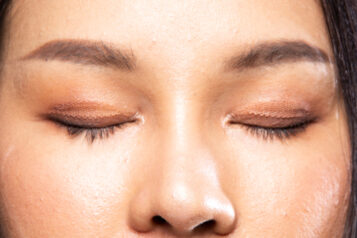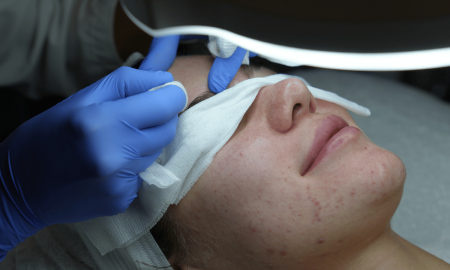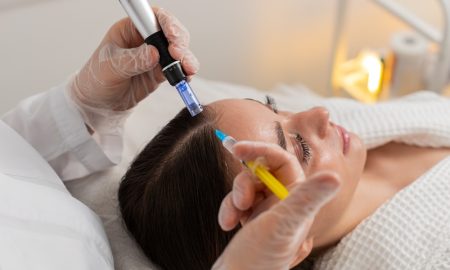







Type "Ozempic face" into Google and the autocomplete finishes the thought before you do: before and after, treatment, filler, plastic surgeon. That pattern isn't random, it's now been measured. A 2026 study analyzing Google Trends data from November 2021 to December 2024 found that search interest in "Ozempic face" rose by roughly 4,600% over the study period, a steeper climb than interest in GLP-1 drugs themselves. Searches for "plastic surgeons Ozempic face" grew right alongside it. People aren't just curious about the term. They're actively looking for evidence of what it looks like, and for someone who can fix it.
 Photo Credit: Shutterstock
"Before and after" is doing a lot of work in that query. It signals that most searchers aren't looking for a definition, they already know roughly what Ozempic face means. They're looking for visual proof: real examples of hollowed cheeks, sagging jawlines, and sunken temples following rapid weight loss, and equally, examples of what correction looks like once treatment has been done.
That search pattern tracks with a broader shift in who is actually walking into aesthetic practices. Industry survey data from 2025 found that a majority of GLP-1 patients seeking facial treatment had never used cosmetic medicine before. These are patients whose primary relationship to weight loss was medical, not aesthetic, and the appearance changes that followed came as a surprise significant enough to send them looking for photographic proof before they searched for a provider.
Why the Term Exploded When It Did
"Ozempic face" wasn't coined by a marketing team. Dermatologist Dr. Paul Frank is credited with naming the phenomenon in early 2023, describing the gaunt, aged appearance he was seeing in patients who had lost significant weight quickly on GLP-1 medications. The term caught on almost immediately, and the Google Trends data shows why: it arrived at the exact moment public GLP-1 use was accelerating, giving a name to a side effect people were already noticing in themselves and in each other.
The visual nature of the concern is part of what made it so searchable in the first place. Weight loss itself is often framed as a private, gradual process. A changed face is not private. It shows up in every video call, every photo, every mirror, which makes "what does this look like and how common is it" a far more urgent search than it would be for a less visible side effect.
How Celebrity Culture Fueled the Search Boom
A meaningful share of that search volume traces directly back to Hollywood. Since 2023, tabloids, YouTube compilations, and social media accounts have turned "spot the Ozempic face" into a recurring pastime, dissecting red carpet appearances and comparing them frame-by-frame against photos from a few years earlier. Public figures including Demi Moore, Meghan Trainor, Kathy Bates, Jenna Ortega, Margot Robbie, and Kelly Osbourne have all been the subject of widespread speculation, with commentators pointing to sunken cheeks, more defined jawlines, and hollowed under-eyes as evidence of rapid GLP-1-driven weight loss.
Almost none of that speculation is medically confirmed. Some celebrities, including Post Malone and Kylie Jenner, have publicly denied using GLP-1 medications at all, while others, like Meghan Trainor and Kathy Bates, have spoken openly about their own weight-loss medication use without necessarily attributing every visible facial change to it. The gap between public speculation and confirmed medical fact hasn't slowed the conversation down. If anything, it's accelerated it, every award season and red carpet cycle now produces a fresh round of before-and-after comparisons and a corresponding spike in searches trying to confirm what people think they're seeing.
That celebrity-driven attention has real consequences beyond gossip. It's normalized the term for a mainstream audience that may never have encountered it in a clinical context, and it's taught millions of people to scrutinize facial volume changes, their own included, through the same lens tabloids apply to celebrities. For someone newly on a GLP-1 medication, that means the first framework they have for understanding their own face may be a comparison to a red carpet photo rather than anything a physician has told them.
What the Search Volume Doesn't Show
A before-and-after photo compresses a complicated process into two frames, and that compression leaves out most of the useful information. It doesn't show the rate of weight loss, which matters significantly: clinical guidance generally links faster loss to more dramatic facial volume depletion, meaning two people who lose the same amount of weight at different speeds can end up with very different facial outcomes. It doesn't show which treatment, if any, was used to correct the result, or how many sessions and how much time that correction actually took.
It also doesn't show the growing range of correction options behind those after photos. Fat grafting procedures rose roughly 50% in 2024 according to facial plastic surgeon association data, directly attributed to GLP-1-related volume loss, while injectable biostimulators and, more recently, human-tissue-derived fillers are being developed specifically to address this exact concern. The search term treats "Ozempic face" as a single fixed look. In practice, both the problem and the fix vary considerably by patient, weight-loss speed, and treatment approach.
What to Do With That Search Instead of Just Looking at Photos
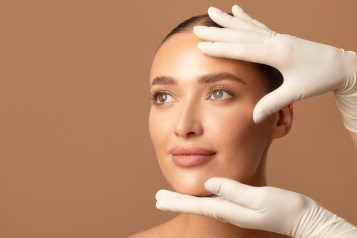
If a before-and-after search is the starting point, the more useful next step is a consultation rather than more scrolling. A board-certified physician can assess where volume has actually been lost on your face specifically, since GLP-1-related depletion tends to concentrate in the cheeks, temples, and under-eye area rather than affecting the whole face uniformly, and recommend an approach based on that assessment rather than a photo that may not resemble your starting point at all.
Rate of weight loss is also worth raising directly in that consultation. Slower, more gradual loss is generally associated with less dramatic facial changes, which means the conversation with a prescribing physician about pacing can matter as much as any downstream cosmetic treatment.
Frequently Asked Questions
How much have searches for "Ozempic face" actually increased? A 2026 study published in the Journal of Cosmetic Dermatology found that Google search interest in "Ozempic face" rose approximately 4,600% between November 2021 and December 2024, outpacing the growth in searches for Ozempic itself.
What does "Ozempic face" actually mean? Ozempic face refers to facial volume loss, sagging skin, and a gaunt or prematurely aged appearance that can follow rapid weight loss on GLP-1 medications like Ozempic, Wegovy, or Mounjaro. The term was coined by dermatologist Dr. Paul Frank in 2023.
Who is most likely to search for "Ozempic face before and after" photos? Search and survey data suggest a significant share of people researching this term are new to cosmetic medicine entirely, often people who started GLP-1 medications for weight loss or diabetes management and were surprised by the facial changes that followed.
Can Ozempic face be prevented? Slower, more gradual weight loss is generally associated with less pronounced facial volume loss than rapid weight loss. Discussing pacing with a prescribing physician is a reasonable preventive step alongside any planned cosmetic treatment.
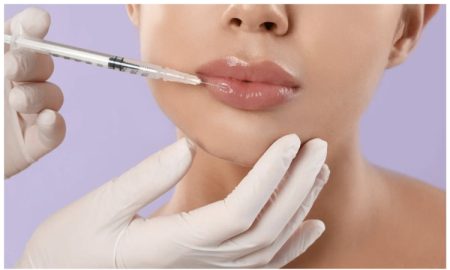
What treatments actually correct Ozempic face? Common approaches include dermal fillers, biostimulator injectables like poly-L-lactic acid or calcium hydroxylapatite, and surgical fat grafting. Fat grafting procedures rose roughly 50% in 2024, with facial plastic surgeons directly attributing much of that increase to GLP-1-related volume loss.
Is Ozempic face the same for everyone who loses weight on GLP-1 drugs? No. The severity and pattern of facial volume loss vary based on how much weight is lost, how quickly it's lost, age, skin quality, and individual fat distribution. A before-and-after photo of one person is not a reliable predictor of another person's results.
Where on the face does GLP-1-related volume loss usually occur? Clinical research has identified the medial cheeks, under-eye area, and temples as the areas most commonly affected by pronounced volume loss in GLP-1 patients.
Should I see a dermatologist or a plastic surgeon for Ozempic face concerns? Either can be a reasonable starting point. Dermatologists and facial plastic surgeons both treat GLP-1-related facial volume loss, and the right choice often depends on whether the treatment being considered is injectable-based or surgical.