








Ask most people what happens at a dental cleaning and you will get a shrug. Someone scrapes your teeth for twenty minutes, you get a new toothbrush, you leave. It is the appointment that gets bumped for a work trip, a busy month, a better-sounding Tuesday.
But "just a cleaning" is one of the most misleading phrases in healthcare. What happens in that chair is a customized medical treatment, a preventive intervention, and when it is done well, a genuine aesthetic upgrade. It is also one of the few things you can do for your appearance that quietly benefits the rest of your body at the same time. Here is what is actually going on, and how to tell whether you have ever really had a thorough one.
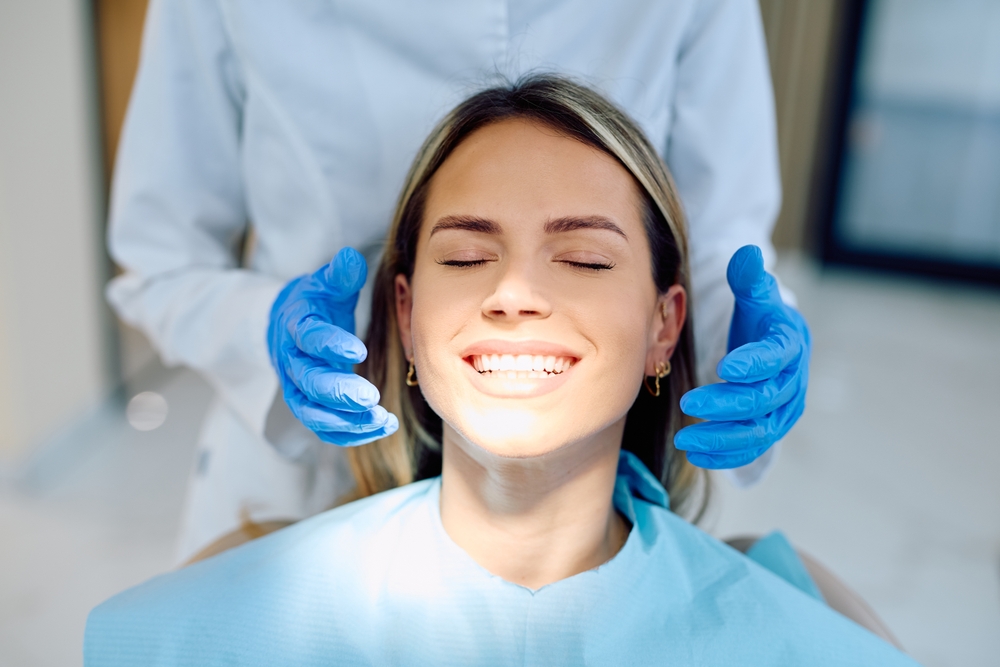 Photo Credit: Shutterstock
No Two Mouths Need the Same Dental Cleaning Schedule
The "twice a year" rule is a useful average and a poor prescription. Frequency should follow your gum health, not the calendar.
Some people do beautifully on one or two dental visits a year. Others need three or four. That is not a sales tactic, it is biology. Bacterial plaque reorganizes itself into a mature, inflammatory colony within a matter of weeks. If your gums have a history of inflammation, bone loss, or deeper pockets where bacteria hide below the gumline, waiting six months hands that colony a long, uninterrupted runway. Shortening the interval to every three or four months is how we keep it from ever getting established.
Your schedule can also shift over time. Pregnancy, diabetes, certain medications that cause dry mouth, orthodontics, smoking, a stressful year with slipped routines, all of these change the math. A well-run practice reassesses your interval rather than defaulting you to the same slot forever. Ask your dental team directly: why this frequency for me? You should get a specific answer about your gums, not a shrug and a generic six-month rebooking.
What Makes a Professional Dental Cleaning Thorough
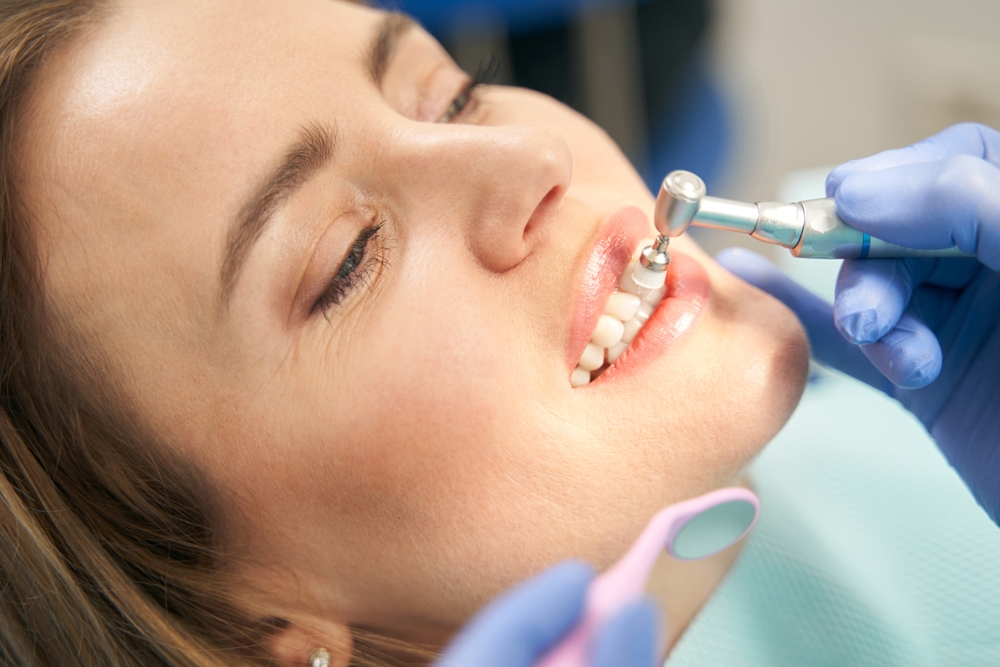 Photo Credit: Shutterstock
This is the part most people never hear. Two practices can bill the identical procedure and deliver dramatically different results. The difference lies in how thoroughly the roots of the teeth are cleaned beneath the gum-line, how carefully the gum tissue itself is treated, and how much time the clinician is actually given with you.
Plaque and hardened deposits that sit just below the gum-line are the real drivers of chronic inflammation. If they are left behind because the visit was rushed, or because only the visible surfaces got attention, your teeth may look polished while your gums stay quietly irritated. Over years, that low-grade inflammation is what erodes the bone supporting your teeth. It rarely hurts. That is exactly why it is so easy to miss.
Signs your gums are not fully healed:
- Persistent bad breath or a bad taste
- Gums that look puffy, red, or rolled rather than firm and pink
- Tenderness or sensitivity that lingers
- Being told you are "fine" year after year while these symptoms continue
- Bleeding when you brush or floss: common, but never normal
At Empire Dental Aesthetics, we hear a version of the same sentence constantly: I have never had a cleaning like that before. It is flattering, but it is also a little concerning, because it means a lot of people have gone a long time without one.
How Modern Dental Cleaning Technology Has Changed the Experience
If your mental image of a dental cleaning involves a metal hook, a lot of scraping, and a jaw clenched against the headrest, that image is dated.
Modern instrumentation works on a different principle. Rather than mechanically scratching deposits off enamel, today's ultrasonic and air-driven systems use gentle vibration and a warm water spray to lift plaque and biofilm away from tooth surfaces and flush it out from around the roots and gum tissue. The debris and the irritants get rinsed out rather than pushed around.
The practical result is less scraping, less pressure, less of that nails-on-a-chalkboard sensation, and a considerably more thorough clean, particularly in the places that matter most and are hardest to reach. Most patients describe it as soothing. Some fall asleep.
The Cosmetic Benefits of a Professional Dental Cleaning
There is a reason patients book dental cleanings before weddings, milestone birthdays, reunions, photo shoots, and first dates. A thorough cleaning removes the surface staining that coffee, tea, red wine, and time deposit on enamel. That is not bleaching, and it will not take you several shades lighter, but it restores your teeth to their own natural brightness, which is frequently lighter than people realize. Teeth look cleaner and reflect light better. Gums shift from puffy and red toward firm and pink, which makes the whole smile look healthier in a way that is hard to name but easy to notice.
Then there is breath. Chronic bad breath is very often a bacterial problem living below the gumline, not a mouthwash problem. Clean out the source and the effect lasts.
And the part that shows up in photographs: people who feel confident about their mouth smile differently. Wider, more readily, without the reflexive hand or the closed-lip version. Think of it as a facial for the one feature you cannot take off.
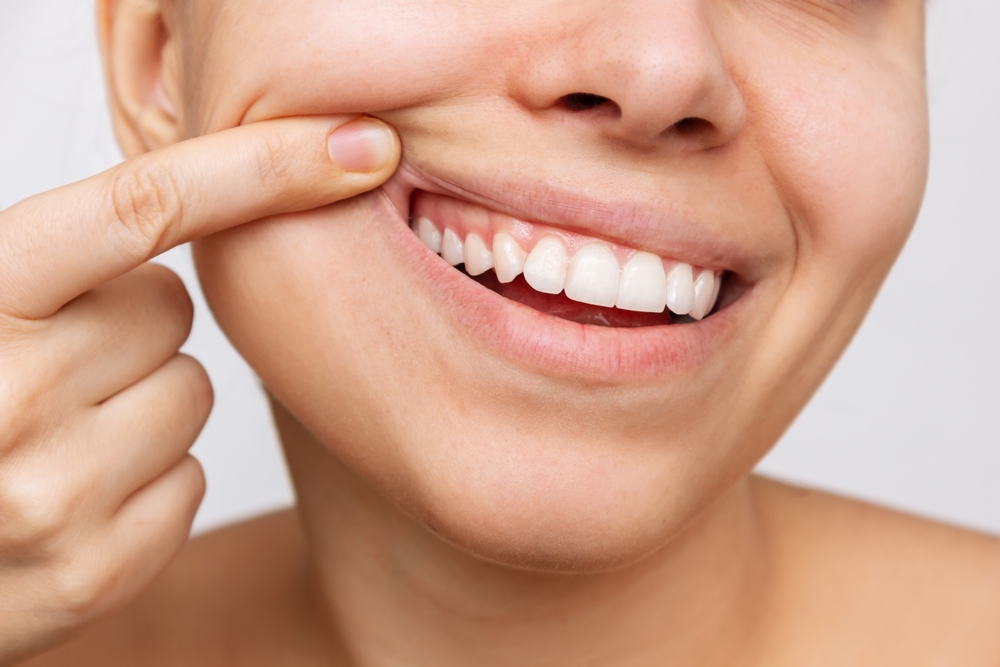 Photo Credit: Shutterstock
The Connection Between Gum Health and Your Overall Health
Your gums are not a sealed compartment. Inflamed, bleeding gum tissue is an open interface between the bacteria in your mouth and your bloodstream, and researchers have documented associations between gum disease and cardiovascular disease, diabetes, rheumatoid arthritis, respiratory infections, and complications in pregnancy.
What is well established is this: chronic gum disease is a genuine source of chronic inflammation, and chronic inflammation is not something you want circulating in your body year after year. Treating your gums lowers your inflammatory burden. That is a concrete, worthwhile thing to do, and it is one of the easiest sources of chronic inflammation to actually eliminate. Two visits and better home care can resolve what medication cannot.
The relationship also runs both ways, which is why your dental visit is a legitimate health checkpoint. Gum disease makes blood sugar harder to control in people with diabetes, and poorly controlled diabetes makes gum disease worse. Your mouth is often where a systemic issue shows up first.
Why Summer Is the Right Time to Book Your Dental Appointment
Summer looks like the easy season. For your teeth, it is often the opposite. Routines get loose. Iced coffee lasts three hours. Rosé on a rooftop, ice cream, a wedding weekend where you graze from four in the afternoon until midnight. Every time you sip or snack, your mouth turns acidic and stays that way for roughly twenty minutes. Grazing all afternoon means your enamel never gets a break.
Your summer dental health checklist:
- Pack the floss first, whatever gets packed last gets forgotten
- Rinse with water after sports drinks, iced coffee, wine, or citrus
- Wait 30 minutes to brush after anything acidic
- Cluster your snacking: three distinct eating windows are far gentler than continuous grazing
- Hydrate for your saliva, not just your body
- Chew sugar-free gum after meals you cannot brush after
Book Your Summer Dental Appointment at Empire Dental Aesthetics
Schedules loosen in summer. There is finally a little room. It is the season people get to the things they have been deferring for a year, and it is the right moment to ask a better question than "am I due?"
Ask instead: am I actually getting a thorough cleaning? Ask what your gum measurements are and whether they have changed since last time. Ask why your interval is what it is. Ask what is happening below the gumline, not just on the surfaces you can see.
You will walk out with cleaner, brighter teeth, fresher breath, and gums that have actually been treated rather than polished around. You will know where you stand before the fall calendar fills back up.
It was never just a cleaning.
Frequently Asked Questions About Professional Dental Cleanings
How often should I get a professional dental cleaning? Most patients benefit from a dental cleaning every six months, but frequency should be based on your individual gum health. Patients with a history of gum disease, inflammation, or bone loss may need cleanings every three to four months. Ask your dentist specifically why they are recommending your current interval.
What is the difference between a regular cleaning and a deep cleaning? A regular dental cleaning, also called a prophylaxis, removes plaque and tartar from above and just below the gumline. A deep cleaning, also called scaling and root planing, cleans the root surfaces below the gumline and is recommended for patients with active gum disease or deeper periodontal pockets. Dr. Almunajed at Empire Dental Aesthetics will assess which is appropriate for you at your consultation.
Does a dental cleaning whiten your teeth? A professional dental cleaning removes surface staining from coffee, tea, red wine, and other foods, restoring your teeth to their natural brightness. It is not the same as teeth whitening, which uses peroxide to lighten enamel. For patients who want both, Dr. Husam Almunajed at Empire Dental Aesthetics offers professional whitening treatments in conjunction with a cleaning for the most complete smile refresh available.
Is bleeding during a dental cleaning normal? Bleeding during a dental cleaning is common but not normal. It is a sign of gum inflammation and should be discussed with your dentist. With consistent professional cleanings and improved home care, bleeding typically resolves within a few weeks.
How do I find a cosmetic dentist in New York City for a dental cleaning? Dr. Husam Almunajed is a cosmetic and restorative dentist and the founder of Empire Dental Aesthetics at 16 East 52nd Street in Midtown Manhattan. He specializes in cosmetic dentistry, preventative care, and comprehensive dental health. For appointments, visit empiredentalaesthetics.com or call 212.393.4650.
Dr. Husam Almunajed, DDS is a cosmetic and restorative dentist and the founder of Empire Dental Aesthetics at 16 East 52nd Street, Midtown Manhattan, New York City. He is a Clinical Professor at NYU School of Dentistry and specializes in porcelain veneers, teeth whitening, dental implants, and Invisalign. For consultations, visit empiredentalaesthetics.com or call 212.393.4650.
For more information, visit Dr. Husam Almunajed's social media: