






 Photo Credit: Adobe Firely
Red Light Therapy, Explained Through a Clinical Lens
Red light therapy has quickly moved from a niche, in-office treatment to a widely accessible at-home option, but its popularity often outpaces a clear understanding of how it actually works. At its core, red light therapy is a form of photobiomodulation, typically using wavelengths in the 630 to 660 nanometer range. These wavelengths penetrate the skin and act on mitochondrial chromophores, particularly cytochrome c oxidase, to enhance cellular energy production and regulate oxidative stress. The downstream effect is not just superficial improvement, but measurable biological changes that support healthier, more resilient skin.
These cellular shifts translate into increased collagen synthesis, particularly type I collagen, alongside reduced activity of matrix metalloproteinases, the enzymes responsible for breaking down the skin’s structural framework. In parallel, red light therapy supports fibroblast activity and helps modulate inflammatory signaling. The result is a treatment that works at the level of the dermis, not just the surface, making it a compelling option for patients looking to improve skin quality in a meaningful, cumulative way.
What the Evidence Shows for Skin Rejuvenation
Clinical data consistently supports red light therapy as an effective tool for improving wrinkles, texture, and overall skin quality. Studies evaluating red light as a standalone treatment demonstrate increased collagen density and visible improvements in fine lines and skin smoothness, with histologic confirmation of dermal remodeling. When compared to other wavelengths, such as amber light, red light has shown slightly superior outcomes, particularly in delicate areas like the periorbital region.
Even more notable are findings that combine red light with near-infrared wavelengths, typically around 830 nanometers. This combination appears to amplify results, improving not just wrinkles but also skin firmness and elasticity. While red light alone remains effective, the addition of near-infrared light may enhance structural support within the skin, making it a valuable consideration in more comprehensive treatment plans.
A Role in Sensitive and Reactive Skin Conditions
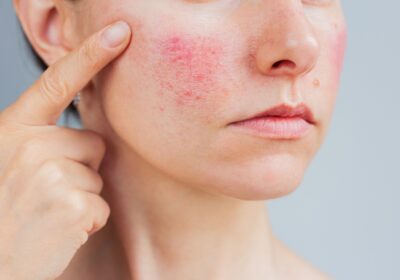
Beyond anti-aging, red light therapy has shown promise in managing inflammatory skin conditions, particularly rosacea. Its mechanism in this context centers on reducing pro-inflammatory cytokines, improving microcirculation, and calming neural hypersensitivity that contributes to flushing and redness. While large-scale studies are more limited in this area, smaller trials and clinical observations suggest improvements in erythema, reduced flushing frequency, and increased overall skin comfort.
One of the most important advantages of red light therapy is its tolerability. Because it is non-thermal and non-invasive, it is generally well-suited for sensitive skin types, including those prone to rosacea flares. It can also be used as an adjunct to other treatments, although vascular components may still require modalities such as laser or light-based therapies for optimal results.
Safety, Limitations, and a Thoughtful Approach
Red light therapy is widely regarded as safe, with minimal side effects, most commonly mild, transient redness or warmth. However, it is not entirely without limitations. Variability in device quality, inconsistent treatment protocols, and a lack of large-scale studies in certain indications, particularly rosacea, mean that outcomes can vary. Patient selection also matters. Individuals with photosensitive conditions, certain pigmentary disorders, or underlying diagnoses that mimic rosacea may not be ideal candidates, and should be evaluated carefully.
Ultimately, red light therapy is most effective when used as part of a broader, well-designed treatment strategy. Consistency is key, with most evidence supporting use several times per week over a period of weeks, followed by maintenance. Whether incorporated in-office or through FDA-cleared at-home devices like the Omnilux red light masks, the value of red light therapy lies in its ability to deliver steady, biologically driven improvements over time.
A Modern Addition to Long-Term Skin Health
Red light therapy is not a quick fix, but it is a scientifically grounded, low-risk option that aligns well with a long-term approach to skin health. By supporting collagen production, reducing inflammation, and improving overall skin function, it offers a versatile solution for both rejuvenation and maintenance. When used thoughtfully and consistently, it becomes less about chasing trends and more about building healthier skin from within.
For more information, visit Victoria A. Cirillo-Hyland, MD, FAAD's social media: