Century-Old and Still the Hottest Check-In: America’s 25 Most Glamorous Historic Hotels
From the reborn Waldorf Astoria to the Pink Palace, these are the 25 most glamorous historic hotels in America worth booking now

Twenty-five hotels, most of them a century old or close to it, and not one has lost its nerve. The Waldorf Astoria is back on Park Avenue after an eight-year, $2-billion-plus restoration, The Plaza still pours tea in the Palm Court, The Breakers is still owned by Henry Flagler’s descendants, The Beverly Hills Hotel is still (thank God) pink, and Hotel del Coronado just finished a $550 million-plus revival of its 1888 Victorian building. Add a car-free island where you still dress for dinner, a West Virginia resort receiving guests since 1778 and a Washington hotel that arguably helped invent Washington, and you have the most glamorous historic hotels in America.
Full disclosure on my bias. I love an infinity pool as much as the next jet-lagged editor, but no minimalist villa has ever made me feel the way a marble lobby with an orchestra warming up does. Long before luxury meant plunge pools and oak-and-linen restraint, America’s grand hotels sold something rarer: liveried service, painted ceilings and the thrilling sense that simply arriving was an event.
The best of them refused to become monuments to themselves. Some were painstakingly restored, others reimagined almost entirely, all of them kept the architecture, rituals and mystique that made them famous. From Manhattan’s society hotels and Palm Beach’s Gilded Age playground to a pink palace in Beverly Hills and a former boarding house for immigrant factory workers in Wisconsin (stay with me), here’s where to check in.
Waldorf Astoria New York — New York City
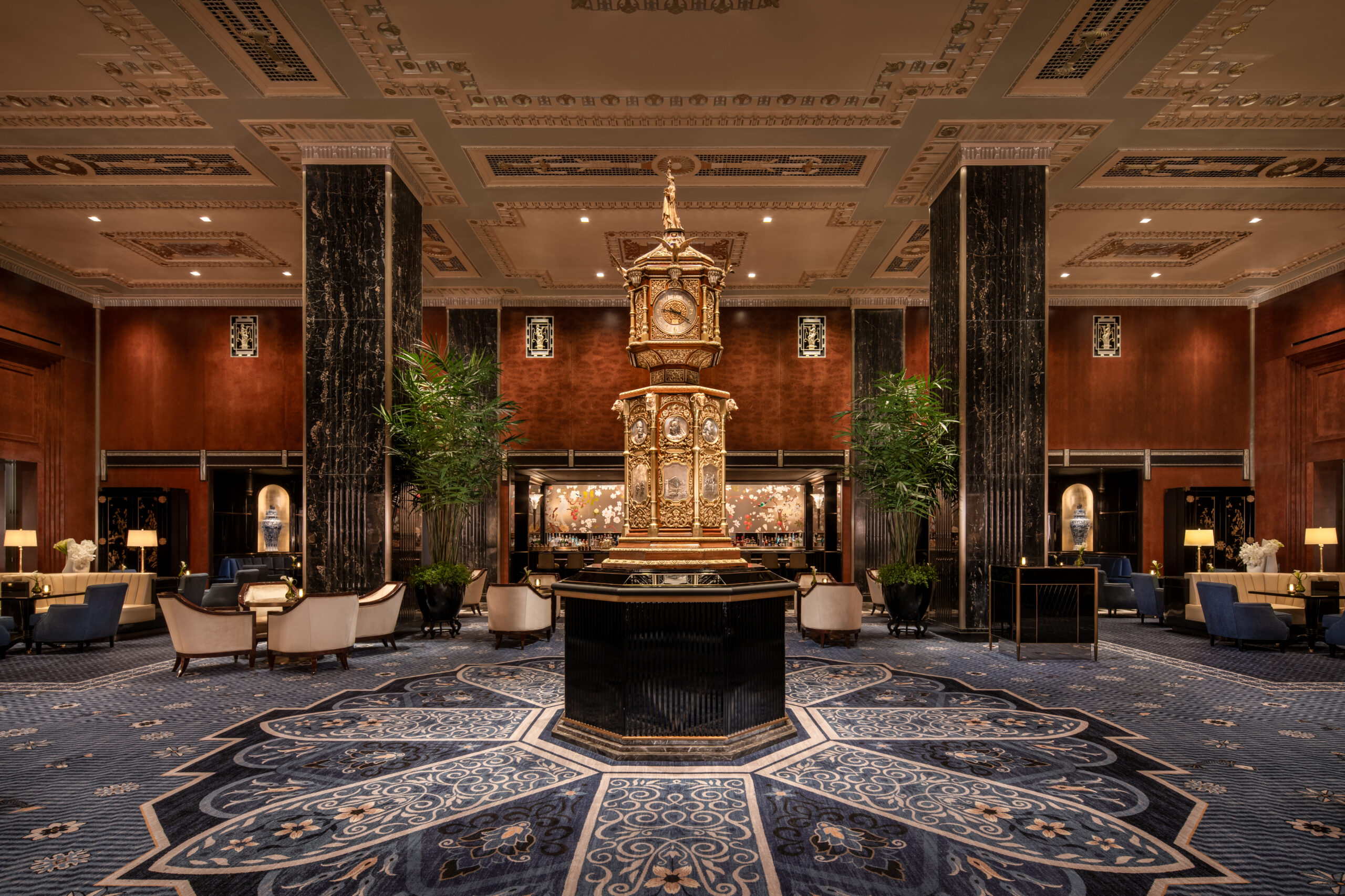
Waldorf Astoria New York reopened on Park Avenue in 2025 after an eight-year, $2-billion-plus transformation that shrank roughly 1,400 rooms to 375 rooms and suites. Peacock Alley is back, the Grand Ballroom is back and the Art Deco bones that hosted presidents, royalty and every species of New York power broker since 1931 have been scrubbed to a shine. Crucially, nobody tried to freeze it in amber: the restoration pairs rediscovered decorative detail with the space and privacy of a modern residence. (Our full take on the reopening lives here.)
Haute Living Verdict: Not a nostalgia act. A second act.
The Vinoy Resort & Golf Club — St. Petersburg, Florida
The Vinoy opened on New Year’s Eve 1925, its pink Mediterranean Revival façade instantly signaling to wintering socialites, athletes and presidents that St. Petersburg had arrived. It closed in 1974, sat empty for years and was painstakingly restored before reopening in 1992; a more recent transformation, now under Marriott’s Autograph Collection, refreshed it again without touching the color or the Old Florida spirit. History tours and high tea bring ceremony back to a city in the middle of its own cultural renaissance.
Haute Living Verdict: Proof that pink is a load-bearing color in Florida.
The Carlyle, A Rosewood Hotel — New York City
The Carlyle opened on the Upper East Side in 1930 and built its reputation on the opposite of The Plaza’s: discretion. It’s where the most important person in the room never announces it, and where long-term residents have always outnumbered the curious. Bemelmans Bar, wrapped in Ludwig Bemelmans’ whimsical Central Park murals, is the best room in the city for a martini, and Café Carlyle keeps the 1930s supper club alive. A multiyear refresh polished the rooms without sanding off their prewar, residential character.
Haute Living Verdict: Old money whispers. The Carlyle taught it how.
The Breakers Palm Beach — Palm Beach, Florida
Henry Flagler first opened The Breakers in 1896; after two fires, the present Italian Renaissance-inspired building arrived in 1926, cribbing its moves from the great palazzi of Europe. Loggias, painted ceilings, fountains and a palm-framed Atlantic frontage deliver Gilded Age scale, while steady reinvestment keeps it from feeling trapped there. It’s still owned by Flagler’s descendants, a continuity almost unheard of in American hospitality, and it remains the answer to where a first-timer should stay (see our Palm Beach hotel guide).
Haute Living Verdict: Less a hotel than Palm Beach society rendered in stone.
Hotel del Coronado — Coronado, California
Hotel del Coronado opened in 1888 as one of the country’s first destination resorts, its red turrets rising off the Pacific like a Victorian fever dream. Royalty and presidents came; so did Billy Wilder, who made it a principal setting for Some Like It Hot. A six-year, $550 million-plus restoration wrapped in 2025, reviving the original building, the Crown Room and the courtyard while adding new restaurants and rooms.
Haute Living Verdict: The architecture always wrote checks the interiors couldn’t cash. Now they can.
Photo Credit: The Dorchester Collection
The Beverly Hills Hotel — Beverly Hills, California
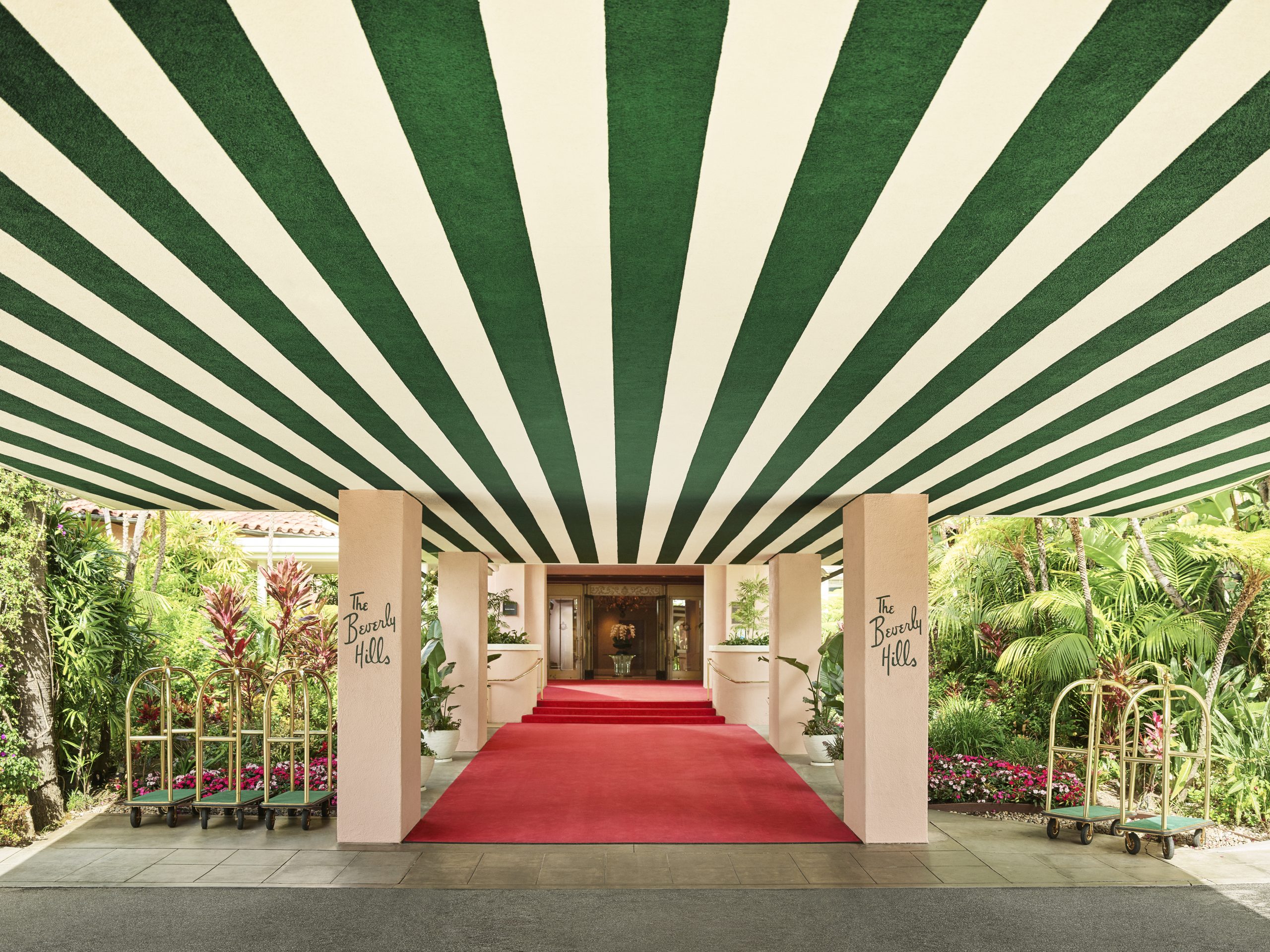
The Beverly Hills Hotel opened in 1912, two years before the city around it was even incorporated, which tells you who was really in charge. Paul R. Williams shaped its midcentury identity, and the salmon façade, Martinique banana-leaf wallpaper and green-and-white awnings are now as recognizable as the Hollywood sign. Elizabeth Taylor, Marilyn Monroe and Howard Hughes all hid out in the bungalows (the hotel will still let you live like Marilyn), and the Polo Lounge still hosts deals over chopped salads and soufflés.
Haute Living Verdict: The rare celebrity hotel that’s glamorous, not merely famous.
Fairmont San Francisco — San Francisco
Fairmont San Francisco was about to open atop Nob Hill when the 1906 earthquake hit; Julia Morgan helped bring it back, and its 1907 debut became a symbol of the city’s recovery. Presidents and royalty filled its Beaux-Arts rooms, and the Venetian Room was one of the West Coast’s great midcentury stages. Then there’s the Tonga Room, a tiki fantasia built around a former indoor pool, complete with scheduled tropical rainstorms and a band floating on a barge. I have no notes.
Haute Living Verdict: Grand architecture upstairs, tropical thunder below. Perfect.
Palace Hotel — San Francisco
When the Palace Hotel opened in 1875 it was billed as the largest, most luxurious hotel in the world; fire after the 1906 earthquake gutted it, and it reopened in 1909. Its showpiece is the Garden Court, a glass-roofed room of marble columns and Austrian crystal chandeliers where breakfast or afternoon tea under the stained-glass dome is one of the loveliest hours in the city. The Maxfield Parrish painting behind the Pied Piper Bar adds a final flourish of history.
Haute Living Verdict: Built to astonish. Still does.
Ojai Valley Inn — Ojai, California
Ojai Valley Inn opened in 1923 as a Spanish Colonial country club, and Hollywood quickly discovered it as the ideal distance from Los Angeles: far enough to disappear, close enough to be back for Monday’s meeting. It now sprawls across 220 acres of gardens, golf, pools, art programming and a vast spa, with Wallace Neff’s hand still visible at its historic core. Private residences like Casa Elar keep it firmly contemporary, and Ojai’s famous pink hour does the rest of the styling for free.
Haute Living Verdict: Come for the spa, stay for the light.
The Ahwahnee — Yosemite National Park, California
The Ahwahnee was completed in 1927 to lure well-heeled travelers into Yosemite Valley, and it does so with a distinctly American kind of grandeur. Granite, timber, Native American design motifs and Art Deco touches combine in public rooms scaled to compete with the cliffs outside, which is an ambitious brief (they almost pull it off). Presidents, royalty and film stars have stayed, but nobody upstages Half Dome.
Haute Living Verdict: The only hotel where sitting by a window counts as an itinerary.
Willard InterContinental — Washington, D.C.
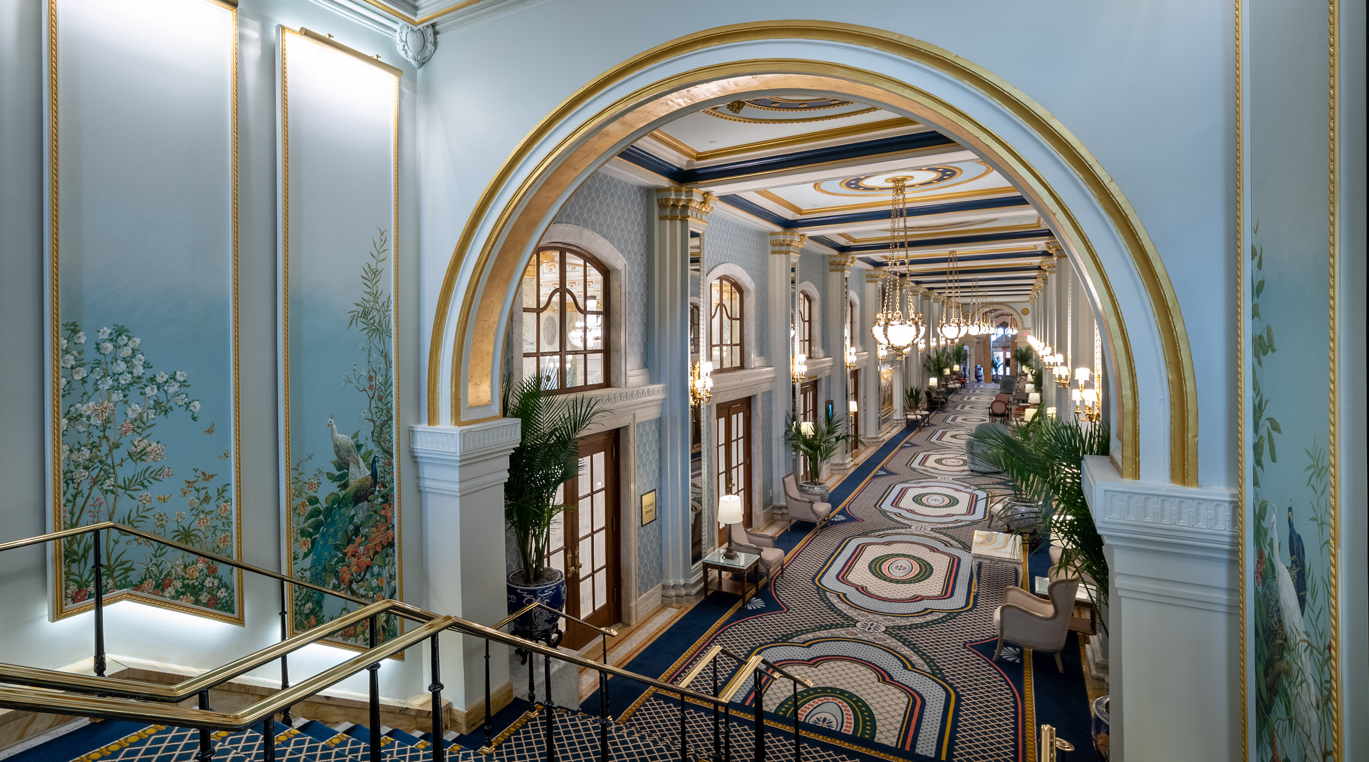
The Willard’s history stretches to 1818, and its present Beaux-Arts building opened on Pennsylvania Avenue in 1901, squarely between the White House and the Capitol. That address made it the natural stage for diplomacy, backroom negotiation and presidential arrivals; Nathaniel Hawthorne called it the true center of Washington. The Round Robin Bar, Peacock Alley and formal afternoon tea keep the rituals alive, and the corridors still hum with proximity to power.
Haute Living Verdict: Plenty of D.C. hotels have witnessed history. This one helped write it.
The Greenbrier — White Sulphur Springs, West Virginia
Guests have traveled to White Sulphur Springs to take the waters since 1778, but it was Dorothy Draper who gave The Greenbrier its identity after World War II, when the property had served as an internment site and military hospital. Her black-and-white marble floors, outsize florals and fearless color, carried on by protégé Carleton Varney, ensured it never slid into beige anonymity. Afternoon tea, formal dinners, the mineral spa and a once-secret congressional bunker all belong to the story.
Haute Living Verdict: The purest shot of American maximalism ever poured into a hotel. Drink up.
The Broadmoor — Colorado Springs, Colorado
Spencer and Julie Penrose opened The Broadmoor in 1918, dropping an Italian Renaissance-inspired resort, pink stucco and all, at the foot of the Rockies. The ornamental lake, formal gardens and European art collection brought a cosmopolitan polish nobody expected in the American West. Dress codes and championship golf keep tradition front and center, while fly-fishing, falconry and mountain retreats keep it from getting precious.
Haute Living Verdict: A European palace resort that got 5,000 acres to play in. Lucky palace.
Grand Hotel — Mackinac Island, Michigan
Grand Hotel opened in 1887 on Mackinac Island, where cars are banned, so you still arrive by ferry and horse-drawn carriage. It preserves rituals that have vanished almost everywhere else: afternoon tea in the parlor, dressing for dinner, dancing to a live orchestra and long evenings on what it bills as the world’s longest porch. The interiors are a riot of color and pattern (restraint was never invited).
Haute Living Verdict: It doesn’t reference another era of travel. It makes you RSVP to it.
The American Club — Kohler, Wisconsin
The American Club was built in 1918 as a Tudor Revival residence for immigrant workers at Kohler, and it became a luxury resort in the early 1980s without scrubbing that story off its brick walls. Today it anchors a destination famous for championship golf, serious dining, elaborate gardens and a near-religious devotion to bathing (it’s Kohler; what did you expect?). Historic photographs throughout connect the polished present to its working-class past.
Haute Living Verdict: The most thoughtful reinvention on this list. And the best tubs.
The Hermitage Hotel — Nashville
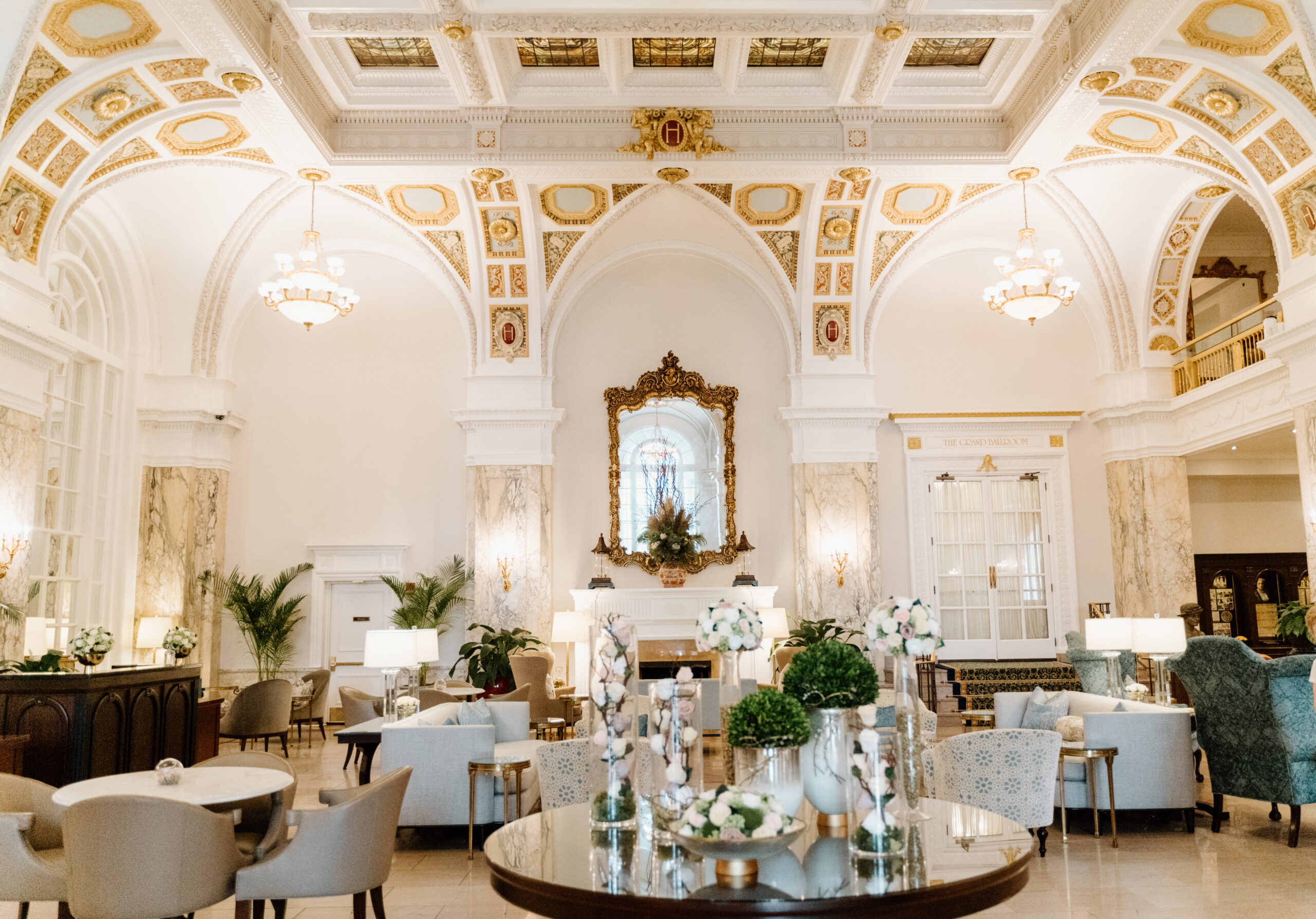
The Hermitage opened in 1910 as Nashville’s first million-dollar hotel, all painted-glass ceiling, marble columns and Beaux-Arts swagger. In 1920 it became ground zero in the fight to ratify the 19th Amendment, with suffragists and their opponents camped out under the same roof. A recent restoration added Drusie & Darr from Jean-Georges Vongerichten, and yes, the famously lavish Art Deco men’s room is still a legitimate tourist attraction.
Haute Living Verdict: Where women won the vote and the men’s room won the internet.
Chatham Bars Inn — Chatham, Massachusetts
Chatham Bars Inn opened in 1914 as a hunting lodge for wealthy Bostonians, with steam heat and saltwater baths that counted as outrageous luxury on Cape Cod at the time. It has since grown into a polished waterfront retreat with cottages, a private beach, boats, a spa and a working farm that feeds its restaurants. The shingles and the Atlantic say old New England; the linens say otherwise.
Haute Living Verdict: The fantasy Cape Cod summer, with a rosé budget.
The Newbury Boston — Boston
The building overlooking Boston’s Public Garden opened in 1927 as one of America’s earliest Ritz-Carltons, later ran as the Taj Boston and was reborn as The Newbury. Champalimaud Design gave the rooms a residential polish, with some suites keeping their wood-burning fireplaces. Downstairs, The Street Bar plays private club; upstairs, Major Food Group’s Contessa holds court in a glass rooftop over Back Bay.
Haute Living Verdict: A Boston Brahmin that finally learned to have fun.
The Jefferson Hotel — Richmond, Virginia
Tobacco magnate Lewis Ginter opened The Jefferson in 1895 as his grand gift to Richmond, and it was designed to overwhelm. A monumental staircase, marble columns and a life-size statue of Thomas Jefferson presiding over the lobby make the point loudly. Fire, closures and changing fortunes interrupted the story, but restorations returned it to form, with rooms now softened by a more residential touch.
Haute Living Verdict: Few Southern hotels make a louder first impression. Fewer deserve to.
The Historic Cavalier Hotel and Beach Club — Virginia Beach, Virginia
The Cavalier opened in 1927 on one of Virginia Beach’s highest points and is credited with putting the town on the national social map. Ten presidents came through, as did Frank Sinatra, Elizabeth Taylor, Bing Crosby and Muhammad Ali. A four-year restoration brought the 85-room hotel’s terrazzo floors, painted ceilings and loggias back, and the modern incarnation adds a private Beach Club, a spa and an on-site bourbon distillery (priorities, correctly ordered).
Haute Living Verdict: A private Roaring Twenties club that happens to rent rooms.
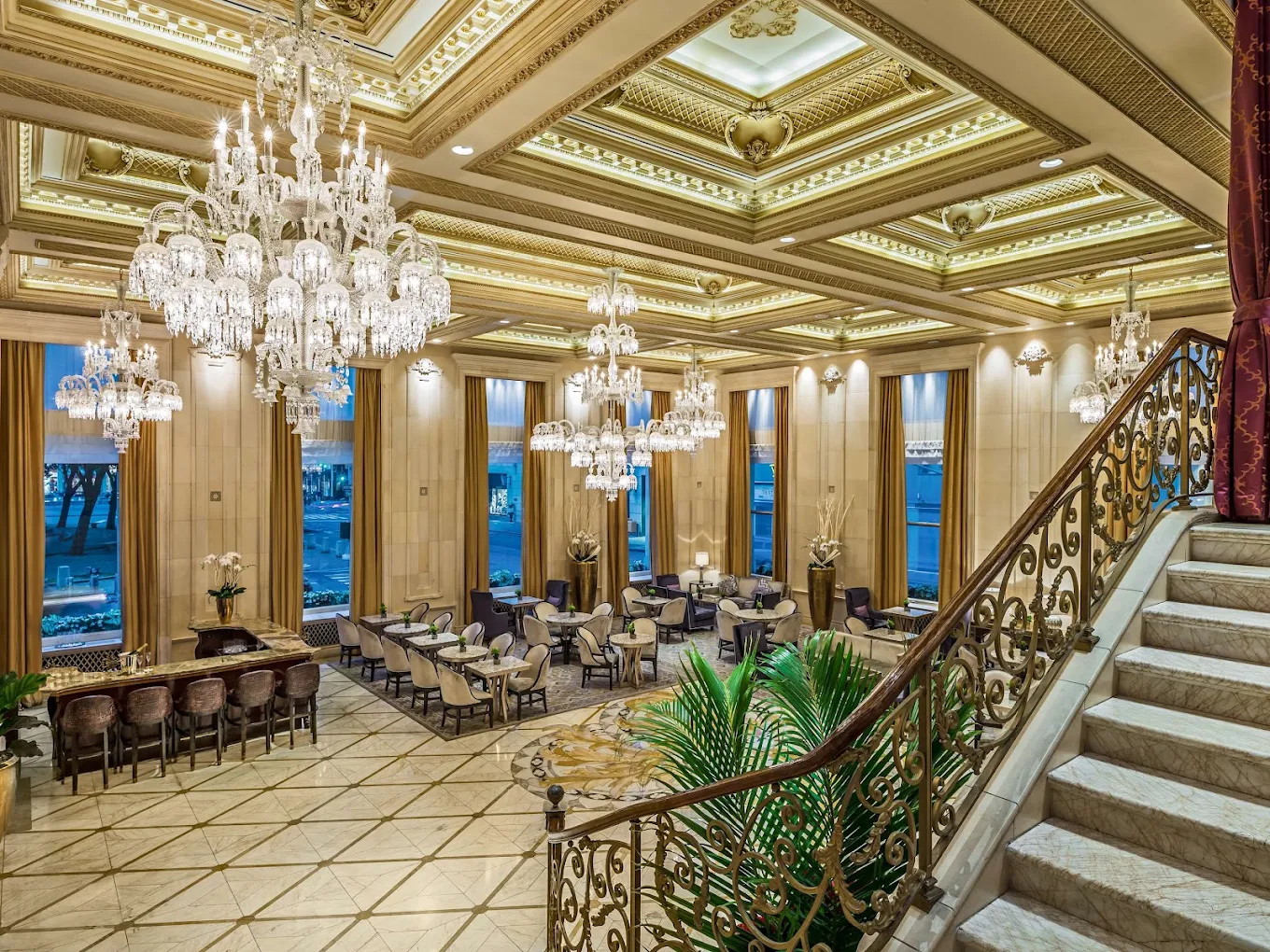
The Plaza — New York City
The Plaza has held the corner of Fifth Avenue and Central Park South since 1907, and no hotel on earth is more fused with the fantasy of New York. Truman Capote threw his Black and White Ball here; Eloise ran it like a small, bossy monarch and convinced generations of children it belonged to them. Tea in The Palm Court remains a Manhattan sacrament, and the rooms are unapologetically ornate (marble, mosaic, gold-plated fixtures, zero apologies for any of it).
Haute Living Verdict: Checking in feels like walking onto a set you’ve already seen a hundred times, which is exactly the point.
The Biltmore Hotel — Coral Gables, Florida
The Biltmore opened in January 1926 as the centerpiece of George Merrick’s Coral Gables, designed by Schultze & Weaver (the same firm behind the Waldorf’s Park Avenue building). Its soaring tower, arcaded loggias and famously enormous pool captured the full extravagance of Florida’s first land boom. It later served as a military hospital and veterans’ facility before returning to hospitality, where its ballrooms, golf and palm-lined grounds now hold the line.
Haute Living Verdict: Jazz Age Miami, before the velvet ropes and glass towers ruined everything.
Hotel Monteleone — New Orleans
Sicilian immigrant Antonio Monteleone bought a small hotel on Royal Street in 1886, and five generations later the family still runs it, an astonishing run in the heart of the French Quarter. Hemingway, Tennessee Williams, Faulkner and Capote all belong to its literary lore. The Carousel Bar, revolving slowly under its whimsical canopy, is the most famous spot in town for a drink (order a Vieux Carré, which was invented here, and try not to get dizzy).
Haute Living Verdict: Elegant without being self-serious. So, New Orleans.
The Pfister Hotel — Milwaukee
The Pfister opened in 1893 promising Milwaukee a new level of luxury, including then-radical electric lighting and individual thermostats. Its Romanesque Revival bones and gilded public rooms broadcast the city’s industrial confidence. It also holds a remarkable collection of Victorian art hung throughout the property rather than cordoned off in a gallery, and an artist-in-residence program keeps the building talking to the present.
Haute Living Verdict: The kind of lobby that makes walking to the elevator feel like a procession.
The Cloister at Sea Island — Sea Island, Georgia
Automobile magnate Howard Coffin opened The Cloister in 1928, hiring Palm Beach architect Addison Mizner to give it Mediterranean Revival bones. It became a multigenerational retreat for prominent families chasing privacy, sport and Southern hospitality. The present Cloister was re-created in 2006 with original materials reused and beloved rooms, including the Spanish Lounge, rebuilt with care, while the marshes and private-island setting keep the outside world politely at bay.
Haute Living Verdict: Southern discretion, perfected. Don’t tell anyone I told you.
Read More
Planning the grand tour? Start with more from Haute Living:
- Waldorf Astoria New York Returns After an Eight-Year Restoration
- Where to Stay in Palm Beach in 2026
- The Best Luxury Hotels in Los Angeles Right Now
- The Hautest Los Angeles Hotels By Neighborhood
through Haute Black.
Haute Living access. Two decades inside the world’s best hotels.
Virtuoso partner. Upgrades & VIP arrival at 1,200+ properties.
One advisor. Who knows you by name.
Frequently Asked Questions
What is the oldest hotel on this list?
The Greenbrier in West Virginia has hosted guests taking the mineral waters since 1778. Among the hotels that still occupy their original buildings, Grand Hotel on Mackinac Island (1887) and Hotel del Coronado (1888) are the elders.
Which historic American hotels have recently reopened after restorations?
Waldorf Astoria New York reopened in 2025 with 375 rooms and suites, down from roughly 1,400. Hotel del Coronado completed a six-year, $550 million-plus restoration in 2025, and The Cavalier in Virginia Beach reopened after a four-year restoration.
Where can you still dress for dinner at a historic American hotel?
Grand Hotel on Mackinac Island keeps evening dress, a live orchestra and afternoon tea in the parlor. The Broadmoor and The Greenbrier also preserve formal dining rituals.
Which historic hotel has the most famous bar?
Bemelmans Bar at The Carlyle, with Ludwig Bemelmans' Central Park murals, and the revolving Carousel Bar at Hotel Monteleone are the two most celebrated. The Polo Lounge at The Beverly Hills Hotel remains Hollywood's favorite deal-making room.
Latest from Haute Living

The Fendi Spring/Summer 2027 Show Was Quintessentially Maria Grazia Chiuri

Meet Miami Business Club: Building Miami’s Next Generation of Business Community
Inside Seia’s Museum-Grade Hospitality