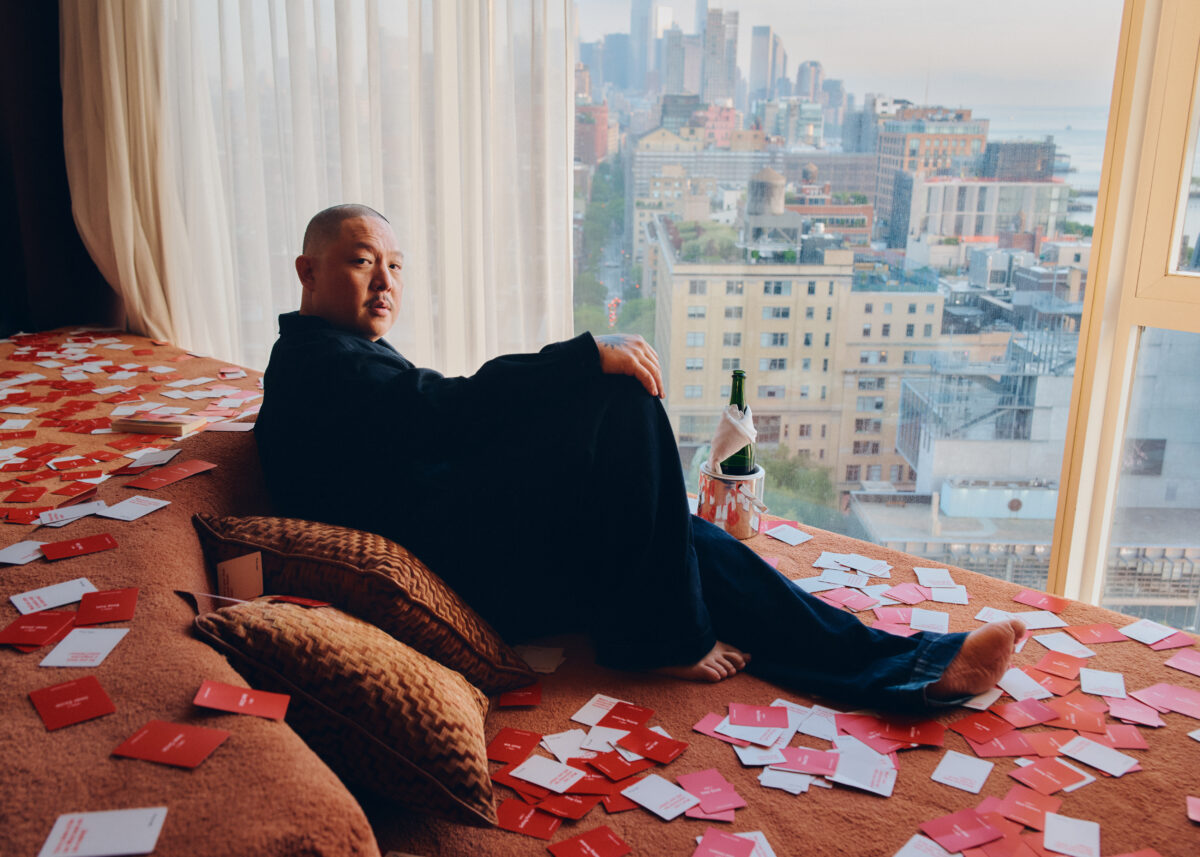
Eddie Huang Has Nothing Left to Hide
Eddie Huang on Come Undone, his debut novel about love, intimacy, and the five days it took to finally write the truth.

Eddie Huang rewrote his debut novel in five days. Not revised and not edited, he rewrote it. He asked his wife for five days where nothing was expected of him, explained it as a trade, sat down, and followed what he calls emotional truth. The result is Come Undone, a novel about a man named Hubie who moves through the world as if he owns it, loves everyone, lets no one in, and eventually gets caught by exactly the thing he has been running from his whole life.
It is the most honest thing Huang has ever made. Which is saying something for a man who built a career on radical transparency.
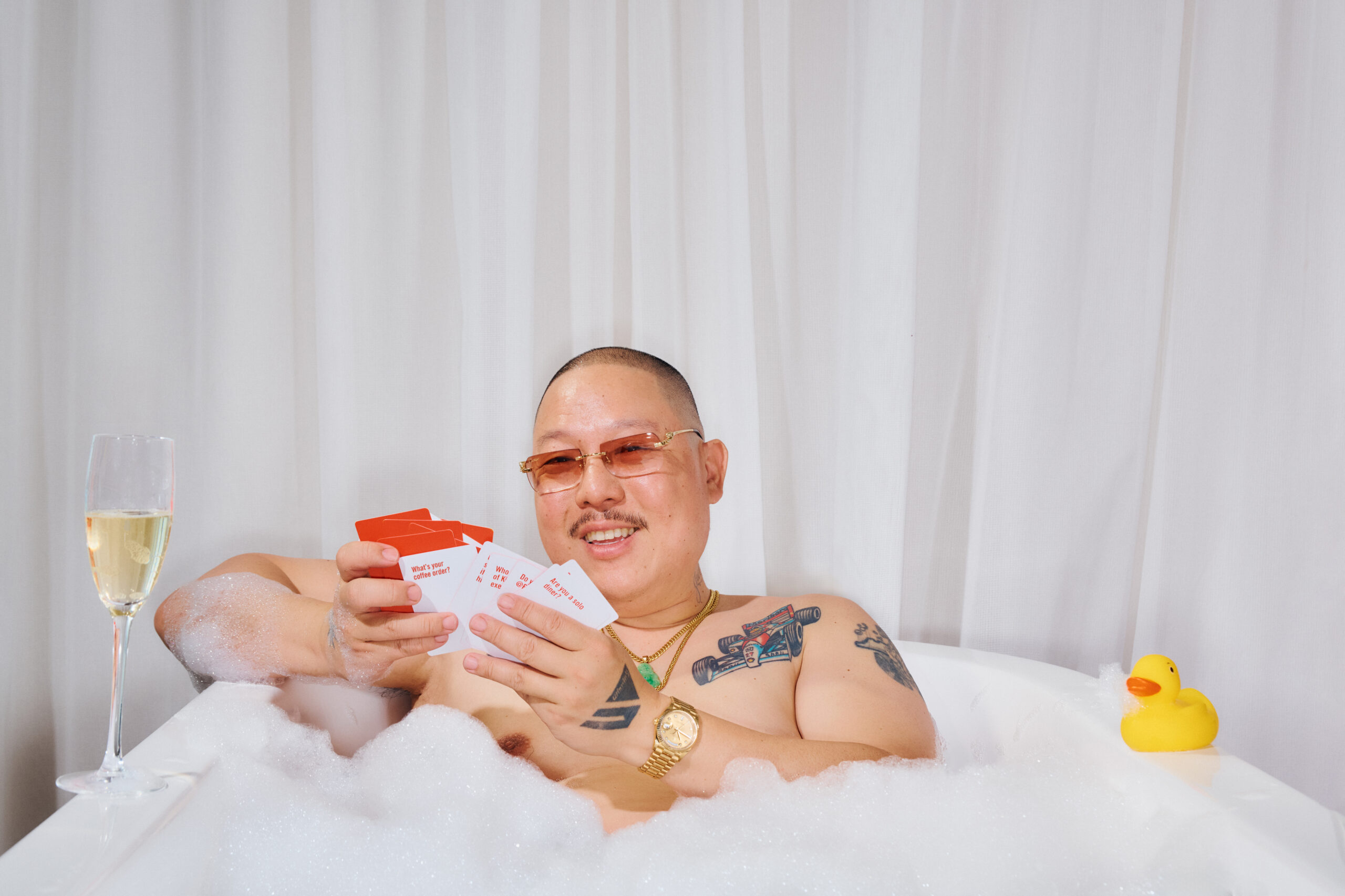 Photo Credit: The Standard
We talk about fiction and memoir, luxury and its discontents, his wife’s JPG Shoulder Birkin, the Ottessa Moshfegh sentence that changed his writing, the conversation card deck that Hubie would absolutely hate, and the kind of perfect day that ends with a Guinness, a bao, and House of the Dragon.
The difference between fiction and memoir, Huang explains, is that memoir requires you to negotiate. “Part of your brain is always concerned with the things that need to be said on everyone else’s behalf for it to feel fair to them,” he says. “Not you, not the story, not the emotional truth, but it needs to feel fair to the other characters wherever they are in their lives. And if we’re honest, a lot of the people in our lives need psychiatric help.”
Fiction gave him permission to follow the feeling. With Come Undone, he did.
The five-day rewrite had a specific context. “I need space and emptiness to write,” he says, “so I just told my wife, please give me five days. I cannot participate in anything for five days.” He explains it as a trade, five days of total absence instead of three months of being half there. She agreed. The book that came out of that week is the one in your hands.
Come Undone lives in a world of luxury travel, exclusive dinners, and global jet-setting, and Huang makes it clear this world was a trap he escaped rather than a playground he built. “For most of my life, I was very cost-conscious,” he says. He bought Polo. Stone Island. Willy Chavarria, where the premium felt like a fair exchange for design and craft. When Hollywood arrived, so did sponsored vacations and invited luxury. Then he started dating people who wanted those things without the sponsorship. “I got caught in a loop I never wanted to be in.”
He got out, and the only exception he’ll allow is his wife’s bag. “I went and bought her a vintage JPG Shoulder Birkin before this rollout as a peace offering,” he says. “I said, ‘ This bag means I love you. There are going to be moments on this tour when I’m gone where you are going to be upset, and I want you to look at this bag and remember that I fucking love you.” He pauses. “Funny enough, as I was inspecting bags at The Real Real where I purchased it, I couldn’t help admiring the craftsmanship.” The leather. The construction. The honesty of an object built to last. “If you can buy one of these bags out of the store or vintage at a good price, it’s a very strong investment. Do you need it? No. But if you would like to purchase a bag that holds its value and your things at the highest level, there is no other bag to buy.”
When I ask about his literary influences, Ottessa Moshfegh, Junot Díaz, Sally Rooney, he doesn’t reach for the obvious answer. He thinks about it. “Ottessa is the most cutting and decisive of the three,” he says. “She sees the darkness of humanity but isn’t abhorred or bothered or reactive. She sits in her observations and actually finds comfort in the repulsive.” He pauses. “There is a transcendent nonplussed element to her writing that I adore.”
Junot sees the evil that men do, he says, and weaves a more fantastical narrative infused with hope without being idealistic or foolish. “It’s as if he sees but doesn’t feel it is his place to tell everyone how to see it.” Rooney is something else entirely. “She pays much attention to the micro feelings and everyday hurt between people. It reminds me of the moments when I sit in the kitchen on a stool and watch the cooks at Baohaus.” He describes a particular kind of silence between people, the kind where they eventually reveal themselves. “When you talk and interact with someone, you’re not actually interacting with them. You’re dancing with a mask.” He says it slowly. “And I think it is quite sacred when people reveal themselves to you.”
The book is about a man who won’t let that happen to him. So when did love catch Huang?
“I did not feel much love in my family,” he says, without apology or bitterness. “My mother is a master at getting people to open up and then turning that against them.” He was always looking for another family, in friends, in the women he dated. “But ultimately I wanted someone who saw me as the sad sack of shit I was and still loved me.”
He found that in his wife, Natashia. In the novel, Hubie meets someone who mirrors his own guarded behavior back at him, and the recognition breaks something open. It happened the same way in real life. “Both of us are Pisces,” Huang says. “We are emotional clowns. We will shamble at a moment’s notice over something as simple as a text message that feels short or rude.” He laughs. “But being able to see these behaviors in someone you love has helped us not only laugh at ourselves, but love ourselves. And through that alchemy, we evolve.”
Huang is not interested in the manchild-who-cannot-commit genre, even as he writes squarely inside it. He has read the good ones, Fuccboi by Sean Thor Conroe, High Fidelity by Nick Hornby, and he knows what separates a story that works from one that doesn’t. “If people actually want to understand,” he says, “the answers need to come from inside the house.” He cites a line from Manchester by the Sea, the one where Lee Chandler says simply: “I just can’t beat it.” Huang delivers it the way someone delivers a thing that has genuinely stayed with him. “He simply cannot ever open back up again because of the pain he’s once endured. That was one of the realest things I’d ever heard uttered in a film. It haunts me.”
Anthony Bourdain once said Huang did everything with style. I ask whether Come Undone feels like the first time the style stopped showing. He exhales. “I feel seen.” Going back to read his old work and watch old episodes of Huang’s World was, he says, almost physically embarrassing. “I wanted to be the best, I wanted to be the coolest, I wanted to be anything but myself.” Then he lost all his money, became a father, and simply ran out of energy for the performance. “I will say that Ottessa’s writing was also quite inspirational,” he adds. “She is a writer who has no energy for bullshit anymore either.”
What fills the space that Baohaus used to fill? “My family,” he says. No elaboration. No qualification. Just that.
The places in the novel- Jamaica, Utah, Los Angeles- are not invented. I ask which real place has actually changed him. He answers without hesitating: Elephant Mountain in Taipei. “I hiked there every day for almost a year,” he says. “The solitude and quiet really helped me find myself again.”
He and Natashia have a podcast together now, which for Huang, building a creative life with the person he spent so long running from is the best. “There was a lot of friction and work up front establishing limits and learning what worked and what didn’t.” He describes the particular difficulty of working with someone you love: the level of care required is extremely high, and the potential for shortcuts is zero. “But when you put in the work, the potential is infinite.”
His perfect day is specific and unhurried. Sleep. Box at the gym. Eat. Hang with his family. A Guinness and a bao at Baohaus. Put the kid to bed. Watch House of the Dragon.
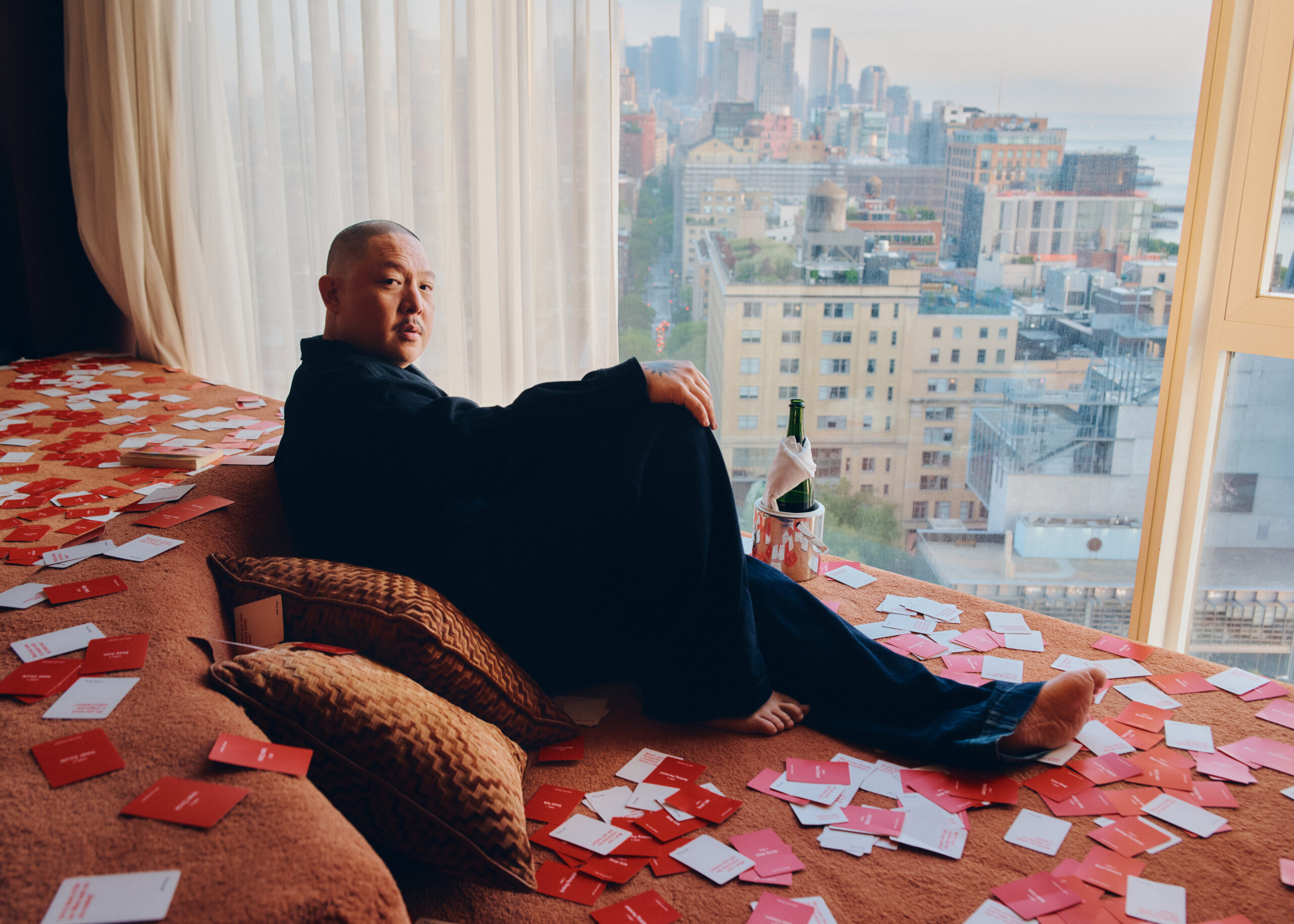 Photo Credit: The Standard
The one thing he wants a reader to feel after finishing Come Undone is not an idea. “Empathy for themselves and anyone trying to do intimacy,” he says. “The shit is hard. Everyone is on their own time, and I think when you have empathy for yourself in that way, you can actually begin to feel.”
The conversation card deck that came out alongside the book was developed with The Standard, and Huang is unambiguous about what it is for. “Some of them are cute, but they go deep,” he says. “Some of them are ‘mean.'” He grins. “I really feel that if you are on a first date or a third date or hit a wall in a relationship, sitting with these cards is going to unlock something.” He describes how gamifying intimacy removes the shame from the front of the conversation without removing the eventual vulnerability. “As you play, there will absolutely be shame and embarrassment and empathy if you are playing it right.”
The card he would least want to be asked himself: what’s your relationship like with your mother?
I personally believe Hubie would absolutely hate this deck. He laughs and says, “He would. I would have, eight years ago. But you know who would have loved these cards? Sixteen-year-old me who had a Xanga page answering survey questions because I wanted a girl to know who I was.”
He’d use the deck on a sixth or seventh date, not sooner. He’d invite someone over for dinner and drinks and be upfront about it. “People seem to like it when you’re direct about what you want,” he says. “If they don’t want it, you have your answer, and you didn’t even have to play cards.”
One final note on the deck, offered unprompted: “If you like the cards, buy a few decks. Do not use the same deck with someone else.” He is not joking. “I truly believe in the metaphysical, and there’s juju with this stuff. Get new cards each time.”
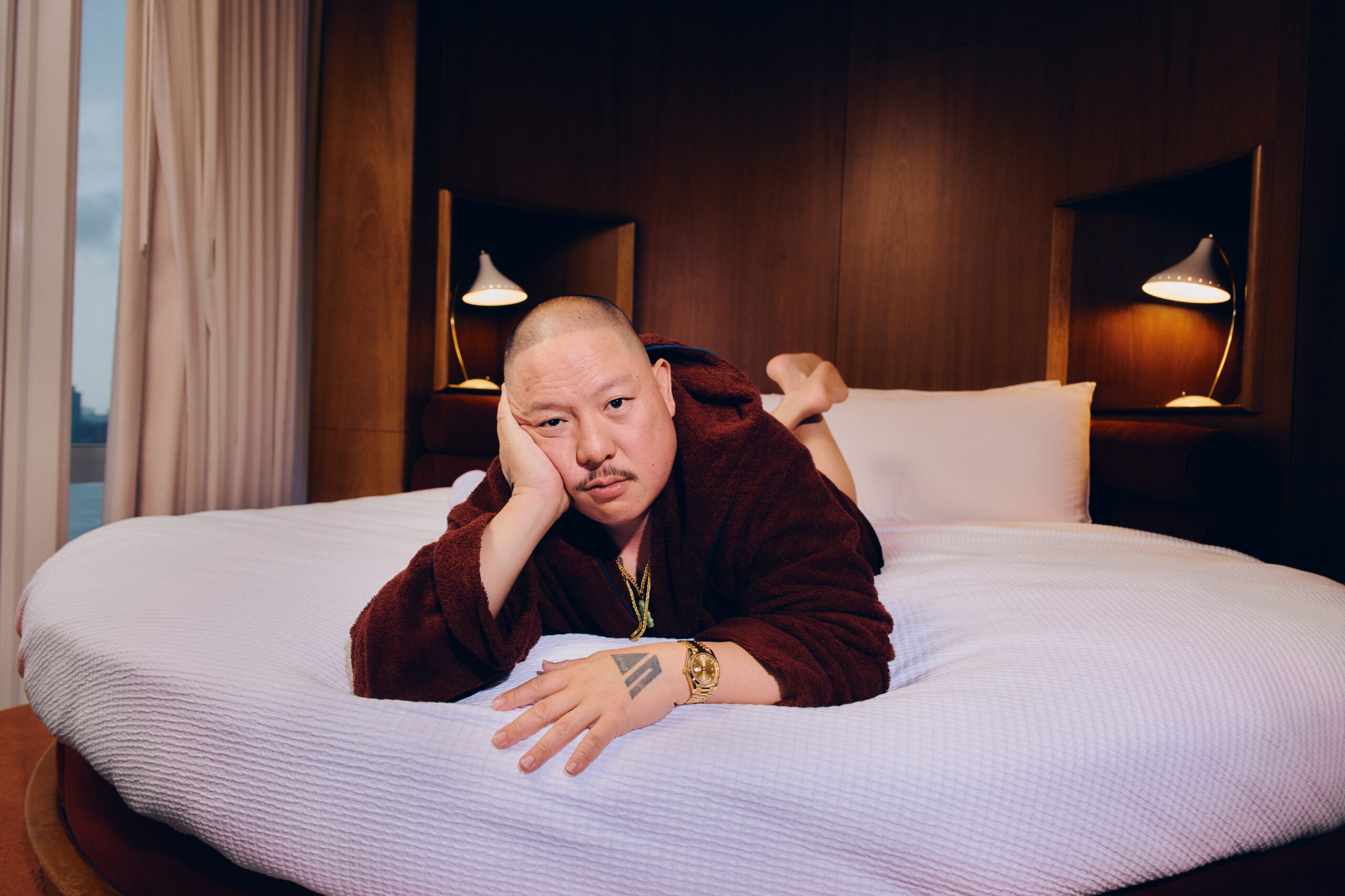 Photo Credit: The Standard
The collaboration with The Standard goes beyond the deck. The Standard Spa Miami Beach is offering a Come Undone room package through August 31 that puts the full experience in one place: a signature suite, chilled bubbly, a drawn bath, a copy of the novel waiting bedside, the conversation card deck, and access to the Spa, with the promo code COMEUNDONE.
It is, as Huang might put it, exactly the kind of thing Hubie would book for someone he was not ready to admit he was falling for.
The Come Undone x The Standard conversation card deck is available at Shop The Standard.
Frequently Asked Questions
What is Eddie Huang's new book, Come Undone, about?
Come Undone follows Hubie, a man who moves through life with charm and confidence but keeps everyone at a distance, until he's eventually caught by the very thing he's spent his life avoiding: real intimacy.
What is The Standard's Come Undone room package?
The Standard Spa Miami Beach is offering a Come Undone-themed package through August 31, including a signature suite, chilled champagne, a drawn bath, a copy of the novel, the conversation card deck, and spa access. The promo code is COMEUNDONE.
Where can I buy Come Undone and the conversation card deck?
Come Undone is available now wherever books are sold, and the Come Undone x The Standard conversation card deck is available at Shop The Standard.
Is Come Undone based on Eddie Huang's own life?
Huang describes it as fiction rather than memoir, explaining that fiction gave him the freedom to follow emotional truth without the obligation memoir carries to be fair to every real person involved. That said, the book draws on real places from his life, including Jamaica, Utah, and Los Angeles.
Did Anthony Bourdain influence Eddie Huang's approach to Come Undone?
Bourdain once said Huang did everything with style, a comment that shaped how Huang thinks about this book specifically. Huang has said Come Undone feels like the first time that style has stopped showing, describing it as the most honest thing he's ever made rather than a performance of coolness.
Latest from Haute Living
Romero Britto: Historic Art Sales & Collector Milestones

Meet The Chic Design Visionary Behind One Of The Fastest-growing Restaurant Groups
The Best Speakeasies & Hidden Bars in Las Vegas Right Now