How Crypto Platforms Are Turning Education Into a Wealth-Building Engine for Young Investors
How crypto platforms are investing in financial literacy to empower Gen Z and drive sustainable digital asset adoption worldwide.


Young crypto investors aren’t just chasing upside anymore. While they remain open to innovation and calculated risk, what increasingly defines this generation is a deliberate effort to understand the mechanics behind digital assets from market structure to token economics to on-chain strategy.
In response, leading crypto platforms are doubling down on financial literacy as a core growth lever. This shift signals a maturation of the industry: education is no longer a side feature, it’s becoming foundational infrastructure for sustainable adoption in 2026 and beyond.
Binance CMO Rachel Conlan discussed the importance of financial literacy in the digital asset ecosystem while at the WEF in Davos recently, “Education is at the heart of Binance’s mission to democratize access to crypto globally. We invest heavily in accessible, multilingual educational content and programs. If crypto is going to reach the next billion users, education must evolve alongside the product.” Conlan continued, “The results speak for themselves: Binance now serves over 300 million users across 100+ countries.”
The Rise of Youth-Focused Crypto
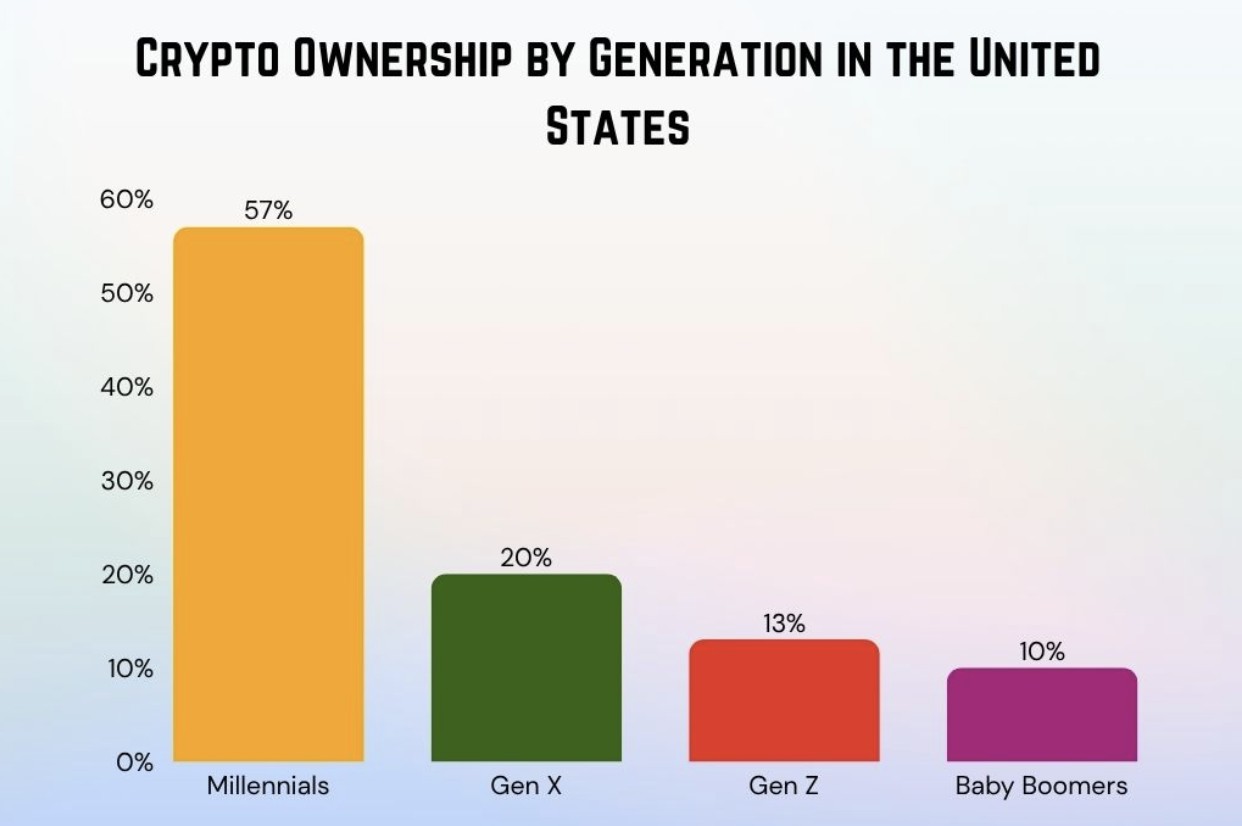
Its popularity with the world’s youth has always been crypto’s secret weapon. After all, in traditional finance, over half of Gen Z and Millennials already use digital-only banks. And, when it comes to crypto, the vast majority of users are young, estimated to be 25 to 34 years old on average.
In fact, Gen Z and Millennials account for nearly 60% of all crypto users worldwide, and young adults are twice as likely to invest in cryptocurrencies as their older counterparts. Only 8% of U.S. citizens aged 65 or older own crypto, according to the study cited above.
Yes, the new generation is approaching finances, investing and digital assets in a novel way. This is helping to create a rapidly growing market for crypto and financial education platforms. These platforms are designed for young people and, if the companies that created them have estimated correctly, will become the building blocks for wealth creation for a new generation shaped by digital-first habits.
Investors are learning to recognize the signs of an opportunity. This is a sector that could explode in growth. In fact, the financial literacy market was worth $10.27 billion last year. This industry is expected to exceed $17 billion by 2032.
It’s an optimistic projection, but it’s supported by evidence that many young adults see crypto as a stronger alternative to traditional financial instruments such as stocks and bonds, which offer limited growth potential. Furthermore, distrust in the traditional banking system typically outweighs concerns about crypto market volatility.
Platforms Encouraging Digital Financial Literacy
Corporate crypto actors have, in recent years, accelerated programs designed to improve digital financial literacy. These are, of course, geared toward young adults. And, if they can successfully bridge the currency knowledge gap, these outlets may be responsible for creating the next wave of crypto adoption.
For example, the world’s largest cryptocurrency exchange, Binance, has launched Binance Junior, a platform designed to teach finance while also allowing young people to use crypto. Essentially, Binance Junior works as a parent-controlled investment account for kids. The kids are encouraged to earn interest through staking but are not allowed to trade, thereby eliminating significant risk.
It doesn’t stop there. Binance Academy also offers zero-cost learning tools. The company says it is working with universities worldwide to integrate crypto into curricula.
Furthermore, Binance says it is collaborating with governments and fintech companies to integrate crypto education into public policy. For example, programs such as the United Nations Development Programme (UNDP)’s Government Blockchain Academy teach officials to use blockchain in finance and digital ID to support youth-focused projects.
Other platforms are also contributing to improving crypto education, with some offering developers access to cost-effective tools and AI-based models that deliver interactive learning experiences. Experts note a focus on gamification, with these platforms seeking ways to create a learning ecosystem tailored to the needs of youth.
Of course, recent regulatory progress by the SEC in the U.S. and the EU has further enhanced the perception of crypto’s legitimacy. These rules, let’s not forget, encourage platforms to focus on compliance and user protection.
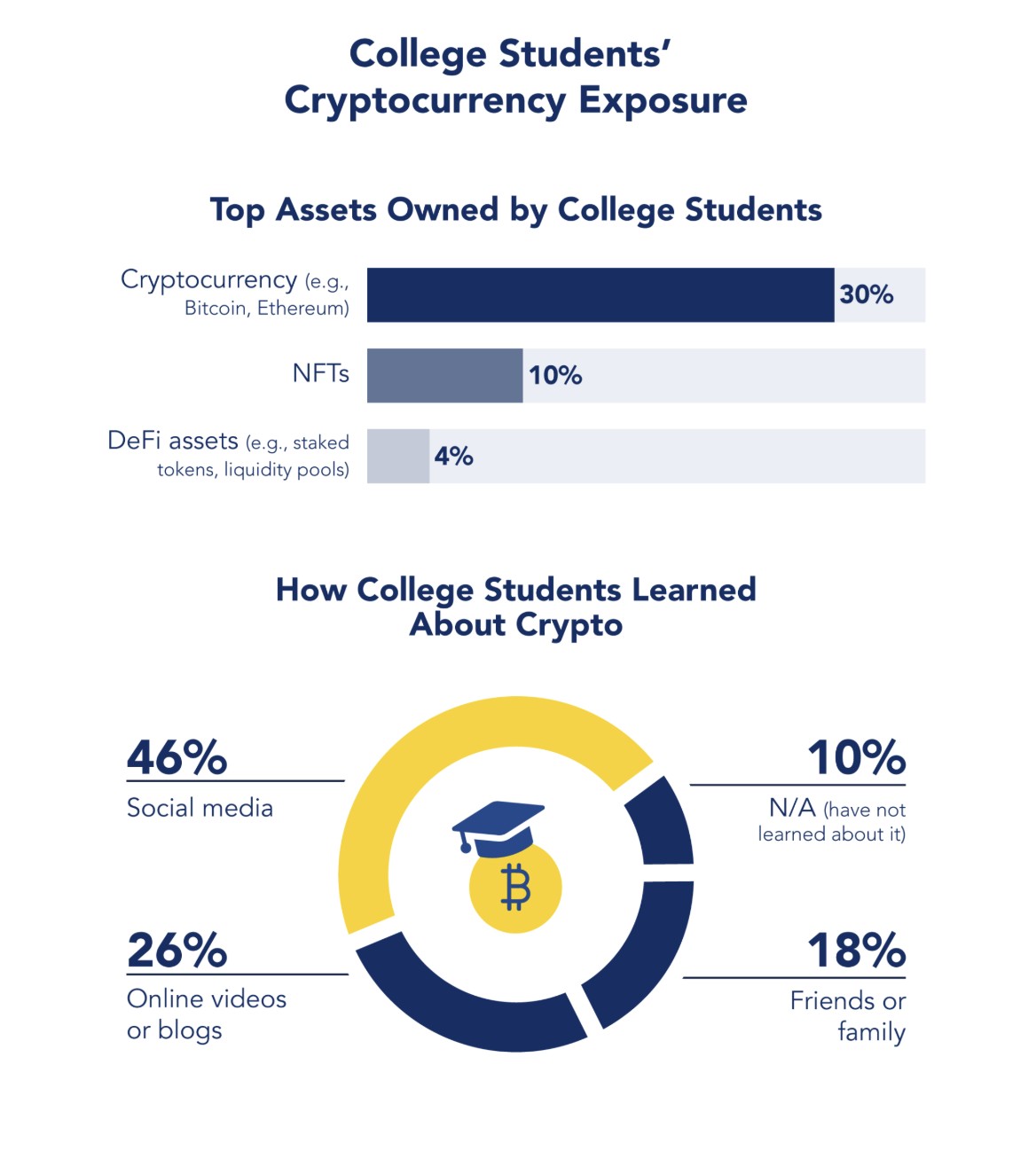 Source: Southeastern Oklahoma State University
Seizing Financial Opportunities and Assessing Potential Risks
Platforms that wish to teach youngsters about crypto must not only create incentives to use it for wealth building but also find ways to mitigate risk. This is driving the appeal of services that automate returns, through yield farming and staking, or those that offer interest on stablecoins. For newcomers wishing to avoid risk, these particular features offer a structured entry point.
Furthermore, projects like the aforementioned Binance Junior, which has benefited from early $2 billion investments in the platform as a whole, provide evidence that this corner of the crypto industry can grow significantly.
However, when optimistically looking ahead, we must not forget the inherent risks. A recent study suggested that nearly 20% of Gen Z crypto investors have all of their finances tied to the blockchain. This makes them at risk of scams and regulatory changes.
Source: CoinLaw
The emergence of these crypto-learning platforms signals a major shift. Crypto investors are getting younger and seeking resources for long-term success. The younger generation demands innovation, and this is a significant positive development for mainstream crypto adoption.
Latest from Haute Living

Palm Beach Season is Officially Starting, and the Island Is About to Triple in Size

These are the Perfumes Defining Luxury Fragrance in 2026

The Team Behind Miami’s Top-Ranked Steakhouse Just Opened Their First Italian Restaurant