Palma y Arco: A Sanctuary Shaped by Craft, Culture, and Intention
Palma y Arco in Tulum blends Moroccan soul with jungle serenity as Amine Ouaki redefines sanctuary driven luxury through craft.
In Tulum, architecture has become part of the destination’s language. Villas are no longer just places to stay. They are expressions of mood, ritual, and identity. Within a landscape known for bold design and sensory immersion, a small number of properties stand apart not through spectacle, but through restraint and coherence. Palma y Arco is one of them.
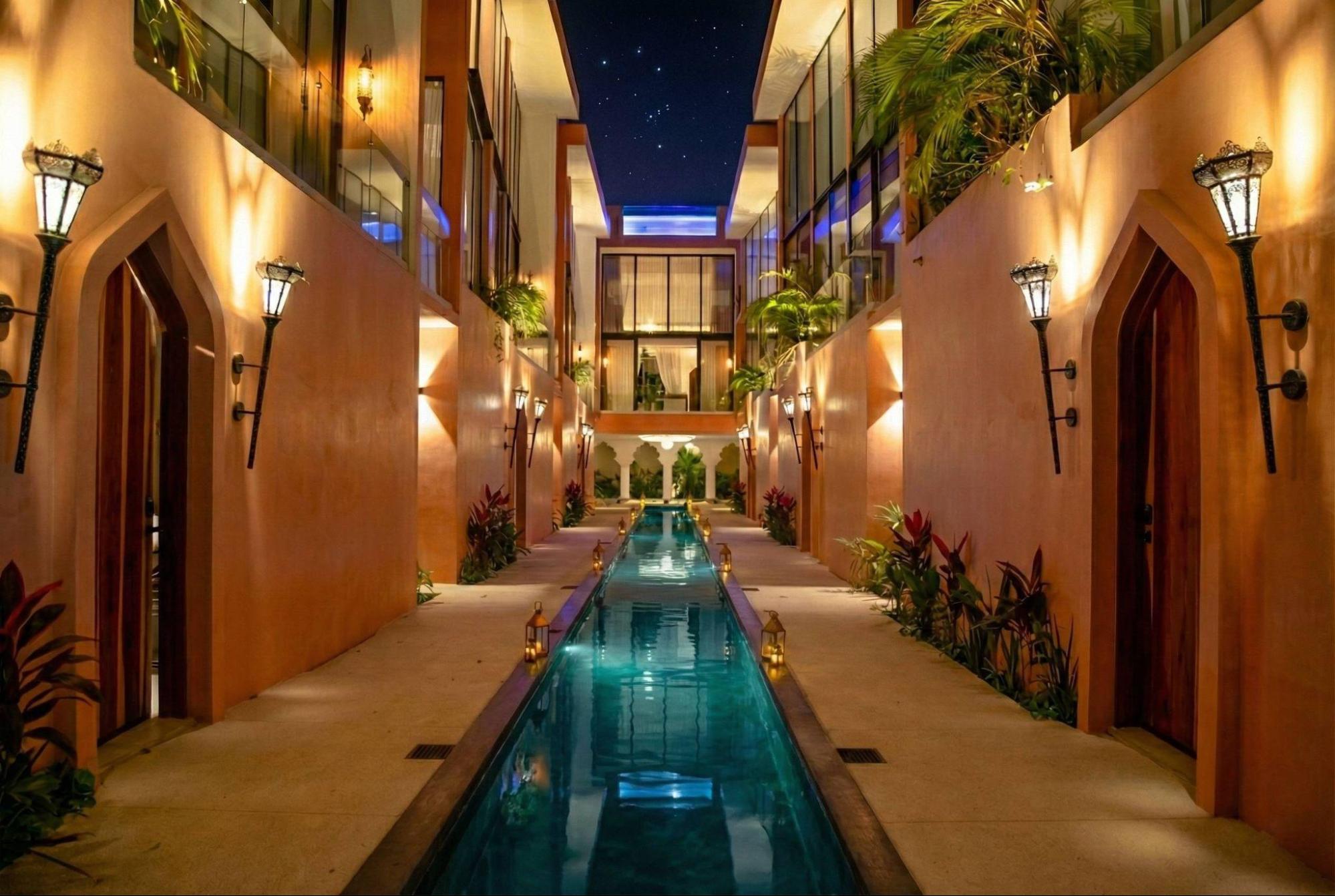
Tucked into the Riviera Maya jungle, Palma y Arco is conceived less as a vacation rental and more as a sanctuary. The villa merges Moroccan architectural tradition with Tulum’s natural rhythm. The result is a space that feels inward and deliberately paced. Developed by Ouaki Capital Remex under the leadership of its founder, Amine Ouaki, the property reflects a long-view philosophy centered on depth, durability, and emotional resonance.
Photo Credit: Palma y Arco
A Vision That Extends Beyond Hospitality
From its inception, Palma y Arco was designed to invite return, not as a novelty, but as a ritual.
“For Palma y Arco, the vision is clear: to build a global hospitality and wellness brand. Something people don’t just visit once, but return to as part of their lifestyle,” Ouaki says.
That vision informs every decision, from architectural flow to material sourcing. The goal was not to create rooms, but a feeling. Guests are meant to slow down, reset, and leave changed in subtle ways. In that sense, Palma y Arco functions as a lived experience rather than a destination to check off.
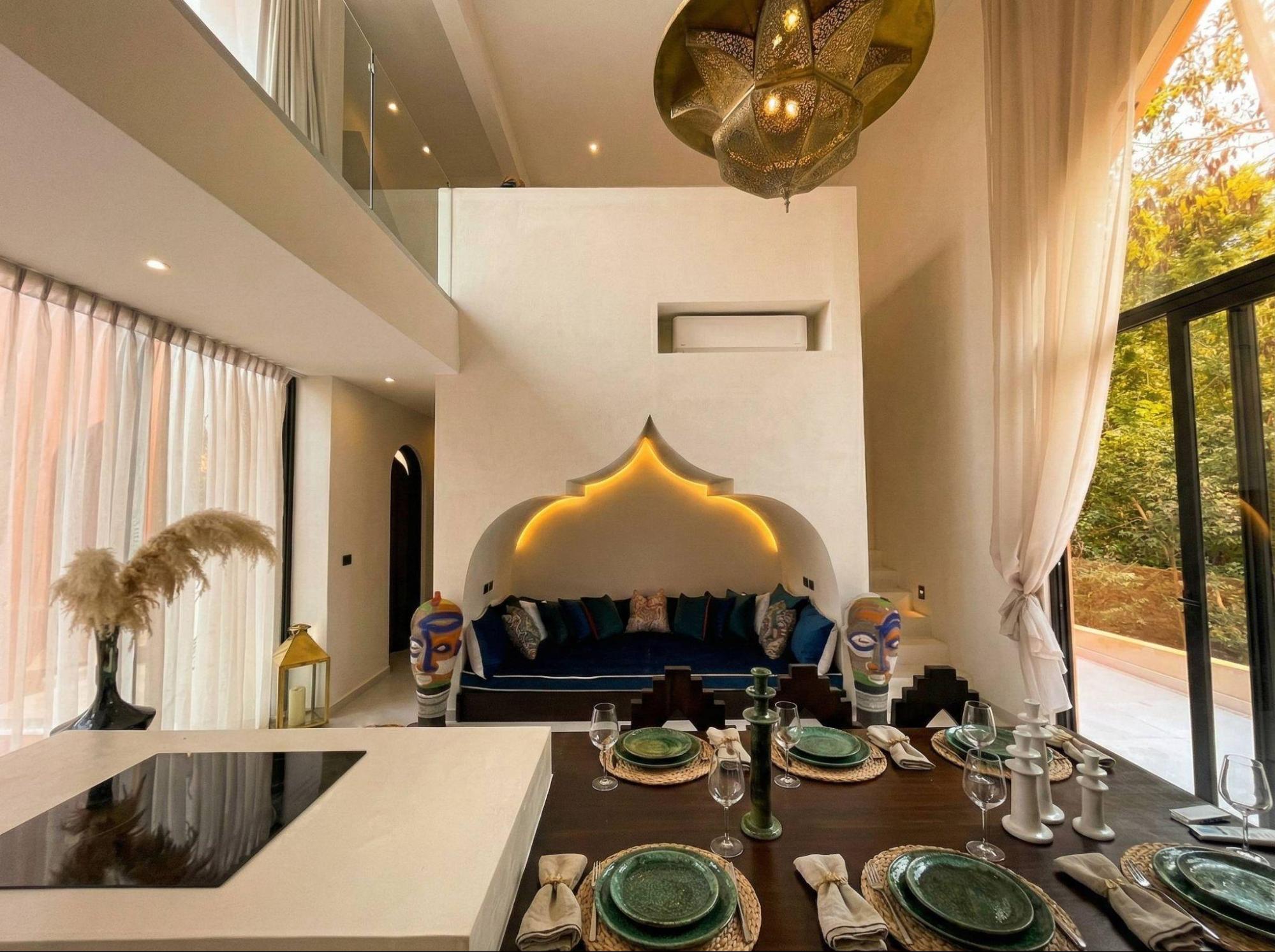 Photo Credit: Palma y Arco
Moroccan Soul, Interpreted for the Jungle
The villa’s Moroccan influence is immediately present, but never ornamental. Horseshoe arches, layered thresholds, and filtered light shape how guests move through the space. Textured walls and soft curves respond to the day’s changing shadows, while courtyards draw the eye inward.
Ouaki notes that Moroccan design is as emotional as it is visual. He describes it as architecture that holds you. The intention was not to replicate Morocco in Mexico, but to create a dialogue between the two cultures.
“With Palma y Arco, the goal was never to transplant Morocco into the Riviera Maya,” he explains. “It was to create a dialogue: Moroccan soul with Tulum energy.”
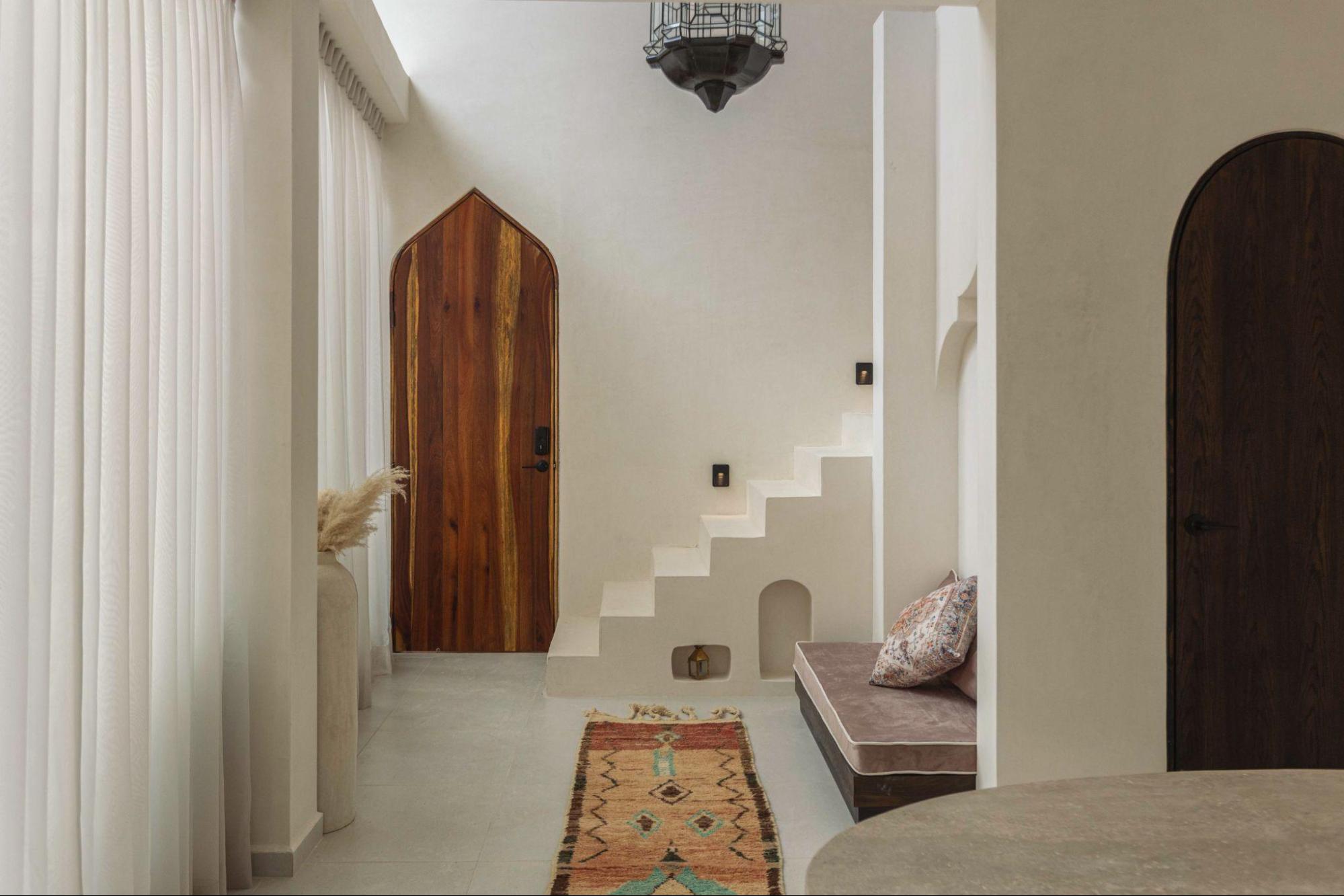 Photo Credit: Palma y Arco
Craft as a Foundation, Not an Accent
Authenticity at Palma y Arco is rooted in human touch. Lanterns, chandeliers, and Berber rugs were sourced directly from artisans in Fez and Marrakech. These pieces were chosen for their imperfections and history, not polish.
Shortcuts were intentionally avoided. The emphasis remained on preserving the spirit of Moroccan craft rather than assembling a visual checklist. That commitment extends to the villa’s climate-conscious design, with ventilation, shade, and proportions adapted to Tulum’s environment so the space feels balanced throughout the day and across seasons.
An Architecture of Exhale
The emotional brief behind Palma y Arco was simple. The space should prompt an immediate sense of calm.
“From the moment you walk in, the atmosphere is meant to feel like a sanctuary,” Ouaki shares. “Not hotel luxury, but soulful luxury. The kind that makes you exhale without thinking.”
That atmosphere is reinforced through privacy, inward flow, and the quiet interplay of light and texture. Palma y Arco does not compete for attention. It invites presence.
In a destination shaped by rapid growth, Palma y Arco offers something more enduring. It stands as a reminder that lasting value in hospitality is built not on trend, but on craft, intention, and a deep respect for place.
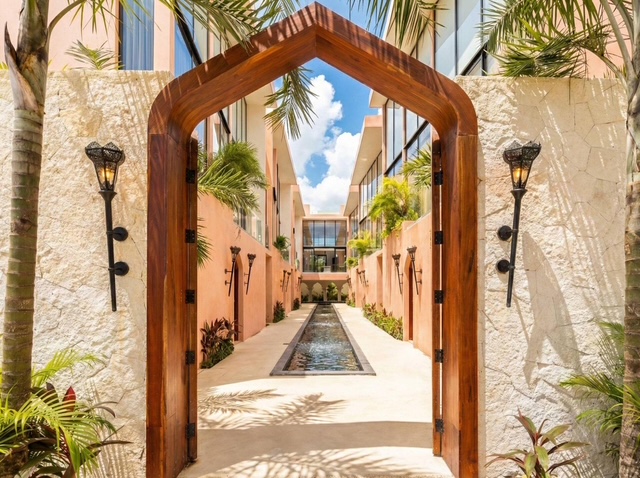 Photo Credit: Palma y Arco
Latest from Haute Living
The Best Products From Celebrity Beauty Brands That Actually Deliver

Inside the Gucci Store Show, Demna’s First Full Statement for the House
Say Yes to the Dress, Then Stay the Night: Vera Wang’s New Bridal Suite in Beverly Hills