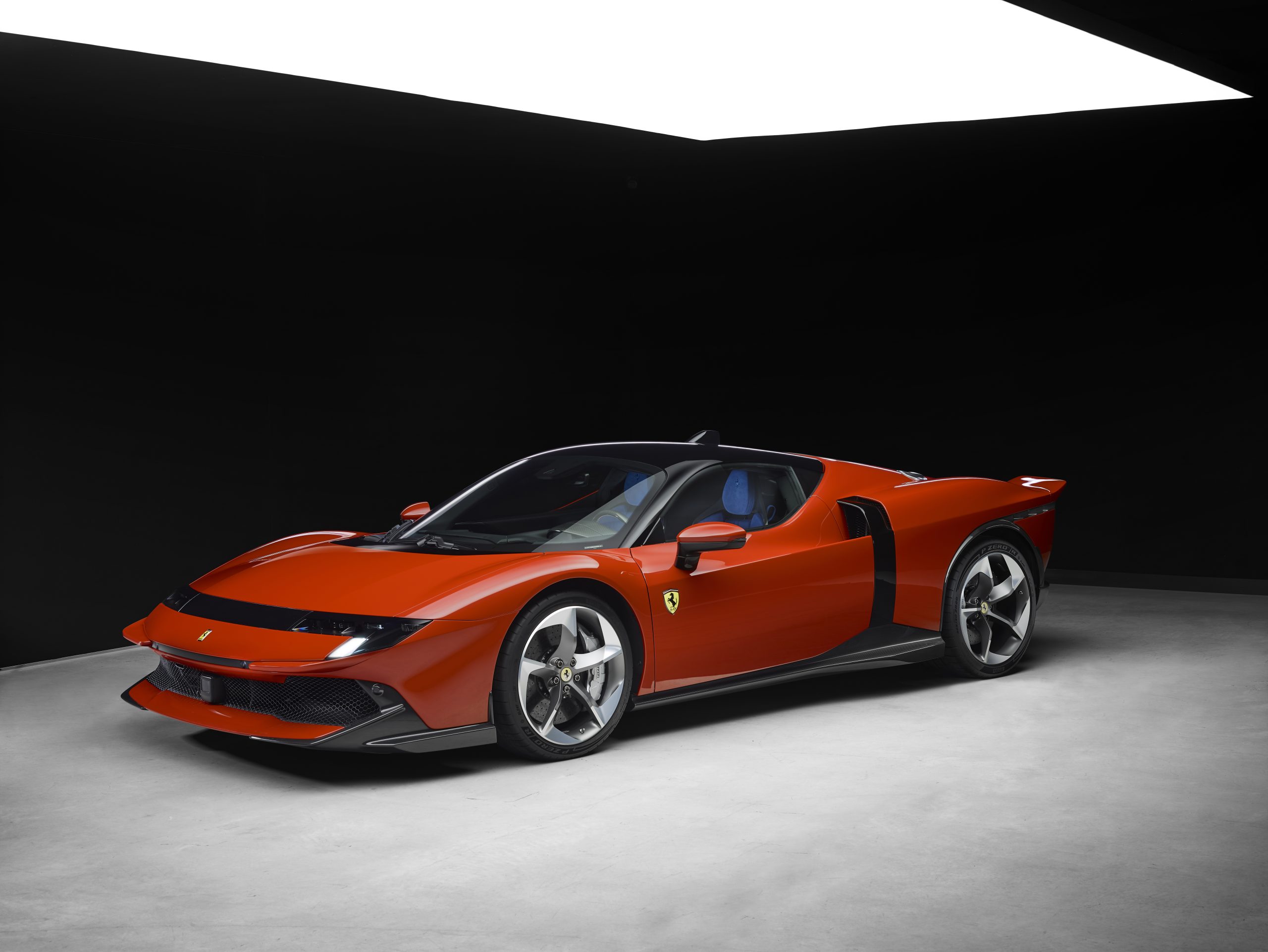
Flavio Manzoni Is Designing Ferrari’s Future: One Radical Line at a Time


In a cultural moment obsessed with nostalgia, where fashion resurrects past silhouettes, music revives forgotten decades, and design endlessly recycles trends. Ferrari’s Chief Design Officer, Flavio Manzoni, stands firmly, defiantly, in the tension between past and future.
For Manzoni, progress is not found by repeating the past. It is found through conversation with it: a dialogue, a tension, but never imitation.
“The duty is to never forget the past, but never be a slave to it,” says Manzoni, who has led Ferrari’s design vision for 15 years. “People expect a new interpretation of forms from the past. But for me, design means innovation, not repetition of something that already exists.”
This belief sits at the core of Ferrari’s newest supercar: the F80 Testarossa, successor to the SF90 Stradale and the most radical embodiment yet of Manzoni’s design philosophy. Not a nod to heritage, but a leap into what Ferrari could become.
When Manzoni began work on the F80 Testarossa, he wasn’t looking to refine the SF90. He was looking to transcend it.
“We wanted to take a step forward in terms of radical design approach,” he explains. “The SF90 Stradale was still a bit like a berlinetta, not extreme enough. With this new design, we wanted to send a clear message: This is a supercar.”
At Ferrari, that message begins with exploration. The design process doesn’t start with a single sketch or predetermined form. It starts wide. Intentionally wide. Overseeing a styling center of 100 to 120 people, Manzoni and his team pursue work that goes beyond design into the relentless passion of bringing vision to life.
“We start from a very divergent phase where we experiment in different directions,” he says. “We don’t begin with a preconceived idea. We have to know all the constraints of the project to design the perfect car.”
This divergence includes not only sketches but what Manzoni calls 3D sketches: rapid digital models that test whether a concept can truly work.
“Even if there is a good idea,” Manzoni emphasizes, “if we’re not sure it fits the package, we have to verify the concept applies perfectly to the project’s constraints. Then, step by step, we converge on concepts that become visually more interesting.”
The Birth of the Twin Tail
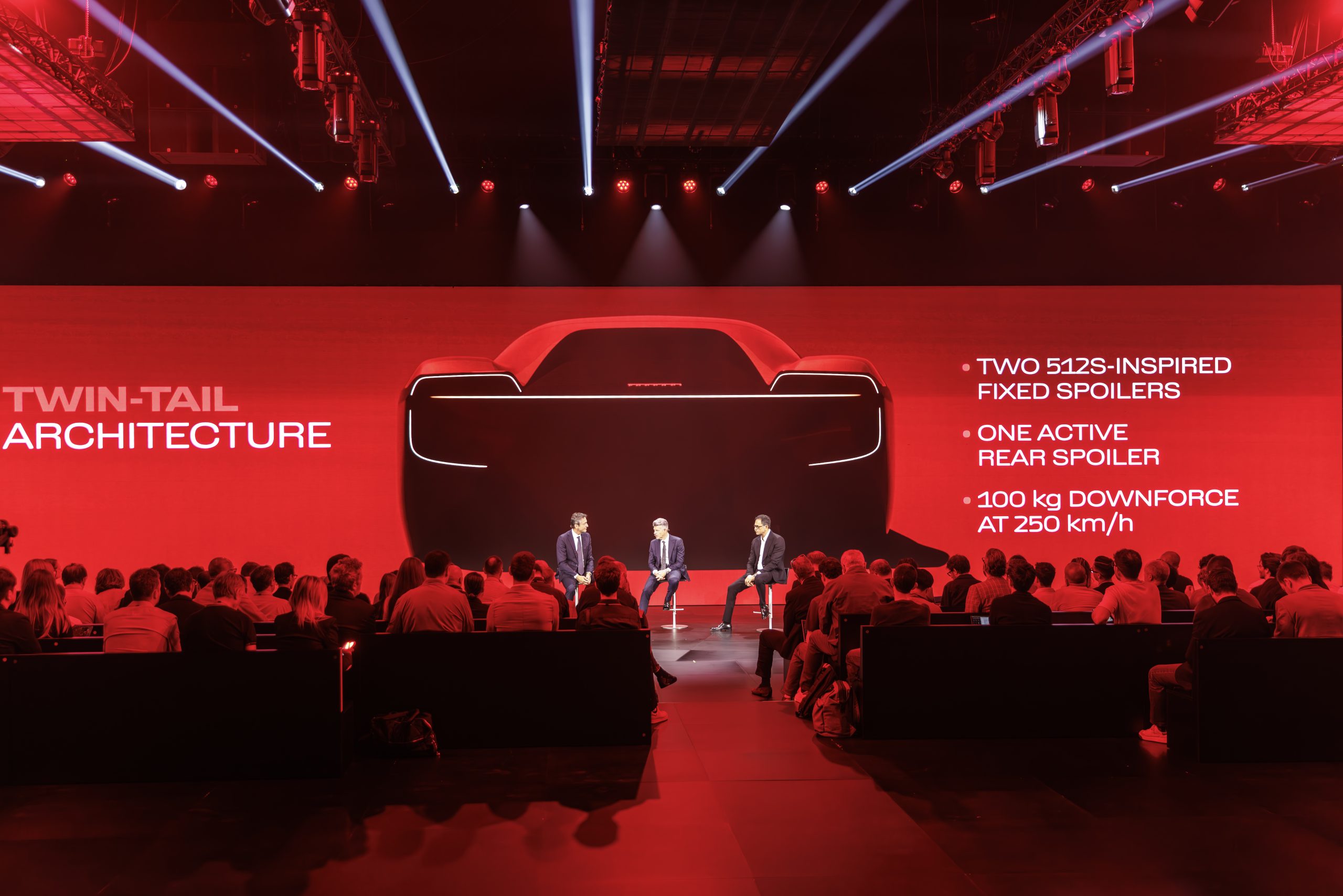
Some of the most iconic Ferrari elements arise not from certainty, but from risk. Nothing captures this better than the F80’s dramatic twin tail.
“The twin tail—or the so-called codoni in Italian—was very difficult,” he admits. “Until the end, we didn’t know if it was possible. It’s always a bet. I thought this concept is very strong. I want to go ahead and see what happens.”
Engineers questioned it. Constraints mounted. Some ideas test your resolve, but Manzoni knew this was one worth fighting for.
“Sometimes if the constraints or doubts are too many, I have to think about a plan B,” he says. “But I feel when something is possible. And I can still push to make it come together.”
The result? A sculptural, aerodynamic signature that cements the car as one of Ferrari’s most visually striking modern supercars.
To understand Manzoni is to recognize that he sees design as a holistic, immersive discipline. Never shallow or surface-only.
“I don’t like working only on aesthetic aspects,” he says. “Design is not styling. It’s an integrated project. I have to think about the product’s content and the form, which is linked to it.”
Which is why cars like the F80 become deeply personal: navigating each design hurdle, learning how to marry performance with aerodynamic character, negotiating which ideas stay and which must be let go.
“Every time there is the opportunity to make something extremely innovative, I feel more proud,” Manzoni reflects.
Manzoni’s perspective cuts through a society often anchored to the past — emotionally, artistically, culturally.
“When I started my career in 1993, I discovered that the world was going in a completely different direction,” he reveals. “It was the vintage, the retro style. Everything is retro. Music, fashion, design. It’s still like that.”
His inspiration was never rooted in nostalgia. It has always lived in the realm of futurism and possibility. As a child, Manzoni imagined the work he now brings to life, and much like the child who once dreamed it, he still moves with that forward gaze.
In discussing futurism, Manzoni brings up Syd Mead, the pioneering industrial designer and visual futurist whose work shaped everything from cinematic worlds to real-world automotive design. Best known for designing the worlds of Blade Runner and Tron, Mead was celebrated for envisioning futures that felt both otherworldly and believable.
“He was a great master, a visionary designer,” Manzoni says.
But when asked whether Mead directly influenced this new Ferrari, he shakes his head.
“Not really. But the idea of something very innovative, very futuristic, it was very strong for me. I wanted this job because of that.”
The 849 Testarossa marks not just a single milestone, but the beginning of a new Ferrari aesthetic vocabulary.
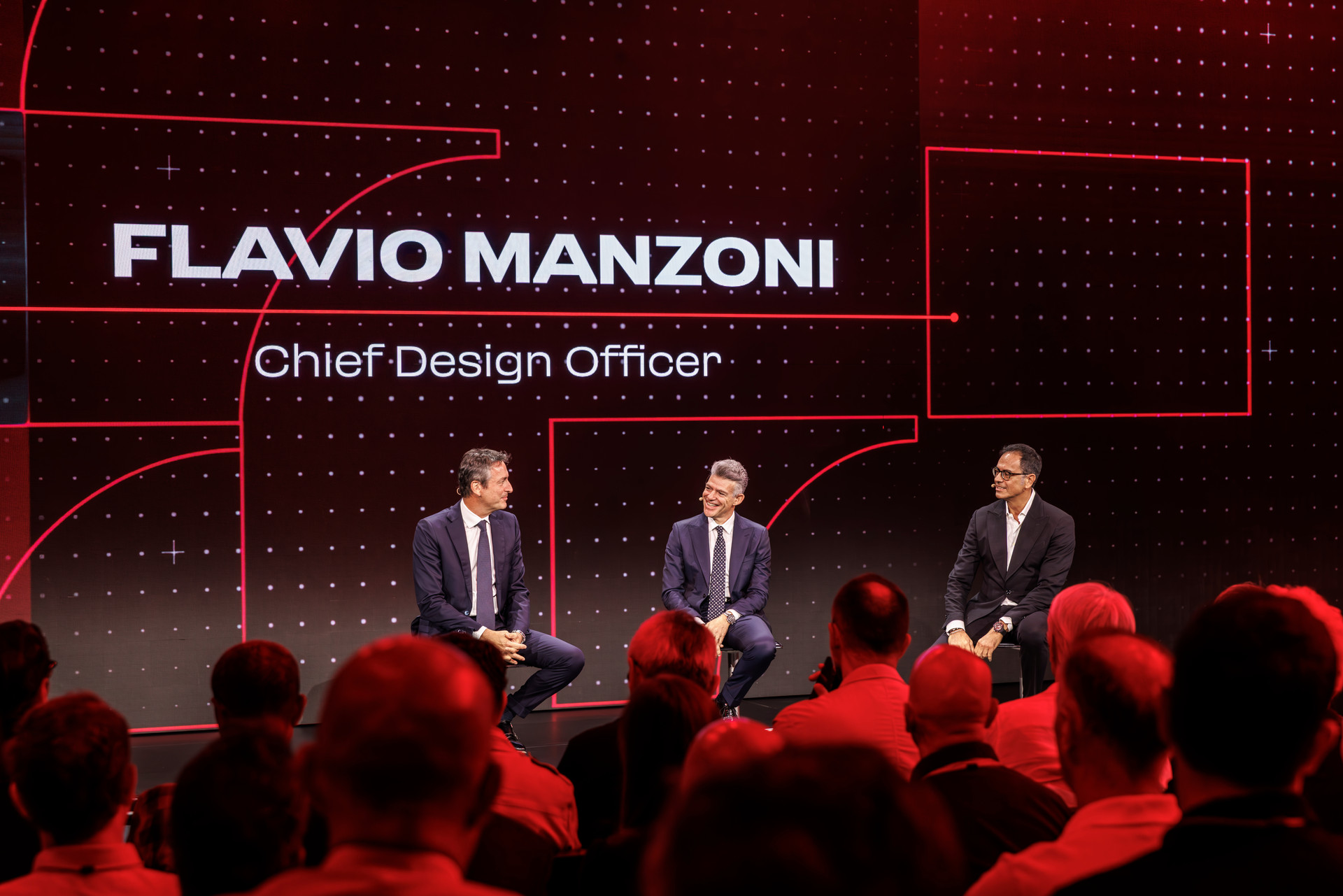
“There will be other cars speaking the same language, with completely different interpretations. It’s like music,” Manzoni says, drawing a parallel between design and melody. “You have seven notes, always the same, but you can compose any kind of music.”
He explains that each Ferrari category (GTs, supercars, hypercars) will interpret these design “ingredients” uniquely.
“The more the car looks like a GT, the more it should be elegant,” he says. “The more the car expresses incredible performance, the more the design should be powerful and aggressive. It depends on how you express these ingredients differently.”
This philosophy began with the 12Cilindri (pronounced “Dodici Cilindri”), continued with the F80 hypercar, and now reaches its boldest form in the 849 Testarossa, what Manzoni calls Ferrari’s “range supercar… very, very extreme,” his work carrying the unmistakable flourish of Italian conviction.
As the interview winds down, it becomes clear: Flavio Manzoni isn’t designing cars for today. He’s designing the visual language of Ferrari’s next decade and beyond. To him, the past exists only as context. The future is the destination.
With the 849 Testarossa, Manzoni proves something simple yet profound: Ferrari’s greatest icons aren’t born from what once was. They’re born from the courage to imagine what has never been.
Related Articles
- One On One New York Entrepreneur Kimberly Gindi
- Four Time Best Of Show Winners Sam Mann Drives Us Through His Day
- Haute Cuisine Commercial Convenience A Culinary Exploration Of The New Delta One Lounge At Bos
- Jaime Casado Of Reto Health The Future Of Healthcare Is Already Here
Frequently Asked Questions
What are the key specifications?
This article covers the performance specs, design features, and pricing details of the featured vehicle. Read the full review for comprehensive technical information.
How much does it cost?
Luxury vehicle pricing varies by model, trim level, and customization options. Contact your local dealership or the manufacturer for current pricing and availability.
When is it available for purchase?
Availability varies by market and model. Check with authorized dealers or the manufacturer’s website for release dates and ordering information in your region.
How does it compare to competitors?
This article evaluates the vehicle within its competitive set, considering performance, design, technology, and value relative to other luxury options in its class.
Latest from Haute Living
Catch LA Reimagines Its Rooftop Dining Experience for Fall
Chanel is Returning to Deauville for Cruise 2027: Where Gabrielle Chanel Opened Her First Boutique in 1912

Loro Piana Presented Its Spring/Summer 2027 Collection in a 1770 Milanese Library