CEO & Chairman Stefano Domenicali On The Astronomical American Rise of Formula 1
Formula 1 CEO & Chairman Stefano Domenicali reveals how F1 became a cultural force in America in his sit-down interview with Haute Living.
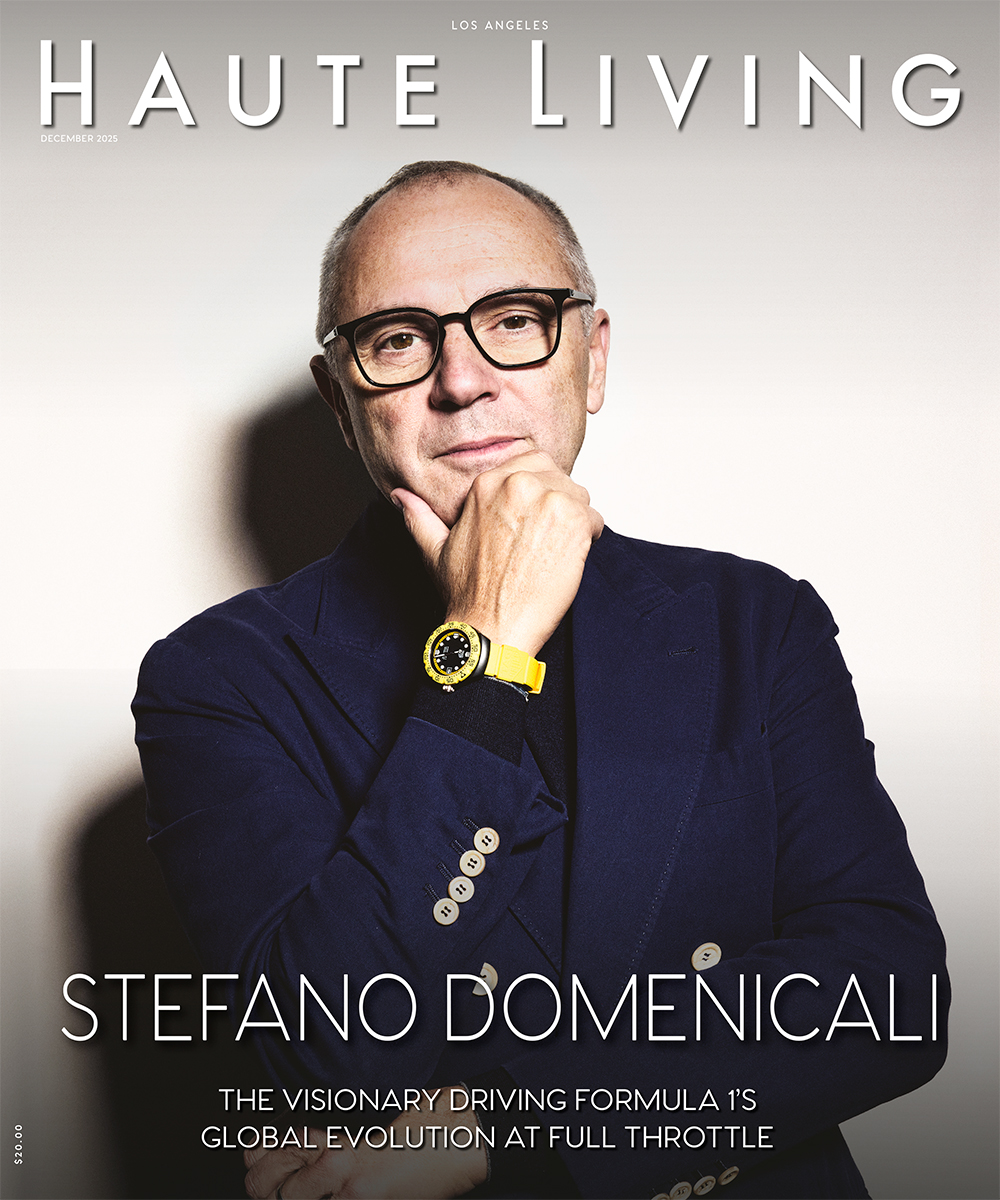
Photo Credit: David ClerihewBY LAURA SCHREFFLER
PHOTOGRAPHY DAVID CLERIHEW
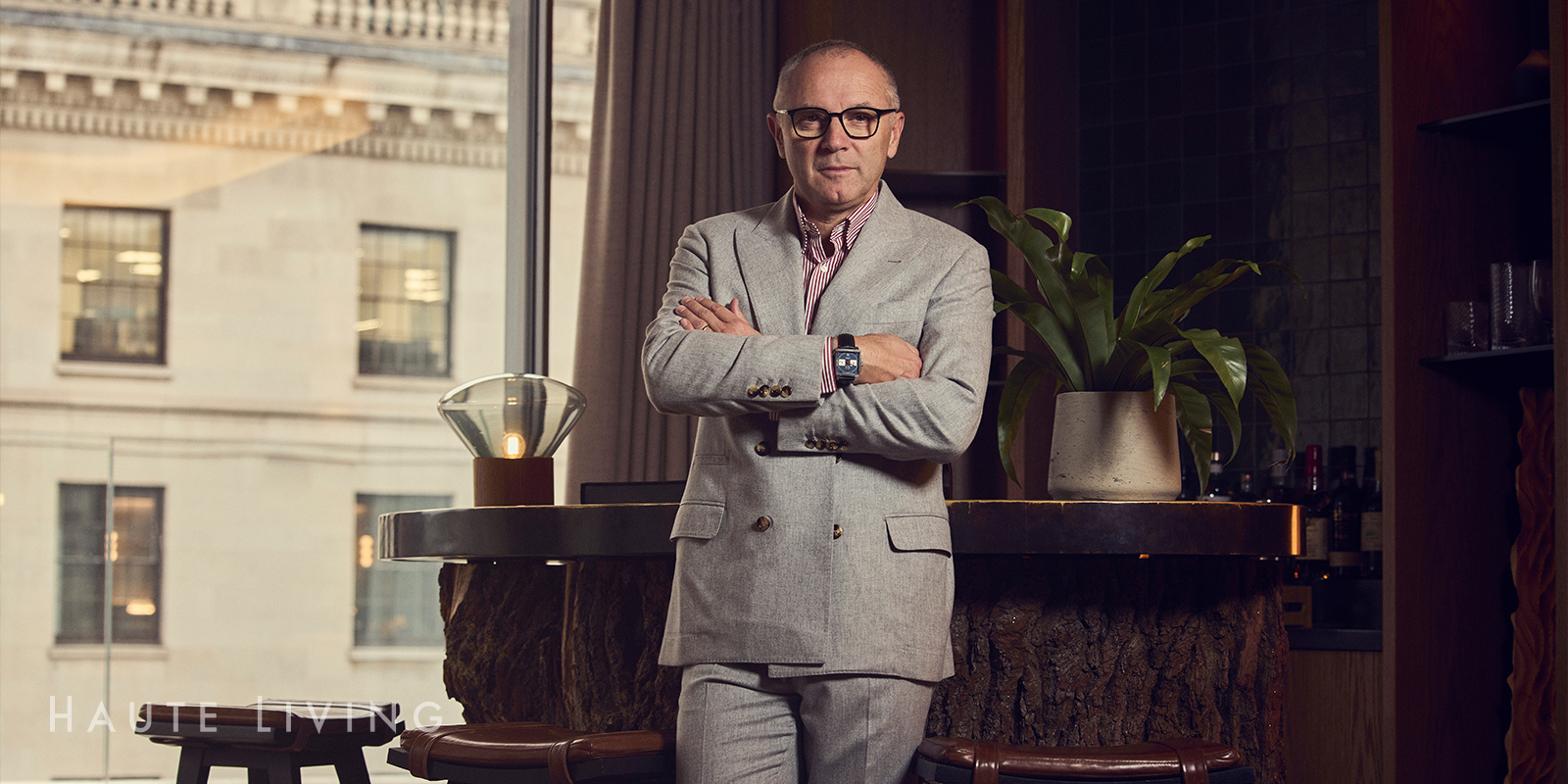
SHOT ON LOCATION AT THE 1 HOTEL MAYFAIR, LONDON, U.K.
The morning run through London is a ritual, not a routine. Stefano Domenicali moves through the green corridors of England’s capital city with the same precision he brings to everything else — measured, deliberate, aware of the margins. He runs not for escape but for clarity. This is where the day begins to take shape, where the noise of Formula 1 — the politics, the logistics, the endless negotiations — hasn’t yet arrived. Just breath, pace, and the quiet hum of a mind that never fully stops working.
By the time he reaches his office, the world has already been moving for hours. Emails from Singapore, calls scheduled with Austin, messages from Monza. Formula 1 doesn’t sleep, and neither does the man who runs it. But there’s a calmness to Domenicali that seems almost incongruous with the chaos he orchestrates. He’s not frantic. He doesn’t perform urgency. Instead, there’s a kind of steady intensity, the demeanor of someone who has learned that control is less about force and more about knowing exactly where to apply pressure.
“I truly believe that our life is a moment-by-moment situation where every day that you live gives you something — either positive or negative — but in any case, it’s an experience,” he says. “If you are good, you can bring it home and try to make sure that it gives you some fuel to be even stronger the day after. That’s my mantra. That’s my philosophy.”
It’s a philosophy forged in the crucible of Ferrari, refined in the boardrooms of Lamborghini, and now deployed across the global stage of Formula 1. Domenicali has spent his entire career in the machinery of speed — literal and metaphorical — and he’s learned that success is rarely about the single brilliant decision. It’s about the accumulation of small, correct choices, made consistently, under pressure, when the margin for error is microscopic.
Right now, though, the machinery in question is a camera, and the stage is considerably more serene. The location is 1 Hotel Mayfair, where the aesthetic is all reclaimed wood and natural light, a studied casualness that costs a fortune to achieve; the occasion: Domenicali’s Haute Living cover shoot. He arrives in upscale street clothes, the kind of garments that whisper rather shout ‘good taste.’ He’s comfortable in front of the camera in the way that people who’ve spent decades being photographed learn to be — not performing, exactly, but aware of the frame, the angle, the story being told.
“There is a mantra I have,” he says, “every single detail is never small enough to follow, and every vision is not big enough to think.”
It’s the kind of statement that could sound like corporate speak, but from Domenicali it lands differently. Because you can see it in how he works — the way he’ll spend an hour discussing the placement of hospitality suites at a new circuit, then pivot immediately to conversations about broadcast rights in emerging markets. The granular and the strategic aren’t separate domains for him. They’re the same thing, viewed from different distances.
Photo Credit: David Clerihew
His path to this position wasn’t inevitable, though in retrospect it has a certain narrative logic. “I was coming from a very normal family,” he reflects. “When I was 14, I was at my high school, going to Imola to be one of the guys helping the organization park the trucks in the paddock. And now I run the organization. That is something I’m very proud of — but also lucky. I took the opportunity. That means there is a possibility for everyone. Get the chance, follow your dream, and things can happen.”
Imola. The name carries weight in motorsport, a cathedral of speed where Ayrton Senna died and where the sport was forced to reckon with its own mortality. For a young Domenicali, it was simply home — the place where the circus came once a year, where the impossible machinery of Formula 1 briefly touched down in his world. He was drawn to it not as a fan, exactly, but as someone fascinated by the system, the logistics, the sheer complexity of making it all work.
That fascination became a career. He joined Ferrari in 1991, working his way through various roles in the sporting department. These were the years when the Scuderia was struggling, when the championship drought stretched on and the pressure from Maranello became almost unbearable. Domenicali learned the business during the lean times, which meant he learned it properly — understanding that in Formula 1, everything matters and nothing is guaranteed.
When Michael Schumacher arrived, along with Jean Todt and Ross Brawn, Ferrari was transformed. Domenicali was part of that transformation, watching and learning as the team was rebuilt into a championship-winning machine. He saw how Todt managed the politics, how Brawn approached technical problems, how Schumacher’s relentless perfectionism raised everyone’s standards. By the time he became team principal in 2008, he’d been steeped in Ferrari’s culture for nearly two decades.
The Ferrari years were both triumph and education. He led the team to constructors’ championships, managed the transition from Schumacher to Kimi Räikkönen to Fernando Alonso, navigated the impossible expectations that come with the Prancing Horse. But he also learned the limits of even the best preparation, the way that Formula 1 can humble anyone, no matter how talented or dedicated. When he left Ferrari in 2014, it was with the kind of knowledge that only comes from being tested at the highest level.
Lamborghini was different — a luxury brand with its own mythology, but one that needed to evolve. “When I went to Lamborghini, it was a new world for me — I’d never been involved in the production of cars,” Domenicali says. “But I think we took the right decisions in terms of portfolio. We doubled the revenues, protected the people in Italy, even during Dieselgate when electrification seemed like the only way forward. I had big discussions with our shareholder to protect the brand. And now the results are there.”
It was a masterclass in brand management, in understanding that luxury isn’t just about the product — it’s about the story, the experience, the way a brand makes people feel. He took those lessons with him when he became CEO and President of Formula 1 in 2021, stepping into a role that had been redefined by his predecessor, Chase Carey, and the Liberty Media ownership that had purchased the sport in 2017.
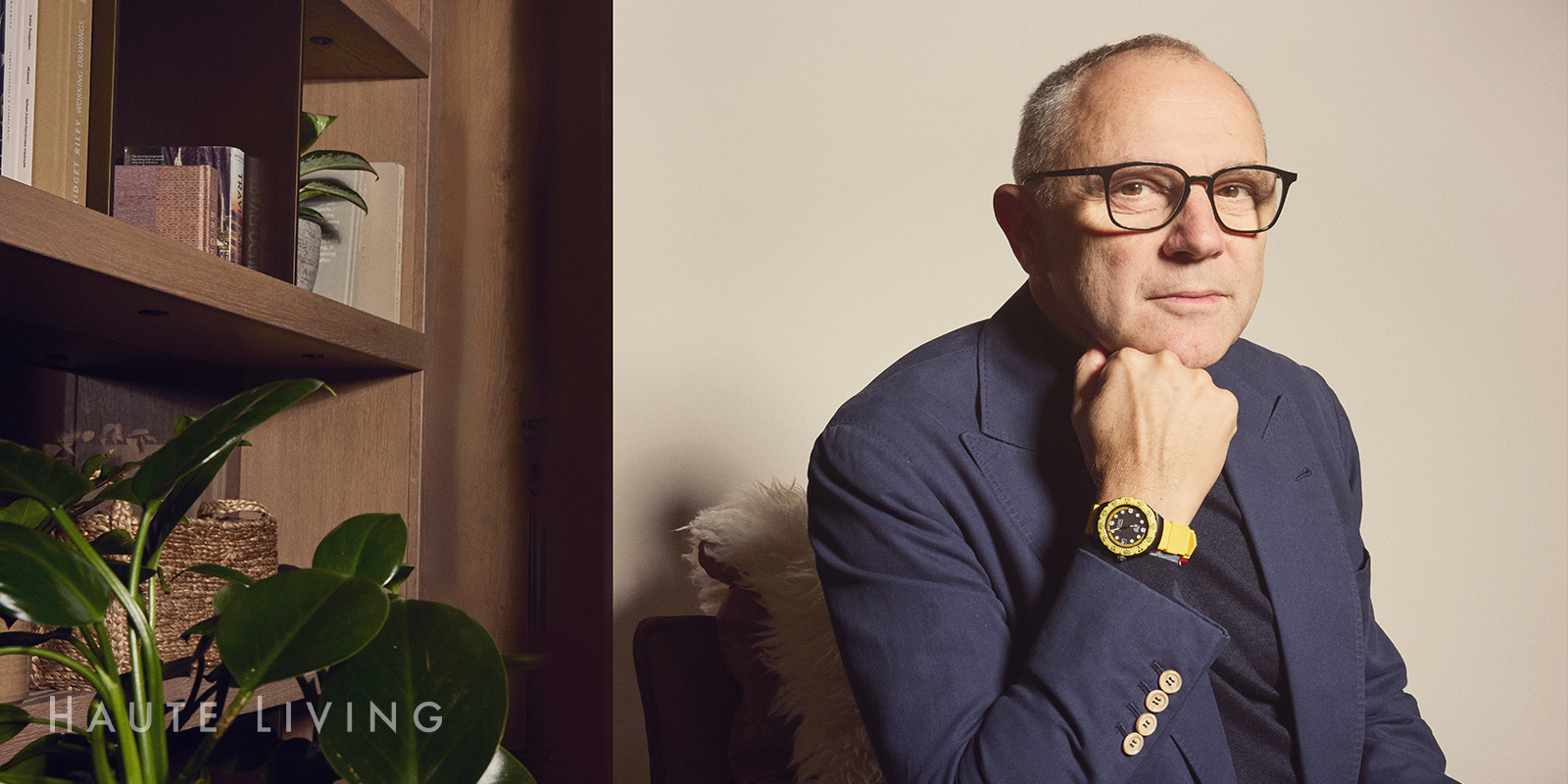
Photo Credit: David Clerihew
Formula 1 under Liberty Media was already changing when Domenicali arrived. The Netflix series Drive to Survive had cracked open the sport’s insular culture, revealing the personalities and drama that had always existed but had never been packaged for a mainstream audience. Suddenly, Formula 1 wasn’t just a sport — it was a narrative, a soap opera with 200-mph cars and billion-dollar budgets. New fans flooded in, particularly in America, where Formula 1 had always struggled to gain traction.
Domenicali understood immediately that this wasn’t a temporary spike in interest. It was a fundamental shift in how the sport could be positioned, consumed, and monetized. His job wasn’t to preserve Formula 1 as it had been — it was to accelerate its evolution into something bigger, broader, more culturally relevant. “Just four years ago — I’m not talking about 40 — we had only one. Now we have three Grand Prix. Incredible crowds, different demographics, different fans.”
The American expansion is perhaps the clearest expression of Domenicali’s vision. Miami arrived in 2022, a spectacle of celebrity and excess wrapped around a parking lot circuit. Las Vegas followed in 2023, a Saturday night race on the Strip that was equal parts sporting event and entertainment extravaganza. Combined with the existing race in Austin, Formula 1 now has a genuine footprint in the American market — not just presence, but cultural penetration.
Las Vegas, in particular, represents everything Domenicali is trying to build. The race itself comes first, but secondary is the experience — the concerts, the parties, the sense that this is where the world’s attention is focused for one glittering weekend. The circuit runs past the Sphere, the Wynn, and the Bellagio fountains, through the heart of the casino corridor, under lights that turn the Strip into a river of neon. It’s absurd and excessive and absolutely perfect for what Formula 1 is becoming.
“We were lucky to be in Miami and Vegas at the same time as the Super Bowl,” Domenicali notes. “And in terms of economic impact, our economic impact was bigger. For us, traveling all around the world with 24 Grand Prix — every weekend we are around the world, it’s a Super Bowl in terms of dimension. Even bigger, because of the logistic complications, because our community is such an incredible business. That gives you the magnitude of who we are.”
The comparison to the Super Bowl is deliberate. Domenicali isn’t content with Formula 1 being a niche sport for enthusiasts. He wants it to be a cultural event, the kind of thing that transcends sport and becomes part of the broader conversation. And he’s willing to reshape the calendar, add new races, and push the boundaries of what Formula 1 can be to make that happen.
“For us, the U.S. is important as a market, as a country, as a culture,” he explains. “But I have a dream — and we need to be resilient on that. Where I will see that we’ve achieved breaking through the American market is when we’re ready to be seen as a social relevancy. Today you wake up in every American house, you switch on TV or the radio or read a magazine — there is something connected to the most important sport or cultural movement in the U.S. The day where this happens, where F1 is part of that conversation — that’s when we say mission accomplished.”
It’s an ambitious goal, perhaps even audacious. But the data suggests it’s not impossible: there are now 52 million fans in the U.S. — a 10-and-a-half percent increase in the last year. “Forty percent of our U.S. audience is female,” Domenicali points out. “The average age is 34. Very young. We need to connect with them.”
This is the new Formula 1 demographic — younger, more diverse, more interested in the personalities and stories than in the technical minutiae of aerodynamics and tire compounds. They came for the drama of Drive to Survive and stayed for the racing. They follow drivers on Instagram, buy team merchandise, travel to races as destination events. They’re not replacing the traditional fans — they’re expanding the audience, bringing new energy and new revenue streams.
Domenicali has embraced this shift without apology. He understands that some purists will grumble about the Americanization of the sport, about the emphasis on spectacle over substance. But he also knows that Formula 1 has always been about spectacle — it’s just that the spectacle used to be confined to the track. Now it encompasses everything: the paddock, the parties, the celebrity appearances, the social media content.
“Our duty is to make sure that when you come to a race, you have everything possible to live there — from music concerts to fan engagement to hospitality that is the top end of the world, a unique experience,” he says. “In the world of luxury, or in the world of the fans, you are offering something different. That’s where we are successful. That’s why we’re going to be even more successful in the future.”
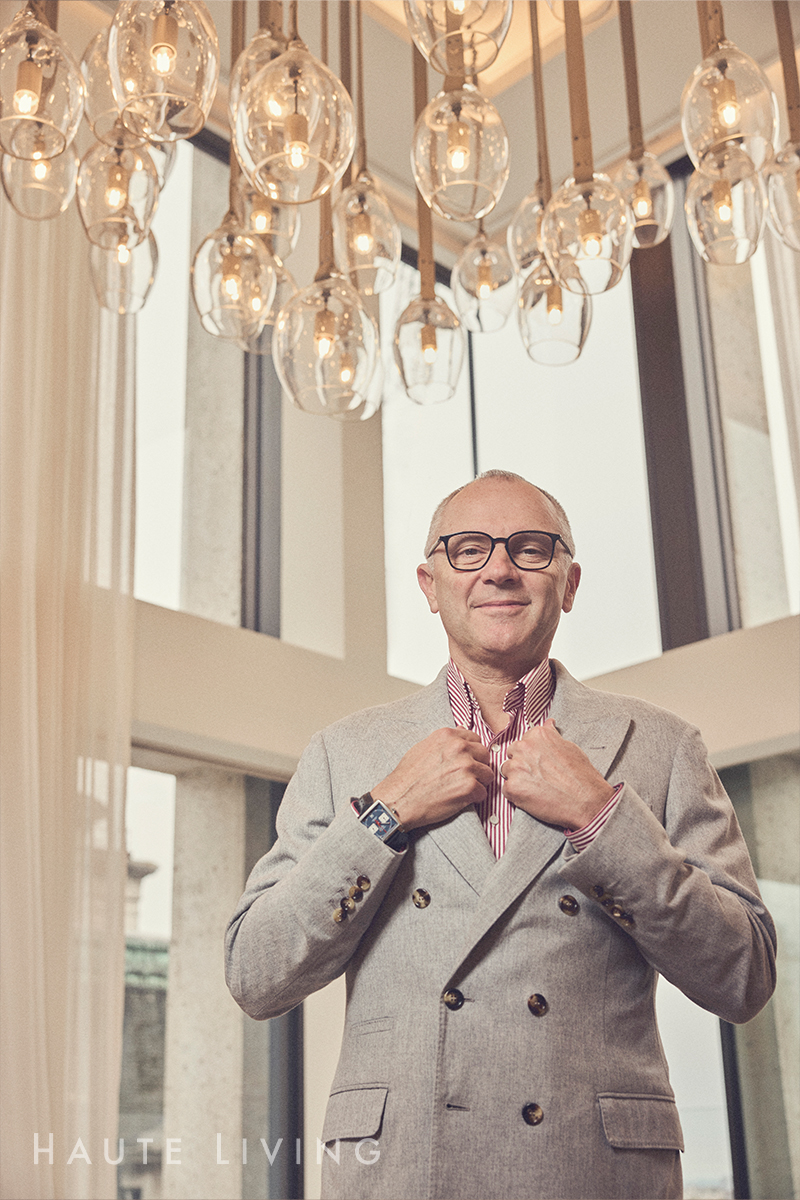
Photo Credit: David Clerihew
The business model is sophisticated. Formula 1 generates revenue from multiple streams: race hosting fees paid by circuits and cities, broadcast rights sold to networks around the world, sponsorship deals with global brands, and hospitality packages that can cost anywhere from hundreds to hundreds of thousands of dollars for a single weekend. Under Domenicali’s leadership, all of these revenue streams have grown. New races mean new hosting fees. Increased viewership means higher broadcast rights. Cultural relevance means premium sponsors want association with the brand.
But it’s not just about growth for growth’s sake. Domenicali is also focused on sustainability — both environmental and competitive. The sport has committed to being net-zero carbon by 2030, a goal that requires significant changes to how races are organized, how freight is transported, and how the cars themselves are powered. The current generation of power units are already the most efficient engines in motorsport, recovering energy that would otherwise be wasted and achieving thermal efficiency levels that road car manufacturers can only dream of; by the end of 2024, they had already been reduced by 26 percent. The cars will also be running on advanced sustainable fuel from 2026, a real world solution that can be dropped into existing petrol engine cars with no need to expand any infrastructure.
On the competitive side, the budget cap introduced in 2021 has fundamentally changed the economics of Formula 1. For decades, the sport was dominated by teams with the biggest budgets — Ferrari, Mercedes, Red Bull. Now, there’s a ceiling on how much teams can spend, which theoretically creates more competitive balance. It’s still early, and Red Bull’s recent dominance suggests the budget cap alone isn’t enough to ensure parity. But it’s a start, and Domenicali has been a strong advocate for regulations that promote closer racing and more unpredictable outcomes.
The F1 Academy, launched in 2023, represents another dimension of Domenicali’s vision. It’s an all-female racing series designed to develop young drivers and create a pathway to Formula 1. The sport has never had a female driver compete in a race since the 1970s, and while there have been test drivers and development roles, the pipeline has been essentially non-existent. The Academy is an attempt to change that, to create the infrastructure and support system that could eventually produce a female Formula 1 driver. The organization has seen strong growth in karting and grass roots engagement in the sport as such.
It’s a long-term investment, the kind of initiative that won’t pay dividends for years, maybe decades. But Domenicali understands that Formula 1’s growth depends on being inclusive, on reflecting the diversity of its audience. If 40 percent of American viewers are female, the sport needs to offer them someone to root for, someone who represents them on track.
The calendar itself has become a statement of intent. Twenty-four races across five continents, from the street circuits of Monaco and Singapore to the purpose-built facilities of Abu Dhabi and Bahrain. Each race is a negotiation, a balance between sporting considerations and commercial opportunities. Some traditional venues are no longer on the calendar — including Germany and France — while new markets have been added. The calendar is now truly global, though Europe remains the sport’s historical and emotional center.
Managing this expansion requires a particular kind of leadership. Domenicali can’t simply dictate terms — he has to negotiate with team principals who have their own agendas, with circuit owners who want guarantees, with broadcasters who need scheduling certainty, with sponsors who demand activation opportunities. It’s a constant process of alignment, of finding solutions that work for multiple stakeholders with competing interests.
“I want to lead by example, having the energy that has to be taken by everyone,” Domenicali says. “We need to think big. We need to keep growing. We need to stay persistent. If you are not relevant every day, this world can take you to the top and take you down in a blink of an eye. So there is a need to stay focused every day, pushing your people and your system. You need to be seen as a credible person — with credibility, with integrity. These are very important values that I apply in my daily job.”
It’s a leadership style forged in the pressure cooker of Ferrari, where credibility is earned through results and integrity is tested constantly. Domenicali doesn’t have the luxury of being purely visionary — he has to deliver, race after race, season after season. The teams need to make money. The circuits need to sell tickets. The broadcasters need compelling content. The sponsors need return on investment. And somehow, through all of this, the racing itself needs to remain compelling.
The balance is delicate. Push too hard toward entertainment and you risk alienating the core fans who care about the purity of competition. Stay too conservative and you miss the opportunity to grow, to reach new audiences, to secure the sport’s long-term future. Domenicali’s bet is that Formula 1 can be both — that it can maintain its sporting integrity while also being a global entertainment brand.
“I’m a pragmatic dreamer. Let me put it this way. But always positive. There is always positive in my thinking,” he says.
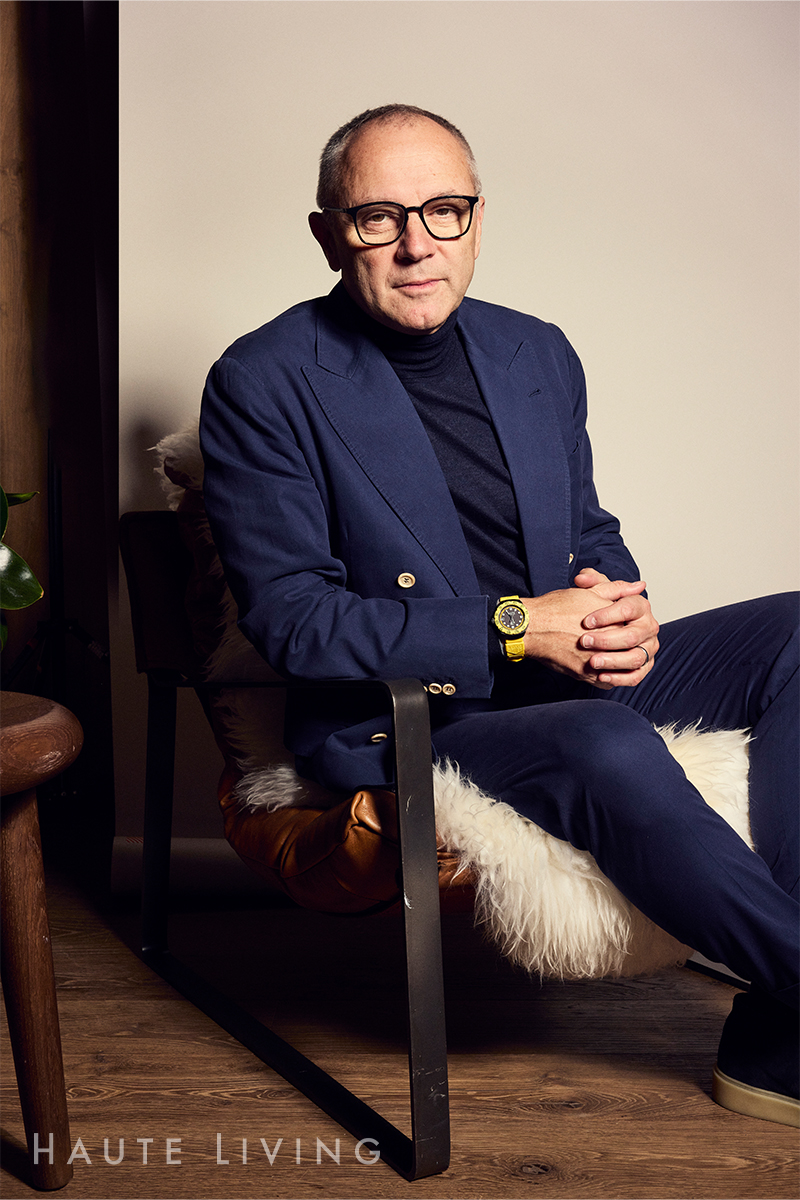
Photo Credit: David Clerihew
It’s an interesting self-description. The pragmatist in him understands the constraints — the regulations, the politics, the financial realities. The dreamer sees what Formula 1 could become — not just a sport, but a cultural force, a lifestyle brand, a platform for innovation and entertainment. The positivity is almost a requirement for the job. Leading Formula 1 means dealing with constant crises, conflicts, and complications. Without an underlying optimism, the weight of it would be crushing.
His days are structured but never predictable. There are standing meetings, regular calls with key stakeholders, scheduled appearances at races and events. But there’s also the constant flow of unexpected issues — a team may be questioning something to do with the event schedule or a venue may be experiencing unforeseen circumstances such as flooding. Domenicali has to be responsive without being reactive, decisive without being impulsive.
“The greatest luxury is quality time,” he reflects. “Quality time means that you have the right moment for the thing that you want to do. You need to always find the time — the right time — with regard to myself, with my family, with my kids and with my close friends. Not only to talk about our job, our business, but also talking about the beauty of life.”
It’s a reminder that beneath the corporate title and the global responsibilities, there’s a person trying to maintain some kind of balance. The morning runs through London are part of that — a carved-out space where the demands of Formula 1 can’t quite reach. But balance in this job is always provisional, always subject to the next crisis or opportunity.
“Thanks God, even if our offices are in London and we live here with my kids, Martino and Viola, we love our country,” he says. “Whenever we can, we go back to Italy because we believe that is the best place in the world.”
Italy remains the touchstone, the place where his identity was formed. Imola, where he parked trucks as a teenager. Maranello, where he learned the business at Ferrari. The Italian approach to life — the emphasis on family, food, beauty, passion — still shapes how he sees the world, even as he operates in the decidedly Anglo-Saxon business culture of London.
The tension between these worlds is productive. Formula 1 needs both the Italian passion and the British pragmatism, the emotional connection to the sport’s history and the steely assessment of its commercial future. Domenicali embodies that tension, moving fluidly between the romantic and the rational.
“When we’re talking about Formula 1, I want people to talk about different kinds of business,” he explains. “I want F1 to be seen as a lifestyle. When you talk about us, you talk about the place to be. When you talk about us, you talk about F1 as the right place to develop new technologies. I want people to think of us as a place where they can have different experiences out of our racing. A reference, a role model in all the different dimensions we’re in.”
This is the ultimate ambition — Formula 1 as more than a sport, more than entertainment, more than a business. A lifestyle brand that touches multiple aspects of culture and commerce. It’s what luxury brands like Ferrari and Lamborghini have achieved in the automotive world, and Domenicali wants to replicate that success at the organizational level.
Yet, the challenges are significant. Formula 1 operates in a complex regulatory environment, with different rules in different countries regarding everything from broadcasting to betting. The competitive balance remains elusive, with dominant teams able to maintain their advantage despite the budget cap. And there’s always the risk that the expansion will overreach, that adding too many races will dilute the product or exhaust the teams.
But Domenicali seems energized rather than daunted by these challenges. After all, he’s spent his entire career in high-pressure environments, and he’s learned that problems are just opportunities in disguise. The competitive balance problem forces creative thinking about regulations and revenue distribution. The expansion risk requires careful curation of new venues and markets.
The photoshoot wraps up, and Domenicali checks his watch. There’s a gala in an hour, and, quite efficiently and pragmatically, he is wearing the final look of the shoot to his evening event. And why not? The machine keeps running, and he’s at the center of it, making decisions that will shape not just the next race but the next decade of Formula 1. It’s a position of enormous influence, and he wears it with a kind of casual authority that comes from decades of earning respect in the most demanding environments in motorsport.
As he leaves 1 Hotel Mayfair, stepping back into the London twilight, there’s a moment where you can see both versions of Stefano Domenicali — the boy from Imola who parked trucks in the paddock, and the CEO who now runs the entire circus. The distance between those two points is vast, but the connection is direct. He took the opportunities that came, made the right decisions more often than not, and built a career on the accumulation of small, correct choices.
Tomorrow morning, he’ll take his morning run through the streets of London again. The path will be the same, the rhythm familiar. But the day that follows will bring new challenges, new opportunities, new moments that will either fuel him forward or teach him something valuable. That’s the philosophy, the mantra, the approach that has carried him from Imola to Ferrari to Lamborghini to the pinnacle of Formula 1.
Every detail matters. Every vision can be bigger. And there’s always something positive to find, even in the most difficult moments. It’s a simple framework, but applied consistently, with discipline and integrity, it’s proven remarkably effective. Formula 1 under Stefano Domenicali is growing, evolving, reaching new audiences and new markets. The sport has never been more popular, more profitable, or more culturally relevant.
Whether this trajectory continues depends on countless factors, many beyond any one person’s control. But if the past is any guide, Domenicali will keep running — literally and metaphorically — toward the next challenge, the next opportunity, the next moment that might fuel him forward. The boy from Imola who dreamed of being part of Formula 1 is now the man who shapes its future. And he’s not done yet.
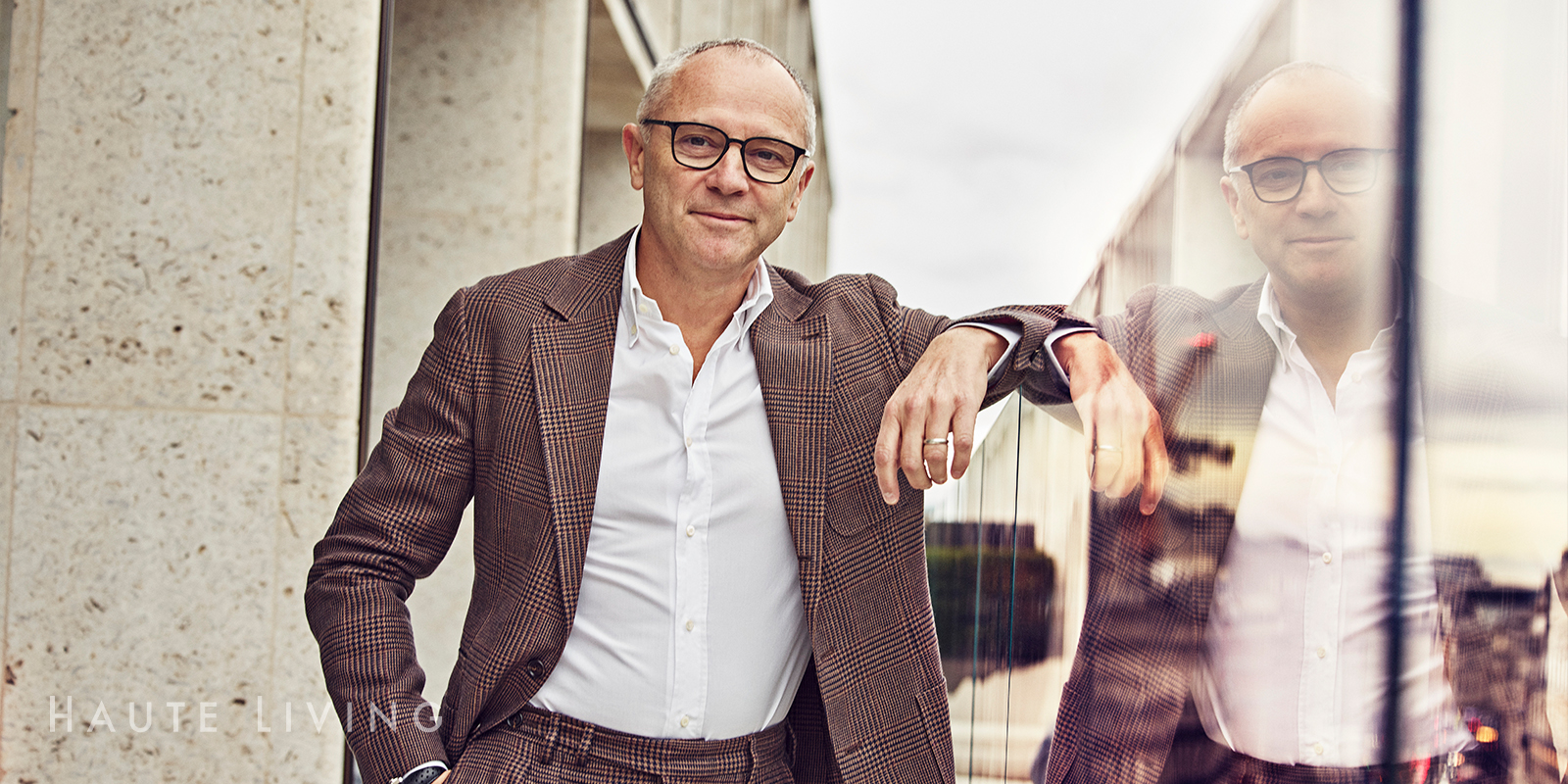
Photo Credit: David Clerihew
Latest from Haute Living
Lacoste & The Hoxton Just Dropped a Collab You Can Only Get By Checking In
The Bvlgari Serpenti Infinito Arrives in New York With a Golden High Line Installation
Inside the LOUIS XIII Black Pearl Experience