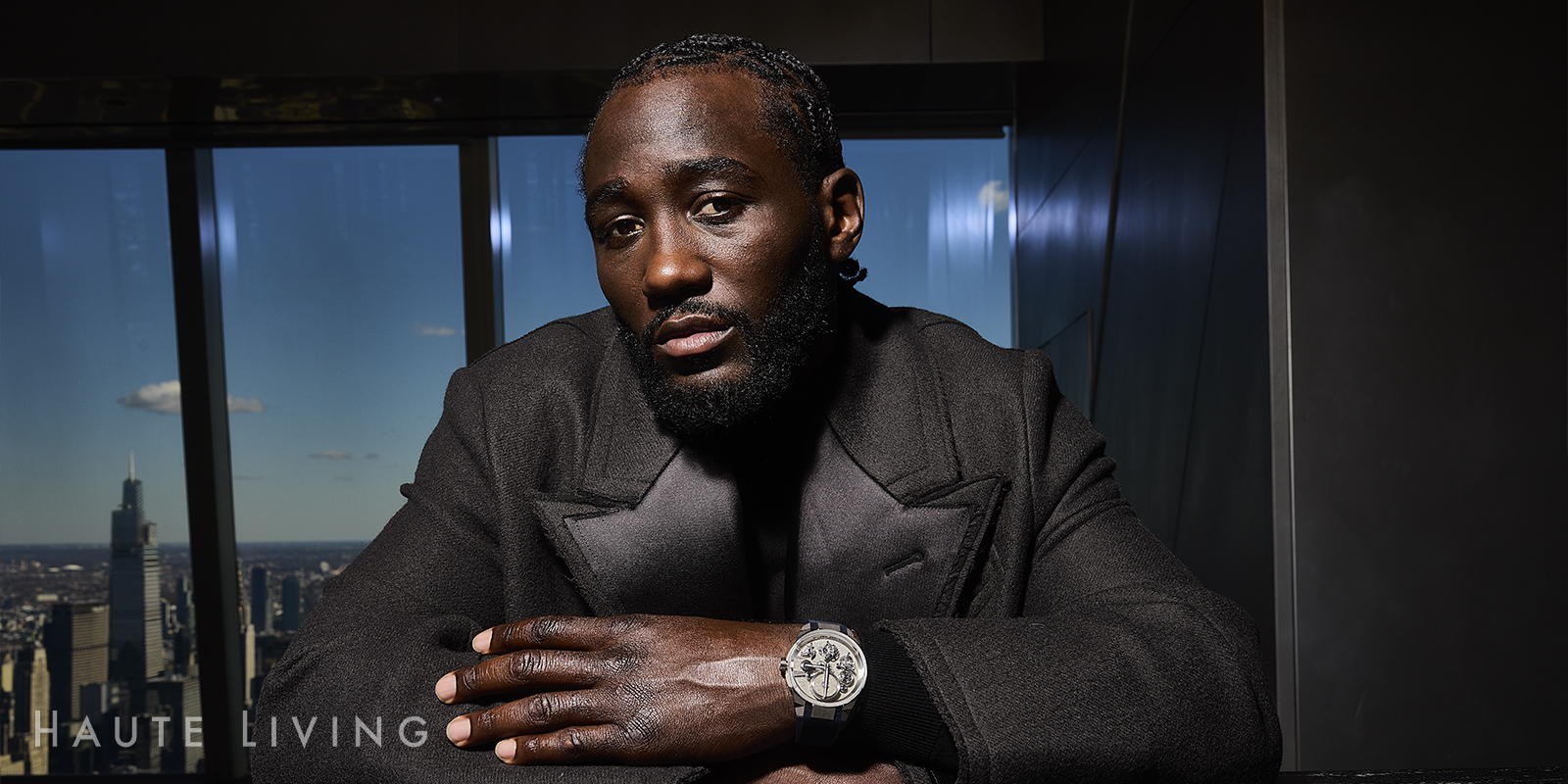
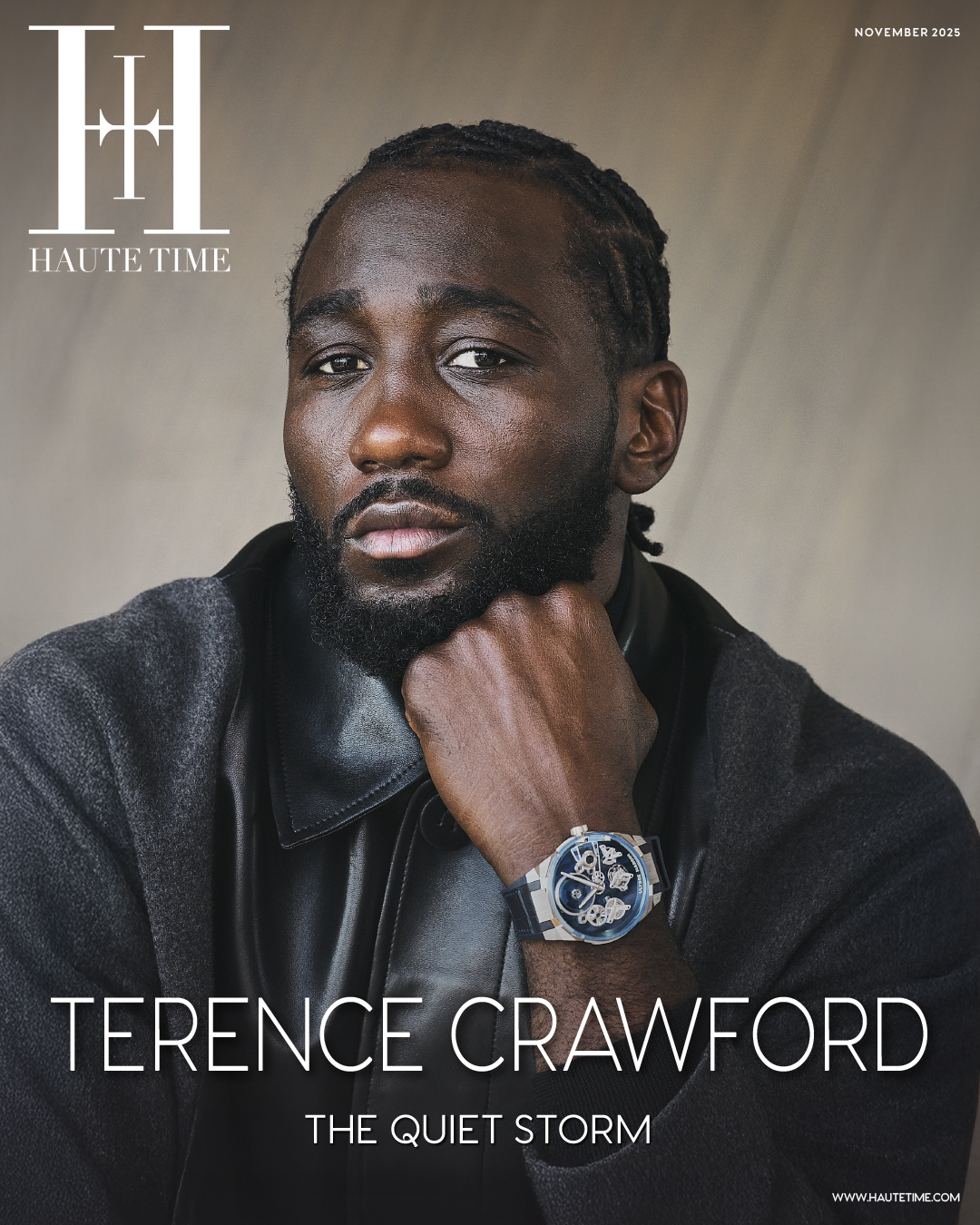
Terence Crawford: The Undefeated King Rewriting Boxing’s Legacy
Undefeated champion Terence “Bud” Crawford on legacy, mindset, and the art of domination — inside the fighter’s most personal interview yet.
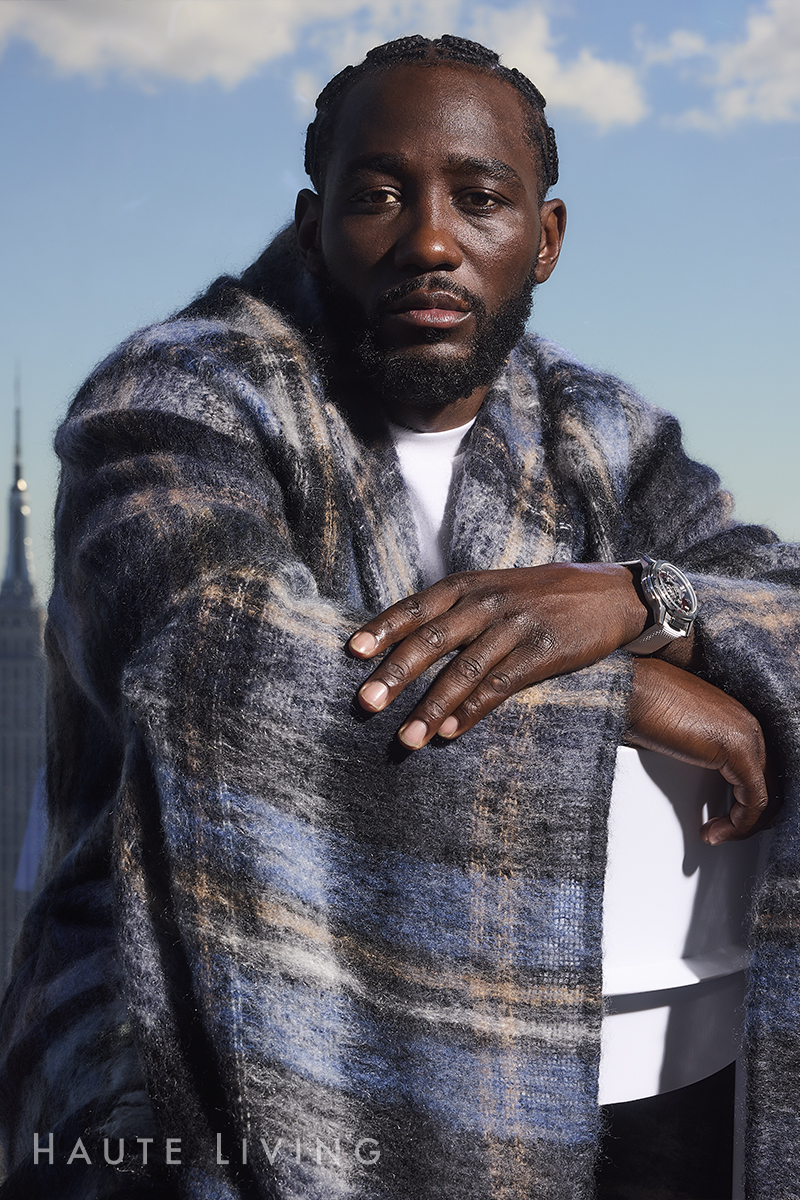
WATCH: Ulysse Nardin
Photo Credit: Ben Draper
Fresh off the fight of the decade and a legacy-cementing victory over Canelo Álvarez, undefeated champion Terence “Bud” Crawford reflects on risk, greatness, and the watches that will outlast even history’s loudest moments.
BY LAURA SCHREFFLER
PHOTOGRAPHY BEN DRAPER
STYLING JASON REMBERT
GROOMING VALISSA YOE
HAIR BRANDI TATUM
SHOT ON LOCATION AT EDGE NYC AT HUDSON YARDS, NEW YORK, NY
SWEATER: Mr. P
WATCH: Ulysse Nardin
Photo Credit: Ben Draper
The first sound is laughter — not the roar of a crowd or the bell that opens a title fight, but the chatter of children in the backseat of a car. Terence “Bud” Crawford, undefeated world champion and one of the greatest fighters of his generation, is driving his Denali with his kids in tow. It is an image that strips away the myth and brings the man into sharp focus: at the height of a storied career, he is still, above all, a father. “I’m a father first,” he says. “A family man. A provider. A supporter. All of the above.” His children don’t care about rankings or pound-for-pound debates; they care if Dad is present, if he’s listening, if he’s there. That distinction matters. Crawford’s résumé is astonishing — 42 wins, no losses, 31 knockouts; the first male boxer in history to become undisputed champion in three different divisions, junior welterweight, welterweight, and super middleweight; a five-division world champion. But he doesn’t lead with stats, belts, or accolades. He leads with his kids.
For a man who has cultivated an aura of menace between the ropes, he’s refreshingly candid about how that image translates—poorly—when he’s off the clock. “People say, ‘Man, I thought you was going to be a douchebag. I was scared to approach you,’” he recalls. “But once they get to know me, they always say, ‘You’re not who I thought you were.’” He shrugs at the assumption, almost amused by it. “I guess they think all boxers are mean.” The truth is simpler and more human: the pre-fight stare is armor, not identity. The man underneath is measured, steady, quick to laugh, and quicker to steer the conversation back to the only thing that outranks boxing in his life—family.
That steadiness didn’t materialize out of nowhere. It was forged in Omaha, Nebraska—about as far from boxing’s velvet-roped corridors as a fighter can get. Omaha isn’t a pipeline town; there are no conveyor belts of promoters and powerbrokers, no parade of established champions to smooth a prospect’s path. Crawford came up in a place that requires you to build what you want to become. Long before anyone called him the best in the world, he was just a kid who had to out-compete everybody at everything. Wrestling, football, basketball—he wanted to be great at it all. When he found boxing, that competitive fire found its true shape.
The teenager with a chip on his shoulder became the amateur representing his country; the amateur became the pro who, on debut, made an unspoken promise to himself: he would take the hard fights, on the road if necessary, and make the results so undeniable that politics couldn’t keep up.
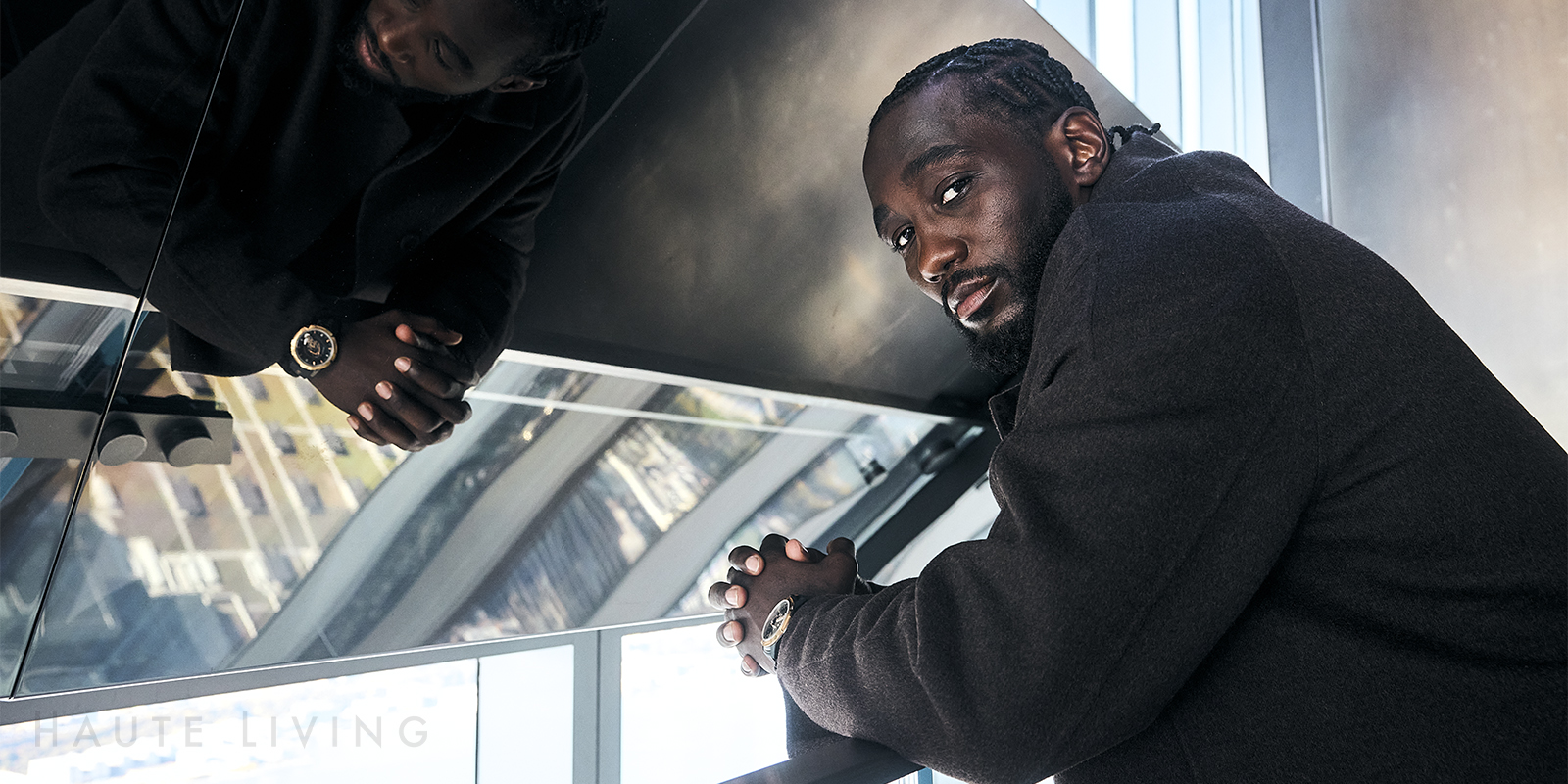
WATCH: Ulysse Nardin
Photo Credit: Ben Draper
“Since day one, I’ve been willing and ready to fight anybody,” he says, and there’s no bravado in it—only conviction. It’s a simple thesis, practiced relentlessly: if a challenge appears, lean into it. Don’t talk around risk. Walk toward it and make it work for you. “My risk-taking is what’s going to be talked about for years,” he tells me. “Every fight, I’ve been willing to punch with a fighter, take chances from awkward angles. To be the best, you gotta take risks. In the ring. In business. In life.” It’s not a slogan; it’s a lived philosophy that shows up in the choices he’s made—stepping into hostile arenas, jumping divisions rather than lingering in comfort, chasing the names that others circled but avoided. Crawford never chased the path of least resistance; he chased the path of greatest proof.
The proof stacked up. Belts gathered. Debates narrowed and then disappeared. The public’s understanding of who he was—technician, finisher, problem-solver—hardened into consensus. Still, ask him to distill all of that into a single word and he doesn’t hesitate. “Great,” he says. Not boastful—certain. “I did it my way. I beat the odds. I went against all the big-time players that were going against me. I ended it with greatness.” In his framing, greatness isn’t what other people hand you after you win; it’s the standard you set before you walk to the ring, the bar you clear because you decided you would.
That idea—greatness chosen before greatness is granted—is what ultimately pulled him toward the fight that would redefine the ceiling of his career. Every risk he had taken, every opponent he had out-thought and out-timed, every weight class he had conquered was quietly converging on one inevitability: a collision with the sport’s biggest global icon. He didn’t talk about that inevitability publicly at first; he simply carried it as fact, the way he carries himself into the gym, into a press conference, into his car after school pickup. When the paperwork finally caught up with the belief, the sport felt it. The date was set. The arena was chosen. The countdown began.
Las Vegas does spectacle better than any city in America, but there are nights when the Strip seems to glow hotter, when the air itself hums. September 13, 2025, was one of those nights. Allegiant Stadium, a black-glass cathedral built for moments precisely like this, filled to a record-setting 70,482. The concourses felt like a global summit of boxing royalty—former champions shoulder-to-shoulder with actors, musicians, and power players who had flown in to witness legacy in real time. Another 181 million watched on Netflix, the largest audience for a boxing event in the streaming era. The live gate climbed past $47 million, the kind of number that stops even jaded insiders mid-sentence. On paper it was Alvarez—red-head, granite chin, pay-per-view juggernaut—against Crawford, the undefeated Nebraskan who wanted not just the win but the last word. In the ring walk tunnel, the cameras caught the expected choreography: the lights, the music cues, the faces of cornermen turning to steel. What they couldn’t capture was the part that mattered most—what was happening inside Crawford’s head.
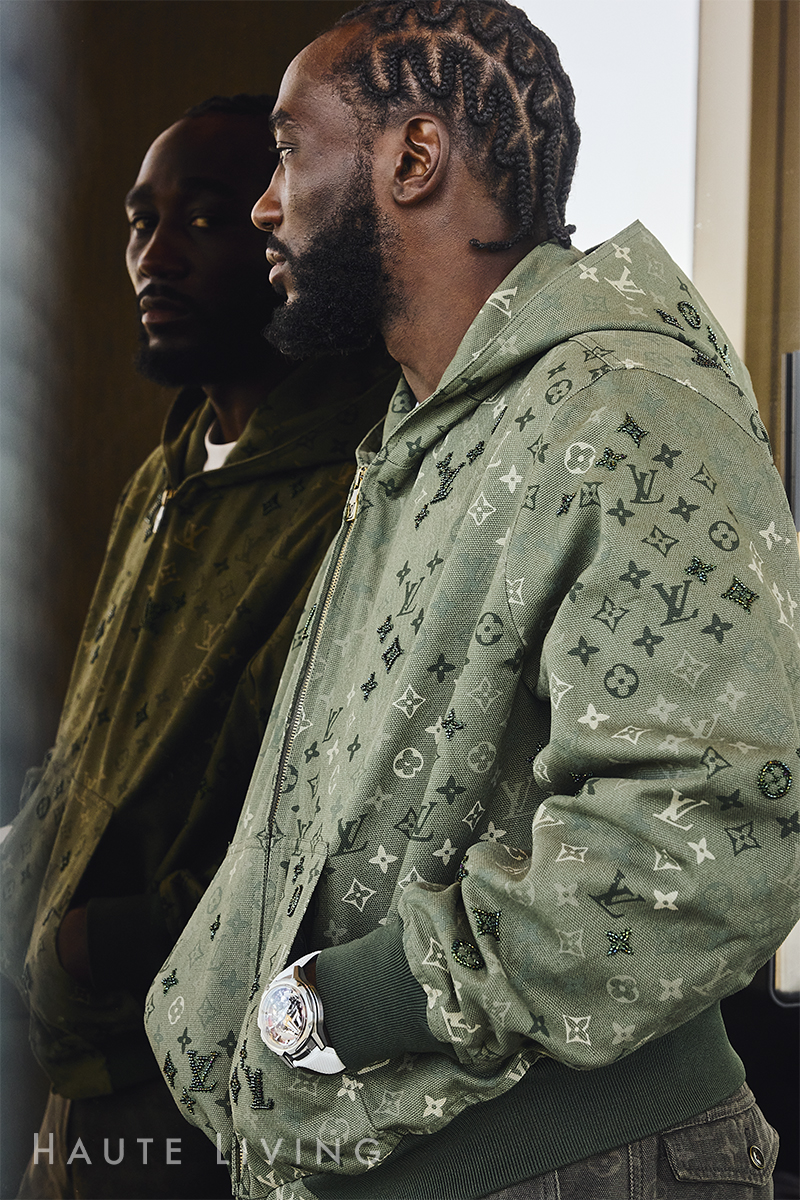
SHIRT: Louis Vuitton
WATCH: Ulysse Nardin
Photo Credit: Ben Draper
“I was confident one thousand percent,” he says, the line delivered without heat or spike, as if he’s describing the weather. “Everybody who didn’t believe in me was surprised. I wasn’t. I’d been telling people what was going to happen from the moment the fight got signed.” The distance between prediction and performance is where most fighters get lost. Crawford treats that gap like a hallway he knows by muscle memory. The bell rang and he stepped through it.
What followed was a masterclass in control under pressure. The game plan wasn’t a secret to the trained eye: manage distance, disrupt rhythm, use footwork to make a puncher reset before he’s ready to throw. But plans are just sketches until someone draws them in ink. Crawford drew in ink. He turned exchanges into equations, timing into leverage, and leverage into rounds that rolled in his direction. He didn’t chase chaos; he denied it oxygen. When Alvarez punched, Crawford made him pay for the choice. When Alvarez waited, Crawford took the lead without overcommitting. The thing about watching him solve is that it makes even the most kinetic moments look quiet; the ring becomes a workshop, the noise drops away, the work gets done.
And then the work was done. Twelve rounds had the shape of inevitability, and inevitability—when you’ve promised it—lands like a form of mercy. The final bell didn’t just end a fight; it completed a statement. Crawford didn’t celebrate like a man shocked by his own result. He celebrated like a man whose conviction had been verified by the loudest possible lab test: 70,000 people in the building, tens of millions more judging from living rooms and bars and phones around the world. “It was validation,” he admits. “But not for me. For the people who didn’t believe.” The distinction is important. He hadn’t needed the result to change what he thought of himself. He needed the result to change what everyone else would say when they said his name.
In the hours that followed, statistics and superlatives raced each other across the internet. Record-setting gate. Record-setting audience. Another line added to the bio that already reads like a ledger of hard promises kept. Most importantly, the piece of history that can never be undone: a first male fighter to become undisputed champion in three divisions, the kind of accomplishment that outlives an era because it’s built from principles that never go out of style. It was the latest, and perhaps the greatest, milestone of a journey that started in Omaha with a kid who wanted to beat everyone at everything, a teenager who discovered that fighting was where his competitiveness could live forever, a professional who decided that risk was not something to be managed but a tool to be mastered.
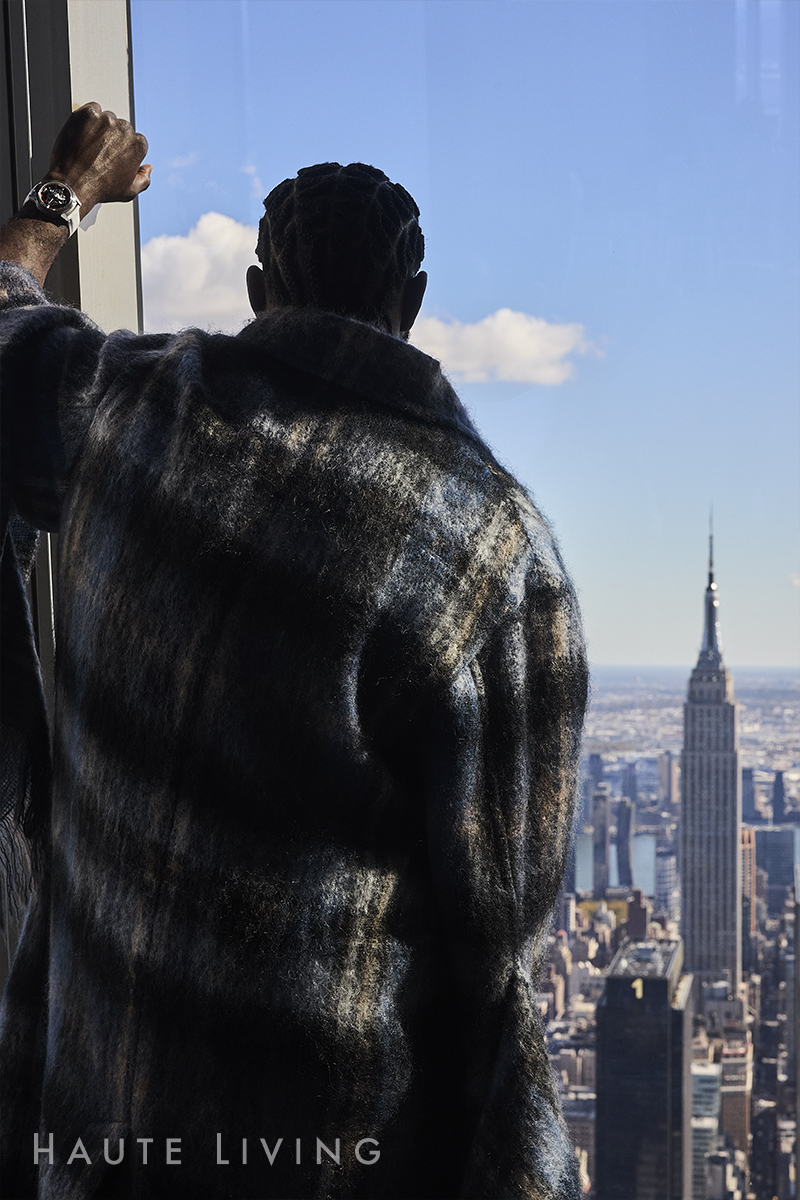
SHIRT: Louis Vuitton
Photo Credit: Ben Draper
Back in the Denali, the noise from Las Vegas is theoretical; the kids in the backseat are real. The ring walk lights get replaced by turn signals. The post-fight interview becomes a drive-thru window or a grocery list. And that is where you can locate the actual center of Crawford’s gravity. The belts and the titles and the broadcast numbers matter—of course they do. But they’re not the point. The point is showing up for the people who believed long before there were lights, long before there were trophies. The point is delivering the life those people deserve. The point is to be, in his own words, “a father first.”
If greatness is a word that makes some people flinch, it’s because they hear it as something assigned by others. Crawford uses it differently, almost like a verb. Greatness, as he defines it, is a way of moving through choices. Take the risk that makes sense to your soul. Do the work that leaves nothing available to chance. Make predictions you intend to keep. Accept that your public face will sometimes be mistaken for your private self, and let the work sort the difference. And when all of that converges at Allegiant Stadium on a night when the world is watching, don’t be surprised by the outcome. You already walked through that hallway.
In the end, what the night against Alvarez confirmed is not just where Crawford belongs in the record books, but how he got there. Not by gaming the calendar. Not by dodging the tough names. Not by sculpting a brand that looked like a fighter’s brand. He got there by treating risk like oxygen and conviction like a compass. He got there by being, paradoxically, both the quietest part of the storm and the part that sets its direction. He got there by doing the thing he always said he would do: fight anybody.
And so the narrative turns, as it must, from the collective roar to the individual day. Tomorrow there will be training or recovery or school drop-off. There will be phone calls and errands and a thousand small calibrations that make up a life. That’s the other outcome of nights like Las Vegas: the contrast throws everything else into relief. What seemed ordinary before looks precious after. The laughter from the backseat, the way a kid’s question interrupts a champion’s sentence, the offhanded joke that follows—it’s all part of the same story. In one chapter the world counts the numbers for you. In the next, you count the minutes for yourself.
If you ask him to summarize, he circles back to the word that started this section. Great. Not as a spike, not as a dare, not as a dismissal of anyone else’s claims—but as a simple description of a promise kept. He did it his way. He beat the odds. He went against all the big-time players that were going against him. And he ended it—this chapter, this argument, this particular climb—with greatness. The belts will sit in cases; the footage will live online; the numbers will be copied into databases. The person will get back in the Denali, check the mirrors, and pull into traffic. The first sound you hear again will be the one that tells you who he really is: laughter, from the back seat, on the way home.
LIVING BY TIME
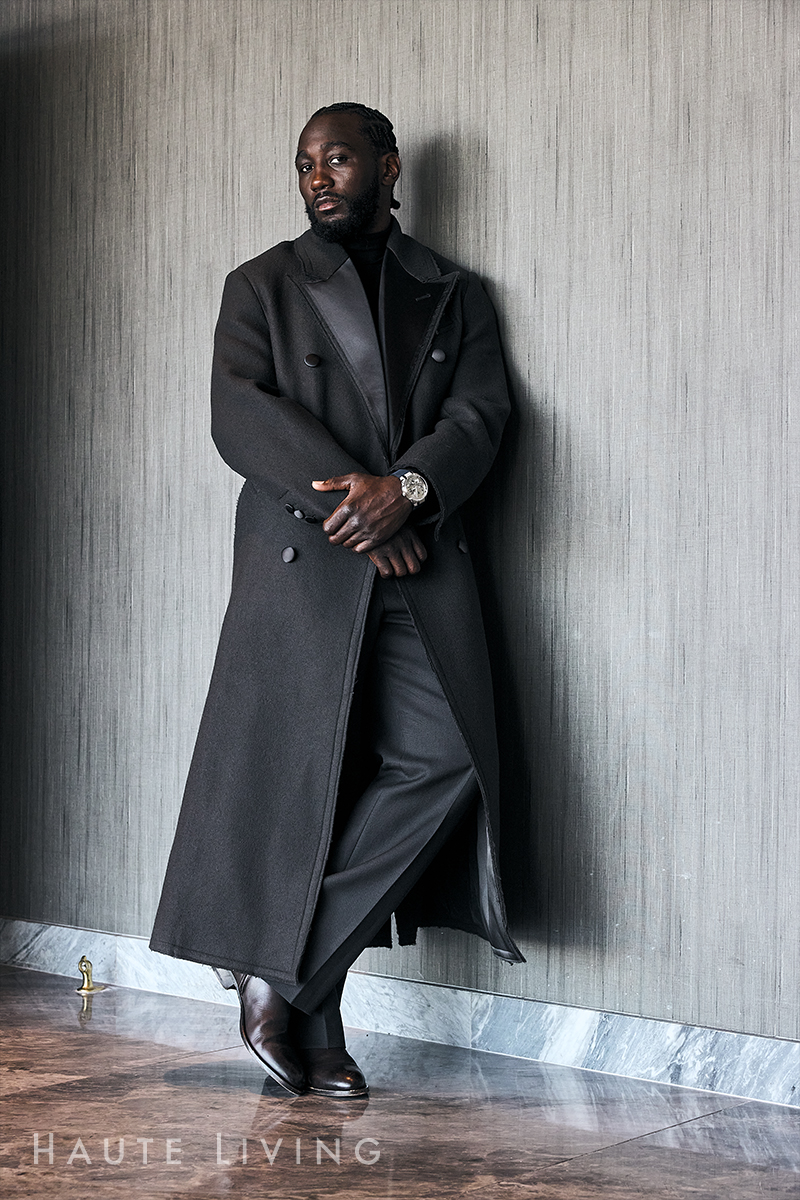
SWEATER: Mr. P
SHOE: Manolo Blahnik
WATCH: Ulysse Nardin
Photo Credit: Ben Draper
For Terence Crawford, watches are not trophies. They are markers. Each piece in his collection — whether bought with the thrill of victory or gifted with thought and care — tells a story about where he was at that moment in his life.
They are reminders of patience, symbols of craftsmanship, and vessels of memory. Each one tells a story, not only of what he has achieved, but of how he intends to be remembered. He still remembers the first time he bought a Rolex. As a boy in Omaha, he had always noticed them on the wrists of men he considered successful—the quiet signal of status, the gleam of hard work made tangible. The idea of owning one felt distant, almost abstract. But then the victories began to stack up, the checks became bigger, and suddenly it was possible. Walking into the store and making that purchase wasn’t about showing off. It was about what the moment represented. “That moment felt like I had crossed over,” he says. “It wasn’t about showing off. It was a reminder that I made it, that all the sacrifices meant something.”
The Rolex wasn’t just a timepiece; it was a marker of time itself, a milestone cast in steel. While some athletes splurge on cars, houses, or champagne-fueled excess, Crawford’s first indulgence was something quieter, more enduring—an object that held its value both financially and emotionally. That choice said as much about him as any punch thrown in the ring. Where flash burns quickly, a timepiece endures.
In a sport where success is often measured by flash, Crawford’s fascination with watches stands out. For him, they are investments, but more than that, they are extensions of discipline. They speak to patience, precision, and timing—the very qualities that define both boxing and horology. “Some people buy things just to say they’ve got it,” he says. “But a watch, man—it’s different. You can look at it every day. You can hand it down. It’s not just a thing, it’s a piece of history.” That belief has guided his approach as his collection has grown. He doesn’t count them, doesn’t obsess over daily wear. They are kept in a safe, brought out for occasions that matter, each chosen with intention.
It is not that he doesn’t appreciate luxury—he does. But he sees it differently than most. Crawford isn’t interested in being covered in diamonds for the sake of optics. He prefers the quiet elegance of a well-crafted piece, something that says more with understatement than with glitter. “I got some flashy jewelry, some mellow jewelry, some classic jewelry,” he says. “But I think I’m more classic than anything. I’m not a big jewelry guy. I got jewelry, I wear jewelry, but it ain’t something I need to put on every day. You see a lot of people every day, they got their jewelry on. I’m not that type of person.”
WATCH: Ulysse Nardin
Photo Credit: Ben Draper
Still, watches hold a special resonance for him—especially when they are given, not bought. In the days leading up to the fight of his life against Canelo Álvarez, Crawford received a gift that stood out: a Ulysse Nardin watch. He speaks about it with an appreciation that cuts through his usual understatement. “That’s a dope piece,” he says simply. For him, it wasn’t about market value or rarity. It was about meaning. The fight was a single night, a spectacle, but the watch would remain long after, quietly marking time, keeping the memory alive. “It’s definitely a piece that’s going to be around for a long time,” he adds.
That philosophy runs deep. To Crawford, the value of a gift lies not in the number on the price tag but in the thought behind it. “Whether it’s $10,000 or $100,000, it means something to me because it came from you,” he explains. “You took the time to think about what to give. That matters.” His watches, in that way, are less about ownership than stewardship. They are objects he sees himself one day passing on to his children, each one carrying not only hours and minutes but the weight of history. He describes it as handing over time itself, as creating heirlooms that bridge generations. “When I give someone a watch,” he says, “it’s not just me saying, ‘Here’s a gift.’ It’s me saying, ‘Here’s a part of me, here’s time. Carry it, remember it.’ That’s forever.”
The way he speaks about it, you sense he is less a collector than a custodian. His pieces are tucked away carefully, not paraded daily. When he does wear them, it is with intention, not habit. He learned early that true wealth doesn’t need to shout. Growing up, he noticed the difference between men who flaunted cars and chains and those who simply wore a watch with a suit. “Meeting successful people and businessmen, they all have watches,” he reflects. “You see guys from the neighborhood, you think they got money because they got the cars and jewelry. And then you see this other guy—he doesn’t need all that glitter and glamour, but he’s got a nice watch and a nice suit. That’s when you know.” The lesson stuck: success is not about flash but about foundation.
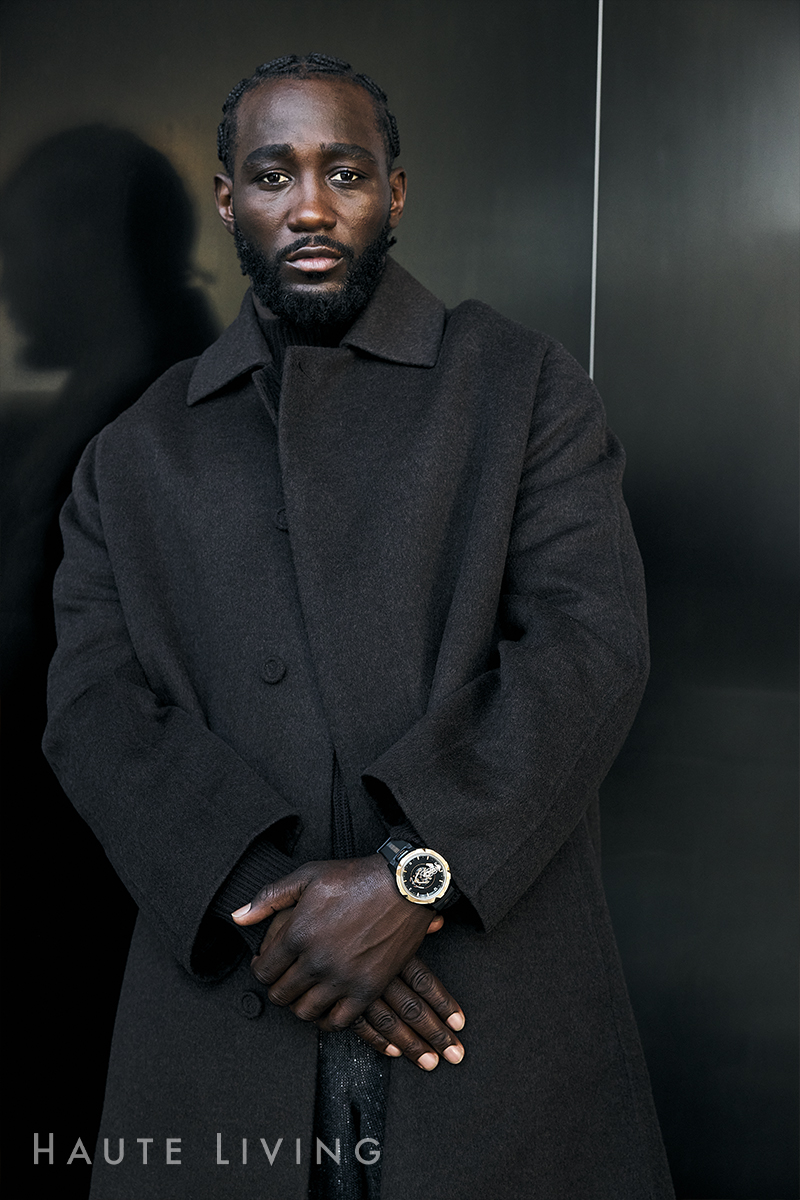
Watch: Ulysse Nardin
Photo Credit: Ben Draper
It is also, in many ways, the perfect parallel for how he fights. Jewelry shouts. A watch whispers. Flash is fleeting. Craft endures. Boxing, like watchmaking, rewards those who understand timing, patience, and precision. The comparison isn’t lost on him. “Think about it,” he says. “A fight is like a watch. Every second counts. You can’t rush it, you can’t force it. You’ve got to trust the work that’s been put in, just like a watchmaker trusts the movement he built.”
The deeper you follow the analogy, the more it holds. To the untrained eye, a knockout might look like brute force, just as a watch might look like nothing more than gold and glass. But the trained eye sees the mechanics—the angles, the calibrations, the hundreds of invisible decisions that produce the visible result. Every feint, every jab, every pivot in the ring is a gear turning, a spring coiling, a movement designed to create perfect harmony. When it all comes together, when Crawford lands a fight-ending shot or when a tourbillon keeps time flawlessly, the result feels inevitable, as if it could never have gone any other way.
And yet, for all his love of watches, Crawford insists that true luxury isn’t bought—it’s lived. He doesn’t hesitate when asked what he considers the greatest luxury of all. “The real luxury? Health,” he says. “That’s what matters. I can buy watches. I can buy cars. But if I don’t have my health, I don’t have anything.” It’s a perspective that feels both practical and profound. In the ring, one injury can end a career. One mistimed punch can change a life. Staying healthy isn’t just about training; it’s about longevity, about being present for his kids, about ensuring he has more time to enjoy the life he has built. Watches may mark the hours, but health is what allows you to live them. “You can’t do nothing if you’re not healthy,” he says plainly. “Nothing at all.”
That belief reframes everything else. Watches are symbols, markers of time, but health is the foundation—the ability to actually live the time being marked. It is the truest wealth, the kind that no market fluctuation or resale value can touch.
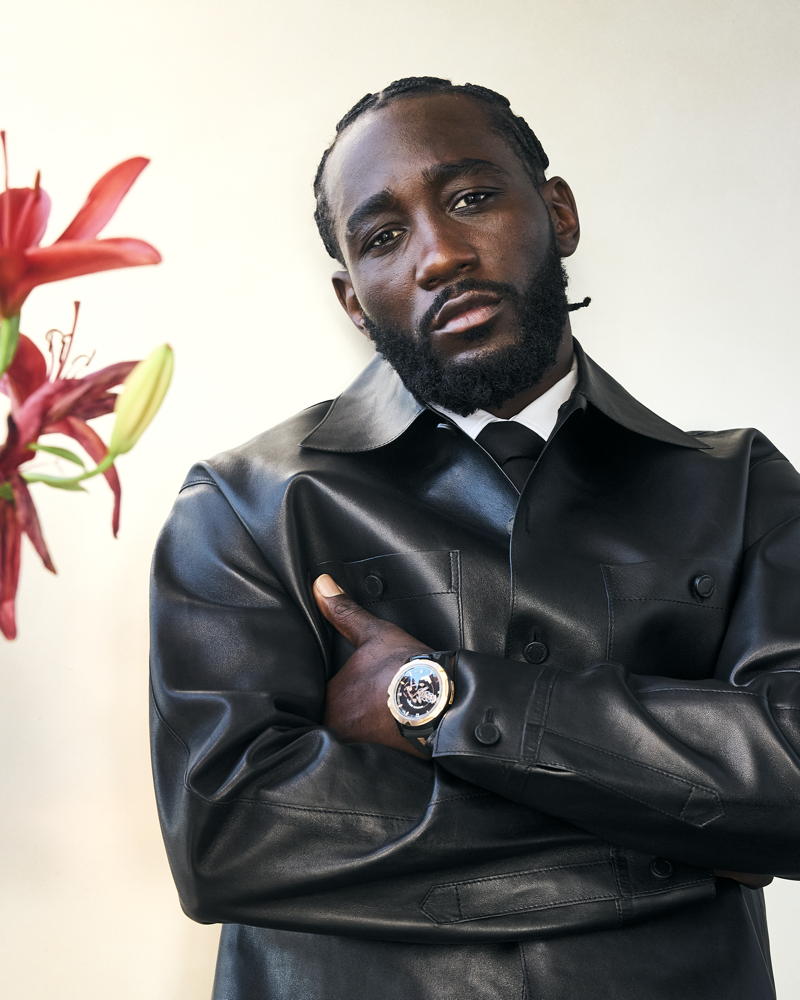
WATCH: Ulysse Nardin
Photo Credit: Ben Draper
Legacy is the word that comes up again and again in his reflections. The Canelo fight will always be remembered as one of his defining moments, but he doesn’t see it as the final chapter. It was just another milestone in a longer journey. In the years ahead, he hopes his watches will outlast the titles, the viewership numbers, the dollar figures. They will remain as heirlooms, each ticking second a reminder of what he built not just for himself but for those who will carry his name. “When people look at my collection one day,” he says, “I want them to see more than just watches. I want them to see my journey. Every fight, every win, every sacrifice—it’s all in there.”
There is poetry in that image: the man who mastered time inside the ring, dictating tempo against some of the greatest fighters alive, leaving behind objects designed to measure time itself. Just as a fight is built from a thousand small decisions made in real time, a watch is built from hundreds of intricate parts, each one essential to the whole. Crawford’s life, his career, his collection—they are all mechanisms designed to endure, to outlast their era, to be remembered long after the crowd has gone home.
As for what comes next, he won’t tip his hand. He is still undefeated, still sharp, still reigning. More fights may come, more milestones will certainly follow, but whether or not he ever laces the gloves again, he has already secured his place. He has already built the kind of résumé and reputation that will be spoken of long after he has stopped adding to it. The watches in his safe will tell that story in their own quiet way.
What stands out, especially for Haute Time, is the way he speaks about his collection—with reverence, with thoughtfulness, with the same care he applies to his craft in the ring. These are not toys. They are testaments. They are pieces of history disguised as accessories, markers of risk and reward, reminders of sacrifice and triumph. In that sense, Crawford and his watches are one and the same—both defined by movements measured in seconds but remembered for lifetimes, both demanding precision, patience, and respect, both, ultimately, about legacy.
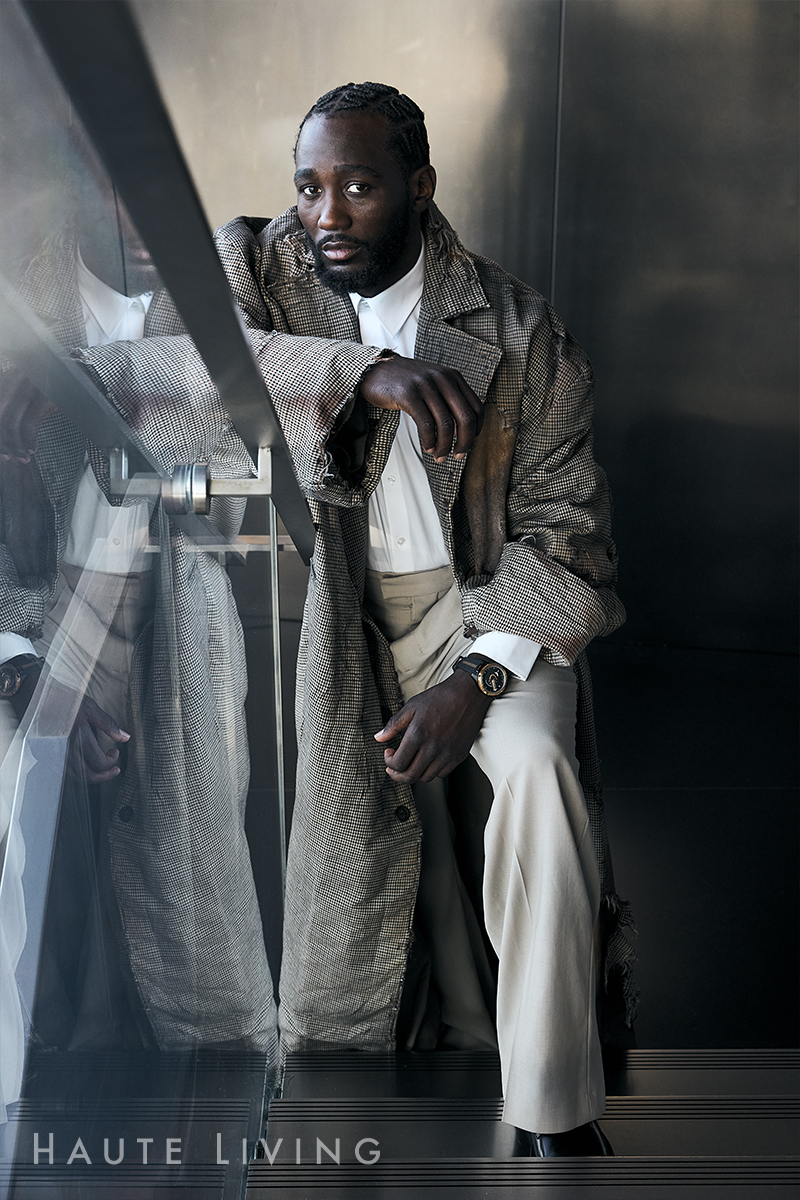
SHIRT: Eton
PANT: AMI Paris
SHOE: Scarosso
WATCH: Ulysse Nardin
Photo Credit: Ben Draper
Latest from Haute Living

The Best 6 Hotel Spas in Atlanta, According to Our Editors

Nicola Siervo Brings the Italian Riviera to the Miami River with Mercante

Miami’s Best Kept Secret Isn’t the Club, It’s the Hotel Bar