Frank Carone Lives By a Simple Rule: It’s Better When Everyone Wins

Frank Carone Is Rewriting the Rules of Influence
For Frank Carone, influence isn’t about domination. It’s about alignment, access, authenticity and, ultimately, making sure everyone wins.
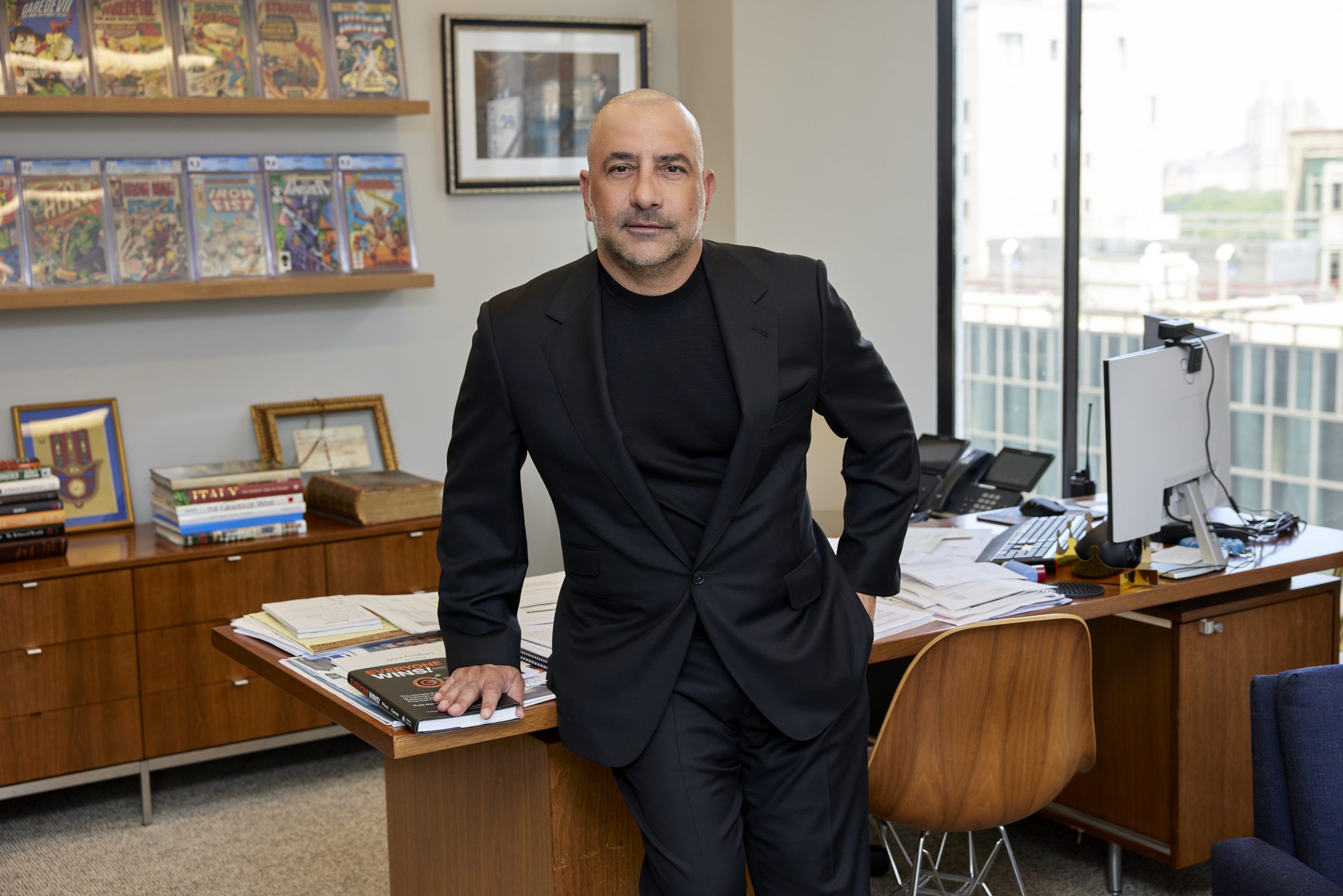
“Everyone Wins.” Two simple words that, for Frank Carone, serve as a radical blueprint for power, strategy, and legacy. This is not a feel-good motto—it’s a tactical philosophy for business and for life honed by someone who has more than three decades of experience navigating the intersection of law, politics, business, and culture around the globe. In his new, best-selling book, Frank writes this mindset isn’t aspirational—it’s achievable and essential for success.
“Human nature is to do what’s in our best interest, at its essence, and typically you must deal with other people to do so,” Frank Carone explains.
“You could achieve a goal by directly aligning with the goals of others, which doesn’t mean you don’t still have to negotiate hard for the best result. But if your ideas don’t align with the other person’s goals and objectives, it won’t happen,” Carone said.
Getting to a situation where everyone wins isn’t about compromise or diluted results. It’s about clarity. Listening. Tactical empathy.
“People hear without listening,” he says, quoting the Simon & Garfunkel classic — though he prefers the disturbed version. “They’re too busy planning their rebuttal to hear what the other person needs.”
When you listen to understand and empathize, not to respond, you discover alignment. And where there’s alignment, there’s opportunity. It’s this principle that inspired Carone to pen his best-selling book, which he calls a practical guide to achieving financial freedom without losing your integrity or your humanity.
Carone has implemented this mindset in all his endeavors, from growing up in working-class Brooklyn, to leading a 100+ person law firm, and eventually overseeing multiple legacy-defining projects as Chief of Staff to the Mayor of New York City. He specifically recalls from City Hall how the long-stalled Willets Point redevelopment had failed to move forward under several administrations. But Carone approached it differently. “We are doing this,” he told stakeholders from unions, developers, and the community at the first meeting. He listened to every party’s needs, constraints, and ambitions. Then, he aligned those interests, finding common ground without asking anyone to compromise beyond their values. And at the end, everyone agreed to a deal of creating 2,500 units of affordable housing, the city’s first-ever privately-funded professional soccer stadium, and major infrastructure upgrades for the former industrial neighborhood.
In just 60 days, Carone’s team was able to succeed where previous mayoral administrations had fallen short because they didn’t ask for anyone to lose for the city to win.
“This could not have happened without the type of lessons that I speak of in the book,” Carone states.
Investing with Intention

Now as the founder and Chairman of Oaktree Solutions, a venture consulting firm focused on public affairs, Carone doesn’t just invest capital, he invests conviction – and he believes anyone who follows that blueprint can also expect a significant return on that investment. Take the new series One Day In October, which is the first scripted television series on the subject of the October 7th attacks in Israel. The project had stalled, in part due to a lack of financial support.
But Carone saw something essential in the story: “I grew up very fortunate in a diverse community,” he says. “My professional life, in some ways, centered around Judaism almost as much as the Catholicism I was raised in.”
According to creator Daniel Finkelman, that’s what this series is about: aiming to preserve the truth by telling the stories of the people who experienced those horrific attacks firsthand, and what they were doing that day. As both producer and investor, Carone brought the stalled project across the finish line not just with funding, but with faith.
“I gave the producer and his team the full financing they needed to produce,” he says. “It is set to release internationally in 2025.”
His investment in Luna Luna—a surreal art carnival resurrected at Hudson Yards—came from a mix of civic responsibility, personal passion, and cultural pride. Through mutual connections, Carone met with public relations wizard Ken Sunshine, who introduced him to legendary rock-and-roll producer Michael Cohl.
“Michael and his son Jacob are the creative geniuses behind Luna Luna,” Carone says. “They brought me into the project, and as an art collector myself, it was right up my alley.”
The backstory was as fantastical as the exhibit: original installations by legendary artists such as Keith Haring, Jean-Michel Basquiat, and Roy Lichtenstein, forgotten in a Texas storage unit for 36 years.
“Of course, we can’t have only L.A. doing it,” Carone jokes. “We need it in New York.”
But beyond the spectacle, Carone believes the project presents a more meaningful opportunity: a chance to democratize wonder. He sees it as yet another way he can leave a lasting legacy, a key step to ensuring everyone wins.
“Culture is a huge part of what we are as New Yorkers,” he says. “Luna Luna is about making art joyful—and accessible—to everyone.”
Where Legacy Meets Leverage: Carone’s Vision for Athlete Investments

Frank Carone sees athletes not just as competitors, but as brands with untapped potential. His entry into the sports world began through the legal representation of the powerhouse baseball agency ACES, a client during his legal practice. That exposure, combined with a lifelong ability to learn from others’ missteps, sparked a deeper realization.
“It’s disappointing to say that many athletes post-career have not properly monetized their brand the way they could and should,” Carone said. “There are exceptions, but the vast majority do not.”
He’s seen firsthand how star power can fade without the right infrastructure behind it. Now, through Oaktree Sports Ventures and a new partnership with former NBA All-Star Jayson Williams, he’s building that infrastructure, pairing emerging and legacy athletes with companies that are past the startup phase and ready to scale.
For Carone, this is about legacy, ensuring athletes are empowered long after the final whistle.
“They have what politicians pay for: attention,” Carone said. “If they think about that early in college, even they can use it to build something lasting.”
From charity events for retired football players to aligning current stars with impact-driven ventures, Carone’s approach fuses strategy with stewardship. The goal is clear: make sure the spotlight doesn’t dim once the game is over.
Legacy in the Making

Carone isn’t chasing influence. He’s curating it.
For Carone, the foundation of every decision, whether in politics, business, or culture, is built on authenticity.
“I may make mistakes,” he admits. “But I never lie. That authenticity requires courage, but it pays enormous dividends.”
It’s a principle that informs not only how he operates, but also how he avoids pitfalls.
“You solve many problems before they begin by being transparent and speaking the truth-as you understand it to be. And sometimes my truth is wrong. And I’m happy to then pivot because I had the wrong facts in mind,” Carone says.
That level of self-awareness extends to the opportunities he accepts—and the ones he lets pass.
With a constant stream of deals and invitations landing at his feet, Carone’s focus is sharpening.
“Underwriting the opportunities is something I recently started focusing on,” he says. “We just had a meeting yesterday about that very question—distilling the pipeline to focus most on the strong opportunities versus the weak.”
He’s open to all kinds of ventures—sports, art, spirits, media, technology and beyond—but they must meet a core test.
“I have to understand and see the finish line. If I can’t, or it’s not clear to me or my team, It’ll be hard for us to move forward,”he explains.
For Frank Carone, dealmaking isn’t about the flash—it’s about clarity, conviction, and staying true to what matters. Most importantly, he believes influence isn’t power over others. It’s power with others.
That’s the only kind worth having. When you lead with that kind of power? Everyone wins.
Looking for expert legal representation? explore the Haute Lawyer network.
Latest from Haute Living

Inside Seia’s Museum-Grade Hospitality

Our Editors Say This is the Skincare Brand Actually Changing How Luxury Skincare Works

Palm Beach Season is Officially Starting, and the Island Is About to Triple in Size