The Seth Greenberg Special
The hospitality visionary continues to serve up the very best in lifestyle experiences.
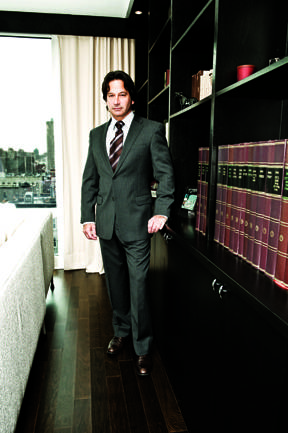
Seth Greenberg sits at his favorite table, center stage, and towering over all others in the space. The long, tall, and sturdy sharing table speaks much to the story of Greenberg’s career: Long. Tall. Sturdy. And created to share.
The legendary hospitality pro has been a renegade. He’s forged new concepts, executed them sharply, and in turn, proven their success, time and time again. Hot on the heels of his newest venture, steakhouse-cum-farmhouse, 1500 Degrees, we caught up with the lifestyle giant to learn just how he does it. And how he plans to keep us entertained—and well fed—going forward.
Like with all great stories, his was born in that spark where eager youth meets forward-thinking genius. At a ripe 17 years, Greenberg was attending college at Boston University and working as an event promoter. Having been born in New York City and grown up in Miami Beach, the knack for bringing together the right group of people was a skill he’d honed in on, and perfected, by this point. For the son of an international businessman with factory outposts in Hong Kong, Thailand, Singapore, and Italy, being constantly in the company of people of different cultural backgrounds the world over, was nothing short of commonplace. And armed with the arsenal of tools that comes from such experience, Greenberg met the world.
At 23 he had his first nightclub, aptly named Paradise. But quite quickly, Greenberg birthed the Euro Club concept; a term derived from Euro House, a genre of music, and one that he felt fit not only the concept, but the clientele—a motley assortment of friends and friends-of-friends from all corners of the globe. So, M-80, the “Euro Club” was built within the Paradise space, and nightlife was forever changed. “It became a place where all of my artist, entrepreneur and sophisticated friends around Boston worked and played,” sums up Greenberg. “There were beautiful models and cool people. Everyone that worked there was friends with everyone who came there; it was home base for the international jet-set that lived in Boston, but they weren’t treated as foreigners, they became part of what we referred to as the Euro community.” This “community” he goes on to explain, was a cross-section of cultures: “Middle Easterners and Arabs partied with wealthy Jewish kids from New York who also mingled with Latinos. It was a melting pot for the wealthiest kids in the world whose parents sent them to college in Boston.
M¬-80 eventually took over Paradise. The demand to be involved was such that Greenberg created a membership program. Become a member, and you’ll always have a table. But the marketing strategies didn’t stop there. Greenberg threw members’ parties once a month, and similar dinners weekly. “Part of my marketing program was to host a dinner once a week and invite local celebrities, new acquaintances…I told my Board of Directors that I’m not going to advertise; instead I’m going to spend the money on new interactive marketing platforms, and that’s how we developed our client base of movers and shakers and personalities that became the fabric of the city.”
Eventually, these members would graduate or move away, but they never forgot the times they spent with Seth. Greenberg recalls watching his M-80 office evolve into a concierge service. “My office became a concierge resource for everyone. When younger siblings or cousins of friends came to Boston they were told to call Seth Greenberg. If they needed a doctor wanted or needed to buy a car, or concert tickets, or dinner reservations, whatever it was, M-80 concierge services would do everything for everyone.” By age 30, and after over a decade of “doing everything,” Greenberg owned ten clubs in Boston. Genius struck again—it was time to dabble in dining.
It wasn’t until he opened his first restaurant, Mistral, that Greenberg really realized just how far reaching he was as a brand. Aside from a few charity events held yearly at his clubs, the clientele had been mostly younger; but the more mature set was vying for a similar experience to call their own. A place where they could find themselves in the good company of the afore-mentioned Euro community, and enjoy evenings of their own kind of fun. A strong dining concept house in the confines of a beautiful, historic building provided them with just that. Today Mistral is running on some 14 years of success; and while it was the first of Greenberg’s golden dining establishments, it certainly wasn’t the last.
From Boston he shifted gears and embarked on a journey to develop similar, stellar restaurant concepts in his birth city, New York. And there was certainly a common ground. In 2002 Greenberg opened Capitale, also housed in a historic building, and also catering to an eclectic mix of upper-echelon members of society with a discerning palate and strong sense of how they wanted to spend their time. The Stanford White-designed venue, once the home of The Bowery Savings Bank, is so expansive and so stunning that it currently acts as home to some 60-plus weddings a year. “Capitale really became successful as a catering facility, hosting gorgeous social events on the weekends and high-end corporate and charity dinners during the week. We knew we catered to the downtown market and since a majority of business in New York is based on geography, we jumped at the opportunity to open something in midtown,” explains Greenberg. And jump they did. This time the space was more modern in design. Housed in the Atelier building on 42nd street just off the West Side Highway, espace quickly became a very successful project all its own. And Greenberg credits much of said success to that very address. “We get a lot of events tied to the convention center which is literally located a block away from espace and that clientele would probably never consider an event downtown at Capitale,” describes Greenberg. The space is also really malleable, transforming into the wonderland required by the client. “We attract many of the automotive industry clients as our design allows for a car to drive right into the space through the front doors, which open very wide. You can’t place a car in Capitale.” Different options mean Greenberg is never competing with himself, so he continues developing new concepts in his three key cities: Boston, New York, and most recently, Miami.
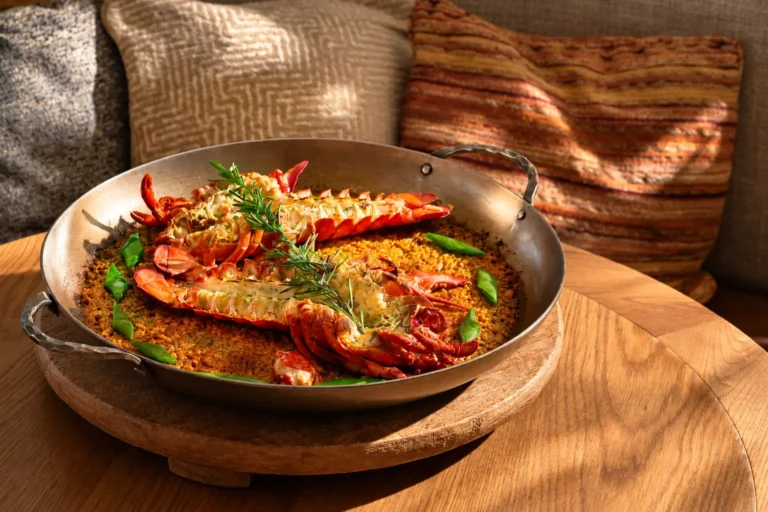
When the historic Miami Beach hotel, the Eden Roc, was redone it made all but too much sense for the property to tap Greenberg’s talents to create their signature restaurant. And he was just too happy to participate in the evolution of the space; which happens to stand tall on the stretch of beach, which once acted as his childhood stomping grounds. Walking in through the newly renovated lobby, one’s eye is drawn directly to the corridor leading towards the beach. A wall lined with a Peter Tunney-realized, pop art collage of old photos of the property from the 50’s, 60’s, and 70’s practically walks you to the restaurant,by the hand. The latest of Greenberg’s projects, 1500 Degrees serves its guests, lobby hanger-outters, and the inhabitants of some 630-guest rooms under the direction of Executive Chef and Hell’s Kitchen runner-up, Paula DaSilva, whose skill on the grill had much to do with the naming of the steakhouse, a fact understandably crucial once one becomes aware that the proper temperature at which to sear a steak is, in fact, a sizzling 1500°. DaSilva is also at the helm of the constantly evolving menu, making sure to change offerings daily and according to season in order to incorporate only the freshest local ingredients. And by fresh, we mean cut from the garden growing just outside the perimeter of the restaurant’s outdoor seating terrace. : “We gave the restaurant a true farm-to-table feeling by utilizing all local fruits, veggies, line-caught fish, grass-fed beef, goat cheese from a farm in plantation- all local purveyors.”
The delicious offerings at 1500 Degrees are only the beginning for Greenberg who has already broken ground on his next project within the Eden Roc space. This time tapping into memories of some 15 summers spent in St. Tropez, Greenberg is creating what has tentatively been named Cabana Beach Club. Passed the pools, bars, and currently in-development Elle Magazine-branded spa, sits what promises to be Miami Beach’s next hot spot. Sitting far back on the beach, above the boardwalk, with breath taking views not otherwise available on Miami Beach, Cabana Beach Club will be the place for visitors to settle in for the long haul. Equipped with fire pits, a retractable roof, and NanaWall transforming doors, the casual dining establishment will be open for lunch and dinner but also well into the evening hours for your enjoyment. The idea: to feel like you’re in the middle of the Mediterranean. Greenberg proudly states that this joint should be open in the next three months or so, and we await its arrival with bated breath; but in the interim, may I suggest dining beneath the Greenberg-dubbed Avatar tree on the terrace of 1500 Degrees. Oh, and try the brussels sprouts.
Latest from Haute Living
The Best Investment Cashmere Worth Buying This Season
Inside LDV Hospitality’s Most Stylish Venues for Holiday Celebrations in New York
Arid Blayne’s New Slipper Brings Luxury Hotel Comfort Home