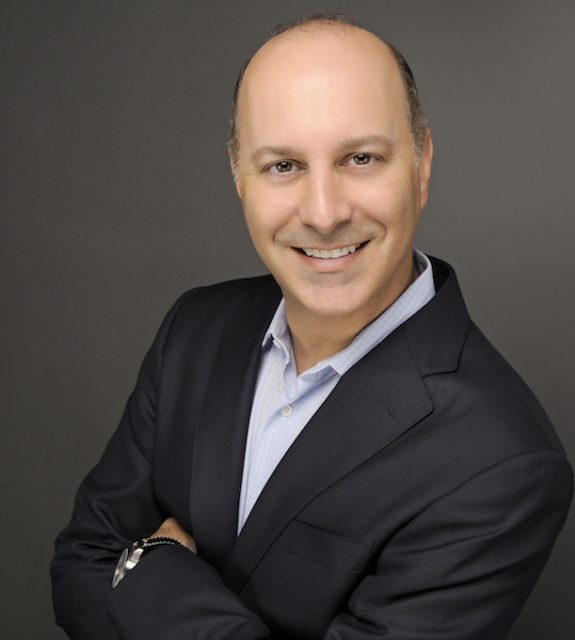






FOUR YEARS AGO, Haute Living interviewed attorney Michael Kosnitzky, a Pillsbury Law partner specializing in private wealth for the ultra-wealthy. Kosnitzky shared his wealth insights, including the impact of financial legislation on clients, alongside his tried-and-tested techniques for working with the ultra-wealthy. Now, four years later, Michael Kosnitzky is a partner and co-chair of Pillsbury Winthrop Shaw Pitman’s Private Client and Family Office Group (PCFOG). Haute Living’s Haute Lawyer Network branch has interviewed Michael again to find out what’s changed for clients, the nature of having a holistic approach to wealth, and what insights the ‘wealth wizard’ has in 2025.
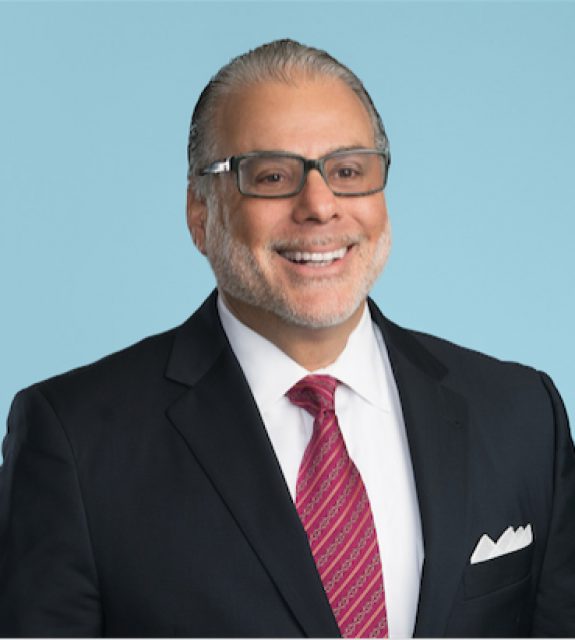
Michael Kosnitzky’s main professional goal is to protect the ultra-wealthy and their families against government intrusion, confiscatory polices, and anything that would harm them fiscally, physically, and emotionally: as a private wealth law partner, his work does just that.
Q&A with Michael Kosnitzky on Navigating Wealth Law
Haute Lawyer: As an attorney with a focus on private wealth, what is your job’s main focus?
Michael Kosnitzky: “Paraphrasing F. Scott Fitzgerald, the rich are very different,” Kosnitzky says. “They are a unique community within our society that requires a completely different mindset to provide advice and counsel properly. They are often significantly affected by changes in government policies.”
In short, “our most important job is to identify, assess, articulate, and then mitigate risks of all kinds to our clients. These include income and estate tax risks, but they also include things like employee risks, civil and criminal litigation risks, creditor risks, divorce risks, general business risks, investment risks, securities law risks, reputational risks, and many others.”
In our role as attorneys, we do not promote any investments; rather, our job is to analyze investments. As our clients’ primary legal consultants, our focus is on sorting the legal risks of investments. We have a specialization in areas such as federal income tax audits, securities laws, aircraft acquisitions, art and valuable collectibles, oil and gas, renewable energy, foreign investing, technology, digital assets, among other specialized areas of the law, so at any time, our clients and sometimes other lawyers and law firms reach out to us for advice on those specialized areas. Often, we work in tandem with other consultants or area specialists, and when we are called in to consult, we help existing counsel and are very cautious about respecting preexisting client relationships.
Haute Lawyer: When you say you and your firm approach wealth law with a holistic philosophy, what has changed in the last 4 years?
For context, Kosnitzky has described Pillsbury’s approach to wealth law as both multidisciplinary and holistic. He says, “Most law firms have a siloed approach: everyone is focused only on his or her specific area of knowledge. Of course, Pillsbury has all types of experts in its offices around the world, but the primary difference is how we deploy our expertise.” We do so in a coordinated fashion so we can give overall optimal advice to a client. For example, a strategy that might be tax optimal may be inappropriate for other reasons like asset protection, regulatory constraints or other non-tax reasons.
The first step in our client intake is trying to understand and assess a clients’ business, investment, charitable, and personal goals and objectives. After this evaluation, the next step is offering strategies to help clients reasonably achieve their identified goals. Kosnitzky describes the complexity of these solutions that require a multidisciplinary approach to the law and risk analysis. “In doing our assessment, we need to offer multiple solutions. Our continuum of solutions must consider the associated costs, complexity, and risks. They can’t be one-dimensional. All of our attorneys, no matter their specific expertise, are tasked with being the first responder or general contractor to our clients. ”
Photo Credit: Michael Kosnitzky
Michael Kosnitzky: Honestly, not much has changed, but we’ve added a couple of things, like a criminal defense element, increasing our understanding of Artificial Intelligence (AI), and a change in compensation arrangements for the family office executives. First, given greater enforcement of existing laws, we’ve added a criminal defense element. There are some civil matters that have migrated to criminal, and we’ve learned from experience that our clients need to be protected, so there are criminal defense attorneys who are now part of our group. Second, with technological advancement and the increasing emphasis on Artificial Intelligence, we are actively augmenting the PCFOG’s understanding and usage of AI to aid our practice and our clients’ family offices. Finally, there has also been a greater focus on how family office staff are compensated. When I started representing family offices, the people hired to manage them were retired trust and estates lawyers. Now it’s more common to have former fund managers, investment bankers, and other experienced business professionals managing family offices (all people with strong business and investment backgrounds). So, our firm has developed carried-interest arrangements and other specialized forms of non-traditional compensation so that family offices can attract these former fund managers and bankers.
These compensation arrangements don’t just duplicate what fund managers traditionally receive because of the unique nature of family offices. Time horizons may be quite different from funds. For example, how do you compensate a real estate professional who manages a family office’s real estate portfolio? Many family offices purchase legacy real estate to own for many generations, so no sale is even contemplated during the manager’s lifetime, even though that real estate value may increase substantially; there is no sale, so how can a carried interest be earned by the manager? A greater focus in this area allows compensation to be more specialized and success and profit-oriented.
Haute Lawyer: How has the change in economic climate affected clients? What, if any, strategies or updates have you made in the private wealth space?
Michael Kosnitzky: Markets go up. Markets go down. My clients tend to be long-term investors who understand the cyclical nature of markets and are generally unaffected by the current or short-term economic climate. They try to hire excellent investment professionals for their family office platform or outsource them. Clients tend to spread their investable funds among multiple platforms. If possible, many borrow against their public and sometimes private investments when possible and try to avoid taxable liquidity events. Otherwise, we try to put our clients in situations where they can pay the lowest possible tax rates on profits and gains, offset their gains against losses, and maximize the harvesting of losses when possible, along with many other time-tested strategies and often bespoke tax solutions.

Photo Credit: Michael KosnitzkyHaute Lawyer: What skills and experience have aided you the most in your field?
Michael Kosnitzky: Kosnitzky starts with a quote, “When you sell shoes, the customer is always right; in my job, that is rarely the case. Sometimes the client is right, but more often than not the client’s expectations and perceptions are wrong.” A hard yet extremely important skill is being able to tell the truth to power. You need to be able to tell a client what they need to hear not what they want to hear. I deal with extremely powerful, extremely wealthy people, and I need to be able to explain in a logical and non-technical way that a strategy employed for someone else may not make any sense for them.
Another skill is being a very good listener; you have to listen to what people’s needs and wants are. You have to understand what they are really trying to say.
Haute Lawyer: Is there any advice you have for young professionals who want to work in private wealth law or do something similar to what you do?
Michael Kosnitzky: A young lawyer who may want to practice in this space someday should hone his or her skills in the tax and/or estate planning areas as a starting point. Develop a reputation in one or both of these areas: write articles, give as many talks as you can to professional groups and organizations on unusual legal topics that show your creativity. Start to network in organizations and at events where the ultra-wealthy participate, like hospital boards, the opera, symphonies, and other cultural organizations.
To contact Michael Kosnitzky:
You may call: 212 – 858 – 1002 (NYC) or 786 – 913 -4885 (Miami) or email Michael.Kosnitzky@Pillsburylaw.com
Please visit https://www.pillsburylaw.com/ to learn more about Michael Kosnitzky’s work.