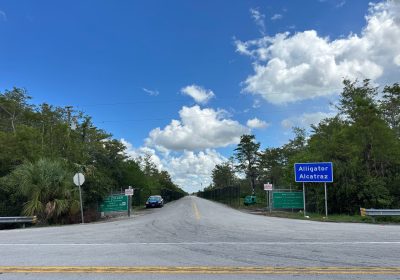





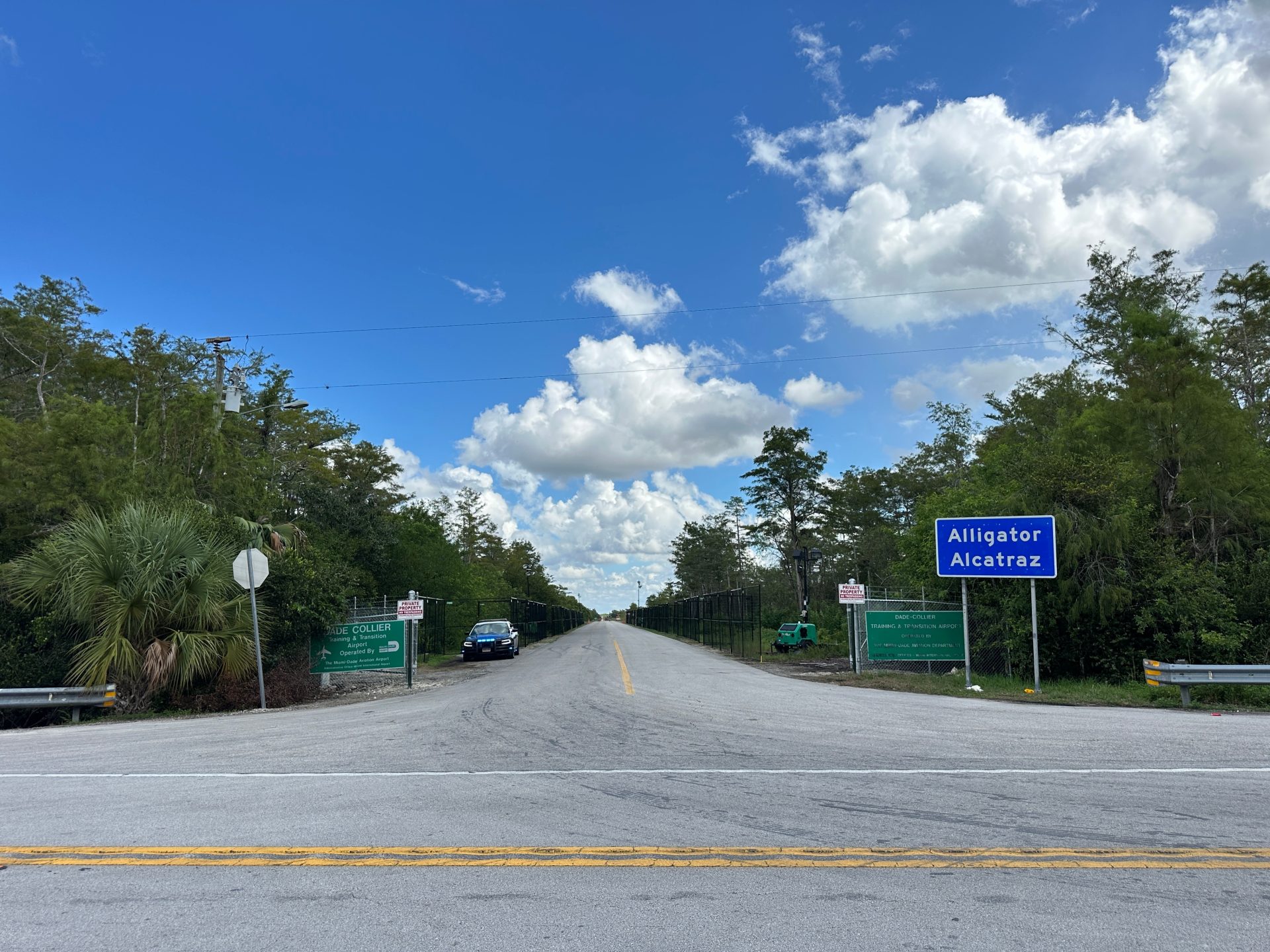
Around 50 miles west of the popular vacation destination, Miami, stands a remote, recently built detention facility known as Alligator Alcatraz.
The name itself is an ode to a dark part of American history. The original Alcatraz, now a museum open for tours, was a maximum security prison in San Francisco Bay accessible only by boat. Open for almost 30 years, San Francisco’s Alcatraz is said to have housed the most dangerous criminals. Now, Governor Ron DeSantis and President Trump think Florida’s own Alcatraz should be housing migrants.
James Uthmeier, the current Florida Attorney General, posted to social media that building the detention center was a solution aligned with Governor Ron DeSantis’ pledged support for the new wave of aggressive immigration enforcement policies.
Opened just two months ago, the facility has been ordered by federal judge Kathleen Williams to shut its doors.
What Is Alligator Alcatraz?
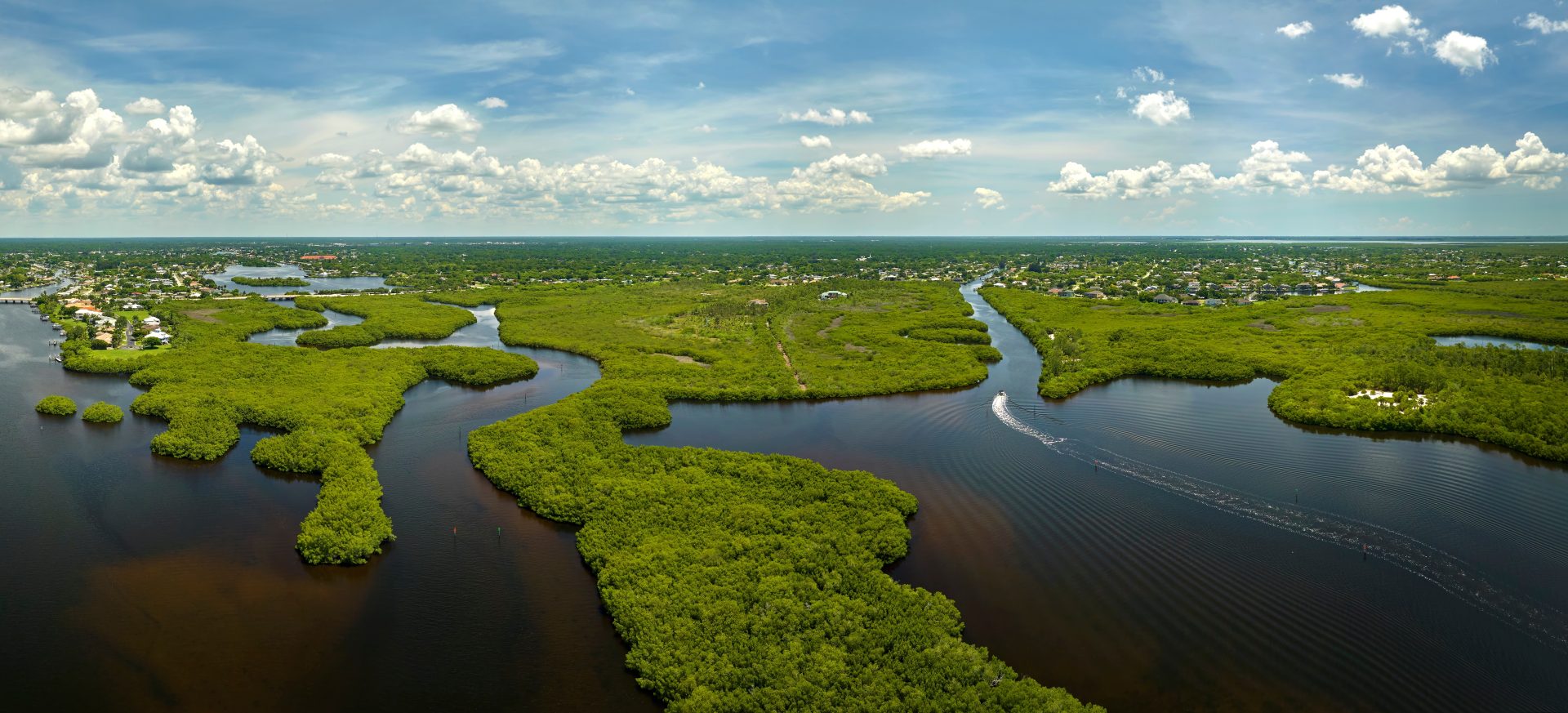
Located in the Florida Everglades at what was originally the Everglades Jetport, then the Dade-Collier Training and Transition Airport, Alligator Alcatraz is a short-term detention facility. Alligator Alcatraz refers to the detention building situated within the swampy ecosystem of Everglades National Park, ultimately located within Big Cypress National Preserve. Migrants who have been in custody of Immigration and Customs Enforcement, some of whom are undocumented, awaiting case processing, or even deportation, are held at these facilities.
Why the Shut down?
A lawsuit filed against the state of Florida, by environmental groups Friends of the Everglades and Center for Biological Diversity, alongside the Miccosuke Tribe, alleges that the construction of the facility began without any environmental testing.
The problem with this is that the airport site is geographically within the Big Cypress National Preserve. The Big Cypress Area is protected grounds. Florida statutes 380.055(1)–(2). acknowledge that this area is important, describing its “legislative intent” to “conserve and protect the natural resources and scenic beauty of the Big Cypress Area of Florida.” After hearings on August 7th and August 8th, Judge Williams of the Southern District of Florida temporarily paused construction at Alligator Alcatraz for two weeks. On Thursday, August 22nd, Judge Williams’ decision gives officials 60 days to remove current detainees alongside the structural support maintaining the center. Judge Williams describes environmental concerns for the surrounding ecosystem, and mentions a disregard for federal law in its creation.
What Happens Now?
The Department of Homeland Security’s request to stop the decision was denied. While Alligator Alcatraz is set for immediate cessation of activities, the controversy continues to rise.
What was previously explained as a “low-cost opportunity” site actually costs upwards of $250 million. A cost breakdown from AP News explains that: “the cost to shut down could range from $15 million to $20 million”, making the former airport sustainable as a detention place, cost $218 million, all on top of the “at least $405 million in vendor contracts signed to build and operate the facility” pledged by the state of Florida.
Alligator Alcaraz has been associated with accusations of human rights abuses, lack of governmental transparency, and encroachment on indigenous lands, among other legal violations. Amid the current immigration atmosphere, the controversial center was described by the President as a solution for “dangerous illegal migrants,” yet The Guardian describes that “hundreds of those held there have no criminal record or active criminal proceedings against them.”

DeSantis championed the animal habitat as a natural barrier; CNN reports, “Clearly from a security perspective, if someone escapes, there’s a lot of alligators you’re going to have to contend (with).” However, the internal conditions were of serious concern as well, with numerous detainees suffering unsanitary conditions, being physically detained in large cages, and subjected to a lack of resources.
Florida’s sanctioned cruelty is but an unfortunate symptom of large-scale shifting attitudes in immigration as a whole. DeSantis, undeterred by the shutdown, is seeking another complex while Florida taxpayers will pay the cost of the one that’s still winding down.
As Alligator Alcatraz closes its gates, its creation opened the door for Florida to trample on conservation efforts, indigenous communities, and disregard fundamental rights all at once. The legacy it leaves behind should raise future questions about what might take its place.