




 Photo Credit: Shutterstock
Lacey Foster, Samuel Lin, MD, FACS
A strong jawline is widely regarded as a symbol of attractiveness, dominance, and youthfulness across cultures. From an evolutionary perspective, a well-defined jaw is thought to reflect good health and higher testosterone levels in men, signaling reproductive fitness¹. Facial symmetry and prominent jaw structure have been shown to significantly influence how people perceive attractiveness², and in women, a contoured jawline is associated with youth and vitality³.
In recent years, the jawline has become even more culturally significant, thanks in large part to social media, high-definition cameras, and increased video-based communication. Chin augmentation procedures have increased by over 60% in the past decade⁴, a trend driven by the rise of selfie culture and Zoom-focused work environments. Social media platforms such as Instagram and TikTok have reinforced beauty standards that emphasize angular facial features, intensifying the desire for a sculpted jawline among both men and women⁵.
One of the most practical ways to enhance the appearance of the jawline is to reduce overall body fat. Research has shown that facial adiposity—perceived as facial roundness or fatness—negatively affects how healthy or attractive someone appears⁶. As body fat decreases, the underlying bone structure becomes more visible. Hydration also plays a key role in jawline definition, as adequate water intake helps reduce bloating and fluid retention that can obscure facial contours⁷.
Posture, though often overlooked, is another important factor. Poor head and neck alignment from prolonged screen time can lead to forward head posture and sagging skin under the chin⁸. Strengthening neck and upper-back muscles can improve alignment and subtly enhance the jawline over time. In addition to posture correction, targeted facial and neck exercises can improve muscle tone. For example, “neck curl-ups” strengthen the platysma and surrounding muscles when performed regularly⁹. Jaw resistance exercises can also activate and tone the masseter muscles, though they must be done cautiously to avoid stress on the temporomandibular joint.
Chewing gum is sometimes recommended for jawline improvement due to its mild muscle-activating properties. While the aesthetic impact is limited, habitual gum chewers have been shown to develop stronger masseter muscles than non-chewers¹⁰. However, overuse may result in masseter hypertrophy, potentially creating a wider rather than more sculpted lower face¹¹.
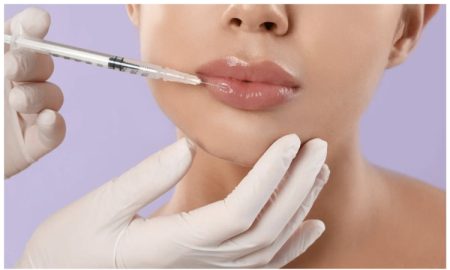
Natural strategies—like fat reduction, improved posture, hydration, and exercise—can gradually improve jawline appearance with time and consistency. Still, for individuals seeking more dramatic or immediate changes, cosmetic procedures may be an appropriate alternative. Minimally invasive treatments like dermal fillers, Kybella, and thread lifts, as well as surgical options such as chin implants, offer precise and customizable jawline enhancement. Demand for these procedures has surged in recent years, particularly among younger generations⁴. When performed by board-certified plastic surgeons, these interventions are generally safe and yield satisfying results.
Ultimately, enhancing one’s jawline—whether through natural or medical means—should be rooted in personal aesthetic goals rather than societal expectations. A balanced approach that includes healthy habits, posture correction, and, when appropriate, aesthetic interventions can help individuals feel more confident and aligned with their self-image.
References:
- Thornhill R, Gangestad SW. Facial attractiveness. Trends Cogn Sci. 1999;3(12):452–460.
- Rhodes G, Simmons LW, Peters M. Attractiveness and sexual behavior: Does attractiveness enhance mating success? Evol Hum Behav. 2005;26(2):186–201.
- Little AC, Jones BC, DeBruine LM. Facial attractiveness: evolutionary based research. Philos Trans R Soc Lond B Biol Sci. 2011;366(1571):1638–1659.
- American Society of Plastic Surgeons. Plastic Surgery Statistics Report 2022. Arlington Heights, IL: ASPS; 2023.
- Walker HR, Patel M, Skinner R. The facial aesthetics boom: Social media’s impact on cosmetic surgery trends. J Aesthet Nurs. 2021;10(6):262–268.
- Coetzee V, Perrett DI, Stephen ID. Facial adiposity: a cue to health? Obes Rev. 2009;10(2):145–153.
- Popkin BM, D’Anci KE, Rosenberg IH. Water, hydration, and health. Nutr Rev. 2010;68(8):439–458.
- Kapandji IA. Physiology of the Joints. Vol. 3. The Trunk and the Vertebral Column. 6th ed. Edinburgh: Churchill Livingstone; 2008.
- Gupta D, Shetty M, Kalra N. Myofunctional therapy: a muscle training therapy for oral and facial musculature. J Clin Diagn Res. 2018;12(5):ZC01–ZC03.
- Linstrom CJ, Linstrom PJ, Westesson PL. The influence of mastication on masseter muscle volume. J Oral Rehabil. 2007;34(3):174–180.
- Ishii LE, Byrne PJ, Chen W. Clinical implications of masseter hypertrophy in cosmetic patients. Aesthet Surg J. 2018;38(5):529–536.
For more information, visit Dr. Samuel Lin's social media: