
Beyond Aesthetics: Architectural Designer João Freitas on How Smart Homes and Acoustic Design Can Redefine Accessible Living
Shaped by his own hearing loss, architectural designer João Freitas explains how acoustic design and home automation can make luxury homes more comfortable, independent and inclusive.

In luxury residential architecture, sophistication is often showcased through aesthetics, craftsmanship, and technology. Yet for architectural designer João Freitas, one dimension is often overlooked: how a home sounds, and how it communicates with the people living in it.
With years of experience managing high-end residential projects in New York and North Carolina, Freitas focuses on architecture, acoustic design, and home automation, an interest shaped by his own hearing loss. He began recognizing the extent of his hearing difficulties while pursuing his Master of Architecture at the University of Pennsylvania during the COVID-19 pandemic. After his diagnosis, he reconsidered how the built environment serves people who are hard of hearing. His philosophy: homes should engage more than the visual senses, and technology can make them more comfortable, independent, and inclusive.
When a Home Communicates Beyond Sound
“The goal is to rethink how the home communicates with its occupants,” Freitas explains.
In his own apartment, using Philips Hue lighting, connected devices, and wearables, he turns auditory notifications into visual or tactile signals. A kitchen timer triggers flashing lights, a doorbell vibrates his Apple Watch, and gradual lighting replaces his morning alarm.
“These small updates make a meaningful difference in how comfortable, independent, and in control I feel in my own home,” he says. Integrated systems such as Lutron suit luxury projects, but accessibility should not require large budgets: wireless technologies can offer similar accommodations in existing apartments and rentals. For Freitas, a sophisticated smart home is defined not by its number of devices, but by how well they meet occupants’ needs.
The Overlooked Importance of Architectural Acoustics
Contemporary architecture, Freitas argues, overemphasizes visual composition while neglecting acoustics. For someone who is hard of hearing, reverberation, background noise, and poor sound separation can make conversation difficult, including in open-plan homes.
“Background noise, reverberation, and poor acoustic design can turn an otherwise welcoming space into an isolating one,” he explains.
Solutions start with distinguishing sound absorption from sound isolation. Soft furnishings, rugs, curtains, and acoustic panels reduce reverberation and improve speech intelligibility. Keeping noise from traveling between rooms may require better wall assemblies, airtight construction, and resilient systems against structure-borne sound. High-end homes, with expansive interiors, hard surfaces, and minimalist finishes, are especially prone to these challenges. Freitas advocates planning for auditory comfort from the earliest design stages.
Designing Luxury Around the Individual
Freitas’ portfolio includes Lilla Lane, winner of a 2022 AIA Long Island ARCHI Award for Excellence in Architecture and an AIA Peconic Honor Award, and Brick Kiln, a 2023 HC&G Innovation in Design Awards finalist for historic restoration and adaptive reuse. His Hamptons projects have appeared in The New York Times, Dezeen, and Wallpaper.
Accessibility works best when it starts with the individual. A household with a child who has hearing loss might concentrate automation in the child’s bedroom and shared spaces, while another resident may prioritize acoustic separation. This also helps manage costs, and because hearing impairment is not uniform, solutions must remain flexible.
A More Sensory Future
Freitas sees opportunities for connected devices, hearing aids, wearables, and intelligent home systems to work together, but his ambition goes beyond technology. Inspired by Juhani Pallasmaa and Steen Eiler Rasmussen, he believes buildings should be understood through their auditory qualities as much as their appearance. For luxury residential design, this means a fuller definition of comfort that treats aesthetics, acoustics, accessibility, and technology as interconnected.
Latest from Haute Living

Elle Macpherson and Dr. Will Cole Host the Biohack-It Supper Club at Amrit Ocean Resort, With Karolína Kurková and Dr. Barbara Sturm at the Table
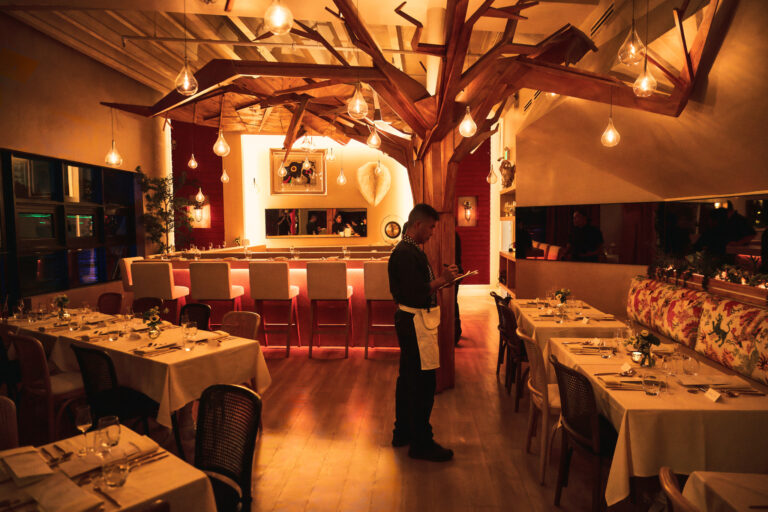
A First Taste of Seaspice Omakase

Terra’s David Martin and Northwind’s Ran Eliasaf Make the Case for Business-Led Philanthropy at American Friends of NATAL’s First Miami Evening, With Cuba Gooding Jr. in the Crowd