Celebrate World Sustainability Day at 20 of the Most Eco-Friendly Luxury Hotels on Earth
From French Polynesia's The Brando to Canada's Fogo Island Inn, these 20 luxury hotels are among the world's most sustainable.

A private pool is lovely. Keeping the reef beyond it alive? That deserves your attention, too. Luxury hotels have become very good at talking about sustainability, but the 24 properties here (from The Brando in French Polynesia and Soneva Fushi in the Maldives to Post Ranch Inn in Big Sur and 1 Hotel Mayfair in London) can tell you exactly what they’re doing—and give you a reason to care beyond the little card asking you to reuse your towels.
At The Brando, deep ocean water helps cool the villas. At Post Ranch Inn, 90 of the property’s 100 acres are maintained as protected land. At Fogo Island Inn, guests can see how the money from their stay contributes to the local economy. Elsewhere, former cattle pasture is becoming forest again, discarded wine bottles are getting a second life as art, and organic estates are supplying ingredients for your dinner.
For World Sustainability Day, these 24 hotels offer plenty to swoon over, with environmental and community commitments worth examining just as closely as the room service menu. From Mayfair to the Maldives, here’s where checking in comes with a more thoughtful approach to the places we love visiting.
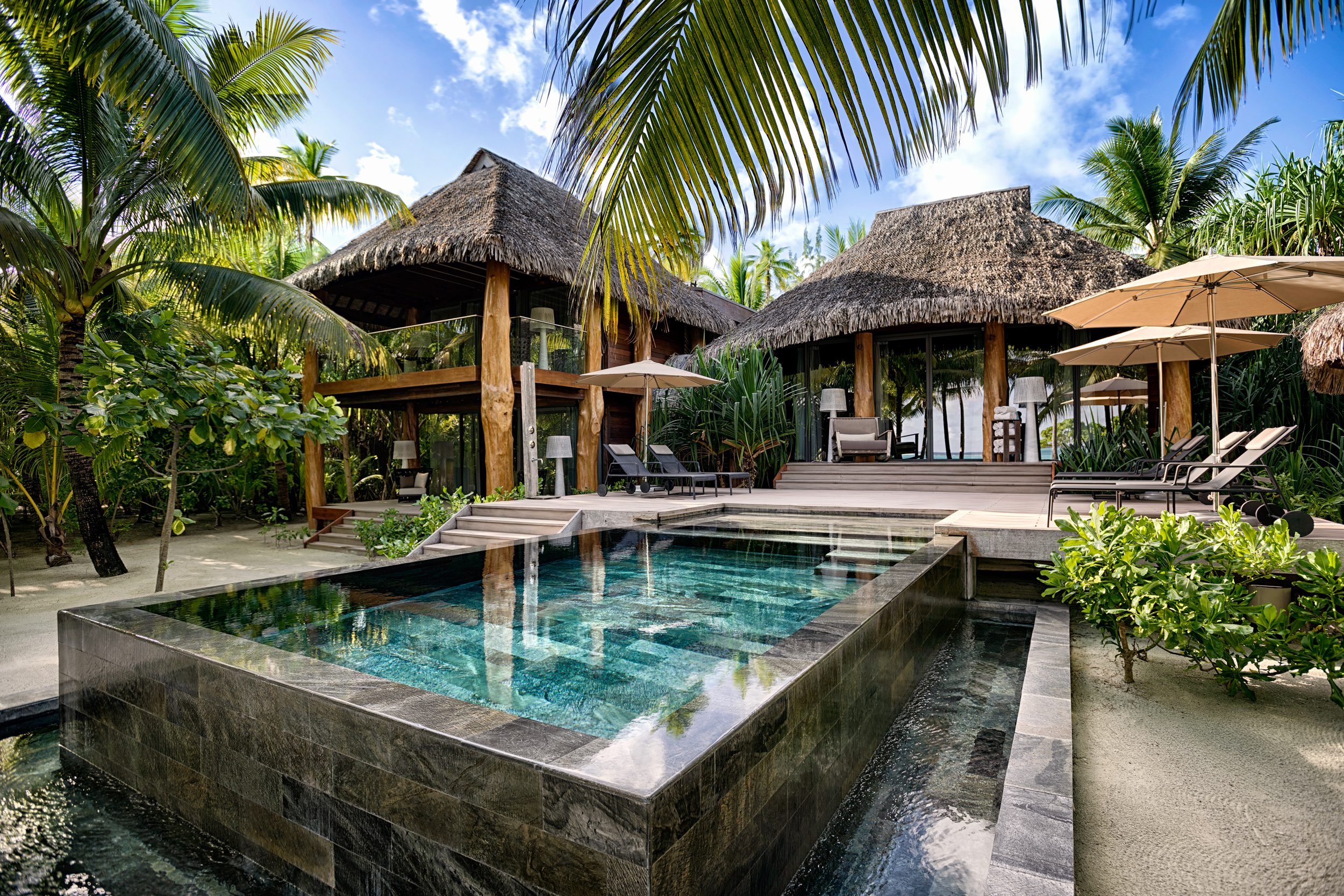
Photo Credit: Romeo Balancourt/The BrandoThe Brando — Tetiaroa, French Polynesia
Marlon Brando had the right idea about getting away from it all. On Tetiaroa, the private Polynesian atoll he once owned, the resort bearing his name makes a persuasive case for thinking a little harder about paradise—and how to keep it that way. Seawater air conditioning harnesses the cold of the deep ocean, solar panels help power the property, and the Tetiaroa Society brings scientific research and conservation into the picture. Guests, meanwhile, have private villas, plunge pools, and very little reason to put on shoes. The environmental engineering does the heavy lifting behind the scenes.
Soneva Fushi — Baa Atoll, Maldives
At Soneva Fushi, even an empty wine bottle has an interesting future. The resort’s Glass Studio transforms discarded glass into art, part of a broader Waste-to-Wealth philosophy that makes the back of house almost as fascinating as the villas. Almost. Those sprawling island hideaways still make a compelling argument for spending the afternoon doing absolutely nothing. Elsewhere, the Eco Centro sorts, composts, and repurposes materials, while coral restoration puts the surrounding marine ecosystem firmly on the agenda. Soneva helped make barefoot luxury an aspiration; the work happening beyond the beach gives that aspiration a little more depth.
Six Senses Laamu — Laamu Atoll, Maldives
The marine life at Six Senses Laamu has its own team of advocates—and considerably better research facilities than your average hotel aquarium. The resort’s Sea Hub for Environmental Learning in Laamu, appropriately shortened to SHELL, houses the Maldives Underwater Initiative, bringing marine biologists and conservation partners into the daily life of the island. Guests can explore the world they’ve traveled so far to see, with a clearer understanding of what it takes to protect it. Add beach and overwater villas, an excellent excuse to go barefoot, and an ocean worth paying attention to, and the appeal becomes fairly obvious.
Fogo Island Inn — Newfoundland, Canada
At Fogo Island Inn, “where does the money go?” has an actual answer. The striking 29-room inn operates as a community-centered social business, with an Economic Nutrition label explaining how a stay contributes to the local and wider economy. That transparency is part of a larger commitment to the people, craft, food, and culture of this Newfoundland island. The architecture may have made it famous, but the community gives it its character. Come for the Atlantic views and the extraordinary sense of place; leave thinking a little differently about what a luxury hotel can do for its neighbors.
Grootbos Private Nature Reserve — Near Gansbaai, South Africa
The flowers deserve top billing at Grootbos. Set within South Africa’s extraordinary Cape Floral Kingdom, this luxury retreat makes the surrounding fynbos a central reason to visit—and protecting it a central reason to operate. Through the Grootbos Foundation, conservation sits alongside organic agriculture, education, and programs that help people build livelihoods in the local community. The result is a stay with plenty to admire beyond the view from your suite. Botanical excursions become unexpectedly compelling, the landscape reveals itself in small details, and a patch of vegetation you might once have walked past suddenly warrants a much closer look.
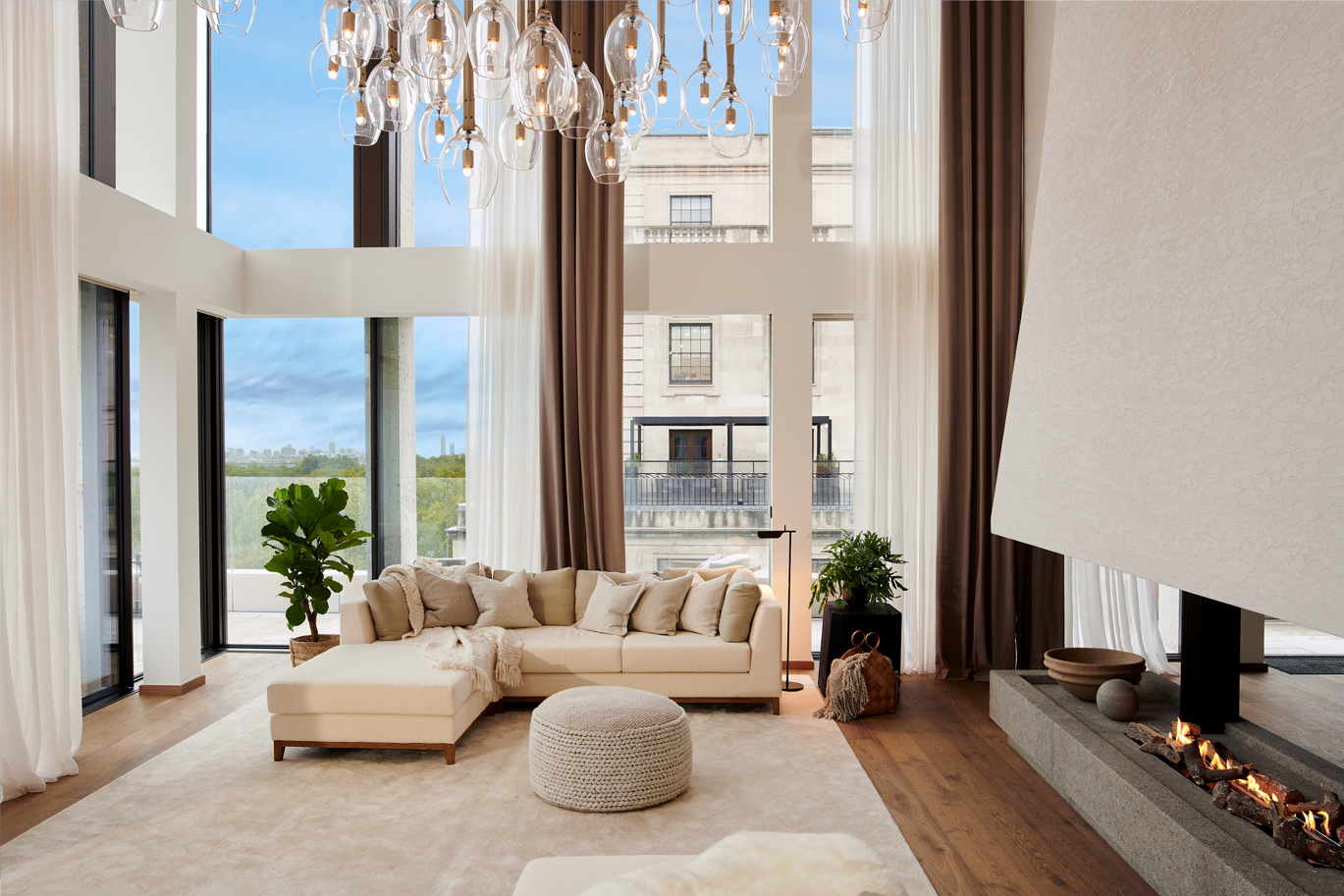
Photo Credit: Mikkel Vang
1 Hotel Mayfair — London, England
Mayfair knows a thing or two about reinvention. At 1 Hotel Mayfair, that process began by keeping much of what was already there: the refurbishment retained 80 percent of the existing structure, saving approximately 4,200 tonnes of carbon, according to the hotel. Its BREEAM Excellent credentials sit alongside intelligent building systems, rainwater-fed exterior green walls, and filtered-water stations. Reclaimed timber and abundant planting give the interiors their character, while Green Park provides an excellent reason to head outside. It’s a polished London address with a particularly compelling detail in its backstory: sometimes the smartest building decision is how much you keep.
Heckfield Place — Hampshire, England
At Heckfield Place, the kitchen garden is worth getting dressed for. The Hampshire country-house hotel treats its certified biodynamic market garden and organic Home Farm as essential parts of the estate, giving the food a connection to the land that extends well beyond a menu description. Seasonal rhythms shape the experience, and the grounds reward the sort of long, aimless walk that rarely happens at home. It’s an appealing interpretation of country-house luxury: beautiful rooms, very good food, and a working landscape with something to contribute. Suddenly, knowing where dinner came from becomes part of the pleasure.
Borgo Pignano — Tuscany, Italy
At Borgo Pignano, the estate supplies enough of the good life to make leaving feel mildly unreasonable. Its organic farmland produces grains, olive oil, wine, honey, and ingredients for the kitchen, with on-site composting returning nutrients to the gardens. Restored buildings incorporate local stone and reclaimed materials, while renewable energy forms part of the property’s broader environmental approach. All of this happens in the Tuscan countryside, where an afternoon can disappear quite happily between lunch and a long look at the landscape. The farm earns its keep. You’re welcome to take things considerably easier.
Lefay Resort & SPA Dolomiti — Pinzolo, Italy
A serious spa hotel requires serious energy, particularly when the setting comes with an Alpine winter. Lefay Resort & SPA Dolomiti addresses that challenge through a highly insulated building, biomass heating, and cogeneration systems designed to reduce energy demand. Its ClimaHotel certification gives the environmental approach a formal framework. Guests encounter the more immediately seductive side of the equation: mountain scenery, expansive wellness spaces, and an itinerary that can comfortably revolve around the spa. The technical work happens in service of an experience that feels effortless—which is generally how luxury should feel, even when the systems behind it are anything but simple.
Deplar Farm — Troll Peninsula, Iceland
A former sheep farm on Iceland’s Troll Peninsula has enjoyed a rather glamorous second act. Now an intimate Eleven adventure lodge, Deplar Farm pairs black timber cladding and a living roof with a geothermal pool that makes cold weather suddenly seem like an excellent idea. Reusing an existing farmstead gives the property a compelling architectural backstory, while its geothermal bathing experience draws on one of Iceland’s defining natural resources. Days can unfold on foot, bike, or skis before ending in warm water beneath an enormous sky. If the northern lights make an appearance, consider your evening plans settled.
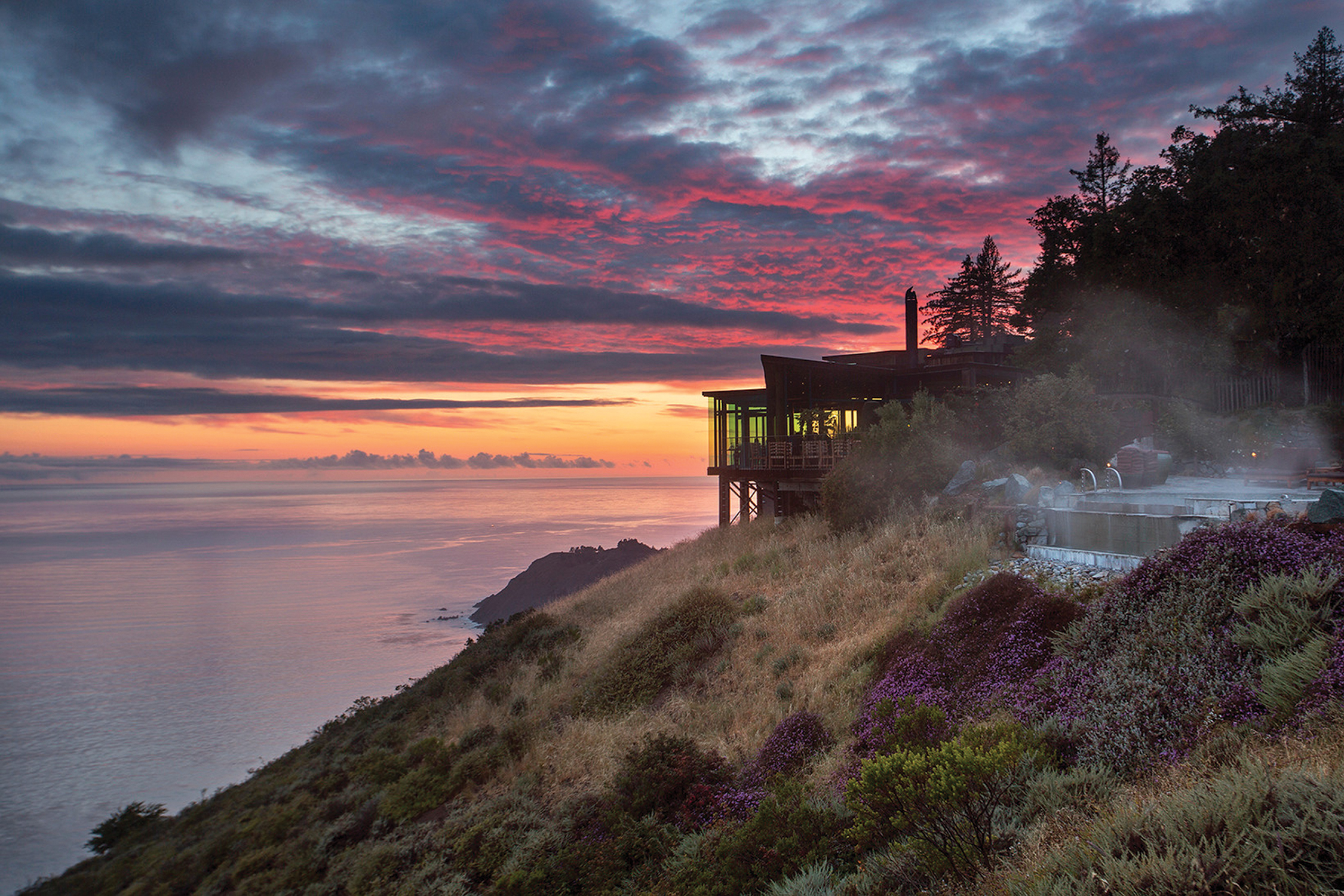
Photo Credit: Kodiak Greenwood/Post Ranch Inn
Post Ranch Inn — Big Sur, California
Big Sur does most of the seducing at Post Ranch Inn. The hotel’s job is to make the most of that extraordinary setting while taking its stewardship seriously. Ninety of its 100 acres are maintained as protected land, with habitat programs supporting rare and threatened species. Solar power, treated well water, reclaimed wood, and restaurant composting contribute to the operation, while earth-sheltered rooms reduce heat loss and elevated treehouses protect nearby roots. The architecture makes you feel wonderfully immersed in the landscape. The conservation work gives you another reason to appreciate the view—and the considerable thought that went into your place within it.
Singita Sabi Sand — South Africa
At Singita Sabi Sand, the wildlife provides plenty of drama. The environmental work is quieter, but it deserves a place in the story. Across Ebony Lodge, Boulders Lodge, and Castleton, the experience sits within Singita’s wider commitment to wilderness conservation and neighboring communities. Its September 2026 reporting puts solar penetration across the Sabi Sand operations at approximately 40 percent, with practically no generator diesel use. That’s a meaningful detail behind a stay otherwise defined by exceptional guiding and close attention to guests. The leopard will still steal the show. Some stars simply refuse to share the spotlight.
Nayara Tented Camp — Arenal, Costa Rica
The word “tent” is doing some very modest work at Nayara. These lavish accommodations rise on stilts amid the greenery around Arenal, with ample space between them for trees and palms to grow. The forest itself is part of the story: land previously cleared for cattle farming has been replanted with thousands of trees and native shrubs, helping restore habitat for local wildlife. Guests get the pleasure of watching that landscape come alive around them. A sloth sighting from your deck is delightful on its own; knowing how much work went into bringing the trees back makes it better.
Awasi Patagonia — Torres del Paine, Chile
The most interesting neighbors at Awasi Patagonia have no interest in your itinerary. Pumas move through the landscape surrounding this private-villa retreat, whose conservation work includes a 7,000-acre protected area bordering Torres del Paine National Park. Patagonian steppe, scrub, and forest provide habitat worth safeguarding—and an extraordinary setting for exploring with a private guide. The luxury is wonderfully personal, but the wider ambition gives wildlife room to carry on without consulting the guests. Bring your binoculars, follow your guide’s lead, and accept that the most memorable encounter of the trip will happen entirely on nature’s schedule.
Explora Patagonia — Torres del Paine, Chile
Patagonia has a way of making even an excellent hotel feel like a supporting character. Explora Patagonia understands the assignment, using its position in Torres del Paine as a starting point for getting guests out into the landscape. The wider company connects that exploration to conservation: Explora Chile is a certified B Corporation, and its work includes a separate 14,800-acre protected reserve neighboring the national park. Spend the day seeing why this part of the world inspires such devotion, then return with a much clearer idea of why protecting it matters. The scenery makes a compelling case all on its own.
NIHI Sumba — Indonesia
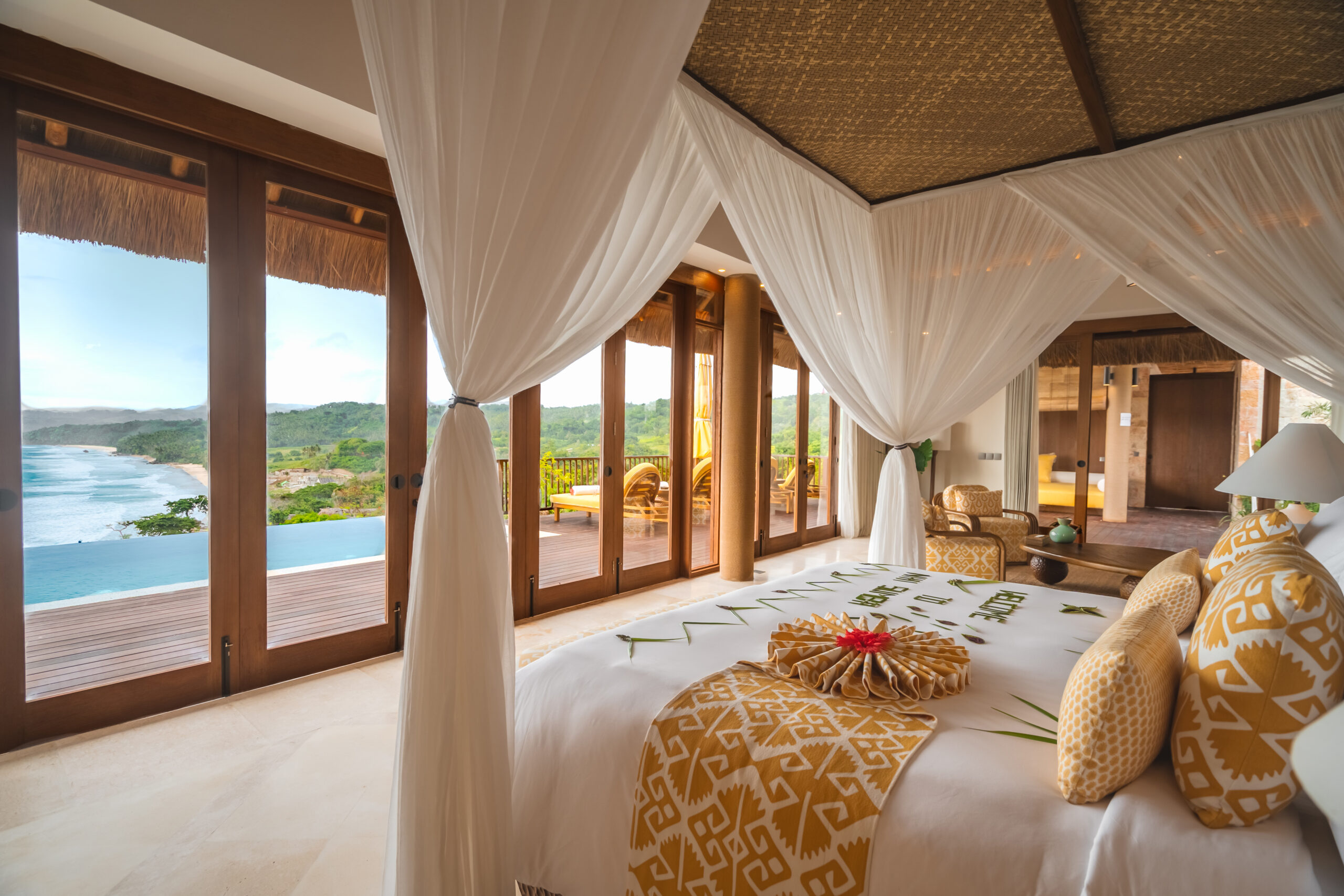
NIHI Sumba delivers the kind of island escape that can make the outside world feel very far away. Its relationship with the Sumba Foundation brings the surrounding community firmly back into focus. The foundation’s work addresses essential needs through health, clean water, nutrition, and education programs, with guest donations helping fund its activities. That connection gives the resort’s extraordinary setting a human dimension that belongs in any conversation about responsible luxury. Come for the wild coastline and the sense of escape; take time to understand the island beyond the resort, and the people whose home you’ve come to enjoy.
Tambo del Inka, a Luxury Collection Resort & Spa — Sacred Valley, Peru
The Sacred Valley sets a high bar for a hotel’s surroundings. Tambo del Inka responds with a polished resort experience and environmental credentials that helped establish a precedent in Peru: it was the country’s first LEED-certified hotel. Its operator also identifies a native forest, orchid garden, and organic garden among the property’s efforts to protect Andean flora. The setting gives guests an invitation to explore; the spa provides a persuasive argument for returning. For travelers who prefer their adventures with a generous helping of comfort, this is a particularly appealing place to regroup.
Inkaterra Machu Picchu Pueblo Hotel — Aguas Calientes, Peru
Machu Picchu may be the reason you booked the trip, but Inkaterra gives you a reason to linger below it. This cloud-forest retreat brings the surrounding natural world into the experience, backed by a conservation organization whose work reaches beyond the hotel grounds. One particularly practical contribution: a plant installed at the property transforms used cooking oil into biodiesel and glycerin, part of a wider waste-management partnership with local authorities and AJE Group. It’s an unusually tangible response to the pressures of tourism in an extraordinary place. Even yesterday’s cooking oil gets a more useful onward journey.
The Datai Langkawi — Langkawi, Malaysia
At The Datai Langkawi, the rainforest gives the hotel a rather spectacular design brief. The Malaysian retreat’s appeal is inseparable from its setting, which makes its investment in that setting especially relevant. Through The Datai Pledge, the property brings together wildlife and marine conservation, community initiatives, and efforts to reduce and repurpose operational waste. Published impact reports give those commitments something more useful than a glossy slogan. For guests, it all unfolds within a deeply luxurious rainforest-and-beach escape, where paying attention to the surroundings is both the point of the trip and an extremely pleasant way to spend it.
Saffire Freycinet — Tasmania, Australia
Saffire Freycinet’s story begins with a landscape that needed some care. The Tasmanian lodge was developed on a former caravan park site affected by degradation and erosion, making rehabilitation part of the project from the outset. Today, the luxury experience draws its power from the surroundings, with architecture and an intimate collection of suites that keep the Freycinet landscape firmly in focus. It’s a useful reminder that a hotel’s environmental story can begin long before the first guest checks in. Here, the history of the site adds another dimension to a stay already blessed with a rather enviable setting.
Driving up to Big Sur from the south? Start with Haute Living’s guide to the best luxury hotels in Los Angeles. And for a sunnier kind of escape, see the 10 best luxury hotels in Mykonos and the Greek Islands.
through Haute Black.
Haute Living access. Two decades inside the world’s best hotels.
Virtuoso partner. Upgrades & VIP arrival at 1,200+ properties.
One advisor. Who knows you by name.
Frequently Asked Questions
What is the most sustainable luxury hotel in the world?
There is no single official ranking, but The Brando in French Polynesia is often cited thanks to its seawater air conditioning, solar power and the Tetiaroa Society’s research and conservation work. Fogo Island Inn, Soneva Fushi and Bucuti & Tara are also standouts, each for a different reason.
Which luxury resort is carbon neutral?
Bucuti & Tara Beach Resort in Aruba holds certified CarbonNeutral status through a program that measures its footprint and compensates for remaining emissions. The adults-only resort sits on Eagle Beach.
What is the best sustainable luxury hotels in the U.S.?
Post Ranch Inn in Big Sur keeps 90 of its 100 acres as protected land and uses solar power, reclaimed wood and earth-sheltered rooms.
Latest from Haute Living
The 7 Best Luxury Restaurants in Brooklyn Right Now

Inside Louis Vuitton’s Care & Repair Atelier, Where Nearly 600,000 Pieces a Year Get a Second Life

The Hautest Walking Tour: A Chic Ensemble Discovered Manolo Blahnik’s New York Map