The Director Behind The Great Gatsby Also Designed This Miami Beach Hotel
From a gilded mammoth to a 14,507-square-foot penthouse, here's a complete look inside Faena Miami Beach and the district surrounding it.

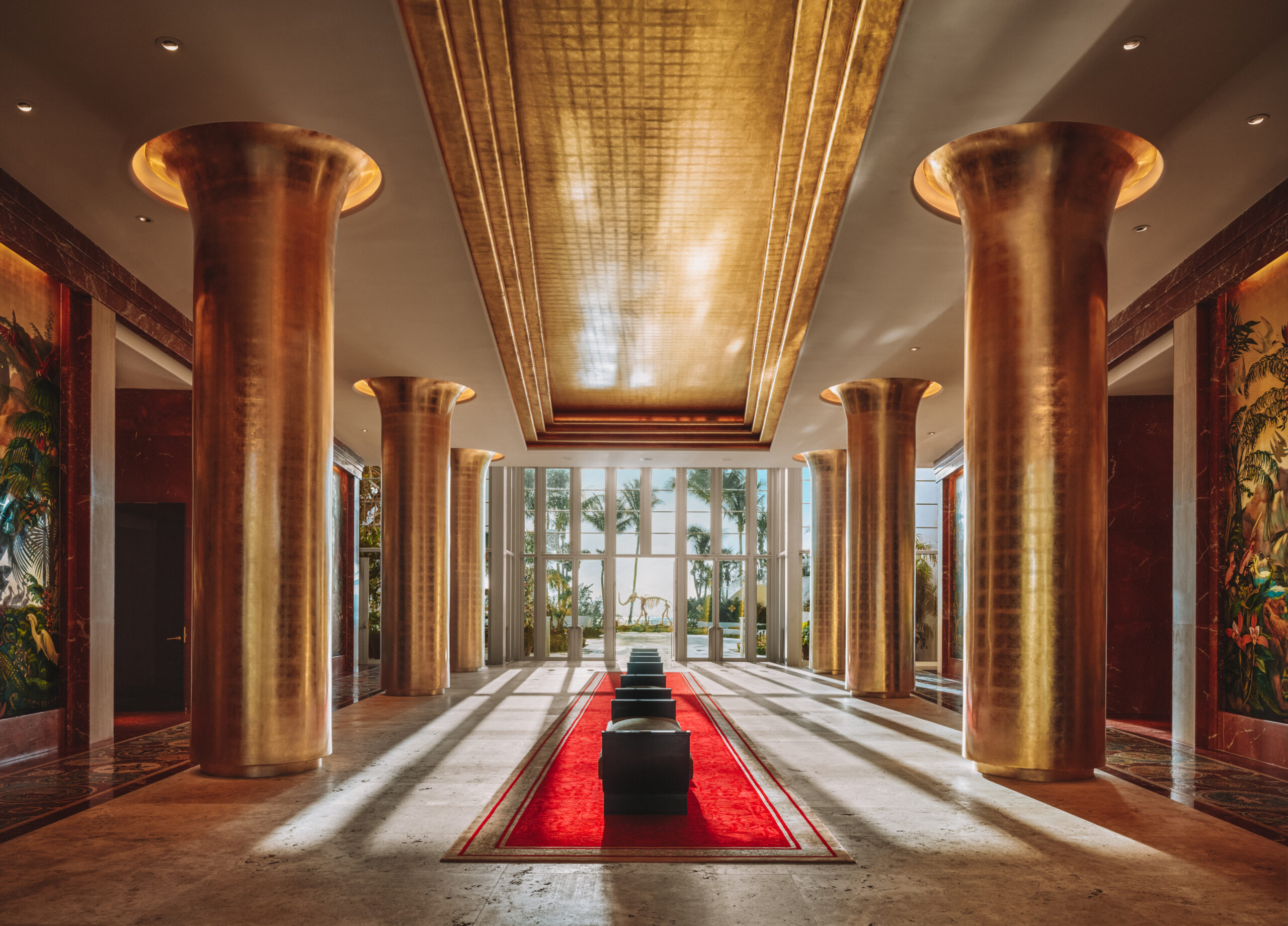
Plenty of hotels in Miami Beach can promise sun, sand, and an ocean view. Faena promises something else entirely: the sense that you’ve wandered into someone else’s party, one that was clearly going long before you arrived. That feeling isn’t an accident, I learned. Faena Miami Beach was built as a total work of art, architecture, fashion, food, performance, and fine art treated as one continuous thing rather than separate departments. I found out its overall design language actually comes from Baz Luhrmann and Catherine Martin, the husband-and-wife team behind the visual worlds of The Great Gatsby and Moulin Rouge. Their instinct for maximalist glamour, gold leaf, saturated color, a sense that every room is staged for a scene still unfolding, runs through the entire property, less a hotel amenity than the organizing idea behind it.
Alan Faena calls his approach “urban alchemy”: the idea that a neighborhood is transformed by layering new creative energy onto what’s already there, not by tearing it down. Before he was a hotelier, Faena was a fashion designer in Buenos Aires who built and sold a clothing company, then spent time in the fishing village of José Ignacio, Uruguay, before deciding what to build next. That turned out to be Puerto Madero, a derelict stretch of Buenos Aires docklands he transformed with designer Philippe Starck into Faena Hotel + Universe. Founded in partnership with Len Blavatnik, a businessman and philanthropist with interests spanning media, entertainment, and real estate, the project eventually crossed an ocean into a quiet stretch of Mid-Beach, applying the same idea: treat the neighborhood itself as the canvas, not just the building.
Faena has said the goal was never a hotel that happened to contain some art. It was a place where culture, food, design, and entertainment blend so closely that you can no longer separate the architecture from the exhibition.
Photo Credit: Faena Miami Beach
Faena and Blavatnik unveiled Faena Miami Beach in December 2015, a reimagining of the historic Saxony Hotel, originally built in 1947 by George Sax and designed by architect Roy F. France. Known in its heyday as the “Queen of Collins Avenue,” the Saxony reigned through the 1950s and ’60s as a lodestar of glamour, hosting performances by Frank Sinatra, Marilyn Monroe, and Dean Martin. Faena Miami Beach’s arrival catalyzed a broader cultural renaissance in Mid-Beach, strengthening the neighborhood’s position as a vital link between Miami Beach’s north and south.
The project followed a partnership that began in 2000, when Faena, originally from Argentina, turned his focus toward transforming cities through art and culture and joined forces with Blavatnik, a businessman and philanthropist with global interests spanning media, entertainment, and real estate. Their first collaboration transformed an abandoned stretch of the Puerto Madero docklands in Buenos Aires into what would become Faena Buenos Aires in 2004, now one of that city’s most valuable pieces of real estate. Miami Beach, long a beneficiary of the transformative power of the arts, was the natural next canvas.
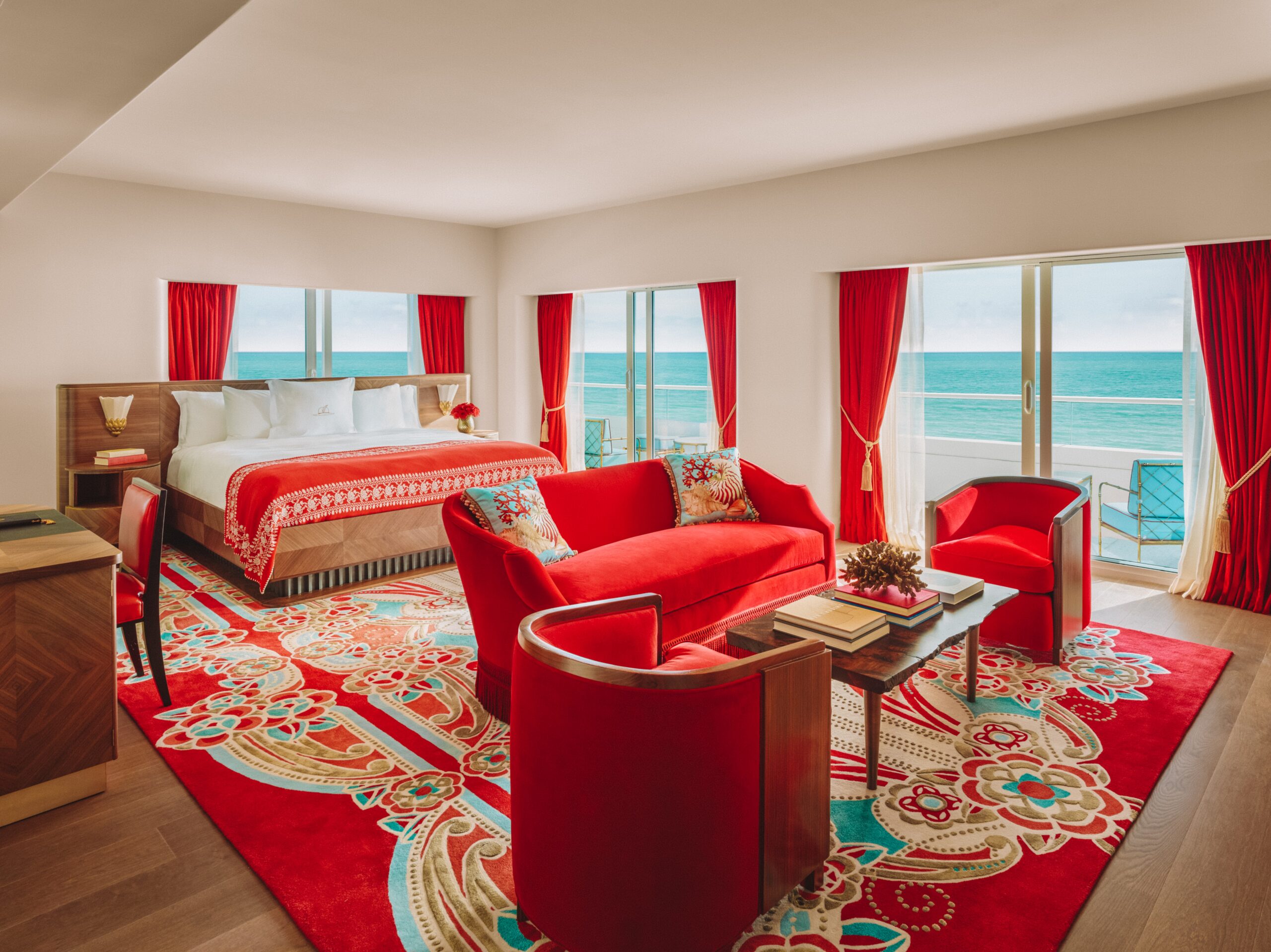 Photo Credit: Faena Miami Beach
Faena Miami Beach features 179 rooms and suites, ranging from the 463-square-foot Partial Ocean View Room to the property’s crown jewel: a 14,507-square-foot, two-story, five-bedroom Faena Penthouse Suite. Faena partnered with film director Baz Luhrmann and Academy Award-winning costume designer Catherine Martin to shape the property’s overall narrative, and that cinematic sensibility runs through every room, Art Deco detailing, Old World grandeur, hardwood floors, signature Faena Red velvet, and cool blue tiled bathrooms.
The Penthouse Suite itself showcases panoramic ocean views through floor-to-ceiling windows, two levels of gathering and dining space, and a curated collection of globally sourced art. Custom furnishings by designer Frank Pollaro fill the suite in ivory and beige tones with gold and black accents, and all five bedrooms open onto furnished balconies. Bespoke service extends across every accommodation: on-call butlers, complimentary chauffeur service, and dedicated Experience Managers who build custom itineraries for each stay.
Los Fuegos
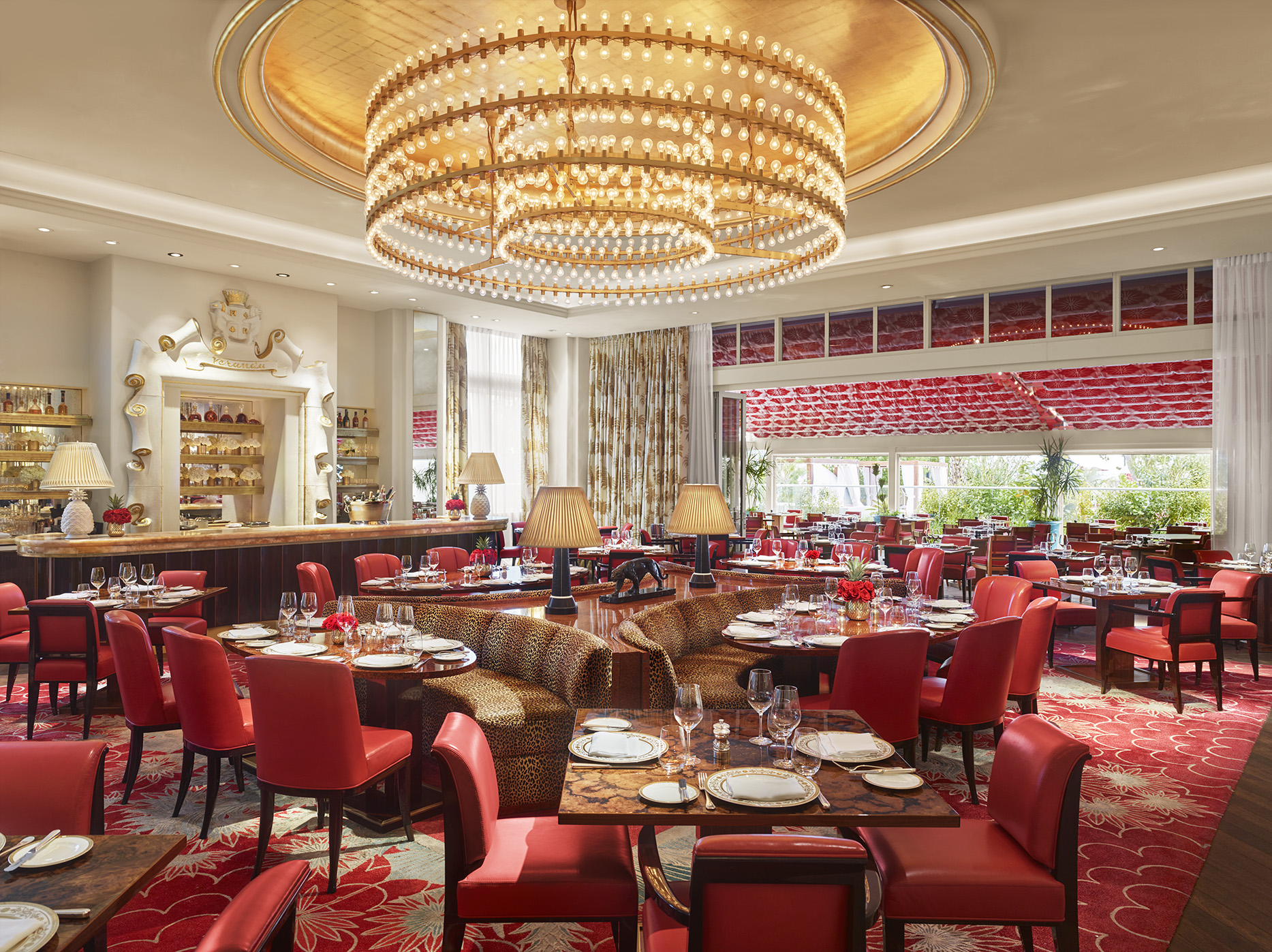 Photo Credit: Faena Miami Beach
Faena Miami Beach’s dining program captures the spirit of South American cuisine alongside the pulse of its nightlife. Los Fuegos by Francis Mallmann brings the Argentine grillmaster’s live-fire cooking to a contemporary asado setting, built around an open-fire kitchen. Pao by Paul Qui reflects the James Beard Award-winning chef’s take on modern Asian cuisine in a striking oceanfront room. El Secreto Omakase offers an ultra-exclusive, six-seat speakeasy experience blending Tokyo-style sushi and Kyoto-style kaiseki into a single multi-course tasting menu.
Beyond the two headline kitchens, Sun Bar serves light fare and cocktails poolside, while Veranda offers a more relaxed setting for a meal or afternoon cocktail overlooking the pool and ocean. For something more private, La Cava is a wine cellar tucked among the hotel’s extensive collection of fine wines, anchored by a centerpiece table from designer Frank Pollaro’s collection, created in partnership with actor Brad Pitt. Beyond dining, La Cava doubles as an intimate venue for private wine tastings, meetings, and small events.
Saxony Bar
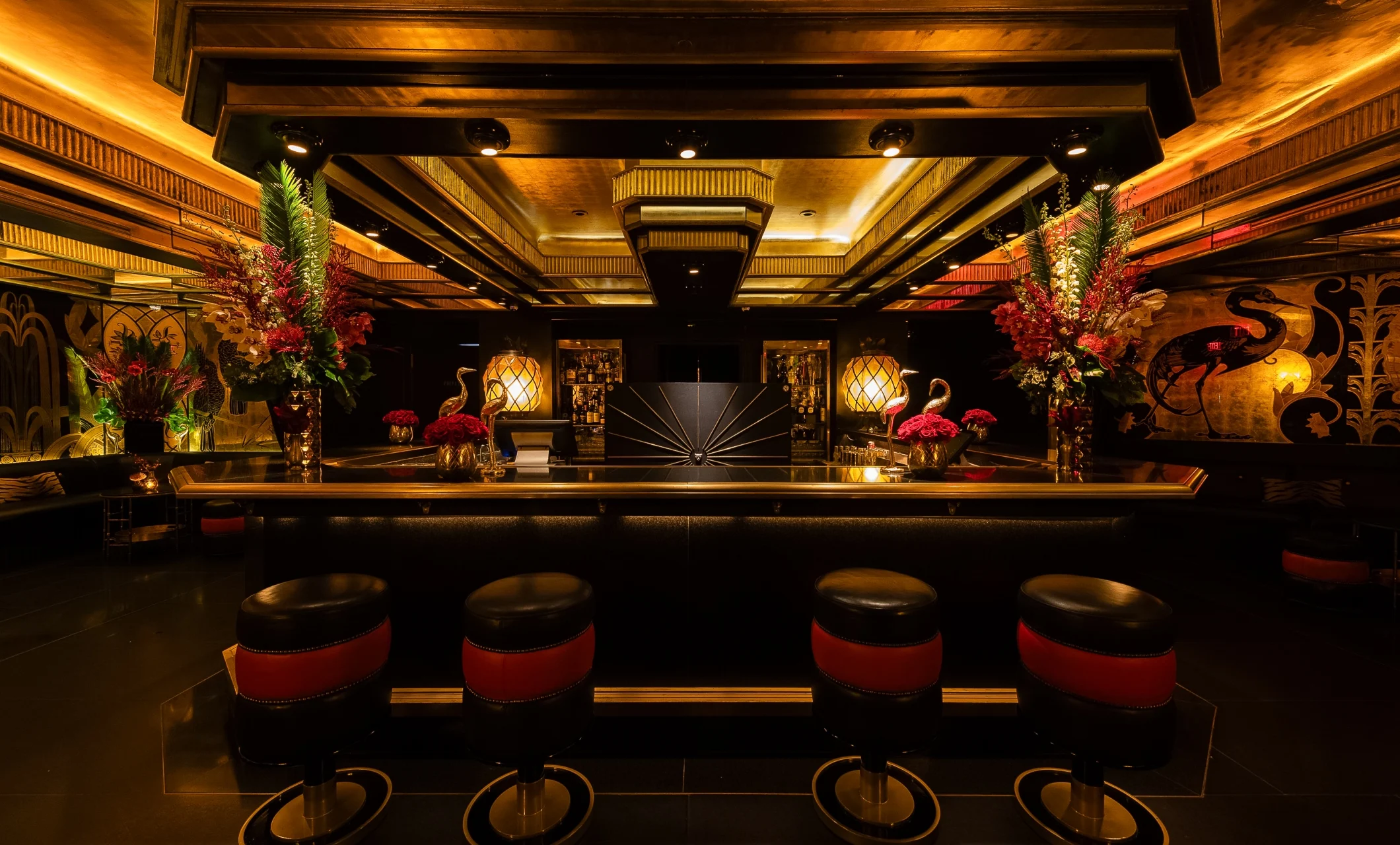 Photo Credit: Faena Miami Beach
Saxony Bar, Faena’s late-night lounge, channels golden-age glamour into an intimate, speakeasy-style setting, complete with its own dedicated entrance, a curated menu of classic cocktails and top-shelf spirits, and live DJ sets. The Living Room takes its cues from 1950s Miami Beach, leopard-print couches, red velvet accents, and live music and entertainment nightly, serving small plates, bespoke cocktails, and wine in a setting built for the evening rather than the afternoon.
Faena Theater
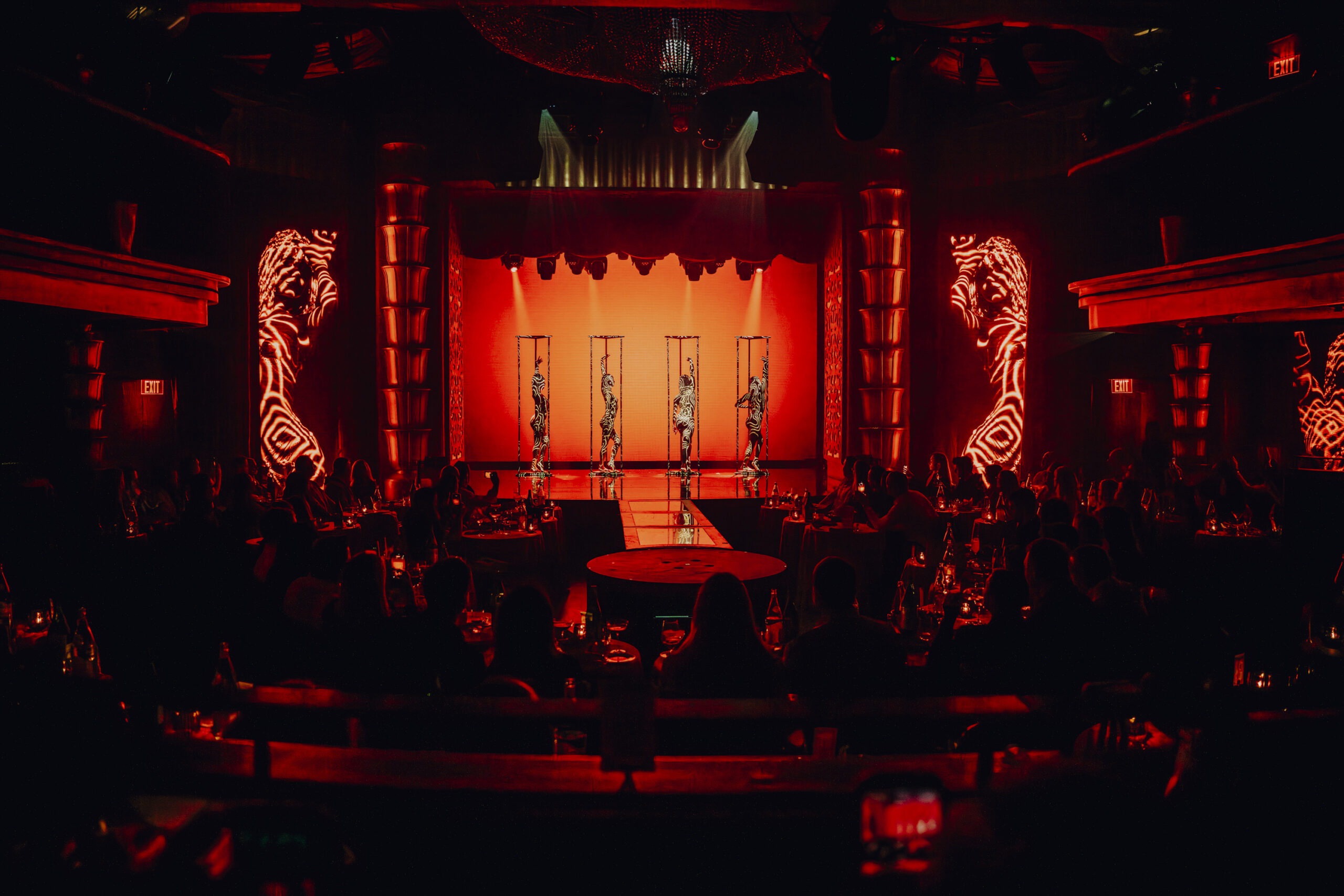 Photo Credit: Faena Miami Beach
Designed in partnership with Baz Luhrmann and Catherine Martin and modeled after Europe’s grand opera houses, the 150-seat Faena Theater hosts an ambitious calendar of original productions, comedy, live music, and immersive performance art. Past resident productions have included RETRO, a Motown-inspired live show, and a reimagined staging of Carmen. Current and ongoing programming includes OBSESSION, the theater’s signature production created in collaboration with performance art collective Quixotic, and Art of Comedy, an intimate stand-up series, alongside performances by internationally acclaimed pianist Havasi.
Tierra Santa Healing House
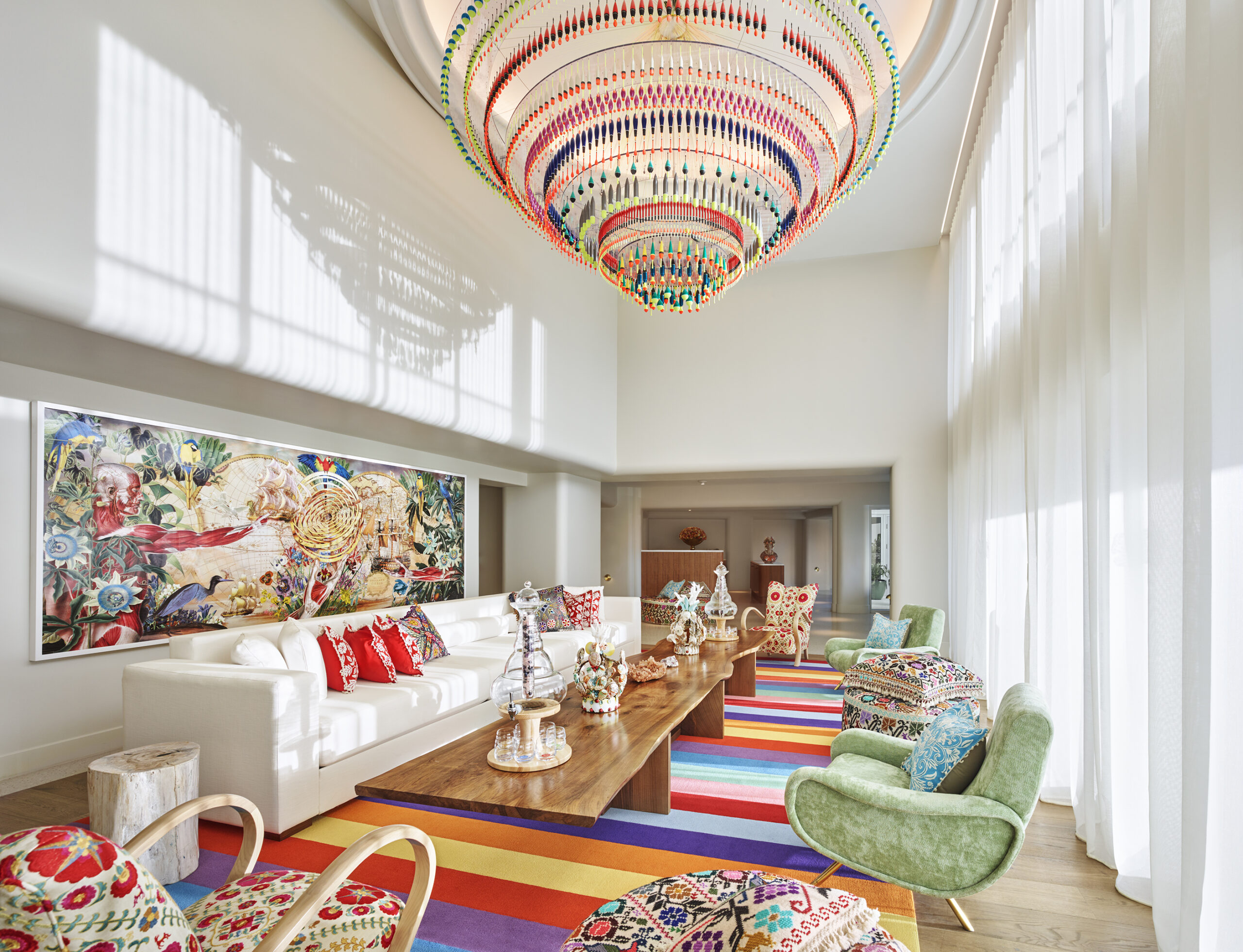 Photo Credit: Faena Miami Beach
Described as the soul of the property, Tierra Santa Healing House draws its inspiration from a beach house in the rustic Uruguayan village of Punta del Este. The 22,000-square-foot oceanfront sanctuary blends ancient ritual, indigenous ingredients, and contemporary anti-aging technology across a program that includes shaman-developed body treatments, sound and color therapy, and advanced facials, alongside one of the largest hammams on the East Coast.
The Tierra Santa experience begins in an extensive thermal sanctuary, guiding guests through a sequence of temperature changes designed to promote relaxation and detoxification, with direct access to the pool and beach throughout. The spa houses five multi-functional treatment rooms and two oceanfront treatment suites, including one couples suite with a private outdoor terrace overlooking the Atlantic. An oceanfront fitness center outfitted with Technogym equipment, a dedicated movement studio, and a spa boutique round out the wellness offering, alongside a full salon for manicures, pedicures, hair, and makeup.
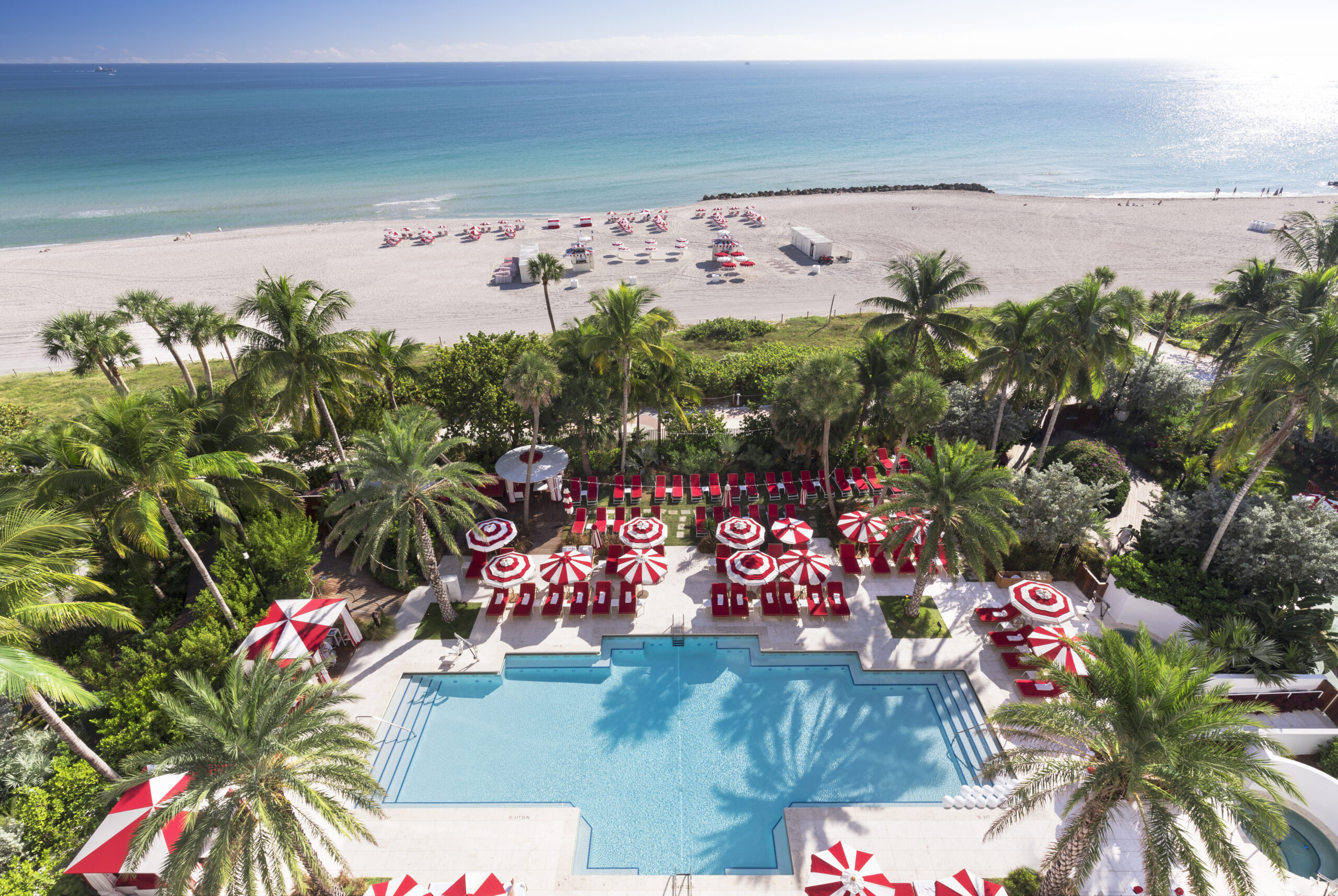 Photo Credit: Faena Miami Beach
Faena Pool & Beach sit on 100,000 square feet of sugar-white sand, shaded by the property’s signature candy-striped umbrellas. The palm-fringed pool is lined with complimentary chaise lounges and cabanas sized for groups, with Pool Butlers on standby offering fruit-infused water, sunglass cleaning, and light bites throughout the day. Private poolside cabanas, tucked into a more secluded enclave, come with their own mini-bar for guests who want to uncork a bottle of champagne without leaving their lounge chairs.
On the beach itself, dedicated Beach Butlers coordinate chaise lounges, umbrellas, full food and beverage service, and a fresh water footwash. Beach chairs are available to non-hotel guests on a first-come, first-served basis, and oceanfront daybeds can be reserved in advance.
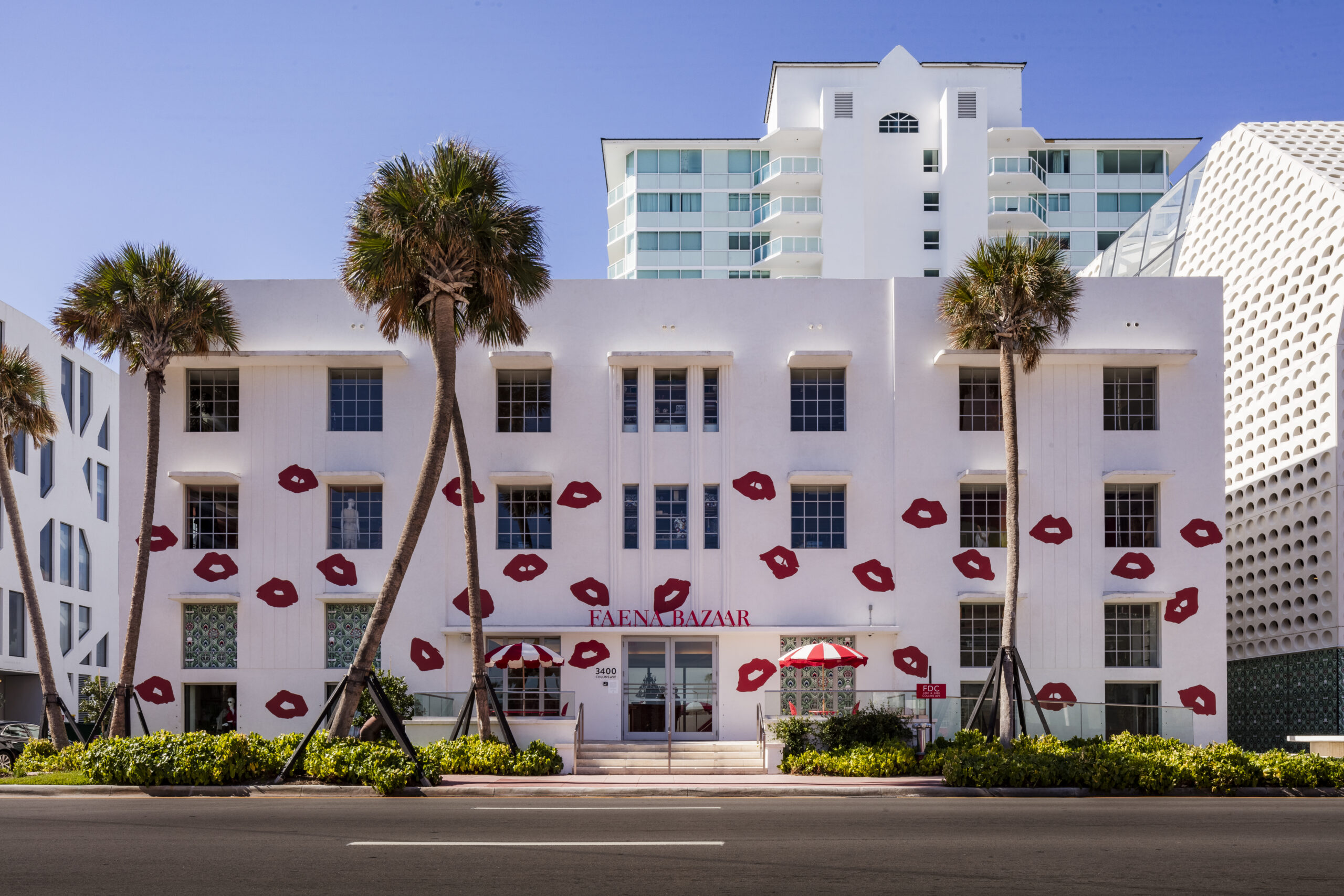 Photo Credit: Faena Miami Beach
Adjacent to the hotel, Faena Bazaar occupies the historic Atlantic Beach Hotel, designed by Pritzker Prize-winning architect Rem Koolhaas and his firm OMA. The 20,000-square-foot space blends fashion, jewelry, art, and food into a single multi-sensory retail experience, evoking the sense of discovery found in Marrakech’s souks or the market stalls of Paris. Inside, Curio showcases a rotating selection of internationally coveted labels and one-of-a-kind finds, while Crema Coffee Bar offers espresso, brunch, and fruit smoothies in a bright, beachside-casual setting.
The cultural cornerstone of the district, Faena Forum is a 43,000-square-foot event and exhibition space designed by Rem Koolhaas and OMA, led by architect Shohei Shigematsu. The building centers on a grand exhibit hall beneath a dramatic 40-foot-high domed oculus, alongside a rose marble amphitheater with built-in seating and five separate meeting rooms. The Forum hosts everything from weddings and conferences to product launches and concerts, and functions as the district’s platform for work spanning art, entertainment, and business.
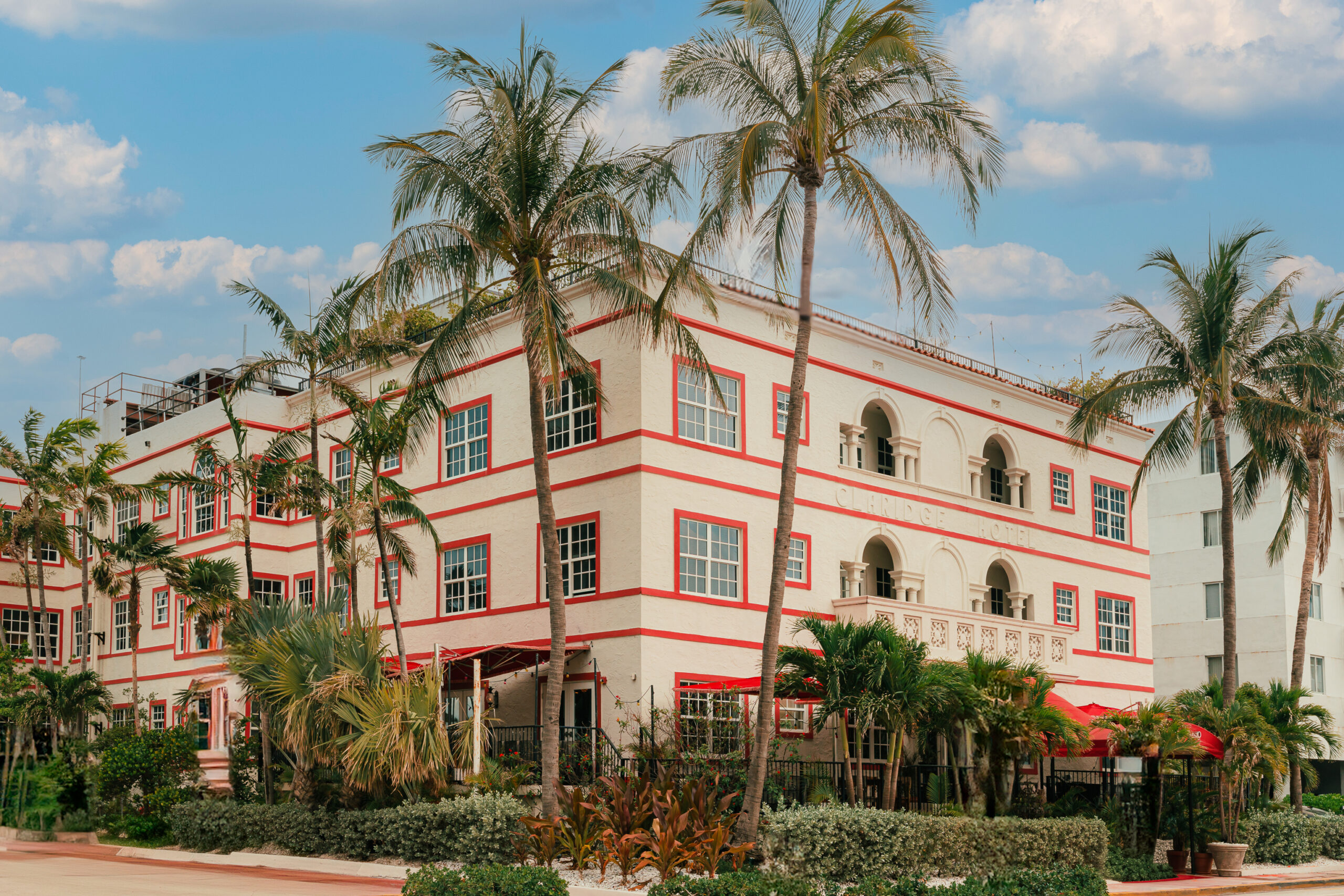 Photo Credit: Faena Miami Beach
Just steps from the ocean, Casa Faena offers a quieter, more residential counterpoint to the main hotel, an elegant throwback to 1900s Spanish art and design layered with Art Deco and colonial Mediterranean influences. Guestrooms lean warm and intimate, with hand-carved custom beds and hand-woven throws. The property’s newest addition, Campo, is an all-day restaurant serving New American cuisine with Latin influences, drawing on Executive Chef Antonio Maldonado’s own childhood recipes for a farm-to-table menu built around fresh, health-conscious cooking.
The Art and Design of Faena Miami Beach
Faena Miami Beach’s art collection includes work from Damien Hirst, Jeff Koons, Alberto Garutti, Gonzalo Fuenmayor, Manuel Ameztoy, Amaya Bouquet, and Juan Gatti, known within Faena’s world as “the Michelangelo of Faena.” Gatti was commissioned to create “The Way to Futopia,” a series of eight large-scale murals lining the entrance to The Cathedral, the hotel’s grand entry hall, each rich with tropical imagery touching on love, war, knowledge, passion, and nature. Hirst’s contribution, “Gone But Not Forgotten,” a gilded, three-meter-tall woolly mammoth skeleton, anchors the property’s Mammoth Garden and remains its most photographed feature. Additional pieces from the collection appear throughout the property’s restaurants and signature suites.
For more of Haute Living’s Miami hospitality coverage, see the 10 best luxury hotels in Miami Beach and the best beach clubs in Miami for summer 2026, both of which feature Faena.
through Haute Black.
Haute Living access. Two decades inside the world’s best hotels.
Virtuoso partner. Upgrades & VIP arrival at 1,200+ properties.
One advisor. Who knows you by name.
Frequently Asked Questions
Who founded Faena Miami Beach?
Faena Miami Beach was founded by entrepreneur and creative visionary Alan Faena alongside Len Blavatnik, following a partnership that began in 2000 with the redevelopment of Buenos Aires' Puerto Madero docklands.
What is Faena Forum?
Faena Forum is a 43,000-square-foot event and cultural space designed by Rem Koolhaas and OMA, featuring a domed exhibit hall, a rose marble amphitheater, and five meeting rooms, used for everything from weddings to concerts.
What is the significance of the gold mammoth sculpture at Faena?
"Gone But Not Forgotten" is a gilded, three-meter-tall woolly mammoth skeleton by artist Damien Hirst, installed in the property's Mammoth Garden. It's considered Faena's signature art piece and one of the most photographed objects in Miami Beach.
What was the Saxony Hotel?
The Saxony Hotel was the original building on the site, built in 1947 by George Sax and designed by architect Roy F. France. Known as the "Queen of Collins Avenue," it hosted performers including Frank Sinatra, Marilyn Monroe, and Dean Martin through the 1950s and '60s before Faena reimagined the property in 2015.
Latest from Haute Living

Luggage as Art: BÉIS Just Dropped Its Most Creative Collab Yet

Kith Just Published the Most Complete Sneaker Archive Ever Made
This Rare Diamond Ring Could Sell for $2.6 Million at Christie’s Geneva Auction