My LOUIS XIII Debut: A First Sip with Cellar Master Baptiste Loiseau
Living in the frantic dopamine loop of notifications, we have become a generation obsessed with the visible. We curate our lives for an audience of strangers, confusing the price tag we can display with the value we actually feel. We are loud. We are fast. We…
Living in the frantic dopamine loop of notifications, we have become a generation obsessed with the visible. We curate our lives for an audience of strangers, confusing the price tag we can display with the value we actually feel. We are loud. We are fast. We are constantly “on,” leaving behind our human senses of touch, stillness, and depth. Instead, we swap them for visual intimacy, constant stimulation, and reach.
But sitting across from Baptiste Loiseau, the Cellar Master of LOUIS XIII, time behaves differently. We’re seated for lunch at COTE, the first Miami restaurant I’ve ever confidently called my favorite, surrounded by the hum of conversation, yet Baptiste carries a stillness that attracts attention without shouting for it. He is the guardian of a legacy spanning centuries, a man whose daily work involves tasting the past and preparing a future he will never see. In our two-hour conversation, a profound truth emerges: alcohol is an art, not just for fun, aesthetics, or showing off at tables. LOUIS XIII represents something you can’t flaunt, something you can’t post on the internet. It’s a luxury you have to feel, a moment you have to live, and a connection to yourself you have to rediscover.
To understand LOUIS XIII, you must first understand the man entrusted with its secrets. Baptiste Loiseau is not a scion of a cognac dynasty. He was born and raised in Cognac, a French town an hour from Bordeaux, where sunflowers beam and grapes soak in the region’s chalky soil, destined for greatness.
“I was not at all from a family involved in the Cognac industry. My grandparents were growing vegetables and flowers,” he says, his voice carrying the warmth of the terroir.
His journey wasn’t a straight line to the cellar. It was a winding path through winemaking studies that took him to South Africa and New Zealand, far from French soil. “It’s a little bit difficult when you’re a teenager to imagine that maybe it will be the place where you will settle,” he admits with a smile.
A return to his roots sparked the fire. He realized that while winemaking schools taught him how to make wine, he saw a gap in his knowledge on the alchemy of distillation—how you transform white grapes into an eau-de-vie (water of life) that can age for decades.
His ascension was meteoric but earned. He joined the House of Rémy Martin in 2007, training under the legendary Pierrette Trichet, the house’s first female cellar master. Their bond was one of deep respect and unspoken intuition. When she decided to retire, she chose Loiseau, then just 34, as her successor.
“LOUIS XIII has to remain the same,” he explains, describing the weight of consistency. “The vision of the creator in 1874… we have to respect this vision.”
The liquid inside isn’t just alcohol; it is a blend of up to hundreds of eaux-de-vie, sourced 100% from Grande Champagne, the most prestigious cru of the Cognac region. The youngest drop in the bottle is at least 40 years old; the oldest could be over 100.
“The initial name of LOUIS XIII in French was Grande Champagne, Très Vieille, Age Inconnu,” Loiseau says, referencing the original classification. “Which in English is ‘Grande Champagne, Very Old, Age Unknown.'”
This leads to what he calls the “paradox” of LOUIS XIII. When you think of something that old, aged in oak for decades, you expect heaviness. You expect it to be thick, perhaps overwhelming.
“I imagined LOUIS XIII would be so concentrated that it might be overwhelming,” he confesses about his first tasting. “And finally, I told Pierrette, ‘How can it be so light and concentrated at the same time?'”
It is a sensation of density and lightness—heavy with history but light on the palate.
For a generation used to “shots” and pre-game drinks, the ritual of LOUIS XIII can seem intimidating. But Loiseau dismantles this fear with grace. He isn’t interested in the snobbery of spirits; he is interested in the emotion.
“It’s not to show off,” he says. “No. With LOUIS XIII, it’s much more a question of we are together.”
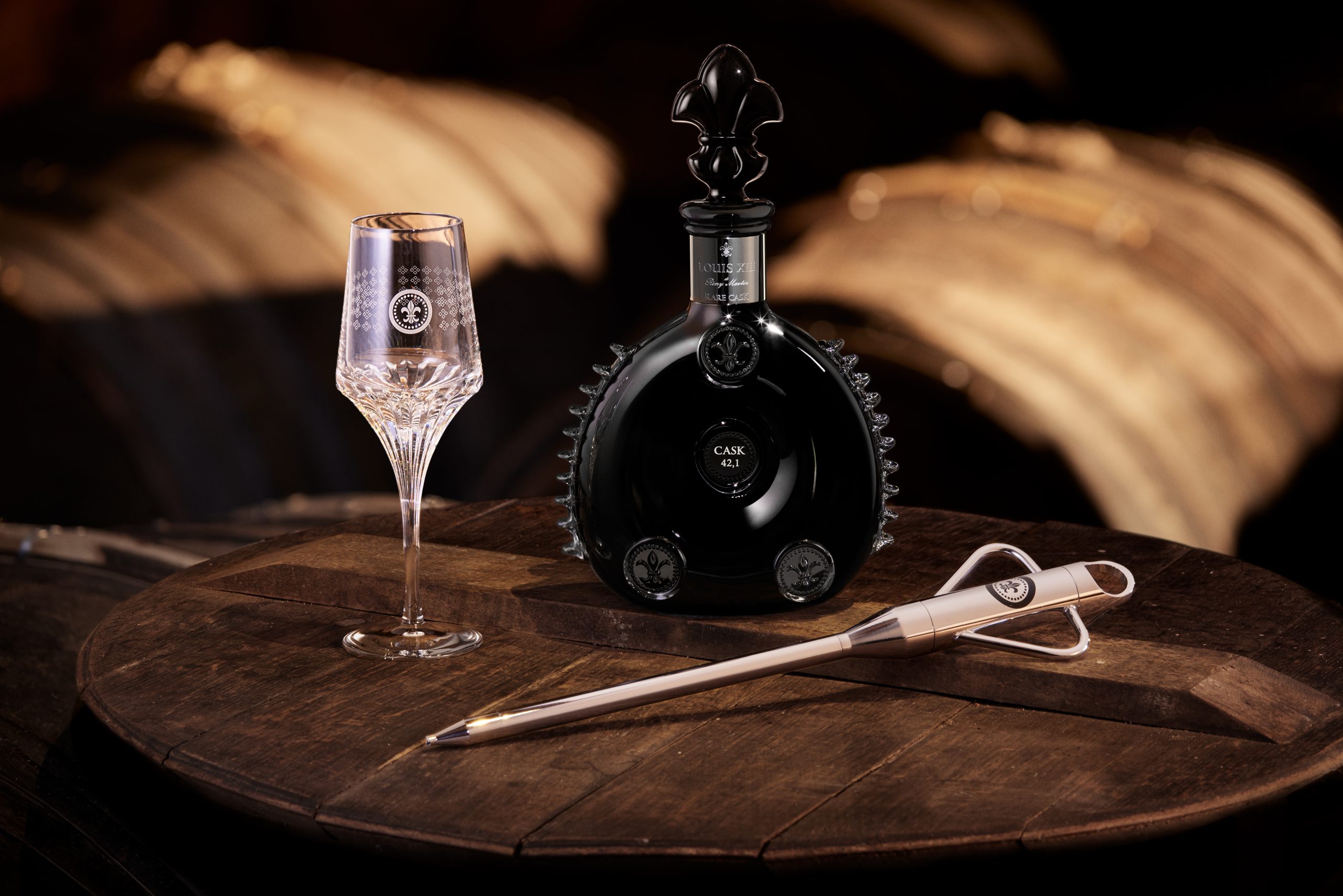
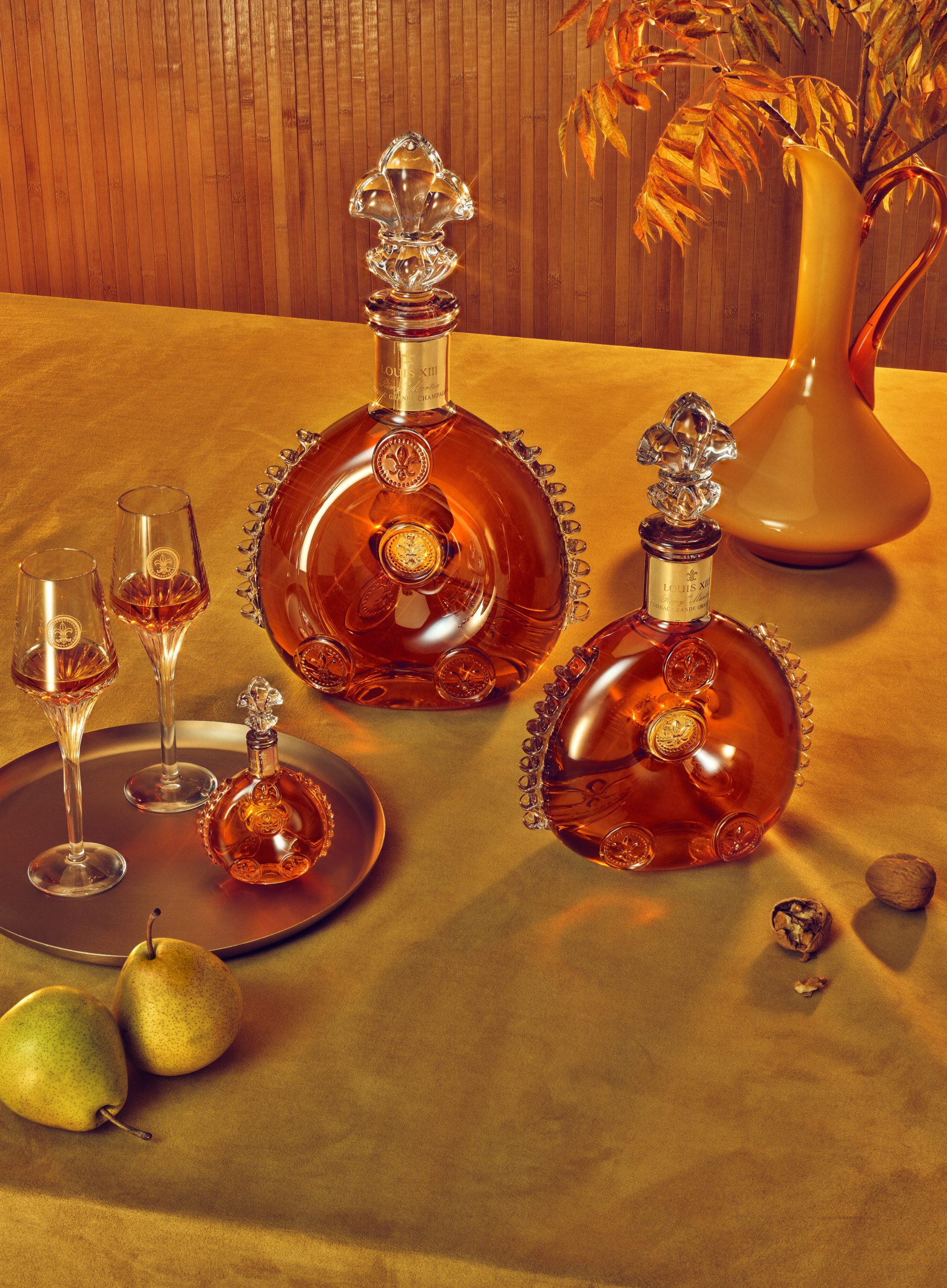
The tasting ceremony begins, and everything transforms. From the LOUIS XIII decanter, the liquid climbs the pipette, then cascades into the iconic crystal Baccarat glasses.
“It’s like a sunflower,” the brand ambassador points out, noticing how the ridges of the crystal radiate outward.
Loiseau nods, seizing the image. When you look down into the glass, the liquid and light create a pattern resembling the sunflowers in the region of Cognac. A detail you would miss if you were just knocking back a drink for a boomerang video. You have to be present. You have to look.
He guides me through the “Angelic Voices”—a toast where the crystal glasses touch, emitting a long, resonant chime that sounds like a choir holding a high note. It is a sound that vibrates in your chest, a physical signal to slow down.
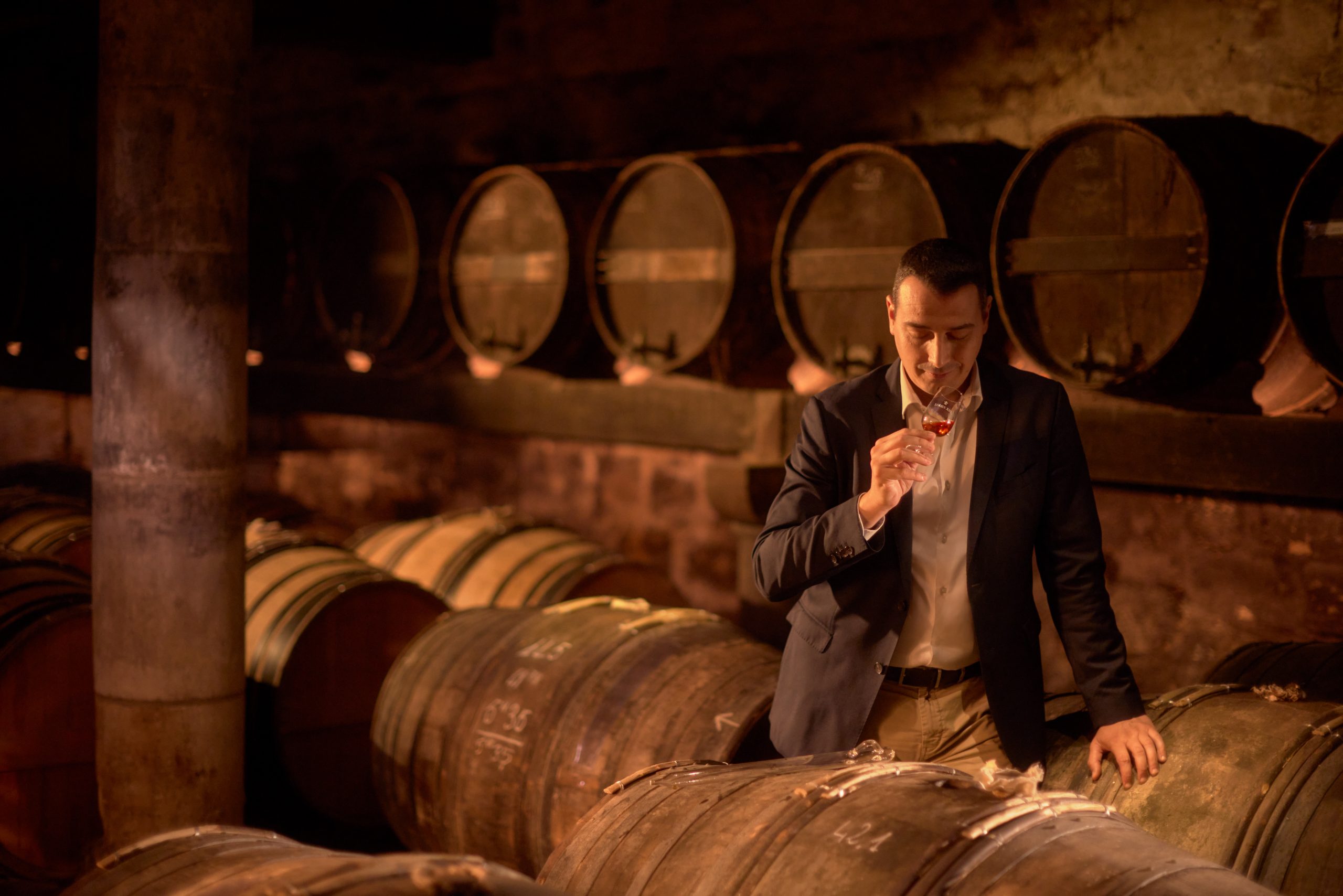
“Just take your time to explore all these facets,” he advises. “This is the perfume of time. You have the head notes, heart notes, and finally more dense notes at the bottom of the glass, and waves of aromas that we’ll find through the tasting.”
He suggests starting at a distance. We close our eyes and approach the glass to our nose. The aromas flourish one after another. Yet the cellar master identifies each element like a scientist reciting the periodic table.
“Nuttiness, figs, dates,” he begins upon the first sniff.
Every idea hovered on the tip of my tongue, and somehow Loiseau spoke it first, like a mind reader.
“I have lots of honey, dried raisins, sweet spices,” he continues.
He begins with a single instruction: place just one drop on the lips to prepare the palate. No swirling. No warming the glass in your palm. And no dessert pairings—a long-held myth he’s quick to dismantle.
“If you do, you evaporate the most volatile components, the very essence of its elegance,” he urges.
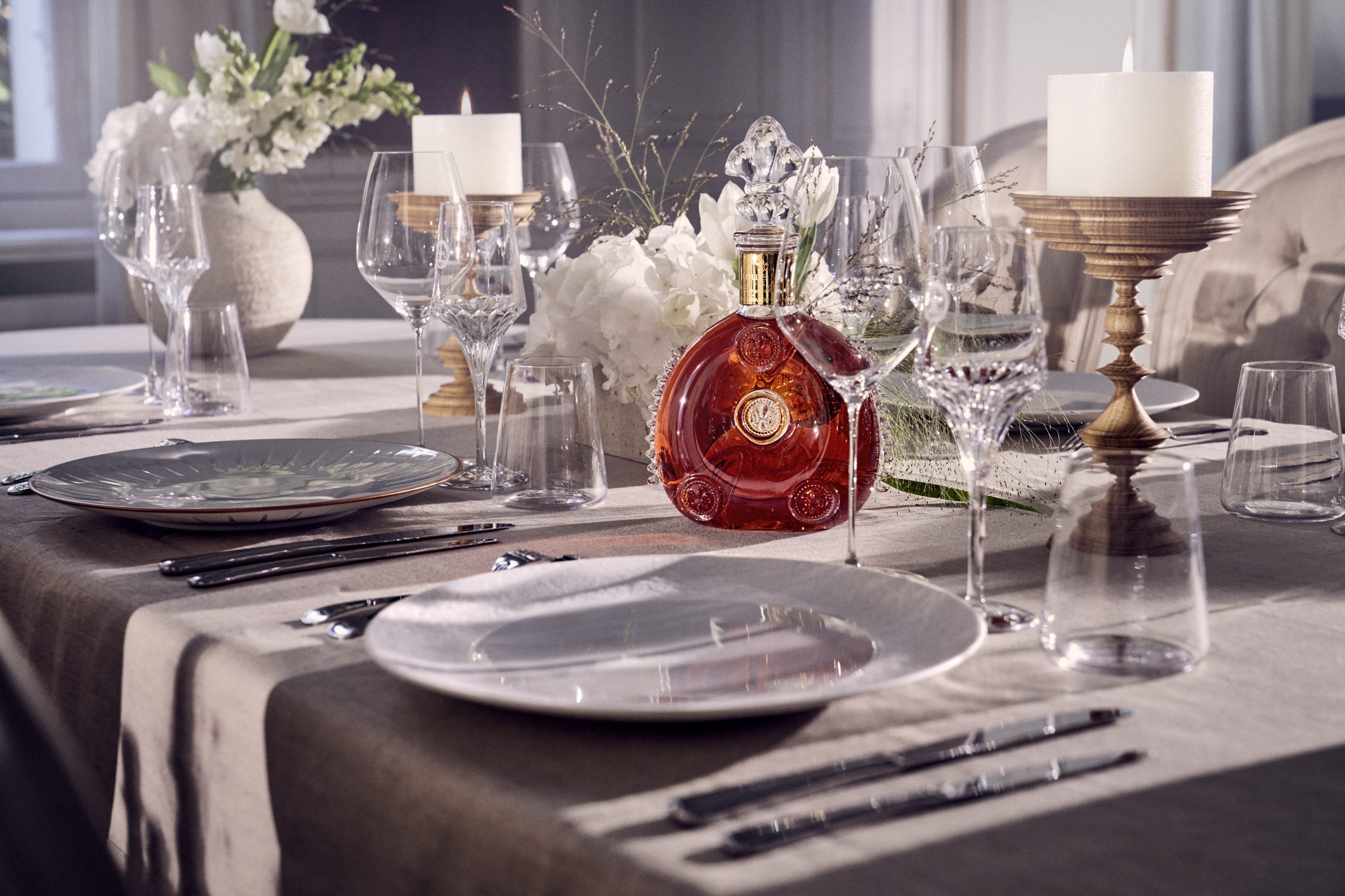
As we taste, the flavors arrive in waves. First, a warm richness spreads across the mouth, giving way to a fresh, almost airy sensation. A hint of spice follows, and before you know it, a minty note emerges. All from a single drop—my palate journeys through more layers of flavor than the entire meal we just enjoyed.
“It’s a never-ending rolling effect on the palate,” he describes. “You start with the density, then you have the lightness, then you go back to density.” Even the empty glass, he notes, tells a story.
Moments after the first sip, the flavors lingered, unfolding slowly and decisively—a testament to the legendary, enduring finish of this cognac.
“If you let your empty glass sit during the night,” Loiseau highlights, “you go back in the morning, and it’s still smelling. You have much more of the incense, the myrrh, the smokiness.”
In a digital world, our memories are stored in the cloud. In the world of LOUIS XIII, they are stored in our senses.
He recounts a trip to Kyoto, Japan, where he led a tasting for the third-generation owner of a temple, a woman in her seventies. As he described the notes of candied fruits, figs, and plums, he noticed she began to weep.
“She was in tears,” he says softly. “She was telling me, ‘You brought me back thanks to everything you are describing to a memory I have with my grandmother when I was taking the fruits from the garden and making plum jam with my family.'”
While alcohol is usually associated with oblivion, in the world of fine cognac, it performs the opposite role, becoming a vessel of memory, carrying the possibility of a new one forming after each sip.
“It’s the power of the senses,” he reflects. “For me, it’s linked to everything you’ve got in your memory that can be hidden somewhere, and thanks to LOUIS XIII, you reactivate a little bit of this memory.”
We live in a time where “luxury” is synonymous with excess. The loudest logo, the fastest car, the most exclusive table. But LOUIS XIII offers a different definition.
In the cellars of Cognac, time is the raw material. Loiseau is currently selecting eaux-de-vie he will never see bottled. He is working for his successors, just as his predecessors worked for him. It is an act of supreme generosity and patience. He deals with the things we as a society are leaving discarded: nature, time, and emotions.
“Yes, the foundation has to be the science of making the best eau-de-vie possible, but we deal with time, nature, and you have to welcome your senses with your emotions, maybe your intuition too,” he says. “Then when you taste it, you have to let yourself go.”
For our generation, this is a radical concept. We are told to hustle, to grind, to maximize every second. LOUIS XIII asks us to do the opposite. It asks us to respect the century it took to create this liquid. To close our eyes, shut out the noise, and look inward.
“It can be a little bit scary,” he admits, referring to the depth of the experience. “Because it goes beyond maybe the level that you have to scratch a little bit to go much deeper.”
But scratching that surface reveals something far more valuable than your go-to cocktail or wine. It reveals a connection—to nature, to history, and to ourselves. In the end, the “sunflower” in the glass isn’t just a trick of the light; it’s a reminder to turn our faces away from the glare of the screen and toward the warmth of a genuine, shared moment. That is the art of LOUIS XIII, a luxury worth waiting for. And as for me—well, let’s just say my cognac “debut” was claimed that day, and I’m glad it wasn’t with anything less than the real thing.
Latest from Haute Living

These are Palm Beach’s Most Indulgent Spa Experiences
The Art of Rest: A Restorative Wellness Journey at HOTEL THE MITSUI KYOTO
The Rare Tour Brings Sydney Steakhouse Margaret to New York This September