Death Becomes Him: The Secret to Hiroyuki Sanada’s Immortal Career
Hiroyuki Sanada reflects on his iconic onscreen deaths, Scorpion’s legacy in Mortal Kombat II, and his groundbreaking role in FX’s Shōgun.
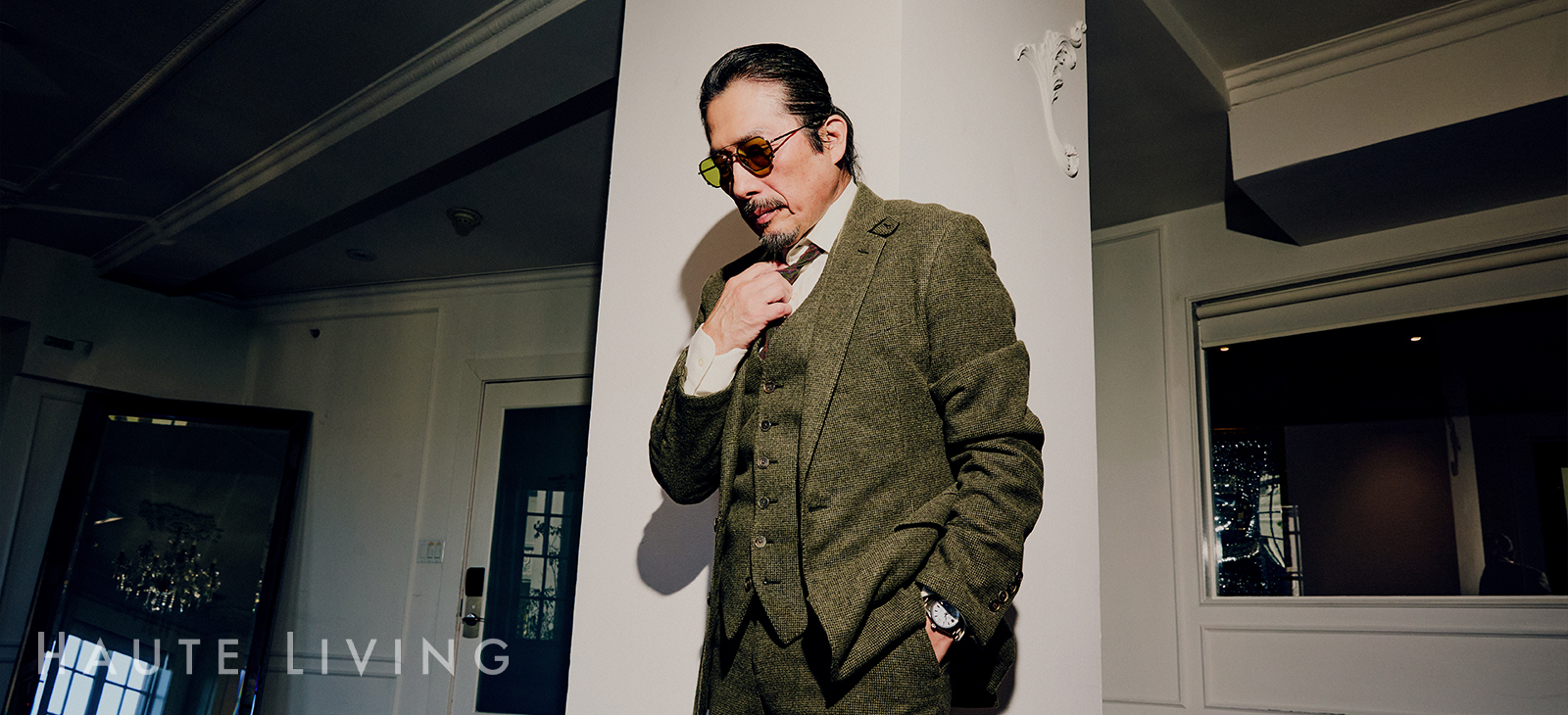
GLASSES: Jacques Marie Mage
WATCH: Grand Seiko
Photo Credit: Juan Veloz
BY LAURA SCHREFFLER
PHOTOGRAPHY JUAN VELOZ
STYLING CHLOE TAKAYANAGI
GROOMING TAMMY YI
SHOT ON LOCATION AT THE CULVER HOTEL, CULVER CITY, CA
Hiroyuki Sanada has been shot, stabbed, beheaded, and burned — all before lunch.
When I ask how many times he’s died onscreen (I mean, he is famous for it, after all), he chuckles: “Too many!”
And while it’s true that the characters he plays — whether they’re assassins, samurai, or even the vengeful Scorpion in Mortal Kombat — seem to have a brief shelf life, the same can’t be said for Sanada himself. With more than 70 films and almost 60 years as a professional actor under his belt and a body of work that stretches from intimate Japanese dramas like The Twilight Samurai to epic period dramas like The Last Samurai (his Hollywood breakthrough, opposite Tom Cruise, in 2003) to blockbusters like Avengers: Endgame and John Wick: Chapter 4, it’s safe to say that Sanada isn’t going anywhere.
And yet, death not only seems to follow him — but, in truth, it becomes him.
By now, audiences know the rhythm of his falls: the sudden clash, the pause, the intake of breath before the inevitable cut to silence. On Reddit, fans joke that he “never makes it out alive,” pointing to his roles in The Last Samurai, The Wolverine, 47 Ronin, Westworld, and Mortal Kombat. That gasp from audiences is almost Pavlovian by now — proof of how deeply his sacrifices land.
Perhaps the most indelible of those deaths came as Scorpion, the vengeful warrior in 2021’s Mortal Kombat, whose story begins — and ends — in fire. For longtime fans of the video game franchise, Scorpion is both a cult hero and a tragic figure, his entire mythology built on loss and vengeance.
When Sanada was initially cast in the film, he had no idea just how iconic the role was. “I never played the game before I got the offer,” he admits. “I was a little nervous to play that famous character.” Nervous, but not intimidated. With Scorpion, he did what he has always done. He studied. He practiced. And, in this case, he picked up a controller. “I tried to play, but I had never done it before, so I was a loser again and again,” he laughs. Still, he kept at it. And over time, the character’s world — the secret weapons, the coded moves, the history — came into focus. “Playing helped me understand Scorpion’s world on set. I got a bit of a new hobby,” he admits.
But the true appeal of tackling such a role wasn’t just in the fight choreography, visual effects, or the ability to brush up on his video game skills, but in the story itself. He understood immediately that his own task was not just to embody the fighter, but to ground him in humanity.
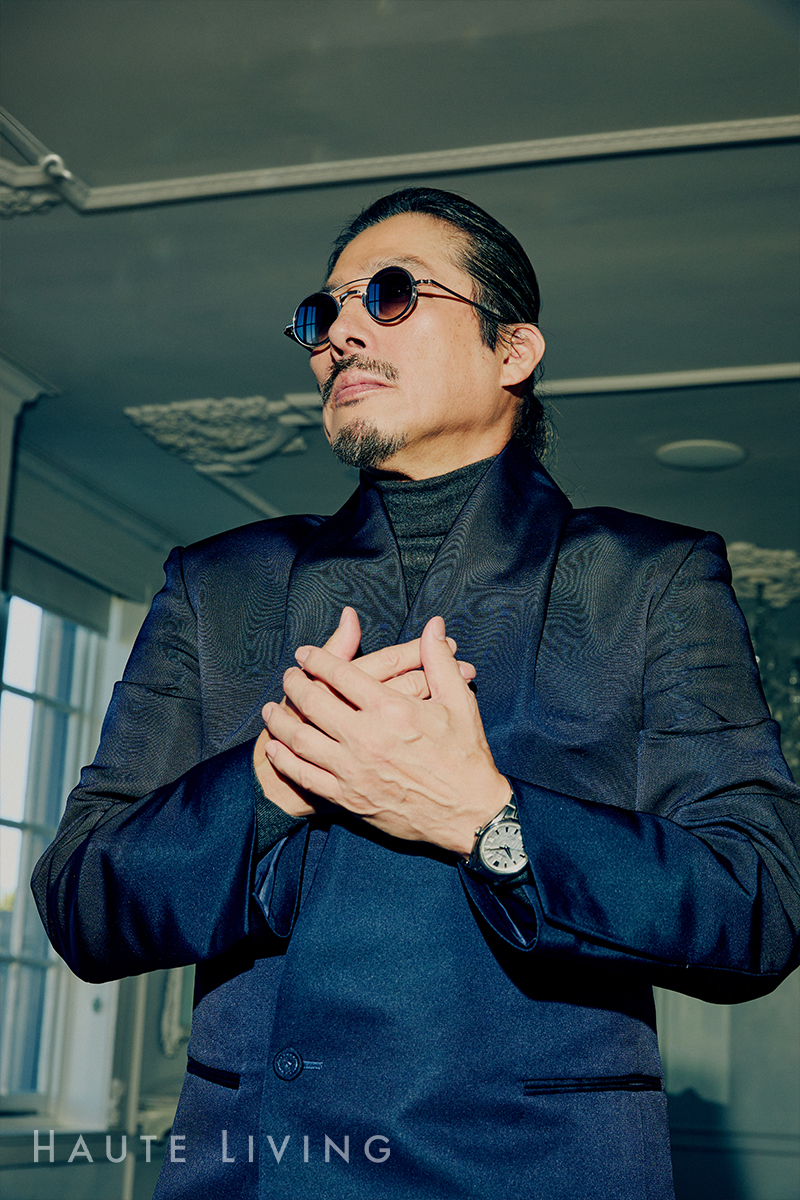
GLASSES: Jacques Marie Mage
WATCH: Grand Seiko
Photo Credit: Juan Veloz
Which is why, in the first film, he relished the chance to play Hanzo Hasashi, the man before the mask — a grieving husband and father whose humanity lent weight to the supernatural vengeance that followed as he transformed into Scorpion. “That human story helped me respect the original and then create something new,” he says, noting,
“Finding that balance is my mission as an actor.”
Sanada understands the responsibility that comes with such casting, which is why the vengeanace he initially brought to Scorpion is still alive (ironically) and strong in the upcoming Mortal Kombat II. “My revenge is the most important theme for my character, same as part one,” he explains.
But as one of the few Japanese-born actors to break through in the West, authenticity is the most important element for Sanada. He has been entrusted to carry cultural integrity into roles that might otherwise have been flattened into stereotype. His collaborators often speak of the gravitas he brings to even the briefest of appearances — the way his physical precision and quiet authority elevate his films into something weightier. Audiences, too, respond to that gravitas. A Sanada warrior is never generic; he is flesh and spirit, carrying centuries of discipline in the flick of a wrist.
It is this reputation that has made him both indispensable and symbolic. Directors lean on Sanada not only for precision in choreography, but for the way he elevates what might otherwise be dismissed as genre spectacle. Every cut of the blade, every fall to the ground carries centuries of history in his movement. In the silence that follows his characters’ deaths, audiences often feel they are mourning more than fiction. They are mourning the warrior itself — a figure Sanada embodies with almost mythic resonance.
But then, he knows the stakes: stepping into a character beloved by millions of fans can be treacherous — especially when it comes to characters like Scorpion. “Of course, I felt a lot of pressure. But I didn’t mimic the game completely. I respected the original but added my own originality.”
GLASSES: Jacques Marie Mage
SHOES: Santoni
WATCH: Grand Seiko
Photo Credit: Juan Veloz
That pressure hasn’t gone unnoticed by audiences. The appetite for Sanada’s Scorpion is stronger than ever. When the red-band trailer for Mortal Kombat II dropped, it shattered expectations, notching 107 million global views and becoming one of the most watched trailers in franchise history. Though the premiere date was set for October 24 of this year, fans will have to wait (impatiently) a little longer. Well, maybe more than a little: in late August (after this interview was done, in fact), Warner Bros. and New Line shifted the sequel’s release from a crowded late-October slot to mid-May next year — a move designed to capture summer’s box-office heat, just as Final Destination: Bloodlines did with record numbers last season. To date, the three Mortal Kombat films have grossed more than $250 million worldwide, proof that Scorpion’s sting — and the gravity Sanada brings to him — remain irresistible to fans.
But back to death (because really, can he avoid it?). In Mortal Kombat II, Sanada’s fate is sealed once again: by the time the sequel opens, Scorpion is already gone — a ghost, a legend, a presence rather than a man. The irony isn’t lost on Sanada that one of his most popular roles is defined by absence. Nor is it accidental that this absence resonates now, at a time when international casting in blockbuster franchises faces sharper scrutiny than ever. These roles carry the weight of representation and responsibility — not tokenism, but testament. In an industry often criticized for sidelining Asian actors, Sanada has managed to seize center stage by imbuing them with emotional truth. This, in
part, is what made Shōgun such a success — and which, simultaneously, turned Sanada himself into a global phenomenon, with a collection of accolades that few actors of any nationality can claim.
FX’s lavish adaptation of James Clavell’s novel became one of the most acclaimed television series in years, hailed for its visual splendour, dramatic scope, and cultural authenticity. It wasn’t just a critical darling; it was a juggernaut. Not only did it shatter records once thought untouchable, even dethroning Game of Thrones for the most wins in history, but it also collected a treasure trove of well-deserved Golden Globes, Critics’ Choice, and SAG Awards. As Sanada became the first Japanese actor to ever win these accolades — his first outing as producer even earning the Producers Guild’s Norman Felton Award — he also reframed how Hollywood — and the world — viewed Japanese actors and storytelling.
For Sanada, who plays protagonist Lord Yoshii Toranaga, the brilliant strategist caught between duty, betrayal, and ambition, the role carried deep personal significance. “Lord Toranaga was my hero since I was a kid,” he admits. That reverence, however, came with pressure. How does one play his hero? His solution was simple. “I tried to forget the original, then create my own version. Once I decided [on that], I felt free.”
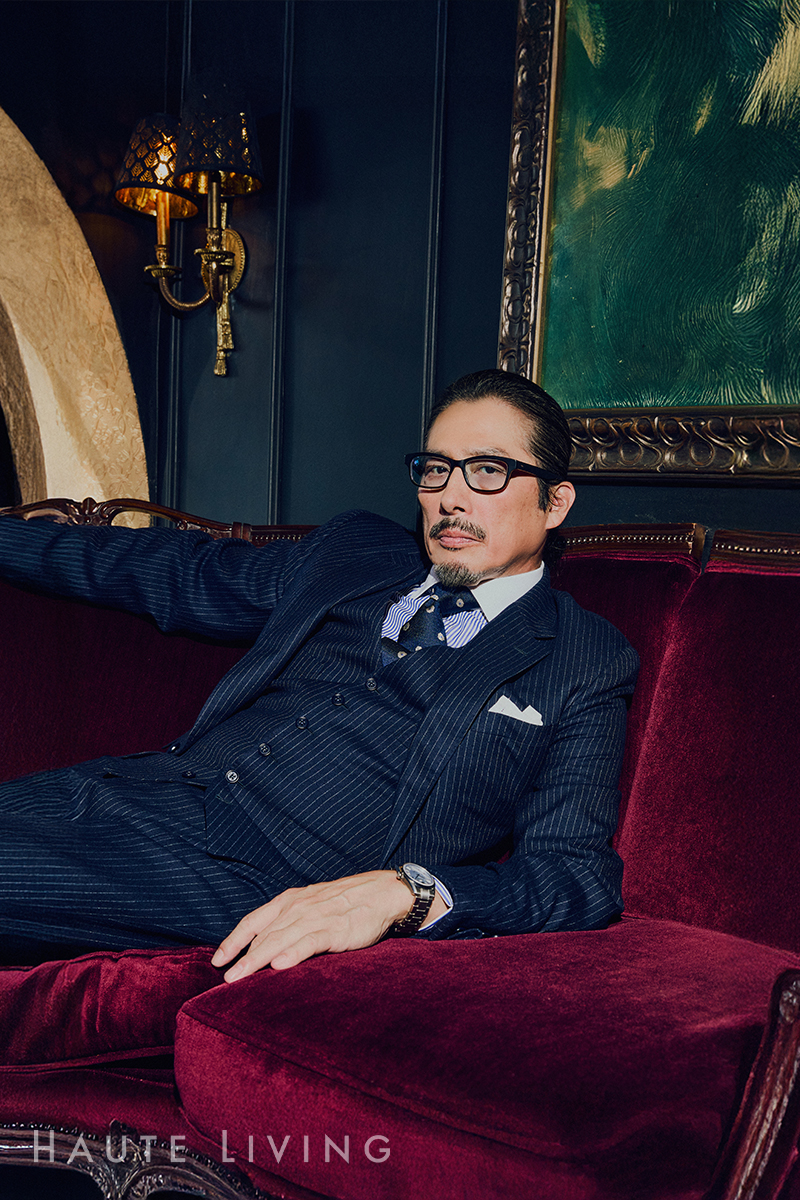
WATCH: Grand Seiko
GLASSES: Sanada’s own
Photo Credit: Juan Veloz
In building the character from scratch, Sanada landed upon something special. In his hands, Shōgun became transformative: no longer a story told solely through foreign eyes, but one anchored in lived cultural truth. For Western audiences, Lord Toranaga was a revelation, embodying the complexity of leadership without exoticism. Critics praised his “commanding subtlety,” marveling at how he could alter the mood of a scene with the smallest shift in gaze. This dual resonance — authenticity at home, authority abroad — is what elevated Shōgun from adaptation to phenomenon. And luckily, the saga isn’t over. FX has officially greenlit a second season, with Sanada heading to Vancouver (where the majority of the series is actually filmed) to begin shooting later this year. For him, it’s not just a continuation of Toranaga’s journey, but another opportunity to shape the way Japanese history is portrayed on a global stage.
Still, Sanada downplays the idea that he alone is the sole cultural bridge between Japan and the West. Critics and collaborators often point to him as the rare actor able to bring Japanese authenticity into Hollywood stories without compromise, but Sanada resists being cast in that singular role. “Maybe half and half,” he says, meaning he is proud to champion Japanese stories, yet refuses to be defined only by them. “I want to support others. But not just Japanese stories — I want to work on all kinds of international projects; that is one of my missions as a producer. International projects are important, but not necessarily all the time. It depends on the project.”
One thing is for certain though: Sanada is content to keep dying onscreen for as long as he needs to. It’s part of his legacy, after all. And so, what begins as a joke quickly turns into something deeper. “After I die, the movies remain alive forever,” he says. “That’s why I give my best every time: I never want to regret it.”
BUBBLES OVER BATTLES
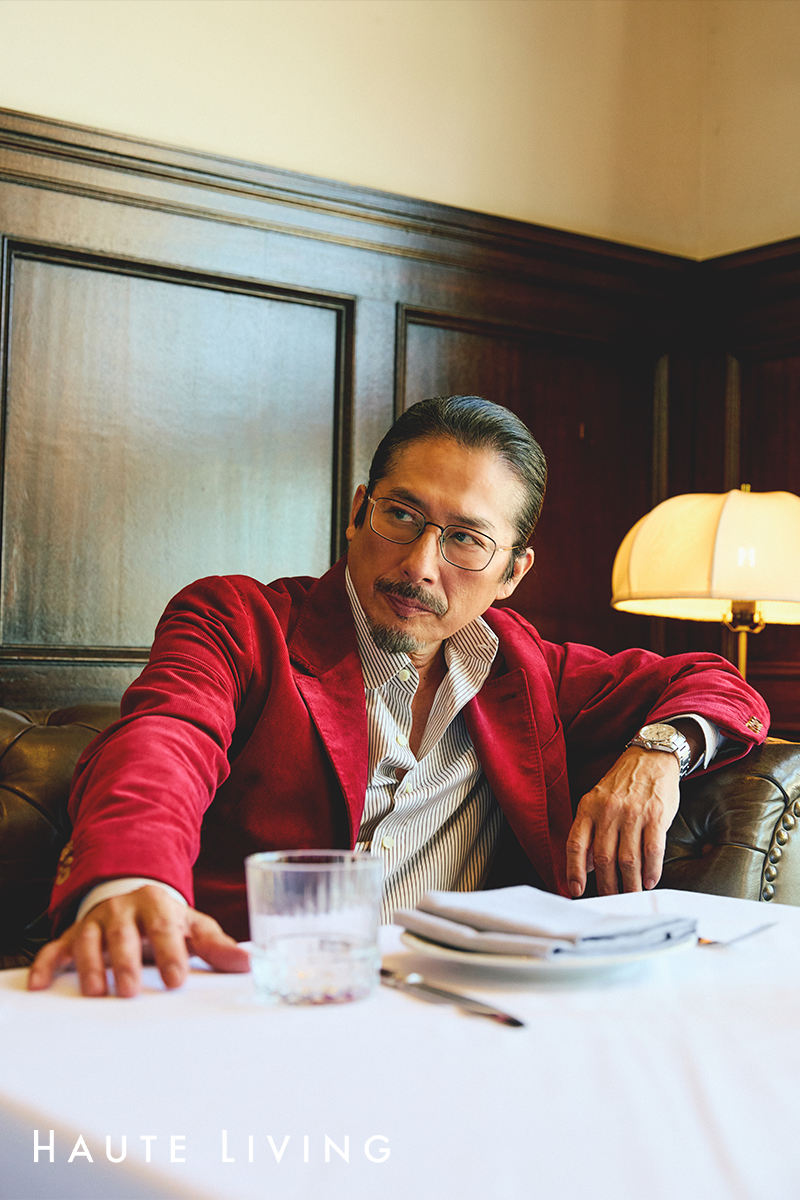
SHIRT: Loro Piana
WATCH: Grand Seiko
GLASSES: Sanada’s own
Photo Credit: Juan Veloz
Onscreen, death is Hiroyuki Sanada’s constant companion. Off screen, though, he insists on life. “I always open the bubbles,” he says with a smile, referring to his love of champagne and prosecco. Where death defines his roles, celebration defines the man himself — a reminder, a quiet insistence, that what lasts is not sacrifice, but joy. It’s a philosophy that has carried him through a career of more than half a century, one that has made Sanada — who turns 65 on October 12 — an industry legend, an international star, and one of the most celebrated actors of his generation.
In an industry where roles are fleeting and stardom fragile, Sanada has survived for decades by pouring everything he’s got into each and every performance, whether it lasts for twelve minutes of screen time or twelve weeks on stage.
“I just follow my instincts. They are all good footsteps in my life,” he says. That instinct has carried him from child actor in Japan to one of Hollywood’s most respected and sought-after stars. Along the way, he has been honored at every level — from lifetime achievement awards in Japan to Hollywood’s highest accolades — yet he measures success less in trophies than in integrity.
That philosophy came into sharp focus when Sanada took on what he calls the scariest role of his life: the Fool in the Royal Shakespeare Company’s King Lear. It was a test not only of skill, but of the very instincts and integrity he prizes most. He had to perform in English for the first time — and not just any English, but the dense, archaic cadences of Shakespeare. “I was so scared, speaking English on stage — especially Shakespearean English,” he recalls. “I thought, if I fail, I cannot go back to Japan. I cannot survive in the Western world.”
Failure meant more than a bad review. To Sanada, it felt like the difference between international credibility and permanent limitation; the stakes were that high. In that crucible, guidance mattered — and he found it in Nigel Hawthorne, the veteran British actor playing Lear. “He taught me Shakespeare’s rhythm and punchlines,” Sanada says. “Without him, without his help, I couldn’t have survived on stage. I cannot thank him enough.”
The audience, too, became part of his transformation. “Every single day they gave me strength,” he says. “They were laughing at my jokes as a fool, and I thought London people laughing at my jokes?” He pauses before admitting, “But honestly, I could only have fun and feel free for the last two months.”
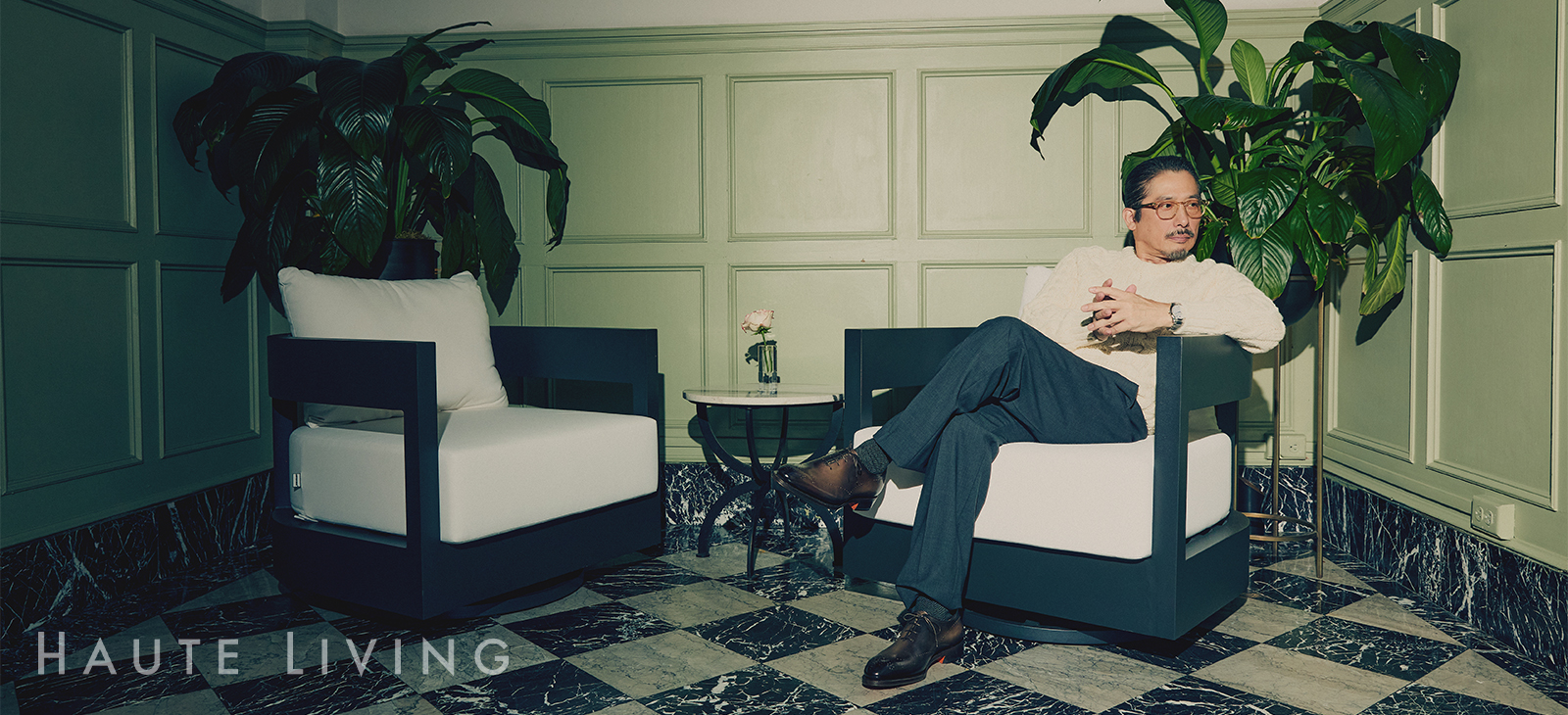
SHOES: Santoni
SOCKS: London Sock Co
WATCH: Grand Seiko
GLASSES: Sanada’s own
Photo Credit: Juan Veloz
Even though it may have taken time, this warm reception translated into more than confidence for Sanada. It led to acclaim beyond the stage, culminating in an honorary MBE — Member of the Most Excellent Order of the British Empire, one of Britain’s highest honors, that recognizes individuals for outstanding achievement or significant service to the community — marking him as a rare artist equally respected in Japanese and British theater traditions.
Said accolade was more than ceremonial; it crystallized the magnitude of the moment. To walk onto the RSC stage as a Japanese actor in the late 1990s was itself a risk. To walk off with standing ovations? That was transformative. For Sanada, it proved that courage in vulnerability could be as powerful as the fiercest sword fight.
That revelation — that risk breeds freedom — became a compass for the decades that followed. Sanada describes this as the moment when fear gave way to liberation, when he realized that risk and vulnerability could unlock freedom, not diminish it. “Let’s keep doing this challenge in my life,” he remembers thinking. That mindset carried him forward, from stage to screen, from East to West.
It also shaped how he approached the roles Hollywood offered him, never content to be confined to a single archetype. “Fighting skills are just one of my skills as an actor,” he says. “Action is just like dancing or singing. For me, it’s not special. I don’t care if it is comedy or musical or warrior.”
In many ways, that single declaration reframes the arc of his career.Audiences may remember him most vividly in armor, but to Sanada, action is just another instrument in his toolkit. The true craft is inhabiting characters fully — whether through fight choreography or comic timing. That’s why, if the right script came along, he’d gladly trade sword fights for screwball banter. For Sanada, it isn’t about chasing a particular genre but embracing the unknown. “Just a role I have never done before,” he says when asked what genre he secretly longs to try. For him, freshness is the only wish — with the audience’s surprise being the reward. [And they would be surprised to see him right now, brandishing a cocktail shaker in favor of a sword as he playfully steps behind the bar of The Velvet Lounge at The Culver Hotel during his Haute Living cover shoot — goofily giving it his all.]
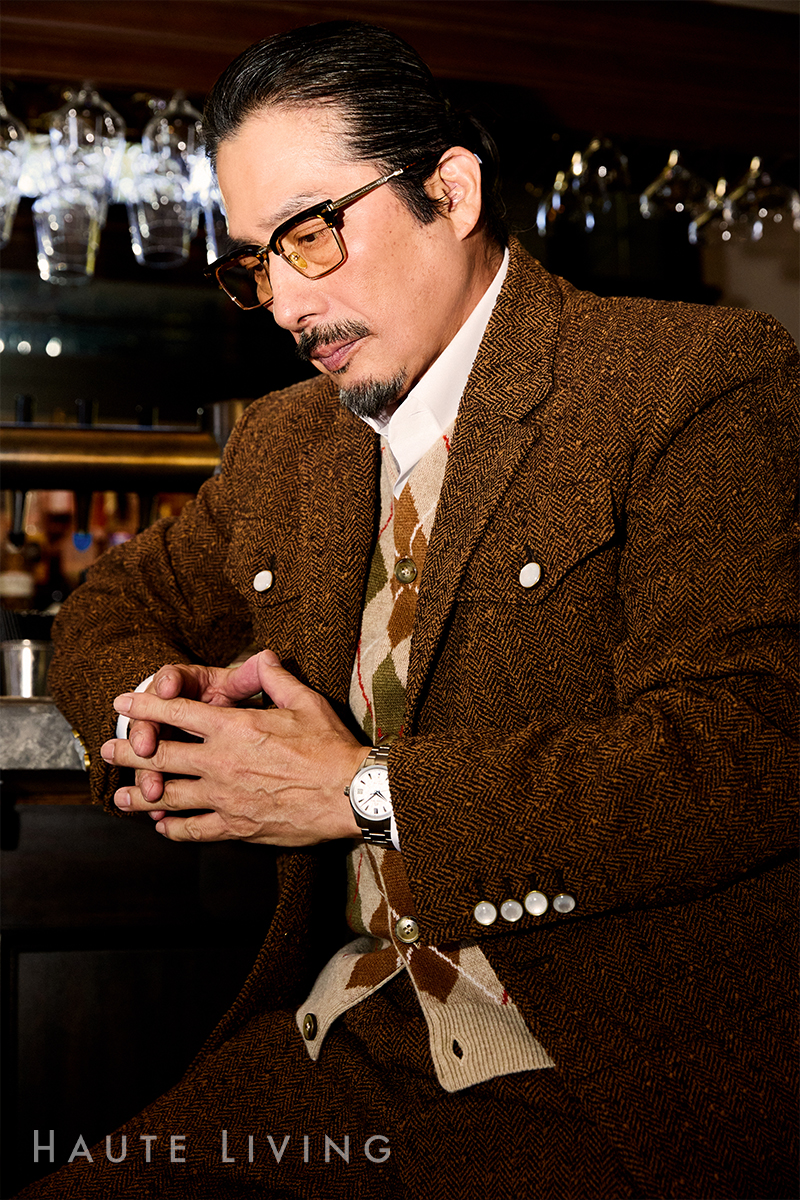
SHIRT: Brioni
GLASSES: Jacques Marie Mage
WATCH: Grand Seiko
Photo Credit: Juan Veloz
This appetite for freshness explains why his filmography stretches from Shakespeare to Marvel, from Kurosawa-influenced samurai epics to zombie blockbusters. He has never stopped searching for the unexpected role, the new angle, the untested challenge. To Sanada, the only true failure is repetition. And just as he refuses to repeat himself on screen, he resists chasing the predictable trappings of success off of it.
Ask most actors of his stature what luxury means, and you’ll hear of sprawling homes, exotic cars, or couture wardrobes. Sanada’s definition is starkly different. “Luxury is a mental thing. Not a mansion or jewels. Working with a great crew and cast is a luxury. Even a small glass of champagne is very luxurious for me,” he admits.
It’s a striking statement from an actor whose résumé reads like a “Who’s Who of Hollywood” with projects that define big-budget spectacle. But it is even in the smallest moments of artistry with his collaborators that matters most, just as it is the smallest of rituals that matter most: raising a glass with castmates at the end of a shoot, watching the sun sink after a brutal day on set, hearing laughter ripple through a theater during a Shakespearean punchline. These are the luxuries that endure, long after the spotlight fades.
Which is why, after more than fifty years in the business, he chooses to measure life not in sacrifice, but in savoring — sometimes with nothing more than a glass of champagne in hand. Not reserved for red carpets or gilded milestones, it can be a modest half-bottle to mark an intimate moment, or a magnum shared only among friends. “It’s for a party, for bringing people together,” he insists. “Never for myself alone.” Even the smallest glass is enough for Hiroyuki Sanada — proof that what matters isn’t how much you pour, but how deeply you taste it.
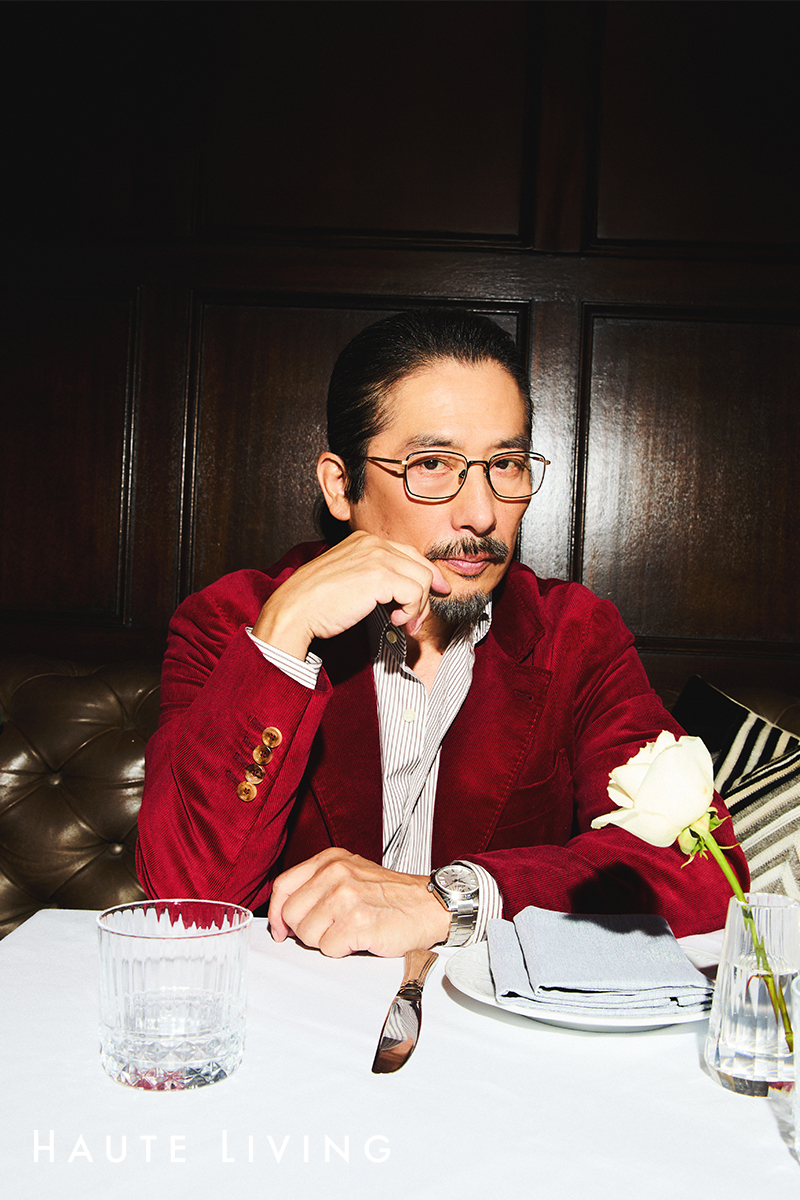
SHIRT: Loro Piana
WATCH: Grand Seiko
GLASSES: Sanada’s own
Photo Credit: Juan Veloz
Related Articles
- Haute Living And Grand Seiko Celebrate Hiroyuki Sanada At Avra Beverly Hills
- Abby Baffoe Interview
- Christine Chiu
- Tiffany Co Introduces A New Icon The Sixteen Stone Solitaire Diamond Ring
Frequently Asked Questions
What are the key specifications?
This article covers the performance specs, design features, and pricing details of the featured vehicle. Read the full review for comprehensive technical information.
How much does it cost?
Luxury vehicle pricing varies by model, trim level, and customization options. Contact your local dealership or the manufacturer for current pricing and availability.
When is it available for purchase?
Availability varies by market and model. Check with authorized dealers or the manufacturer’s website for release dates and ordering information in your region.
How does it compare to competitors?
This article evaluates the vehicle within its competitive set, considering performance, design, technology, and value relative to other luxury options in its class.
Frequently Asked Questions
Does Hiroyuki Sanada speak English?
Yes. He is based in Los Angeles and works extensively in English-language film and television. He first performed in English on stage with the Royal Shakespeare Company in 1999, playing the Fool in King Lear opposite Nigel Hawthorne.
How old is Hiroyuki Sanada?
He was born on October 12, 1960, which makes him 65 in 2026.
Is Hiroyuki Sanada married?
He was married to actress Satomi Tezuka from 1990 until their divorce in 1997. He has two children and has kept his private life largely out of public view since.
Is Hiroyuki Sanada still acting?
Yes. He returns as Lord Toranaga in the second season of FX's Shogun, which he also produces, and he reprised Scorpion / Hanzo Hasashi in Mortal Kombat II.
Latest from Haute Living

These are the Palm Beach Boutiques You Need to Know This Season

Rosewood Hong Kong Just Proved Winning World’s Best Hotel Twice Isn’t A Fluke
The Most Elevated Caviar Experiences in Miami