Château Ducru-Beaucaillou’s New Winery Has 80 Vats and QR Codes — But Still Racks by Candlelight
Getting to know Château Ducru-Beaucaillou, its gravity-fed winery in Saint-Julien, and the science behind its innovative new facility.
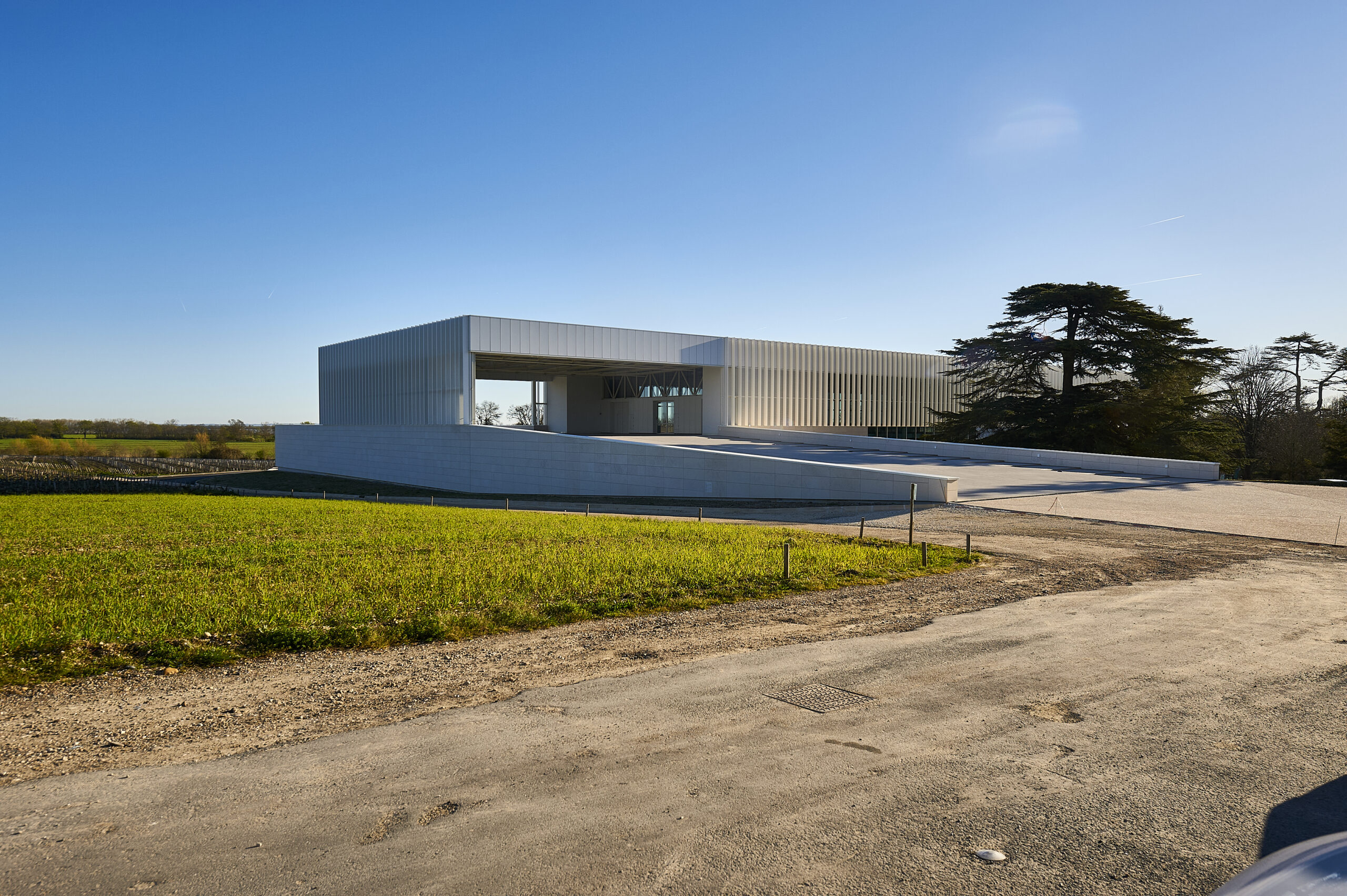
Bruno-Eugène Borie runs on two clocks, and neither of them is especially interested in his schedule. One reads tomorrow morning, when a grape tasted in the row might be perfect for picking; the other reads sometime around 2076, when the young vines on the slope below his château should still be in the ground. Those two clocks explain why Château Ducru-Beaucaillou, the Saint-Julien Second Growth whose story begins in 1720 and whose bottles have worn that famous gold-edged yellow label since 1870, spent more than a decade planning a new winery. Unveiled in April 2026, the gravity-fed building covers 8,000 square meters, holds 80 vats across three levels and takes the grapes from harvest reception to bottling under one roof, built to serve vintages none of its planners will live to taste.
It is not subtle about the number eight. (Eight, the château will tell you, is auspicious East and West, a symbol of balance and, tipped on its side, infinity. Bordeaux has never met a symbol it couldn’t bottle.)
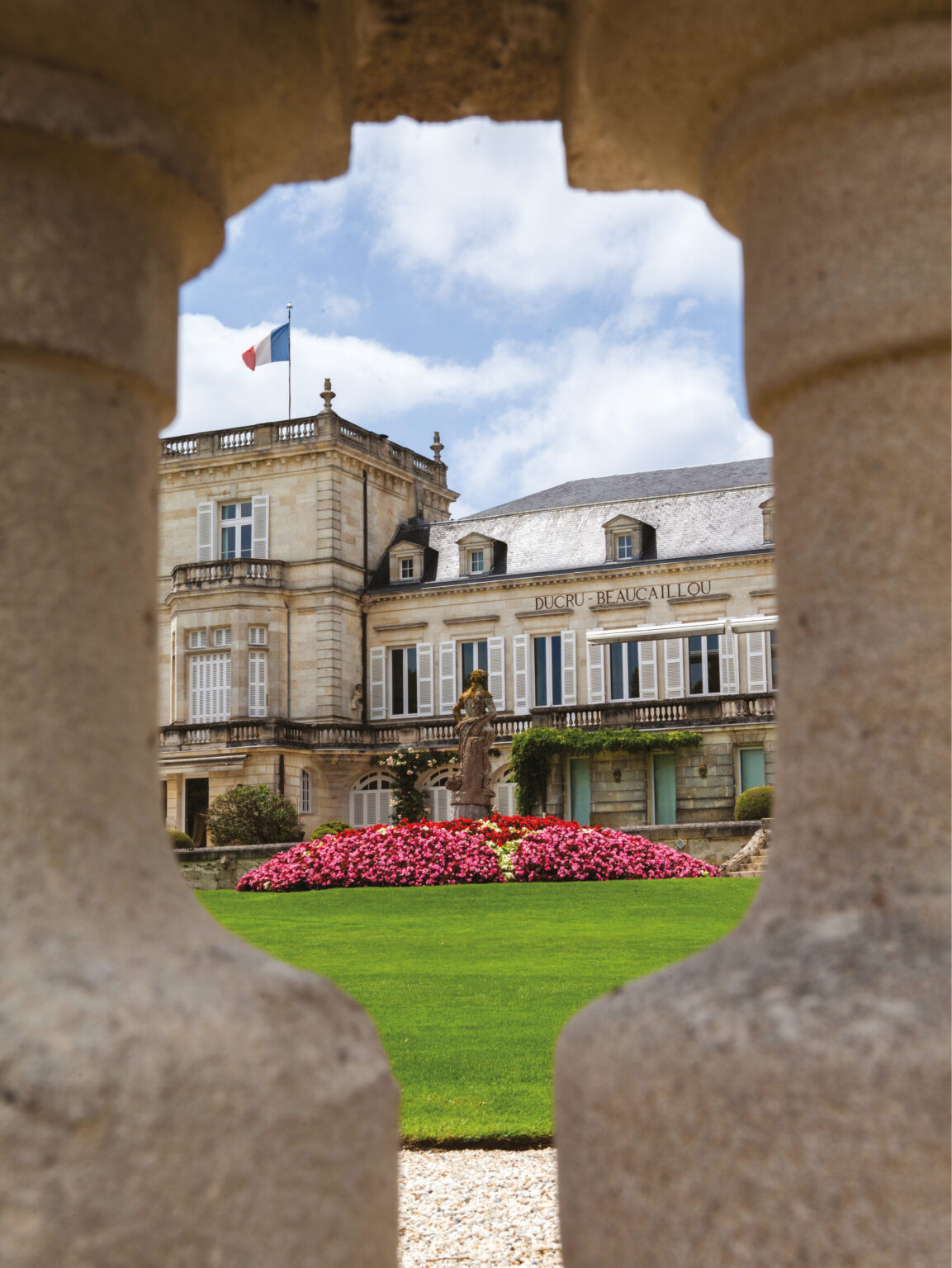 Photo Credit: Artiste Associé
Spend a morning with Borie, who has run the estate since 2003, and you see both clocks at work. He walks a row, tastes a grape and decides it might be ready tomorrow. Then he points to those young vines, meant to stay in the ground for 50 or 60 years, long enough to outlast the people who planted them and very possibly every climate forecast currently on file.
“First, we are farmers,” he tells me. But there are two kinds of farmers, he explains: the ones who grow vegetables, on an annual deadline, and the ones who grow forests, for people they will never meet. A winemaker has to be both at once. “We have to think both short term and very long term.” He calls this one of the magics of the job. (I would call it a recipe for insomnia. He seems to relish it.)
That patience shows in the timeline: more than a decade of planning, construction from June 2023 to December 2025, and a building meant to serve the estate for generations.
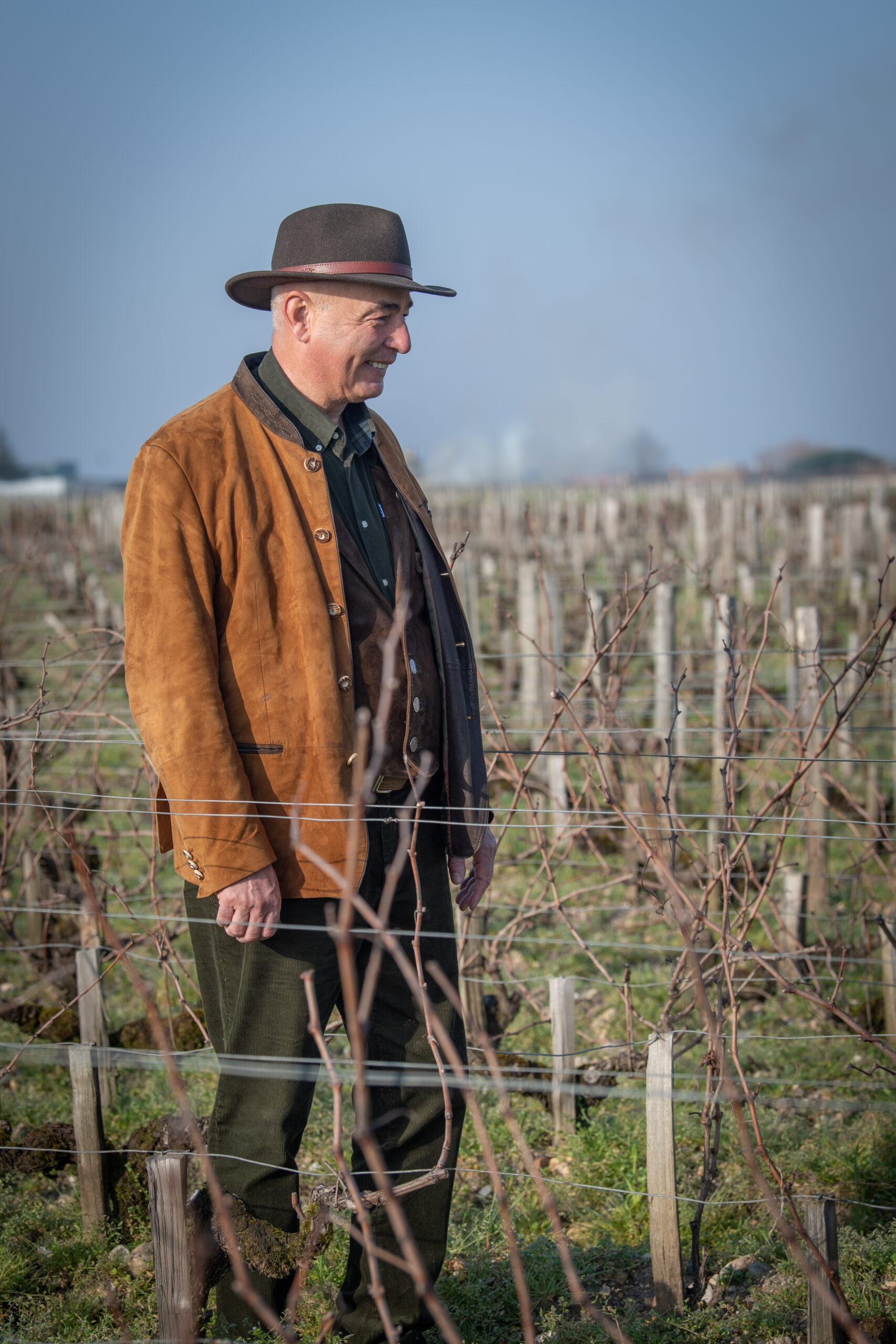 Photo Credit: Ellisa Linder
From the road, you could read the whole thing as Bordeaux doing what Bordeaux does best, which is commissioning a building to make a point. The château’s own press book name-checks Ricardo Bofill at Lafite Rothschild, Norman Foster at Margaux and Herzog & de Meuron at Bélair-Monange, which is either homage or a very polite flex. But the more interesting story at Ducru-Beaucaillou isn’t the glass and the metal. It’s the list of things Borie decided not to change.
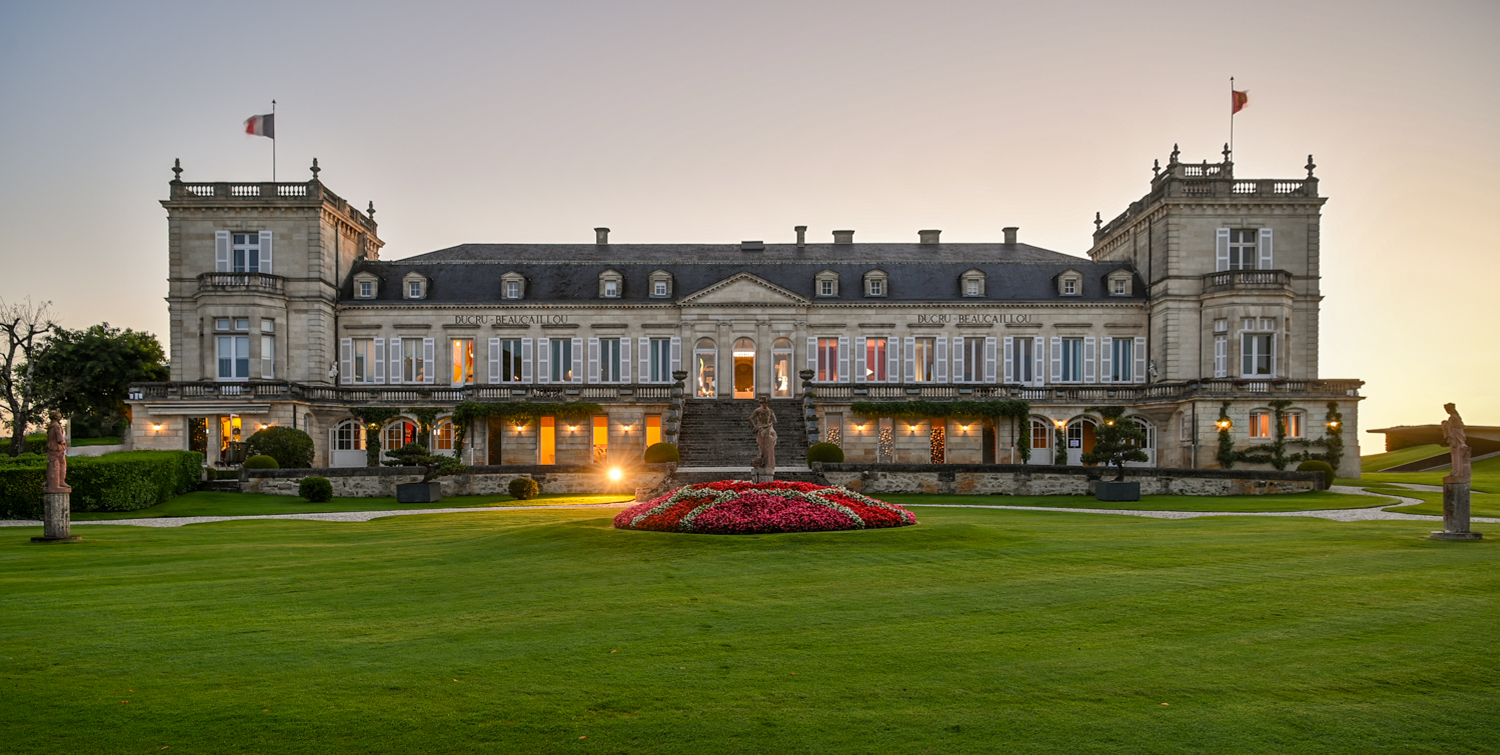 Photo Credit: Artiste Associé
Nobody Invented Ducru-Beaucaillou in 2003
Borie has zero patience for the new-owner narrative. His father, Jean-Eugène, couldn’t stand the investors who would land in the Médoc, buy a property and send out a glossy press kit announcing that everything before them had been a disaster and that, thanks to their arrival, a miracle had occurred. “No,” Borie says. “You build on the past. You build on the experience.”
There is quite a lot of past to build on. The estate traces itself to a marriage in 1720, and by the time of the 1855 classification—which named it a Second Growth—it bore the name of the Ducru family, stitched to the beaux cailloux, the big, blond quartz pebbles the ancient Garonne dragged here roughly two million years ago. They are still the whole point: poor, fast-draining soil that forces the vines to dig deep, stones that hold the day’s heat and hand it back to the vines at night.
In March 1866, the château passed to Lucie-Carole Dassier, wife of Nathaniel Johnston IV, scion of a Bordeaux merchant dynasty and, crucially, a trained engineer with a restless streak. Johnston didn’t just decorate (though, with his second wife, Princess Marie Caradja of Constantinople, he decorated plenty—architect Michel-Louis Garros added the two towers that still anchor the façade on the Médoc’s famed Route des Châteaux, and the park filled with Atlas and Lebanon cedars, California sequoias and Louisiana cypresses). He also experimented. With Professor Alexis Millardet and estate manager Ernest David, he developed the copper-and-lime spray known as bouillie bordelaise, the Bordeaux mixture, at Ducru-Beaucaillou, and it went on to protect vineyards around the world against mildew. It is still used today, notably in organic farming. So the next time someone tells you tech-forward winemaking is a 21st-century idea, send them to Saint-Julien.
Then there’s the label. That yellow, edged in gold, first appeared on bottles in 1870, and for more than 130 years—until 2000—Ducru-Beaucaillou was the only estate in Bordeaux to use the color at all, in a region whose labels otherwise dress for a board meeting. Chinese collectors simply call it “yellow label”; yellow, as the château is fond of noting, was the color of the emperor. Borie links the shade to the Johnstons’ taste for the exotic, to honey and ripe wheat, to the golden stone of Bordeaux buildings at dusk. When he took over, he stripped the drawing of its shrubs and clouds and turned the yellow up until it practically hums; later, the clouds were allowed back in, a nod to the Médoc sky. Now, he has noted with a smile in the estate’s magazine, DB Confidential, the copycats are everywhere: “Everything’s turning yellow these days.”
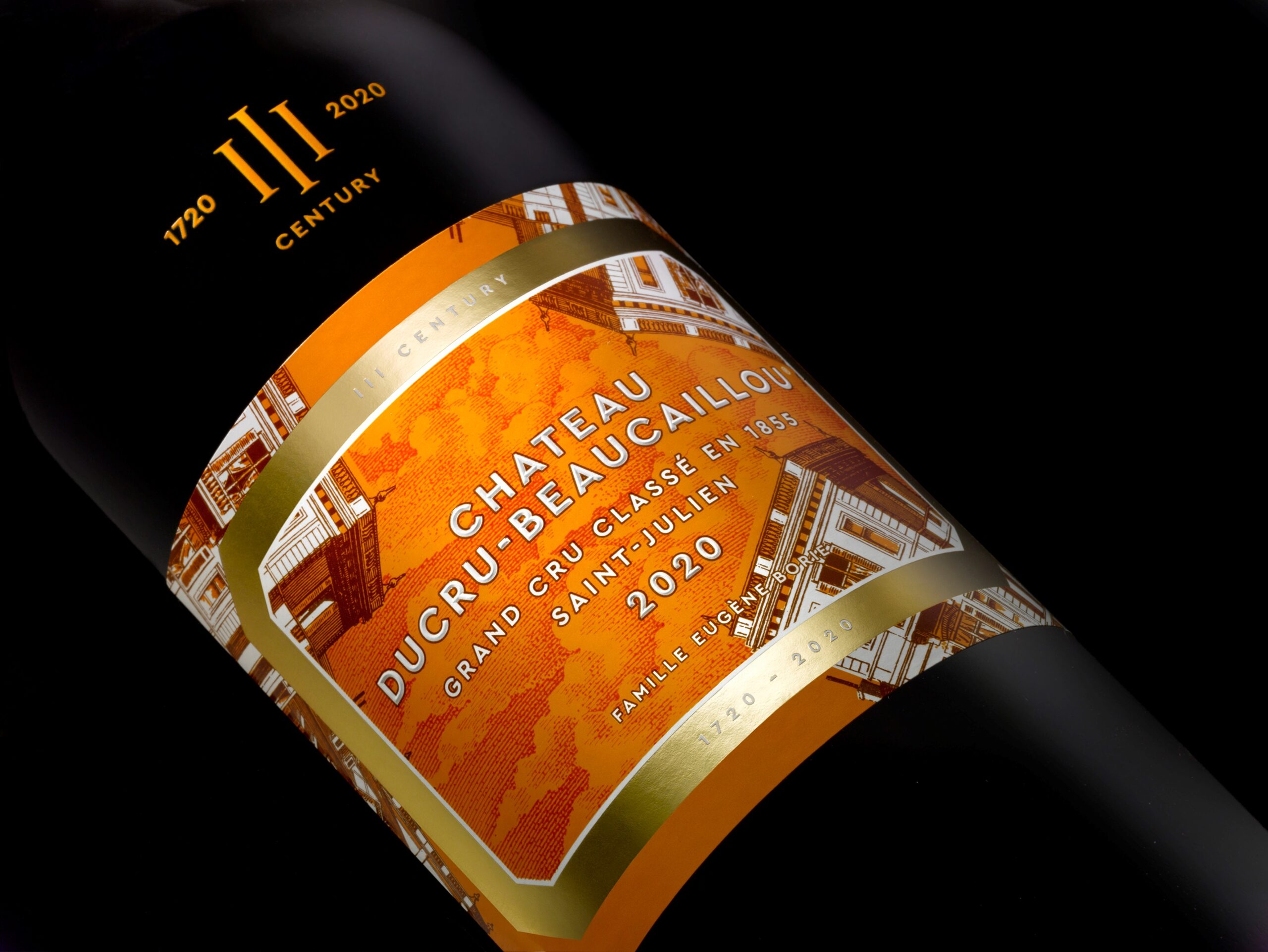 Photo Credit: Gabriel Guibert
The color used to be on the château itself, too. The façade was once regularly limewashed yellow to protect the stone, and in 1990 his father had it cleaned. Borie disagreed. He saw the yellow as an allegiance to the house’s history, its label, its wines. His father saw the cleaning as the final step in restoring the property. “He wasn’t completely wrong,” Borie has conceded. Which, from a son about a father, is practically a standing ovation.
His own route to the château was not a straight line. Born at Ducru-Beaucaillou, he studied economics and began his career in 1981 with wine merchant Peter Sichel, co-owner of Château Palmer. From 1985, he took on Lillet, the Bordeaux aperitif, reworking both the product and its reach before handing it over to the Ricard group in 2008. By then, he had already taken the reins at Ducru-Beaucaillou at his family’s request, in 2003—and his first vintage as the man in charge was the scorching summer of 2003. (Welcome to the job.) He still dates the vines’ capacity to adapt from that year, though he’s candid that no one can say for sure what the climate will look like 20, 30 or 50 years out.
The work, as he describes it, runs vertically and horizontally at once: vineyard today, vineyard in half a century, and in between, everything else. The morning we speak, he has already been on a call with the estate’s ambassador in China and caught up with Vanessa Conlin, the Master of Wine who is its U.S. ambassador. Agronomy, winemaking, selling, promoting, all at the same time. “Holistic,” he says, offering it as the contemporary word for it. He means it as a compliment to the job.
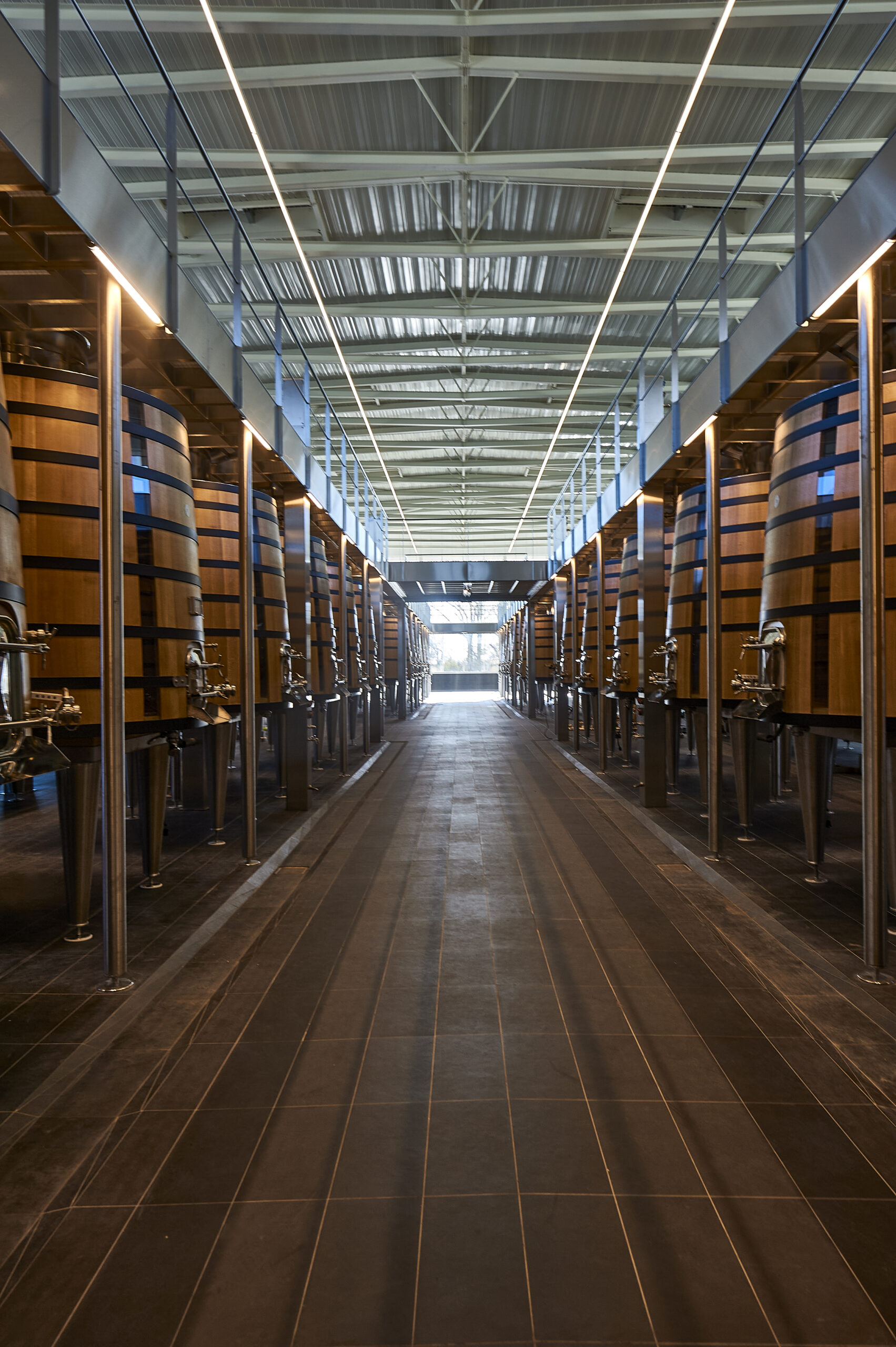 Photo Credit: Atelier Caumes
Eighty Vats, No Map
The story that tells you the most about the new winery isn’t about the winery at all. It’s about a map that was never made.
When Emmanuel Bonneau arrived at Ducru-Beaucaillou in 2016 (today he is technical and operations director), one of his first questions to Borie was whether the estate should map every single plot—soil, structure, exposure, the complete DNA of each parcel. Borie said no. Science, in his view, still can’t fully explain why a great terroir is great. Years later, Bonneau was interviewing a job candidate, a very scientific agronomist, who asked the very same question. Bonneau’s answer: No. We have experience.
Conversion complete.
Borie has a coda he clearly enjoys. A Master of Wine who worked with the estate once told him about a leading Bordeaux terroir scientist who had spent a conference explaining, in exhaustive detail, why certain soils were good. At the end, the students asked the obvious question: So what does that soil actually do to the wine? No idea, the scientist admitted. He could say whether a vine grows well in a soil, or whether it suits Cabernet better than Merlot. The specific taste the soil gives the grape? No idea.
Photo Credit: Atelier Caumes
Let me be clear, because Borie would be: this is not a man who distrusts science. In his 2019 induction speech to France’s Académie des Vins, he credited it for the estate’s move away from herbicides, chemical fertilizers and insecticides, and argued that it is through science that winemakers rise. What he distrusts is the idea that a spreadsheet can replace a few hundred years of paying attention.
Which is exactly what the new building is designed to help with. Grapes come in through a covered reception area with three 30-meter lines, get destemmed and sorted on rollers, settled on a vibrating table and then run past an optical sorter that selects berries by size, shape and color. They go into vats immediately rather than waiting in cold rooms. From there, 5-hectoliter motorized containers carry the fruit to its vat by gravity, no pumping, and here’s my favorite detail: a container can’t release its grapes until someone scans a QR code on the chosen vat. During harvest, when dozens of parcels and decisions collide, the right lot goes to the right place, full stop.
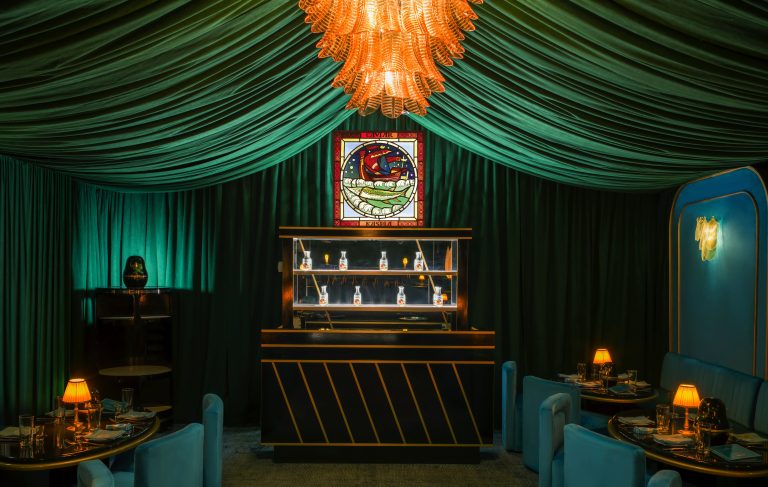
The vat room offers 26 conical oak vats (reserved for parcels at the heart of the terroir), 26 conical stainless-steel vats and 28 cylindrical stainless-steel ones. Sensors track temperature at several levels, sugar, density and oxygen. Every vat has its own pump-over system, so interventions can be smaller, gentler and more frequent, around the clock; the machine room, a wall of valves and cables, looks like something out of a Turing biopic. (Years before ground broke in 2023, Borie was already telling the estate’s in-house magazine that the future meant tending each vine “365 days a year, 24 hours a day.” The cellar got there first.) There are also three dedicated rooms and eight vats for micro-vinification, where new ideas are tested separately before they’re allowed anywhere near the main event.
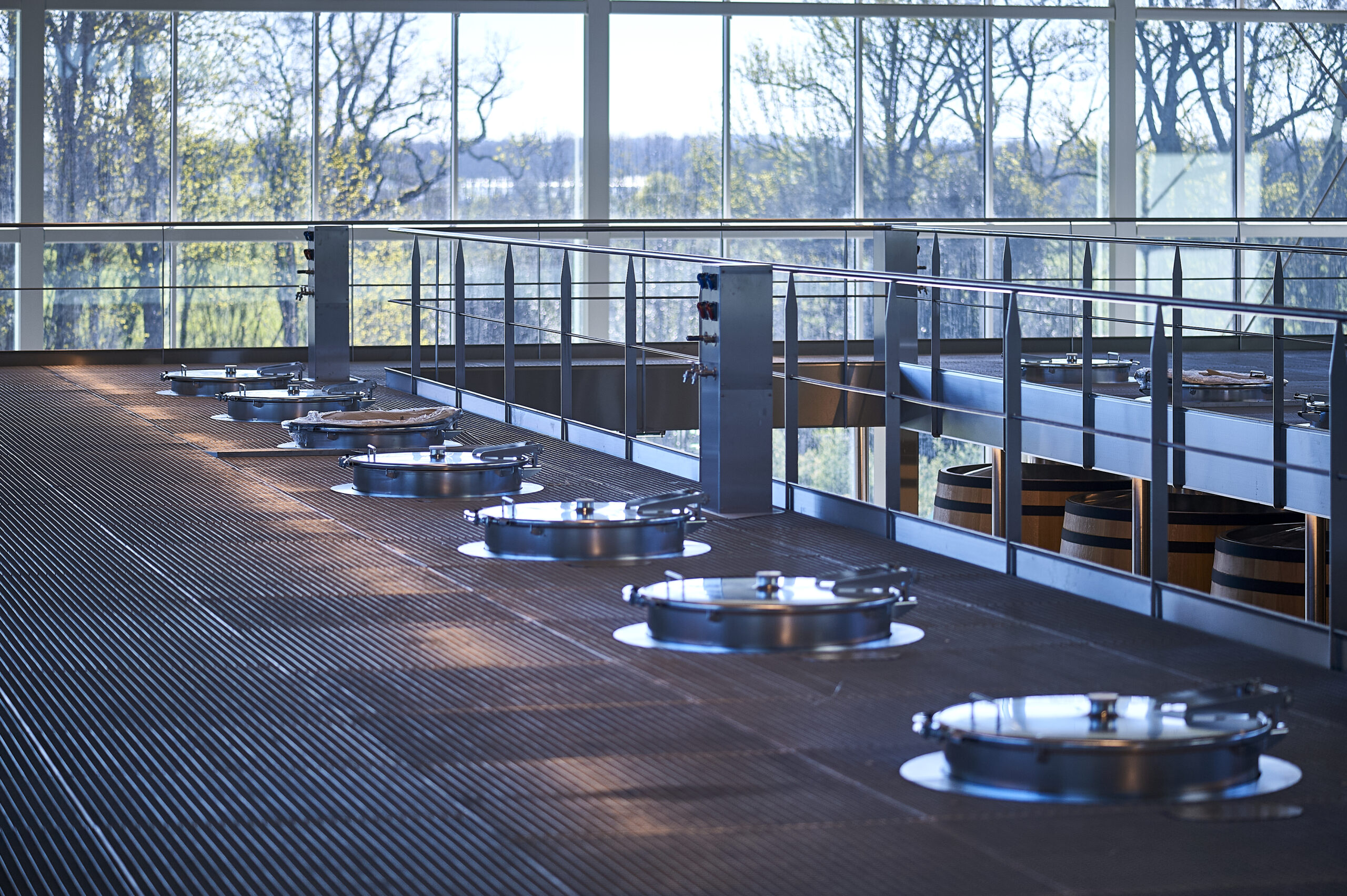 Photo Credit: Atelier Caumes
And then, downstairs, the plot twist: after trying amphorae, globes and Central European casks, the estate went right back to the 225-liter French-oak Bordeaux barrel. The Grand Vin spends about 18 months in barrel, the other wines about 12. The Grand Vin is still racked by gravity—by candlelight—every quarter, and the wines are still fined with egg whites, four to five per barrel. Eighty sensor-laden vats, a room of blinking solenoids, and they rack by candlelight. I love this place.
The building is kinder to the people inside it, too. Natural light pours into the vat room, which looks out onto trees; a system captures the carbon dioxide produced during fermentation, one of the real hazards of working among vats; and circulation was laid out to make the frantic weeks of harvest a little less frantic.
Tracey Dobbin knows those weeks. The Newfoundland native first worked at Ducru-Beaucaillou as a cellar hand during the 2011 vintage; she earned her Master of Wine title in 2020 and is now the estate’s expert advisor on wines and markets, sitting in on blending sessions, talking to critics and representing the château around the world. The knowledge made in the cellar has to travel somehow. She is one of the ways it does.
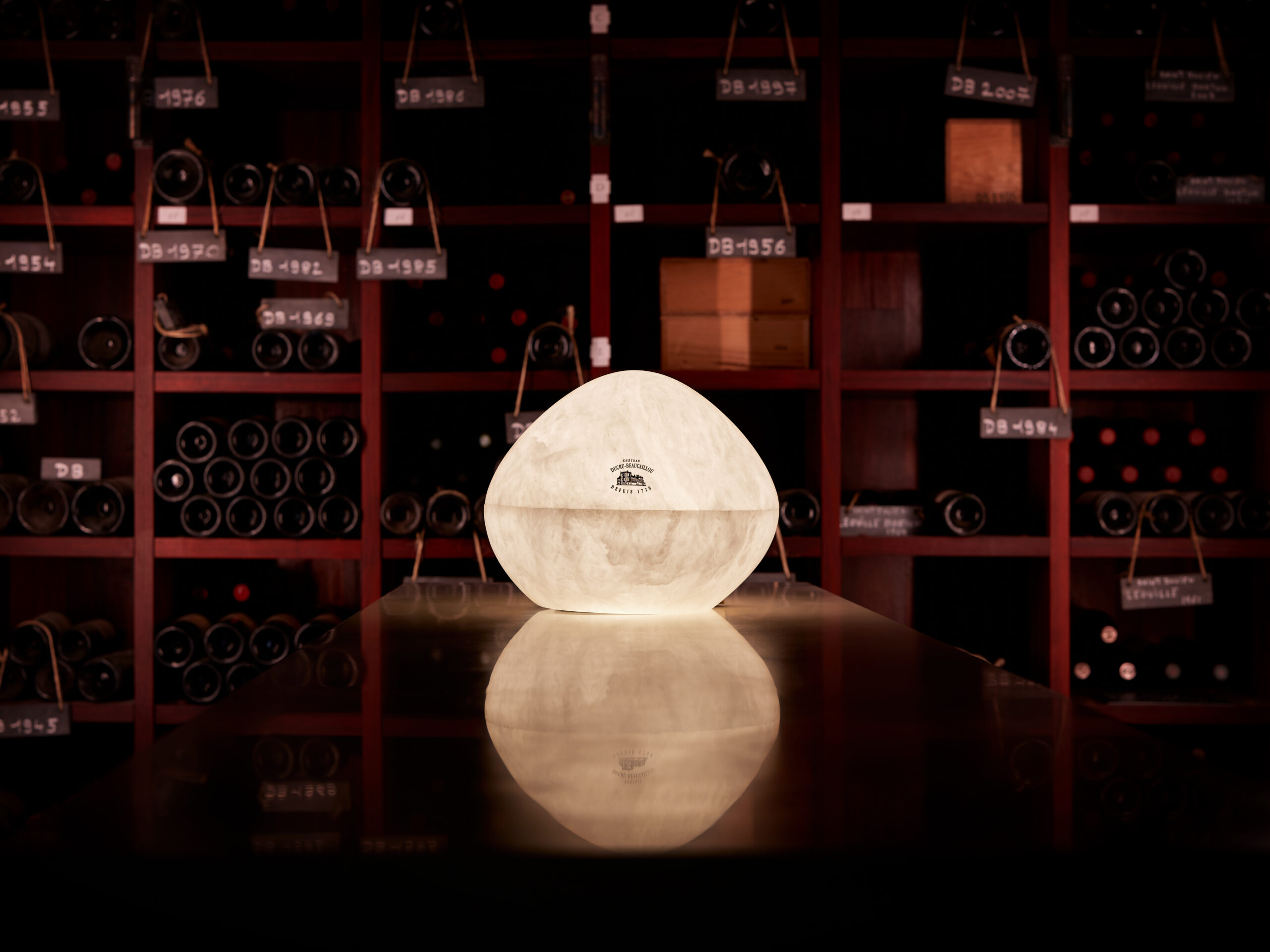 Photo Credit: Château Ducru-Beaucaillou
What it travels toward is a range that speaks in more than one register. The Grand Vin, built on Cabernet Sauvignon and made to go the distance, is the estate’s long-form argument for its terroir (Borie has said that with the 2015 they “touched the essence of Ducru-Beaucaillou,” in a style close to the legendary ’61). La Croix Ducru-Beaucaillou, carried by Merlot and structured by Cabernet with a touch of Petit Verdot, is all texture. Le Petit Ducru, from the same deep gravels, is the fruit-forward, drink-it-now version. And Madame de Beaucaillou, from the Haut-Médoc, is the one you open on a Tuesday. (Chicago got a taste last year, when Haute Wine Society paired a Ducru-Beaucaillou vertical with Grant Achatz’s menu at Next.) More vats, more choices at blending, better decisions about which parcel belongs where.
Art, for Borie, is another way of checking his work. The château’s walls hold pieces by Keith Haring, Christian Boltanski, Annette Messager, Claude Viallat, Alain Sechas and photographer Éric Poitevin, whom he met at a Bordeaux gallery in 1991 over a photograph of a roe deer that Borie initially recoiled from—and then couldn’t stop thinking about. (“That’s Bruno all over,” Poitevin told the estate’s magazine.) Artists, Borie tells me, “invent tomorrow”: they have such a sharp understanding of today that they can see what comes next. “They help us to take some perspective.”
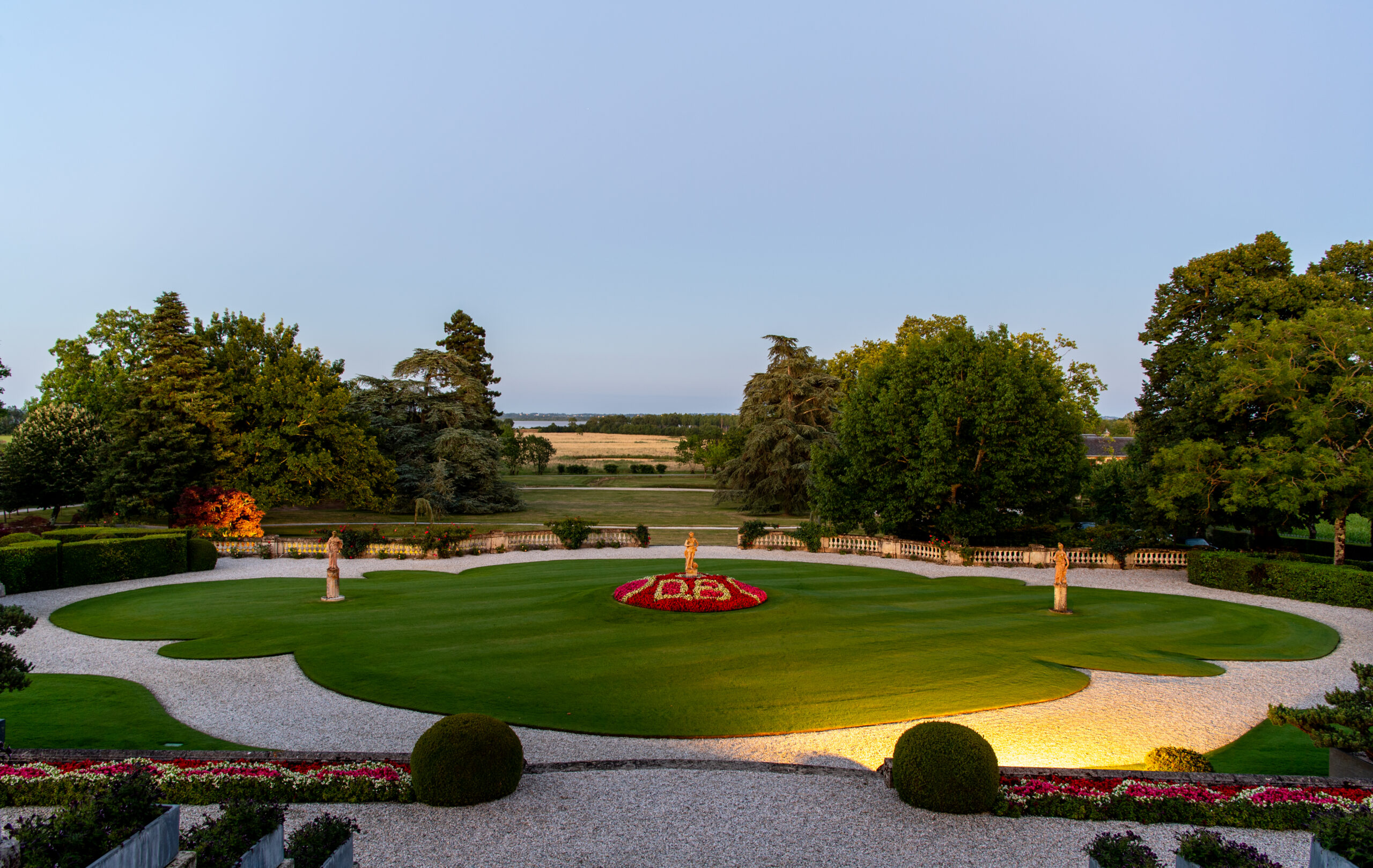 Photo Credit: Artiste Associé
I suggest to him that this is what he has done at Ducru-Beaucaillou, too—bolted the future onto the past in a way that shouldn’t work but does. He doesn’t argue, exactly. He zooms out. “We are part of a long history,” he says. You know the history, you try to anticipate tomorrow, you build on what was already there. You push a little further.
The park makes the argument better than either of us. Every year, a few weeks after harvest, in the last days of November, the old ginkgo turns a flaming gold and drops its leaves in a matter of days; the estate’s magazine calls it a symbol of eternity. When his son, Louis-Eugène, was born, Borie planted rare trees of his own. Someone planted the ginkgo, too. Someone tended the vines. Every generation inherits the decisions of the one before, and the first vintage made inside the new winery has yet to reach anyone’s glass.
It was somewhere in the middle of the terroir-scientist story, for the record, that Borie noticed it was cold, and that I might catch one.
Too late, I told him.
“You already had one?”
Not yet, I admitted.
Decision made. We would sit in the kitchen. The vines can wait 50 years for their verdict. Some calls, a farmer makes on the spot.
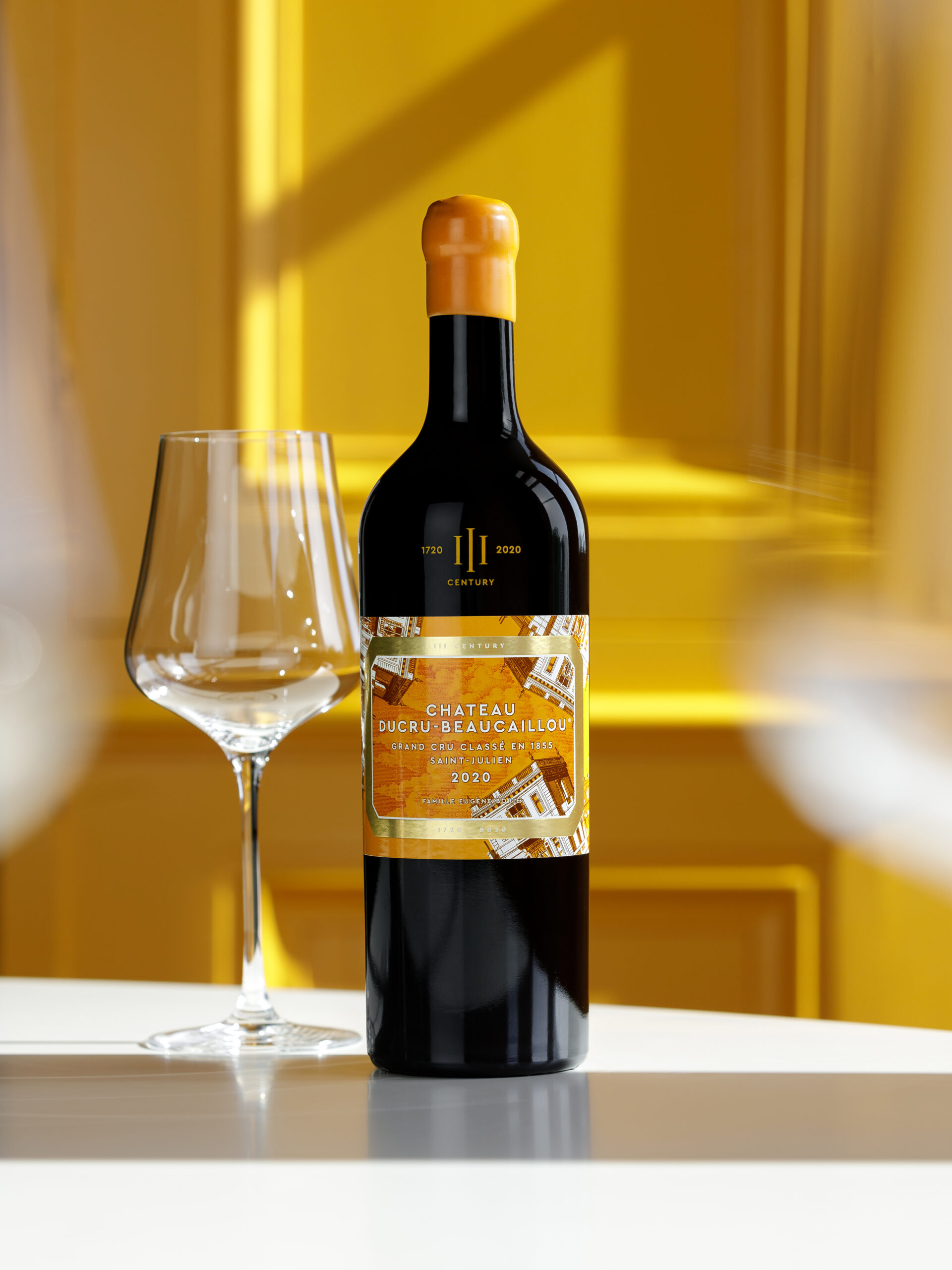 Photo Credit: Gabriel Guibert
Read More
Haute Wine Society poured Ducru-Beaucaillou alongside Grant Achatz’s menu in Chicago: Haute Wine Society Hosts Ducru-Beaucaillou Dinner With Grant Achatz at Next in Chicago.
More Saint-Julien, from the island that takes its Bordeaux seriously: The Wines, Chefs, and Stories That Defined the 2025 Nantucket Wine & Food Festival.
Frequently Asked Questions
What is new at Château Ducru-Beaucaillou?
In April 2026, the Saint-Julien estate unveiled a new gravity-fed winery of 8,000 square meters, planned over roughly a decade and built between June 2023 and December 2025. It handles every stage from harvest reception to fermentation, barrel aging, blending and bottling across three levels, with 80 vats and 8,000 hectoliters of capacity.
How does Ducru-Beaucaillou’s new winery work?
Grapes arrive at three covered reception lines for destemming, roller and vibrating-table sorting and optical sorting, then travel to their vats by gravity in 5-hectoliter motorized containers rather than being pumped. Each container can only discharge after its destination vat’s QR code is scanned, and every vat has its own pump-over system and sensors tracking temperature, sugar, density and oxygen.
What wines does Ducru-Beaucaillou make?
The estate makes the Grand Vin Château Ducru-Beaucaillou, led by Cabernet Sauvignon and built for long aging; La Croix Ducru-Beaucaillou, carried by Merlot with Cabernet Sauvignon and a touch of Petit Verdot; and Le Petit Ducru, a fruit-forward Saint-Julien. Madame de Beaucaillou comes from the Haut-Médoc.
What did Ducru-Beaucaillou contribute to wine history?
In the late 19th century, owner Nathaniel Johnston worked with Professor Alexis Millardet and estate manager Ernest David to develop the Bordeaux mixture, a copper-and-lime spray against mildew. It spread to vineyards worldwide and is still used today, notably in organic farming.
Latest from Haute Living
The World’s Most Glamorous Champagne Bars to Celebrate International Champagne Day — Including One in the Trees
The Team Behind Award-Winning Mírate Just Opened One of L.A.’s Most Anticipated Bars — and It Changes Destinations Every 50 Minutes
Seia Transforms Into Venice for Halloween With a Masquerade 54 Floors Above Brickell